
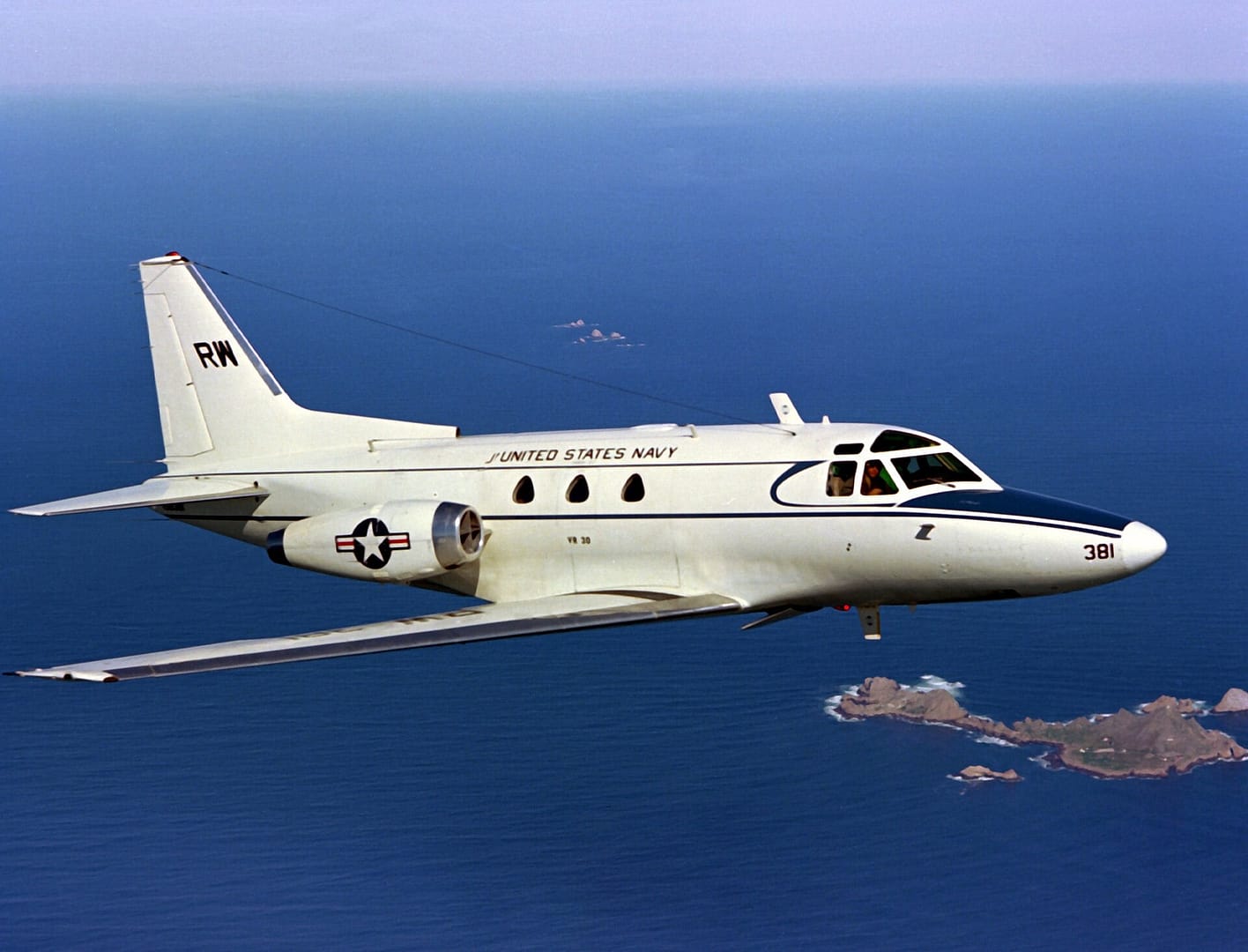
It was a routine training flight on a grey winter afternoon. Three American airmen took off from Wiesbaden in an unarmed little jet, expecting to be back in three hours. They never came home.
The shootdown of a U.S. Air Force T-39 Sabreliner over East Germany on 28 January 1964 is one of the Cold War's quietest tragedies — a peacetime flight that ended in gunfire, and three names that deserve to be remembered.
Informazioni rapide
- Data: 28 January 1964
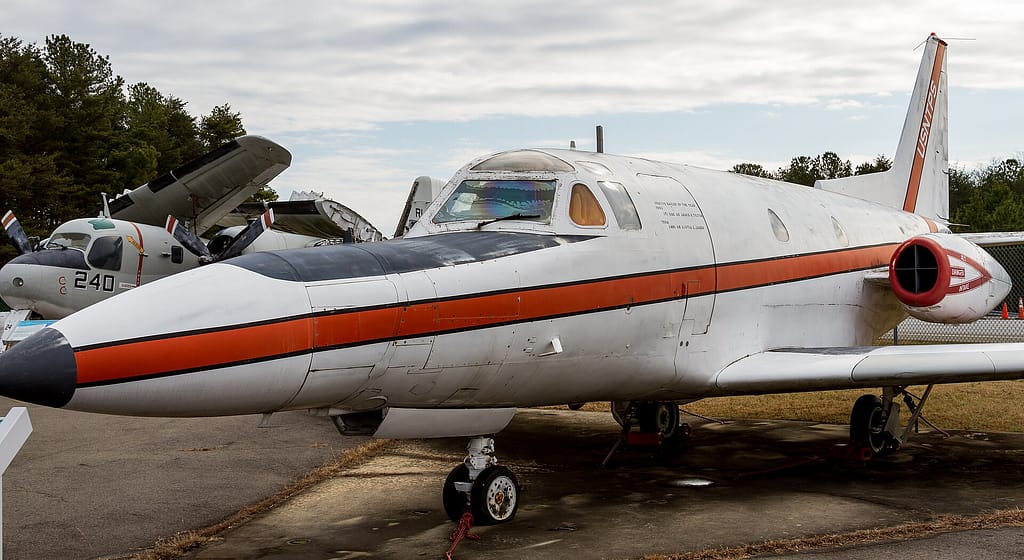
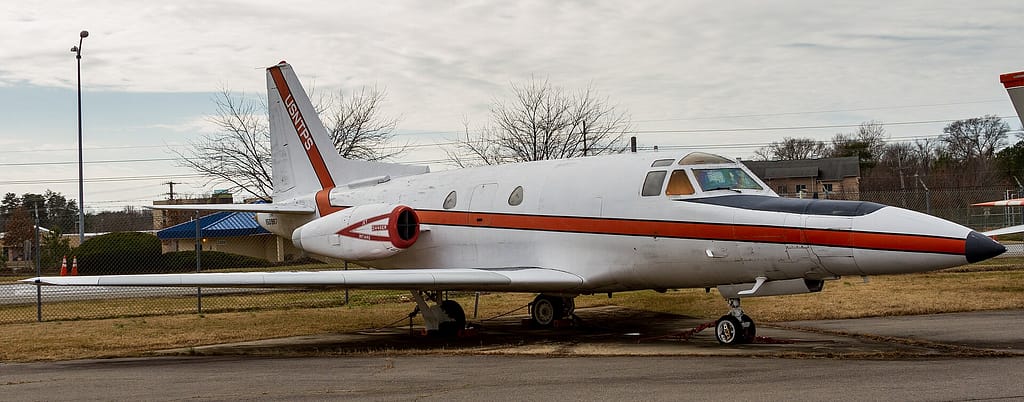
- Aeromobili: North American T-39A Sabreliner, 62-4448 (unarmed trainer)
- Unità: 7101st Air Base Wing, departed Wiesbaden Air Base
- Quello che è successo: Strayed into East German airspace; shot down by Soviet MiG-19s
- Posizione: Near Erfurt, East Germany
- Equipaggio: All three killed
A wrong turn in a divided Germany
The T-39A Sabreliner was about as harmless as a military jet gets: a twin-engine trainer and light transport, unarmed, used to keep pilots current. On that afternoon, aircraft 62-4448 left Wiesbaden at 14:10 for a standard three-hour training sortie over West Germany. Aboard were three men: Captain John F. Lorraine, the instructor, and two experienced pilots checking out on the type, Lieutenant Colonel Gerald K. Hannaford and Captain Donald Grant Millard.
Somewhere over the cloudy landscape, navigation failed them. The jet drifted east, across the invisible but lethal line into East German airspace.
No warning
Soviet radar caught the intruder and scrambled two MiG-19 fighters to intercept. Whatever the Sabreliner's obviously non-threatening profile, the response was merciless. Around 15:14, the MiGs opened fire and destroyed the jet in mid-air. Lorraine, Hannaford and Millard were killed instantly. There had been no war, no warning shot recorded in the crew's favour — just a navigational error and a burst of cannon fire.
The cost of a line on a map
The incident triggered a furious diplomatic exchange. Washington protested; Moscow insisted the aircraft had violated its airspace. But the men were already gone, and no protest could change that. Their deaths became a grim reminder of how thin the margin was in Cold War Europe, where a wrong heading in bad weather could be a death sentence.
Chuck Yeager and the sound barrier get the documentaries. Crews like Lorraine's rarely do — three professionals doing an ordinary job, killed by the geometry of a divided continent. Sixty years on, their names are the whole point of telling the story.
Sources: Wikipedia (1964 T-39 shootdown incident); Super Sabre Society; dbpedia.
Post correlati
0 Commenti