
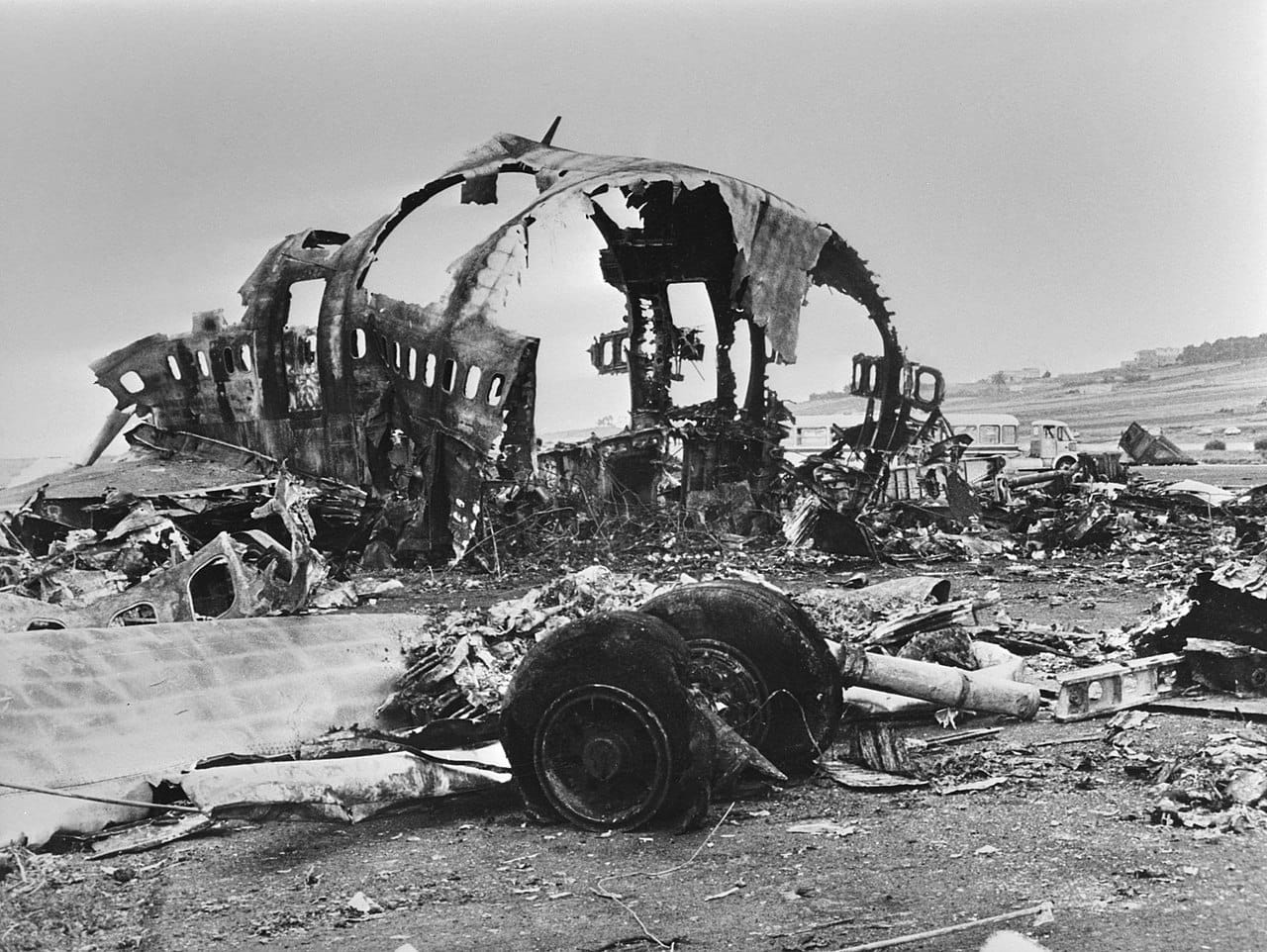
On the morning of 27 March 1977, neither KLM Flight 4805 nor Pan Am Flight 1736 was meant to be anywhere near Tenerife. Both Boeing 747s were bound for Gran Canaria when a bomb planted by a separatist group tore through the terminal at Las Palmas. With a warning of a second device, authorities closed the airport and diverted the inbound traffic to the nearest field with a long enough runway: Los Rodeos, a modest regional airport tucked into the hills.
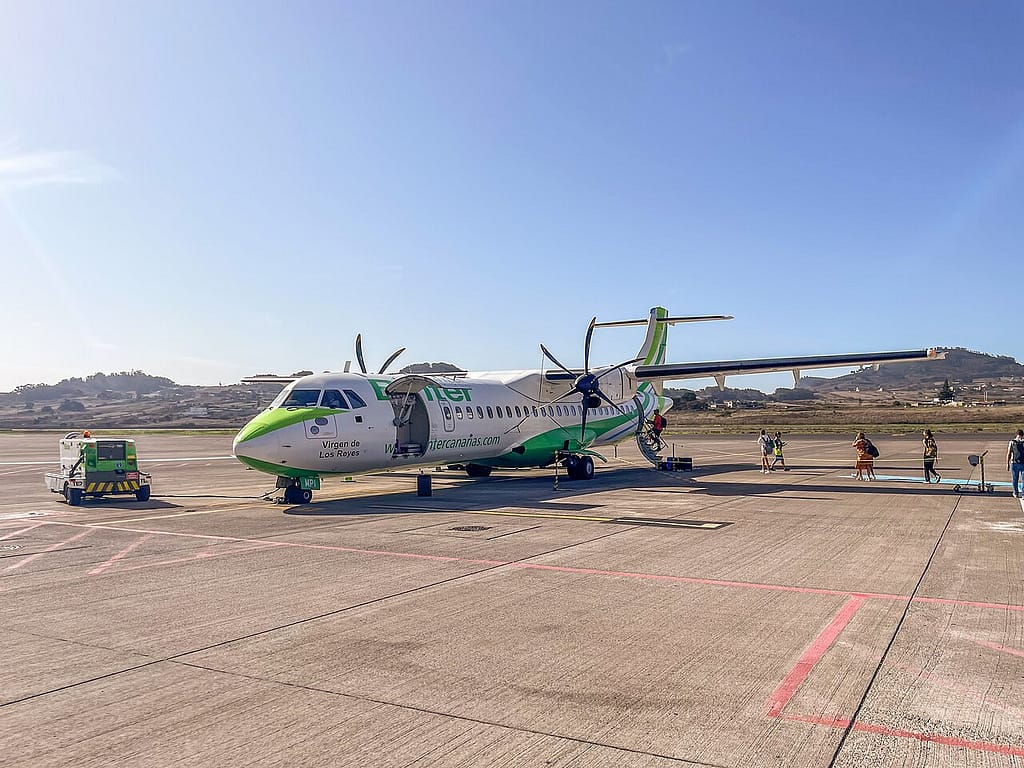
It was the kind of decision that looks harmless on paper. Los Rodeos had one runway and little room to maneuver, and within an hour it was crowded with diverted jets far larger than anything it usually handled. Departing planes had to taxi down the active runway itself and turn around at the end. On a clear day it is merely awkward. That afternoon, it would prove catastrophic.
- Date & place: 27 March 1977, Los Rodeos Airport (today Tenerife North), Canary Islands
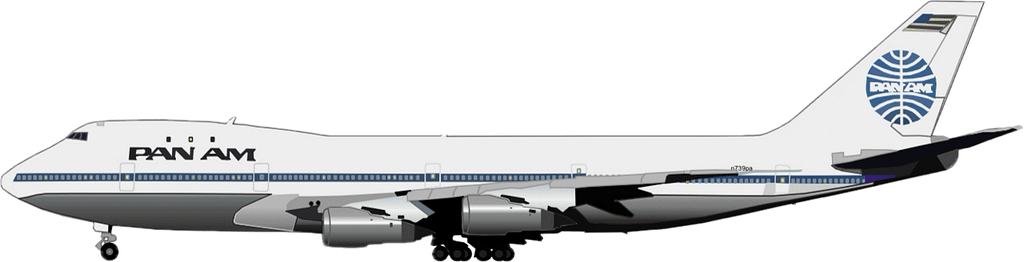
- Aircraft: KLM Flight 4805 and Pan Am Flight 1736 — both Boeing 747s
- Toll: 583 killed; 61 survivors, all of them from the Pan Am 747
- Why they were there: a bomb at Gran Canaria diverted both jets, and fog then settled over Los Rodeos
- The trigger: KLM began its takeoff roll without takeoff clearance while Pan Am was still on the runway
- Legacy: standardized radio phraseology and the rise of Crew Resource Management
A small field pushed past its limits
As the hours passed, the mountain weather closed in. Banks of fog drifted across the field, and visibility fell sharply. When Gran Canaria reopened, everyone wanted to leave at once. The KLM commander, Jacob van Zanten — the airline’s chief 747 instructor, whose face appeared in KLM’s own advertising — decided to refuel at Tenerife rather than risk a second delay later.
The choice was reasonable, but it cost roughly half an hour and blocked the taxiway, trapping the Pan Am 747 behind him. When the KLM was finally ready, controllers instructed it to backtaxi the full length of the runway and turn 180 degrees. The Pan Am was told to follow down the same runway and turn off to clear the way. In the thickening fog, neither crew could see the other, and the tower could see neither aircraft at all.
The last two minutes on the runway
What happened next unfolded in barely two minutes and has been studied ever since through the cockpit voice recorders of both aircraft. At the end of the runway, van Zanten advanced the throttles. His first officer reminded him they had not yet received takeoff clearance, and the captain throttled back. The first officer radioed for clearance and read back the route, ending with the words that they were now ready. Then, as the throttles came up again, van Zanten said simply that they were going.
The tower had not cleared him. It replied to stand by, while the Pan Am crew, still on the runway, transmitted that they were still taxiing down it. But the two radio calls were made at the same instant, and they cancelled each other into a piercing squeal that the KLM cockpit heard only as noise. The one warning that might have stopped everything never reached the men who needed it. Moments later, through the fog, the Pan Am crew saw the landing lights of the KLM bearing down and swung desperately for the grass. There was not enough room.
The cost, and the sixty-one who lived
Van Zanten hauled his 747 into the air so hard the tail scraped the runway, but the giant could not clear. Its underside and engines tore through the top of the Pan Am. The KLM crashed back down, slid, and was consumed by fire; everyone aboard — 248 people — was killed.
On the Pan Am, the destruction was uneven. The nose section held together, and it was there that a small number of people, including both pilots, managed to climb clear before the fire spread. In all, 61 survived. The final toll reached 583, still the deadliest accident in the history of flight. No single villain caused this. It was a chain of ordinary pressures — a diversion, a delay, fatigue, fog, an ambiguous radio call — that lined up in the worst possible order.
How one afternoon rewrote the rules
That, more than anything, is why Tenerife changed aviation. Investigators concluded that the accident was rooted not in mechanical failure but in communication and human factors. The industry responded by rewriting how pilots and controllers talk to each other. Phraseology was standardized worldwide, and the word ‘takeoff’ was reserved for the moment clearance is actually given — before that, crews and controllers say ‘departure’.
Readback discipline tightened, and the disaster became a founding case study for Crew Resource Management, the training philosophy that teaches crews to speak up and cross-check one another regardless of rank. The junior officer on the KLM had sensed something was wrong; the system built after Tenerife exists to make sure the next one’s doubt is actually heard.
Sources: Wikipedia (Tenerife airport disaster); official Spanish/Dutch/US investigation reports; tailstrike.com CVR transcript.
0 Commenti