
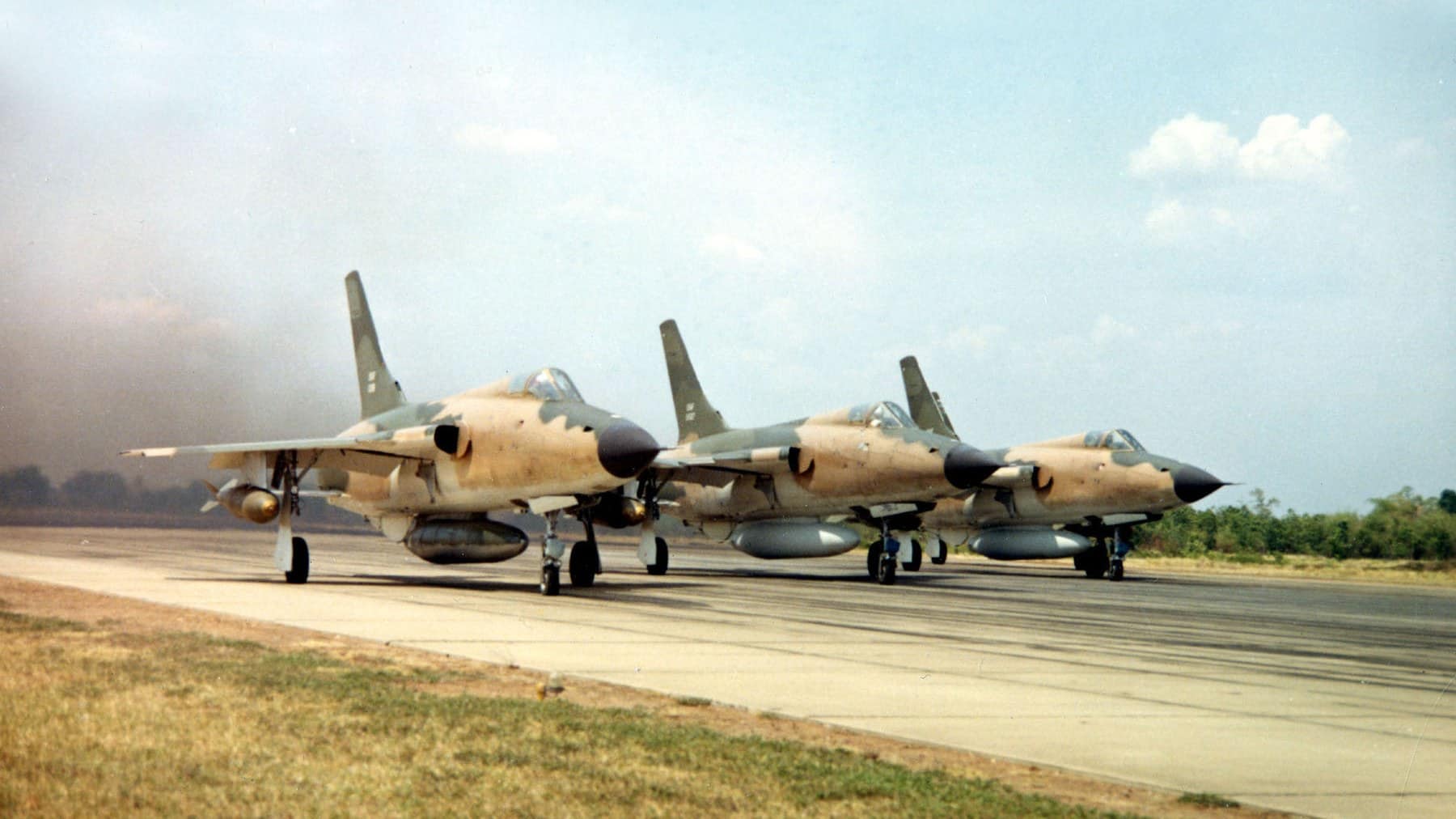
Northwest of Hanoi runs a long spine of mountains called the Tam Dao range. The men who flew the Republic F-105 Thunderchief against North Vietnam never called it that. They named it after their airplane — and after what happened to so many of them beside it. They called it Thud Ridge.
The ridge was a highway sign pointing at the most heavily defended airspace on the planet. Strike pilots coming up from Thailand used its karst wall to hide from radar on the run-in, popped over the top, and dropped into a valley stuffed with anti-aircraft guns, SA-2 missiles and MiG bases. Then they did it again the next day. And the day after that. A tour was 100 missions over the North — if you lived that long.
The Thud flew the great bulk of the US Air Force's strike missions in Operation Rolling Thunder, and it paid a bill unmatched by any American jet before or since. Close to half of all F-105s ever built were lost in Southeast Asia. This is the strike pilots' story — the men who hauled the bombs downtown.
Brevi cenni: F-105 Thunderchief sul Vietnam del Nord
| Aeromobili | Republic F-105 Thunderchief — Mach 2 fighter-bomber, 833 built (1955–1964) |
| Progettato per | Attacco nucleare di basso livello; costretto a ricorrere ai bombardamenti convenzionali sul Vietnam. |
| Campagna | Operation Rolling Thunder, March 1965 – November 1968 |
| Basi | Basi dell'aeronautica militare tailandese reale di Korat e Takhli, Thailandia |
| Sorties | Oltre 20.000 nella guerra del Vietnam |
| Perdite | ~380–395 lost in Southeast Asia (tallies vary); roughly 330 to enemy action, most to AAA |
| combattimento aereo | Accreditato di 27,5 MiG abbattuti contro 17 MiG persi |
| Tour | 100 missioni sul Vietnam del Nord |
| Il nome | “Thud Ridge” = the Tam Dao mountains northwest of Hanoi |
L'aereo sbagliato, pilotato magnificamente
The F-105 was never meant to do any of this. Republic designed it in the 1950s as a nuclear sprinter: one pilot, one enormous engine, an internal bomb bay sized for a tactical nuke, and the ability to run at the ground at just under the speed of sound until it was time to toss the weapon and go home. It was one of the biggest single-engine fighters ever built — so big and so heavy that pilots joked the Thud could outrun anything in a straight line and be out-turned by everything, including the runway.
Vietnam handed it a different job: hauling up to around 6,400 kg (14,000 lb) of conventional bombs — a heavier load than a World War II B-17 carried — against bridges, rail yards and depots, week after week, against defenses that grew thicker with every raid.
L'aereo si rivelò affidabile, veloce in volo e notoriamente capace di incassare i colpi. Ciò che non riuscì a fare fu rendere la missione sopravvivibile. Quella era una questione di calcoli, e i calcoli erano impietosi.
Andare in centro
The targets that mattered sat in Route Package Six, the zone around Hanoi and Haiphong that pilots called “downtown.” A strike day started before dawn in Thailand, ran through a tanker rendezvous over Laos, and funnelled the force toward the ridge. Terrain masking bought a few minutes of radar shadow; after that the Thuds belonged to the guns.
North Vietnam's defences were a layered machine: thousands of anti-aircraft artillery pieces from 37 mm up, SA-2 surface-to-air missiles that forced the Americans down into the flak, and MiG-17 E MiG-21 rising off airfields the strike pilots could see beneath their wings. The overwhelming majority of F-105 losses went to plain, unglamorous anti-aircraft fire.
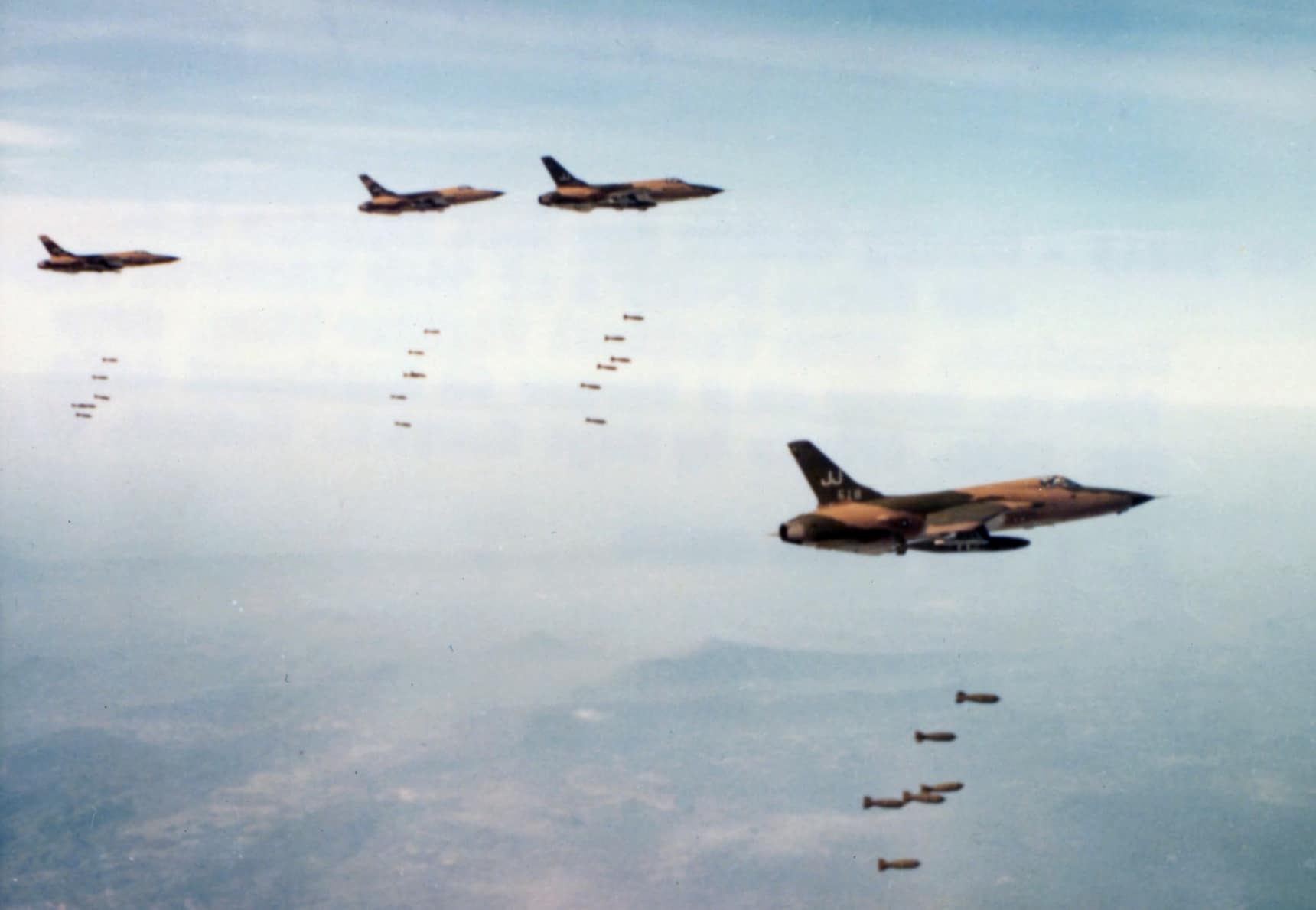
Anche la geografia era ostile. Hanoi si trovava a circa 1.100 km (700 miglia) dalle basi thailandesi dove si svolgevano effettivamente le missioni, e un Thud danneggiato in battaglia doveva affrontare un lungo e solitario viaggio di ritorno attraverso il Laos. I piloti completavano le 100 missioni oppure no: durante i periodi più critici dell'operazione Rolling Thunder, le probabilità di terminare un ciclo di operazioni indenni erano spiacevolmente vicine al lancio di una moneta.
Eppure continuarono a volare. Secondo i calcoli della stessa Aeronautica Militare, all'F-105 furono attribuiti circa tre quarti dei raid d'attacco condotti dall'USAF contro il Nord durante l'operazione Rolling Thunder.
Regole scritte a 12.000 chilometri di distanza
Ciò che fece infuriare i piloti dei Thud non fu il nemico, bensì il regolamento. Il presidente Johnson e il segretario alla Difesa McNamara, terrorizzati all'idea di coinvolgere la Cina o l'Unione Sovietica nella guerra, mantennero la selezione degli obiettivi a Washington e avvolsero la campagna in un insieme di regole di ingaggio che sembravano un documento legale. Il colonnello Jack Broughton, vice comandante del 355° Stormo Caccia Tattico a Takhli, descrisse il documento con la precisione tipica di un pilota da caccia.
The rules produced situations that would be comic if they hadn't been lethal. For much of the campaign, the MiG base at Phuc Yen — sitting in plain sight beside the ridge — was off limits. Broughton watched it happen from the cockpit, mission after mission.
The MiGs he couldn't touch on the ground would be airborne minutes later, cutting into the rear flights of his strike force. The Thud drivers fought back well enough — F-105s were credited with 27.5 MiG kills, most of them MiG-17s gunned down with the internal 20 mm cannon, against 17 Thuds lost to MiGs. But every dogfight was a distraction from the real job, and every bomb jettisoned to fight was a mission wasted.
L'aritmetica della sopravvivenza
The totals are stark in any version. Of 833 Thunderchiefs built, official tallies put losses in Southeast Asia at roughly 380 to 395 aircraft depending on what gets counted — close to half of all F-105s ever made. Around 330 fell to enemy action, the great majority to anti-aircraft guns, with SAMs and MiGs claiming most of the rest.
The type is often described as the only American aircraft withdrawn from combat because its loss rate was unsustainable — by 1968–69 the Air Force was simply running out of Thuds. Production had ended in 1964; there were no replacements. The F-4 Phantom took over the strike role, while the two-seat F-105F and G Wild Weasels soldiered on hunting SAM radars to the war's end.
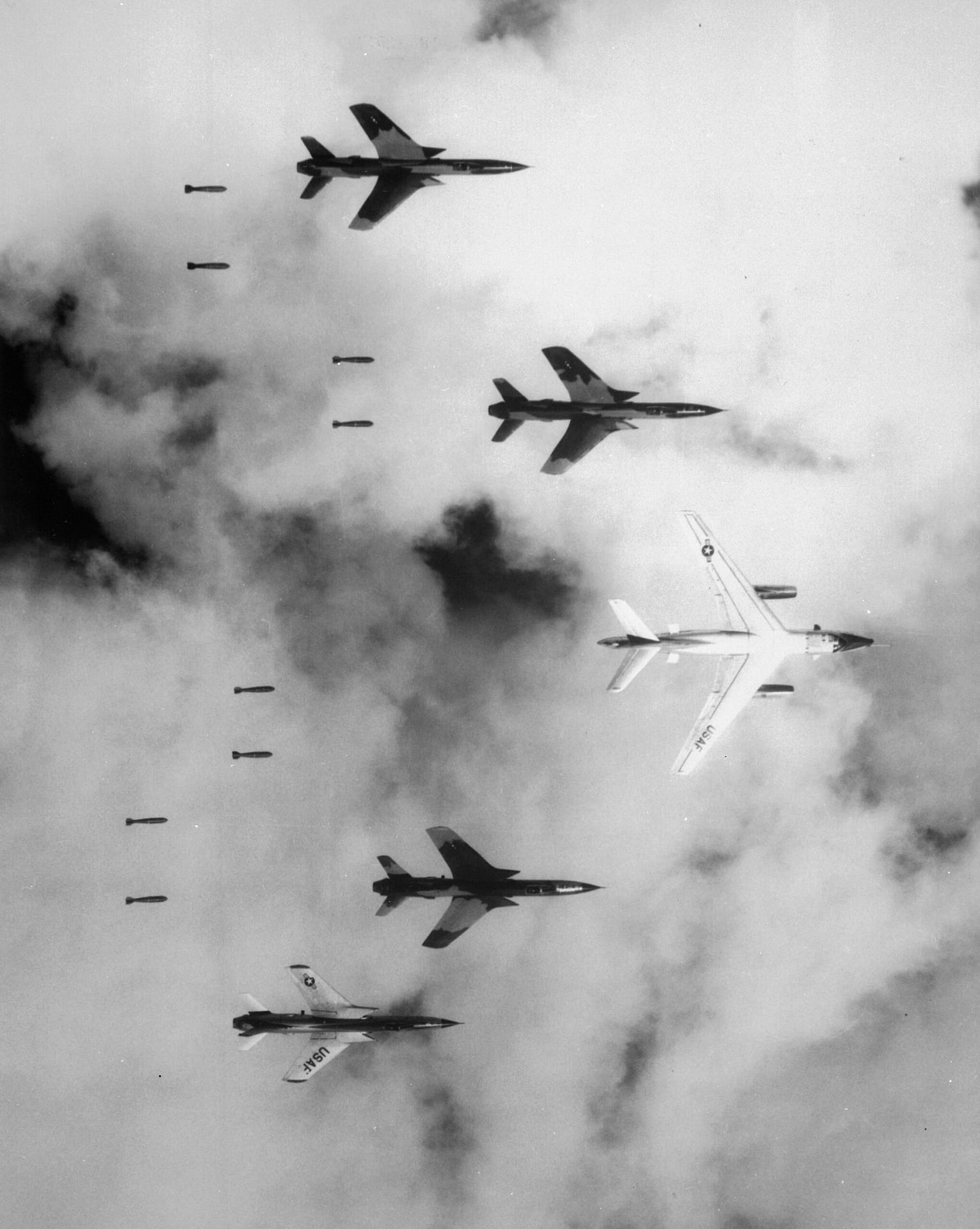
Numbers, though, don't carry what this campaign asked of individual human beings. The same pilot, flying the same route, past the same guns that had killed his friends the day before — a hundred times. Two F-105 airmen received the Medal of Honor, both from the Wild Weasel force; the strike pilots' heroism was distributed instead in small, unrecorded increments, one run through the flak at a time.
Their SAM-hunting brethren have their own story — we've told it in our piece on the Donnole selvatiche. Questo post appartiene agli uomini che si trovano dietro di loro, a bordo delle D-model cariche di bombe.
L'uomo che lo ha scritto
I piloti d'attacco trovarono la loro voce in Broughton. Ex allievo di West Point e veterano della guerra di Corea, pilotava personalmente le missioni più difficili, portava un piccolo registratore a nastro nella cabina di pilotaggio e trasformava le conversazioni radio in parole. Cresta del Tuono, Pubblicato nel 1969, mentre la guerra era ancora in corso, non è mai andato fuori catalogo. John McCain lo definì il miglior resoconto quotidiano del volo di combattimento in Vietnam e in seguito si guadagnò un posto nella lista di letture professionali del Capo di Stato Maggiore dell'Aeronautica.
Broughton's career ended the way his book said it would. In 1967 he destroyed gun-camera film to protect two of his pilots accused of strafing a Soviet freighter, took a court-martial for it, and saw the conviction overturned — too late to save his stars. His pilots never forgot which way he had chosen. War artist Maxine McCaffrey, who spent time at the Thud bases, recorded how they spoke of him.
Rolling Thunder ended in November 1968 having failed to break Hanoi, and the argument about why — gradualism, the ROE, targets chosen at Tuesday lunches in Washington — has never really stopped. The men who flew the missions rendered their verdict earlier and more economically, in the name they gave a mountain range.
Gli ultimi membri dei Thuds lasciarono il combattimento nel ruolo di Wild Weasel e si ritirarono dalla Riserva dell'Aeronautica Militare nel 1984. La cresta è ancora lì, naturalmente. Così come il nome. Sulle carte aeronautiche è la catena montuosa di Tam Dao; in ogni bar di squadrone che si rispetti, sarà per sempre Thud Ridge.
Fonti: Wikipedia, Air & Space Forces Magazine (John T. Correll), National Museum of the United States Air Force, The Aviation Geek Club
Domande correlate
Cos'era l'F-105 Thunderchief?
Il Republic F-105 Thunderchief era un grande cacciabombardiere americano in grado di raggiungere Mach 2, di cui furono costruiti 833 esemplari tra il 1955 e il 1964. Progettato per attacchi nucleari a bassa quota, fu invece impiegato in missioni di bombardamento convenzionale sul Vietnam del Nord, dove svolse la maggior parte delle missioni di attacco dell'aeronautica statunitense durante l'Operazione Rolling Thunder. I piloti lo soprannominarono "Thud" (Tuono)."
Cos'era Thud Ridge?
Thud Ridge era il soprannome che i piloti statunitensi diedero alla catena montuosa di Tam Dao, a nord-ovest di Hanoi, durante la guerra del Vietnam. Gli equipaggi degli F-105 Thunderchief utilizzavano le sue alte pareti carsiche per proteggersi dai radar durante l'avvicinamento, prima di lanciarsi in picchiata nello spazio aereo pesantemente difeso. Il nome univa il soprannome dell'aereo stesso alle perdite subite sorvolando quella zona.
Perché l'F-105 veniva chiamato "Thud"?
""Thud" era il soprannome affettuoso del Republic F-105 Thunderchief, che si diceva evocasse il suono del pesante jet che colpiva il suolo. Nonostante l'umorismo macabro, gli equipaggi rispettavano la velocità e la robustezza dell'aereo. Il Thud effettuò la maggior parte delle sortite d'attacco di Rolling Thunder e combatté le difese che diedero origine al Donnola selvatica missione.
Quanti F-105 sono andati persi in Vietnam?
Circa 380-395 F-105 andarono persi nel Sud-est asiatico, con cifre variabili a seconda della fonte; circa 330 caddero a causa dell'azione nemica, la maggior parte per mano dell'artiglieria antiaerea. Il Thunderchief effettuò più di 20.000 sortite durante la guerra. Le sue pesanti perdite sulle difese di Hanoi riflettevano l'intensità della campagna aerea che produsse anche imprese come Operazione Bolo.
L'F-105 ha abbattuto aerei nemici?
Sì. Nonostante fosse un bombardiere, all'F-105 Thunderchief furono attribuite 27,5 uccisioni di MiG, contro le 17 perdite subite a causa dei MiG in combattimento aereo. La maggior parte delle uccisioni avvenne utilizzando il suo cannone interno mentre era pesantemente carico di bombe. Questi scontri sul Vietnam del Nord si svolsero insieme a famose azioni di caccia come la trappola del MiG su Hanoi.
Per cosa era stato originariamente progettato l'F-105?
L'F-105 Thunderchief fu originariamente progettato negli anni '50 come un aereo nucleare da trasporto a bassa quota: un jet monoposto con un enorme motore e una stiva bombe interna dimensionata per un'arma nucleare. Non era mai stato concepito per il ruolo di bombardamento convenzionale per cui divenne famoso sul Vietnam, un destino che condivise con altri progetti della serie Century come il YF-107 Ultra Sabre.
0 Commenti