
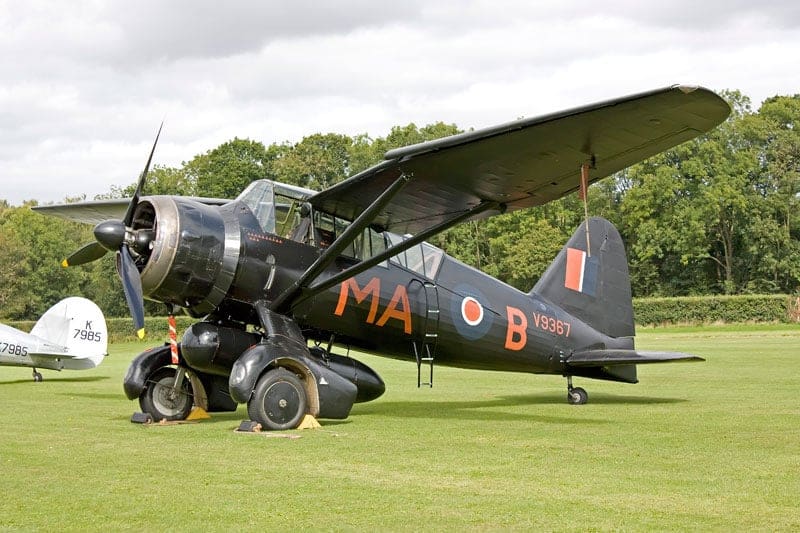
On certain moonlit nights during the Second World War, deep inside Nazi-occupied France, a handful of Resistance members would gather in a remote field and lay out three small torches in the shape of an L. Minutes later, a single black aircraft would slip out of the darkness, touch down on the grass, swap its human cargo in under three minutes, and vanish back into the night.
That aircraft was the Westland Lysander — an ungainly, high-winged machine that had failed at the job it was designed for, and then found an extraordinary second life as the RAF’s secret taxi for spies.
Informazioni rapide
- Aeromobili: Westland Lysander (Special Duties variant), Royal Air Force
- Ruolo: landing and recovering secret agents in Nazi-occupied Europe by night
- Operatore: RAF No. 161 (Special Duties) Squadron, from Tempsford and the forward base at Tangmere
- Key trait: extraordinary short-field performance — it could land in as little as 150 yards
- Motore: a single Bristol Mercury radial; it could fly as slowly as 55 mph without stalling
- Modifications: guns removed, a long-range belly fuel tank added, and a fixed ladder for fast boarding; painted black
- Operations: flown only around the full moon, guided in by a flarepath of handheld torches
- Record: Lysanders carried 101 agents into, and recovered 128 from, occupied Europe
An army hack that found a secret calling
The Lysander entered service in 1938 as an “army co-operation” aircraft, meant for reconnaissance and artillery spotting. In that role, against modern fighters, it was hopelessly vulnerable. But it possessed one magical quality that would make it irreplaceable: it could fly astonishingly slowly, and land almost anywhere.
The Shuttleworth Collection’s Lysander, painted in the black Special Duties scheme, displaying at Old Warden.
The Moon Squadrons
When Winston Churchill founded the Special Operations Executive in 1940 and ordered it to “set Europe ablaze,” someone had to carry its agents across the Channel. That task fell to two special-duty squadrons based at RAF Tempsford. No. 161 Squadron took the Lysanders, flying from a forward cottage at Tangmere on the south coast to reach deep into France.
The aircraft were stripped of guns, fitted with a huge belly fuel tank that gave a round trip of over 1,100 miles, and given a fixed external ladder — its top rungs painted yellow — so an agent could scramble aboard in seconds. They flew only in the “moon period,” the week either side of the full moon, when there was just enough light to navigate and land without lights.
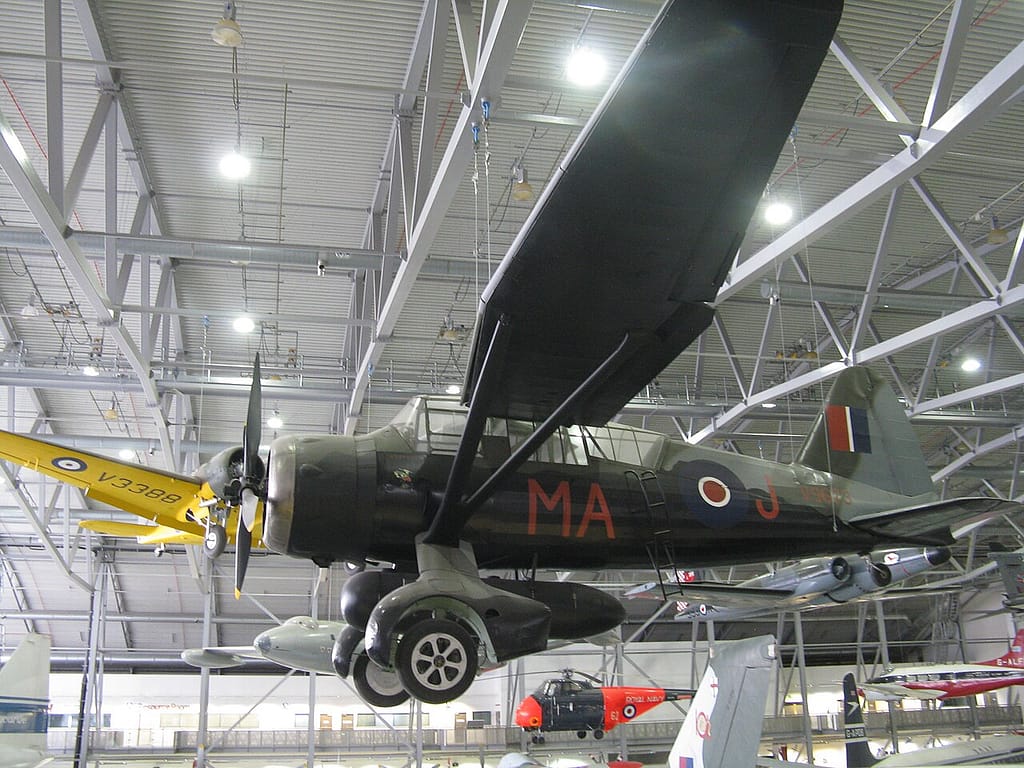
The Westland Lysander in flight — the “spy taxi” of the RAF’s clandestine war.
Flarepaths, torches and dead reckoning
There was nothing high-tech about it. The pilots navigated by dead reckoning, holding hand-cut strip maps and hunting for rivers, coastlines and forests in the moonlight. The BBC would broadcast a coded phrase — “Le castor foulera la neige deux fois,” the beaver will tread the snow twice — to tell the Resistance a flight was coming.
On the ground, agents marked out a flarepath shaped like an inverted L, just 150 yards long, using pocket flashlights or bicycle lamps. As the Lysander approached, they flashed an agreed letter in Morse; only when the pilot answered did the rest of the lights come on. It was espionage conducted with torches and stopwatches.
The passengers they called “Joes”
The pilots called all their agents “Joes,” men and women alike. Some became legends. Violette Szabo, of French-English descent, was flown into and out of France by a Moon Squadron Lysander in the spring of 1944; captured soon after, she was executed at Ravensbrück and posthumously awarded the George Cross. In November 1943, a Moon Squadron aircraft flew out an agent code-named “Morland” — a young François Mitterrand, a future President of France — for talks in London before returning him to the fight.
These were the human stakes of every three-minute landing: a courier, a saboteur, a wireless operator, a future head of state, all riding out of an enemy field in the back of a converted army spotter plane.
The cost, and the legacy
It was desperately dangerous work. Between 1940 and 1944, the Moon Squadrons lost thirteen Lysanders on 279 pick-up sorties, and six pilots were killed — some shot down over the fields, others caught by weather or treachery. The peak came in 1943, with 125 landings in France in a single year. All told, the little Lysanders carried 101 agents in and brought 128 out.
No. 161 Squadron was disbanded in 1945, and the Lysanders left RAF service the following year. But the memory endures — and so does at least one aircraft. The Shuttleworth Collection keeps an airworthy Lysander painted in the black Special Duties scheme, carrying the serial of a machine flown by a real 161 Squadron pilot: a moonlit ghost still taking to the English sky.
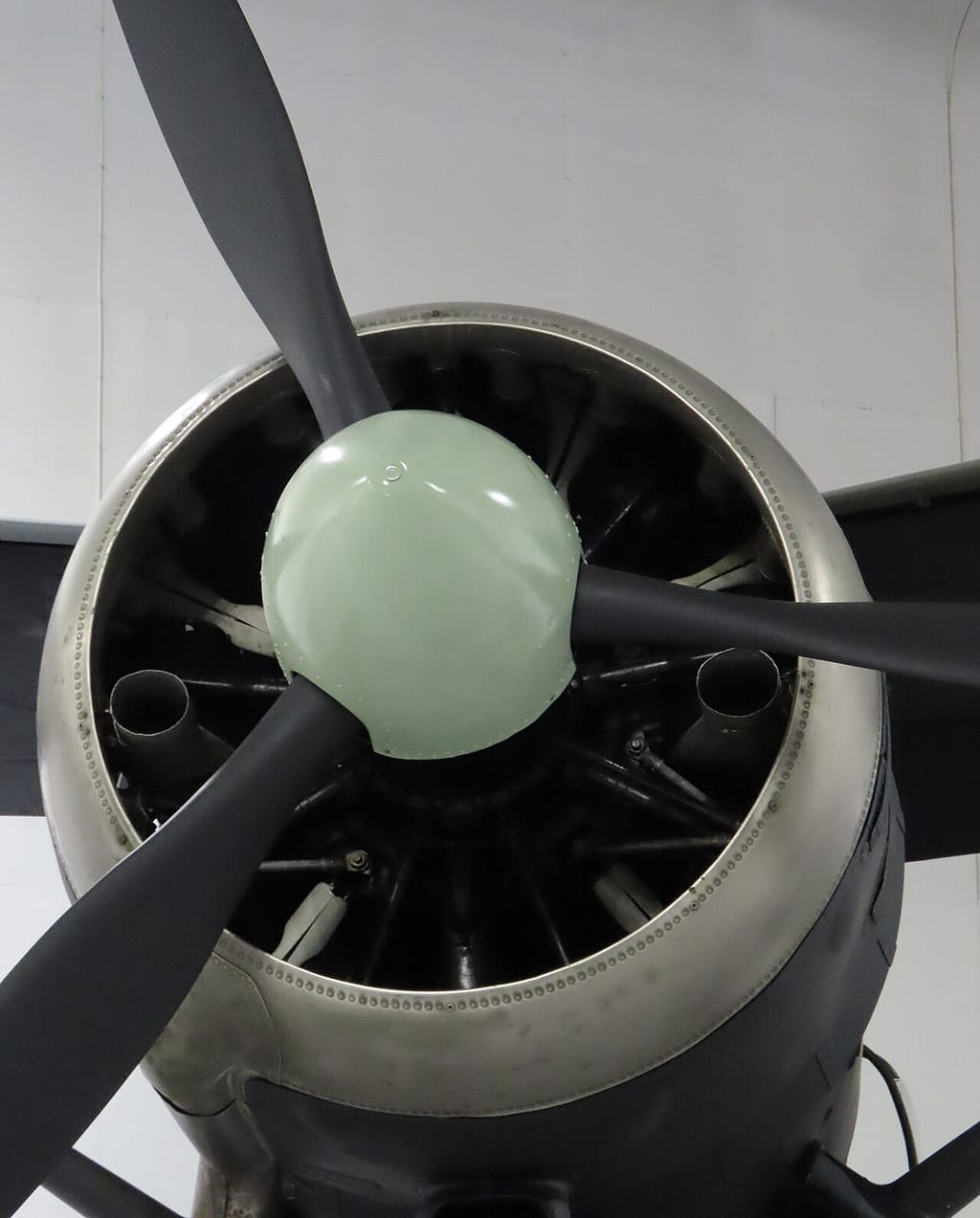
A close-up look inside the Westland Lysander at Shuttleworth.
Sources: John T. Correll, “The Moon Squadrons,” Air & Space Forces Magazine; Group Captain Hugh Verity, “We Landed by Moonlight”; The Shuttleworth Collection; Tangmere Military Aviation Museum.
0 Commenti