
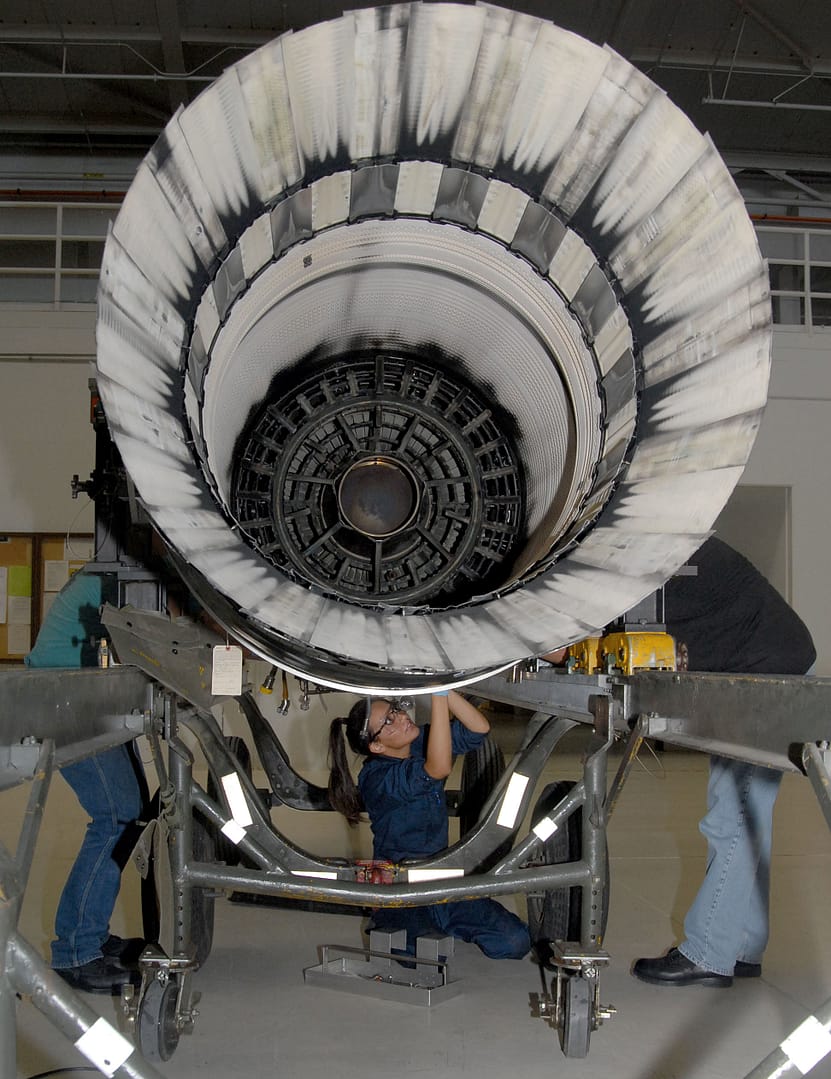
Every fighter pilot trains for it. Most pray they'll never experience it. The moment a jet engine — the machine that keeps you flying at 500 knots and 30,000 feet — stops working. Whether it's a compressor stall that sounds like a cannon going off behind your seat, a flameout that leaves you gliding in silence, or an uncontained failure that tears the engine apart, an engine emergency in a fighter jet is one of the most demanding situations any pilot can face.
Unlike airline pilots, who have multiple engines and long runways waiting for them, fighter pilots often operate with a single engine over hostile terrain, at extreme altitudes, and far from any airfield. When that engine fails, the physics are brutal: a clean fighter loses about 3,000 feet per minute in a glide. That's less than ten minutes from typical combat altitude to the ground.
✈ Informazioni rapide
- Compressor stall: Disruption of airflow through the engine — causes loud bangs, loss of thrust, and possible flameout
- Flameout: Complete loss of combustion — engine windmills but produces no thrust
- Uncontained failure: Catastrophic mechanical breakup — fan blades or turbine discs breach the engine casing
- Glide ratio (typical fighter): ~6:1 to 10:1 — compared to ~17:1 for a commercial airliner
- Time to react: Seconds for compressor stall recovery; minutes for glide-to-landing
- Single-engine fighters affected: F-16, Gripen, Mirage 2000, F-35A/C — no redundancy
- Twin-engine advantage: F-15, F/A-18, Su-27, Rafale — can fly home on one engine
- Famous deadstick landings: F-16 near Elizabeth City, NC (1996)
Compressor Stall: The Bang You Never Forget
A jet engine works by compressing air, mixing it with fuel, igniting the mixture, and expelling the exhaust at high speed. The compressor section — a series of spinning fan blades — must maintain a precise relationship between airflow, blade angle, and pressure. When that relationship breaks down, the airflow through the engine reverses momentarily, producing a sound that pilots describe as somewhere between a shotgun blast and a backfire from a truck exhaust.
Compressor stalls can be caused by rapid throttle movements, flying at extreme angles of attack, ingesting foreign objects (including gun gas from the aircraft's own cannon), or engine wear. A single stall is usually recoverable — the pilot reduces throttle, adjusts angle of attack, and the engine sorts itself out. But a series of stalls can lead to a flameout, and an engine that's stalling repeatedly may be in the process of tearing itself apart.
That first compressor stall reportedly sounds like a cannon going off inside the intake, and a pilot’s heart rate can spike from around 80 to 180 in half a second — then training takes over: throttle to idle, scan the instruments and assess, exactly as drilled hundreds of times in the simulator.
Flameout: Flying Without Power
A flameout is exactly what it sounds like: the flame in the combustion chamber goes out. The engine is still spinning (driven by airflow through the intake, called "windmilling"), but it's producing no thrust. The aircraft is now a glider — and fighters make terrible gliders.
Most modern fighters have an automatic relight capability: the engine control system detects the flameout and attempts to reignite the combustion chamber. If automatic relight fails, the pilot can attempt a manual airstart — essentially restarting the engine in flight by achieving the right combination of airspeed, altitude, and throttle position. This works surprisingly often, but it requires altitude and time — two things that may be in short supply.
For single-engine fighters like the F-16, a flameout that can't be restarted means one of two outcomes: a deadstick landing (if there's a runway within glide range) or ejection. F-16 pilots are taught to start the ejection decision process immediately upon flameout, calculating whether they can make a runway while simultaneously attempting restart. The decision point — eject or commit to landing — typically comes at around 10,000 feet AGL.
Uncontained Failure: When the Engine Comes Apart
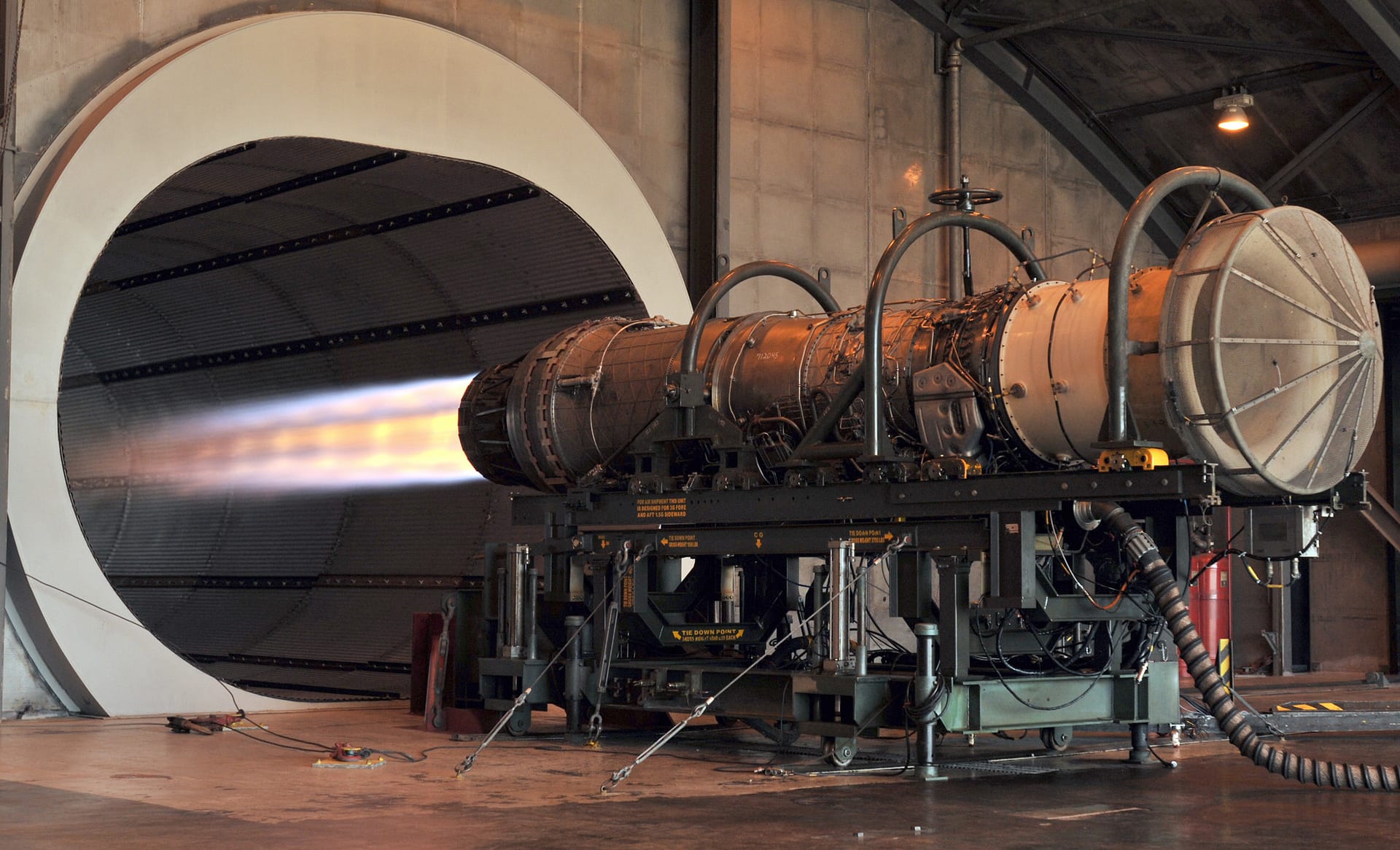
The worst-case scenario is an uncontained engine failure — when a turbine disc, fan blade, or compressor stage breaks free at rotational speeds exceeding 10,000 RPM and tears through the engine casing. Fragments of metal traveling at supersonic speeds can sever hydraulic lines, fuel lines, electrical wiring, and even structural members of the aircraft. An uncontained failure can turn a manageable single-engine emergency into an uncontrollable aircraft in less than a second.
This is why modern jet engines are designed with containment rings — heavy metal bands around the fan and turbine stages designed to catch broken blades. But these rings add weight, and in military engines — where every kilogram matters — the containment is less robust than in civil engines. The F100 engine that powers the F-15 and F-16 experienced a rash of turbine failures in the 1970s and 1980s that led to major redesigns.
In a twin-engine jet, losing one engine is a serious problem; in a single-engine jet, losing the engine leaves only roughly 90 seconds to make a critical decision — try for the field, or pull the ejection handle.
The Deadstick Landing: Gliding Home
A deadstick landing — touching down without engine power — is one of the most challenging maneuvers in aviation. In a fighter, there's no go-around: you get one approach, and if you're too high, too low, too fast, or too slow, the options are ejection or crash. The pilot must manage energy precisely, converting altitude to airspeed and airspeed to distance, all while configuring the aircraft for landing (gear down, which increases drag) at exactly the right moment.
The most famous deadstick landing in fighter aviation history occurred in 1983, when an Israeli F-15 lost its right wing in a mid-air collision during a training exercise. Pilot Zivi Nedivi, unaware of the extent of the damage, managed to fly the aircraft back to base and land — discovering only after he climbed out of the cockpit that he had landed a fighter jet with one wing. The asymmetric lift was partially compensated by the F-15's massive engine thrust and lifting-body fuselage design.
What Pilots Train For
Engine emergencies are among the most frequently practiced scenarios in fighter pilot training. Modern simulators can replicate every type of engine failure — from a gentle flameout at altitude to a catastrophic uncontained failure at low level — and pilots practice the decision tree until the responses are automatic. The key training points: maintain aircraft control first, then troubleshoot, then decide. Aviate, navigate, communicate — in that order, always.
The statistics bear out the training. Despite the inherent danger, the majority of fighter engine emergencies result in either a successful restart or a safe ejection. The cases that go wrong are almost always those where the pilot ran out of altitude, ran out of airspeed, or delayed the ejection decision too long. In a fighter, the seat is there for a reason — and knowing when to use it is as important as knowing how to fly.
Sources: USAF Safety Center, "Fighter Pilot: The Memoirs of Legendary Ace Robin Olds," NASA Technical Reports, Pratt & Whitney F100 engine documentation, Aviation Safety Network, The Fighter Pilot PodcastPost correlati
- Five Crashes in Three Days: The Week That Shook Military Aviation
- How Radar Warning Receivers Actually Work
- Il fulmine elettrico inglese: il missile verticale della Gran Bretagna
Domande correlate
What happens when a fighter jet's engine fails?
When a fighter's engine fails the pilot loses thrust and must act within seconds. Depending on the cause, the engine may surge, flame out or break apart. The pilot tries to restart it, glide toward a runway, or — if recovery is impossible — eject. Twin-engine jets can often fly home on the remaining engine.
What is a compressor stall in a jet engine?
A compressor stall is a sudden disruption of the smooth airflow through the engine's compressor. It produces loud bangs, a loss of thrust and sometimes a flameout. Pilots usually have only seconds to react, easing off throttle to let airflow re-stabilise before the engine can recover.
What is a flameout?
A flameout is the complete loss of combustion inside a jet engine — the flame literally goes out. The engine keeps windmilling from airflow but produces no thrust. Pilots attempt an air restart using airspeed or the auxiliary power unit; if that fails, the aircraft becomes a glider.
Che cos'è un guasto al motore non contenuto?
An uncontained engine failure is a catastrophic mechanical breakup in which fan blades or turbine discs burst through the engine casing instead of being contained inside it. The high-speed debris can damage the airframe, fuel tanks or flight controls, making it one of the most dangerous failure modes.
Can a fighter jet glide without engine power?
Yes, but not far. A typical fighter has a glide ratio of about 6:1 to 10:1, far worse than the roughly 17:1 of an airliner, because fighters are built for speed and manoeuvrability, not efficiency. A successful engine-out 'deadstick' landing leaves the pilot only minutes to reach a runway.
Which fighter jets have only one engine?
Single-engine fighters include the F-16, Saab Gripen, Mirage 2000 and the F-35A and F-35C — none has a second engine for redundancy. Twin-engine designs such as the F-15, F/A-18, Su-27 and Rafale can keep flying on one engine if the other fails.
Do fighter pilots eject when an engine fails?
Not automatically. Pilots first try to restart the engine or glide to a runway, ejecting only when controlled flight is no longer possible. Ejection itself carries risks — it can compress the spine and even shorten a pilot — so it is always a last resort.
How do pilots survive a jet engine emergency?
Survival depends on training, altitude and quick decisions: recognising the failure, attempting a restart, and using ejection seats and parachutes if needed. Modern escape systems trace back to early pioneers — see the first man saved by a parachute. Engine reliability also keeps improving as nations develop advanced jet engines.
0 Commenti