
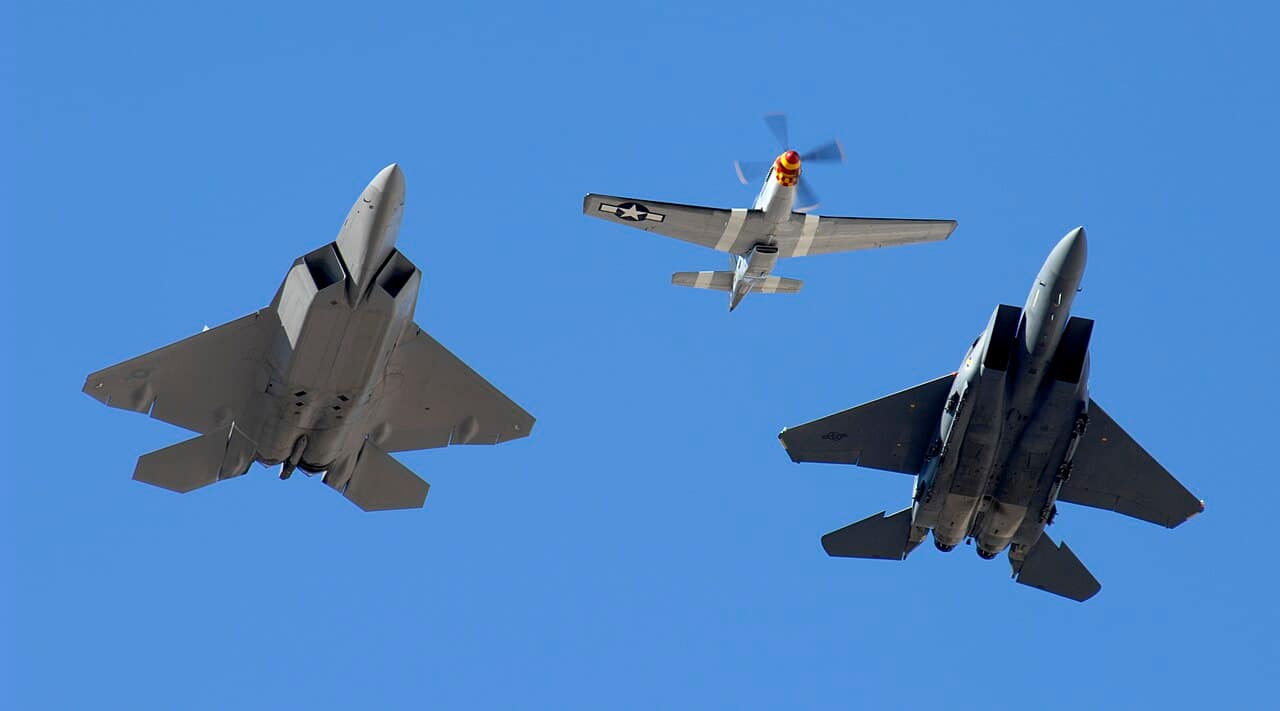
Here is a riddle the Pentagon wrote by accident and never quite solved. In December 2005 the U.S. Air Force fielded the most fearsome air superiority fighter ever built — the Lockheed Martin F-22 Raptor — expressly to retire the aging McDonnell Douglas F-15 Eagle. Two decades on, the Raptor line is cold, scrapped, and effectively unrevivable, while Boeing is still bolting together brand-new Eagles in St. Louis and the Air Force keeps signing the checks.
L'aereo che doveva essere sostituito è sopravvissuto al suo sostituto sulla linea di assemblaggio. Non è un errore di battitura. È una questione di approvvigionamento.
È uno dei risultati più strani nella lunga storia di le competizioni di volo e i programmi che hanno plasmato la potenza aerea statunitense, and it happened not because the F-15 out-fought the F-22 — it never could — but because of money, politics, and a set of 1990s assumptions that aged like milk. We have full deep-dives on each jet if you want to go further, but the short version is a lesson in how a superior aircraft can lose the war that actually matters: the budget war.
• F-15 Eagle first flight: 1972 — still in production more than 50 years later
• F-22 Raptor: first production flight 7 September 1997, entered service December 2005
• Raptors planned: roughly 750 → scaled to 381 → cut to 195 built (187 operational)
• F-22 production ended: 2009 (final jet delivered 2012)
• F-22 exports: barred by U.S. law since 1998
• F-15EX Eagle II: maiden flight 2021, in service 2024, FY2027 plan roughly 267 jets
Il Raptor è stato progettato per seppellire l'Aquila
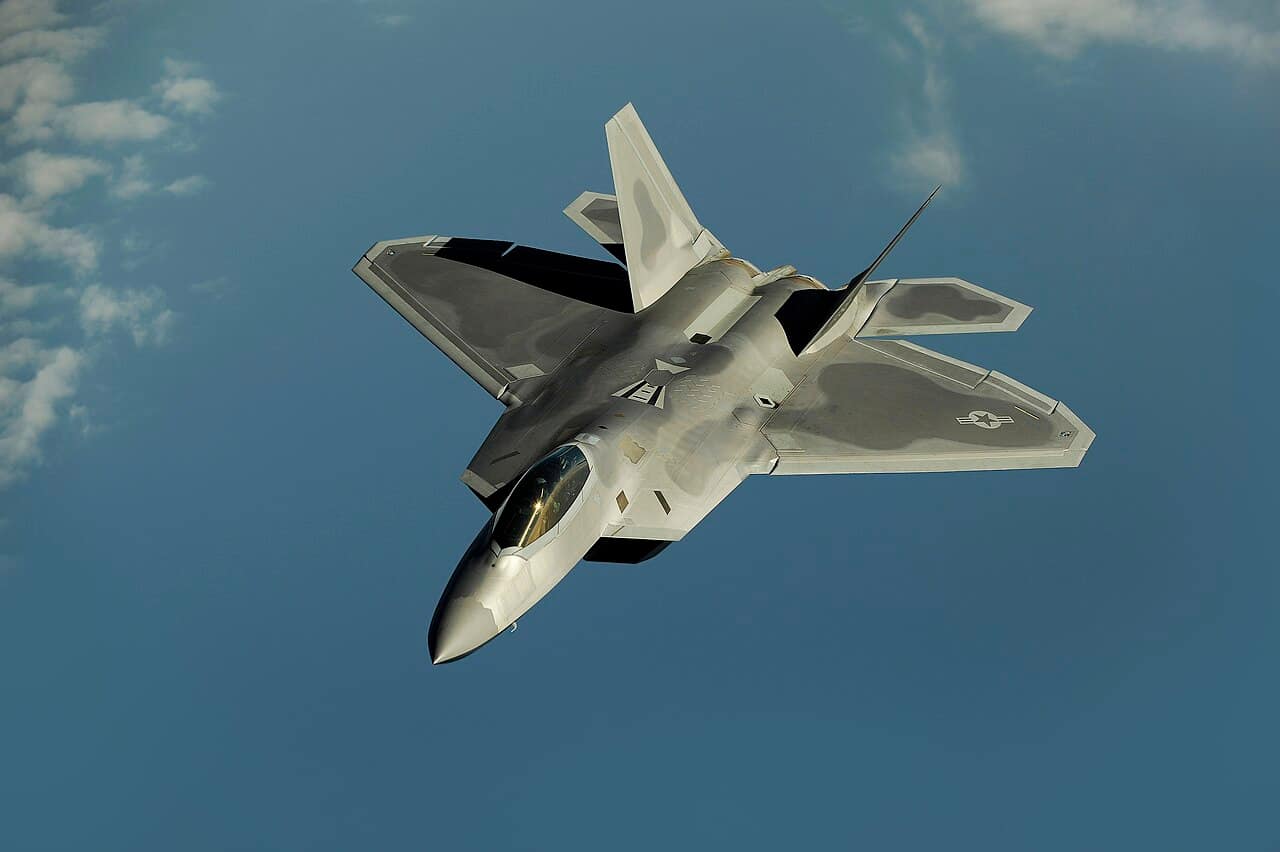
Let us be clear about the original intent. The F-22 grew out of the Advanced Tactical Fighter program the Air Force launched in 1981 with one job: replace the F-15 and F-16 before a new generation of Soviet fighters and surface-to-air missiles rendered them obsolete. Lockheed’s YF-22 beat Northrop’s YF-23 in the ATF competition, the winner was announced in April 1991, and the production Raptor first flew on 7 September 1997. When it formally entered service in December 2005, it did exactly what it was built to do — it began pushing the F-15 out of the Air Force’s frontline air superiority squadrons.
The plan was ambitious and, frankly, magnificent. The Air Force originally wanted around 750 of them to re-equip its entire Eagle fleet. Stealth, supercruise, thrust vectoring, sensor fusion no adversary could match — the Raptor was not an upgrade on the Eagle so much as a different species. On paper, the F-15 was finished. On paper.
Come 750 è diventato 187
Poi la realtà, e i contabili, fecero la loro comparsa. Il sogno di 750 jet fu ridimensionato a 381, e nel 2009 il Segretario alla Difesa Robert Gates chiuse definitivamente la flotta a 187 velivoli operativi. La motivazione era brutalmente dettata dal contesto: il Raptor era incredibilmente costoso, la minaccia di pari livello della Guerra Fredda che era stato progettato per sconfiggere era apparentemente svanita, e le guerre che l'America stava effettivamente combattendo erano operazioni di controinsurrezione in cui un intercettore stealth supersonico era di utilità limitata. Perché continuare a comprare proiettili d'argento quando nessuno riusciva a vedere il lupo mannaro?
The numbers backed the axe. By the time the line wound down, the total F-22 program cost was estimated at roughly $67 billion — on the order of $360 million per aircraft when you spread development across the fleet. Meanwhile the cheaper, more flexible, exportable F-35 Lightning II was coming up fast to become the mass-produced stealth fighter the F-22 never would be. Just 195 Raptors were ever built; the last was delivered in 2012. It remains the finest air superiority fighter on Earth and one of the rarest.
La linea che non puoi riattivare
Here is where the paradox locks into place. There was one other quiet decision that doomed the Raptor to scarcity: it was never allowed out of the house. U.S. law has prohibited the export of the F-22 to any foreign government since 1998, to protect its stealth secrets. No allied orders, no economies of scale, no export line humming along to keep the tooling warm. Just one closed production run for one customer — and when that customer stopped buying, the whole enterprise simply switched off.
And you cannot un-switch it cheaply. When Congress asked the Air Force in 2016 to price a restart, the 2017 answer was sobering: roughly $50 billion to build 194 more Raptors, at something like $206–216 million each, including nearly $10 billion just to stand the line back up. The tooling had been scrapped or repurposed, the specialized supplier base scattered, the clearances lapsed. The Air Force declared it cost-prohibitive and walked away. The Raptor fleet is frozen at around 186 airframes, and that is where it will stay.
Perché l'aquila si rifiutò semplicemente di morire
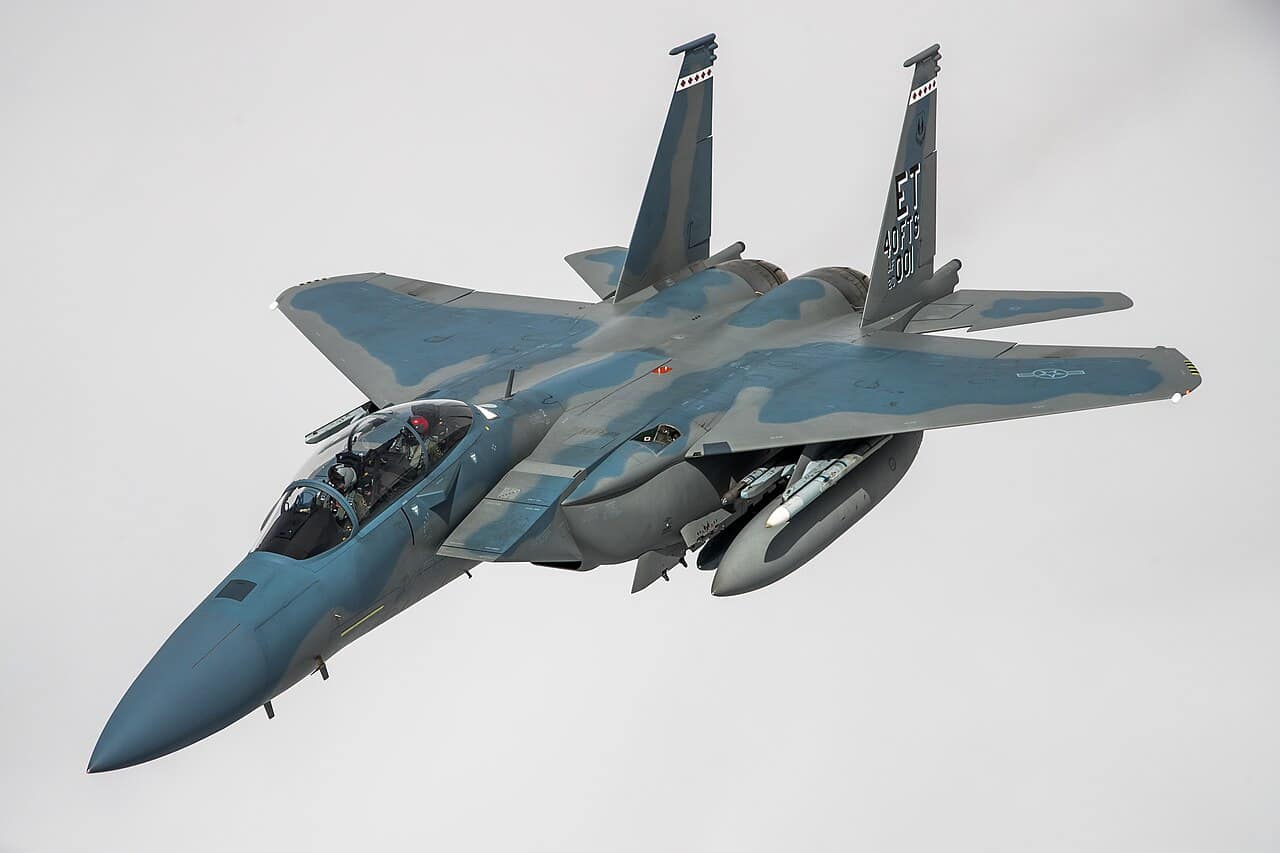
Now flip the coin. While the Raptor was being capped and its line dismantled, the humble F-15 — a design that first flew in 1972 — kept quietly doing the one thing the Raptor could not: it kept selling. Boeing never let the Eagle line go cold, because export customers kept it alive. Saudi Arabia bought the advanced F-15SA, which first flew in 2013; Qatar followed with the F-15QA. That living, breathing production line is precisely what made the next trick possible.
Facing a looming fighter shortfall as its 1980s F-15C/Ds cracked from structural fatigue — and with restarting the Raptor off the table — the Air Force did the pragmatic thing. It ordered a brand-new Eagle. The F-15EX Eagle II, built on that same hot export line to keep costs and delays down, made its maiden flight in February 2021, was christened Eagle II that April, and entered operational service in July 2024. It is not stealthy and nobody pretends otherwise. But it is fast, it carries an enormous load of weapons, it is comparatively affordable, and — crucially — you are allowed to sell it.
The clincher arrived in the budget books. The Air Force’s planned Eagle II fleet grew to 129 jets in the FY2026 request, and then the FY2027 plan roughly doubled it to around 267 aircraft. Read that again. The service is now planning to buy more new F-15s than it ever managed to buy F-22s — of the very aircraft the Raptor was created to render extinct.
La morale della storia
None of this means the F-15 won on merit. Put an EX and a Raptor in the same sky in a fair fight and the smart money never leaves the stealth jet. The F-15EX is a complement to the F-22 and F-35, not their equal — a shooter and a missile truck that lets the stealth fighters do the jobs only they can do.
Ma alle linee di produzione non interessano i combattimenti aerei. A loro interessano i costi, l'esportabilità e la volontà politica, e su tutti e tre i fronti l'Eagle ha dominato incontrastato. Il Raptor era troppo costoso, troppo segreto per essere venduto e troppo perfettamente ottimizzato per una minaccia che negli anni '90 era stata dichiarata superata. L'Eagle era sufficientemente economico, flessibile e accessibile da continuare a trovare acquirenti per mezzo secolo. Così, il jet costruito per essere ritirato esce nuovo di zecca dalla linea di produzione negli anni 2020, mentre il jet costruito per sostituirlo è un museo chiuso con 186 reperti. Nelle grandi competizioni che plasmano la potenza aerea, non sempre vince l'aereo migliore. A volte vince quello che si è ancora autorizzati a costruire.
Fonti: Wikipedia (Lockheed Martin F-22 Raptor; Boeing F-15EX Eagle II); Air & Space Forces Magazine; The War Zone; Military.com; Rapporto del 2017 dell'aeronautica statunitense al Congresso sulla ripresa della produzione dell'F-22.
Domande correlate
Perché l'F-15 è ancora in produzione quando l'F-22, che lo ha sostituito, non lo è più?
L'F-22 Raptor è stato schierato nel 2005 per mandare in pensione l'F-15 Eagle, ma la linea Raptor è stata chiusa nel 2009 mentre Boeing continua a costruire nuovi F-15 a St. Louis. Il motivo è legato a denaro, politica ed esportabilità piuttosto che al merito nei combattimenti aerei: L'F-22 era troppo costoso e legalmente non esportabile., mentre l'F-15, più economico e vendibile, è durato silenziosamente più a lungo.
Quanti F-22 Raptor sono stati costruiti?
Sono stati costruiti solo 195 esemplari di F-22 Raptor, di cui 187 operativi. Il programma prevedeva inizialmente la consegna di circa 750 velivoli, ma il numero fu ridotto a 381 e successivamente limitato a 187 Raptor operativi dal Segretario alla Difesa Robert Gates nel 2009. La produzione terminò nello stesso anno, con la consegna dell'ultimo esemplare nel 2012.
Gli Stati Uniti possono riavviare la produzione dell'F-22 Raptor?
In pratica no. Quando il Congresso chiese all'Aeronautica militare di stimare il costo per la ripresa della produzione, la stima del 2017 era di circa 50 miliardi di dollari per costruire altri 194 Raptor, a un costo di circa 206-216 milioni di dollari ciascuno, inclusi quasi 10 miliardi solo per riaprire la linea di produzione. Gli stampi erano stati dismessi e i fornitori sparsi, quindi l'Aeronautica militare definì l'operazione proibitiva in termini di costi.
Perché l'F-22 Raptor non può essere esportato?
Dal 1998, l'esportazione dell'F-22 è vietata dalla legge statunitense per proteggere la sua tecnologia stealth. Ciò significava nessun ordine dagli alleati, nessuna economia di scala e nessuna linea di esportazione per mantenere attivi gli utensili. Quando gli Stati Uniti hanno smesso di acquistare, l'intera impresa si è fermata, una ragione fondamentale per cui l'esportazione F-15 Eagle è sopravvissuto.
Cos'è l'F-15EX Eagle II?
L'F-15EX Eagle II è la versione più recente dell'F-15, un caccia di quarta generazione potenziato e pesantemente modernizzato, costruito da Boeing. Ha effettuato il suo primo volo nel 2021 ed è entrato in servizio nel 2024. Secondo il piano per l'anno fiscale 2027, l'aeronautica militare statunitense intende acquistarne circa 267, un numero di nuovi Eagle superiore a quello dei Raptor mai acquistati.
L'F-15EX è altrettanto capace dell'F-22 in un combattimento aereo ravvicinato?
No. In uno scontro leale, l'F-22 Raptor furtivo batte l'F-15EX; l'Eagle II è un complemento, non un pari. Serve come tiratore e "camion missilistico" trasportando carichi pesanti di armi, liberando caccia stealth come l' Raptor e F-35 solo per le missioni possono volare.


0 Commenti