
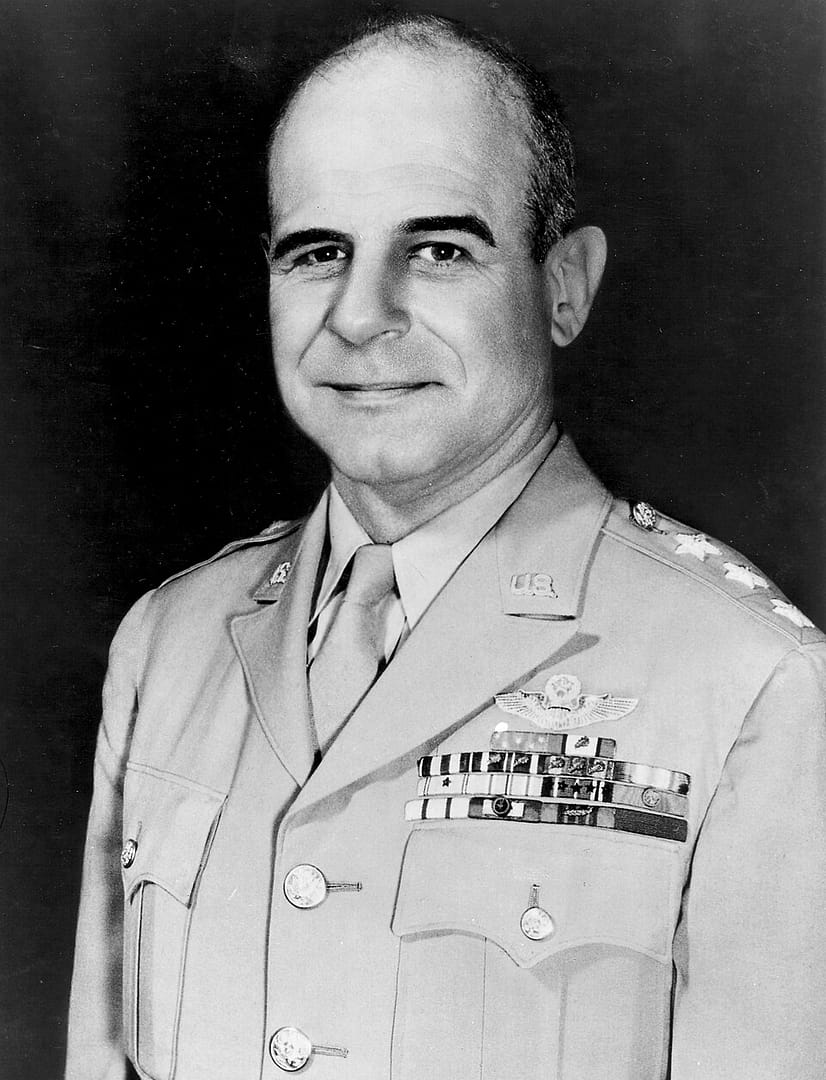
James Harold Doolittle flew two flights that changed the world — and they could scarcely have been more different. The first was on 24 September 1929, at Mitchel Field, Long Island, when he climbed into a Consolidated NY-2 biplane with a fabric hood pulled over the cockpit so he couldn't see out, and flew a complete circuit using only his instruments. He was the first human being to take off, fly, and land without any external visual reference. He called it "blind flying." We call it instrument flight rules — the system that makes commercial aviation possible in cloud, rain, and darkness.
Quick Facts
| Nationality | American 🇺🇸 |
| Achievement | First to fly blind (instruments only, 1929); led Doolittle Raid — first air attack on Japan |
| Doolittle Raid | 18 Apr 1942 — 16 B-25 Mitchells launched from USS Hornet, bombed Tokyo |
| Awards | Medal of Honor, Distinguished Service Medal, Silver Star, DFC, and many more |
| Born / Died | 14 Dec 1896 – 27 Sep 1993 (age 96) |
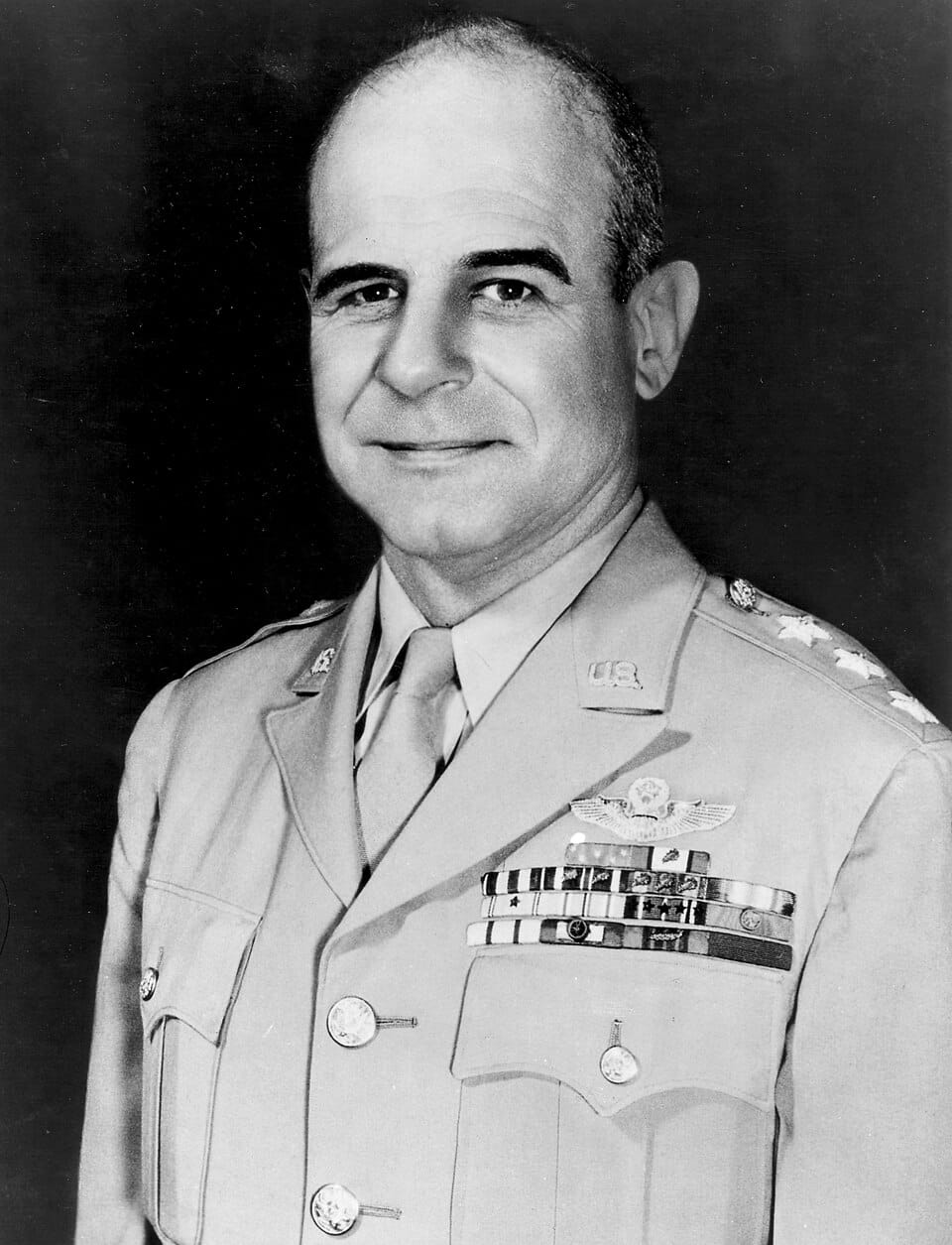
The second flight was on 18 April 1942. Four months after Pearl Harbor, with America reeling and Japan seemingly invincible, Doolittle led 16 North American B-25 Mitchell bombers off the deck of the USS Hornet — a feat that should have been impossible, because the B-25 had never been designed or tested for carrier operations. The bombers were loaded so heavily with fuel and bombs that they barely had enough deck to get airborne. Doolittle was first off. His B-25 lifted free of the carrier deck with little to spare and banked east toward Japan.
The mission was suicide in almost every respect. The bombers could not return to the carrier — they didn't have enough fuel. They planned to bomb Tokyo and fly on to China. Most of the crews crash-landed or bailed out over Chinese territory. Three airmen were killed. Eight were captured by Japan; three were executed. Doolittle himself crash-landed in a rice paddy in China. The material damage to Japan was minimal. The psychological damage was enormous: for the first time, Japanese citizens had heard bombs falling on their capital. And across America, a stunned, grieving nation suddenly had a reason to cheer.
The Scientist and the Warrior
What makes Doolittle remarkable is not just his courage but his intellect. He held a doctorate in aeronautics from MIT — one of the first ever awarded. His 1929 blind flight was the product of years of research into gyroscopes, altimeters, and artificial horizons. He helped develop the first practical directional gyroscope and artificial horizon, instruments that are still found in every aircraft cockpit today. He understood the physics of flight better than almost anyone of his era, and he could also fly better than almost anyone of his era.
Every crewman who flew the Tokyo Raid was a volunteer — a fact Doolittle credited for the success of the mission for the rest of his life.
— On the crews of the Tokyo Raid, 1942Doolittle received the Medal of Honor from President Roosevelt, was promoted from Lieutenant Colonel to Brigadier General in a single leap, and went on to command the Eighth Air Force over Europe — the largest air armada ever assembled. He died in 1993, aged 96, having seen aviation grow from the Wright Flyer to the Space Shuttle. He was, as his biographers have written, the complete airman: scholar, warrior, record-breaker, and commander. There may never be another like him.
Watch: Documentary
Related Questions
Who was Jimmy Doolittle?
James "Jimmy" Doolittle was a pioneering American aviator who made the first blind, instrument-only flight in 1929 and later led the 1942 Doolittle Raid, the first air attack on Japan. He earned the Medal of Honor and rose to the rank of lieutenant general.
What was the Doolittle Raid?
The Doolittle Raid was a daring American attack on 18 April 1942, when 16 B-25 Mitchell bombers launched from the carrier USS Hornet and struck Tokyo and other Japanese cities. It was the first air attack on the Japanese home islands and a major morale boost early in World War II.
What is blind flying, and who pioneered it?
Blind flying, now called instrument flight, means controlling an aircraft using only cockpit instruments with no outside visual reference. On 24 September 1929 Doolittle became the first person to take off, fly a circuit, and land entirely on instruments, with a hood over his cockpit.
Why is instrument flight important?
Instrument flight is the system that lets aircraft operate safely in cloud, rain, and darkness. By proving in 1929 that a pilot could fly with no view outside, Doolittle laid the groundwork for the all-weather operations that make modern commercial aviation possible.
How was Jimmy Doolittle honored?
Doolittle received the Medal of Honor for leading the 1942 raid on Tokyo, along with the Distinguished Service Medal, Silver Star, Distinguished Flying Cross and many other decorations. Born in 1896, he lived to age 96, dying in 1993.


0 Comments