
Imagine an aircraft with no cockpit as you would recognise it — no seat, no upright pilot peering over a nose. Instead, the airman lies flat on his stomach inside a glazed cone at the very front of what is, essentially, a flying engine. This was not science fiction. It was French, it was real, and it flew.
The Leduc ramjet aircraft are among the strangest and most elegant dead ends in all of aviation — and for a few years in the 1950s, they looked like the future.
Quick Facts
- Aircraft: the Leduc ramjet series (0.10, 0.21, 0.22) — France, late 1940s to 1950s
- Designer: René Leduc, a ramjet pioneer who patented the idea in the 1930s
- The quirk: the fuselage was the engine — the pilot lay prone in a glazed nose cone inside a flying ramjet tube
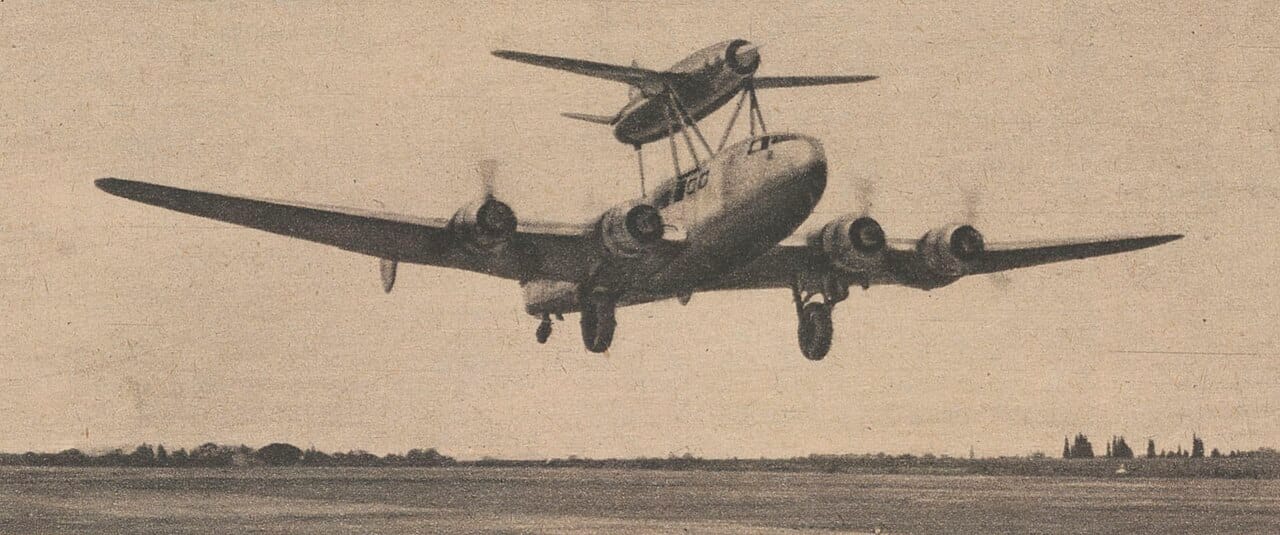
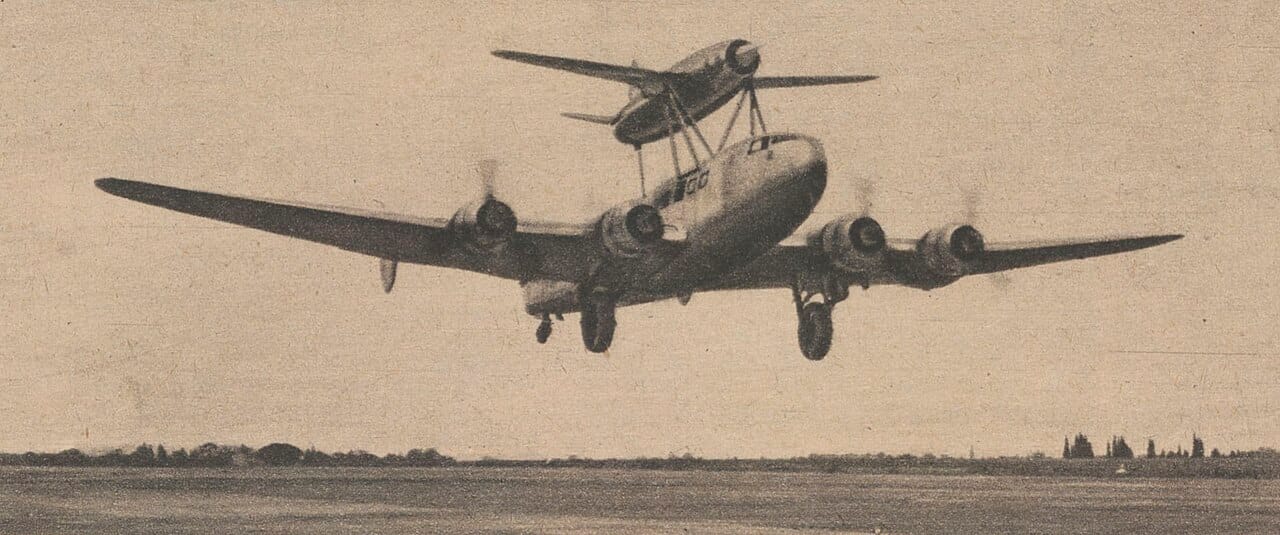
- The catch: a ramjet makes no thrust at rest, so the early Leducs were carried aloft atop a Languedoc airliner and air-launched
- First powered flight: Leduc 0.10, April 21, 1949, over Toulouse — about 680 km/h on half power
An Engine With Almost No Moving Parts
René Leduc was obsessed with the ramjet, a beautifully simple form of jet propulsion. A ramjet has no compressor and no turbine; it simply uses its own forward speed to ram air into a tube, where fuel is added and burned. Fewer moving parts, enormous potential speed. There is just one problem: a ramjet produces no thrust at all when standing still. It has to already be moving fast before it will work.
Leduc’s solution was audacious. He turned the whole aircraft into a ramjet — and got it up to speed by bolting it to the top of an airliner.
The Pilot Inside the Engine
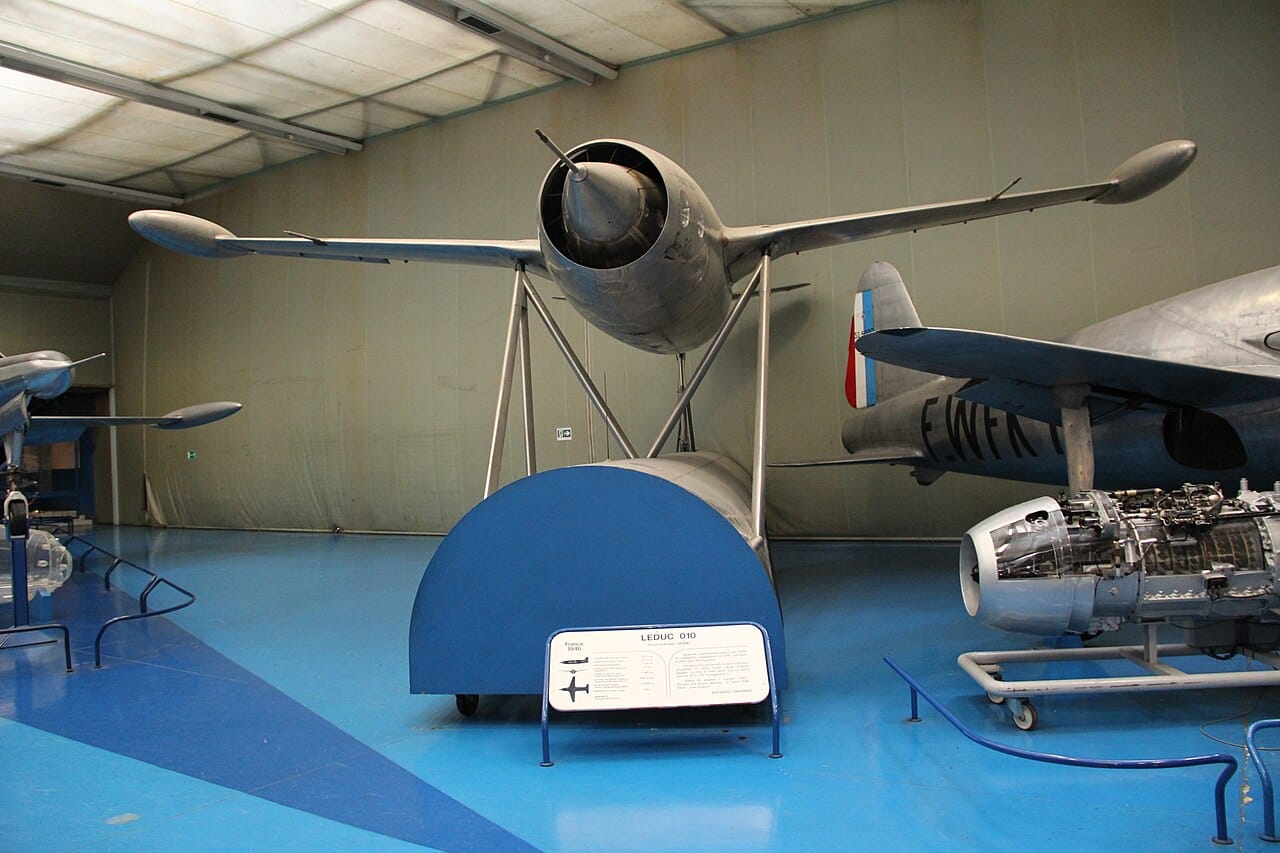
Because the entire fuselage was the engine, there was nowhere conventional to put the pilot. So Leduc placed him in the dead centre of the air intake, reclining face-down in a glazed nose pod, peering out through the glass as air rushed past on its way to the flame. Designed in 1938 and built semi-secretly during the German occupation, the Leduc 0.10 was finally completed in 1947. Its first powered flight came on April 21, 1949, released from atop a Languedoc over Toulouse, where it hit around 680 km/h on just half power.
So Close to Mach 2
The follow-on 0.21 refined the concept, and the final 0.22 of 1956 was the most ambitious of all: it added a separate turbojet so it could take off from a runway under its own power, with the ramjet reserved for high-speed dash. The goal was a Mach 2 interceptor. It was a genuine contender — until 1958, when the French Air Force chose a more conventional delta-winged fighter, the Dassault Mirage III, and the Leduc program was cancelled with flight testing still under way.
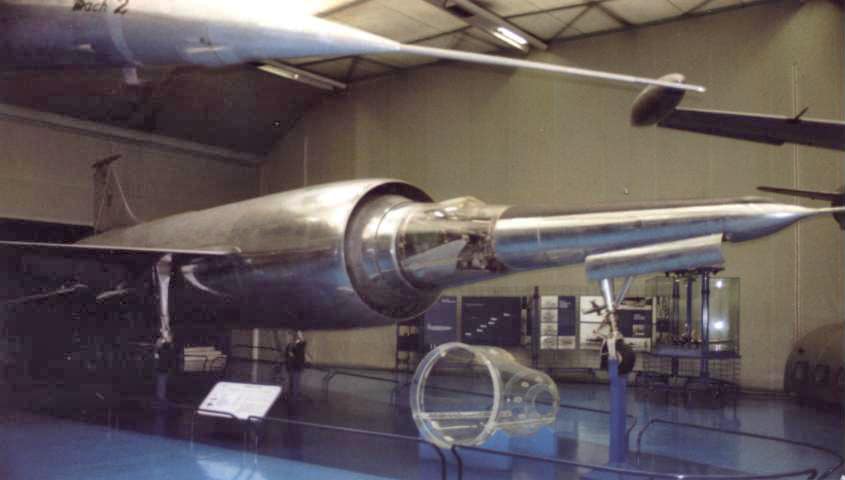
The ramjet itself never went away — it powers missiles to this day. But Leduc’s flying engines, with their prone pilots and piggyback launches, remain one of aviation’s most wonderful what-ifs, now resting quietly in a French museum.
Sources: Wikipedia; PlaneHistoria; Musée de l’Air et de l’Espace; Secret Projects.

 English
0 Comments