
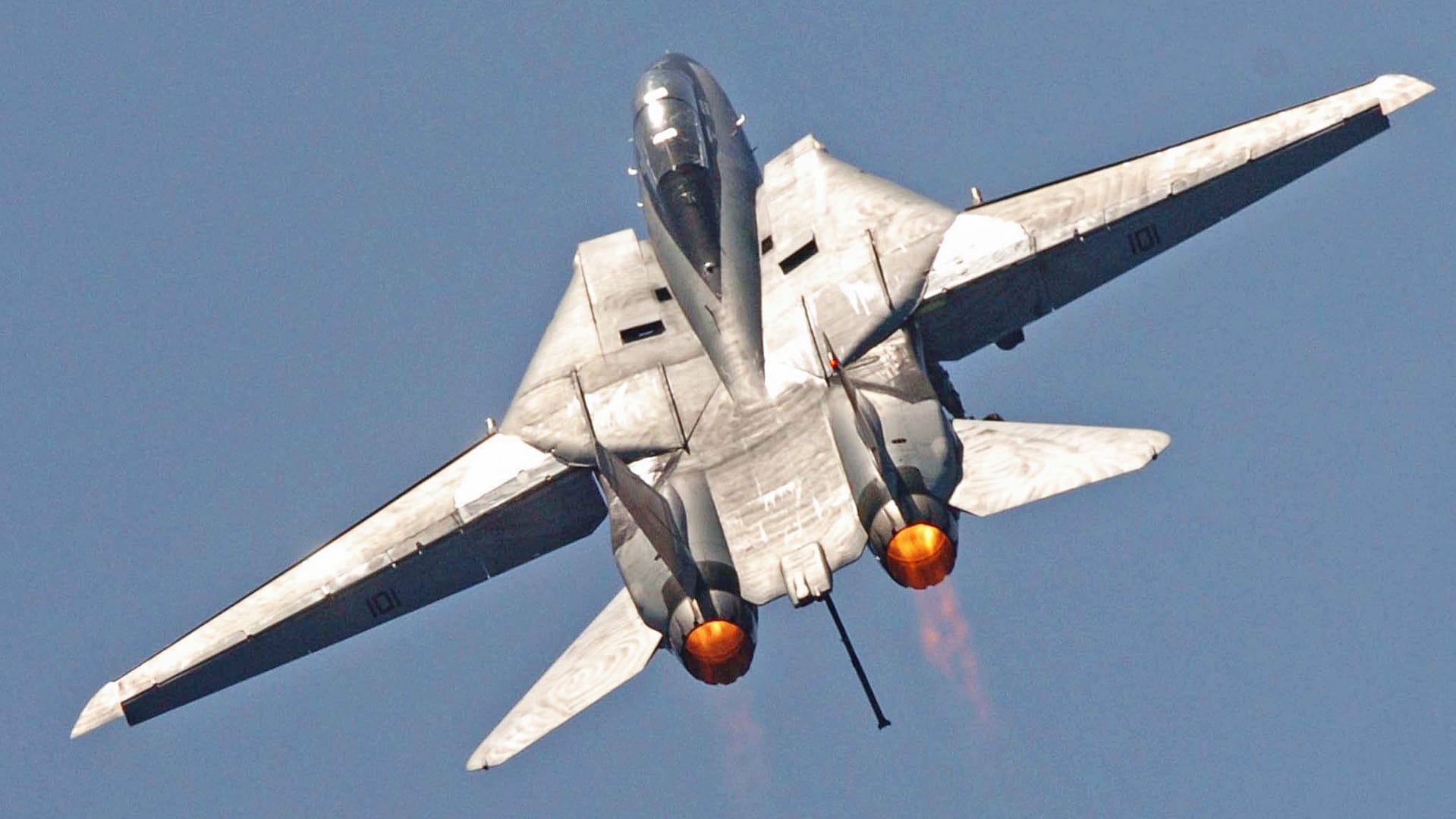
Quick Facts
- U.S. Senate passed the Maverick Act unanimously on April 28, 2026
- Bill authorises transfer of the Navy's last 3 F-14D Tomcats (BuNos 164341, 164602, 159437) to the U.S. Space and Rocket Center, Huntsville, Alabama
- Aircraft may be restored to airworthy status for airshows and commemorative events
- Introduced by Senators Tim Sheehy (R-MT) and Mark Kelly (D-AZ); House companion bill by Rep. Abraham Hamadeh (R-AZ)
- Bill still requires House vote before becoming law
- Transfer costs zero dollars to the U.S. government — all restoration and operating costs fall to the Space and Rocket Center Commission
- Iran is the only other country ever to operate the F-14 — and the reason most U.S. Tomcats were destroyed rather than preserved
What the Maverick Act Actually Does
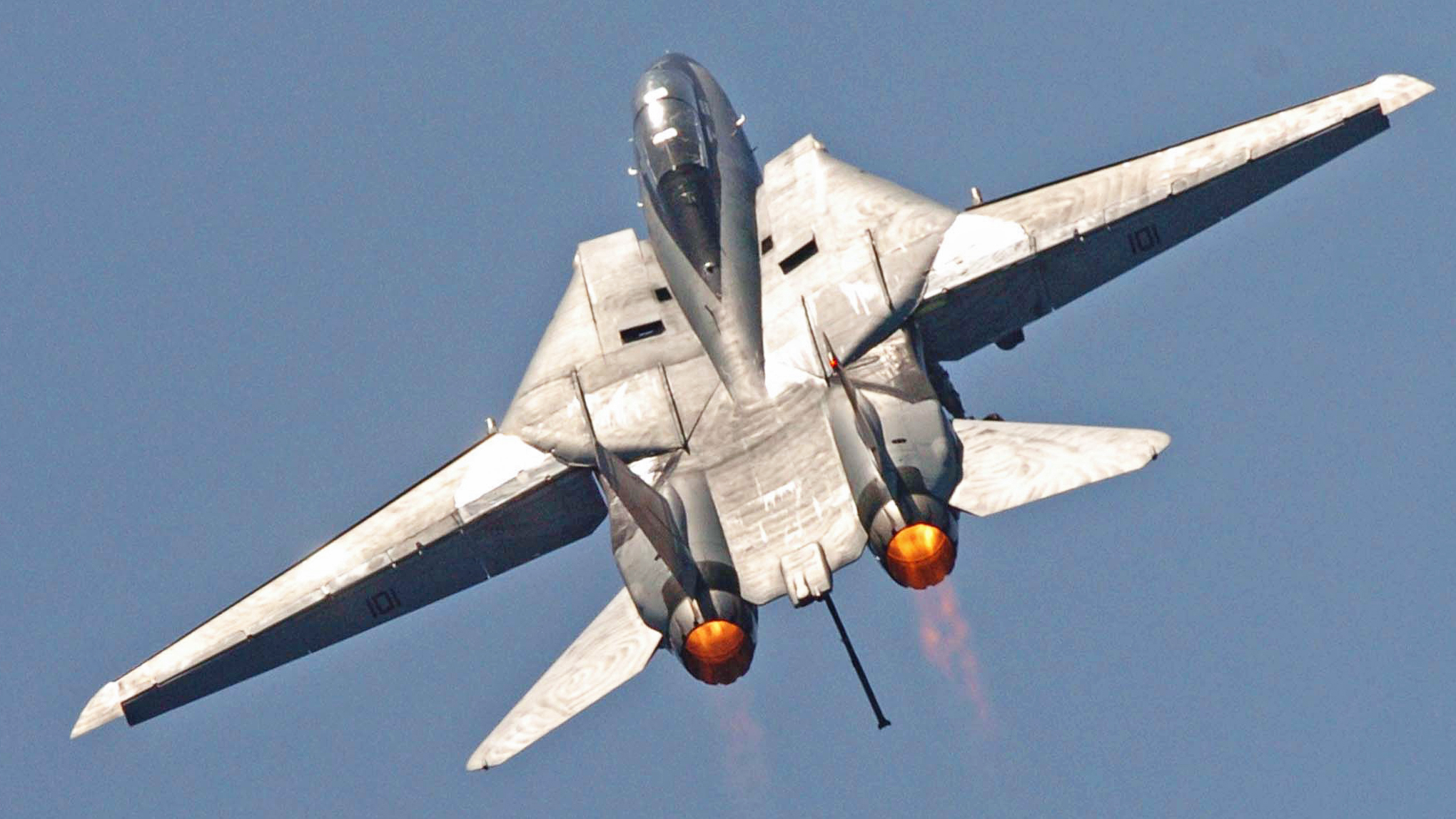
The legislation is precise and deliberately narrow. The three aircraft are identified by their Bureau Numbers — 164341, 164602, and 159437 — and all are currently in storage at the famous "Boneyard" at Davis-Monthan Air Force Base in Arizona, where retired military aircraft sit out the decades in the mercifully dry desert air. The bill requires that the jets be fully demilitarised before transfer: no munitions capability, no combat systems of any kind. The Secretary of the Navy is not required to restore or repair the aircraft before handing them over, but must provide all available maintenance and operations manuals along with any existing excess spare parts. That last clause is where things get genuinely exciting. The bill specifically states that the Secretary "shall provide excess spare parts to make one of the F-14D aircraft flyable or able to complete a static display" — with the important caveat that all parts must come from existing Navy stock, with nothing newly procured on the government's account. In other words, Congress has cracked open a door that has been welded shut for two decades. Whether anyone can actually walk through it is a separate and formidable question. The Space and Rocket Center Commission, which governs what is sometimes called "Earth's largest space museum," bears all costs associated with the transfer, maintenance, and operation. The bill also permits the Commission to contract with qualified nonprofit organisations to assist with restoration — a model similar to the Collings Foundation's successful return of the F-4D Phantom to flying condition, currently the only such example airworthy in the United States.
The Iran Problem — Why the Tomcats Were Destroyed
To understand why this bill is remarkable, you need to understand why it was necessary in the first place. When the Shah of Iran signed a contract for 80 F-14A Tomcats in 1974, the aircraft was the most advanced carrier-based fighter in the world. Iran took delivery of 79 examples, along with the AIM-54 Phoenix missile — a weapon capable of targeting multiple aircraft simultaneously at ranges exceeding 100 miles. Then, in 1979, the Shah fell. The Islamic Revolution brought in a government that was, to put it diplomatically, not aligned with American interests. Iran's new air force found itself flying American hardware with no American support. Spare parts dried up. Pilots who knew the aircraft died or fled. Iran tried to smuggle components through front companies in Europe and Asia — and, disturbingly, sometimes succeeded. After the U.S. Navy retired its last Tomcats in September 2006, Congress moved quickly. The Fiscal Year 2008 National Defence Authorization Act specifically prohibited the DoD from selling any F-14 fighters or parts, or granting any export licence. Going further, the Pentagon paid a contractor nearly one million dollars to shred Boneyard F-14s into two-foot-square pieces, then comb through the scrap to ensure nothing useful remained. It was not preservation. It was deliberate, methodical destruction, carried out because the aircraft was too operationally valuable — and too dangerous — to leave intact. In a remarkable coda to this story, NPR reported in March 2026 that Iran's last operational Tomcats — perhaps ten remaining airframes — may have been destroyed in joint U.S. and Israeli strikes on the 8th Tactical Air Base in Isfahan since the outbreak of the current conflict in February. Satellite imagery subsequently confirmed the destruction of what appear to be F-14 airframes on the ramp. If confirmed, America's long-standing reason for destroying its own aircraft may have finally become moot.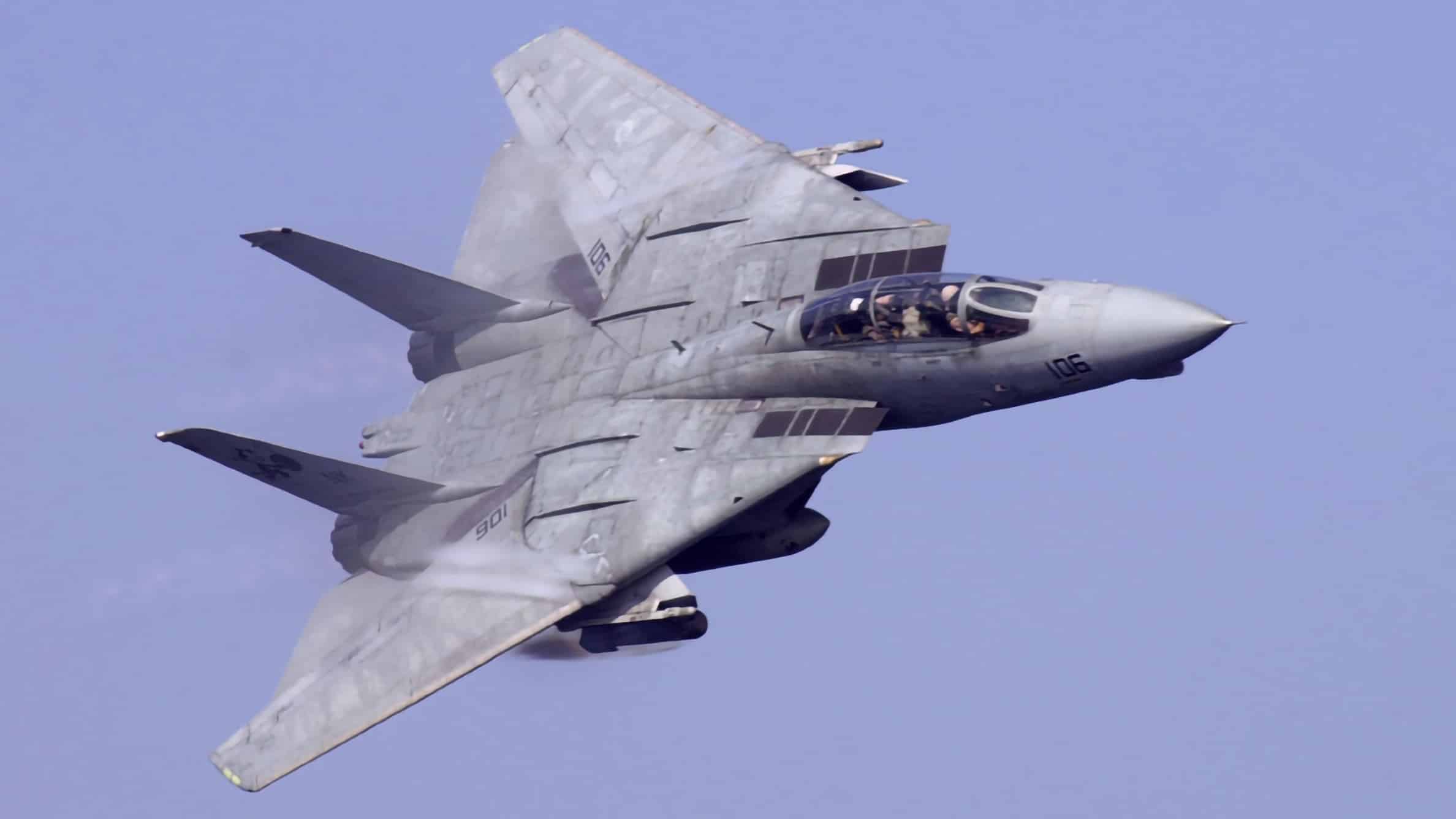
The People Behind the Bill
The bipartisan nature of the Maverick Act is itself worth noting. Senator Tim Sheehy, the bill's primary Senate sponsor, is a U.S. Naval Academy graduate and former Navy SEAL — he has skin in the game that goes beyond nostalgia. Senator Mark Kelly, his Democratic co-sponsor, is a retired naval aviator who flew A-6 Intruders off carriers and later became a NASA astronaut. He knows what it means to be strapped to a catapult on a flight deck. In the House, Representative Abe Hamadeh, an Army Reserve officer from Arizona, introduced the companion legislation on April 16 with nine co-sponsors, including one Democrat. The Senate passed this unanimously. Not with a narrow majority, not grudgingly across the aisle — unanimously. Every single senator, regardless of party, chose to put their name behind the idea of this aircraft returning to American skies. That tells you something genuine about the F-14's place in the national consciousness. This is an aircraft that recruited more Navy aviators through a single 1986 film than any peacetime recruitment campaign in history. Forty years after Top Gun hit cinemas, the mere possibility of one flying again is still enough to unite a hundred senators for five minutes.Can It Actually Fly? The Hard Truth
Here is where enthusiasm must be tempered with engineering reality. Getting an F-14D back in the air after twenty years in a desert is not a small undertaking. It is, to borrow a phrase from project management, a very large undertaking indeed. The three candidate aircraft have been sitting at Davis-Monthan since 2006. Desert storage is kinder than humidity — the dry Arizona air suppresses corrosion — but twenty years is still twenty years. Before a single engine is turned, the airframe and all critical subsystems would need deep structural inspections. Then comes FAA certification, which for a swing-wing supersonic naval fighter with variable-geometry inlets, a complex hydraulic wing-sweep system, and twin afterburning turbofans represents a challenge that would keep a team of engineers busy for years. The Tomcat was notoriously maintenance-intensive even when new, supported by hundreds of trained technicians and a functioning supply chain. None of that infrastructure exists anymore. Spare parts are the single biggest obstacle. The bill restricts the Navy to providing only existing surplus stock — nothing can be newly manufactured on the government's account. Given that most Tomcat parts were either used up or deliberately shredded as part of the Iran denial programme, what remains in Navy inventory is uncertain at best. The F-14's TF30 engines were notoriously temperamental — powerful but prone to compressor stalls at high angle of attack. Finding serviceable examples will not be easy. And then there is the cost of actually operating the aircraft. The War Zone calculates that the F-14's internal fuel load of roughly 2,280 gallons costs approximately $14,500 to fill at current jet fuel prices — and the Tomcat can consume that at a truly impressive rate during high-performance manoeuvres. Operating costs for a type this complex in private hands, without military logistics behind it, are likely to be substantial. If the Space and Rocket Center expects to fly this aircraft regularly, they will need either deep pockets or a very generous sponsor — and probably both. None of this is impossible. The Collings Foundation's flying F-4D Phantom demonstrates that dedicated expertise with adequate funding can do extraordinary things. Jared Isaacman — NASA administrator, astronaut, and the man currently returning a Cold War-era Tornado F2 to flight in his private hangar — has shown that the appetite for this kind of aviation heritage work exists among those with the means to pursue it. The timeline, though, is almost certainly measured in years rather than months. If a restored F-14D appears at an airshow before 2030, it will represent a genuine triumph of determination over logistics.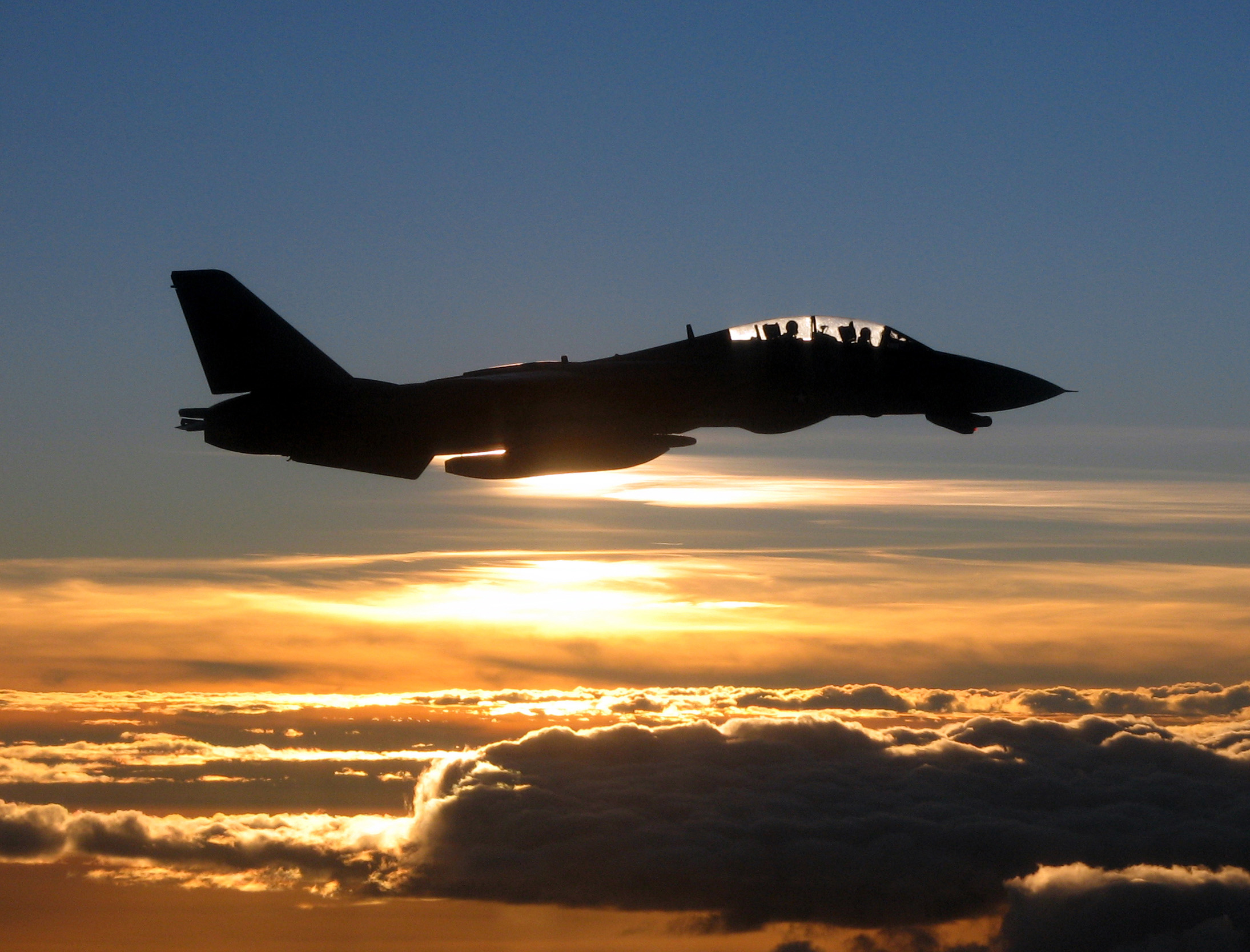
Why This Matters Beyond Nostalgia
It is tempting to frame the Maverick Act purely as Top Gun-era sentiment dressed in legislative language, and there is certainly an element of that at work. The bill is, after all, named after a fictional movie character. But the story of the F-14 is also a genuine piece of American aerospace and naval history that has been, uniquely among major combat aircraft, almost entirely erased from the physical record. Virtually every other significant U.S. fighter of the Cold War era — the F-4 Phantom, the F-100 Super Sabre, the F-86 Sabre — survives in museums, flying collections, and private hands. The F-14, thanks to the Iran situation, was deliberately prevented from following that path. The Maverick Act is an attempt to correct a historical anomaly. For those of us who believe that certain aircraft carry something of the era that built them — that the Tomcat, like the Spitfire or the Mustang before it, is more than metal and fuel — this is genuinely significant news. The House still needs to vote. The Space and Rocket Center still needs to raise the funds. The engineers still need to solve problems that have never been solved before. But for the first time since a Navy contractor fired up his shredder in 2006, the trajectory of the F-14's story is pointing upward. Anytime, baby.Sources: Navy Times • The War Zone • The Aviationist • Congressman Hamadeh's Office • S.4161 — Maverick Act Text, Congress.gov • Task & Purpose • Stars and Stripes
Related Questions
Will the F-14 Tomcat fly again?
It might. On 28 April 2026, the US Senate passed the Maverick Act by unanimous consent, allowing three retired F-14 Tomcats to be transferred to the US Space and Rocket Center in Huntsville, Alabama, and potentially restored to airworthy status for airshows and commemorative events. The bill still needs a House vote, and fans still ask whether you can fly an F-14 today.
When was the F-14 Tomcat retired?
The US Navy retired the Grumman F-14 Tomcat from service in 2006. Famous for its variable-geometry swing wings and twin Pratt & Whitney TF30 engines, the jet had been a carrier mainstay for decades, and after 2006 its distinctive sound survived only in old film and the memories of those who flew it.
What is the Maverick Act?
The Maverick Act is US legislation, passed by the Senate in April 2026, authorizing the transfer of three specific F-14 Tomcats, identified by Bureau Numbers 164341, 164602, and 159437, to the US Space and Rocket Center. It was introduced by Senators Tim Sheehy and Mark Kelly, with a House companion bill by Rep. Abraham Hamadeh.
Why were most F-14 Tomcats destroyed?
Iran is the only other country ever to operate the F-14, having bought them in the 1970s. To prevent spare parts from reaching Iran's still-flying Tomcats, the US deliberately shredded most retired airframes rather than preserving them, which is why so few survive and why this transfer is notable.
Why does the F-14 have swing wings?
The F-14's variable-geometry wings sweep back at high speed for acceleration and forward at low speed for carrier landings, combining fast performance with low-speed control. This swing-wing design defined the Tomcat and other Cold War jets, a story told in the wing that changed shape in mid-air.

Interesting. Looking at the boneyard in Google Earth I see four Tomcats, not three. I wonder why they are only transferring three.