
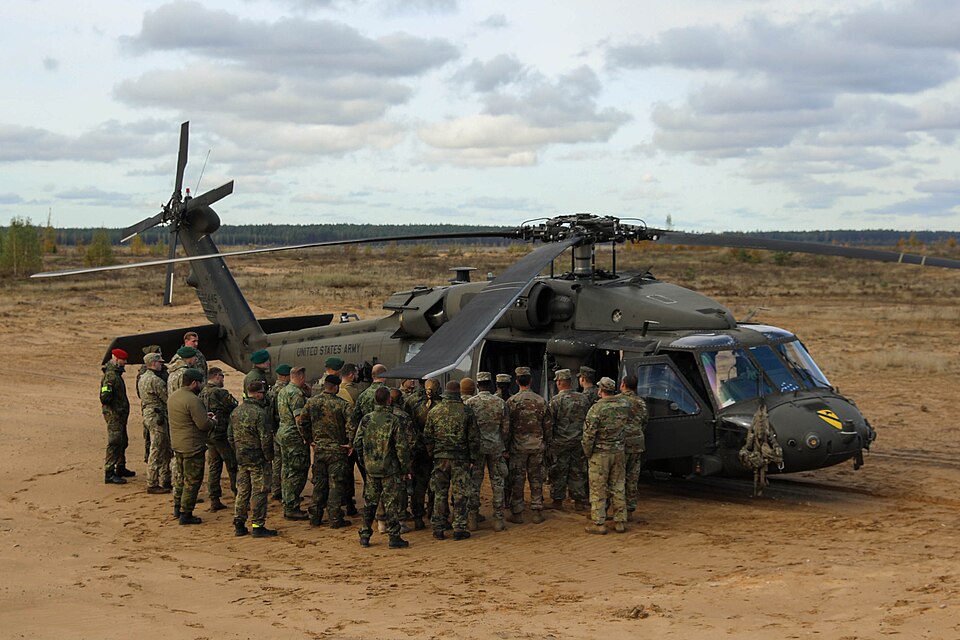
Exercises AURORA 26 (Swedish-led) + DEFENDER-Europe 26 (US-led)
Scale 15,500+ personnel (6,000 US troops) across eight countries
Region Scandinavia, Baltic States, Northern Europe
Timing April 2026
Focus Rapid reinforcement of NATO's northern flank, integrated air defence
Key Air Assets Fighter jets, AWACS, tankers, transport aircraft from 20+ nations
Context Largest NATO spring exercises since the Cold War

Fifteen thousand troops. Eight countries. Two simultaneous exercises running across Scandinavia and Northern Europe. NATO is conducting its largest spring military exercises since the Cold War — and the air component is the tip of the spear.
AURORA 26, led by Sweden, is the bigger of the two. It's testing something specific: how fast can NATO reinforce Finland and the Baltic states if Russia moves? Not in theory. Not on a PowerPoint slide. In practice, with real aircraft flying real missions to real airfields that would be the front line in a conflict. Swedish Gripens are flying alongside American F-16s, German Eurofighters, and Finnish F/A-18 Hornets in the kind of multi-national air operations that only work if you've practised them.
Running simultaneously, DEFENDER-Europe 26 is the US Army's contribution — 6,000 American troops deploying across the continent with integrated air defence as a central pillar. The two exercises overlap deliberately. The message to Moscow is unmistakable: the alliance can move forces to its northern and eastern flanks faster than you think.
Sweden's New Role
Two years ago, Sweden wasn't in NATO. Now it's leading the alliance's largest northern exercise. The transformation is remarkable — and it reflects a fundamental shift in European security architecture. Sweden brings something NATO badly needed: geographic depth in the Nordic region, a sophisticated defence industry (Saab makes the Gripen, the NLAW anti-tank missile, and the Gute II anti-drone system), and a military culture shaped by decades of armed neutrality that took territorial defence seriously even when many NATO members didn't.
AURORA 26 is Sweden's way of proving it belongs. The exercise validates Swedish reinforcement plans — how to receive allied forces on Swedish soil, integrate them with Swedish command structures, and project combined combat power across the Baltic and into the Arctic. For Finnish and Baltic commanders, having Sweden as a NATO ally means their countries are no longer exposed peninsulas. They have strategic depth to their west for the first time.
The air dimension is where Sweden's contribution is most visible. The Gripen was designed specifically for dispersed operations — operating from highway strips, rearming in minutes with conscript ground crews, and surviving in an environment where main airbases have been cratered. That operational concept is exactly what NATO needs in Northern Europe, where fixed bases would be targeted by Russian missiles within the first hours of a conflict.
Integrated Air Defence — The Real Test
The headline exercise scenarios involve air combat and strike missions, but the real test is the unsexy, critical work of integrated air defence. Can a Swedish Gripen pilot flying under Finnish ground control hand off a radar track to a German AWACS, which then cues an American Patriot battery in Estonia? In theory, NATO's interoperability standards make this possible. In practice, it only works if you've done it before under realistic conditions.
AURORA 26 is doing it. Multiple nations' air defence systems are operating under a single command structure, practising the kind of layered defence that would be essential against Russian cruise missiles, ballistic missiles, and manned aircraft. The exercise includes scenarios where communications are degraded — jamming, cyber interference, destruction of relay nodes — forcing operators to fall back on backup procedures and maintain the air picture even when the network is under attack.
For NATO's newest members — Sweden and Finland — these exercises are building the muscle memory that older allies developed over decades. For the alliance as a whole, they're a statement of intent. The northern flank isn't an afterthought anymore. It's a priority — and NATO is practising like it means it.
Sources: NATO Allied Command Operations, Swedish Armed Forces, U.S. European Command, Defence24
Related Questions
What are AURORA 26 and DEFENDER-Europe 26?
AURORA 26 and DEFENDER-Europe 26 are two large simultaneous military exercises held in April 2026. AURORA 26 is a Swedish-led drill, while DEFENDER-Europe 26 is led by the United States. Together they involve more than 15,500 personnel across eight countries and rank as NATO's largest spring exercises since the Cold War.
How big is NATO's 2026 spring exercise?
The combined AURORA 26 and DEFENDER-Europe 26 exercises field over 15,500 personnel, including about 6,000 US troops, across eight countries in Scandinavia, the Baltic states and Northern Europe. Air assets from more than 20 nations take part, including fighter jets, AWACS, tankers and transport aircraft. It is NATO's biggest spring drill since the Cold War.
What is NATO's northern flank?
NATO's northern flank refers to the alliance's territory and approaches across Scandinavia, the Baltic states and the Arctic. With Finland and Sweden now members, defending and reinforcing this area has become a priority. The 2026 spring exercises specifically rehearsed rapid reinforcement and integrated air defence of the northern flank.
What aircraft take part in NATO exercises?
Large NATO exercises rely on a mix of combat and support aircraft: fighter jets for air superiority and strike, AWACS for airborne early warning, aerial tankers for refuelling, and transport aircraft for moving troops and cargo. AURORA 26 and DEFENDER-Europe 26 drew such assets from more than 20 nations.
Why is NATO focused on Scandinavia and the Baltic?
The region sits along NATO's frontier with Russia and includes vulnerable approaches like the Baltic Sea. With Sweden and Finland joining the alliance, NATO has rehearsed reinforcing the area quickly, including drills like Marines landing F-35Bs on a Finnish highway and joint Raptor and F-35 training.
0 Comments