

The Alpha Scramble order reaches the quick reaction alert shelter at Šiauliai before the coffee has cooled. Two Romanian F-16s, fuelled and armed, are airborne over the grey Baltic within minutes, vectored toward an unidentified contact loitering off the Lithuanian coast. When the canopy glints close enough to read the target, it resolves into the long, four-engined silhouette of a Russian Ilyushin Il-20M — a flying ear, bristling with antennas, listening to everything NATO does.
It is a routine the Alliance has run for two decades. What makes this particular scramble worth marking is who answered the call. For the Romanian Air Force, deployed to the northern flank on its own rotation, this was the detachment’s first live intercept of the mission — a milestone for a relatively young F-16 operator now standing watch over skies a thousand kilometres from home.
According to NATO Air Command and reporting by Army Recognition, the Romanian Vipers identified and shadowed the Il-20M before joining French Rafales already tracking a wider package of Russian bomber, fighter and reconnaissance traffic over the Baltic. Two flags, two aircraft types, one tasking.
Quick Facts
- Who: Romanian Air Force F-16 detachment (“Carpathian Vipers”), with French Air and Space Force Rafales
- What: Romania’s first live intercept of its Baltic Air Policing rotation — a Russian Il-20M “Coot-A” spy plane
- Where: International airspace over the Baltic Sea, flown from Šiauliai Air Base, Lithuania
- When: Confirmed by NATO Air Command in April 2026
- Why it matters: An eastern-flank ally is now policing the northern flank — NATO burden-sharing made visible
What Baltic Air Policing Actually Is
Estonia, Latvia and Lithuania regained their independence in 1991 and joined NATO in 2004. None of the three fields a standing fighter force capable of round-the-clock air defence. So from the day they joined, the Alliance has filled the gap collectively: allied nations rotate fighter detachments through bases in the region — principally Šiauliai in Lithuania and Ämari in Estonia — to hold Quick Reaction Alert over Baltic skies.
The mechanism is deliberately simple. When NATO radar picks up an aircraft that files no flight plan, squawks no transponder code, or refuses to talk to air traffic control, the on-call jets launch on an Alpha Scramble to put eyes on it. The fighters identify the contact visually, shadow it through allied airspace boundaries, and peel off once it is clear. It is policing in the literal sense — presence, identification, escort — not combat.
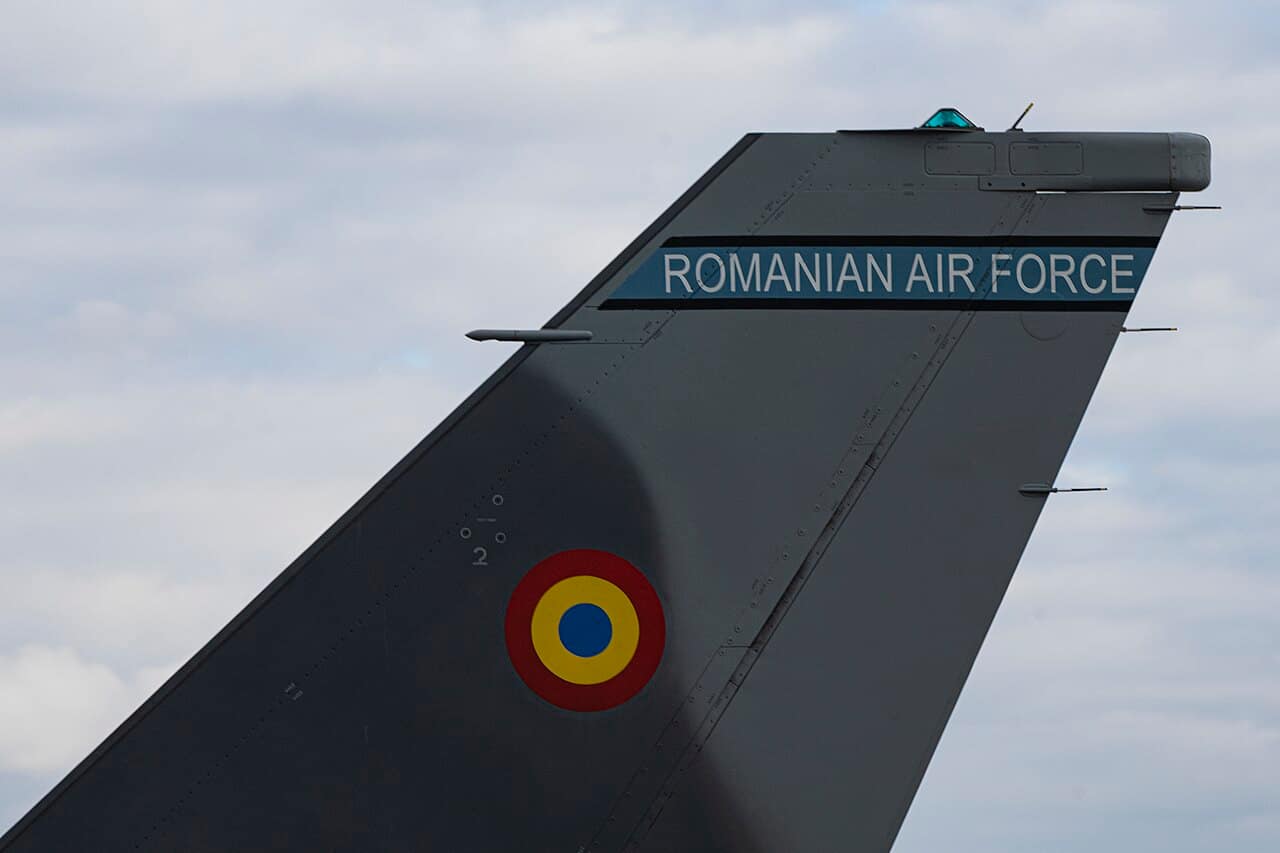
For Romania, the symbolism runs deep. This is a country that sits on NATO’s south-eastern edge, on the Black Sea, where its own QRA jets routinely scramble against Russian activity. To send a detachment north to guard the Baltic states is the Alliance’s founding logic in action: an ally that itself lives under pressure choosing to share another ally’s burden.
The Cat-and-Mouse With Russia’s Listening Plane
The Il-20M “Coot-A” is not a bomber and carries no weapons. It is a signals-intelligence platform, derived from the 1950s-era Il-18 turboprop airliner and rebuilt around a belly canoe fairing and a forest of antennas. Its job is to fly near — never quite into — NATO airspace and harvest electronic intelligence: radar frequencies, radio chatter, and, crucially, how fast and how aggressively allied QRA forces react when they are provoked.
That is why intercepting it matters even though it never crosses a line. Every scramble the Il-20M triggers is itself a data point for Moscow. By meeting the aircraft promptly, professionally and in formation, NATO answers the question the Russians came to ask — we see you, we are here — while giving away as little as possible about the systems behind that response.
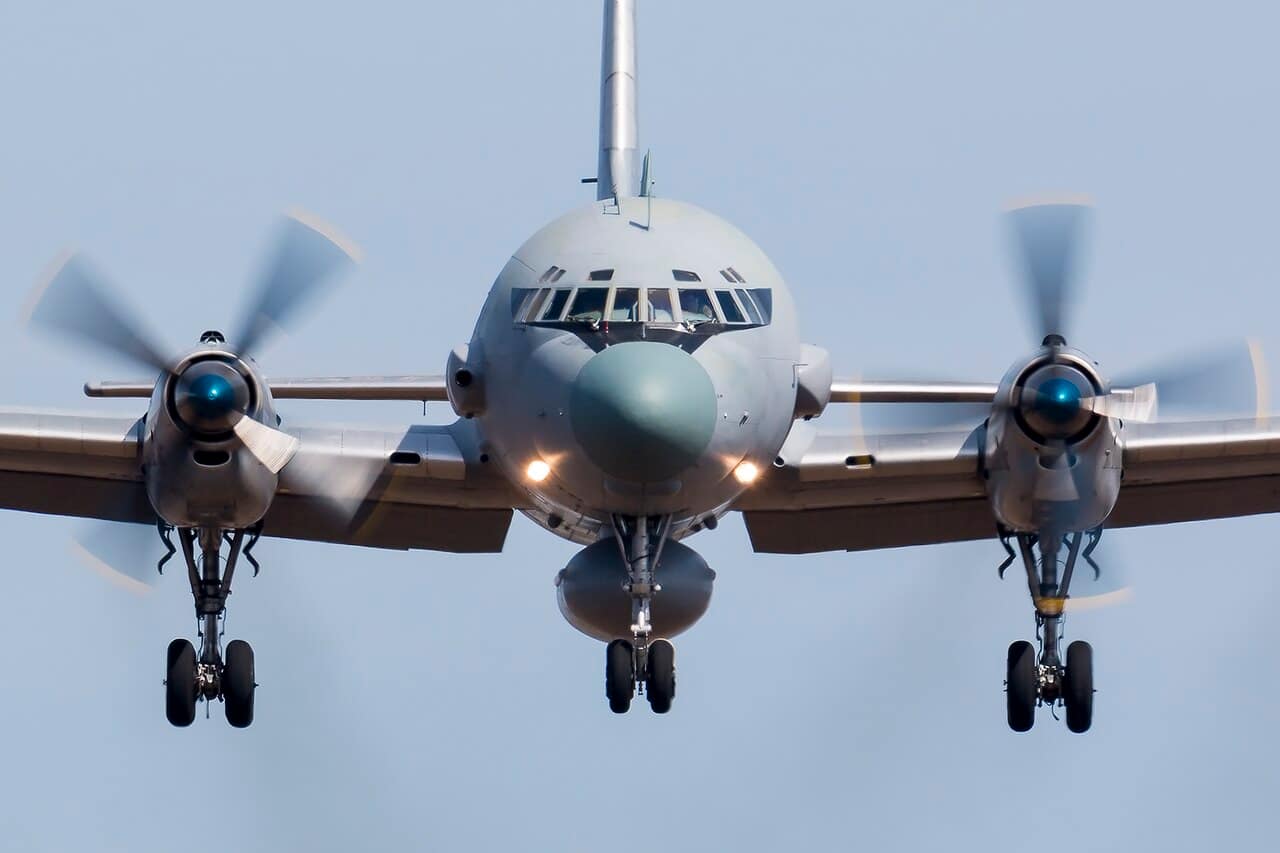
The Il-20 has been a fixture over the Baltic for years, and its appearances spiked through early 2026. The aircraft Romania’s F-16s met was one of a long series — part of a sustained tempo of Russian reconnaissance flights that has kept the QRA detachments at Šiauliai and Ämari busy week after week.
Two Flags Over the Baltic
The Romanian intercept did not happen in isolation. On 31 March 2026 the French Air and Space Force formally took over the lead of the Baltic Air Policing mission at Šiauliai, deploying four Rafales alongside the Romanian F-16 detachment for the same rotation. When the wider Russian package appeared over the Baltic, the two fleets worked the problem together — the Rafales with their AESA radar and long-reach Meteor missiles, the Vipers with their proven interception record and full integration into NATO’s command-and-control web.
It is worth pausing on how far Romania has travelled to reach this point. Bucharest is a comparatively young F-16 operator. Its fleet was assembled second-hand and on a budget — refurbished ex-Portuguese jets first, then a much larger tranche of ex-Norwegian airframes — standing up new squadrons to retire the last of its Soviet-era MiG-21s. In November 2024 Romania signed for the Lockheed Martin F-35A, joining the program as it transitions toward a fifth-generation future. The F-16 is the bridge between those two eras, and it is that bridge now flying QRA over the Baltic.
Romanian and Portuguese F-16s on Baltic Air Policing — air-to-air footage of the jets that hold the northern flank.
None of this is dramatic in the Hollywood sense. No shots are fired; the Il-20M turns for home and the fighters return to alert. But that is precisely the point of air policing — deterrence is the absence of escalation, achieved by being reliably, visibly present. For Romania, putting that first Baltic intercept in the logbook is a quiet kind of arrival: proof that an ally from NATO’s south-eastern corner can stand the watch in the north, and do it seamlessly alongside a French nuclear-capable wing.
The Baltic skies will stay contested. The next scramble is only a radar return away. But the Alliance answered this one with two flags in formation — and that, more than any missile, is the message Moscow keeps testing and keeps receiving.
Sources: NATO Allied Air Command; Romanian Ministry of National Defence; Army Recognition; AeroTime; CBS News.
Related Questions
What is NATO Baltic Air Policing?
Baltic Air Policing is a NATO mission that guards the airspace of Estonia, Latvia and Lithuania, which have no fighter jets of their own. Allied air forces deploy on rotation to bases such as Siauliai in Lithuania, standing quick-reaction alert to identify and intercept unannounced aircraft - most often Russian military flights over the Baltic Sea.
Which countries flew Romania's first Baltic intercept?
The Romanian Air Force carried out the intercept with its F-16 detachment, nicknamed the 'Carpathian Vipers', operating alongside French Air and Space Force Rafales. It was Romania's first live intercept of its Baltic Air Policing rotation, flown from Siauliai Air Base in Lithuania and confirmed by NATO Air Command in April 2026.
What is the Ilyushin Il-20M?
The Ilyushin Il-20M (NATO reporting name 'Coot-A') is a four-engined, propeller-driven Soviet-era reconnaissance and electronic-intelligence aircraft still flown by Russia. Its long fuselage carries sensors for gathering signals and electronic intelligence. NATO jets frequently intercept Il-20Ms operating in international airspace near the alliance's eastern and northern flanks.
Why does NATO intercept Russian aircraft over the Baltic?
NATO intercepts because Russian military aircraft often fly near allied airspace without filing flight plans or using transponders, which is unsafe near civilian air traffic. Fighters are scrambled to visually identify and escort them. Such Baltic intercepts are routine, but Romania flying one marks an eastern-flank ally now helping police the northern flank.
What fighter jets does Romania operate?
Romania's Air Force operates F-16 Fighting Falcons, which it has acquired second-hand to replace its ageing Soviet-era MiG-21 fleet. For this mission its F-16 detachment, the 'Carpathian Vipers', deployed to Lithuania. The F-16 is a single-engine multirole fighter flown by many NATO members, making it well suited to shared air-policing duties.
Why is Romania policing the Baltic significant?
It matters because Romania sits on NATO's south-eastern flank near the Black Sea, yet it deployed fighters to guard the alliance's far northern flank. That makes burden-sharing visible: a newer eastern ally is now contributing to collective defence beyond its own borders, alongside established air forces like France's Rafale operators.
0 Comments