
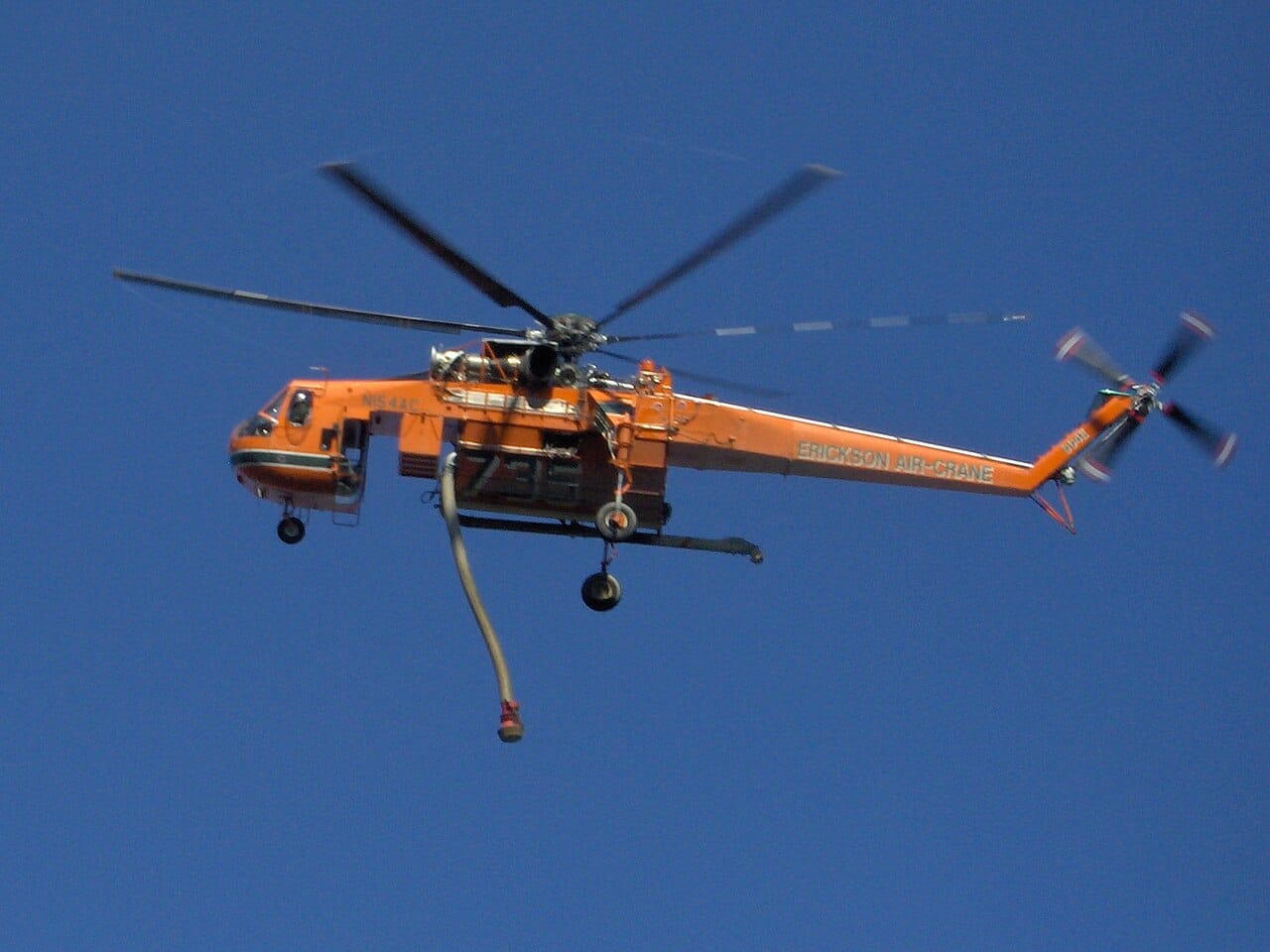
Most aircraft try to look sleek. The Sikorsky S-64 Skycrane does not bother. It is, essentially, a flying spine: a long open backbone with two turbine engines and a six-blade rotor bolted on top, a cockpit at the front, tall stalky legs, and a hook underneath where a fuselage ought to be. It looks less like a helicopter than a piece of construction equipment that learned to fly — which is more or less exactly what it is.
And more than sixty years after its first flight, this strange skeleton is still one of the most useful flying machines on Earth.
Quick Facts
- Aircraft: Sikorsky S-64 Skycrane (military CH-54 Tarhe; today the Erickson S-64 Air-Crane)
- First flight: 9 May 1962 — and still working today
- Design: a minimalist “flying crane” — a backbone, two engines, a rotor and a hook, with no cargo body
- Engines: two Pratt & Whitney turboshafts; six-blade main rotor
- Payload: around 20,000 lb slung beneath the hull
- Party tricks: a rear-facing pilot seat for precision loading, kneeling landing gear, interchangeable pods
- Second life: aerial firefighting with a 2,650-gallon tank, plus logging and construction
Built for strength, not beauty
Sikorsky’s idea was radical: strip a helicopter of everything that is not lifting. No cargo hold, no passenger cabin — just structure, power and a hook, so that huge, awkward loads could be slung underneath or clipped into interchangeable pods. The prototype first flew on 9 May 1962, and the concept worked immediately.
The clever touches were everywhere. The landing gear could kneel to drop the aircraft over a load. Interchangeable pods could turn the bare spine into a mobile hospital, a command post, or a troop transport for as many as 90 men. And a third crew member sat facing backwards, with a full set of controls, so he could fly the helicopter while staring straight down at the cargo — likely the first use of fly-by-wire in a helicopter.
War crane
The U.S. Army took one look and ordered it as the CH-54 Tarhe, named after a Wyandot chief called “The Crane.” In Vietnam it earned its keep hauling bulldozers and artillery into places no road reached, and it became the great battlefield salvage tool, plucking hundreds of downed aircraft out of the jungle and flying them home to be repaired. It even moonlighted as a bomber, dropping 10,000-pound “daisy cutter” bombs to blast instant helicopter landing zones out of the forest.
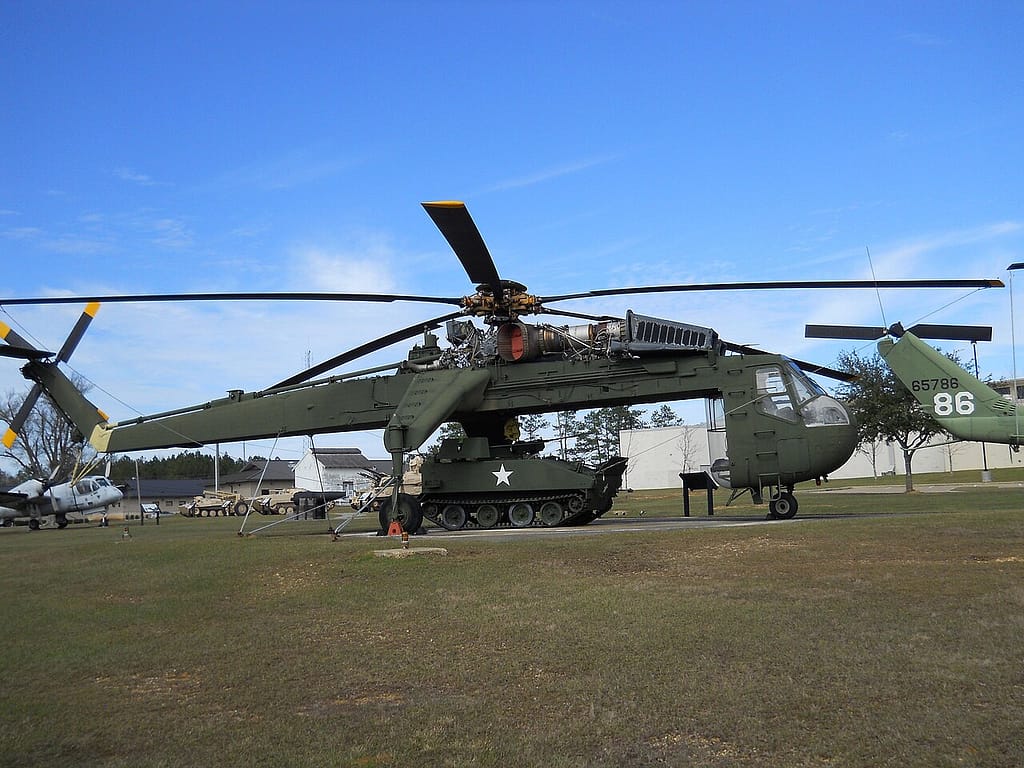
In 1971 a CH-54B climbed to 36,133 feet, setting a helicopter altitude record for level flight that still stands.
A second career fighting fires
When the Army retired its Skycranes in the 1990s, the type did not die — it changed employers. In 1992 the Oregon firm Erickson bought the design outright, made well over a thousand improvements, and turned the Skycrane into the world’s premier heavy-lift civilian helicopter. Fitted with a 2,650-gallon belly tank and a snorkel that lets it refill from a lake or the sea in seconds, the Erickson Air-Crane is now a familiar sight over wildfires from California to Greece.
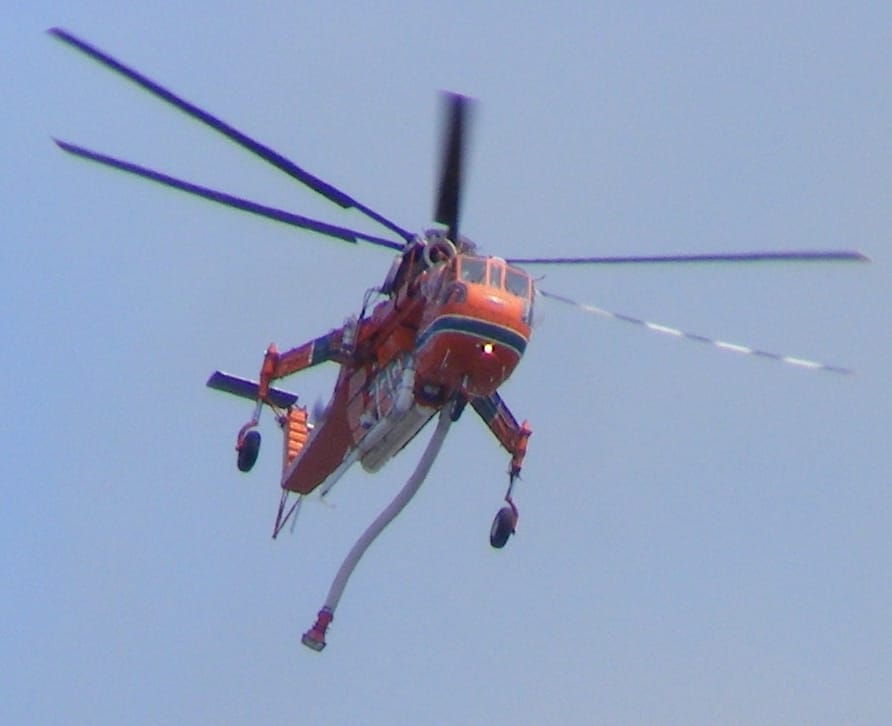
Erickson gives each aircraft a name and a personality — “Elvis,” “The Incredible Hulk,” and “Olga,” the crane that helped hoist the top section onto Toronto’s CN Tower. Skycranes have set steel towers, placed air-conditioning units on skyscrapers, harvested timber from roadless slopes, and even helped replace the Statue of Freedom atop the U.S. Capitol dome.
Only about 110 were ever built, yet many are still working. It turns out the ugliest helicopter in the sky is also one of the hardest to replace.
Sources: Buffalo Air-Park (Bill Riccio); Igor I. Sikorsky Historical Archives; military factory; Wikipedia.
0 Comments