
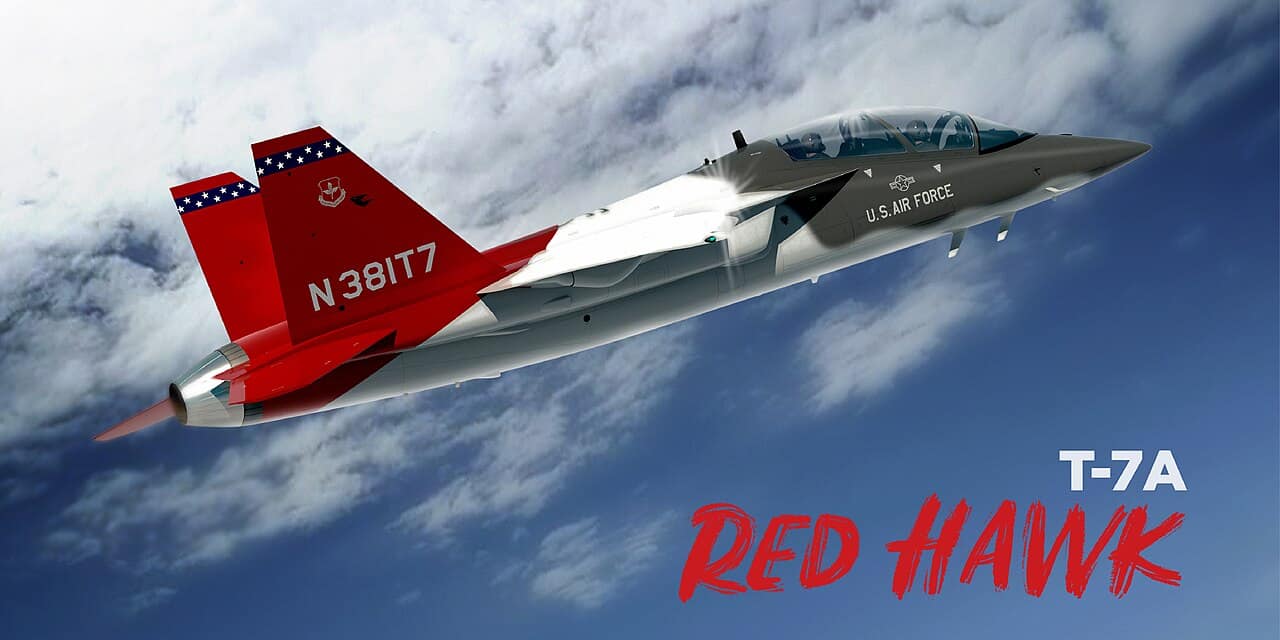
The Boeing T-7A Red Hawk was supposed to be the Air Force's feel-good story — a sleek, digitally-designed trainer built to replace the geriatric T-38 Talon and modernize pilot training for a generation. It still might be. But a three-part investigation by Breaking Defense, based on internal Air Force documents, reveals a program hobbled by a fight over who owns the data needed to keep the jet flying.
The investigation, published in late June 2026, paints a picture of a fundamentally sound aircraft undermined by a contractual battle that could add $1.5 billion to program costs, delay depot-level maintenance capability by years, and leave the first 82 production jets flying with what the Air Force itself calls a "serious" airworthiness risk.
"High Risk" Sustainment
At the heart of the problem is a March 2026 internal presentation prepared for the T-7A's production decision. That document rates the program's sustainment outlook as "high risk" — driven almost entirely by Boeing's failure to hand over the technical data the Air Force needs to maintain the aircraft independently.
The T-7A contract explicitly required Boeing to provide data rights sufficient for organic sustainment — the ability for the Air Force to maintain, repair, and overhaul the jets at its own depots rather than paying Boeing for every wrench turn. According to Breaking Defense, Boeing has delivered only a fraction of the required documentation. The Air Force is missing data for intermediate- and depot-level maintenance — the kind of detailed technical manuals that tell mechanics how to disassemble, inspect, and rebuild critical components.
Without this data, the Air Force faces two equally unattractive options: pay Boeing to handle all major maintenance indefinitely, surrendering control of the jet's lifecycle costs, or spend years and hundreds of millions of dollars reverse-engineering the information by contracting directly with component suppliers.
"Serious" Airworthiness Risk for 82 Jets
The data dispute has a direct safety dimension. An August 2025 internal Air Force assessment projects a "serious" airworthiness risk for the first 82 production T-7As. The risk stems from what the document describes as Boeing's "non-compliance" in providing documentation for Critical Safety Items — components whose failure could result in the loss of an aircraft or its crew.
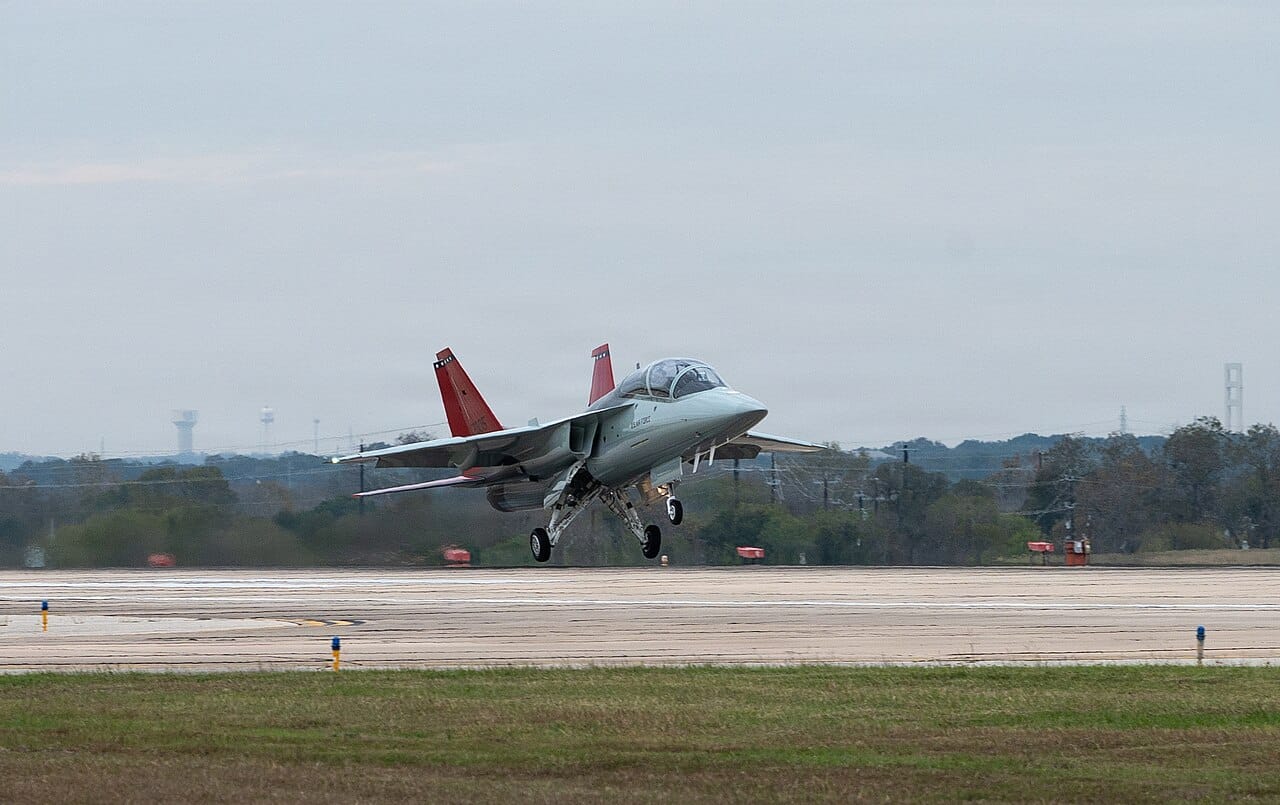
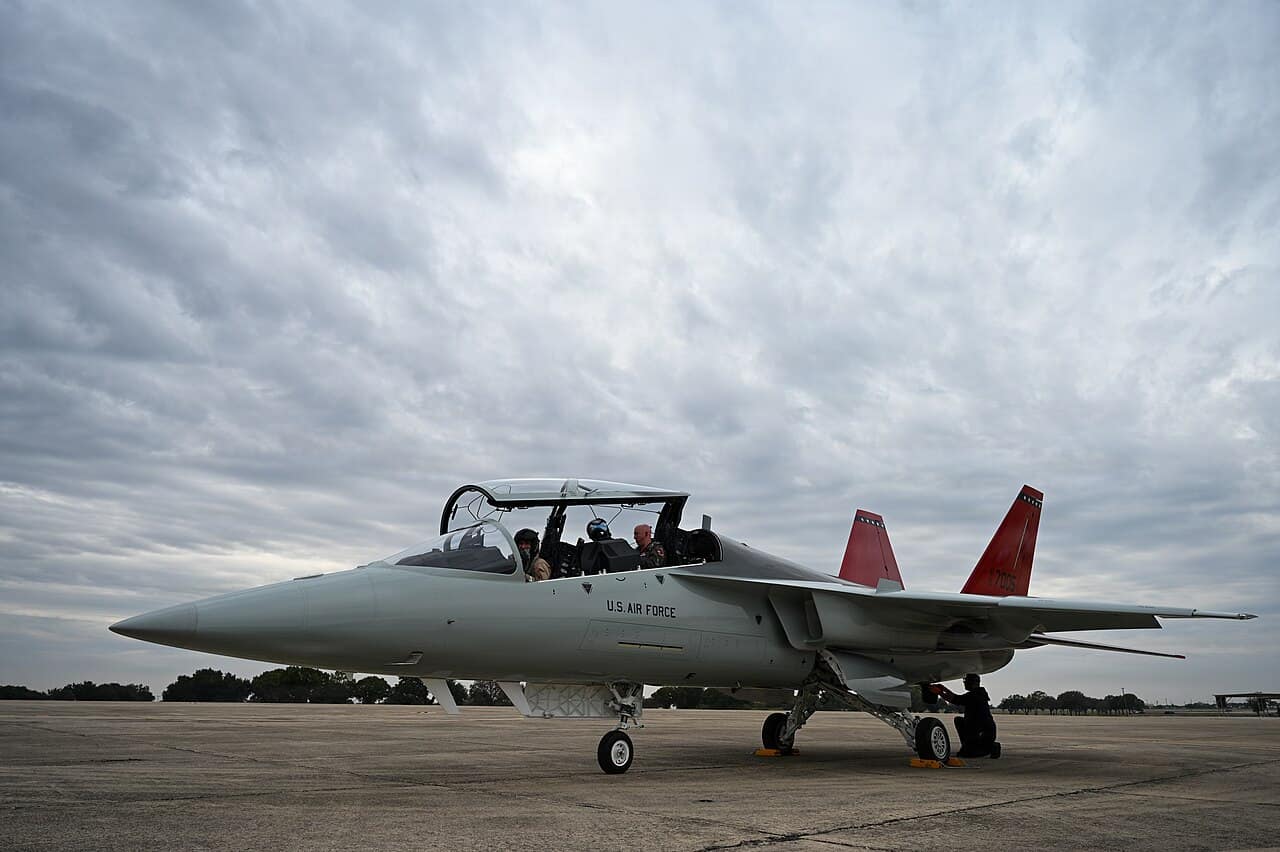
This doesn't mean the jets can't fly. The Air Force cleared the T-7A for low-rate initial production with the Milestone C decision on April 23, 2026, and in early June, Lt. Col. Michael Trott and Lt. Col. Phillip Bourquin became the first Air Education and Training Command pilots qualified on the type. But it means the service is accepting risk on paper that it would rather not carry — and that risk will persist until Boeing provides the missing documentation or the Air Force finds another way to verify the safety of critical parts.
The $1.5 Billion Engine "Horse Trade"
Breaking Defense also uncovered a proposal that could add up to $1.5 billion to program costs through changes to engine procurement. The T-7A is powered by a single General Electric F404 engine — the same powerplant that once flew in the F/A-18 Hornet. A proposed restructuring of the engine supply chain, described as a "horse trade," would see the Air Force contract for the T-7A’s engines directly with GE, while Boeing hands over technical data on the SAOC aircraft — the future “Doomsday Plane” that will replace the E-4B Nightwatch. The financial implications are significant either way.
A Pattern, Not an Aberration
The T-7A data fight is not unique — it's the latest chapter in a decades-old battle between the Pentagon and defense contractors over who controls the intellectual property behind military hardware. The F-35 program has fought similar battles over software source code and sustainment data. The KC-46 tanker has been plagued by Boeing's resistance to sharing technical documentation. The pattern is consistent: contractors design systems with proprietary data, then leverage that data to lock in long-term sustainment contracts at premium prices.
What makes the T-7A case notable is its timing. The Air Force is buying this jet with eyes wide open — the data rights requirements were written into the contract from the start. If Boeing can stonewall even explicit contractual obligations, the precedent for future acquisition programs is bleak. The T-7A may fly beautifully, but the fight over its maintenance manuals could define how the Air Force buys and sustains trainers for decades.
Related Questions
What is the Boeing T-7A Red Hawk?
The T-7A Red Hawk is a Boeing jet trainer designed to replace the U.S. Air Force’s aging T-38 Talon and modernize pilot training. It was developed using digital engineering, but the program has been hampered by a dispute over technical data.
What aircraft does the T-7A replace?
The T-7A Red Hawk is intended to replace the Northrop T-38 Talon, a supersonic trainer in service since the 1960s. Keeping the T-38 flying has grown increasingly costly as its replacement is delayed.
Why is the T-7A Red Hawk delayed?
A June 2026 investigation revealed a fight over who owns the maintenance data needed to keep the jet flying. Boeing has delivered only part of the required documentation, a gap that could add $1.5 billion in costs and delay depot-level maintenance by years.
Is the T-7A safe to fly?
An August 2025 internal Air Force assessment projected a "serious" airworthiness risk for the first 82 production T-7As, tied to missing technical data described as Boeing "non-compliance." The airframe itself is considered fundamentally sound.
When was the first T-7A delivered?
The first T-7A Red Hawk arrived at Joint Base San Antonio-Randolph in December 2025, marking Air Education and Training Command’s first delivery of the new trainer.
Who builds the T-7A Red Hawk?
Boeing builds the T-7A Red Hawk. The company’s trainer business has faced other setbacks, including its decision not to bid on the U.S. Navy’s trainer replacement.

0 Comments