

Quick Facts
Company: Vertical Aerospace (Bristol, UK)
Aircraft: Full-scale eVTOL demonstrator (precursor to the Valo production aircraft)
Milestone: First piloted thrustborne-to-wingborne transition in a full-scale eVTOL
Date: April 2, 2026 (announced April 6)
Location: Cotswold Airport, Gloucestershire, England
Regulator: UK Civil Aviation Authority (CAA) / EASA
Production aircraft: Valo — type certification targeted for 2028
Financing: $850 million package arranged by Mudrick Capital (March 2026)
The Hardest Part of Building a Flying Car
Every eVTOL company faces the same engineering nightmare: the transition. Taking off vertically requires rotors spinning fast and pushing air straight down. Flying forward like an airplane requires wings generating lift and a completely different aerodynamic regime. The moment in between — when the aircraft shifts from one mode to the other — is where things go wrong. The aerodynamics are chaotic. Control authority shifts from rotors to control surfaces. If anything is slightly miscalibrated, the aircraft stalls, rolls, or drops.
$850 Million Says This Is Real
Scepticism about flying cars is healthy. Dozens of eVTOL startups have promised the future and delivered PowerPoint slides. Vertical Aerospace is different for one reason: money. In March 2026, the company secured an $850 million financing package from Mudrick Capital — enough to fund development through 2027 and beyond as it works toward the 2028 type certification target for its production aircraft, the Valo. The Valo is designed to carry four passengers plus a pilot at speeds up to 200 miles per hour over distances of 100-plus miles. It targets the urban air mobility market — short-hop flights between city centres, airports, and suburban hubs that currently require 60-90 minutes of gridlocked driving. A Valo flight would take 15 minutes. The transition flight at Cotswold Airport was the proof that the physics works. The $850 million is the proof that serious investors believe it will scale. Whether the "flying car" actually changes how people move through cities remains to be seen. But on April 2, in a quiet corner of the English Cotswolds, it got closer than it has ever been. Sources: Aviation Week, AIN Online, AeroTime, Vertical AerospaceRelated Questions
What is an eVTOL aircraft?
An eVTOL — electric vertical take-off and landing aircraft — lifts off like a helicopter using electric rotors, then transitions to wing-borne flight like an aeroplane. Quiet and emissions-free in flight, eVTOLs are designed for short urban and regional hops, forming the basis of the emerging air-taxi industry.
What did Vertical Aerospace achieve in April 2026?
On April 2, 2026, test pilot Paul Stone flew Vertical Aerospace's full-scale eVTOL demonstrator through the first piloted thrustborne-to-wingborne transition in an aircraft of its class, at Cotswold Airport in Gloucestershire, England. The milestone — taking off vertically then flying on the wing — is the hardest part of eVTOL flight.
Why is the vertical-to-wing transition so difficult?
The transition is the riskiest phase of eVTOL flight because the aircraft must shift from rotor-borne hovering to wing-borne cruise without losing control or lift. Achieving it with a pilot aboard in a full-scale aircraft, as Vertical Aerospace did, proves the design works beyond models or computer simulation.
What is Vertical Aerospace's Valo?
Valo is Vertical Aerospace's planned production eVTOL, the aircraft the 2026 demonstrator is paving the way for. The Bristol, UK company is targeting type certification around 2028, backed by an $850 million financing package arranged by Mudrick Capital in March 2026.
When will eVTOL air taxis enter service?
Several companies are racing toward certification in the mid-to-late 2020s, and the technology has cleared major regulatory milestones — air taxis recently passed their last big hurdle. Real services are beginning to appear, such as Joby's demonstration flights from JFK to Manhattan.
Are eVTOL air taxis a good investment?
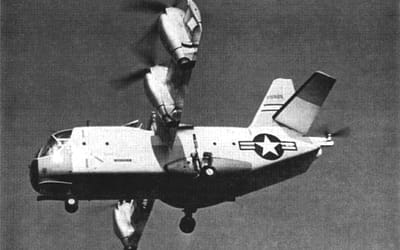
The sector is promising but cash-hungry and unproven commercially. Billions have been spent before carrying paying passengers, as detailed in our look at the eVTOL cash bonfire. The basic idea also has deep roots, going back to experiments like the Bell X-22 ducted-fan VTOL.

0 Comments