

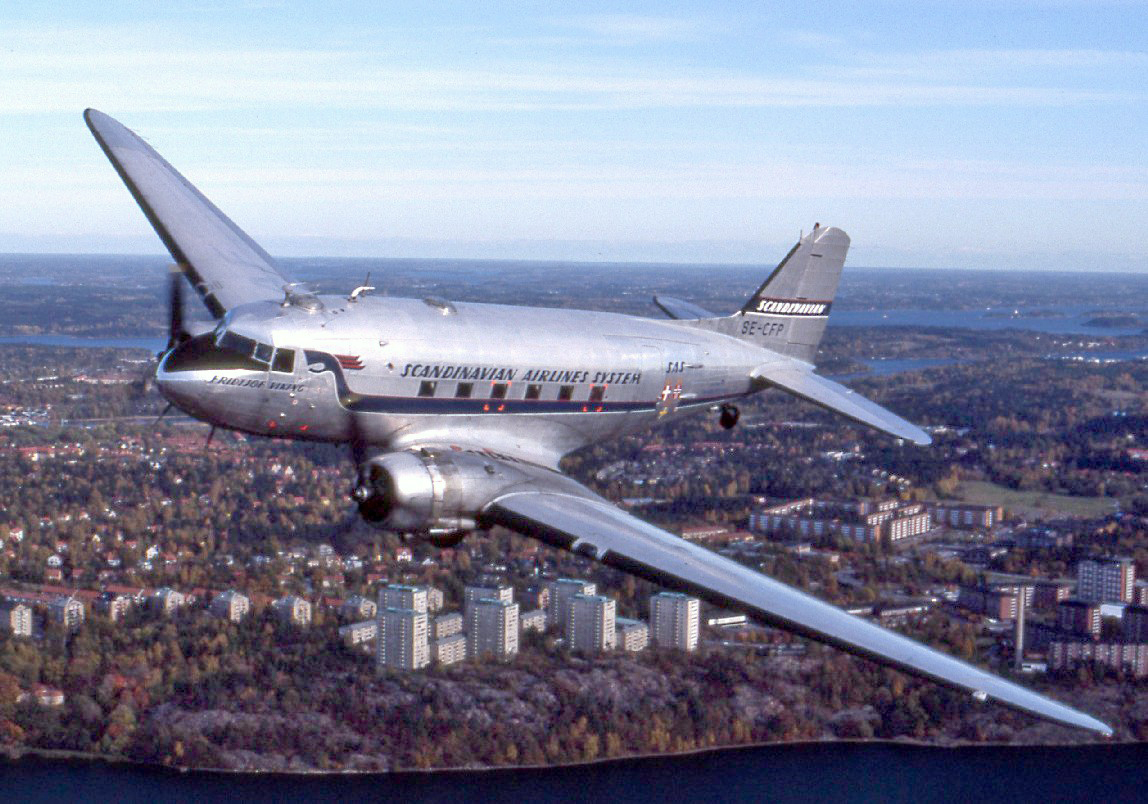
In 1936, American Airlines president C.R. Smith made an audacious request to Donald Douglas: build an airliner that could carry passengers across America in 16 hours and make money doing it. The result was the Douglas DC-3 — an aircraft so well-designed that it immediately made every other airliner obsolete, so profitable that it transformed airlines from subsidised services into genuine businesses, and so robust that examples are still flying commercial routes today, 90 years later. No aircraft in history has done more to shape the world we live in.
The Aircraft That Made Airlines Profitable
Before the DC-3, airlines lost money. They survived on US Mail contracts and government subsidies. The aircraft of the early 1930s — the Ford Trimotor, the earlier Douglas DC-1 and DC-2 — were too small, too slow, or too expensive to operate profitably on passenger revenue alone. Airlines were essentially charter services for the wealthy.
The DC-3 changed the equation. It carried 21 passengers (later configurations up to 28), flew at 207 mph, had a range of 1,500 miles, and was powered by two Pratt & Whitney or Wright Cyclone radial engines of 1,000-1,200 horsepower each. Critically, the economics worked: at full load, a DC-3 could generate enough revenue per mile to cover its operating costs from passenger fares alone — the first time in the history of commercial aviation that this was true.
By 1939, DC-3s were carrying 90% of all airline passengers in the United States. Every major American carrier operated them. Internationally, airlines from Europe to Australia placed orders. The aircraft was simultaneously luxurious enough to attract wealthy passengers and economical enough to make flying accessible to the middle class for the first time.
“By 1939, DC-3s were carrying 90% of all airline passengers in America. The aircraft didn't just succeed — it invented the modern airline industry.”
— Douglas DC-3, the aircraft that changed everythingThe War Changes Everything

When the United States entered World War II in December 1941, the military requisitioned virtually every DC-3 in civilian service and ordered thousands more. Designated the C-47 Skytrain (or Dakota in British service), the militarised DC-3 became the most important transport aircraft of the war. It carried troops, supplies, and equipment in every theatre. It dropped paratroopers over Normandy on D-Day and over Arnhem in Operation Market Garden. It flew "The Hump" — the astonishing route over the Himalayas from India to China — supplying Chinese forces when all ground routes were cut off.
General Dwight D. Eisenhower listed the C-47 as one of the four weapons most responsible for Allied victory in Europe — alongside the bazooka, the jeep, and the atomic bomb. More than 10,000 C-47s were built during the war. When it ended, thousands were sold back to airlines at surplus prices, flooding the global market with cheap, proven aircraft and creating a postwar boom in commercial aviation that connected continents.
Why It's Still Flying
The DC-3's longevity is not nostalgia — it's engineering. The aircraft was over-built for its era, with structural margins that gave it enormous durability. Its systems are simple enough to maintain with basic tools anywhere in the world. It can operate from unpaved strips and short runways. It can carry cargo in configurations that more modern aircraft cannot match economically for small-volume, short-haul routes in developing countries.
Today, an estimated 200-300 DC-3s remain in airworthy condition worldwide. Several operate scheduled commercial services in remote parts of Canada, Alaska, and Africa. Many more are preserved and flying at airshows. The most famous example may be "Duggy" — a DC-3 that has been operated by Elly Beinhorn and other legends of aviation history and still takes passengers on flights in Europe. No other airliner from the 1930s is still in regular commercial service. No other aircraft from any era has demonstrated this kind of longevity. The DC-3 simply refused to become obsolete.
Sources: National Air and Space Museum; Douglas Aircraft Company historical records; Peter Davies, Douglas DC-3 Dakota: Owner's Workshop Manual (2011); American Airlines corporate history archive.
Related Questions
What was the Douglas DC-3?
The Douglas DC-3 was an American airliner introduced in 1936 that transformed commercial aviation. Carrying 21 or more passengers at 207 mph over 1,500 miles, it was the first airliner that could earn a profit from passenger fares alone. So rugged that some examples still fly today, it is often called the most important airliner ever built.
Why was the DC-3 so important?
The DC-3 made airlines profitable for the first time. Before it, carriers survived on mail contracts and subsidies; the DC-3's economics let them earn money from passengers alone. By 1939 it carried about 90% of all US airline passengers and was ordered worldwide, turning air travel into a real business and a mass-market service.
How many passengers did the DC-3 carry?
The DC-3 typically carried 21 passengers, with later configurations seating up to 28. It cruised at about 207 mph, ranged 1,500 miles, and was powered by two radial engines — Pratt & Whitney or Wright Cyclone — of 1,000 to 1,200 horsepower each. Its size and economics finally made passenger service pay.
Who created the DC-3?
The DC-3 was built by Douglas Aircraft for American Airlines. In 1936 the airline's president, C.R. Smith, asked Donald Douglas to design an airliner that could cross America in 16 hours and still make money. The resulting DC-3 immediately rendered competing airliners obsolete.
Is the DC-3 still flying?
Yes. Remarkably, examples of the DC-3 remain in service around the world roughly 90 years after the type entered service in 1936, flying cargo and passenger routes in remote regions. Its rugged design and simple maintenance have given it one of the longest active careers of any aircraft.
What engines powered the DC-3?
The DC-3 was powered by two radial piston engines, either Pratt & Whitney Twin Wasp or Wright Cyclone types, each producing 1,000 to 1,200 horsepower. This reliable twin-engine layout gave the aircraft the performance and economics it needed to carry 21 or more passengers profitably over long distances.
How did the DC-3 change air travel?
The DC-3 made flying both comfortable enough for wealthy travellers and cheap enough for the middle class, opening air travel to ordinary people for the first time. Within a few years it dominated American skies and was used by airlines on several continents, including Howard Hughes' TWA.


0 Comments