
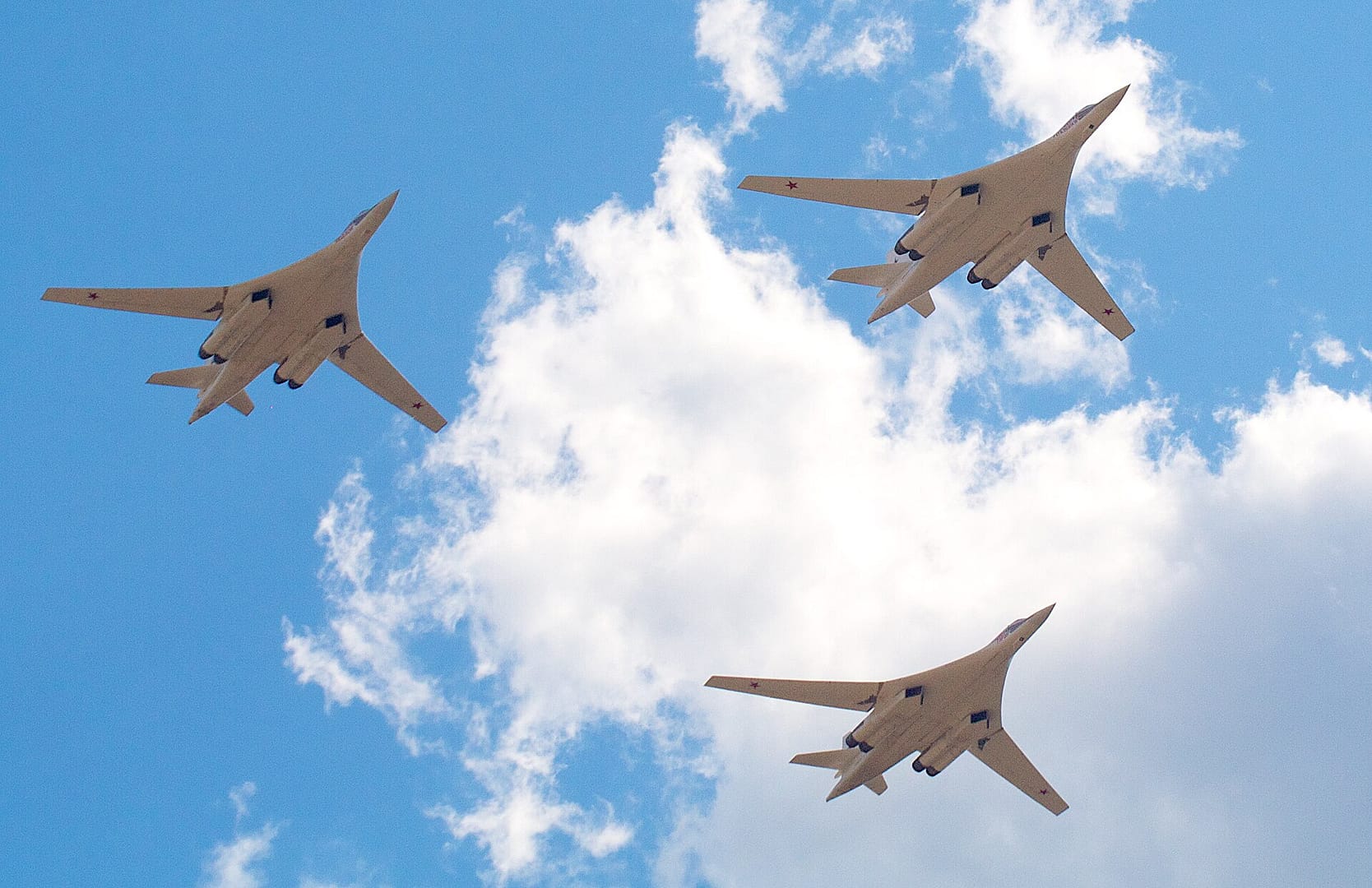
For roughly sixteen hours on 23 June 2026, two of the largest combat aircraft ever built carved a long arc through the cold airspace of the European Arctic. Two Russian Tu-160 strategic bombers — the variable-sweep giants NATO calls “Blackjack” — flew out over the Barents and Norwegian Seas, topped up their tanks from an Il-78M tanker in mid-air, and turned for home. They were not alone.
Shadowing one of the bombers, a few aircraft-lengths off its wing, was a Royal Norwegian Air Force F-35A Lightning II. It had launched from Evenes, in the far north of Norway, on a Quick Reaction Alert scramble — one of the dozens Norway flies every year to meet Russian aircraft probing the edge of NATO airspace. A Russian MiG-31 interceptor held station on the opposite side. For a few minutes over the High North, three of the most capable military aircraft on Earth flew in loose, watchful formation.
Moscow called it routine. NATO called it air policing. Both were right — and that is exactly why the Arctic has quietly become one of the most closely watched patches of sky in the world.
Quick Facts
- When: 23 June 2026, an approximately 16-hour patrol
- Russian package: 2× Tu-160 strategic bombers, escorted by MiG-31 interceptors, supported by an Il-78M tanker
- Where: International airspace over the Barents and Norwegian Seas
- Intercepted by: Royal Norwegian Air Force F-35As on Quick Reaction Alert from Evenes
- Russian framing: The Russian MoD described it as a “scheduled flight” with in-flight refuelling practice
- Context: Norway flies roughly 40 QRA missions a year against Russian aircraft in the High North
A 16-Hour Patrol Along NATO’s Northern Edge
The Russian Ministry of Defence announced the mission itself, releasing cockpit footage and air-to-air video through its official Zvezda channel. According to the ministry, the bombers belonged to the Aerospace Forces’ Long-Range Aviation and spent close to sixteen hours aloft over neutral waters. During the sortie, the crews practiced aerial refuelling — the skill that turns a long-range bomber into a genuinely strategic one, extending its reach far beyond its already enormous unrefuelled range.
Russian military aviation analyst Guy Plopsky identified the two bombers by name and tail number from the released imagery: the “Vasily Senko” and the “Vladimir Sudets.” Each Tu-160 carries the name of a Soviet-era aviator on its nose, a tradition that has survived into the modern fleet. The footage also showed the Il-78M tanker trailing its hose-and-drogue refuelling pods, and a MiG-31 holding formation off the bombers’ wing.
The Russian statement was carefully neutral. “At certain stages of the route,” it noted, “the strategic bombers were escorted by fighter jets from foreign countries” — without naming them. That naming was left to NATO.
Norway Scrambles the F-35
Two days after the flight, NATO Air Command filled in the blank. The “fighter jets from foreign countries” were F-35As of the Royal Norwegian Air Force, scrambled from Evenes Air Station for a Quick Reaction Alert mission. It was part of a busy stretch for the alliance: in the same period, French Rafales deployed to Lithuania and Portuguese F-16s in Estonia were also launched on separate intercepts of Russian aircraft near NATO airspace.
Norway keeps at least two F-35As on round-the-clock alert at Evenes, deep inside the Arctic Circle. When radar or other sensors flag an unidentified contact heading toward Norwegian airspace, those jets are designed to be airborne within roughly fifteen minutes. It is the modern continuation of a Cold War ritual: the alert scramble to meet the bomber at the door.
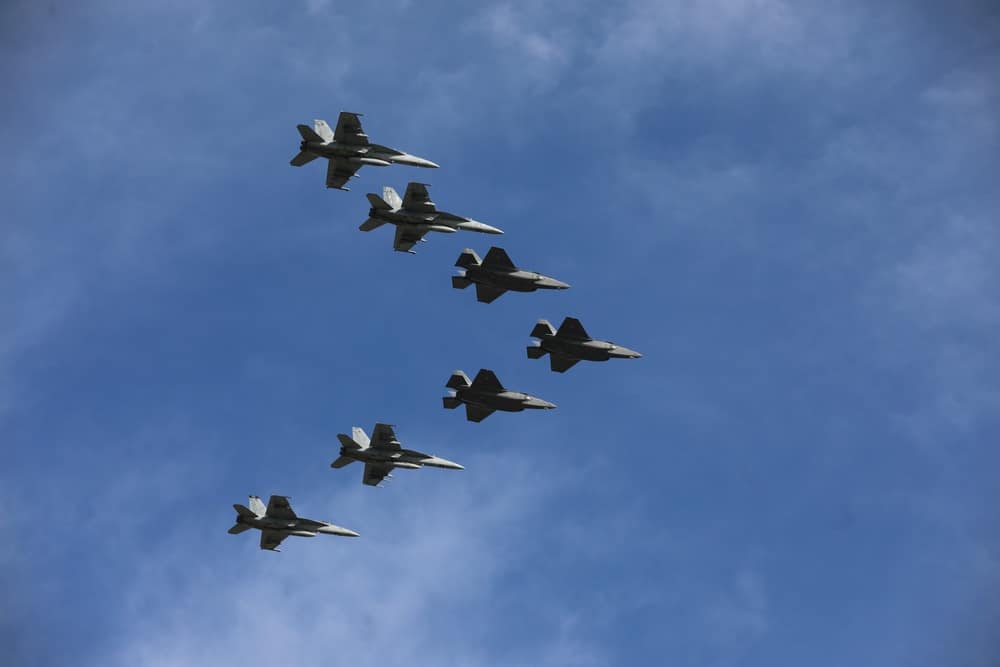
The numbers tell the story of how routine this has become. In 2025, Norwegian F-35s launched on Quick Reaction Alert 41 times and identified more than fifty Russian military aircraft. Since 2022, the Norwegian Air Force has averaged something close to forty such intercept missions a year. The High North is not a quiet frontier — it is a working one.
The Tu-160 “Blackjack”: Russia’s White Swan
The Tu-160 is a genuine heavyweight. It is the largest and heaviest combat aircraft ever built, longer than a B-52, with sweeping wings that fold back for high-speed dash and spread wide for efficient cruise. Powered by four Kuznetsov NK-32 afterburning turbofans — among the most powerful engines ever fitted to a combat aircraft — it can reach roughly Mach 2 at altitude and fly more than 12,000 kilometres without refuelling. Russian crews, struck by its anti-flash white paint and graceful lines, nicknamed it the “White Swan.”
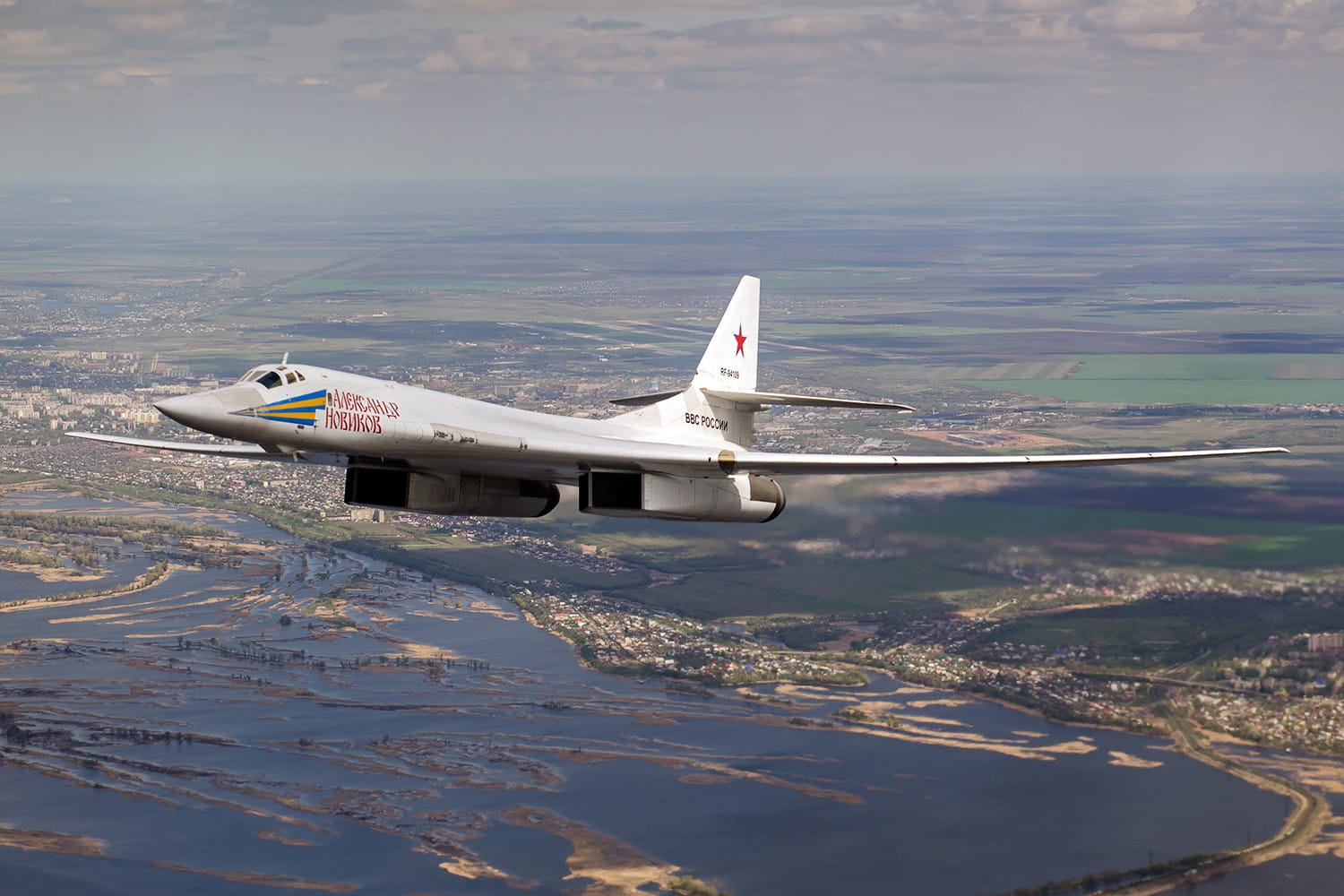
Designed in the 1970s and in service since 1987, the Tu-160 was the last strategic bomber developed for the Soviet Air Forces. Today it is the prestige platform of Russia’s Long-Range Aviation — the aircraft Moscow sends when it wants the flight to be noticed. A sixteen-hour patrol along NATO’s northern flank, complete with cockpit video released to the public, is a message as much as a training mission. The in-flight refuelling practice was real; so was the signalling.
Why the High North Matters
To understand why a routine bomber flight draws a fifth-generation fighter escort, look at the map. Russia’s Northern Fleet — including the bulk of its sea-based nuclear deterrent — is based on the Kola Peninsula, just east of Norway. From there, Russian submarines and bombers have year-round, ice-free access to the North Atlantic. To reach the open ocean, they must cross the gap between Greenland, Iceland and the United Kingdom: the famous GIUK Gap that obsessed NATO planners throughout the Cold War.
That same geography is back at the centre of European security. The waters off northern Norway are where NATO watches Russian naval movements, where the alliance’s reinforcement routes to the continent run, and where Russian aircraft routinely test how quickly and how far north the alliance can respond. Each intercept is a small, repeated answer to a standing question: are you still watching? With the F-35A — its fused sensors built precisely for the murk and distance of the Arctic — Norway’s answer is consistently yes.
None of this is escalation in the conventional sense. No airspace was violated; the Russian flight stayed over international waters, and the Norwegian jets shadowed rather than confronted. But the choreography matters. A bomber that can carry nuclear-tipped cruise missiles, flying a sixteen-hour loop along the edge of the alliance, met within minutes by the most advanced fighter in NATO’s inventory — this is what deterrence looks like on an ordinary day in the High North.
The video below shows footage from the patrol and the resulting NATO intercept.
Sources: The Aviationist; Aerotime; The Barents Observer; Russian Ministry of Defence via Zvezda; NATO Air Command.
Related Questions
What is the Tu-160 Blackjack?
The Tupolev Tu-160 (NATO reporting name “Blackjack,” nicknamed “White Swan” by Russian crews) is a Soviet-designed supersonic, variable-sweep-wing heavy strategic bomber. In service since 1987, it is the largest and heaviest combat aircraft ever built and can reach roughly Mach 2 while carrying nuclear-capable cruise missiles.
Did Russian Tu-160 bombers fly near Norway in June 2026?
Yes. On 23 June 2026, two Russian Tu-160 strategic bombers flew an approximately 16-hour patrol over the Barents and Norwegian Seas, escorted by MiG-31 interceptors and supported by an Il-78M tanker. Royal Norwegian Air Force F-35As intercepted and shadowed them in international airspace.
Which fighters intercepted the Russian bombers?
Royal Norwegian Air Force F-35A Lightning IIs intercepted the Tu-160s. NATO Air Command identified them as Norwegian Quick Reaction Alert jets from Evenes. Around the same time, French Rafales and Portuguese F-16s on NATO Baltic Air Policing were scrambled against other Russian aircraft.
How fast can Norway scramble its F-35s?
Norway keeps at least two F-35As on round-the-clock Quick Reaction Alert at Evenes Air Station in the Arctic. When sensors detect an unidentified contact approaching Norwegian airspace, those jets are designed to be airborne within roughly 15 minutes.
How often does Norway intercept Russian aircraft?
Frequently. In 2025, Norwegian F-35s launched on Quick Reaction Alert 41 times and identified more than fifty Russian military aircraft. Since 2022, Norway has averaged close to 40 such intercept missions a year over the High North.
Why is the Arctic High North strategically important to NATO?
Russia’s Northern Fleet, including much of its sea-based nuclear deterrent, is based on the Kola Peninsula next to Norway, with ice-free access to the North Atlantic via the GIUK Gap. NATO monitors the region closely because it sits astride key reinforcement and submarine transit routes.
0 Comments