
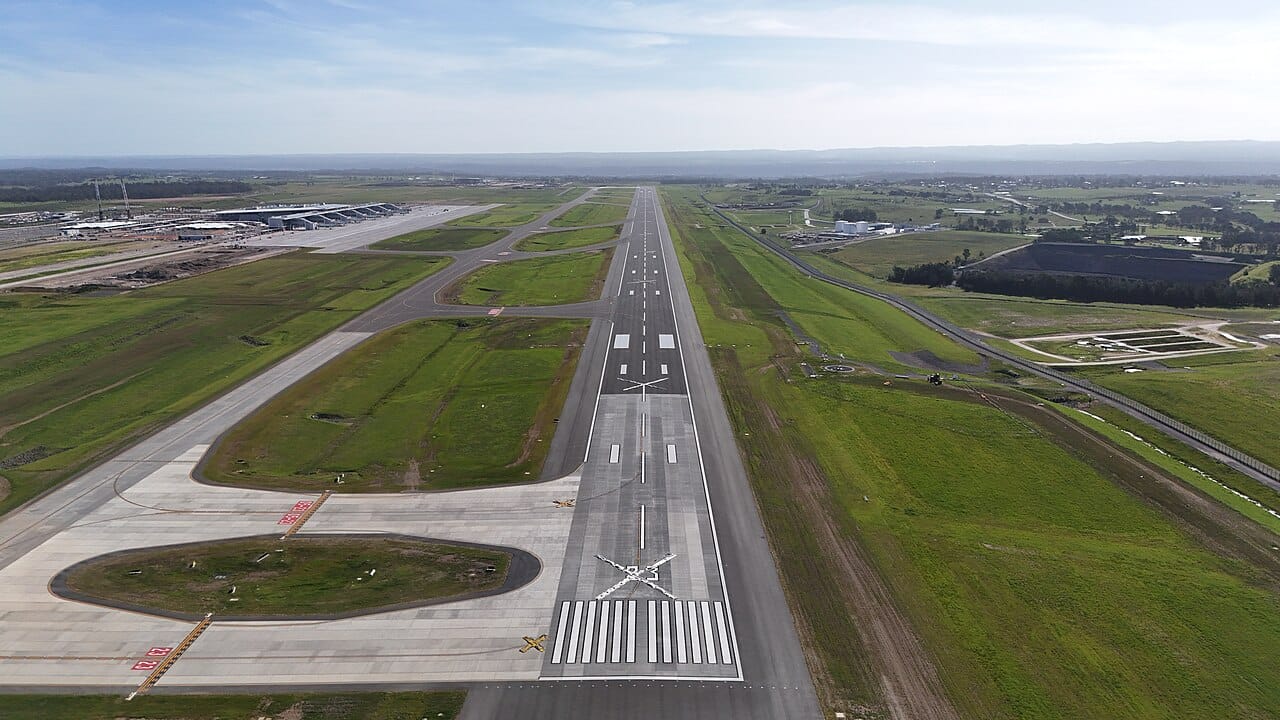
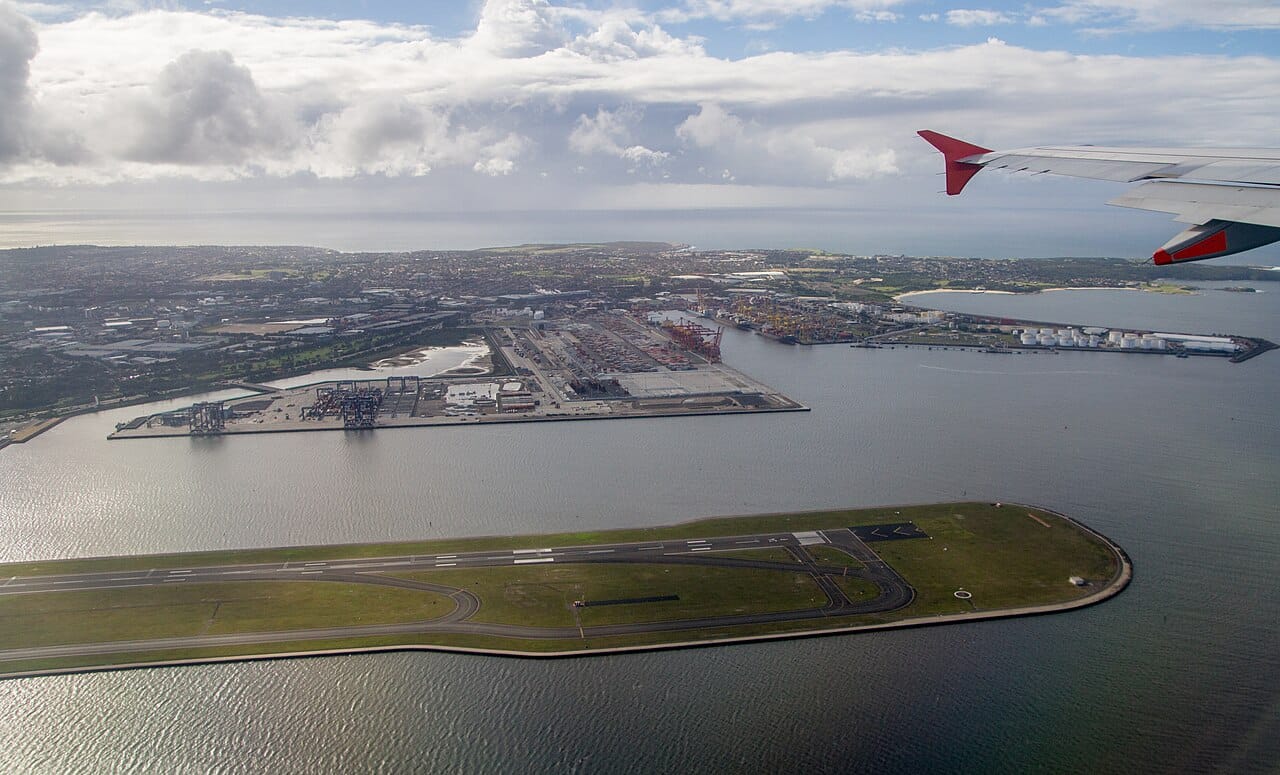
For as long as most Sydneysiders can remember, the city’s air traffic has run into a wall every night. Kingsford Smith Airport — Sydney’s only major gateway — shuts to most aircraft between 11pm and 6am under a hard legal curfew. After dark, one of the busiest aviation markets in the Asia-Pacific simply goes quiet.
That changes on 25 October 2026. On that day, Western Sydney International — formally the Nancy-Bird Walton Airport, named after the pioneering Australian aviator — opens to passengers as the city’s second major airport. And unlike its older sibling, it never closes.
Passenger opening: 25 October 2026 (freight from 27 July 2026)
Key feature: 24-hour, curfew-free operations
Stage 1 capacity: around 10 million passengers per year
Projected demand: about 37 million a year by 2050 (then a second runway)
First flights: Jetstar to the Gold Coast, Air New Zealand to Auckland, Singapore Airlines to Singapore
A Gateway That Never Sleeps
The headline feature isn’t the size — Stage 1 handles a modest 10 million passengers a year, growing toward 37 million by mid-century. It’s the clock. Western Sydney is designed to run 24 hours a day with no overnight curfew, the thing Kingsford Smith has never been able to offer. A new Sydney Metro line is being built to carry passengers straight out to Badgerys Creek.
That single difference reshapes what airlines can do. A curfew-free airport unlocks late-night and red-eye schedules that are impossible at Kingsford Smith — which is exactly why Singapore Airlines plans a daily Airbus A350-900 service to Singapore from 23 November 2026, built around a late departure the old airport could never accommodate.
Why a Second Airport, and Why Now
Kingsford Smith is boxed in. It sits in the heart of the city, surrounded by suburbs and water, with little room to grow and a curfew that protects residents’ sleep at the cost of capacity. As Sydney’s population pushed west, the case for a second airport closer to the growth — and free of the night-time shackles — became overwhelming.
Western Sydney is the answer: a greenfield airport with room to expand to a second parallel runway when demand demands it, positioned in the fast-growing west rather than the crowded east.
First Through the Doors
Freight flights begin on 27 July 2026, with passenger services following on 25 October. Jetstar takes the honour of the first passenger flight, to the Gold Coast, on opening day; Air New Zealand starts services to Auckland the next morning; and Singapore Airlines opens the international long-haul account in November.
For a city that has spent decades planning, arguing over and finally building its second airport, the symbolism is hard to miss. When the lights stay on past midnight at Badgerys Creek, Sydney will have done something it never could before: keep flying around the clock.
Sources: Western Sydney Airport; Australian Department of Infrastructure; Prime Minister of Australia media releases; Business Traveller; Wikipedia (Western Sydney International Airport).
Related Questions
When does Western Sydney Airport open?
Western Sydney International (Nancy-Bird Walton) Airport at Badgerys Creek begins passenger flights on 25 October 2026, with freight services starting earlier, on 27 July 2026. It is Sydney’s second major airport and its first designed for round-the-clock operation.
What is special about Western Sydney Airport?
Its defining feature is the clock: Western Sydney is built to run 24 hours a day with no overnight curfew — something the existing Kingsford Smith Airport has never been able to offer. That makes it attractive for freight and late-night passenger flights.
How many passengers will Western Sydney Airport handle?
Stage 1 is sized for around 10 million passengers a year. Demand is projected to reach about 37 million a year by 2050, at which point a second runway is planned. It joins a wave of new mega-airports such as Vietnam’s Long Thanh.
Which airlines fly from Western Sydney Airport?
The first announced services include Jetstar to the Gold Coast, Air New Zealand to Auckland and Singapore Airlines to Singapore. The mix of domestic and international launch routes reflects the airport’s curfew-free, 24-hour positioning.
How will travellers reach Western Sydney Airport?
A new Sydney Metro line is being built to carry passengers directly out to Badgerys Creek, connecting the airport to the wider rail network. Good ground transport is central to making the greenfield airport, like Montreal’s new MET airport, viable.
Who is Western Sydney Airport named after?
It is officially named Nancy-Bird Walton Airport, after the pioneering Australian aviator Nancy Bird Walton. The Badgerys Creek site was chosen to relieve pressure on Sydney’s curfew-bound Kingsford Smith Airport.

0 Comments