
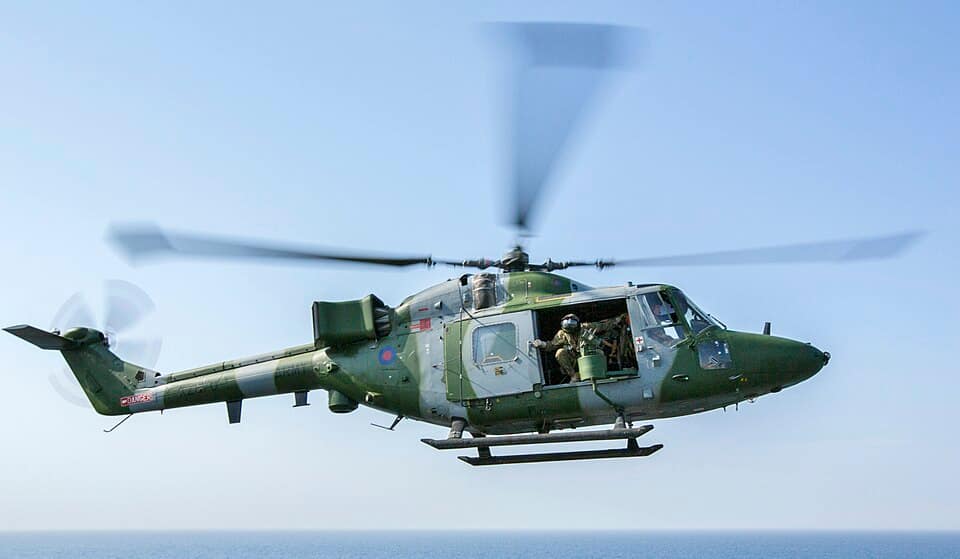
On April 25, 1982, a collection of British helicopters did something that hadn't been done since World War II: they put a submarine out of action from the air. The target was ARA Santa Fe, an Argentine submarine caught on the surface near South Georgia Island during the opening moves of the Falklands War. The attack was improvised, chaotic, and utterly decisive — and it changed the course of Britain's campaign to retake the islands.
The Santa Fe's Mission
The submarine that the British caught that morning had a long history. Originally commissioned as USS Catfish in 1945, she was a Balao-class fleet submarine that had served the US Navy through the post-war years before being transferred to Argentina in 1971. Renamed ARA Santa Fe and designated S-21, she was aging but still capable of the mission assigned to her: reinforcing the Argentine garrison on South Georgia Island.
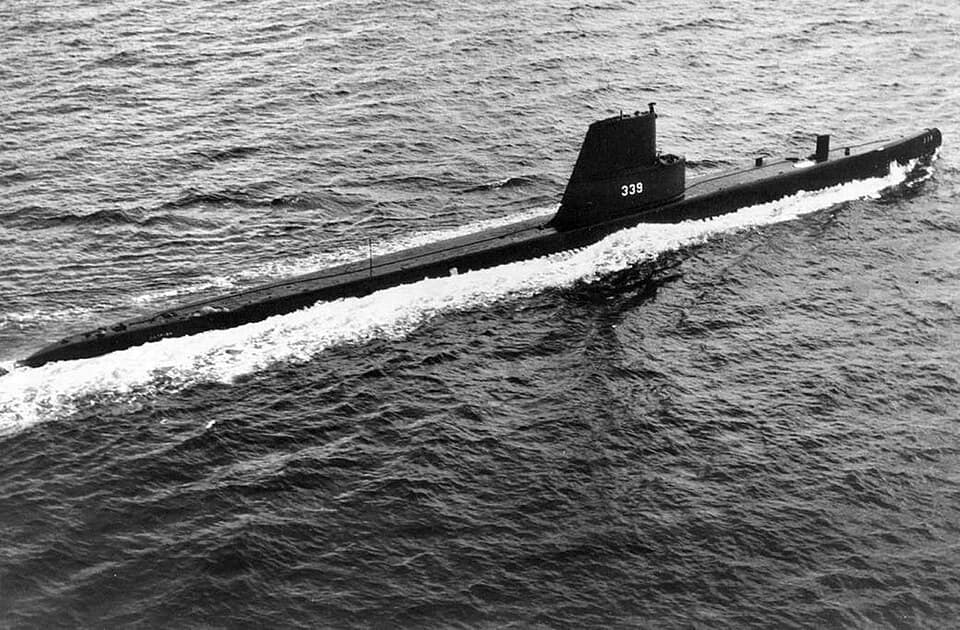
South Georgia, a remote and barren island deep in the South Atlantic, had been seized by Argentine forces on April 3, 1982, just two days after the main invasion of the Falkland Islands. The Santa Fe was tasked with delivering reinforcements — some twenty men — marines and technicians — plus supplies — to the garrison at Grytviken, the island's only settlement of any size.
Captain Horacio Bicain brought the Santa Fe into King Edward Cove on the night of April 24-25, successfully landing his passengers and cargo. His submarine was now at its most vulnerable: on the surface in a confined harbor, preparing to depart. What he didn't know was that a British task force was already closing in on South Georgia as part of Operation Paraquet, the plan to retake the island.
Contact
At approximately 0900 hours on April 25, a Westland Wessex HAS.3 helicopter from HMS Antrim, piloted by Lieutenant Commander Ian Stanley, detected the Santa Fe on the surface about five miles from Cumberland Bay. Stanley had been conducting an anti-submarine search and couldn't believe his luck. A submarine on the surface is a helicopter pilot's dream target — submarines are designed to survive underwater, not to absorb punishment on the surface.
Stanley attacked immediately, dropping two depth charges that bracketed the submarine. The explosions were close enough to damage the Santa Fe's pressure hull and, critically, to prevent her from diving. A submarine that cannot dive is no longer a submarine — it is a slow, poorly armed surface vessel with paper-thin sides.
The Swarm
What followed was a relentless series of attacks by every available British helicopter in the area. Two Westland Lynx HAS.2 helicopters from HMS Brilliant — aircraft XZ725 and XZ729 — joined the attack — one dropping a Mk 46 torpedo that passed harmlessly beneath the surfaced submarine, both strafing her with their machine guns. Wasps from HMS Endurance and HMS Plymouth launched AS.12 anti-ship missiles, several of which struck the submarine's fin. Machine gun fire raked the submarine's conning tower and casing.
The Santa Fe was hit repeatedly but refused to sink outright. Captain Bicain, displaying considerable nerve under the circumstances, managed to nurse his battered submarine back toward Grytviken. Trailing oil and listing, the Santa Fe limped into the harbor and tied up alongside the jetty at King Edward Point. Her crew scrambled ashore. The submarine would never sail again.
Quick Facts
- Date,April 25, 1982
- Location,King Edward Cove, South Georgia Island
- Submarine,ARA Santa Fe (S-21), ex-USS Catfish (SS-339)
- Captain,Horacio Bicain
- Attacking aircraft,Wessex HAS.3, 2x Lynx HAS.2, 3x Wasp HAS.1
- Weapons used,Depth charges, a Mk 46 torpedo, AS.12 missiles, machine guns
- Result,Submarine disabled, later scuttled; South Georgia retaken same day
- Significance,First submarine put out of action by aircraft since World War II
The Domino Effect
The attack on the Santa Fe had consequences far beyond the loss of one aging submarine. The British task force commander, Captain Brian Young, realized that the Argentine garrison at Grytviken — now reinforced by the Santa Fe's marine detachment — knew they were there. The element of surprise was gone. Rather than wait for the planned amphibious assault, Young ordered an immediate attack.
A scratch force of Royal Marines, SBS operators, and SAS troopers was hastily assembled and put ashore. Supported by naval gunfire from HMS Antrim and HMS Plymouth, this improvised assault force advanced on Grytviken. The Argentine garrison, shaken by the destruction of the Santa Fe and the bombardment, surrendered that afternoon without a fight. South Georgia was back in British hands.
The recapture of South Georgia was the first British military victory of the Falklands War and provided a massive boost to morale both in the task force and back home. It also gave the War Cabinet in London confidence that the larger operation to retake the Falkland Islands could succeed.
The End of the Santa Fe
After the surrender, the Santa Fe was inspected by British naval personnel. The damage from the helicopter attacks was severe — the pressure hull was compromised, the conning tower was riddled with bullet holes, and the engineering spaces were flooded. She was towed away from the jetty but proved unseaworthy. She was eventually scuttled in deep water off South Georgia in February 1985.
The attack on the Santa Fe demonstrated something that naval theorists had debated for decades: that helicopters armed with modern weapons could be a lethal threat to submarines caught on or near the surface. The combination of depth charges, missiles, and machine guns from multiple platforms overwhelmed a vessel that was never designed to fight on the surface. For the men of the Santa Fe, the lesson was learned the hard way. For the Royal Navy, it was a proof of concept that would shape anti-submarine doctrine for years to come.
Related Questions
What happened to the ARA Santa Fe?
On 25 April 1982, during the Falklands War, British helicopters disabled the Argentine submarine ARA Santa Fe on the surface near South Georgia Island. Depth charges damaged her pressure hull and prevented her from diving, and follow-up attacks left the crippled submarine unable to escape.
What kind of submarine was the ARA Santa Fe?
She was a World War II-era Balao-class fleet submarine originally commissioned as USS Catfish in 1945. Transferred to Argentina in 1971 and renamed ARA Santa Fe (S-21), she was aging but still operational during the 1982 Falklands War.
How did helicopters disable the submarine ARA Santa Fe?
A Wessex helicopter flown by Lt. Cdr. Ian Stanley caught the Santa Fe on the surface and dropped two depth charges that damaged her pressure hull and prevented diving. Lynx and Wasp helicopters then attacked with a torpedo and machine-gun fire, leaving her unable to escape.
Why was the ARA Santa Fe on the surface when attacked?
She had run reinforcements and supplies into Grytviken on South Georgia overnight on 24-25 April 1982 and was preparing to depart. On the surface in a confined harbor, she was at her most vulnerable when British helicopters of Operation Paraquet found her.
What was the Santa Fe's mission at South Georgia?
Under Captain Horacio Bicain, she was tasked with delivering reinforcements, about twenty marines and technicians, plus supplies, to the Argentine garrison at Grytviken, South Georgia's only significant settlement, which Argentine forces had seized on 3 April 1982.
Why is a surfaced submarine so vulnerable to aircraft?
Submarines are designed to survive underwater, not to absorb punishment on the surface. Once depth charges prevented the Santa Fe from diving, she became in effect a slow, poorly armed surface vessel with thin sides, an ideal target for attacking helicopters.
0 Comments