
Sit in a window seat over the wing of almost any modern airliner and you will see it: the wingtip, instead of ending in a clean point, bends sharply upward into a fin. It looks like a small design flourish. It is not. That upturned tip is quietly one of the most valuable pieces of aerodynamics in commercial aviation history.
Two American companies that retrofit these devices, working from a design born at NASA, say their winglets alone have now saved airlines and business-jet operators more than 10 billion gallons of jet fuel — and kept over 100 million tonnes of CO₂ out of the atmosphere. Per flight, the saving is only a few percent. Multiplied across tens of thousands of aircraft and millions of departures a year, it becomes a number with ten zeros.
And it traces back to one stubborn, workaholic engineer at NASA Langley who had already changed the shape of the airplane twice before he ever looked at a bird’s wingtip.
Quick Facts: The Winglet
- What it does: cuts the wingtip vortex, reducing lift-induced drag
- Inventor: Richard T. “Dick” Whitcomb, NASA Langley
- Whitcomb’s other inventions: the area rule (1952) and the supercritical wing (1969)
- First flight tests: NASA KC-135 testbed, 1979–1980, Dryden (now Armstrong)
- Measured benefit in tests: roughly 6–7% drag reduction at cruise
- Typical airline fuel saving: about 4–6% per aircraft
- Modern forms: blended winglets, sharklets, raked tips, split scimitars
The invisible whirlpool at the end of every wing
To understand the winglet, you first have to understand the problem it solves — and the problem is built into the very thing that keeps an airplane in the air.
A wing generates lift by creating a pressure difference: lower pressure on top, higher pressure underneath. That is the whole trick of flight. But nature hates a pressure difference, and at the wingtip — where the high-pressure air below and the low-pressure air above suddenly meet at an open edge — the high-pressure air spills around the tip and curls up and over toward the low-pressure side.
The result is a powerful, tightening spiral of air trailing off each wingtip: a wingtip vortex. You have probably seen one made visible by condensation on a humid day, streaming off an airliner’s wing like a ghostly rope. These vortices are violent enough that air traffic control spaces aircraft minutes apart on approach so a small plane is not flipped by the wake of a big one.
That swirl is not free. It tilts the local airflow downward behind the wing — engineers call it “downwash” — which in turn tilts the wing’s lift force slightly backward. That rearward-pointing component of lift is pure drag. It is called induced drag, or “drag due to lift,” and on a big jet at cruise it can account for a large slice of the total drag the engines have to overcome.
So here is the engineer’s dilemma in one sentence: the lift that holds the plane up is also leaking energy off the wingtips in the form of a whirlpool. Kill the whirlpool, and you get some of that energy back.
The man who reshaped the airplane — three times
Richard Whitcomb did not set out to become the most important aerodynamicist of his generation. He grew up in Worcester, Massachusetts, flying rubber-band balsa models, read about NASA’s forerunner — the NACA Langley laboratory — in a magazine, and decided he was going there before anyone had offered him a job. He arrived in 1943 and, by his own joke, never moved his desk more than fifty feet for the rest of his career.
From that one building came three ideas that are now on nearly every fast aircraft ever built. In 1952 he worked out the area rule — the “Coke-bottle” fuselage pinch that lets aircraft slip through the sound barrier — an insight that won him the 1954 Collier Trophy. His colleague, the legendary Adolf Busemann, summed up Whitcomb’s knack for cutting straight to the physics.
That distinction — a precisely tailored small wing, not an end plate — is the whole reason winglets work where decades of fences had failed. By gently blocking the air’s tendency to spill around the tip and re-orienting what does escape, a good winglet shrinks the vortex and recovers a slice of the energy that would otherwise spin away. Less induced drag means less thrust needed, which means less fuel burned for the same trip.
The clip below walks through the physics — why the vortex forms, and exactly how a winglet claws back drag — with the kind of clear animation that makes the “aha” click into place.
Proving it on a borrowed tanker
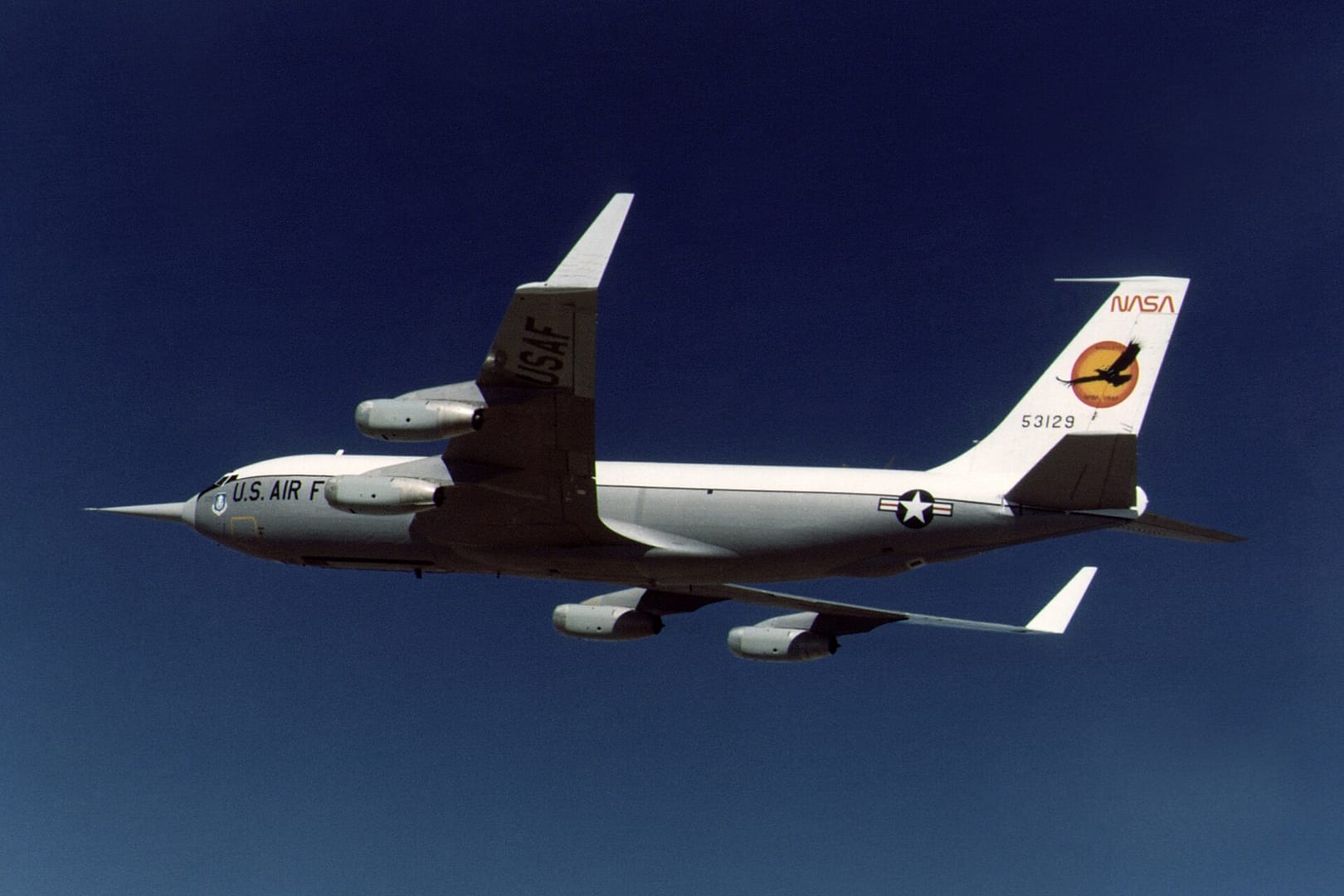
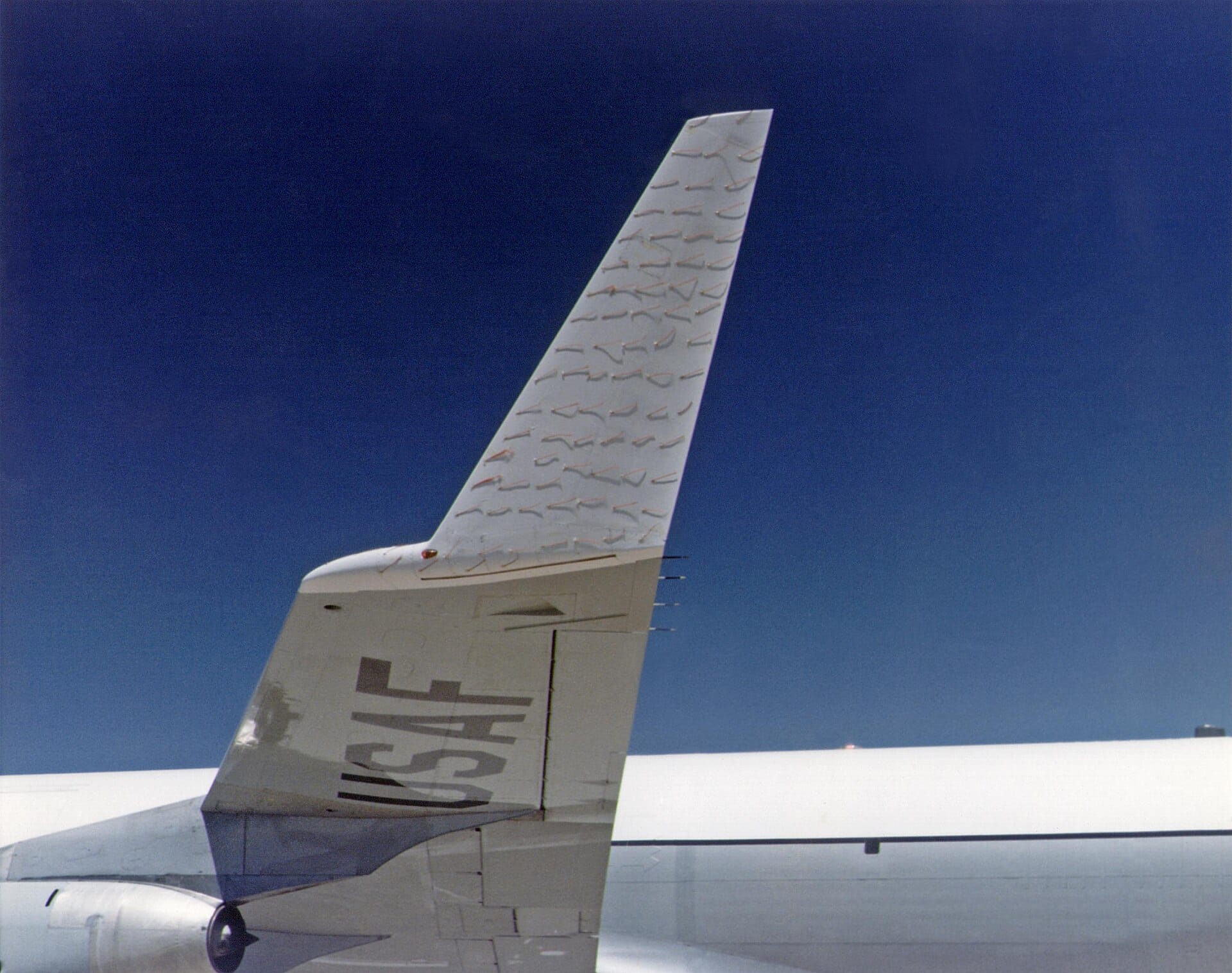
An idea that works in a wind tunnel still has to survive the real sky. To prove the winglet, NASA borrowed a KC-135 Stratotanker — tail number 55-3129 — from the U.S. Air Force, fitted it with a set of Whitcomb’s winglets, and flew it out of Dryden Flight Research Center (today NASA Armstrong) in 1979 and 1980.
The numbers came back better than many had dared hope. Across dozens of research flights, the winglet-equipped tanker showed a cruise drag reduction of roughly 6 to 7 percent, with a comparable gain in range. Wind-tunnel work had already hinted that the devices produced a small forward thrust as they tamed the vortices; the flight tests turned that hint into hard data the whole industry could trust.
Whitcomb retired from NASA in 1980, just as his third great idea was being validated in flight. He never married, kept consulting, and died in Newport News, Virginia, in 2009 at the age of 88 — by which time his three inventions were saving the airline industry billions of dollars a year, mostly without passengers ever knowing his name.
From research curiosity to near-universal
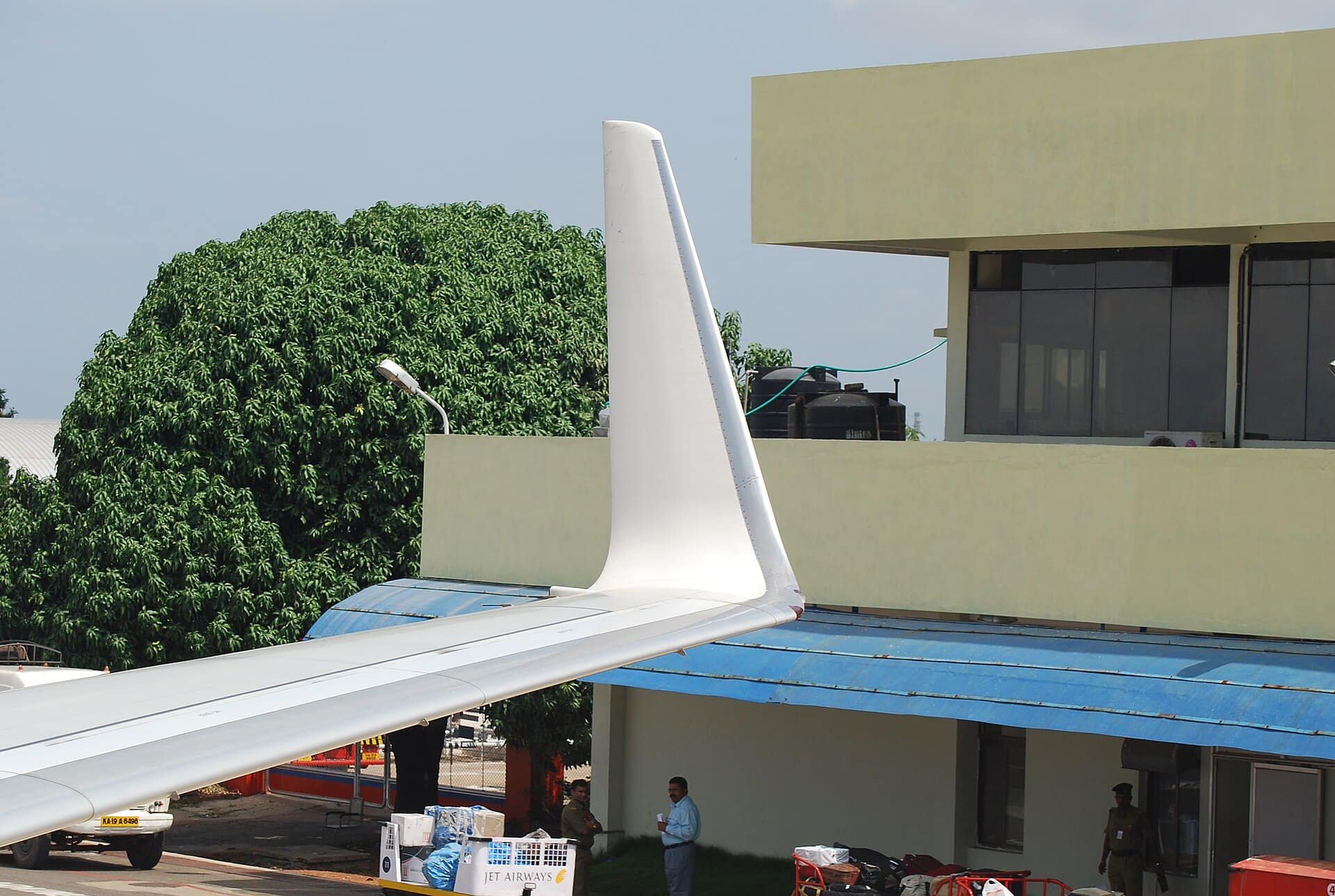
For a while, winglets stayed a niche. The Learjet 28 became one of the first production jets to wear them in the late 1970s. Boeing announced winglets for the 747-400 in the mid-1980s; the type entered service at the end of the decade, the first widebody airliner to carry them. Then, in the late 1990s, a company called Aviation Partners began selling sleek blended winglets — the curved, seamless kind — as retrofits, starting with Boeing Business Jets and then the hugely popular 737. Suddenly any airline could buy a few percent off its fuel bill.
The floodgates opened. Airbus developed its own version — marketed as the sharklet — for the A320 family and rolled the concept onto the A330neo, A350 and beyond. Boeing and Aviation Partners went further with the split scimitar, which adds a downward fin below the existing winglet for a little extra gain. Other designers skipped the vertical fin entirely in favour of long, gently swept raked wingtips, as seen on the 777 and 787.
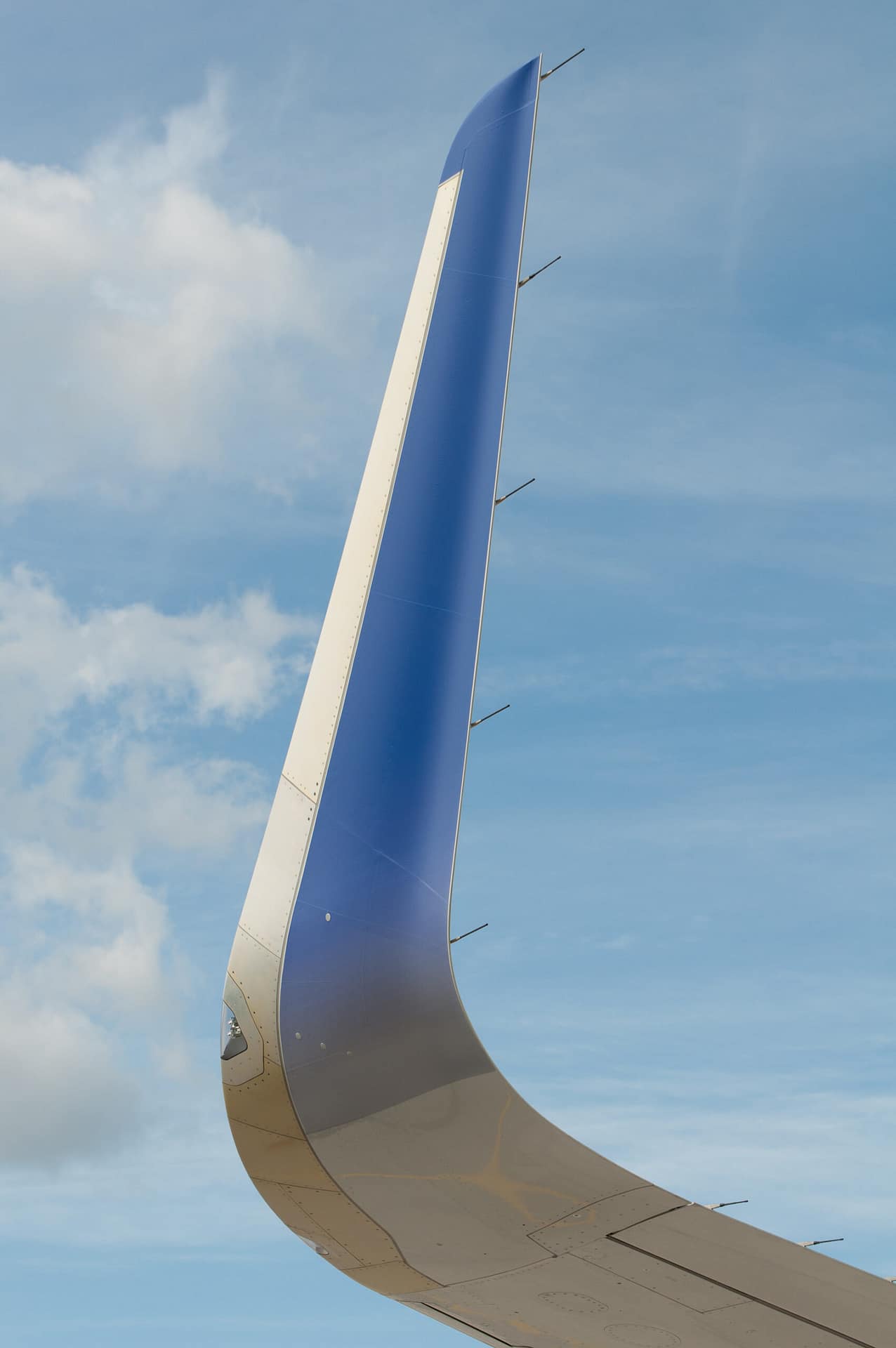
The shapes differ, but the goal is identical: make the wing behave as if it were longer and more efficient, without the weight and airport-gate headaches of an actually longer wing. A typical retrofit trims fuel burn by around 4 to 6 percent — modest on one flight, transformative across a fleet flying every day for decades.
So the next time you watch that upturned tip slice through the clouds, remember what you are looking at: not a styling cue, but a quiet, decades-long victory over an invisible whirlpool — dreamed up by a man who studied birds, and proved on a borrowed Air Force tanker. The winglet may be the most profitable little wing ever built.
Sources: NASA Langley (Richard T. Whitcomb biography); NASA Spinoff and NASA Armstrong KC-135 winglet flight-test records; Aviation Partners; Boeing and Airbus; Wikipedia.
Related Questions
What is a winglet on an airplane?
A winglet is the small, near-vertical fin at the tip of an aircraft wing. It works as a tiny wing in its own right, weakening the swirling wingtip vortex that forms there. By cutting that vortex, the winglet reduces lift-induced drag, so the aircraft burns a few percent less fuel for the same flight.
How do winglets save fuel?
Winglets reduce induced drag, the drag created as a byproduct of generating lift. At the wingtip, high-pressure air spills around the edge and forms an energy-sapping vortex. A winglet partially blocks that spillover and re-orients the airflow, shrinking the vortex. Less drag means the engines need less thrust, cutting fuel burn by roughly 4 to 6 percent.
Who invented the winglet?
The modern winglet was developed by Richard T. Whitcomb, an aerodynamicist at NASA Langley Research Center, during the 1970s. Whitcomb, who was partly inspired by the upturned tip feathers of soaring birds, also invented the area rule and the supercritical wing, making him one of the most influential figures in aircraft design.
What is a wingtip vortex?
A wingtip vortex is a tightening spiral of air that trails off the tip of a wing in flight. It forms because higher-pressure air beneath the wing spills around the open tip toward the lower-pressure air above it. These vortices are strong enough that air traffic control spaces aircraft apart to avoid wake turbulence.
When were winglets first flight-tested?
NASA first flight-tested Whitcomb winglets on a borrowed U.S. Air Force KC-135 tanker (tail number 55-3129) at its Dryden Flight Research Center in 1979 and 1980. The tests measured a cruise drag reduction of roughly 6 to 7 percent, validating the wind-tunnel predictions and paving the way for commercial adoption.
What is the difference between a sharklet, a blended winglet and a raked wingtip?
They are all wingtip devices that reduce induced drag. A blended winglet curves smoothly upward from the wing and is associated with Boeing aircraft and Aviation Partners retrofits. A sharklet is Airbus’s version for the A320 family. A raked wingtip is a long, swept extension with no upturned fin, used on the Boeing 777 and 787.
Related Posts
0 Comments