
Martin Baltimore
An American bomber built to a British order, named after a US city, and flown almost entirely by other people’s air forces — the fast, cramped, hard-working backbone of the Desert Air Force.
A História
The Martin Baltimore: America’s bomber for Britain’s desert war
The Martin Baltimore is one of the Second World War’s great unsung workhorses — an aircraft that fought hard across three years and half a dozen air forces, and yet is barely remembered today even by people who know their warplanes. Part of the reason is its unusual identity. It was designed and built in the United States, but almost never flew in American colours. It was ordered by Britain and France, named in the British style after an American city, and spent its whole operational life in the skies over the Mediterranean and North Africa, dropping bombs for the Royal Air Force and its allies.
The story begins with the Baltimore’s predecessor, the Martin Maryland. In the late 1930s the Glenn L. Martin Company of Baltimore, Maryland, built a fast twin-engined attack bomber, the Model 167, which the French and then the British bought in numbers. It was quick and pleasant to fly but cramped and short on bomb load, and its crews wanted more — more power, more room, a heavier punch. Martin’s answer was the Model 187, a deeper-bodied, more powerful development. Following the RAF’s convention of naming American types after US cities (the Maryland, the Boston, the Baltimore), the new bomber took the name of the city where it was built.
It was ordered in 1940 by the Anglo-French Purchasing Commission, the joint body buying American aircraft for the war in Europe. Then France fell, and the entire order — and every one that followed — went to Britain instead. The United States Army Air Forces did assign the type a designation of its own, the A-30, and took a handful on charge, but American units barely used it. The Baltimore was, to all intents and purposes, a British bomber that happened to be made in America.
“An American aeroplane, a British name, and a war fought almost entirely for other flags — the Baltimore did its best work as everyone’s bomber but its maker’s.”— a fair summary of the Baltimore’s odd career
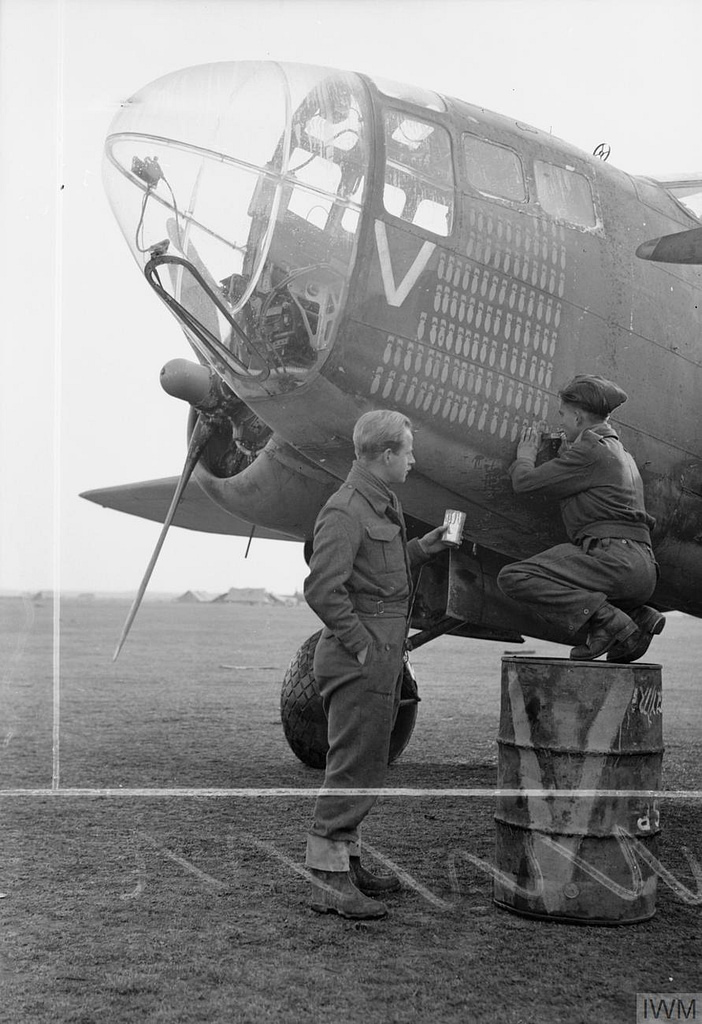
Where it earned its keep was the desert. From 1942 the Baltimore became a mainstay of the Desert Air Force, the tactical air command supporting the Eighth Army as it fought its way back and forth across North Africa. It flew as a light day bomber, going out in tight formations at medium altitude to hit airfields, supply dumps, ports, road columns and troop concentrations, usually with a fighter escort and often several times a day. It was fast for a bomber, sturdy, and — crucially — well defended, which mattered a great deal in skies still contested by German and Italian fighters.
The Baltimore did not fight alone. It was one cog in the Desert Air Force machine — a highly integrated system of fighters, fighter-bombers, light bombers and reconnaissance aircraft working in close cooperation with the Eighth Army on the ground. Baltimores would go out under fighter escort to a briefed target, bomb in formation, and come home while the fighters kept the enemy off their backs. Repeated day after day, this coordinated pressure was one of the things that gradually wore down Axis air and ground strength in North Africa, and the Baltimore was a reliable component of it.
As the war moved north, so did the Baltimore. After the Axis collapse in Tunisia the type followed the fighting into Sicily and up the length of Italy, and ranged out over the Balkans, bombing railways, bridges, ports and troop concentrations ahead of the Allied advance. The terrain was harder than the open desert and the flak often heavier, but the job was fundamentally the same: relentless tactical bombing to isolate and weaken the enemy’s forces. It was in these campaigns that the multinational character of the Baltimore fleet became most pronounced, with British, South African, Australian, French, Greek and eventually Italian crews all flying the type.
Crews had mixed feelings about it. The good news was the view: the Baltimore gave its pilot and bomb-aimer excellent visibility, which made formation flying and accurate bombing easier. The bad news was the fuselage. To keep the aircraft slim and fast, Martin had made the body deep but very narrow, and the four crew positions — pilot, bomb-aimer/navigator in the nose, and two gunners behind — were effectively sealed off from one another. Nobody could move from one station to another in flight. If the pilot was hit, no one could take the controls; if a gunner was wounded, no one could reach him. It was a design that traded crew comfort and mutual support for speed and a clean airframe, and its crews never quite forgave it for that.
Against that, the Baltimore was genuinely effective at the job it was given. It carried a useful bomb load, it was tough enough to bring crews home with heavy damage, and its defensive armament — which grew heavier through successive marks, eventually including a powered dorsal turret — made it a hard target for enemy fighters. Over Tunisia, Sicily, Italy and the Balkans it flew thousands of sorties, and it was operated not just by the RAF but by the South African Air Force, the Royal Australian Air Force, Free French units, Greek squadrons and, after Italy changed sides in 1943, the Italian Co-Belligerent Air Force. Few aircraft of the war served so many flags at once.
The Baltimore never became famous. It was overshadowed by glamorous fighters and heavy bombers, it fought in a theatre that got less press than the skies over Germany, and it flew for a patchwork of allied air arms rather than one national air force that would later celebrate it. When the war ended it soldiered on briefly with the Italian and Greek air forces before being retired and, almost entirely, scrapped. Today not a single complete Baltimore survives anywhere in the world — a startling fact for an aircraft built in four figures, and a large part of why it has slipped so far out of memory. But in the desert, when it mattered, the Baltimore was exactly the honest, hard-working bomber the Desert Air Force needed.
01The Martin Baltimore’s origins: from the Maryland to the Model 187+
The Baltimore was a direct evolution of the Martin Maryland (Model 167), a fast twin-engined attack bomber that Martin had originally offered to the US Army in the late 1930s. The Army passed on it, but France and then Britain bought the Maryland eagerly, valuing its speed. In service, though, crews found it cramped and light on bomb load, and both customers asked Martin for something with more power and a bigger punch.
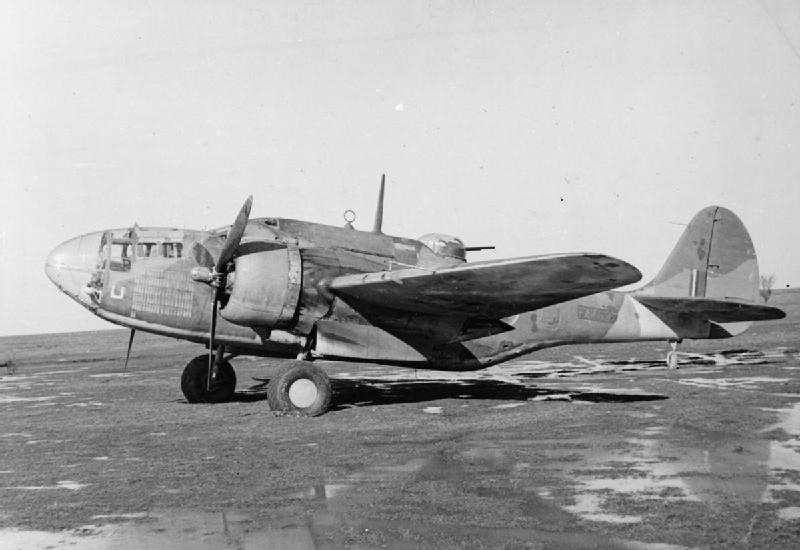
Martin’s response, the Model 187 Baltimore, kept the Maryland’s basic layout but deepened the fuselage, fitted more powerful Wright Twin Cyclone radials, and strengthened the airframe to carry more bombs and heavier defensive armament. The result looked like a beefed-up Maryland — which is essentially what it was. The lineage matters: the Baltimore was not a clean-sheet aircraft but the refinement of a design already proven, if imperfectly, in French and British hands.
02Why the Martin Baltimore was built in America but flew for Britain+
Before the United States entered the war, Britain and France bought large quantities of American aircraft through a joint body, the Anglo-French Purchasing Commission, paying cash for machines their own industries could not produce fast enough. The Baltimore was ordered under this arrangement in 1940. When France collapsed in June 1940, the French share of the order was taken over by Britain, and every subsequent Baltimore was built for the RAF.
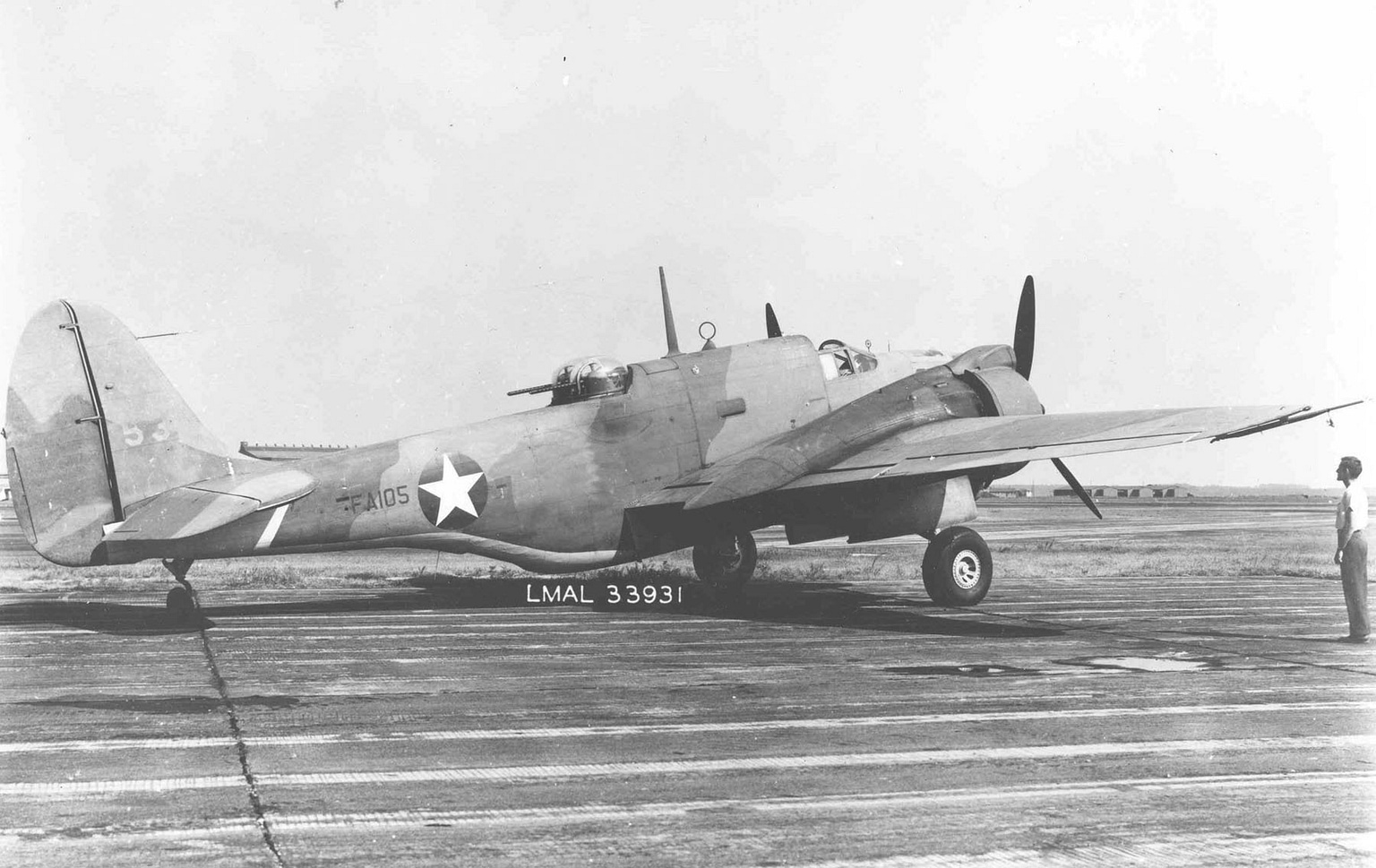
The naming followed a British habit: American aircraft in RAF service were often christened after US places or given British-sounding names. Martin’s bombers became the Maryland and the Baltimore, both named for the company’s home state and city. The US Army Air Forces later applied its own label, A-30, and accepted a small number, but the Baltimore was overwhelmingly a British and Commonwealth aircraft in everything but manufacture — a product of Lend-Lease and cash-and-carry rather than American operational need.
03The Martin Baltimore’s cramped fuselage: the design flaw crews never forgave+
The single most discussed feature of the Baltimore among its crews was the fuselage. To keep drag low and speed high, Martin gave the aircraft a body that was deep from top to bottom but strikingly narrow from side to side. The four crew members — pilot, navigator/bomb-aimer, and two gunners — each had their own compartment, but the narrowness meant those compartments were effectively sealed off from one another.
In practice this meant no crew member could move to another’s station in flight. If the pilot were killed or badly wounded, nobody could reach the controls to fly the aircraft home. If a gunner were hit, no one could give first aid. On other bombers a crew could redistribute itself in an emergency; on the Baltimore it could not. It was a genuine weakness, accepted in the name of performance, and it coloured the type’s reputation for the rest of its career — a reminder that an aircraft’s worst feature is sometimes the price of its best one.
04The Martin Baltimore in the Desert Air Force: how it was actually used+
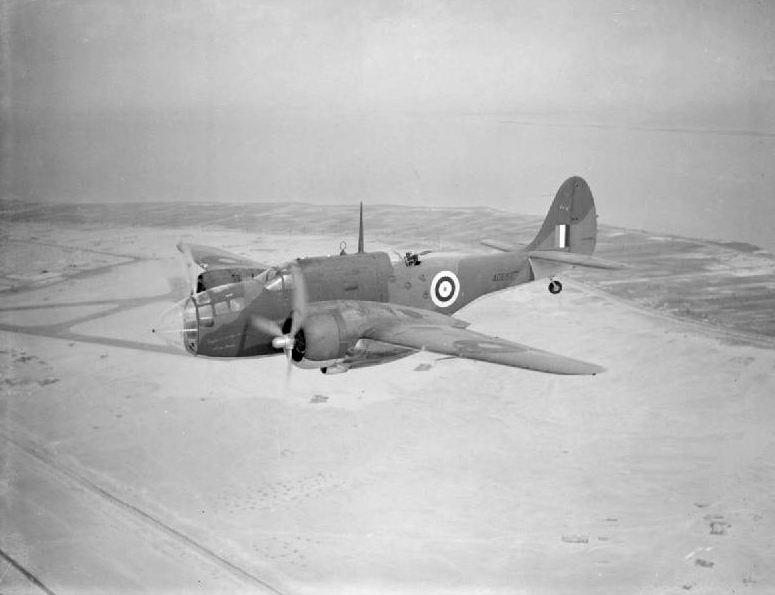
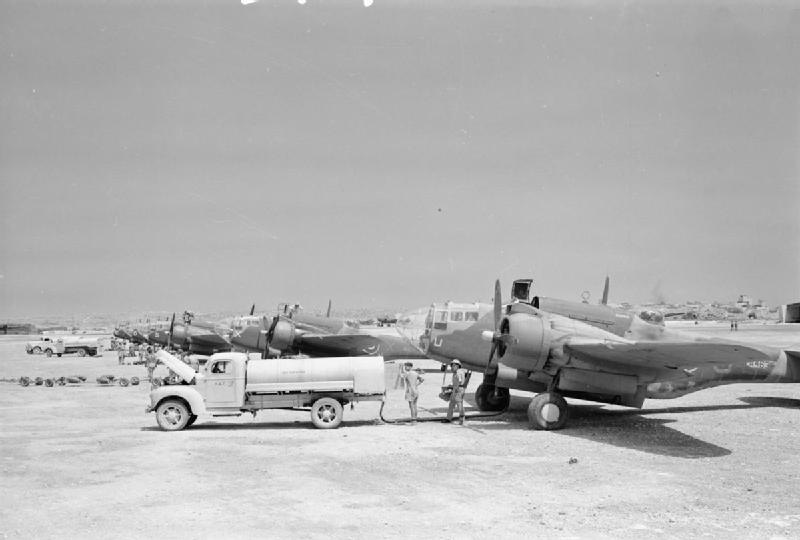
The Baltimore’s natural home was the Desert Air Force, the tactical air command that supported the British Eighth Army in North Africa and later up through Sicily and Italy. Baltimores flew as medium-altitude day bombers, typically in tight boxes of a dozen or more aircraft with a strong fighter escort, striking airfields, ports, marshalling yards, supply dumps, gun positions and columns of vehicles.
This was the unglamorous grind of tactical air power: repeated, methodical strikes to wear down an enemy’s ability to move and supply his forces. The Baltimore suited it well. It was fast enough to make interception difficult, accurate enough in the bombing role thanks to its good visibility, and rugged enough to absorb damage. Alongside the Douglas Boston and other types, it helped give the Desert Air Force the relentless offensive tempo that ground down Axis logistics in the Mediterranean.
05The Martin Baltimore’s engines and performance: the Wright Twin Cyclone+
The Baltimore was powered by two Wright GR-2600 Twin Cyclone fourteen-cylinder radials, the same well-regarded family of engines that powered the B-25 Mitchell and many other American types. Early marks used versions of around 1,600 horsepower each; later marks fitted more powerful variants, pushing the top speed to roughly 490 km/h (about 305 mph) — genuinely fast for a light bomber of its day.
That speed was the Baltimore’s headline virtue. It let the type run in and out of a target area quickly, complicated the job of enemy fighters, and gave crews a real chance of outpacing trouble on the way home. Range and bomb load were modest by heavy-bomber standards — the Baltimore was a tactical machine, not a strategic one — but for hitting targets a few hundred kilometres behind the front line, several times a day, its combination of speed and reliability was exactly right.
06The Martin Baltimore’s defensive armament: a hard target to catch+
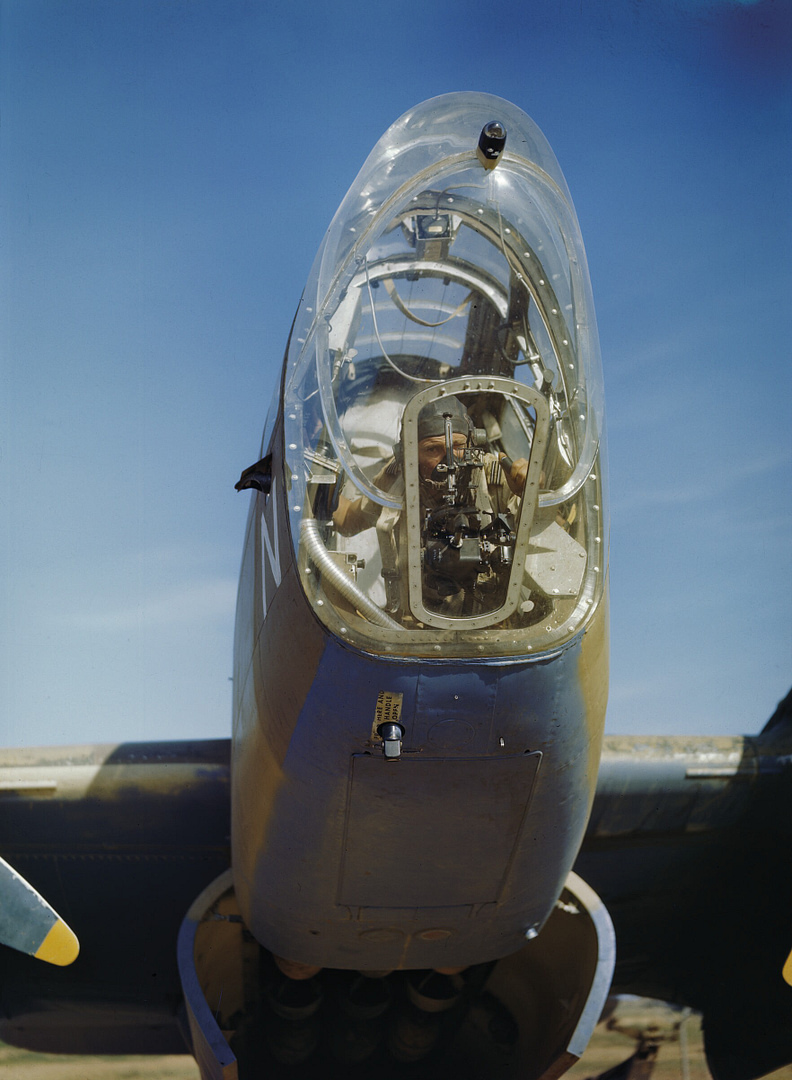
One area where the Baltimore steadily improved was self-defence. Where the earlier Maryland had been lightly armed, the Baltimore grew progressively heavier defensive firepower through its marks. Fixed machine guns in the wings gave the pilot a forward strafing capability, and the rear was covered by dorsal and ventral gun positions.
Later marks replaced hand-held dorsal guns with a powered turret, significantly improving the field and weight of fire against fighters attacking from above and behind — the classic bomber-killing approach. Combined with the Baltimore’s speed and rugged structure, this made it a genuinely awkward target. Crews reported that a formation of well-flown Baltimores, guns coordinated, could give attacking fighters a very unpleasant reception, which was no small thing in the contested skies of the Mediterranean.
07The Martin Baltimore’s many operators: a bomber of many flags+
Few wartime aircraft served under so many national badges at once. The RAF was the principal operator, but the South African Air Force flew several Baltimore squadrons in the Mediterranean and Italy, and Royal Australian Air Force squadrons under RAF command used the type over the Mediterranean and the Balkans. Free French units operated Baltimores as part of the Allied air effort, and Greek squadrons flew them too.
Most strikingly, after Italy surrendered and switched sides in 1943, the Italian Co-Belligerent Air Force — former enemies — received Baltimores and flew them against their old German allies, continuing to operate the type into the post-war years. This multinational service is part of what makes the Baltimore such an unusual aircraft to trace: it belonged fully to no single air force’s story, and so tends to fall through the cracks of national histories.
08The Martin Baltimore’s operating costs: what the records do and don’t show+
As with most Lend-Lease and cash-and-carry aircraft of the period, the Baltimore has no clean, reliable published figure for unit cost, cost per flight hour or total programme cost. It was procured through complex wartime financial arrangements between governments rather than sold at a transparent list price, and the surviving records are fragmentary. Any precise dollar figure quoted for it online should be treated with caution.
What can be said is that the Baltimore was a conventional, mass-produced twin built on an established design and engine family, which kept it relatively economical to build and maintain by the standards of the day. It was cheap enough, and available enough, to equip numerous squadrons across several air forces. We list its cost fields as “not reliably recorded” rather than invent numbers that the sources do not support.
09Why no Martin Baltimore survives today+
One of the more remarkable facts about the Baltimore is that, despite roughly 1,575 being built, no complete example is known to survive anywhere in the world. This is unusual for an aircraft produced in such numbers, and it comes down to a combination of factors: the type fought and was worn out far from home, it was operated by air forces that scrapped it quickly after the war, and it was never adopted as a national icon whose preservation anyone championed.
What does survive are fragments and wreck sites — the remains of aircraft lost over the Mediterranean and elsewhere, some of which have been surveyed by divers and aviation archaeologists. There is periodic interest in recovering and one day reconstructing a Baltimore, but for now the type exists only in photographs, documents, museum components and the seabed. Its total disappearance as a flying or even static airframe is itself a small monument to how completely the tactical workhorses of the war were used up and discarded.
Design & Engineering
How the Martin Baltimore was built: speed and firepower over comfort
The Baltimore was a conventional all-metal twin, competently engineered around a clear priority — a fast, well-armed tactical bomber — with crew comfort deliberately sacrificed to get it.
A deep, narrow fuselage
All-metal construction with a body made deep top-to-bottom but very narrow side-to-side, keeping frontal area and drag low. It gave speed and a clean line, at the cost of a cramped interior whose crew stations could not be reached from one another in flight.
Twin Wright radials
Two Wright GR-2600 Twin Cyclone fourteen-cylinder radials, from the same reliable family that powered the B-25. Roughly 1,600–1,700 hp each depending on the mark, giving a top speed near 490 km/h — fast for a light bomber.
Growing teeth
Fixed forward guns, dorsal and ventral defensive positions, and on later marks a powered dorsal turret. The Baltimore’s defensive firepower increased steadily, making it a hard target for fighters attacking a well-flown formation.
Especificações
Martin Baltimore specifications: dimensions, performance and cost
| Tipo | Twin-engine light / attack bomber |
| Equipe | 4 (pilot, navigator/bomb-aimer, 2 gunners) |
| Comprimento | ~14.8 m (48 ft 6 in) — approx. |
| Envergadura | ~18.7 m (61 ft 4 in) — approx. |
| Altura | ~5.4 m (17 ft 9 in) — approx. |
| Engines | 2 × Wright GR-2600 Twin Cyclone 14-cyl radial |
| Power | ~1,600–1,700 hp each (mark-dependent) |
| Bomb load | ~2,000 lb (~900 kg) — typical |
| Defensive guns | Multiple .303 in (and .50 in) MG; powered dorsal turret on later marks |
| Fixed guns | 4 × forward-firing wing MG |
| Max speed | ~490 km/h (~305 mph) — est., mark-dependent |
| Teto de serviço | ~7,100 m (~23,300 ft) — est. |
| Faixa | ~1,600 km (~1,000 mi) — est. |
| First flight | June 1941 |
| Introduced (RAF) | 1942 |
| Retired | late 1940s (Italy, Greece post-war) |
| Number built | ~1,575 (figures vary) |
| Main variants | Mk I–V (A-30 / A-30A in US nomenclature) |
| Unit cost | not reliably recorded (wartime Lend-Lease) |
| Cost per flight hour | not reliably recorded (wartime) |
| Programme cost | not reliably recorded (wartime) |
| Fleet flight hours | not reliably recorded (wartime) |
10The Martin Baltimore’s variants: from Mk I to Mk V+
The Baltimore was produced in a series of marks, broadly Mk I through Mk V, that traced a steady increase in power and defensive armament rather than any radical change of shape. Early marks (Mk I–III) established the type in service with hand-operated or lighter dorsal armament; later marks (Mk IIIA, IV and V) introduced a powered dorsal turret and more powerful engines, improving both firepower and performance.
In American nomenclature the turret-equipped, US-built-for-Lend-Lease versions were designated A-30 and A-30A. The differences between marks were evolutionary and cumulative — a bomber being continuously improved in production to keep pace with the tactical air war — rather than distinct new models. For most of its front-line career the Baltimore that mattered was the later, turret-armed, higher-powered version.
11The Martin Baltimore compared: Maryland, Boston and B-25 Mitchell+
The Baltimore belongs to a whole family of American twin-engined bombers that fought in Allied hands during the war, and it helps to place it among them. Its direct ancestor, the Martin Maryland, was smaller, lighter and less heavily armed — the Baltimore was essentially the Maryland grown up. Alongside it in the Mediterranean flew the Douglas Boston (the RAF name for the A-20 Havoc), a broadly comparable light bomber that many crews found roomier and more pleasant, and which is far better remembered today.
Larger still was Martin’s own B-26 Marauder, a fast medium bomber in a different weight class, and the North American B-25 Mitchell, which shared the Baltimore’s Wright Twin Cyclone engines but carried more and flew further. Against these the Baltimore occupied a specific niche: a fast, well-defended light day bomber for tactical work at short-to-medium range. It was not the most capable or the most comfortable of the group, but in the Desert Air Force’s hands it did a particular job efficiently, and it did it in large numbers.
12The Martin Baltimore’s crew: four men in four boxes+
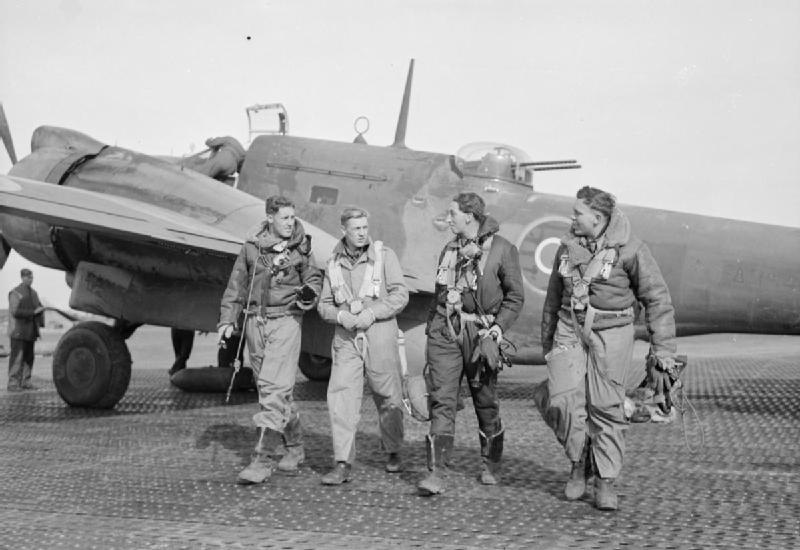
A Baltimore carried a crew of four: the pilot, a navigator/bomb-aimer in the glazed nose, and two gunners in the rear covering the dorsal and ventral positions. Because of the narrow fuselage, each occupied what was effectively a separate compartment, and the four could neither see much of one another nor swap places in the air. It made for an isolating flying experience, especially for the gunners tucked into the rear.
That isolation had real operational consequences. On other bombers a wounded pilot might be pulled from his seat and replaced, or an injured man moved to safety and treated; on the Baltimore, each man was on his own for the duration of the sortie. Crews learned to rely on the aircraft’s speed and armament to keep them out of trouble in the first place, because if trouble arrived, there was very little they could do to help each other. It is a detail that says a great deal about the hard bargains of wartime aircraft design.
13The hunt for a surviving Martin Baltimore: wrecks and recovery+
With no complete Baltimore left in any museum, what interest survives has turned to wrecks. A number of Baltimores were lost over or into the Mediterranean, and some of these underwater sites have been located and surveyed by divers and aviation archaeologists, offering a rare direct look at the type’s structure. Scattered components — instruments, guns, sections of airframe — also survive in collections.
From time to time there is talk of recovering a Baltimore for preservation or even long-term reconstruction, and the total absence of the type from the world’s museums gives such efforts real appeal. For now, though, the Baltimore remains uniquely absent: an aircraft you can read about and see in hundreds of wartime photographs, but cannot stand in front of anywhere on earth. That absence is part of its story, and part of why it deserves a proper record.
Timeline
The Martin Baltimore through the years
Martin builds the Model 167 Maryland, a fast twin bought by France and Britain. Its cramped cabin and light bomb load prompt calls for a more capable successor.
The Model 187 Baltimore is ordered through the Anglo-French Purchasing Commission. When France falls in June 1940, the whole order passes to Britain.
The Baltimore makes its maiden flight in June 1941. Deliveries to the RAF begin as the type works up for operations.
The Baltimore enters combat with the Desert Air Force in North Africa, flying day-bombing sorties in support of the Eighth Army around the fighting at El Alamein.
Baltimores support the Allied advance through Tunisia and into Sicily. After Italy’s surrender, the Italian Co-Belligerent Air Force begins receiving the type.
Baltimores of the RAF, SAAF, RAAF, Free French and Greek units fly intensively over Italy and the Balkans, bombing and reconnoitring ahead of Allied ground forces.
With the war in Europe over, the Baltimore’s front-line role winds down. Most RAF examples are quickly withdrawn and disposed of.
Italy and Greece fly Baltimores on into the post-war years before retiring them. The type is scrapped so thoroughly that no complete airframe survives today.
Stories & Eyewitnesses
The Martin Baltimore in stories: the moments that defined it
An American bomber with a British name, a cramped cabin its crews cursed, a heavy punch its enemies respected, and a service record spread across half the Allied air forces — the Baltimore’s history told through the moments that stuck.
A City’s Name
Named for the place that built it
Following RAF practice, the bomber took the name of its birthplace: Baltimore, Maryland.
British convention gave many American aircraft the names of US cities and states, and Martin’s bombers fitted the pattern neatly: the Maryland and the Baltimore, both named for the company’s home. It is a small quirk that captures the aircraft’s whole identity — American-made, British-badged.
The name stuck so firmly that the type is almost always called simply “the Baltimore”, its Martin Model 187 and A-30 designations forgotten. Few aircraft are so completely known by a name their own maker’s country barely used.
France Falls
An order that changed hands mid-war
Ordered jointly by Britain and France, the Baltimore became wholly British when France collapsed in 1940.
The Anglo-French Purchasing Commission had placed the order to strengthen the Allied air forces facing Germany. When France fell in June 1940, its share — and every later Baltimore — was taken over by Britain, which suddenly needed every aircraft it could buy.
It was a pattern repeated with several American types in 1940: designs bought for one war became urgently needed for another, and aircraft meant to fly from French fields ended up over the Western Desert instead.
The Narrow Cabin
Sealed in your seat
The Baltimore’s deep, thin fuselage meant no crew member could reach another in flight.
To stay fast, the Baltimore was built narrow, and its four crew compartments were effectively isolated from one another. If the pilot was hit, no one could take over; if a gunner was wounded, no one could help him. Crews knew it, and flew with the knowledge.
It was the defining complaint about the aircraft — a stark example of the trade-offs designers made under wartime pressure, buying performance with a real cost in crew safety and morale.
El Alamein
Working the desert
From 1942 the Baltimore became a Desert Air Force fixture, bombing in support of the Eighth Army.
The Baltimore reached its stride over the Western Desert, flying tight formations against Axis airfields, ports and supply lines around the decisive fighting at El Alamein. This was tactical air power at its most relentless: repeated daylight raids to strangle the enemy’s ability to move and fight.
It was not glamorous flying, but it was effective, and it was constant. The Baltimore squadrons became part of the machinery that ground down Axis logistics in North Africa.
Fighter Bait, Fighter Foe
A hard target to catch
Fast and well armed, a Baltimore formation could give attacking fighters a rough time.
The Baltimore’s speed made interception difficult, and its growing defensive armament — culminating in a powered dorsal turret — meant fighters that did close in faced concentrated fire. A disciplined formation, guns coordinated, was a genuinely dangerous target.
Combined with a rugged airframe that could soak up damage, this gave crews a fighting chance in skies still contested by German and Italian fighters — and a better survival rate than a lightly armed bomber would have managed.
Many Flags
Everyone’s bomber
RAF, South African, Australian, Free French and Greek squadrons all flew the Baltimore.
Few wartime aircraft served so many air forces simultaneously. The SAAF was a major operator, RAAF squadrons flew it under RAF command, and Free French and Greek units took it into action across the Mediterranean and Balkans.
This multinational service is part of why the Baltimore is so easily overlooked: it never belonged wholly to one nation’s wartime narrative, and so slipped between the cracks of the histories each of those air forces later told about themselves.
Former Enemies
The Italians who flew it against Germany
After Italy switched sides in 1943, its Co-Belligerent Air Force flew Baltimores against the Germans.
One of the war’s stranger turns: after Italy’s 1943 surrender, the Italian Co-Belligerent Air Force received Baltimores and used them against their former German allies. Italian crews flew the American-built, British-named bomber in the closing campaigns of the war.
They kept flying it afterwards, too, operating Baltimores into the post-war years — one of the type’s last chapters, and one of its most improbable.
Recce & Maritime
More than a bomber
Baltimores also flew reconnaissance and maritime patrol, not just level bombing.
Its speed and good visibility made the Baltimore useful for photographic and tactical reconnaissance, and some were used for maritime patrol over the Mediterranean. Like many tactical twins, it was adapted to whatever the theatre needed.
This flexibility helped keep the type busy and relevant across a long and shifting campaign, from the open desert to the mountains of Italy and the coasts and islands of the central Mediterranean.
Good View, Hard Ride
What the crews said
Pilots praised the visibility and the speed; everyone cursed the cramped, isolating cabin.
Crew opinion of the Baltimore tended to split the same way. The pilot’s and bomb-aimer’s outstanding visibility, the aircraft’s turn of speed and its sturdy structure won real praise. The narrow, sealed-off fuselage that trapped each man at his station did not.
It was, in the crews’ verdict, a good aeroplane to fly and a nerve-wracking one to be trapped inside — effective at its job, but never comfortable or reassuring in the way a well-laid-out bomber could be.
The Overshadowed
Lost in the war’s big stories
A tactical bomber in a secondary theatre, flying for many flags, was easy to forget.
The Baltimore had every ingredient for obscurity: it was a workmanlike tactical bomber rather than a glamorous fighter or a strategic heavy; it fought mainly in the Mediterranean, a theatre that got less coverage than the bomber offensive over Germany; and it flew for a patchwork of allied air forces rather than one that would later lionise it.
The result is an aircraft that did enormous, useful work and is barely remembered for it — exactly the kind of unsung machine that an encyclopedia like this exists to bring back into view.
Vanished
Not a single one left
Despite around 1,575 built, no complete Baltimore survives anywhere today.
Perhaps the most remarkable thing about the Baltimore is its total disappearance. An aircraft built in four figures, flown by half a dozen air forces, has left not one complete airframe in any museum in the world. It was used up in a hard campaign and scrapped without ceremony afterwards.
What remains are photographs, documents, scattered components and wreck sites on the Mediterranean seabed. For enthusiasts the Baltimore is a ghost — abundant in history, absent in the metal.
Legacy
The honest workhorse
The Baltimore won no fame, but it did the Desert Air Force’s hard, daily work well.
Judged by fame, the Baltimore is a footnote. Judged by contribution, it was a dependable, effective tactical bomber that flew thousands of sorties in support of the Allied campaigns in the Mediterranean, in the hands of crews from many nations.
It is a reminder that wars are won as much by unglamorous workhorses as by famous machines — and that being forgotten is not the same as having been unimportant.
Photo Gallery
The Martin Baltimore in photographs
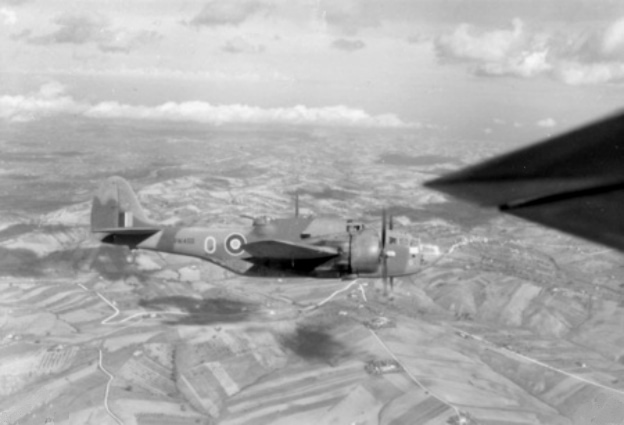
Wartime photographs from the Imperial War Museum collection and US archives, each credited to its source and licence. Click any photo to enlarge.
On Film
The Martin Baltimore on video: a documentary history
A dedicated documentary on the Baltimore — how an American bomber built to a British order became a Desert Air Force workhorse, and why so few people remember it.
“Martin Baltimore; the RAF’s Skinny American” by Ed Nash’s Military Matters (approx. 77,000 views at time of writing; running time ~14 minutes). A well-sourced documentary treatment of the type’s origins, service and quirks.
Operations Overview
Where the Martin Baltimore flew: an operator map
Built in the United States, flown almost entirely by the RAF and its allies across the Mediterranean and North Africa. Toggle the categories to see the Baltimore’s reach; hover or tap a country for detail. Figures are approximate and hedged.
Categories: Design & Manufacture (United States) · RAF Desert Air Force (United Kingdom) · Commonwealth & Allied Operators (South Africa, Australia, Free France, Greece) · Italian Co-Belligerent & Post-war Use (Italy). Operator list is approximate; some sources also cite Turkey. No complete airframe survives.
Service Record
The Martin Baltimore’s record: a Mediterranean workhorse
The Baltimore’s contribution was measured not in famous victories but in a steady weight of tactical sorties across a long campaign.
Questions & Answers
Martin Baltimore: your questions answered
Can I fly in a Martin Baltimore?
No — and in this case nobody can, anywhere. Not a single complete Martin Baltimore survives in the world; the type was scrapped so thoroughly after the war that only fragments and wreck sites remain. There is no airworthy or even static example, and no bookable Baltimore experience of any kind. If what you actually want is the real thing — strapping into a genuine military aircraft and flying it — you very much can do that today in other types. MiGFlug arranges flights in real fighter jets and warbirds around the world. Start here: migflug.com/flights-prices.
Why was the Martin Baltimore built in America but flown by the RAF?
It was ordered from the Glenn L. Martin Company by the Anglo-French Purchasing Commission before the United States entered the war. When France fell in 1940 the whole order passed to Britain, and every Baltimore built after that went to the RAF and its allies. The US Army Air Forces gave it the designation A-30 and took a few, but used it very little. It was, in effect, a British bomber manufactured in the United States.
Why did the Baltimore have such a bad reputation for its cabin?
To keep the aircraft fast, Martin made the fuselage deep but very narrow, which sealed the four crew members off from one another. No one could move between stations in flight, so if the pilot was wounded nobody could take over, and an injured gunner could not be reached. Crews accepted the layout for the sake of the Baltimore’s speed, but it was the single feature they disliked most.
What was the Martin Baltimore used for?
Primarily as a light day bomber with the Desert Air Force, striking airfields, ports, supply lines and troop positions across North Africa, Sicily, Italy and the Balkans. It also flew reconnaissance and some maritime patrol. It was a tactical aircraft — fast, well defended and rugged — rather than a long-range strategic bomber.
How many Martin Baltimores were built, and do any survive?
Around 1,575 were built by Martin in Baltimore, Maryland (figures vary slightly between sources). Remarkably, despite that number, no complete Baltimore survives anywhere in the world today — only fragments, recovered components and wreck sites remain. It is one of the more completely vanished mass-produced aircraft of the war.
Which air forces flew the Martin Baltimore?
The RAF was the main operator, joined by the South African Air Force, Royal Australian Air Force squadrons under RAF command, Free French units and Greek squadrons. After Italy changed sides in 1943, the Italian Co-Belligerent Air Force also flew the Baltimore, continuing to use it after the war. Some sources additionally mention small numbers reaching Turkey.
How does the Baltimore relate to the Martin Maryland?
The Baltimore (Martin Model 187) was a direct development of the earlier Martin Maryland (Model 167). The Maryland was fast but cramped and light on bomb load; the Baltimore deepened the fuselage, fitted more powerful Wright Twin Cyclone engines and carried heavier armament and bombs. They are clearly members of the same family, with the Baltimore the larger, more capable successor.
Was the Martin Baltimore a good aircraft?
For its tactical role, yes. It was fast, sturdy, well armed and gave excellent visibility, which made it an effective and survivable day bomber in the Mediterranean. Its great drawback was the cramped, isolating fuselage. On balance it was a solid, useful workhorse — not a war-winner or a famous name, but a dependable tool that did a great deal of hard work well.
What engines powered the Martin Baltimore, and how fast was it?
The Baltimore was powered by two Wright GR-2600 Twin Cyclone fourteen-cylinder radials — the same engine family used by the B-25 Mitchell — of roughly 1,600 to 1,700 horsepower each depending on the mark. That gave it a top speed of around 490 km/h (about 305 mph), genuinely fast for a light bomber of the period and one of the type’s key strengths, letting it run in and out of targets quickly and complicating the job of enemy fighters.
Fly For Real
You can’t fly the Martin Baltimore — but these, you can
Not one complete Baltimore exists, so no one will ever fly it again. The urge behind it — to strap into a real military aircraft and actually fly — is very much still bookable. MiGFlug puts you in genuine fighters and warbirds around the world.
Fighter Jet Flights
Take the controls of a real ex-military jet with an experienced pilot.
Warbird experiences
Fly in a genuine piston-engined warbird from the era of the Baltimore.
All flights are operated by MiGFlug’s vetted partners with professional pilots. Browse every option and current pricing at migflug.com/flights-prices. MiGFlug does not operate Martin Baltimore flights — no complete Baltimore survives anywhere in the world.
Related Aircraft
If the Martin Baltimore interests you, explore these
Sources & Further Reading
Where this Martin Baltimore history comes from
Note on figures: dimensions, performance and production numbers for the Baltimore vary between sources and are hedged here as approximate. Cost fields are listed as not reliably recorded because trustworthy wartime Lend-Lease cost data is not available. No complete original Martin Baltimore is known to survive anywhere in the world; only fragments, recovered components and wreck sites remain.