
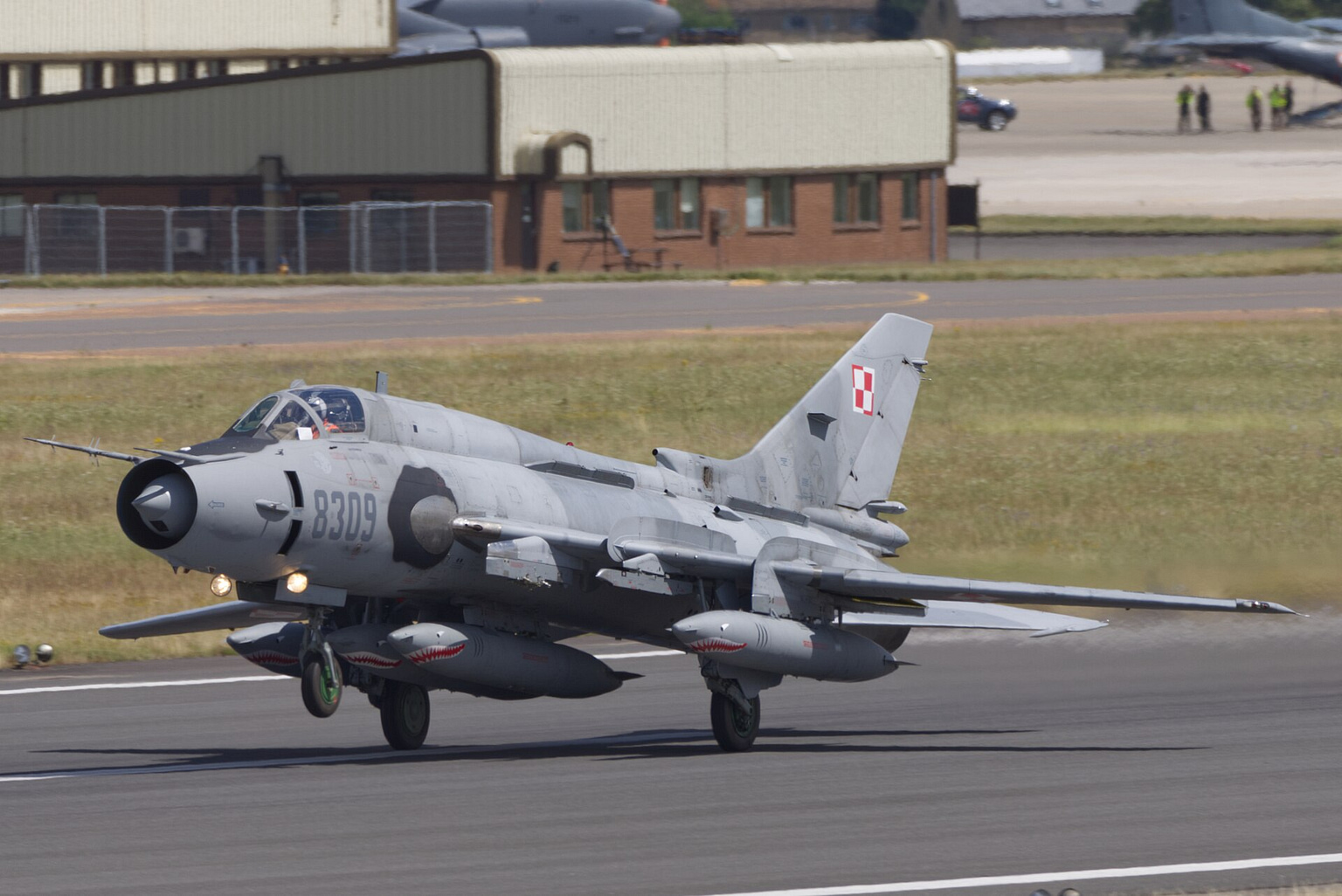
Sukhoi Su-17 / Su-22
“Fitter”
The Soviet swing-wing workhorse that squeezed a whole new aircraft out of the fixed-wing Su-7 — only the outer wing panels moved, but the fix turned a marginal fighter-bomber into a rugged strike jet that armed a dozen air forces and still flew into the 2020s.
A clever, cheap fix that made an old jet new
By the early 1960s Sukhoi’s Su-7 was a fast, sturdy fighter-bomber with one glaring weakness: its thin, sharply swept fixed wing needed enormous runways and could not haul much fuel or ordnance. Rather than design a wholly new aircraft, Sukhoi tried a shortcut. On a converted Su-7 — the S-22I demonstrator, first flown by Vladimir Ilyushin on 2 August 1966 — the engineers left the inner wing fixed and made only the outer panels swing. It was a deliberately modest, low-risk solution, and it worked.
Spreading the outer panels forward for takeoff and landing dramatically shortened the run and boosted low-speed lift and load; sweeping them back kept high speed at altitude. The production aircraft, the Su-17, entered Soviet service around 1970. Because it shared so much with the Su-7 it was cheap to build and easy for ground crews and pilots already familiar with the older jet.
The type became one of the Soviet bloc’s standard tactical strike aircraft and a major export. The domestic version was the Su-17; downgraded export models were sold as the Su-20 and, most widely, the Su-22. Roughly 2,867 were built between 1969 and 1990, and the family saw long, widespread service — a handful of operators kept Fitters flying into the 2020s, with Poland, the last European user, phasing its fleet out around 2025.
01Why the Su-22 Fitter swings only its wingtips, not the whole wing
Full variable-geometry wings — as on the American F-111 or the later MiG-23 — are heavy and complex, with pivots buried near the fuselage and elaborate structure to carry the loads. Sukhoi could not justify that cost simply to fix the Su-7’s field performance. So the design bureau placed the pivots partway out along the wing, leaving a large fixed inner glove and swinging only the outer sections. The moving panels are lighter and the fixed inner wing still carries the landing gear and pylons.
The trade-off is that a part-span swing wing gives less of a change in overall sweep and area than a full one, so the aerodynamic benefit is smaller. But it was cheap, robust and good enough: takeoff and landing distances fell sharply and payload and range improved, all on an airframe that shared much of its tooling with the Su-7. It is often cited as a textbook example of a pragmatic engineering compromise.
What makes the Su-22 special
The part-span swing wing
The Fitter’s defining feature is its part-span variable-geometry wing: only the outer panels pivot, between roughly 30° and 63°. Spread forward, they cut the Su-7’s long takeoff and landing runs and let the aircraft lift more fuel and weapons; swept back, they preserve speed at altitude. It was a cheap, low-risk way to fix the older jet’s biggest weakness without a clean-sheet design.
The big Lyulka AL-21 engine
Most definitive Fitters, including the Su-22M4, are built around a single Lyulka AL-21F-3 afterburning turbojet of roughly 110 kN (about 24,700 lbf) in reheat. It is a large, powerful and thirsty engine that gives the single-engined Fitter brisk acceleration and a useful war load, at the cost of high fuel consumption. Some earlier export Su-22s instead used the Tumansky R-29 engine.
A rugged, simple export workhorse
The Fitter was built to be tough, cheap and easy to operate from rough forward airfields. Its systems are relatively simple, it tolerates hard use, and it can carry a wide mix of bombs, rockets and guided weapons on around ten hardpoints, plus two built-in 30 mm cannon. Those qualities made it a natural export: it served across the Warsaw Pact, the Middle East, Africa, Asia and Latin America.
02The Su-22’s wing sweep: what the pilot actually controls
Unlike a fully automatic swing wing, the Fitter’s outer panels are set by the pilot to suit the phase of flight — broadly spread for takeoff, landing and low-speed manoeuvre, and swept for high-speed flight. Sources describe both selectable fixed positions and intermediate settings across the roughly 30°-to-63° range. Because only the outer panels move, the change in total wing area is modest compared with a full variable-geometry design, so the Fitter is best understood as a fast strike aircraft with much-improved field performance rather than an agile dogfighter.
03Su-17, Su-20, Su-22: how the same jet got three names
The confusion of designations reflects Cold-War export policy. The Su-17 was the domestic Soviet version. The Su-20 was an early, somewhat downgraded export model. The Su-22 covered the main export families, some with the Tumansky R-29 engine and simplified avionics and others — like the Su-22M4 — close to the Soviet standard with the Lyulka AL-21F-3. NATO gave the whole family one reporting name, “Fitter,” with letter suffixes (Fitter-C, -G, -K and so on) for individual variants.
Full specifications
Figures are for the Su-22M4 (Fitter-K), the definitive export variant. Published values vary between sources; treat them as representative.
Airframe & Performance
- Экипаж
- 1 (two-seat trainers seat 2)
- Длина
- ~19.0 m
- Wingspan (spread)
- ~13.7 m
- Wingspan (swept)
- ~10.0 m
- Высота
- ~5.1 m
- Outer-wing sweep
- ~30° to 63°
- Max takeoff weight
- ~19,500 kg
- Max speed
- ~Mach 1.7 (~1,860 km/h) at altitude
- Служебный потолок
- ~14,000–15,000 m
- Боевой радиус
- ~1,150 km (with load)
Propulsion & Armament
- Двигатель
- 1 × Lyulka AL-21F-3 turbojet
- Толкать
- ~110 kN (~24,700 lbf) with afterburner
- Cannon
- 2 × 30 mm NR-30
- Точки крепления
- ~10, up to ~4,000 kg of ordnance
- Weapons
- Bombs, rockets, Kh-23/25/29 missiles, gun pods
- First flight
- 2 August 1966 (S-22I demonstrator)
- Built
- ~2,867 family total (1969–1990)
- Unit cost
- No reliable public figure
04The Su-22’s cost: why no reliable price exists
Like other Soviet combat aircraft, the Su-17/Su-22 was a state product supplied to allies and clients on political and barter terms rather than sold on an open dollar market, so no firm flyaway unit price exists in the public record. Export deals were bundled with training, spares and credit arrangements that make any single figure meaningless. No credible cost-per-flight-hour number exists in open sources either. Any precise dollar figure attached to a Fitter should be read as an estimate, not a sourced fact.
From Su-7 offshoot to long-serving workhorse
Swing-wing demonstrator flies
The S-22I — a converted Su-7 with swinging outer wing panels — first flies on 2 August, piloted by Vladimir Ilyushin.
Su-17 enters service
Serial production begins and the Su-17 joins the Soviet Air Forces as a tactical fighter-bomber.
Exports as Su-20 and Su-22
Downgraded export versions spread to Warsaw Pact and client states across the Middle East, Africa and beyond.
Gulf of Sidra
Two Libyan Su-22 Fitters are shot down by US Navy F-14 Tomcats after one fires a missile — the type’s most famous air-to-air loss.
Iran–Iraq & Afghanistan
Iraqi and Soviet Fitters fly intensive ground-attack and strike missions in two major wars of the decade.
Production ends
After roughly 2,867 aircraft, Su-17/20/22 production winds down as the Cold War closes.
Shootdown over Syria
A US Navy F/A-18E downs a Syrian Su-22 near Raqqa on 18 June — the first US manned air-to-air kill in nearly two decades.
The last European Fitters
Poland retires its Su-22 fleet, ending the type’s frontline service in Europe; a few operators elsewhere linger on.
Twelve Fitter stories
The jet that came from another jet
Sukhoi fixed the Su-7’s runway problem by swinging only its wingtips.
Read the full story
A pragmatic compromise
The part-span wing gave most of the benefit of a swing wing for a fraction of the cost.
Read the full story
One jet, three numbers
Su-17 at home, Su-20 and Su-22 for export — and one NATO name, “Fitter.”
Read the full story
The Gulf of Sidra shootdown
Two Libyan Su-22s were downed by US Navy F-14 Tomcats off the Libyan coast.
Read the full story
Iran–Iraq War
Iraqi Fitters flew intensive strike missions through the long 1980s war.
Read the full story
The Soviet-Afghan War
Soviet Su-17s were among the workhorses of the air war over Afghanistan.
Read the full story
Fitters flee to Iran
In the 1991 Gulf War, Iraqi Su-22s were among aircraft flown to Iran to escape destruction.
Read the full story
Shootdown over Syria
A US Navy Super Hornet downed a Syrian Su-22 near Raqqa on 18 June 2017.
Read the full story
A contested Syrian mission
Su-22s were linked to a 2017 chemical attack — a claim Syria and Russia disputed.
Read the full story
From Peru to Vietnam
The Fitter armed air forces on four continents.
Read the full story
Still flying in the 2020s
Decades after the USSR fell, a handful of air forces kept Fitters in the air.
Read the full story
The end of a Sukhoi line
The Fitter closed out the family that began with the Su-7.
Read the full story
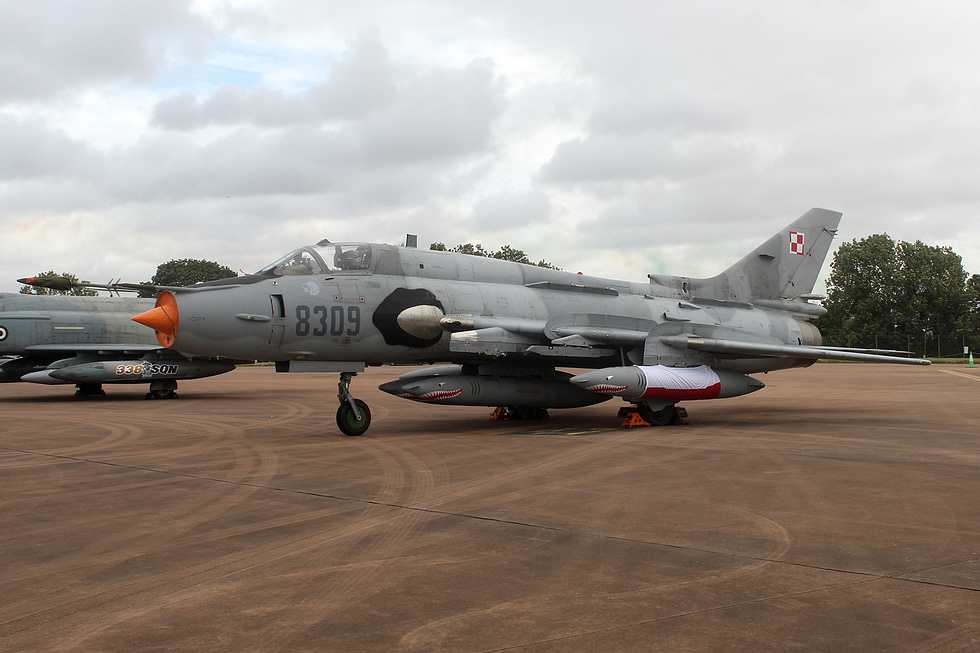
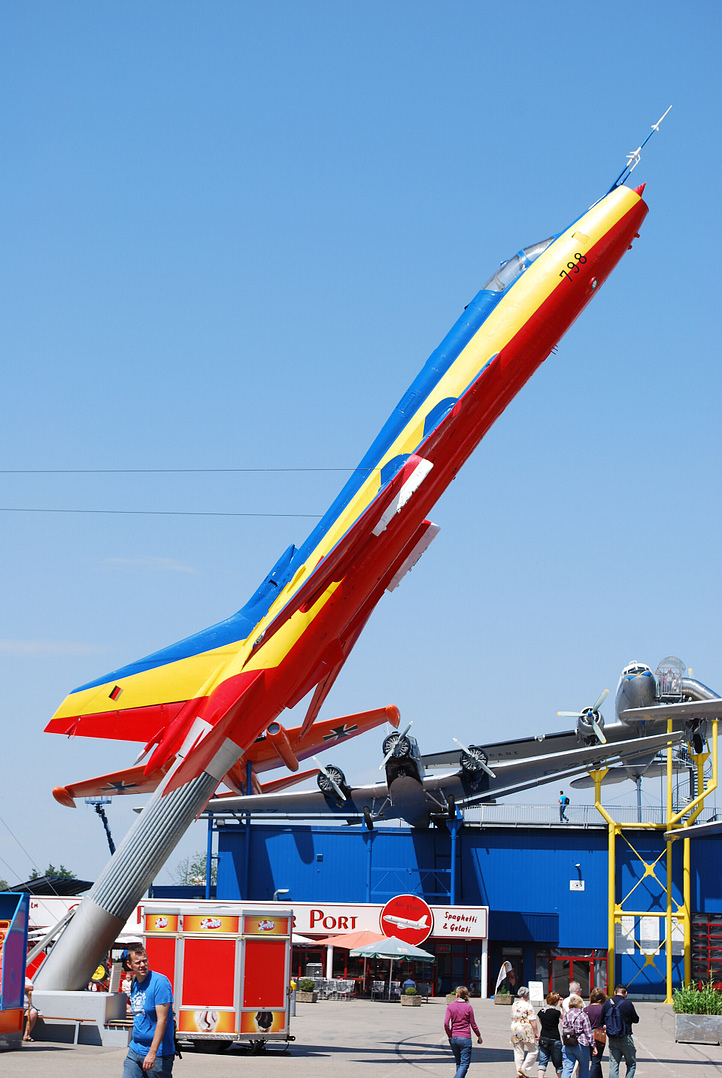
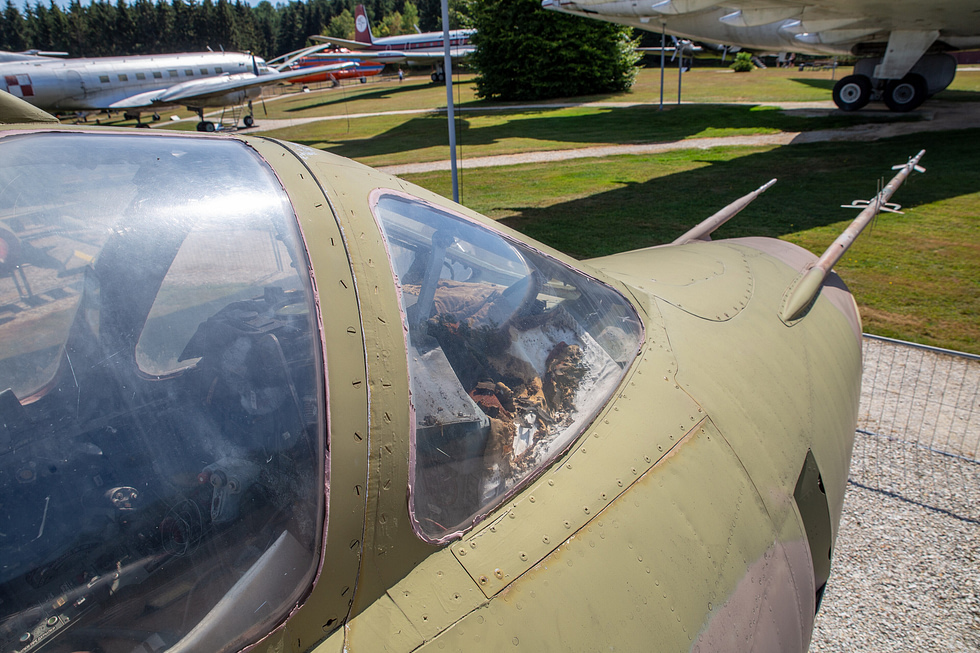
The Fitter in pictures
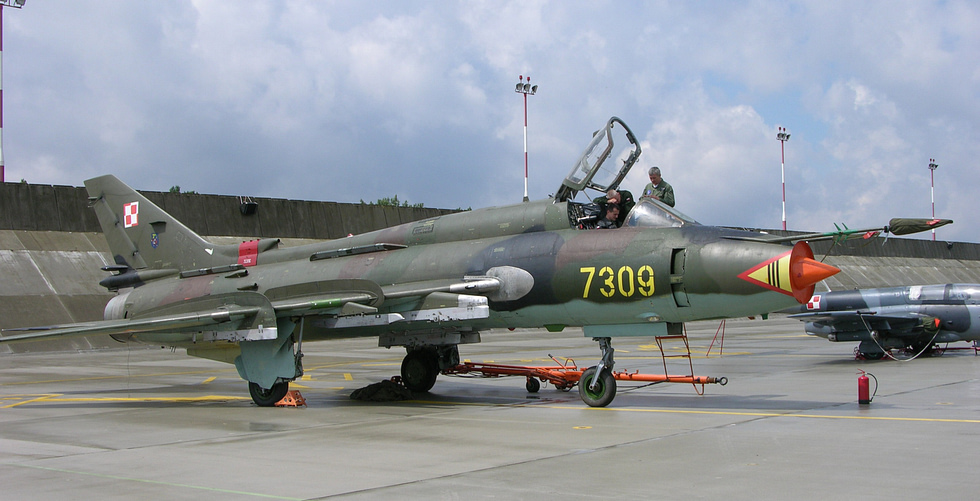
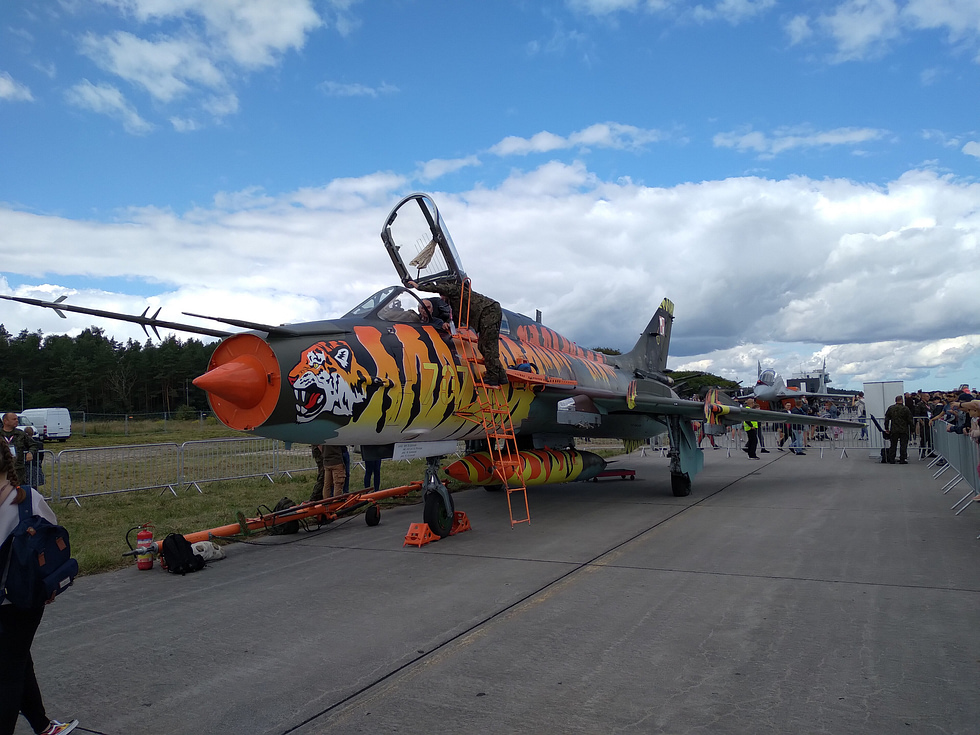
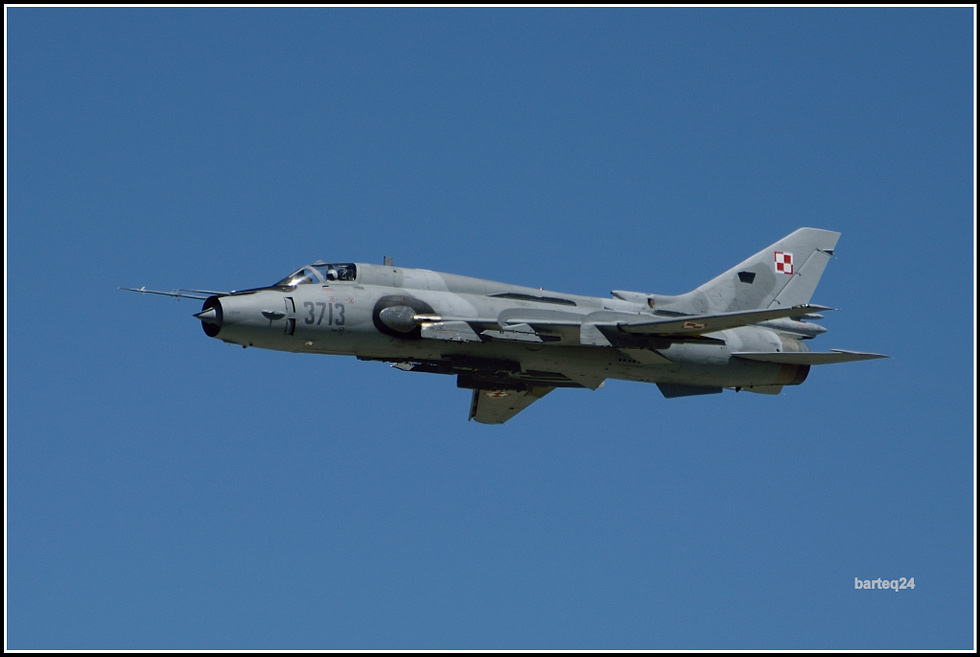
The Fitter in motion
A curated Su-22 Fitter video is coming soon. In the meantime, explore the gallery above and the operations map below to see where this swing-wing workhorse served.
Where the Fitter flew
A strike jet, not a dogfighter
The Fitter’s war record is written mostly in ground-attack: bombing and close-support sorties in the Iran-Iraq War, the Soviet-Afghan War and the Syrian civil war, flown by more than a dozen air forces. In air-to-air combat it was usually the loser — most famously when US Navy fighters downed Libyan Su-22s in 1981 and a Syrian Su-22 in 2017. Figures for its combat use are incomplete and, in several cases, disputed between the parties involved.
Compare the combat record of every military aircraft. Figures as of July 2026.
Everything people ask about the Su-22
Can I fly in a Su-22?
What is the difference between the Su-17, Su-20 and Su-22?
Why does the Su-22 only swing part of its wing?
Did a Su-22 ever get shot down by a US jet?
Is the Su-22 still in service?
How much ordnance can the Su-22 carry?
What replaced the Su-22 in Soviet service?
You can’t fly the Su-22.
These, you can.
Some legends only live in museums — others are fuelled and waiting. MiGFlug has put civilians in real military jet cockpits since 2004.
 Fly the L-39 AlbatrosThe world’s most-flown jet trainer — aerobatics included
 Fly the F-104 Starfighter“The missile with a man in it”
 Fly the MiG-21The Cold War’s most-produced jet
 Управляйте самолетом T-33 Shooting Star.America’s first jet trainer
 Fly the DH VampireA piece of early jet history
 Fly the S.211Agile Italian jet trainer
 Fly the MB-326The classic Aermacchi jet
 Fly the MiG-15The Soviet legend of the Korean War
Continue the tour
Every fact, checked
- National Museum of the US Air Force — Sukhoi Su-22M4Official fact sheet on the Fitter-K variant, its engine and history.
- GlobalSecurity.org — Su-17/-20/-22 FitterDevelopment, variants and operator overview.
- Military Factory — Su-17/20/22 FitterSpecifications and production summary.
- USNI News — Super Hornet downs Syrian jet (2017)Contemporary report of the 18 June 2017 Su-22 shootdown.
- The Aviation Geek Club — Gulf of Sidra 1981Crew recollections of the 1981 Su-22 shootdown.
- The War Zone — Poland retires the Su-22The end of frontline Fitter service in Europe.
- flugzeuginfo.net — Su-17/20/22 dataTechnical data cross-reference.
- Global Military — Su-17/20/22 FitterOperators and current-status overview.