
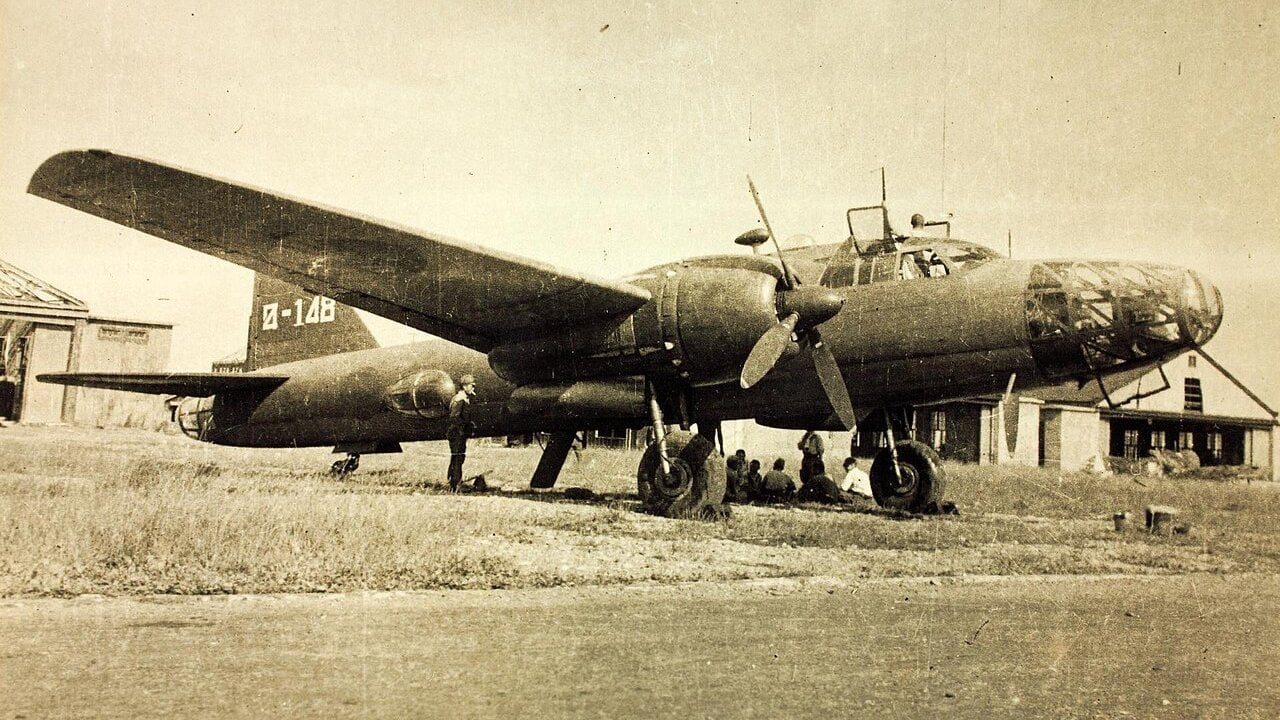
On 27 December 1942 a sleek new Mitsubishi twin-engine bomber took to the air for the first time. Nine days later, on 5 January 1943, the Imperial Japanese Army ordered torpedo racks fitted to 100 of them. Army bombers are not supposed to sink ships. This one would also be turned into a bomber-hunting fighter with a 75 mm cannon in its nose, and finally into a manned flying bomb.
Officially it was the Army Type 4 Heavy Bomber. Its name was Hiryu, the Flying Dragon, and Allied intelligence gave it the reporting name “Peggy”. Historian John Rickard rates the Ki-67 Hiryu as the best bomber to serve with the Imperial Japanese Army in the Second World War.
There is a catch, and it sits in the second half of that same sentence. The Hiryu reached the front in the summer of 1944, when the war it was built for was already lost. What follows is the story of a very good aeroplane asked to do increasingly desperate things.
Quick Facts
- Official name: Army Type 4 Heavy Bomber Hiryu (Flying Dragon); Allied reporting name “Peggy”
- First flight: 27 December 1942
- Engines: Two Mitsubishi Ha-104 18-cylinder radials, 1,900 hp each for take-off
- Top speed: About 537 km/h (334 mph) at roughly 6,090 m
- Combat debut: October 1944, as a torpedo bomber in the air battles off Formosa (Taiwan)
- Production: 698 in the most widely cited count; some sources give 767
- Derivatives: Ki-109 interceptor with a 75 mm cannon (about 22 production aircraft); To-Go and Sakura-dan special-attack conversions
A heavy bomber that was not very heavy
The Ki-67 began with a specification handed to Mitsubishi on 17 February 1941. The Army wanted a successor to the Nakajima Ki-49, and it was thinking about the Soviet Union, not the United States: the new bomber was meant for a possible war along the Manchurian border. It had to be fast, well armed and able to take punishment.
A team under Mitsubishi engineer Hisanojo Ozawa delivered exactly that. They chose the brand-new Mitsubishi Ha-104, an 18-cylinder radial rated at 1,900 hp for take-off, and broke with Japanese habit by giving the crew armour and self-sealing fuel tanks from the start. The result could reach about 537 km/h (334 mph) and handled so well that it later became the basis for a fighter.
Here is the first surprise. In Japanese Army language, “heavy bomber” meant a well-protected, well-armed aircraft, not a big load. The Hiryu normally carried around 500 kg of bombs and at most 800 kg. Rickard puts it closer to American twin-engined medium bombers such as the B-26 Marauder than to anything with four engines.
Defensive armament grew as the design matured. Production Ki-67s carried a 20 mm Ho-5 cannon in a dorsal turret plus 12.7 mm machine guns in the nose, the tail and the two side blisters. The design was frozen on 2 December 1943, and the first fully operational aircraft reached units in the summer of 1944.
The Army bomber that learned to drop torpedoes
Remember those torpedo racks. The trials went so well that, according to Rickard, every Hiryu from the 161st airframe onward left the factory able to carry a torpedo under the fuselage. For a service famous for its rivalry with the Navy, this was an unusual turn: the Army was building a naval strike aircraft.
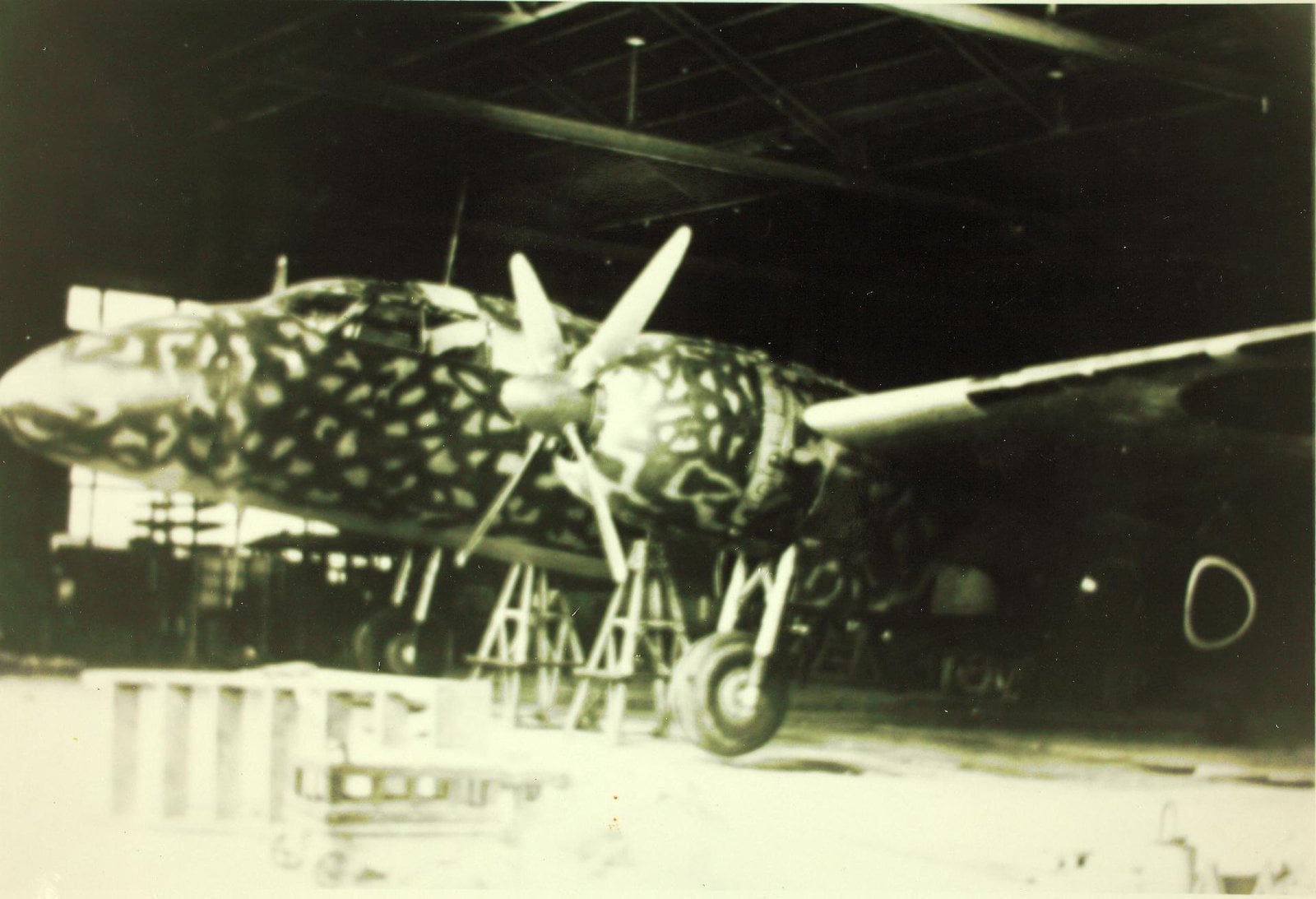
The Navy noticed. A number of torpedo-capable Ki-67s were handed over and flown under the Navy name Yasukuni. When the type finally went to war, Army regiments and the Navy’s 762nd Air Group flew it side by side, against the same enemy: the American fast carriers.
Timing, however, was already against it. In June 1944, months before the Hiryu’s debut, the Battle of the Philippine Sea had gutted Japan’s carrier air arm. Many of the Army’s best aviators had already been lost over Rabaul and New Guinea. The new aircraft would be flown by whoever was left.
Formosa, October 1944: eleven carriers that were never sunk
The Hiryu’s combat debut came in the air battles off Formosa, today’s Taiwan, in October 1944, as Admiral Halsey’s carriers struck the island ahead of the Philippine landings. Ki-67 crews of the Army’s 7th and 98th regiments and the Navy’s 762nd Air Group went in with torpedoes alongside the Navy’s land-based bombers.
Tokyo then announced one of the war’s great fictions: eleven American aircraft carriers, two battleships and several more ships sunk. The real tally was two cruisers, USS Canberra on 13 October and USS Houston on 14 October, both torpedoed and both towed to safety. Japan itself admitted losing 312 aircraft, and the real losses were heavier still.
The US Navy even tried to turn the false claims into a trap, using the crippled cruisers as bait for the Japanese fleet. For the Ki-67 units, though, the lesson was brutal. Low-level torpedo runs against a fully alert carrier task force were close to suicidal, with or without good aircraft.
Iwo Jima to Saipan: hunting Superfortresses on the ground
The Hiryu’s next job was the one its range was made for. When American B-29 Superfortresses began operating from Saipan, the Army formed a special unit at Hamamatsu to strike back. Its Ki-67s flew from Japan to Iwo Jima, refuelled, and pressed on over more than 1,000 km of open ocean to reach the Marianas.
The raids hit Isley Field, sometimes just as heavily loaded bombers were preparing to take off. They also cost the attackers dearly. Historian Michael P. Slater describes one raid in early December 1944 in which eight Hiryu reached Saipan and six were shot down, a loss Japanese sources confirm. The campaign ended when US Marines landed on Iwo Jima on 19 February 1945 and the stepping stone was gone.
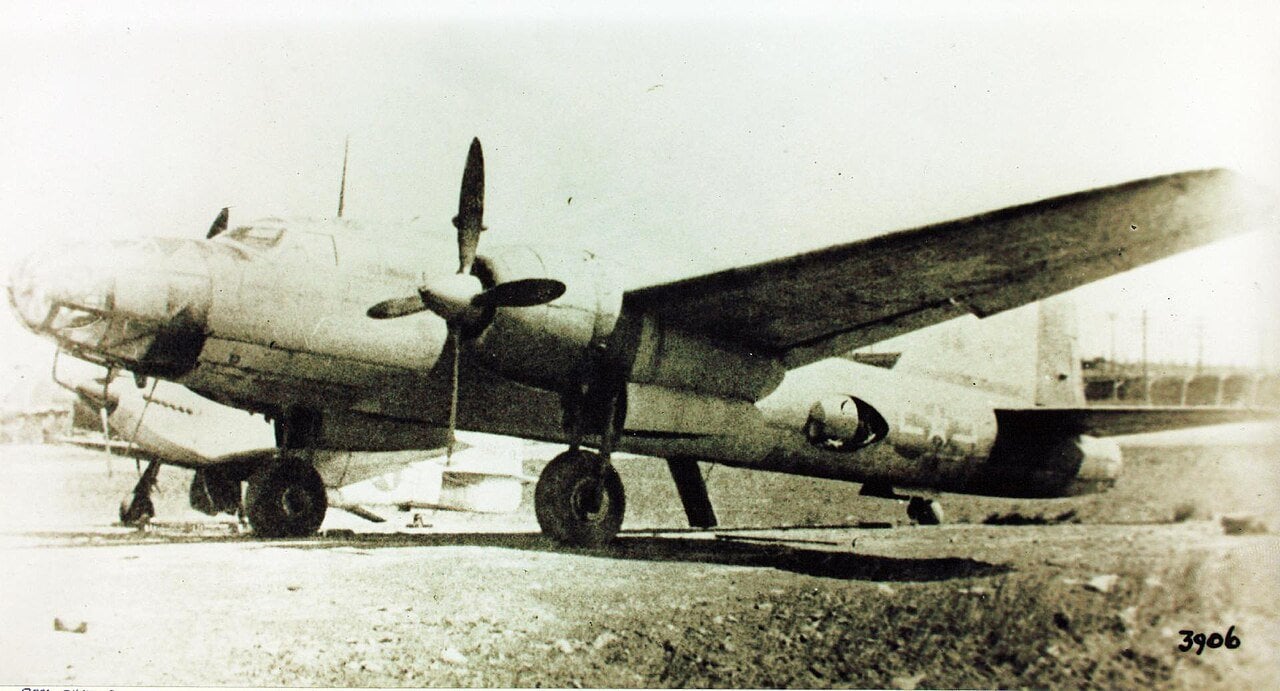
The Hiryu kept fighting to the end. It flew torpedo attacks against the Allied fleets at Okinawa and around Formosa, and bombed targets in China. By then, though, a growing share of the remaining airframes was being converted for missions with no return trip.
Bombers without gunners: To-Go and Sakura-dan
On 24 October 1944, the Army formed one of its first special-attack units at Hamamatsu. The Fugaku unit, under Major Tsunesaburo Nishio, flew specially modified Hiryu. Conversions of this kind, usually called To-Go, had their turrets removed and faired over, a crew of three, and a long rod projecting from the nose to detonate two 800 kg bombs on impact.
On 13 November 1944, Nishio led an attack on a US task force east of Luzon and did not come back. The unit reported that one of its aircraft had rammed and sunk a battleship. According to historian Robin Rielly, US Navy records show no Allied ship hit by a suicide aircraft that day. It was Formosa again, on a smaller and sadder scale. Afterburner has told the wider story of the first kamikaze attacks of that autumn.
The Sakura-dan conversion went further. It carried a single shaped charge of about 2.9 tonnes, more than three times the Hiryu’s normal maximum bomb load, in the fuselage behind the cockpit. Japanese sources put the number converted at around nine. On 25 May 1945 two of them took off from Tachiarai with a pair of Ki-44 fighters as escort, part of the mass Kikusui attacks on the fleet off Okinawa. No hit by a Sakura-dan aircraft has ever been confirmed.
Ki-109: a bomber with a field gun in its nose
Now the most improbable branch of the family tree. Facing high-flying B-29s over Japan, the Army asked Mitsubishi to turn its agile bomber into an interceptor. The Ki-109 swapped the glazed nose for a 75 mm cannon adapted from the Army’s Type 88 anti-aircraft gun, with a reach of more than a kilometre, so that it could hit bombers from outside the range of their defensive guns.
The cannon carried just 15 rounds, and the co-pilot loaded each one by hand. About 22 production aircraft were built, equipping the 107th Heavy Fighter Regiment. They never made it work. The B-29s flew too high and too fast for the heavy Ki-109 to catch, and when the Americans switched to low-level night raids in 1945, the radar-less interceptor had nothing it could usefully do.
The 107th was disbanded on 30 July 1945 without a confirmed B-29 to its name. It is hard to think of a better summary of the Hiryu story: a clever answer, delivered after the question had changed.
Too good, too late
Mitsubishi built the large majority of Hiryu, with Kawasaki adding 91 and an Army arsenal at Tachikawa a single aircraft. The most widely cited total is 698, although some lists reach 767. A Ki-67-II with more powerful Ha-214 engines was planned but never entered production.
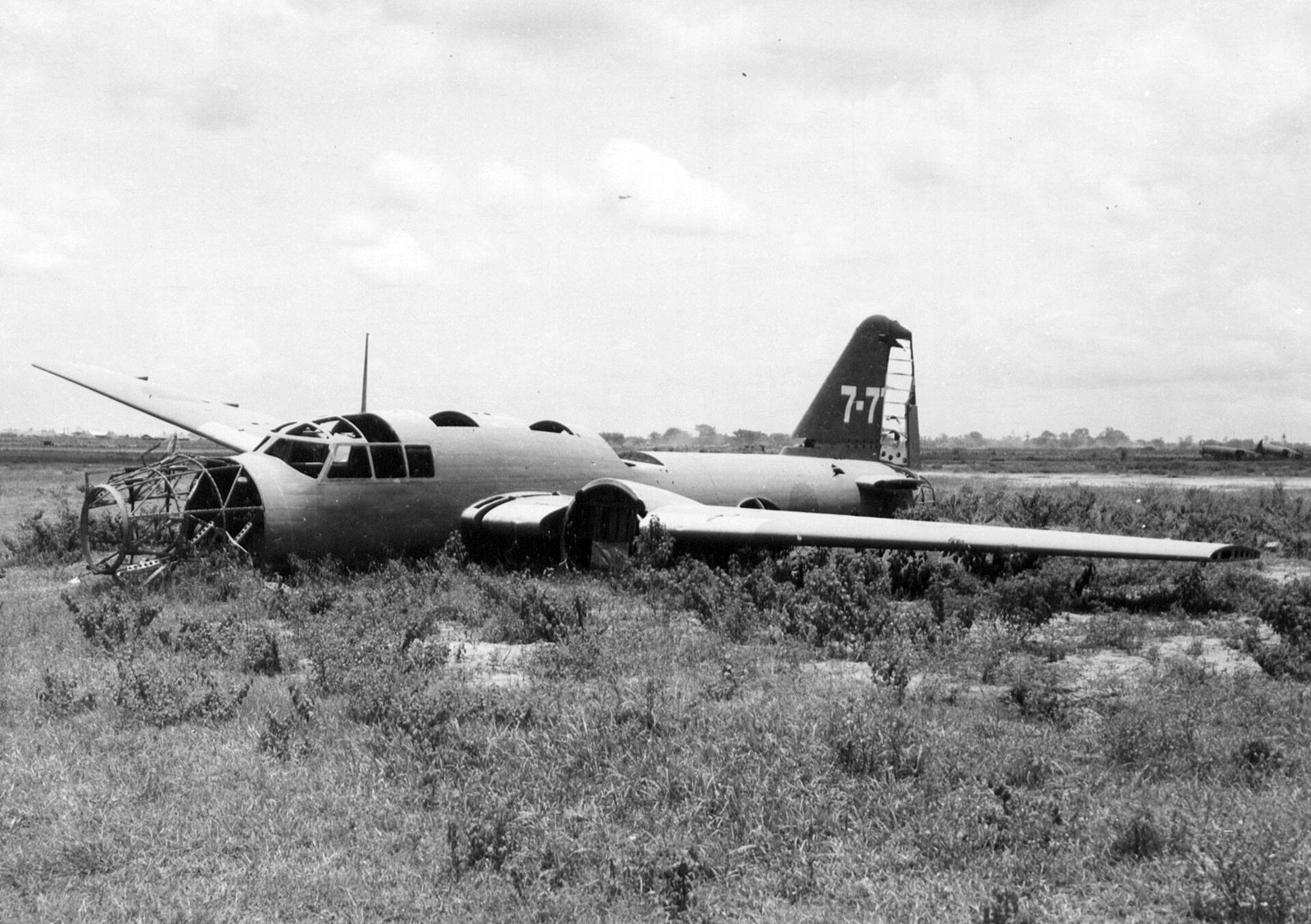
Fast, tough and agile, the Ki-67 Hiryu fixed many of the weaknesses that had made earlier Japanese bombers such easy prey. It simply arrived in a war Japan had already lost, flown by crews too inexperienced to exploit it, against an enemy with radar, fighters and anti-aircraft guns in overwhelming numbers.
No complete Hiryu is known to survive. What remains are photographs like the ones above, a handful of relics, and a verdict that historians keep returning to: the right bomber, built at the wrong time.
Sources: History of War (John Rickard), US Naval History and Heritage Command (H-Gram 038), Warfare History Network (Michael P. Slater, WWII History), Vintage Aviation News, Aviation of World War II (airpages.ru), Kamikaze Images, Arawasi, WarHistory.org, Dave’s Warbirds, René J. Francillon, Japanese Aircraft of the Pacific War.
Header photo: Japanese wartime photo (San Diego Air and Space Museum Archives), cropped, public domain, via Wikimedia Commons
0 Comments