
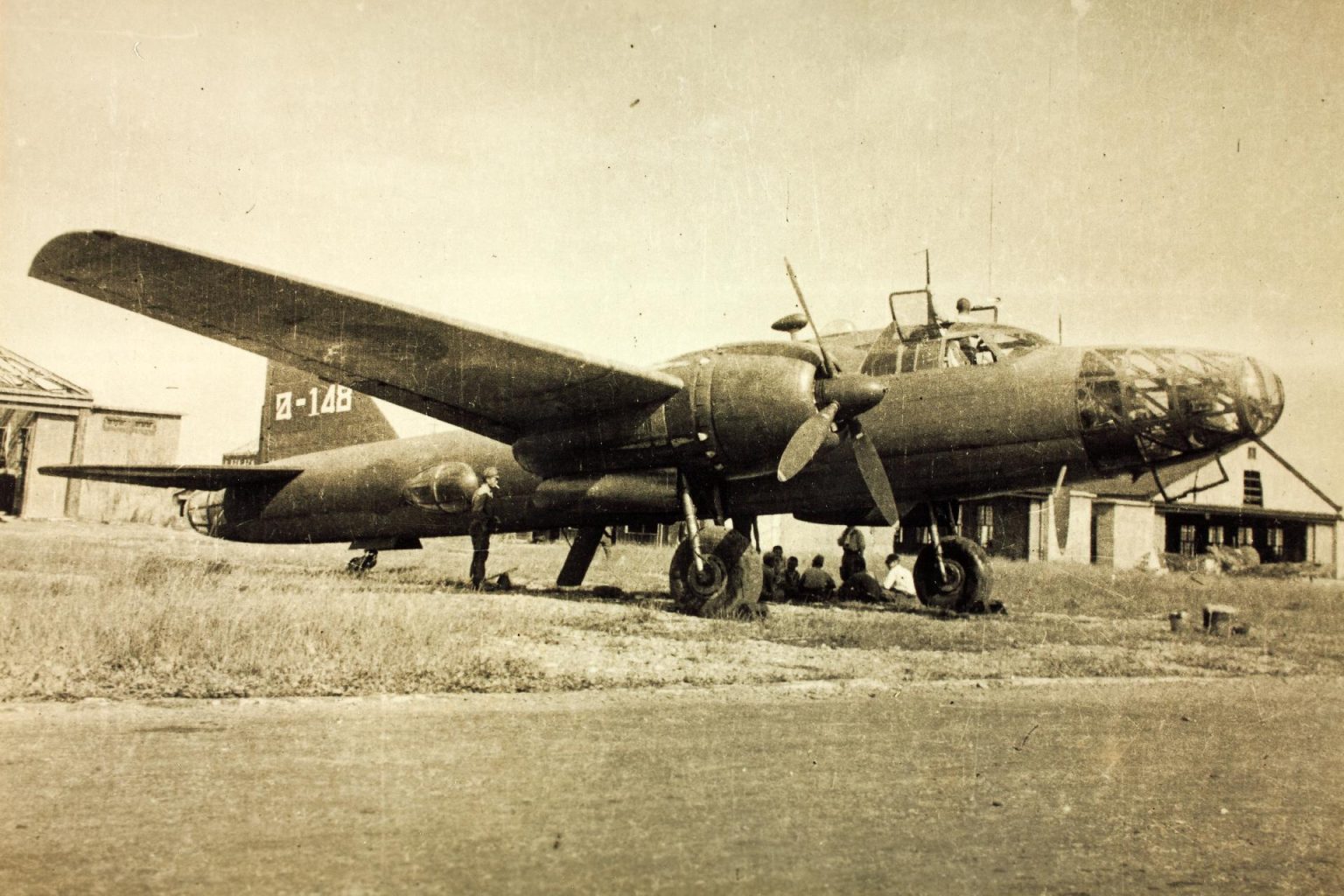
Mitsubishi Ki-67
“Hiryu” · “Peggy”
Fast, well-armoured and hard-hitting — widely regarded as arguably the best Japanese bomber of the war, yet it reached the front too late and in too few numbers to change anything.
The best bomber Japan built — and the one that came too late
By 1940 the Imperial Japanese Army had watched its bombers burn. The Ki-21 “Sally” and the Navy’s G4M “Betty” could fly far, but they were lightly armed and almost unprotected — no meaningful crew armour, no self-sealing fuel tanks, and a fatal tendency to catch fire when hit. So when the Army issued the specification that became the Ki-67, it asked for something different: a fast, tough, survivable bomber that could defend itself and still reach out across the Pacific.
Mitsubishi delivered. The prototype first flew on 27 December 1942, and what emerged was, by common consent, the finest bomber the Japanese Army ever fielded — and one of the better twin-engine bombers of any nation. Powered by two Mitsubishi Ha-104 radials, the Ki-67 “Hiryu” (“Flying Dragon”) was quick, with a top speed of roughly 537 km/h (334 mph), and — most unusually for a Japanese design — it was protected: self-sealing tanks, armour for the crew, and a heavy defensive battery built around a 20 mm cannon.
It flew like nothing the Army had operated before. Test crews found it could be thrown around almost like a fighter — rolled, looped and turned tightly — a level of agility no earlier Japanese heavy bomber came close to. Allied intelligence gave it the reporting name “Peggy”, and would soon meet it in the torpedo-attack role off Formosa and the Philippines.
And yet the Ki-67’s story is a study in too little, too late. It did not reach front-line units until the summer of 1944, with its combat debut in October 1944. By then Japan had lost its trained aircrews, its fuel and its air superiority. Only about 698 were built (figures vary), against thousands of Allied aircraft — never enough to matter.
What service it did see was intense and often desperate. Ki-67 units flew anti-shipping torpedo strikes against the U.S. Navy off Formosa and the Philippines, level-bombing raids, and home-defence sorties. Many were stripped and packed with explosives for kamikaze “To-Go” special-attack units. And the airframe spawned the Ki-109, a dedicated bomber-destroyer meant to knock down B-29s with a 75 mm cannon.
01The Mitsubishi Ki-67 Hiryu’s late arrival: why Japan’s best bomber could not change the war
The Ki-67 was specified in late 1940, first flew at the end of 1942 and was accepted as the Army Type 4 Heavy Bomber in December 1943 — but did not reach operational units in numbers until the middle of 1944. That two-year gap between first flight and front-line service was fatal to its impact. By the time crews were flying it in combat from October 1944, the U.S. Navy fielded overwhelming fighter cover and radar-directed anti-aircraft fire, and Japan had neither the fuel nor the experienced aircrew to exploit a good aeroplane. With only about 698 completed across four production sites, the Ki-67 was always a rare sight in a sky filled with Allied machines. It was, in short, an excellent design that history handed too few chances — a recurring theme for late-war Japanese aviation.
What made the Ki-67 different
Protection, at last
Where earlier Japanese bombers left their crews and fuel exposed, the Ki-67 was built with self-sealing fuel and oil tanks and armour plating from the outset. It was the feature that mattered most in 1944: a Ki-67 that took hits could keep flying and keep its crew alive, where a Betty or a Sally would burn. This single change is the core of its reputation.
Two Ha-104s and fighter-like handling
Two Mitsubishi Ha-104 18-cylinder radials of about 1,900 hp each gave a top speed near 537 km/h and a ceiling around 9,470 m. Combined with a strong, clean airframe, they gave the Ki-67 genuine agility — test crews reported it could be rolled and turned in ways no earlier Japanese heavy bomber could match.
A heavy defensive sting — and a torpedo
Defence was built around a 20 mm Ho-5 cannon (usually in the dorsal turret) backed by four to five 12.7 mm heavy machine guns in the nose, tail and beam positions. The bomb bay could carry roughly 800 kg of bombs — or a single aerial torpedo, the weapon that defined its combat career against U.S. warships.
02The Ki-67 Hiryu’s manoeuvrability: a heavy bomber that could roll
Contemporary and post-war accounts consistently single out the Ki-67’s handling. Where most heavy bombers are deliberately stable, stately machines, the Hiryu was stressed for higher manoeuvre loads and reportedly demonstrated aerobatic-style manoeuvres during trials — rolls and tight turns more associated with fighters. In service this agility mattered twice over: it helped crews jink away from interceptors, and it made the type suitable for the low, fast torpedo runs the Army began flying against Allied shipping. It is one reason the Ki-67 is often called not just the best Japanese bomber but one of the finest twin-engine bombers of the war — though, as ever with rare late-war types, some of the superlatives should be read as informed judgement rather than hard statistics.
Mitsubishi Ki-67-I Hiryu full specifications
Baseline note: the figures below describe the Ki-67-I — the Ki-67-Ia, Army Type 4 Heavy Bomber Model 1, the main production aeroplane — at normal loaded weight with the standard Ha-104 installation. This is the aircraft that flew the Formosa and Okinawa torpedo strikes and made up the overwhelming majority of the run. Deltas for the factory-fitted torpedo carrier and for the Ki-109 heavy interceptor are given in grey.
Dimensions & weights
- Crew
- 6 to 8 (pilot, co-pilot, navigator-bombardier, radio operator and two to four gunners; Ki-109 flew with a reduced crew including a dedicated cannon loader)
- Length
- 18.70 m (61 ft 4 in) — Ki-109 17.95 m (58 ft 11 in)
- Wingspan
- 22.50 m (73 ft 10 in) — unchanged on every service variant
- Height
- 7.70 m (25 ft 3 in); sources disagree sharply and 5.80 m (19 ft 0 in) is quoted just as often, almost certainly a tail-down versus fin-top measurement
- Wing area
- 65.85 m2 (708.8 sq ft)
- Wing loading
- 209 kg/m2 (42.8 lb/sq ft) at loaded weight
- Empty weight
- 8,649 kg (19,068 lb) — Ki-109 7,424 kg (16,367 lb) with the bomb gear deleted
- Loaded weight
- 13,765 kg (30,347 lb) — Ki-109 10,800 kg (23,810 lb)
- Power-to-weight
- 0.21 kW/kg (0.125 hp/lb) at loaded weight
- Internal bomb bay
- 800 kg (1,764 lb) rated; some authorities quote a 1,070 kg (2,360 lb) overload figure
- External store station
- One centreline rack for a single Type 91 aerial torpedo, standard from airframe number 161 onwards
- Structure
- All-metal stressed skin mid-wing monoplane, retractable tailwheel undercarriage, built around large sub-assemblies for fast production
Performance
- Maximum speed
- 537 km/h (334 mph) at 6,090 m (19,980 ft)
- Cruising speed
- 400 km/h (249 mph) at 8,000 m (26,250 ft)
- Demonstrated dive speed
- 644 km/h (400 mph), a figure no other Japanese bomber came near
- Time to 6,000 m
- 14 min 30 s (to 19,685 ft)
- Service ceiling
- 9,470 m (31,070 ft); the Ki-109 as built shared it, and the 12,000 m (39,370 ft) sometimes quoted belongs to the turbocharged Ha-104 Ru that never worked
- Normal range
- 2,800 km (1,740 miles)
- Maximum ferry range
- 3,800 km (2,360 miles)
- Ki-109 maximum speed
- 550 km/h (342 mph) — faster than the bomber, and still not fast enough
- Ki-109 range
- 2,200 km (1,370 miles)
- Against US mediums
- 537 km/h (334 mph) versus 443 km/h (275 mph) for the B-25 and 462 km/h (287 mph) for the B-26
- Handling
- Aerobatic — service crews looped and rolled it; the specification demanded dive-bombing attacks and a low-level escape, and the airframe delivered both
Propulsion & systems
- Engines
- Two Mitsubishi Ha-104 (Army Type 4 1,900 hp Air Cooled Radial), 18-cylinder two-row air-cooled radials
- Take-off power
- 1,417 kW (1,900 hp) each
- Rated power
- 1,350 kW (1,810 hp) at 2,200 m (7,220 ft); 1,201 kW (1,610 hp) at 6,100 m (20,010 ft)
- Supercharging
- Two-speed geared supercharger — the exhaust-turbocharged Ha-104 Ru was flown on three Ki-67-I Kai airframes and was intended for the Ki-109, but was never made reliable
- Propellers
- Four-blade constant-speed metal units, one per engine
- Fuel system
- Self-sealing tanks in the wings, fitted from the first production aircraft rather than retrofitted after losses — the single most un-Japanese thing about the design
- Crew protection
- Armour plate at the crew stations and gun positions, again designed in from the start; the 1941 specification explicitly demanded the ability to absorb battle damage
- Dorsal turret
- Power-operated turret mounting the single 20 mm Ho-5, the heaviest defensive gun on any Japanese bomber in quantity service
- Special equipment
- Taki-1 Model II radar on one early-warning conversion; one further airframe was wired as a mother ship for radio-command anti-ship missiles
- Ki-109 gun installation
- Type 88 75 mm in a fixed nose mount, 15-round magazine, automatic case ejection with hand loading, muzzle velocity 720 m/s (2,360 ft/s); the pilot aimed and fired it himself
- Manufacture
- Mitsubishi Nagoya as prime contractor, with Kawasaki at Gifu, Nippon Kokusai, and the First Army Air Arsenal at Tachikawa
03Ki-67 Hiryu variants: the Ki-67-I Kai suicide aircraft and the Ki-109 B-29 destroyer
The main production version was the Ki-67-I, built as the Ia and — from around the 451st airframe — the Ib, which swapped the single 12.7 mm tail gun for a twin mounting. A planned Ki-67-Ic with a heavier bomb load never entered production, and the more powerful Ki-67-II (with Ha-214 engines) was not completed before the war ended. Two derivatives stand out. The Ki-67-I Kai was a special-attack (kamikaze) conversion: turrets removed, a long nose rod to detonate the warhead, and a very heavy explosive load; roughly a dozen were operational by October 1944 in the “To-Go” force. The Ki-109 was a dedicated bomber-destroyer fitted with a 75 mm Type 88 cannon to attack B-29 Superfortresses at altitude — an imaginative idea that achieved little, largely because the aircraft’s high-altitude performance was inadequate for the interception role (an assessment on which sources broadly agree, though few combats were recorded).
04The Mitsubishi Ki-67 Hiryu’s operating costs: why the numbers were never kept
Unlike a modern jet, no reliable unit cost or cost-per-flight-hour figure survives for the Ki-67. Japan’s wartime industry was strained, accounting was disrupted, and cost data for individual 1944–45 airframes was neither standardised nor preserved. What the record does show is the price that mattered in 1944: fuel and trained aircrew, both of which Japan had all but run out of by the time the Ki-67 arrived. We have therefore marked the cost fields “not reliably recorded (WWII)” rather than invent a figure — the honest answer for almost every late-war Japanese type.
Armament & payload
The Ki-67 was the Japanese bomber that could actually shoot back
Japanese bombers are routinely criticised for burning at the first hit and for defending themselves with rifle-calibre popguns. The Ki-67 is the standing counter-example: a power-operated dorsal turret with a belt-fed 20 mm Ho-5, four 12.7 mm Ho-103 heavy machine guns covering the nose, both beams and the tail, self-sealing tanks and crew armour built in from airframe one. What it did not have was payload — 800 kg in a single internal bay is a light load for a machine the Army called a heavy bomber — and in practice the type earned its keep with one weapon hung outside, the Type 91 aerial torpedo. Gun fits varied: early aircraft carried magazine-fed 7.7 mm Type 89 guns in the beam blisters until Ho-103s were available, and the late Ki-67-Ib rebuilt the tail position around 20 mm.
Gun
- One 20 mm Ho-5 cannon in the power-operated dorsal turret, belt-fed, firing the shortened 20×94 mm round
- Four 12.7 mm Ho-103 (Type 1) machine guns: one in the glazed nose, one in each beam blister, one in the tail
- Ki-67-Ib: the tail position reworked for 20 mm; some references describe a twin 20 mm tail installation on the last aircraft
- Early production carried 7.7 mm Type 89 machine guns in the beam positions as an interim fit
- Ki-109: everything above deleted except one trainable 12.7 mm Ho-103 in the tail, the upper and beam positions faired over
Air-to-air
- No air-to-air missile existed in 1944; the bomber version fought fighters with its defensive guns alone, and those guns were unusually good at it
- The one purpose-built anti-aircraft weapon in the family was the Ki-109 nose gun: a Type 88 75 mm field anti-aircraft piece, 15 rounds, 720 m/s muzzle velocity
- The Type 88 was accurate against ground targets in trials and very hard to aim at a moving bomber; the test pilot Major Sakamoto said flatly that the aiming problem was never solved
- A projected night-fighter Ki-109 with twin 37 mm Ho-203 in an upward-firing oblique mount, on the German Schräge Musik pattern, stayed on paper
- An earlier scheme paired a radar-and-beam "hunter" Ki-109a with a gun-armed "killer" Ki-109b; it was abandoned in favour of the 75 mm single-seat solution
Air-to-surface guided
- Unusually for the period, this card is not empty: one Ki-67 was converted as the mother ship for Japan's radio-command anti-ship missiles
- Kawasaki Ki-147 I-Go-1A: rocket-powered, radio-guided, roughly 800 kg warhead, launched from beneath the bomber
- Mitsubishi Ki-148 I-Go-1B: a smaller companion weapon of about 300 kg warhead weight
- Trials fittings also covered the Ke-Go infra-red homing bomb and several related Go-series projects
- None of it reached an operational unit; the guided-weapon programmes were overtaken by the decision to use the aeroplane itself as the guidance system
Bombs
- 800 kg (1,764 lb) rated internal load in one bay, typically eight 100 kg or four 250 kg weapons
- A maximum of 1,070 kg (2,360 lb) appears in several accounts and in the Wikipedia article text, against 800 kg in the same article's data table
- Ki-67 To-Gō special-attack conversion: turrets removed and faired over, two 800 kg (1,764 lb) bombs in the belly
- Ki-167 Sakura-dan: one 2,900 kg (6,393 lb) shaped-charge thermite bomb behind the crew cabin, blast projected forward, nine converted
- By comparison a B-25 could lift 2,722 kg (6,001 lb) — the Ki-67 was a heavy bomber only in the Japanese Army's sense of the phrase, meaning protection and defence rather than tonnage
Rockets
- None. No air-to-ground or air-to-air rocket was ever cleared for the Ki-67 or the Ki-109
- No rocket-assisted take-off gear was fitted either, despite the type's high operating weights
- The only rocket motor in the story belongs to the Ki-147 missile the aircraft was meant to carry, not to the aircraft
- Japanese anti-bomber rocketry of 1944–45 went to single-seat interceptors; the Ki-109 was given a field gun instead, which is a fair summary of the whole programme
Pods & other stores
- One Type 91 aerial torpedo on an external centreline rack — the store that defined the type's combat career
- Torpedo racks were ordered onto 100 aircraft on 5 January 1943 and became standard from airframe number 161; over 420 machines were completed or modified as torpedo carriers
- Additional internal fuel for the one-way Giretsu raiding missions against the Marianas B-29 bases
- Taki-1 Model II early-warning radar on a single conversion — an airborne early warning aircraft in 1945, and almost nobody notices
- Glider-towing gear, tested with the Manazuru transport glider
Three typical loadouts
- Anti-shipping torpedo strike, Formosa, October 1944
- One Type 91 torpedo on the centreline rack, bomb bay empty, full ammunition for the 20 mm turret and the four 12.7 mm guns. Flown by the Army's 7th and 98th Sentai and the Navy's 762nd Kōkūtai against the US Third Fleet — the type's combat debut and its most effective use.
- Level bombing, China and French Indochina, 1945
- 800 kg internal, usually eight 100 kg bombs, full crew of seven or eight, all gun positions manned. Cruise at 400 km/h (249 mph) around 8,000 m (26,250 ft), where the bomber's speed and ceiling made interception genuinely difficult.
- Special attack, To-Gō and Sakura-dan, 1945
- Turrets and defensive guns stripped and faired over, crew reduced. Either two 800 kg bombs in the belly or the single 2,900 kg Sakura-dan shaped charge. The best-protected bomber Japan built, flown deliberately into a ship.
Sourcing caveat: the machine-gun count is genuinely contested. Wikipedia's data table states five 12.7 mm guns while enumerating only four positions; Francillon and Pacific Wrecks both give four (nose, two beams, tail) plus the single 20 mm turret gun, and that is the figure used here. Bomb load is quoted as either 800 kg or 1,070 kg depending on whether the source is describing the rated or the overload case. Production totals are equally unsettled — see the closing note below.
Variants
The Ki-67 arrived too late to be a bomber and was converted into everything else
The Ki-67 first flew on 27 December 1942 and did not reach a combat unit until October 1944. That gap is the whole tragedy of the aeroplane. It was specified in 1941 against a possible war with the Soviet Union over Manchuria, and it was built to survive that war: good defensive armament, self-sealing tanks, armour, and enough manoeuvrability to dive-bomb and then run away at low level. By the time it existed in numbers, the war it was designed for was not the war Japan was losing.
So it was spent on other things. Almost immediately it became a torpedo bomber — racks were ordered onto 100 airframes in January 1943 and the fit became standard from aircraft 161, with more than 420 machines completed as torpedo carriers. It went to the Navy as well as the Army, an unusual step, flying as the "Yasukuni" with the 762nd Kōkūtai. It was then progressively stripped of the very features that made it good: the To-Gō and Sakura-dan conversions had their turrets removed and faired over and were flown into ships. The best-protected Japanese bomber of the war ended it as a guided weapon with a man inside.
The Ki-109 deserves its own paragraph, because it is the most instructive failure in the family. Major Hideo Sakamoto's proposal to bolt an Army Type 88 75 mm anti-aircraft gun into the nose was approved on 20 February 1944; the prototype flew that August and 22 production aircraft followed. The reasoning was sound on paper: a big, fast, docile airframe standing off outside the B-29's defensive fire and killing it with one shell. It failed for three separate reasons, any one of which was fatal. The turbocharged Ha-104 Ru engines that were supposed to give it altitude never became reliable, so the aircraft as built could not climb to the B-29's cruise height with anything in hand. It had no radar. And the gun — hand-loaded from a 15-round magazine, aimed by the pilot — could not be pointed accurately at a moving target. The 107th Heavy Fighter Regiment was disbanded on 30 July 1945 without a confirmed B-29.
- Ki-67-I prototypes (1942–43 / 19)
- Development airframes with a variety of gun fits; first flight 27 December 1942.
- Ki-67-Ia, Army Type 4 Heavy Bomber Model 1 (1944–45 / the bulk of the run)
- Main production model. Most were completed or converted as torpedo carriers after work number 160.
- Ki-67-Ib (1945 / late production)
- Reinforced tail position rebuilt around 20 mm armament in place of the 12.7 mm gun.
- Ki-67-I Kai (1945 / 3)
- Testbeds for the exhaust-turbocharged Mitsubishi Ha-104 Ru, the engine the Ki-109 needed and never got.
- "Yasukuni" (1944–45 / Army transfers)
- Navy torpedo-bomber version, Ki-67-Is handed from the Army to the Imperial Japanese Navy Air Service.
- Ki-67 To-Gō (1944–45 / conversions)
- Army Special Attack Aircraft Type 4: unarmed, turrets deleted and faired, two 800 kg bombs in the belly.
- Ki-167 Sakura-dan (1945 / 9)
- Special attack conversion carrying one 2,900 kg shaped-charge thermite bomb with a forward-directed blast.
- Ki-67-II (1945 / 2)
- Prototypes with two Mitsubishi Ha-214 engines of 1,581 kW (2,150 metric hp) each. No production.
- Ki-109 (1944–45 / 2 prototypes and 22 production)
- Heavy fighter interceptor with a fixed Type 88 75 mm cannon in the nose, bomb gear and upper and beam guns deleted.
- Q2M1 Tai'yō, Ki-69, Ki-97, Ki-112 (projects only)
- Navy anti-submarine derivative with Kasei engines and radar, escort fighter, transport, and an all-wood escort fighter. None built.
Production and survivors. Totals disagree: 767 is the figure usually printed, while other accounts give 698 excluding the Kai and Sakura-dan conversions, and the factory sub-totals quoted by different authorities (587 or 606 by Mitsubishi, 91 by Kawasaki at Gifu, 29 by Nippon Kokusai, 1 by the Tachikawa arsenal) do not reconcile with either headline number. As for what is left: no complete Ki-67 survives anywhere in the world. No original airframe is preserved in any museum, none is airworthy, and no flying or static reproduction has been built. What exists is fragmentary — recovered components and jungle and lagoon wreck sites in the former Pacific theatre. For an aircraft that was arguably the finest bomber Japan produced, the physical record is close to nothing, which is a large part of why it is so little remembered.
From a 1940 specification to the last Pacific torpedo runs
The Army asks for a survivable bomber
Late in 1940 the Imperial Japanese Army issues the specification that becomes the Ki-67 — explicitly demanding speed, defensive firepower and protection its earlier bombers had lacked.
First flight
The prototype flies on 27 December 1942. Trials reveal an unusually agile heavy bomber with fighter-like handling.
Accepted as the Type 4 Heavy Bomber
The design is frozen and accepted in December 1943 as the Army Type 4 Heavy Bomber, Model 1A — the “Hiryu”.
Enters service
Deliveries to operational units begin in the summer of 1944, far later than Japan needed them and against a tightening Allied advance.
Combat debut off Formosa
Ki-67 torpedo units strike U.S. Navy task forces during the Formosa Air Battle — the type’s first major action, and a taste of its anti-shipping role.
Special attack and the B-29 hunter
Ki-67-I Kai aircraft are converted for kamikaze “To-Go” missions over the Philippines, while the Ki-109 derivative is fielded to hunt B-29s with a 75 mm cannon.
Okinawa and home defence
Ki-67s fly torpedo, bombing and special-attack sorties around Okinawa and in defence of the home islands during the final months of the war.
War’s end — and no survivors
Production ends at roughly 698 aircraft. None would survive intact; today only relics and captured components remain.
Twelve stories of the Ki-67 “Hiryu”
A bomber designed not to burn
The Army had seen its bombers flamed out of the sky. This time it demanded protection first.
Read the full story
First flight of something different
On 27 December 1942 the prototype lifted off — and the test crews were startled by how it flew.
Read the full story
Self-sealing tanks and armour
The feature that mattered most was the one you couldn’t see: the Ki-67 was built to take a hit.
Read the full story
The heavy bomber that could roll
Accounts describe aerobatic-style manoeuvres during trials — extraordinary for a twin-engine bomber.
Read the full story
“Flying Dragon” and “Peggy”
To Japan it was “Hiryu”. To Allied intelligence it became, simply, “Peggy”.
Read the full story
Torpedoes off Formosa
The Ki-67’s first big action was an anti-shipping strike against the U.S. fleet.
Read the full story
An Army bomber learns the torpedo
Attacking warships with torpedoes had been the Navy’s trade. The Ki-67 brought it to the Army.
Read the full story
Fleet strikes and heavy losses
Over the Philippines the Ki-67 fought hard — and was ground down.
Read the full story
The Hiryu as a flying bomb
Some of Japan’s best bombers were deliberately expended as guided weapons.
Read the full story
A 75 mm cannon against the Superfortress
The Hiryu airframe was reworked into a heavy interceptor to knock down B-29s.
Read the full story
~698 — and too late
Japan’s finest bomber was also one of its rarest.
Read the full story
No complete Hiryu survives
The best bomber Japan built left almost nothing behind.
Read the full story
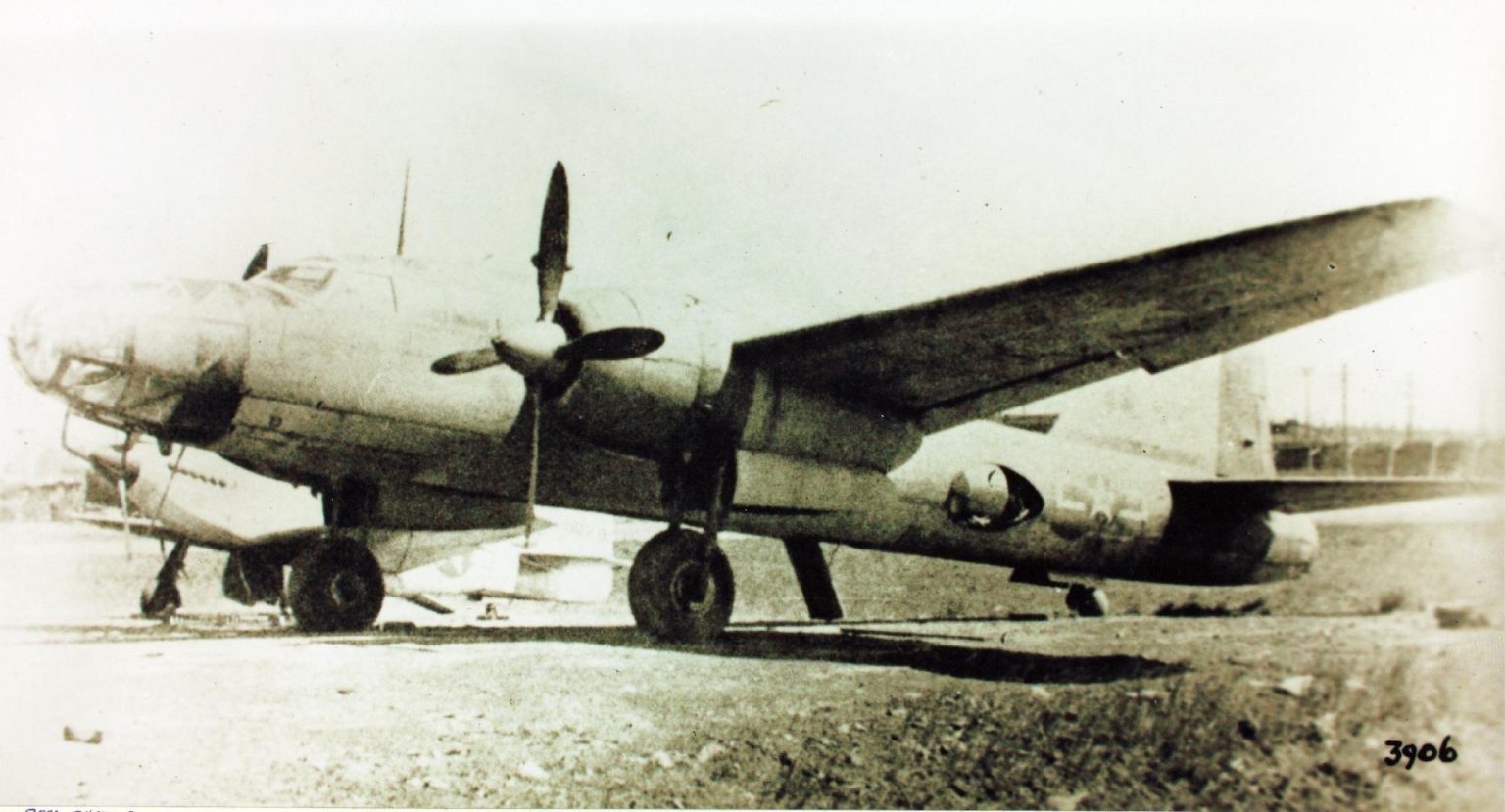
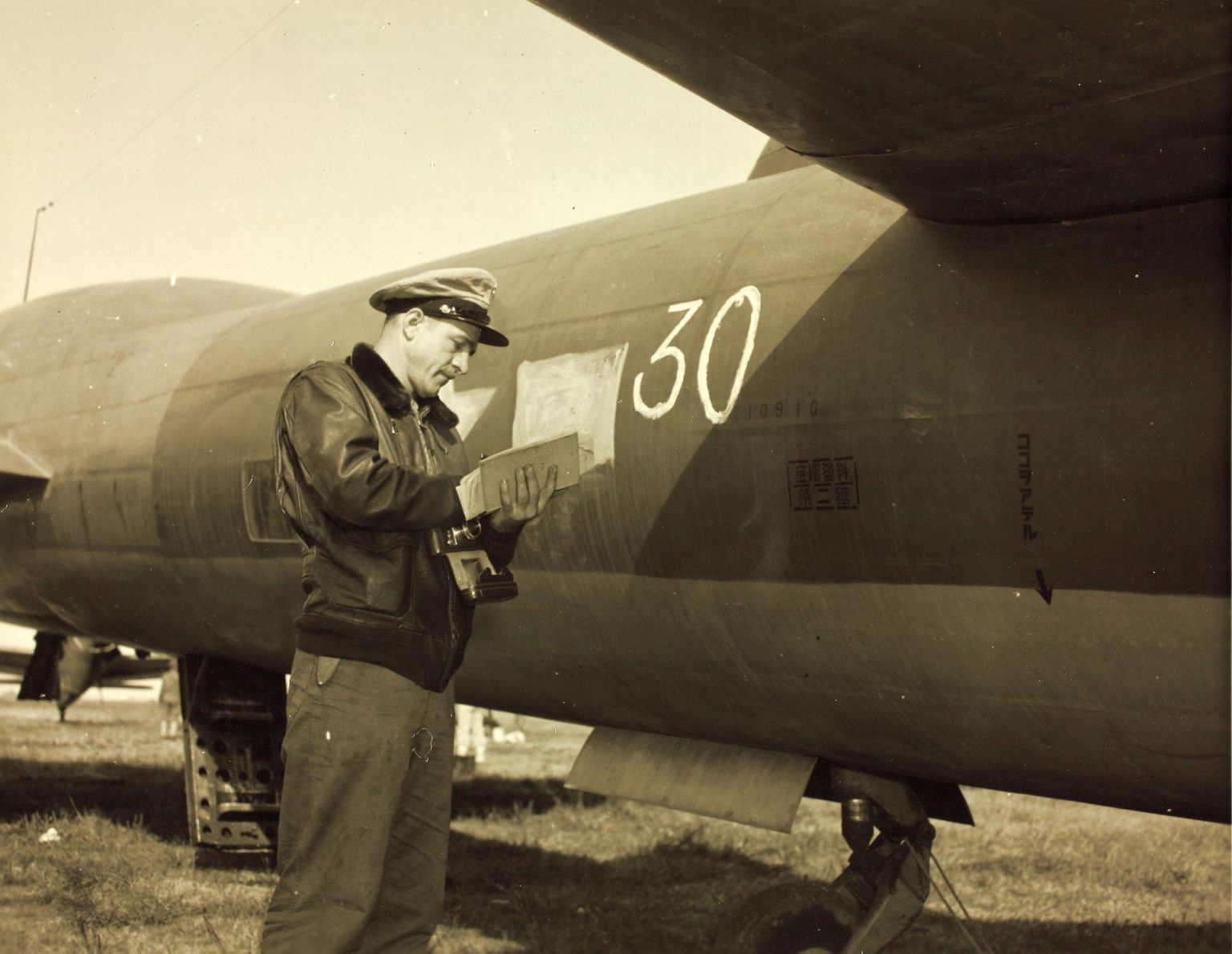
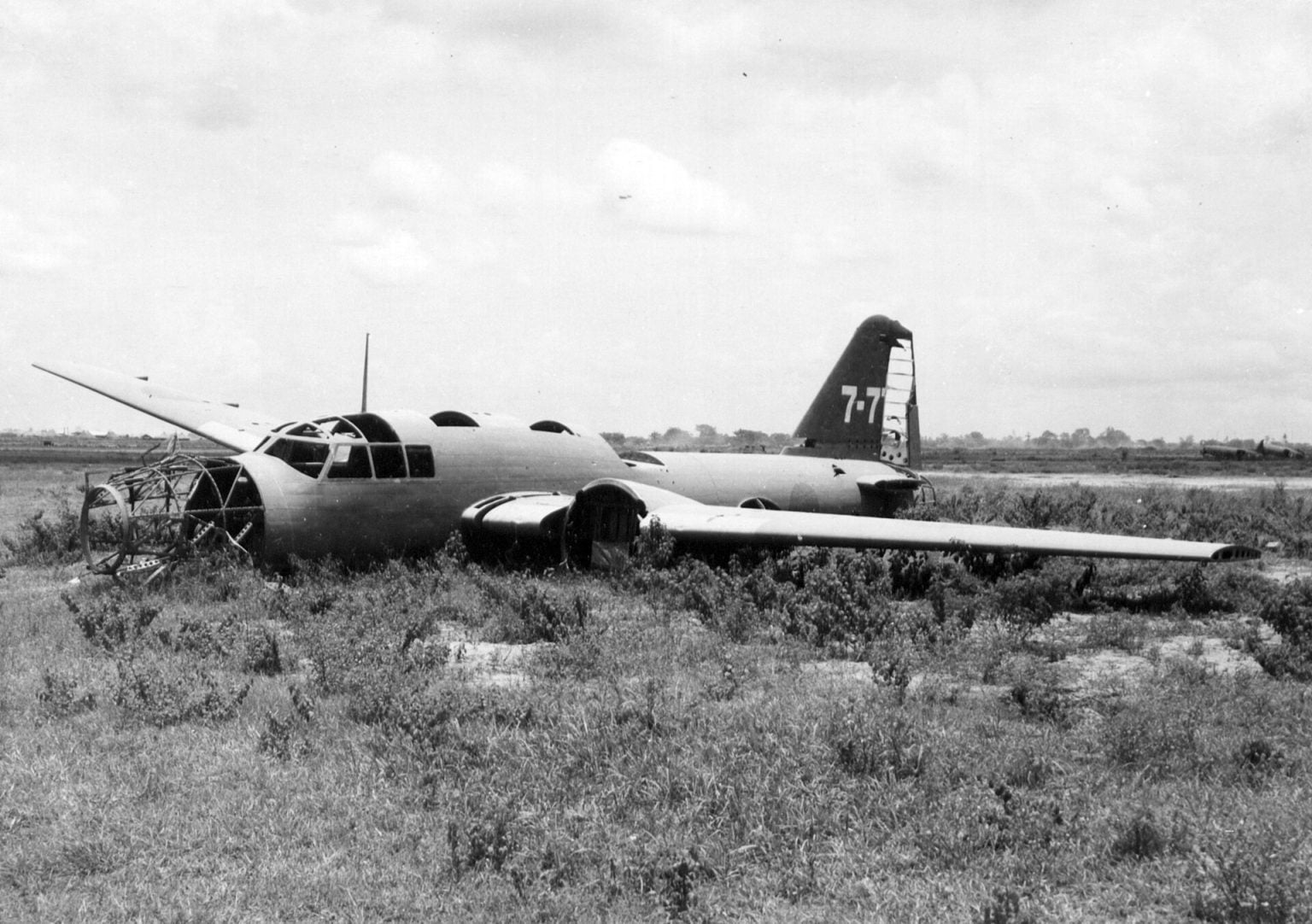
The Ki-67 “Hiryu” in pictures
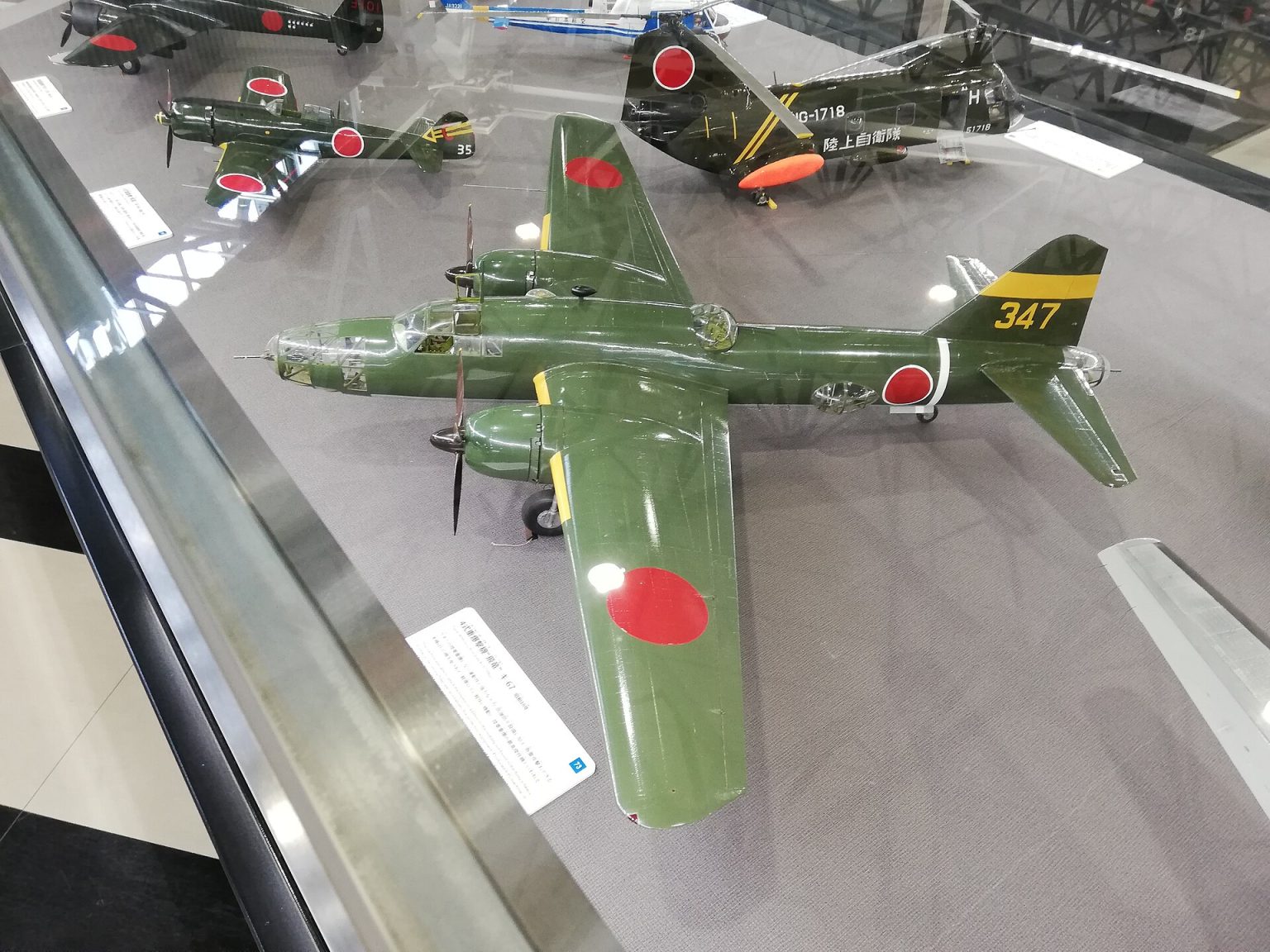
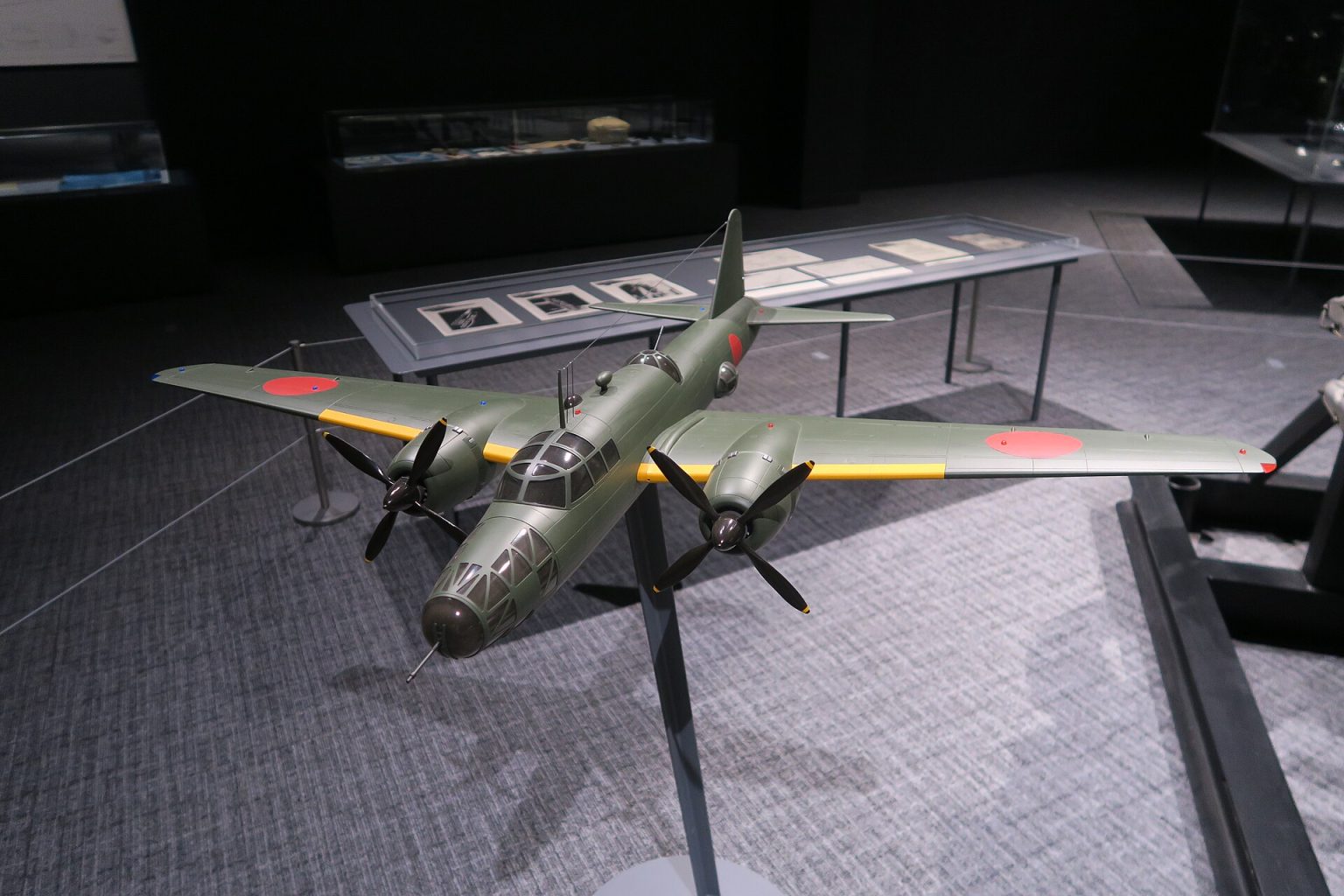
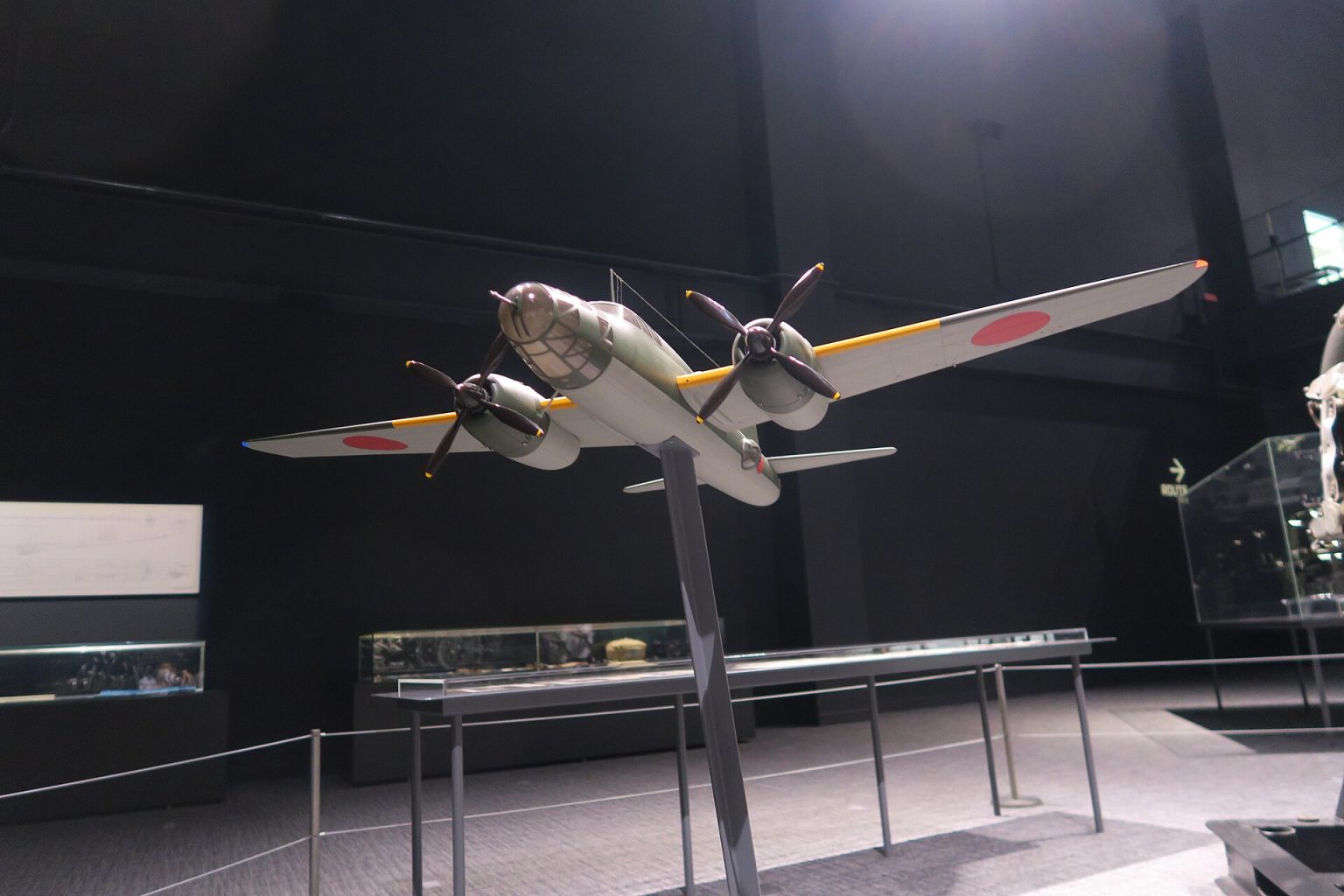
The Ki-67 “Hiryu” in motion
IHYLS: Japan’s Best “Heavy” Bomber Wasn’t Very Heavy — Mitsubishi Ki-67 Hiryu. A focused documentary on the type’s design, protection, torpedo role and the Ki-109 derivative (roughly 65,000 views and a 99% positive rating from an established aviation-history channel).
Where the Ki-67 flew and fought
The Ki-67’s war, in three numbers
The Ki-67 was a survivable, hard-hitting bomber that arrived far too late to shape the outcome. Its record is best measured not in decisive victories but in a short, intense operational life squeezed into the war’s final year.
Compare the combat record of every military aircraft.
Everything people ask about the Mitsubishi Ki-67 Hiryu
Can I fly in a Mitsubishi Ki-67?
Why is the Ki-67 called the best Japanese bomber of the war?
What do “Hiryu” and “Peggy” mean?
Was the Ki-67 really a torpedo bomber?
What was the Ki-109?
Were Ki-67s used as kamikaze aircraft?
How many Ki-67s were built, and why couldn’t it change the war?
Do any Ki-67s survive today?
You can’t fly the Ki-67 Hiryu.
These, you can.
Some legends only live in museums — others are fuelled and waiting. MiGFlug has put civilians in real military jet cockpits since 2004.
 Fly the L-39 AlbatrosThe world’s most-flown jet trainer — aerobatics included
 Fly the F-104 Starfighter“The missile with a man in it”
 Fly the MiG-21The Cold War’s most-produced jet
 Fly the T-33 Shooting StarAmerica’s first jet trainer
 Fly the DH VampireA piece of early jet history
 Fly the S.211Agile Italian jet trainer
 Fly the MB-326The classic Aermacchi jet
 Fly the MiG-15The Soviet legend of the Korean War
Continue the tour
Every fact, checked
- Pacific Wrecks — Mitsubishi Ki-67 (Peggy)Technical data plus the fate of individual airframes, relics and wrecks recovered across the Pacific.
- HistoryOfWar.org — Mitsubishi Ki-67 Hiryu “Peggy”Detailed development history, variants and the assessment of the type as the best Army bomber of the war.
- National Museum of the U.S. Air ForceReference collection on captured Japanese aircraft and the Pacific air war of 1944–45.
- Smithsonian National Air and Space MuseumBackground on Japanese wartime aircraft design, protection and the late-war technical picture.
- World War II Database — Ki-67 HiryuSpecifications, production figures and a concise operational summary.
- Vintage Aviation News — First Flight of the Ki-67Feature on the 27 December 1942 first flight and the aircraft’s place in Japanese aviation.
- Gifu-Kakamigahara Air and Space MuseumJapanese museum holding Ki-67 relics and detailed models — a rare surviving link to the type.
- MiGFlug — Afterburner MagazineMiGFlug’s own aviation writing, and where to book a flight in a real ex-military jet today.