
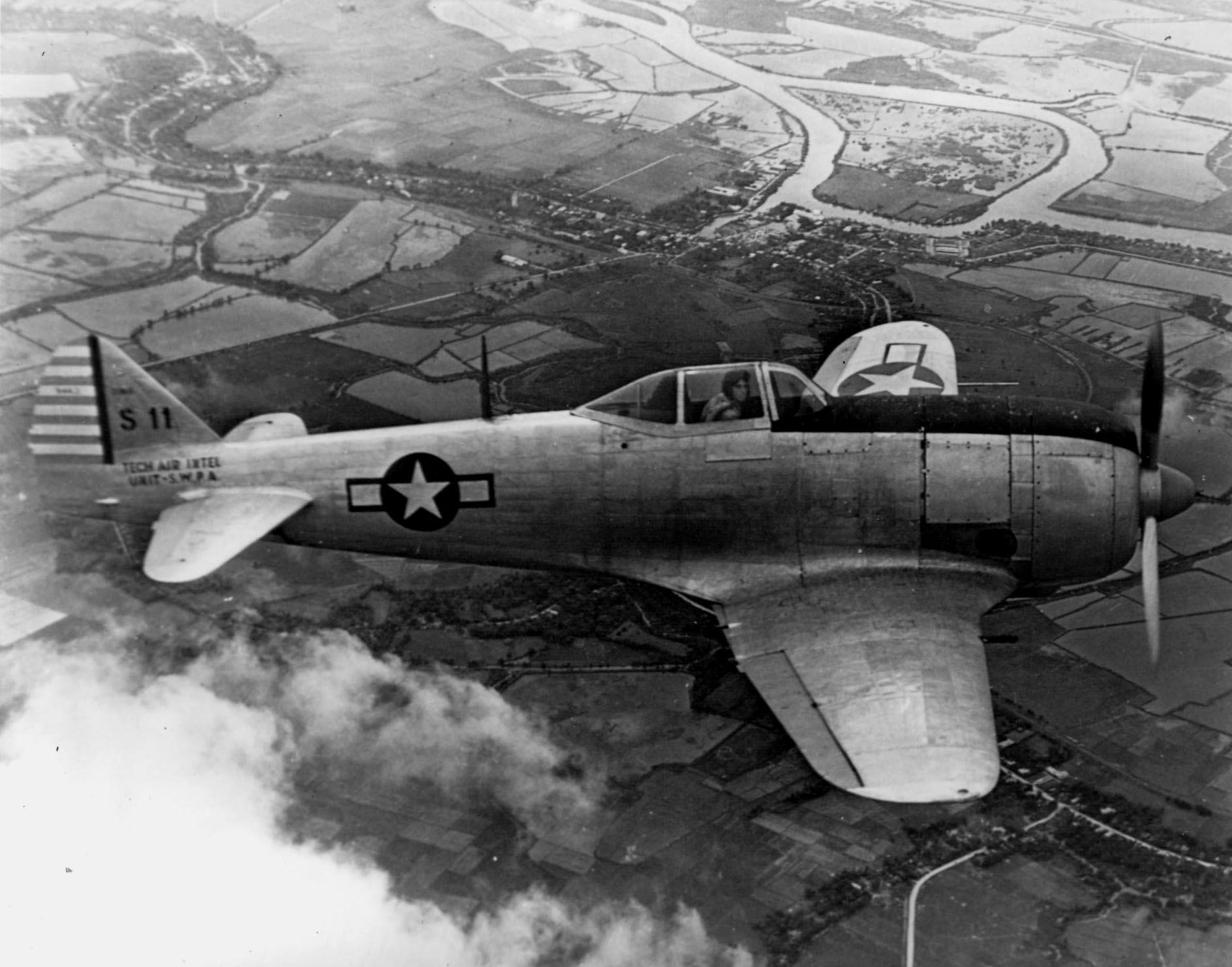
Nakajima Ki-44
“Shoki” · Tojo
Japan’s controversial fast interceptor — a heavily loaded, hard-climbing “demon” that traded the dogfight for speed, and became one of the last lines of defence over Tokyo against the B-29.
The Nakajima Ki-44 Shoki: a fighter that broke Japanese doctrine
Through the late 1930s the Imperial Japanese Army Air Force built its reputation on light, nimble fighters. The Ki-27 and the Ki-43 Hayabusa were designed to out-turn anything they met, and Japanese pilots prized the close-in dogfight above all. So when Nakajima was asked in 1938 for something almost heretical — a heavy, fast interceptor that would climb hard and dash fast, and accept that it could not turn with a lighter fighter — it was a genuine break with doctrine. The result, first flown in August 1940, was the Ki-44 Shoki, named for a demon-quelling deity of Chinese and Japanese legend.
To go fast, the Ki-44 broke every habit. It had a small wing and one of the highest wing loadings of any Japanese fighter of the war — roughly double that of the featherweight Ki-43. Around that wing Nakajima wrapped a large-diameter radial — the Ha-41, later the ~1,520 hp Ha-109 — giving the stubby aircraft a top speed near 605 km/h and a fierce rate of climb. Pilots raised on turning fights initially disliked it: it landed fast, was unforgiving, and refused to play the dogfight game. Many only warmed to it once they learned to fight in the vertical — diving, firing and climbing away rather than circling.
The Ki-44 found its true role at home. As American B-29 Superfortresses began raiding Japan in late 1944, the Shoki’s speed and climb made it one of the best interceptors the Army had — though even it struggled to reach the bombers’ altitude. Around Tokyo, the 47th Sentai formed a special unit whose pilots, stripped of guns and armour for height, were prepared to ram the B-29s. By the time production ended in 1944 — after roughly 1,225 aircraft — the Ki-44 was already being replaced by the Ki-84 Hayate, but it flew in defence of the Home Islands until the last days of the war. To Allied intelligence it was known simply as “Tojo”.
01The Nakajima Ki-44 Shoki’s design gamble: why Japan built a fighter that couldn’t dogfight
Every fighter is a compromise between speed, climb, firepower and manoeuvre. Japanese doctrine had long resolved that compromise in favour of the turn, producing exquisitely agile but lightly armed and lightly built machines. The Ki-44 deliberately chose the other path: a small, high-loaded wing and a big engine, accepting a wide turning circle in exchange for the ability to climb quickly, dash at high speed, and dive away safely — the classic boom-and-zoom interceptor recipe.
That gamble made the Shoki unpopular at first, and demanding to fly, but it was also prescient. The war in the Pacific increasingly turned on speed, altitude and heavy bombers rather than swirling dogfights, and by 1944–45 the qualities the Ki-44 embodied were exactly what Japan needed for home defence. The type pointed directly toward the later, more powerful Ki-84 Hayate.
What makes the Ki-44 Shoki special
A wing built for speed, not the turn
The Ki-44 carried one of the highest wing loadings of any wartime Japanese fighter — commonly put around 185–200 kg/m², roughly double the Ki-43. The small wing cut drag and allowed high speed and a hard climb, at the cost of a wide turning circle and a fast, unforgiving approach. It was a deliberate inversion of Japanese fighter tradition.
A bomber’s engine on a fighter
Power came from a large-diameter Nakajima radial — the Ha-41 (~1,250 hp) on the Ki-44-I, then the Ha-109 (commonly cited ~1,450–1,520 hp) on the definitive Ki-44-II. The engine was unusually broad for a fighter of the size, giving the Shoki its stubby, muscular silhouette and its energy performance.
The 40 mm demon-cannon
Some Ki-44-II Otsu carried two 40 mm Ho-301 cannon — a rare caseless weapon firing a self-contained round. It hit hard but at very low muzzle velocity (~245 m/s) and short range, forcing pilots dangerously close to a B-29’s defensive guns. It is widely judged to have been a near-failure.
02The Nakajima Ki-44 Shoki’s combat flaps: how Nakajima tamed a heavy fighter
A high wing loading is deadly in a turning fight, so Nakajima fitted the Shoki with so-called “butterfly” combat flaps — a Fowler-type flap that could be deployed at a shallow setting in combat to momentarily increase wing area and lift. Snapping the flaps out in a turn tightened the Ki-44’s circle and let a skilled pilot briefly hold his own against more agile opponents before using speed and climb to disengage. It was a partial answer to a problem the small wing created by design.
03The Ki-44 Shoki’s altitude problem: why it struggled to reach the B-29
On paper the Ki-44-II had a service ceiling around 11,000 m — enough, in theory, to meet the B-29. In practice, pilots of the 47th Sentai reported that engine oil pressure fell away above roughly 7,000 m until larger oil lines raised the usable height to about 9,500 m. The Superfortresses often cruised higher still, and the thin air robbed the Shoki of the climb and energy it needed for a firing pass. Even Japan’s best home-defence interceptor frequently could not get cleanly above its target — one reason some pilots turned to ramming.
Nakajima Ki-44 Shoki: full specifications
Baseline note: the figures below describe the Ki-44-II Hei (Model 2C), the four-gun late-production Shoki with the Ha-109 engine — the most numerous single sub-type at some 427 aircraft and the machine most home-defence units flew in 1944–45. Most published Ki-44-II performance figures are common to all three II sub-types, which shared airframe and engine and differed only in guns. Deltas for the Ha-41-engined Ki-44-I and for the one-off Ki-44-III are in grey.
Dimensions & weights
- Crew
- 1
- Length
- 8.84 m (29 ft 0 in); Francillon gives 8.79 m (28 ft 10 in) and the difference is almost certainly a spinner-tip convention rather than two aeroplanes
- Wingspan
- 9.45 m (31 ft 0 in)
- Height
- 3.25 m (10 ft 8 in)
- Wing area
- 15.0 m² (161 sq ft) — the Ki-44-III raised this to roughly 19 m² (205 sq ft), an admission that 15 had been cut too fine
- Aspect ratio
- 5.95
- Empty weight
- 2,106 kg (4,643 lb)
- Loaded weight
- 2,764 kg (6,094 lb)
- Maximum take-off weight
- 2,993 kg (6,598 lb)
- Internal fuel
- ~560 l (~123 imp gal) in fuselage and wing tanks; published capacities scatter and no Japanese production document in general circulation settles them
- Wing loading
- 184 kg/m² (37.7 lb/sq ft) at loaded weight — against about 121 kg/m² for a Ki-43-II and 96 kg/m² for a Ki-27. This single number is the whole argument about the aeroplane
- Power loading
- 1.82 kg/hp (4.01 lb/hp) on take-off power at loaded weight — exceptionally good for 1942, and the reason the climb was worth the landing speed
- Structure
- All-metal stressed-skin low-wing monoplane, flush-riveted, with a wide-track inward-retracting main undercarriage and a retractable tailwheel
Performance
- Maximum speed
- 605 km/h (376 mph) at 5,200 m (17,060 ft)
- Maximum speed, Ki-44-I
- 580 km/h (360 mph) at 3,700 m (12,140 ft) — the first prototype managed only this until drag-cleaning work took a rebuilt machine to 626 km/h (389 mph), which is where the Army’s 600 km/h demand was finally met
- Cruising speed
- 400 km/h (249 mph) at 4,000 m (13,120 ft)
- Stalling speed
- 150 km/h (93 mph) — an approach flown near 170 km/h (106 mph), roughly 40 km/h faster than the Ki-43 crews had come from, and the direct cause of the type’s landing-accident reputation
- Time to 5,000 m (16,400 ft)
- 4 min 17 s — inside the Army’s five-minute requirement, and the one specification the Ki-44 never had trouble with
- Rate of climb
- 19.5 m/s (3,840 ft/min), averaged over the climb to 5,000 m rather than an instantaneous sea-level figure
- Service ceiling
- 11,200 m (36,750 ft)
- Performance against the B-29
- Usable ceiling and control authority fell away above about 9,000 m (29,500 ft), which is precisely where XXI Bomber Command cruised until it went low at night in March 1945. The Shoki reached the bombers; it reached them slowly, once, and with little energy left
- Range
- 1,200 km (750 miles) on internal fuel
- Ferry range
- ~1,600 km (~990 miles) with two drop tanks
- Dive speed limit
- 650 km/h (404 mph) indicated — a genuine strength, and one no earlier Japanese Army fighter could claim
- Handling
- Fast in roll, superb in the zoom climb, viceless in a dive, and comfortably out-turned by a Ki-43 or a Hurricane. Heavy stick forces and poor forward view over the 1,260 mm cowl made the circuit hard work
Propulsion & systems
- Engine, Ki-44-II
- One Nakajima Ha-109 (Army Type 2, 1,450 hp class), 14-cylinder two-row air-cooled radial of 37.5 l (2,288 cu in)
- Take-off power
- 1,133 kW (1,520 hp); many references quote 1,440 hp instead, which is the rated figure at altitude rather than the take-off rating
- Rated power
- 1,074 kW (1,440 hp) at 2,050 m; 971 kW (1,320 hp) at 5,250 m
- Engine, Ki-44-I
- One Nakajima Ha-41 of the same 37.5 l displacement, 940 kW (1,260 hp) for take-off — a bomber engine of 1,260 mm (49.6 in) diameter that Nakajima chose because nothing smaller offered the power, then had to hide inside a fighter fuselage
- Engine, Ki-44-III
- One 18-cylinder Nakajima of the Ha-145 (Homare) family, about 1,491 kW (2,000 hp); one prototype, overtaken by the Ki-84 which used the same engine on a better airframe
- Supercharging
- Single-stage, two-speed gear-driven — adequate to 5,000 m and the reason high-altitude B-29 work was so unrewarding
- Propeller
- Three-blade constant-speed metal unit
- Cooling installation
- Tight cowling with adjustable gills; an annular oil cooler inside the cowl lip on the Ki-44-I, replaced by an external cooler beneath the cowling on the Ki-44-II — the quickest way to tell the two apart
- Flaps
- Split landing flaps plus "butterfly" combat flaps of the Fowler type, carried over from the Ki-43, deployable in a turn to buy back lift the small wing did not have
- External tanks
- Two drop tanks of about 130 l (~29 imp gal) each on wing racks
- Protection
- Pilot back and head armour and partially protected tanks on later production — late, thin, and well behind Allied practice, though far better than the Ki-43 it replaced
- Avionics
- Type 99 HF radio (often removed or unserviceable in service), Type 100 reflector gunsight, oxygen system for high-altitude interception
04The Nakajima Ki-44 Shoki’s cost: why no reliable price survives
The Ki-44 was a wartime product of Imperial Japan, built to state contracts and never sold on an open market, so no dependable flyaway unit price for it survives in the public record — and figures in wartime yen are not readily comparable to modern currency. Likewise, the Imperial Japanese Army did not track aircraft costs the way modern air forces do, so no credible cost-per-flight-hour figure exists for the type. Any precise dollar or yen amount attached to a Ki-44 today should be treated as, at best, a rough estimate rather than a sourced fact.
Armament & payload
The Ki-44 spent its whole career hunting for a gun that could break a bomber in one pass
The Shoki was built to intercept, and interception is an armament problem before it is a flying-qualities problem: a fighter that gets one firing pass on a formation must do enough damage in that pass to matter. Nakajima worked through four answers in three years. It began with the Japanese Army’s standard pairing of two rifle-calibre Type 89 guns and two 12.7 mm Ho-103, settled on four Ho-103 as the practical standard, and in between fitted a genuine curiosity — the 40 mm Ho-301, a caseless weapon whose shell carried its own propellant in its tail and left the muzzle at about the speed of a thrown cricket ball. Against a B-29 a single Ho-301 hit was devastating and the range at which you could obtain one was about 150 metres, which is inside the effective envelope of every gun the bomber pointed back at you. Fits varied widely between sub-types, between production batches and between units, and Japanese Army records for 1944–45 are fragmentary; treat any single stated fit as typical rather than universal.
Gun
- Prototypes, pre-production, Ki-44-I and Ki-44-II Ko: two 7.7 mm Type 89 machine guns in the fuselage decking, synchronised through the propeller, plus two 12.7 mm Ho-103 in the wings — the standard Japanese Army fit of 1941 and already inadequate against four-engined aircraft
- Ki-44-II Hei, the definitive fit: four 12.7 mm Ho-103, two in the cowl and two in the wings. The Ho-103 fired a 12.7×81 mm round at about 780 m/s, near 900 rounds per minute unsynchronised and roughly 400 when timed through the airscrew; the fuzeless Ma-102 high-explosive incendiary round roughly doubled the filling of earlier shells
- Ki-44-II Otsu: two cowl Ho-103 with two 40 mm Ho-301 in the wings. The Ho-301 round was caseless — a 590 g projectile with about 65 g of explosive, propelled by a ten-gram silk bag of smokeless powder held in a tube in the shell’s own tail, sealed by an aluminium cup that burst and vented rearwards through exhaust ports
- Ho-301 ballistics were dreadful and deliberately so: about 220–245 m/s at the muzzle depending on which test is quoted, roughly 400 rounds per minute, an effective range near 150 m and only eight rounds per gun. Some Western sources give ten rounds per gun. The gun weighed 40 kg and needed a rivet inspection every hundred rounds
- 20 mm appeared late and irregularly: Ho-3 cannon in a minority of Ki-44-II wing installations, and a planned four-gun Ho-5 battery for the Ki-44-III Ko that never reached production
Air-to-air
- No guided air-to-air weapon existed in Japanese Army service at any point in the Ki-44’s life; the guns above were the entire air-to-air battery
- Ramming — taiatari — was formally adopted as a weapon. From November 1944 the 47th Sentai maintained the Shinten Seiku Tai (Air Superiority Unit) at Narimasu near Tokyo, a small cadre of Ki-44s flown lightened and, in some accounts, stripped of guns and armour to reach the bombers’ altitude with energy in hand
- Ramming a B-29 at 9,000 m proved far harder in practice than in doctrine: closing geometry, thin air and the bomber’s speed left little margin, and successful rams were rare relative to attempts
- Attack geometry was dictated by the guns. With the Ho-301 the only reliable solution was a stern chase to within about 150 m, which is exactly where a B-29’s tail turret was designed to be answered from
- Home-defence units also experimented with air-burst bombs dropped into bomber formations from above. This practice is far better attested for the twin-engined Ki-45 than for the Ki-44, and Ki-44 use of it should be treated as unproven.
Air-to-surface guided
- None carried and none existed. Japan fielded no operational air-to-surface guided weapon for single-seat fighters during the Ki-44’s service
- The airframe had no provision for one: no guidance equipment, no operator, no capacity in the electrical system
- The card is kept here for consistency across the encyclopedia, and the honest entry is simply that this category was empty for every Japanese Army fighter of the period
Bombs
- Two bombs of up to 100 kg (220 lb) could be hung on the same wing racks that took the drop tanks — the type’s only offensive external load
- Used rarely and reluctantly. The Ki-44 had no dive brakes, no bomb sight worth the name and a short radius; ground attack was work the Ki-43 and Ki-51 did better
- Documented bombing sorties are concentrated in China and Burma with the 33rd and 85th Sentai and in the Philippines, not in home defence
- A fighter designed round a five-minute climb to 5,000 m was never going to be a bomber, and the Army did not seriously try to make it one
Rockets
- None fitted. No production Ki-44 is known to have carried rocket rails, launch tubes or firing circuits
- Japanese Army air-to-air rocketry of 1944–45 went to the twin-engined types with the payload and the crew to aim it — the Ki-45 and Ki-102 — rather than to a small single-seater already carrying four guns
- The Ho-301 was, in effect, the Ki-44’s rocket: a very slow, very heavy projectile fired at very short range. It was a gun, but it behaved like a bombardment weapon
Pods & other stores
- Two jettisonable drop tanks of about 130 l (~29 imp gal) on wing racks, the normal external fit for ferry and escort work
- Type 100 reflector gunsight; a telescopic sight was retained on some early aircraft, as on the Ki-43
- Type 99 HF radio and an oxygen system for the high-altitude role — radios were frequently unserviceable and sometimes removed for weight
- Home-defence lightening was the most common "fit" of all in 1945: radio out, ammunition reduced, armour removed, everything traded for the last thousand metres of climb
- No reconnaissance, jamming or drop-tank-mounted mission equipment was ever developed for the type
Three typical loadouts
- B-29 interception, 47th Sentai, Narimasu, winter 1944–45
- Ki-44-II Otsu: two cowl Ho-103 with about 250 rounds per gun, two wing Ho-301 with eight 40 mm rounds each, no external stores, fuel loaded for a single climb and one interception. The pilot had sixteen shells and had to be inside 150 m to use them.
- Bomber destroyer, lightened, home islands, 1945
- Ki-44-II Hei stripped for altitude: four Ho-103 with reduced ammunition, radio and back armour removed, minimum fuel. Shinten Seiku Tai machines went further still, some flown with the intention of ramming once the guns were empty.
- Air defence of the Palembang refineries, 87th Sentai, January 1945
- Ki-44-II Hei with four Ho-103, full ammunition and two 130 l drop tanks for standing patrols over the Pladjoe and Soengei Gerong plants — the configuration in which the Shoki met Royal Navy Corsairs, Hellcats and Seafires during Operations Meridian I and II.
Sourcing caveat: ammunition capacities, Ho-301 round counts and sub-type gun fits differ between Francillon, Japanese unit histories and Allied Technical Air Intelligence reports compiled from captured airframes. Where they conflict the figures above follow the Japanese-language sources for the guns and TAIC for the flight-test numbers, and the disagreements are flagged in grey rather than smoothed away.
Variants
Nakajima built one small airframe and rearmed it three times
The Ki-44 story is unusually simple in structure and unusually contentious in doctrine. The Army issued a 1939 requirement for something no Japanese unit had asked for: 600 km/h, five minutes to 5,000 m, and a combat radius of 600 km, with turning performance conspicuously absent from the list. Nakajima answered with the smallest wing it dared bolt to the largest engine available, the 37.5-litre Ha-41 taken from bomber work, and the result flew in 1940 — on 4 June according to Japanese accounts, in August according to most Western ones.
What followed was an argument rather than a development programme. Squadron pilots trained on the Ki-27 and Ki-43 had built their entire tactical vocabulary on the turning fight, and the Shoki refused to have one. It landed fast, it saw badly over the nose, and it killed pilots in the circuit; the Army initially restricted it to men with a thousand hours, and instructors reportedly called it a killer. Younger pilots with less to unlearn got on with it far better. The vindication came from outside: when the B-29s arrived over the home islands in 1944, the only Army fighter already built for climb rather than turn was the one nobody had wanted.
Airframe changes across the family were minor. The engine change from Ha-41 to Ha-109 defines the Mark I/Mark II split and is visible in the oil cooler; everything after that is guns. Production ended in late 1944 in favour of the Ki-84, which did the same job with a larger wing and 2,000 hp.
- Ki-44 prototypes and pre-production (1940–41, 10 aircraft)
- Three prototypes and seven or nine pre-production machines on the Ha-41; first flight 1940, initially only 550–580 km/h until drag-cleaning of the cowling, engine mounting and cooling apertures took a rebuilt aircraft to 626 km/h. Evaluated in mock combat against a captured Bf 109 E-7 in summer 1941 and judged the better aeroplane overall.
- Ki-44-I, Army Type 2 Single-seat Fighter Model 1A (1941–42, 40 built)
- Ha-41 of 1,260 hp, annular oil cooler in the cowl lip, two 7.7 mm and two 12.7 mm guns. Underpowered for its weight and always a stopgap; the 47th Independent Chutai took pre-production and early machines to Saigon in December 1941 for combat evaluation over Malaya.
- Ki-44-II Ko, Model 2A (1942–43, ~355 built)
- The Ha-109 of 1,520 hp for take-off, with the oil cooler moved outside beneath the cowling. Speed rose to 605 km/h. Armament unchanged from the Ki-44-I, which was the version’s weakness.
- Ki-44-II Otsu, Model 2B (1943–44, ~394 built)
- Two cowl 12.7 mm guns with provision for two 40 mm Ho-301 in the wings; some aircraft carried 20 mm Ho-3 instead. The bomber-destroyer of the family and the mount of the Shinten ramming cadre.
- Ki-44-II Hei, Model 2C (1943–44, ~427 built)
- Four 12.7 mm Ho-103 as standard: the most numerous sub-type and the sensible compromise, trading the Ho-301’s single-hit lethality for a battery that could actually be aimed at a manoeuvring target.
- Ki-44-III Ko and Otsu (1943–44, one prototype)
- Enlarged wing of about 19 m² and larger tail surfaces on a 2,000 hp 18-cylinder Nakajima radial, with four 20 mm Ho-5 planned for the Ko and two Ho-5 plus two 37 mm Ho-203 for the Otsu. Abandoned: the same engine on the Ki-84 gave a better aeroplane, and the Ki-44 line closed instead.
- Manchukuo Air Force aircraft (1944–45, small numbers)
- A handful of Ki-44s passed to the Manchukuo Air Force in the final year, the type’s only wartime export in any meaningful sense.
- Chinese Nationalist Air Force (October 1945 – August 1946)
- The 18th Squadron of the 12th Fighter Group flew surrendered Shoki taken from the 9th Sentai at Nanking and the 29th Sentai on Formosa, for well under a year, until spares and serviceable engines ran out.
- People’s Liberation Army Air Force (1946 – early 1950s)
- Aircraft from the 22nd and 85th Sentai, disbanded in Korea, reached the Chinese communist forces and were flown at the Northeast Old Aviation School at Jilin, where surrendered Japanese personnel taught the first generation of PLAAF pilots. Small numbers survived in this training role into the early 1950s — a strange and long afterlife for an aircraft that had been unpopular even with the air force that ordered it.
Survivors: no complete original Ki-44 airframe is generally accepted to survive anywhere, from a production run of roughly 1,225 to 1,227 aircraft — among the emptiest survival records of any four-figure production fighter of the war. What exists is fragmentary. A Ki-44 wing centre section is preserved at the aviation museum of Northwestern Polytechnical University in Xi’an, China, where it was for years displayed under a different identity; Ha-41 and Ha-109 engines, instruments, propeller blades and data plates are held in Japanese collections; and excavated fragments from crash sites in Japan, China and the Pacific circulate among museums and private hands. No airworthy example, no static restoration and no accepted full-scale original exists. Production totals themselves differ by two: 1,225 is the figure most often printed, while adding the ten prototype and pre-production machines and the single Ki-44-III to the batch-by-batch serial blocks yields 1,227.
The Ki-44 Shoki: from doctrine-breaker to home defence
An unusual requirement
The IJAAF asks Nakajima for a fast-climbing interceptor — a deliberate break from the light, turning fighters Japan then favoured.
First flight
The Ki-44 prototype flies for the first time, revealing a stubby, high-loaded airframe built around a large radial engine.
Combat debut
Pre-production Shokis deploy with a trials unit to Malaya and Indochina as the Pacific War opens.
First victory
Capt. Yasuhiko Kuroe is credited with an early Ki-44 kill over the Malaya–Singapore front (reportedly 12 January).
The definitive Ki-44-II
The Ha-109-engined Ki-44-II enters production — the main service version, with heavier armament options.
Defending Tokyo
As B-29 raids on the Kanto region begin, the 47th Sentai flies the Shoki in home defence and forms a special ramming unit.
Palembang
Ki-44s of the 87th Sentai help defend the Palembang oil refineries against major British carrier strikes (Operation Meridian).
War’s end
Production had wound down in favour of the Ki-84, but surviving Shokis fly in defence of the Home Islands until the surrender.
From the cockpit: twelve Ki-44 stories
The fighter the Army had to ask for
Japan built its fighters to turn; the Ki-44 was ordered to do the opposite.
Read the full story
Why they called it the demon-queller
“Shoki” is a demon-quelling deity of Chinese and Japanese legend.
Read the full story
An early victory over Malaya
A pre-production Ki-44 is credited with one of the type’s first kills in January 1942.
Read the full story
The fighter its own pilots resented
Raised on the turning fight, many Japanese pilots disliked the Shoki at first.
Read the full story
A bomber engine on a fighter
The broad Ha-41/Ha-109 radial gave the Shoki its stubby, muscular shape.
Read the full story
The butterfly flaps that tightened the turn
A shallow Fowler-type flap setting let the Shoki briefly defy its reputation.
Read the full story
Defending the oil
Ki-44s helped guard the Palembang refineries against British carrier strikes.
Read the full story
Too low to catch the Superfortress
Even Japan’s best interceptor often could not climb high enough.
Read the full story
The Shinten ramming unit
A special 47th Sentai flight was prepared to ram B-29s over Tokyo.
Read the full story
The demon-cannon that rarely worked
The caseless Ho-301 hit hard but had to be fired almost point-blank.
Read the full story
Meet “Tojo”
Allied intelligence gave the Shoki the reporting name “Tojo.”
Read the full story
Replaced, but never beaten in its niche
The Ki-84 succeeded it; today no complete Ki-44 is known to survive.
Read the full story
The Ki-44 Shoki in pictures
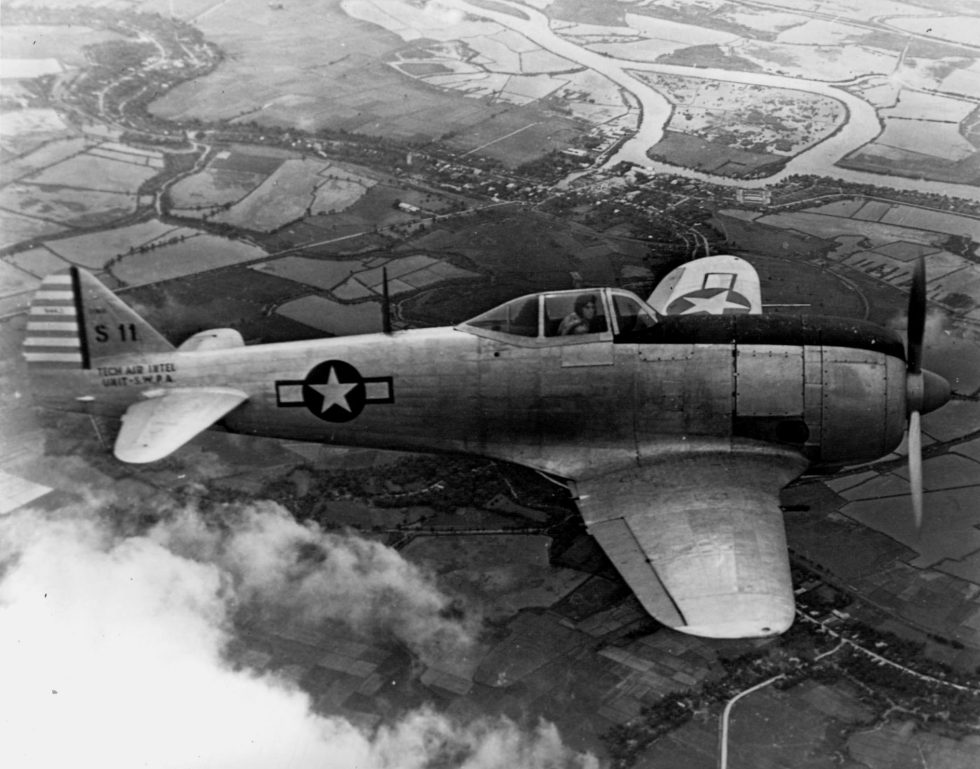
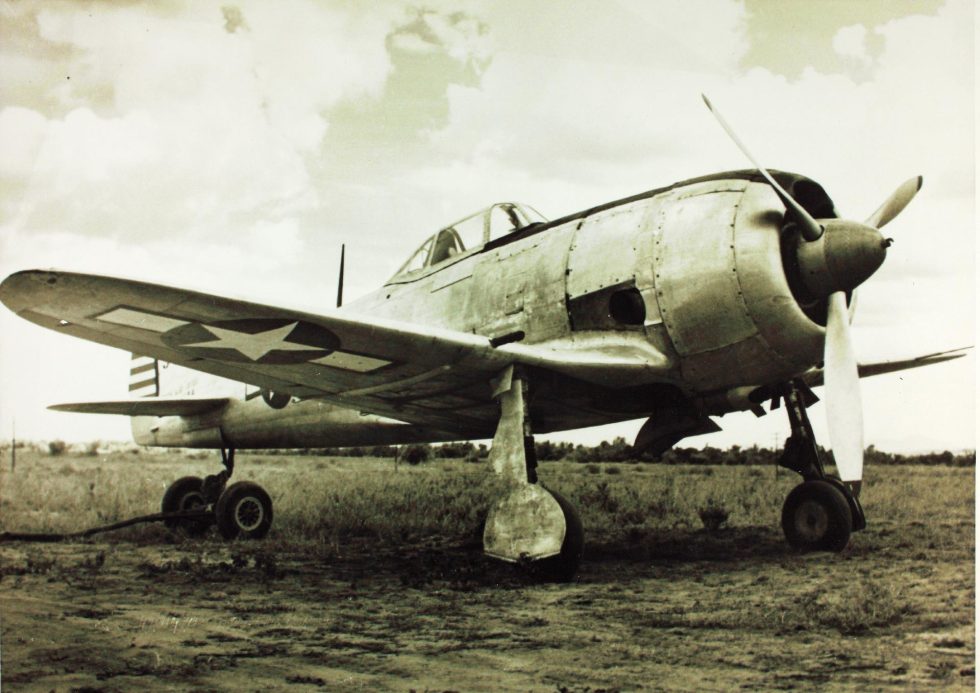
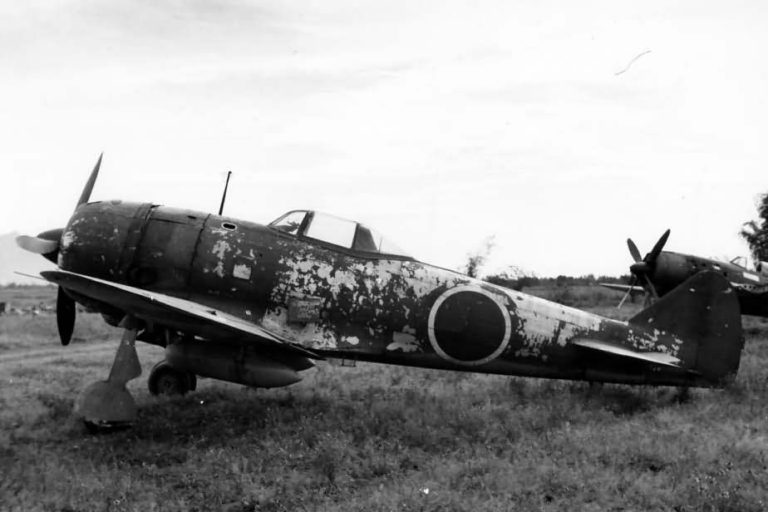
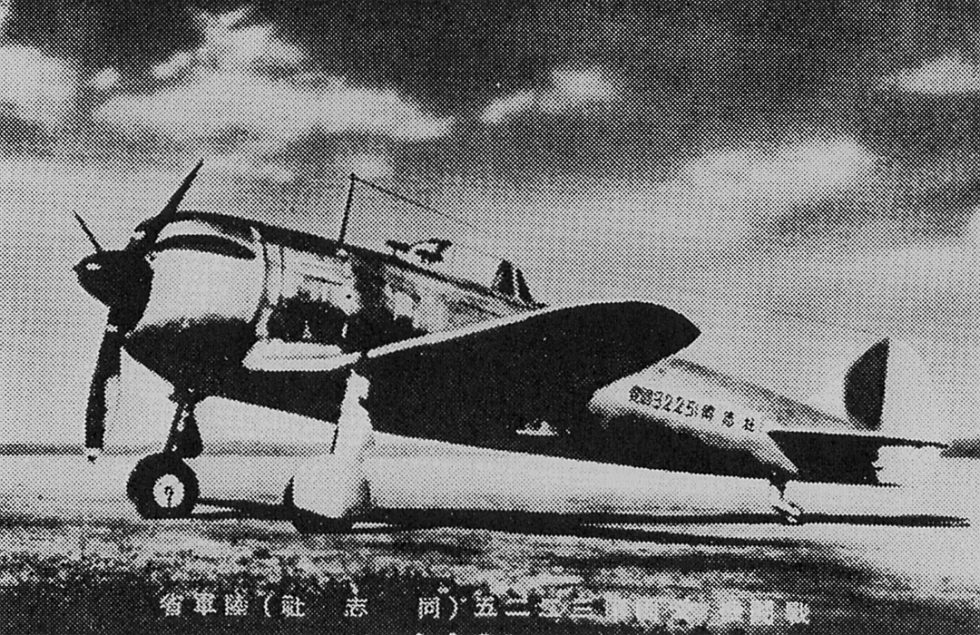
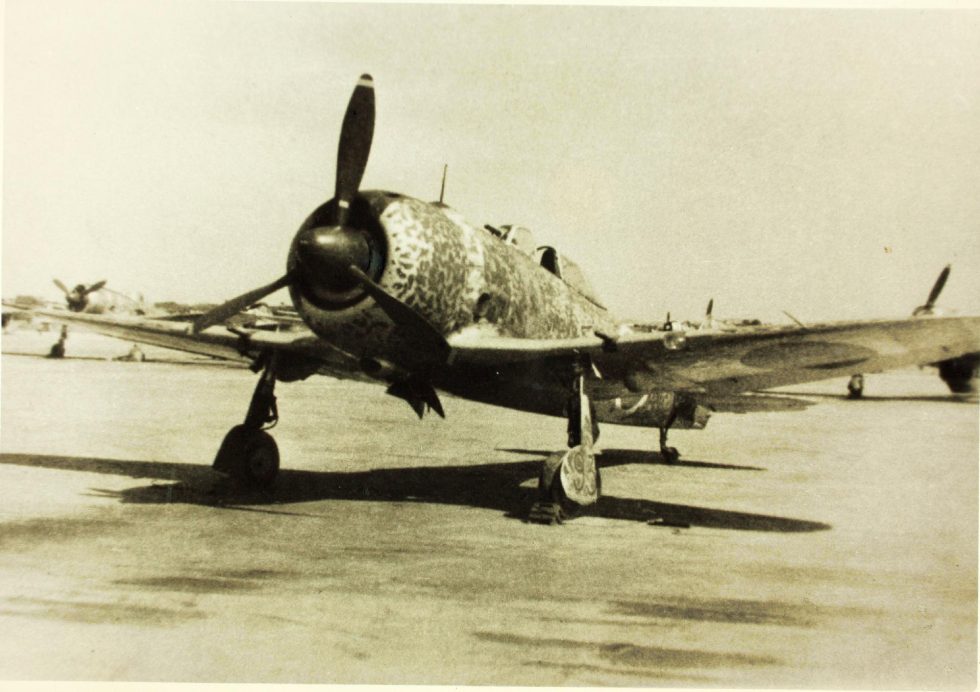
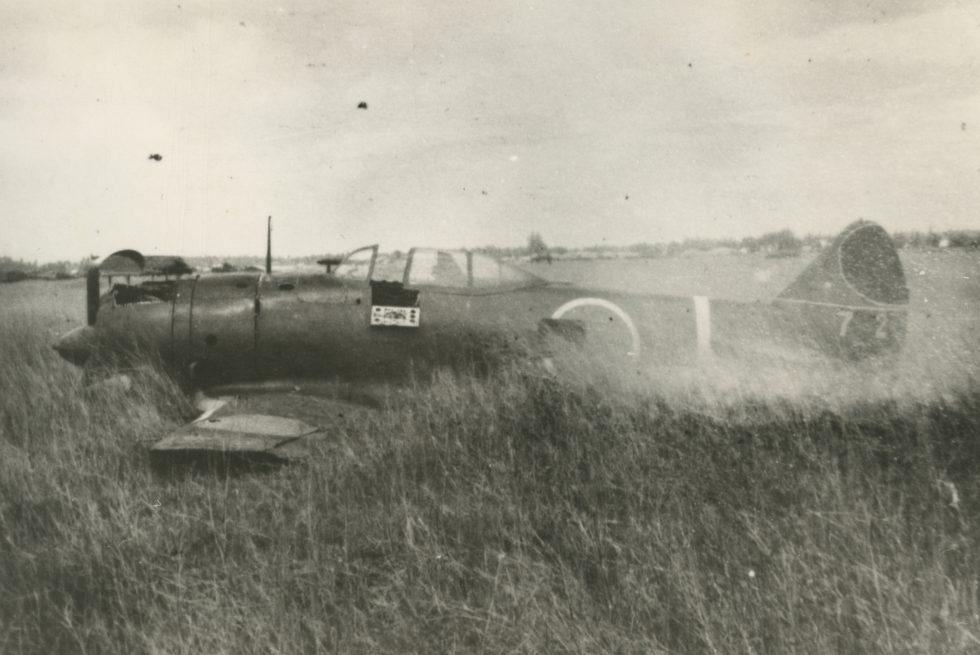
The Ki-44 Shoki in motion
IHYLS: The Japanese Interceptor Built To Destroy Demons — Nakajima Ki-44 Shoki. A concise, well-illustrated documentary on the Shoki’s unusual design philosophy, its engine and armament, and its home-defence career.
Where the Ki-44 Shoki flew
The Ki-44 Shoki’s combat record
The Ki-44 was never a dogfighter, and its record reflects that. It fought as a fast interceptor — over Malaya and Sumatra early in the war, and above all in the defence of Japan against the B-29. Its story is one of hard climbs, slashing passes, and, when altitude and armament failed, of pilots willing to ram the bombers they could not shoot down.
Compare the combat record of every military aircraft.
Everything people ask about the Ki-44 Shoki
Can I fly in a Nakajima Ki-44 Shoki?
What does “Shoki” mean, and why was it called “Tojo”?
How fast was the Ki-44 Shoki?
Why did Japanese pilots dislike it at first?
Did the Ki-44 really ram B-29s?
How many Ki-44s were built, and are any left?
What replaced the Ki-44 Shoki?
You can’t fly the Ki-44 Shoki.
These, you can.
Some legends only live in museums — others are fuelled and waiting. MiGFlug has put civilians in real military jet cockpits since 2004.
 Fly the L-39 AlbatrosThe world’s most-flown jet trainer — aerobatics included
 Fly the F-104 Starfighter“The missile with a man in it”
 Fly the MiG-21The Cold War’s most-produced jet
 Fly the T-33 Shooting StarAmerica’s first jet trainer
 Fly the DH VampireA piece of early jet history
 Fly the S.211Agile Italian jet trainer
 Fly the MB-326The classic Aermacchi jet
 Fly the MiG-15The Soviet legend of the Korean War
Continue the tour
Every fact, checked
- Military Factory — Nakajima Ki-44 Shoki (Tojo)Specifications, variant armament, engine data and production totals.
- HistoryOfWar.org — Nakajima Ki-44 Shoki ‘Tojo’Development history, variants and the combat units that flew it.
- Pacific War Online Encyclopedia — Ki-44 “Tojo”Detailed dimensions, weights, performance and production breakdown.
- World War II Database — Ki-44 ShokiFirst-flight date, metric specifications and service dates.
- Pacific Eagles — Nakajima Ki-44 Type 2 Shoki “Tojo”Design philosophy, wing loading and the “Tojo” naming.
- j-aircraft.com — Famous Airplanes of the World: Ki-44 (translation)Japanese-source translation: units, first victories and the Shinten unit.
- Arawasi WildEagles — Nakajima Ki-44 Shoki, 47th SentaiPilot-memoir translations on ramming attacks and altitude problems.
- Tails Through Time — Nakajima’s Demon: the Ki-44 ShokiCombat flaps, pilot reception and survivor status.
- Naval Historical Society of Australia — Operation MeridianThe January 1945 British carrier strikes on the Palembang refineries.
- Nicholas Millman — Ki-44 ‘Tojo’ Aces of World War 2 (Osprey)The standard English-language monograph on the type and its pilots.