
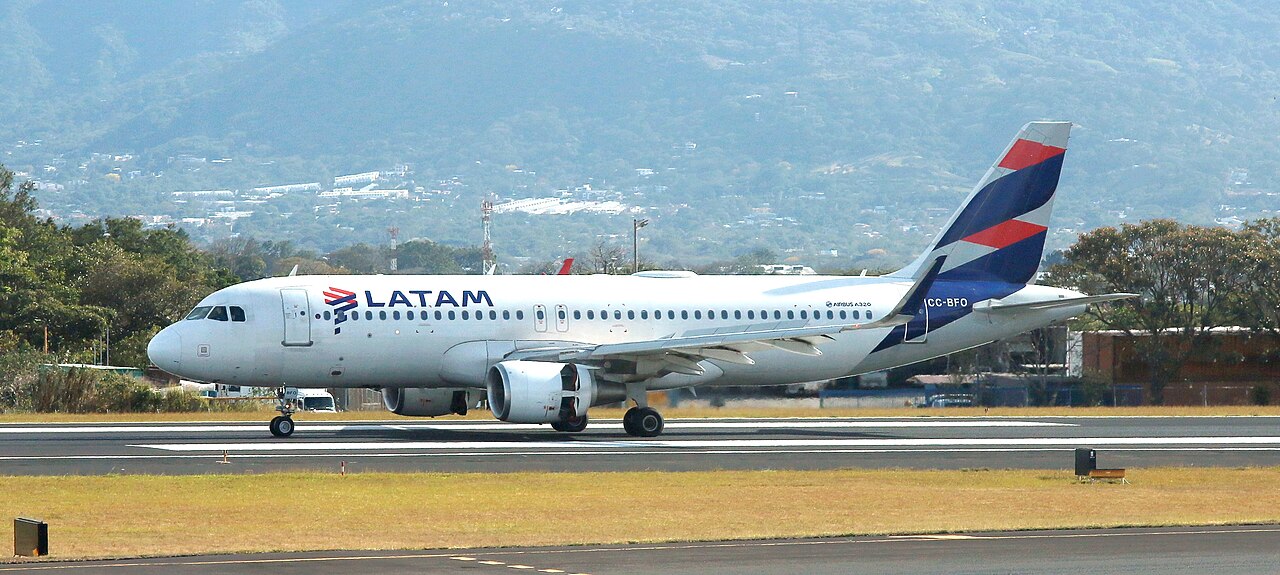
LATAM flight LA2302 never left Lima for Piura. On the morning of Monday 19 October 2026, a LATAM Airlines Perú Airbus A320 caught fire on the ground at Lima’s Jorge Chávez International Airport, minutes from departure.
Videos shared by passengers and bystanders show flames and dark smoke pouring from the area of the left-hand engine. The airport fire service put the fire out, everyone left the aircraft, and LATAM later said nobody was hurt. The airline called it an “unforeseen technical event” and says the cause is under investigation.
Datos rápidos
- Vuelo: LATAM Airlines Perú LA2302, Lima to Piura
- Fecha: 19 October 2026, morning
- Ubicación: Jorge Chávez International Airport, Lima, on the ground before take-off
- Aeronave: Airbus A320 with CFM56 engines; reported as CC-BFS, not confirmed by LATAM
- Fire: Left-hand engine area, extinguished by airport firefighters
- Lesiones: None, according to LATAM
- Investigación: LATAM says the causes are being investigated; no authority named yet
What we know about LA2302
Every outlet we checked agrees on the basics of the LATAM A320 engine fire: the aircraft was on the ground, preparing to leave Lima for the northern city of Piura, when the fire broke out, and it never departed. FlightGlobal, AirDataNews, AirLive, Infobae and La República all place the fire on the left side of the aircraft, with FlightGlobal and AirLive specifying the left engine.
Exactly how far the departure had progressed is less clear. AirLive reports that the A320 had powered up its engines when the crew aborted the departure. One passenger told the Colombian newspaper El Tiempo that the aircraft was still turning to line up for take-off. No source we found describes a high-speed rejected take-off, and LATAM itself says only that the event happened before take-off.
FlightGlobal, describing the social media footage, says the fire came from the rear of the left engine and appeared to affect part of the wing, its trailing-edge control surfaces and possibly the main landing gear. LATAM has not said how badly the aircraft was damaged.
Which aircraft was it?
LATAM has not confirmed the registration. AirDataNews and AirLive both identify the jet as CC-BFS, an Airbus A320-214 with Sharklets, a classic A320ceo rather than a re-engined neo, powered by two CFM International CFM56-5B4/3 engines. FlightGlobal says only that the aircraft appears to have CFM56 engines.
Nobody has yet said whether the fire started inside the engine or in a system or component nearby. AirDataNews points out that there is no official information on that question either way, and Afterburner will not guess.
How an A320 fights an engine fire
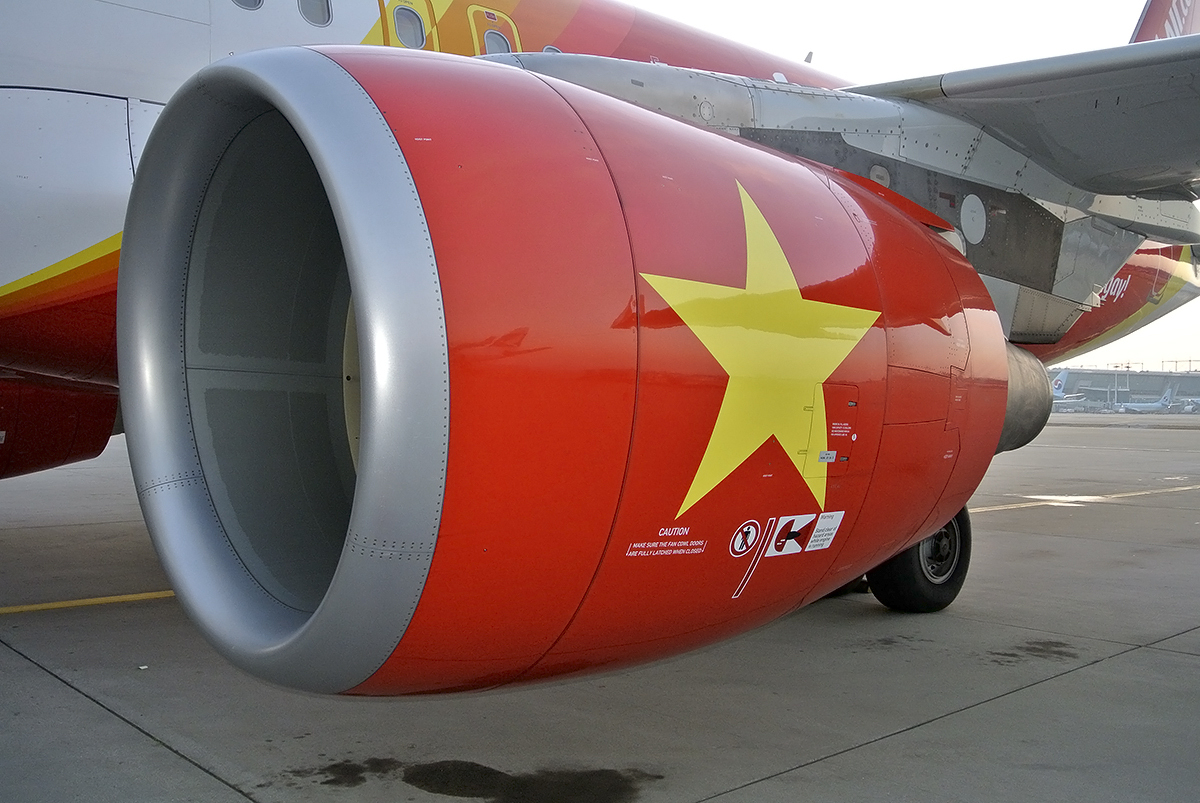
Every A320 engine is wrapped in two fire detection loops, labelled A and B, with sensing elements running through the nacelle. A Fire Detection Unit for each engine monitors both loops. Normally both must sense a fire before the warning triggers, which cuts false alarms; if one loop fails, the system carries on with the other.
When the ENG FIRE warning sounds, the crew sets the thrust lever to idle, shuts the engine down with its master lever and releases the guarded ENG FIRE pushbutton on the overhead panel. That single action cuts fuel, hydraulic, electrical and bleed-air supply to the engine and arms the extinguisher squibs.
Each engine then has two extinguisher bottles mounted in the pylon, fired by the AGENT 1 and AGENT 2 pushbuttons. In flight, the procedure calls for a 10-second pause before discharging the first bottle; if the fire is still burning 30 seconds later, the second goes in. Airbus has published a Safety First article titled “Do not Wait to Apply the Engine Fire Procedure”, which says it all. On LA2302, whether the crew fired either bottle has not been reported; the reports credit the airport firefighters with putting the fire out.
El Comercio footage of the fire on the LATAM A320’s left wing at Jorge Chávez before departure.
Slides or stairs: the evacuation decision
An engine fire on the ground leaves the captain with one big decision: how to get people off. SKYbrary describes the choice as an emergency evacuation using the exits and slides, or a rapid disembarkation that uses neither, with the captain first judging how immediate the threat is.
Slides are fast but not free. SKYbrary notes that more than 80 percent of reported slide injuries are minor, but impact at the bottom of the slide is a known cause, which is why a crew will not blow the slides if the fire is under control and the doors and stairs are safe to use.
LATAM describes what happened on LA2302 as a preventive disembarkation that followed its safety protocols. None of the reports we reviewed mention evacuation slides being used, and one passenger told El Tiempo that the crew kept everyone seated until they were told to leave.
Who investigates?
No outlet has yet named the body handling the inquiry. AirLive says Peru’s aviation safety authority and LATAM technical teams have started an investigation, while Infobae and El Tiempo report that the consumer protection agency Indecopi was at the airport supervising how passengers were looked after. Peru’s accident investigators, the Commission for the Investigation of Aviation Accidents (CIAA), led the inquiry into the last serious LATAM event at Lima; whether they have opened a file on LA2302 has not been reported.
That earlier event still hangs over the airport. On 18 November 2022, LATAM Perú flight LA2213, an A320neo, hit a fire truck that had crossed the runway during a drill. Three firefighters eventually died of their injuries and the aircraft was destroyed by fire.
This time the airport kept running. Jorge Chávez said on X that both runways were operating and that arrivals and departures were not affected. LATAM rebooked the passengers onto a new flight, which it says has since landed in Piura. The jet, and the question of what burned, stay in Lima.
Sources: FlightGlobal, AirDataNews, AirLive, Infobae, La República, El Tiempo, BioBioChile, Aeropuerto Jorge Chávez (X), Airbus Safety First, AviationHunt (A320 ATA 26), Contrail Aviation School, SKYbrary, Wikipedia (LATAM Airlines Perú Flight 2213)

0 Comments