
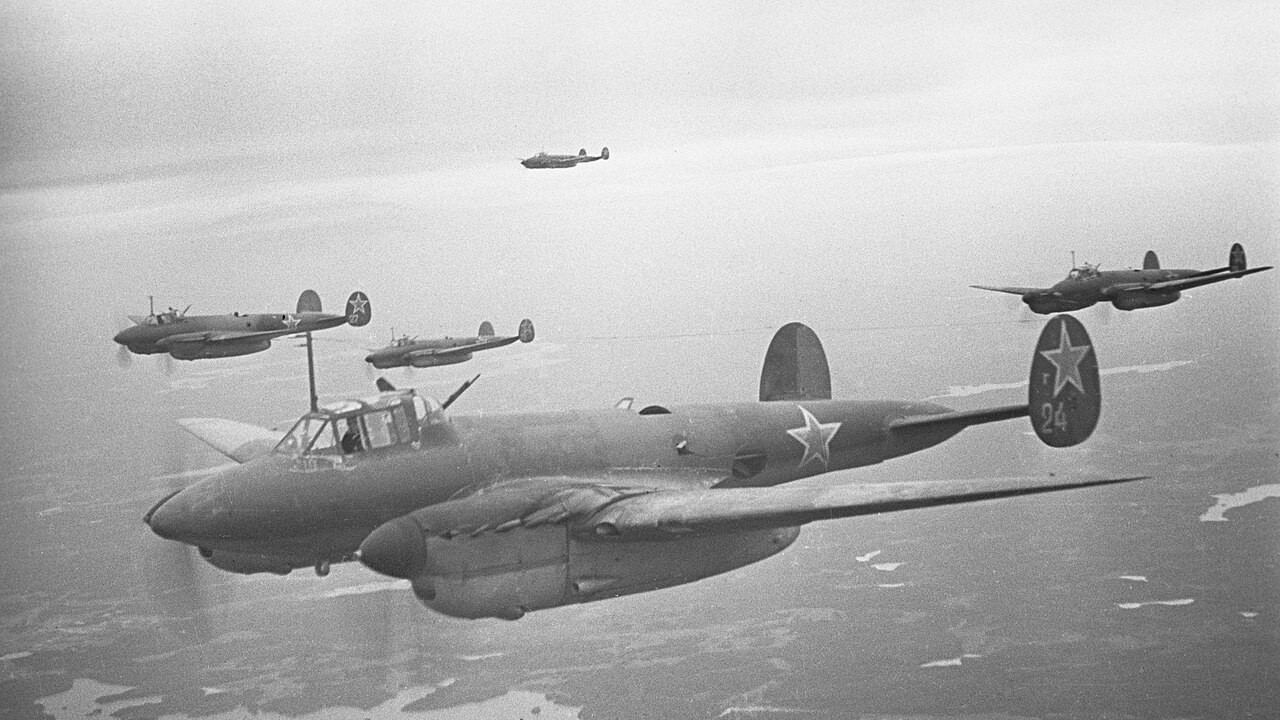
On 21 October 1937, NKVD officers arrested Vladimir Petlyakov, one of the Soviet Union’s best aircraft engineers, along with Andrei Tupolev and the leadership of the TsAGI institute. The charges of sabotage and espionage were invented. Many of his colleagues were shot. Petlyakov was put to work instead.
From a prison design bureau, he and his team produced the aircraft that became the Petlyakov Pe-2, the “Peshka”. It began life as a pressurised high-altitude fighter, was turned into a dive bomber in 45 days, and became the most-produced Soviet twin-engined combat aircraft of the Second World War.
Datos rápidos
- Tipo: Twin-engined dive bomber, also built as heavy fighter (Pe-3) and reconnaissance aircraft
- Diseñador: Vladimir Petlyakov, working as a prisoner in an NKVD design bureau
- Origen: VI-100 pressurised high-altitude fighter, first flown December 1939
- Multitud: 3
- Motores: 2 × Klimov M-105 V-12
- Velocidad máxima: About 540 km/h (early production)
- Bomb load: 600 kg internal; up to 1,000 kg with external racks (early production)
- Construido: About 11,430 during the war
- Apodo: Peshka (“pawn”); NATO name Buck
Designing behind barbed wire
Stalin’s purge reached deep into the aviation industry. Instead of executing every engineer it arrested, the NKVD ran special prisons called sharashkas, where valuable prisoners kept designing aircraft under guard. Petlyakov was given charge of a team in one of them, working alongside other imprisoned designers such as Vladimir Myasishchev.
His project was known simply as “100”. Proposed in 1938, it was a twin-engined high-altitude interceptor meant to catch German bombers flying above the reach of ordinary fighters. The VI-100 was advanced for its time: all-metal construction, a pressurised cabin, turbo-superchargers and many electrically operated systems. The prototype first flew in December 1939.
Then the war in the West changed everything. The Luftwaffe’s Ju 87 Stuka dive bombers had shown in 1939 and 1940 what precise tactical bombing could do, and the Soviet air force wanted its own. At the same time, Soviet experts found that Germany had no serious high-altitude bomber programme under way. The interceptor had lost its target.
Forty-five days to build a bomber
In 1940 Petlyakov’s team was ordered to redesign the two-seat fighter as a three-seat dive bomber within 45 days. The pressurisation and the turbo-superchargers went. In came a glazed nose for better downward view, slatted dive brakes under the wings, a fuselage bomb bay and a small bay in the back of each engine nacelle.
The redesign worked so well that the aircraft went straight into production without a new prototype. The first production machines were completed in late 1940, and the type took the designation Pe-2. Petlyakov was released from imprisonment in 1940 and received a Stalin Prize in 1941.
Dark Skies tells the story of the Pe-2, from Petlyakov’s prison design bureau to the front line.
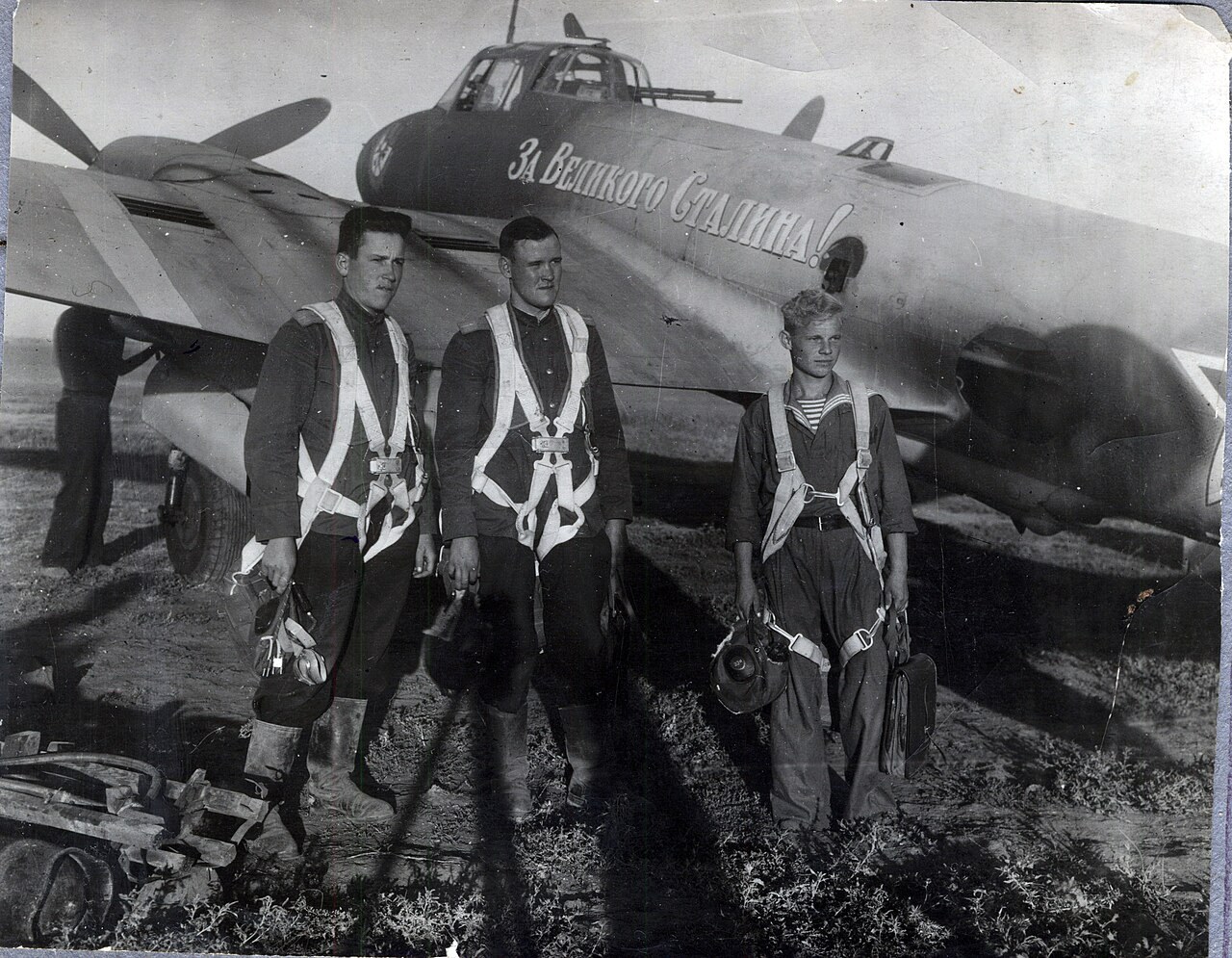
The Pe-2 was accepted for service in June 1941, just before Germany invaded the Soviet Union. Its first months were brutal. Poorly trained crews, still unfamiliar with the new aircraft, were thrown into desperate low-level attacks against advancing German columns, where light flak and fighters cut them down.
The Peshka finds its feet
By the end of 1941 the Pe-2 began to show what it could do. It was fast for a bomber, agile, and able to dive-bomb with real accuracy. Pilots who had come from older, slower bombers were stunned by it, though the aircraft was also demanding to fly, with a high landing speed and a tendency to bounce on touchdown.
Experienced units learned to use that versatility. According to VVS Air War, a research site on the wartime Soviet air force, the elite 6th Guards Bomber Aviation Division often alternated between dive attacks and level bombing on the same sorties, so that German flak gunners could not settle on one way of aiming at the formations.
The cost was still high. Pe-2s were daylight bombers, often flown by young crews, and German fighters took a steady toll even late in the war. The gunners suffered most: the ventral gun had a narrow field of fire, and the belt of the heavy machine gun was prone to jam when fired at extreme angles.
Crews also complained, rightly, that defensive armament was too weak and that the navigator and gunner were badly protected. The design was improved steadily throughout the war in consultation with front-line units: heavier 12.7 mm machine guns, better turrets, more armour and more powerful Klimov engines.
Petlyakov did not see most of it. On 12 January 1942 he was killed when the Pe-2 carrying him to Moscow crashed near Arzamas. Development continued under other designers, Myasishchev among them, and the factories kept turning out Peshkas in enormous numbers.
Women at the controls
The Pe-2 was the mount of one of the most remarkable units of the war. The 587th Bomber Aviation Regiment, founded by Marina Raskova as one of three Soviet women’s aviation regiments and later renamed the 125th Guards Bomber Aviation Regiment, flew the Pe-2 in combat. It flew 1,134 missions and dropped more than 980 tons of bombs, and five of its members became Heroes of the Soviet Union.
The airframe also proved adaptable. The Pe-3 turned the bomber back into a heavy fighter, bringing the design full circle to where it had started. The Pe-2R carried cameras for reconnaissance. In June 1944, Pe-2 crews were among the Soviet airmen who met American bomber crews at Poltava during the Operation Frantic shuttle missions.
Eleven thousand Peshkas
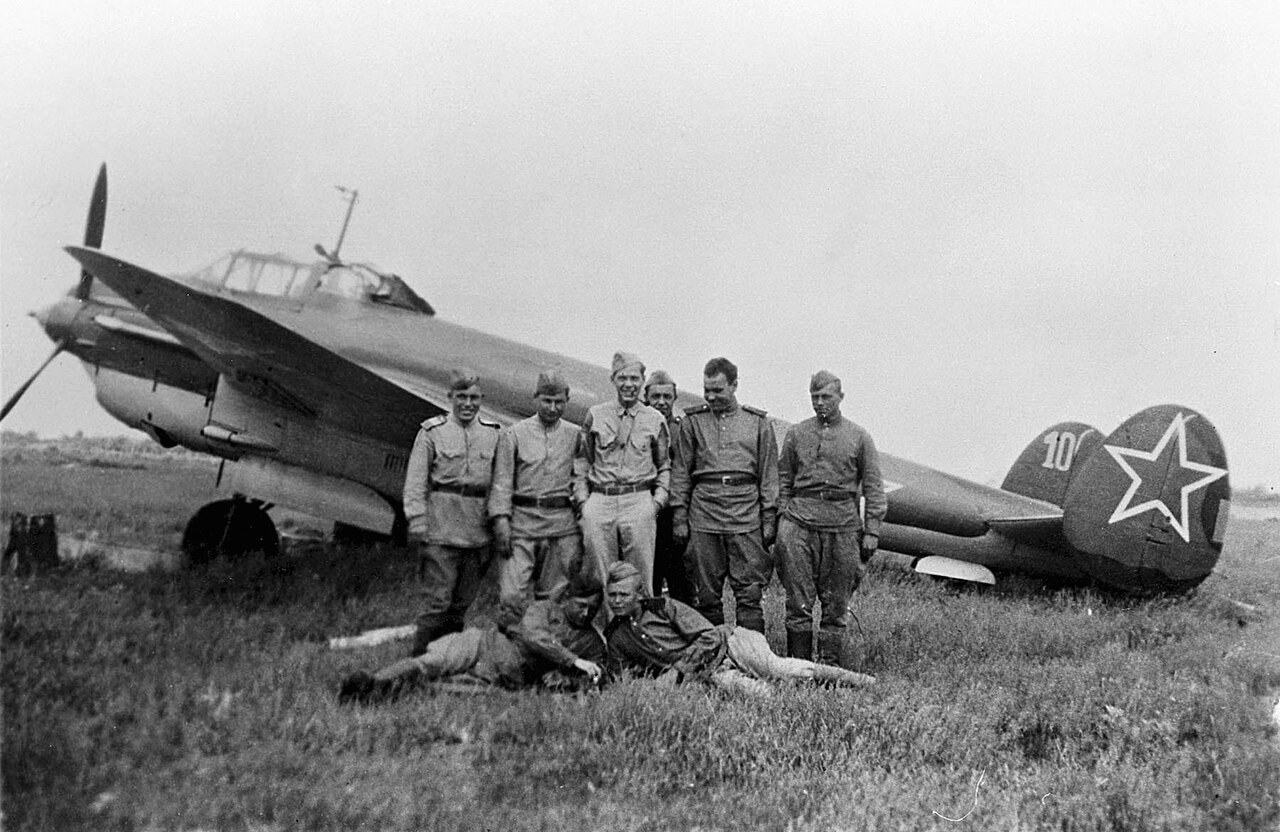
Around 11,430 Pe-2s were built during the war. Only Germany’s Junkers Ju 88 and Britain’s Vickers Wellington were built in greater numbers among twin-engined combat aircraft of the conflict, which makes the Pe-2 the most-produced Soviet twin-engined combat aircraft of the war and the backbone of its light bomber force.
A documentary on how the VI-100 fighter became the Soviet Union’s most important wartime bomber.
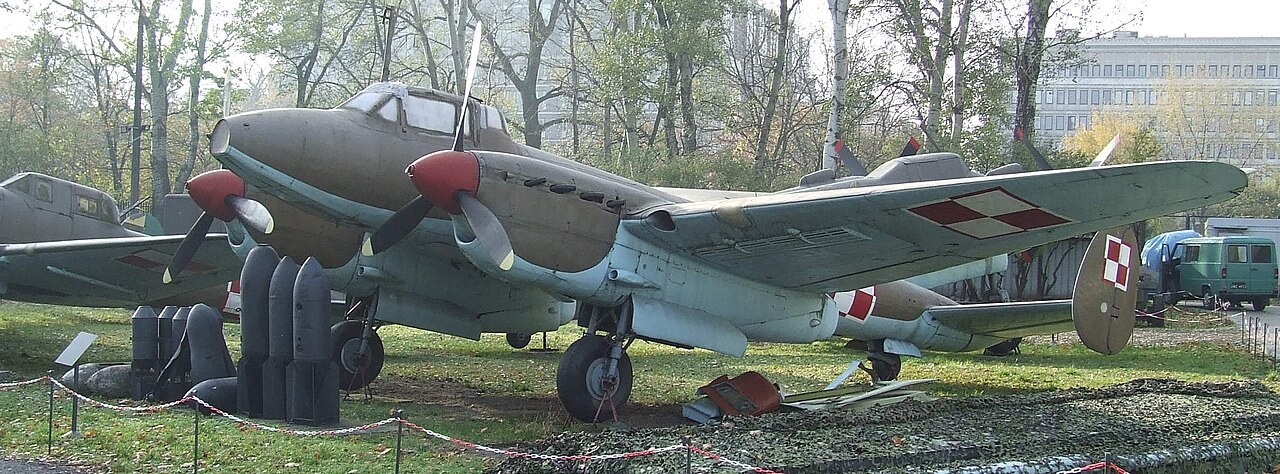
After 1945 the Peshka served on with Soviet-aligned air forces including those of Czechoslovakia and Poland, and NATO gave it the reporting name “Buck”. A handful survive today, among them examples in the Polish Army Museum in Warsaw and the Central Air Force Museum at Monino.
Archive footage of Soviet Pe-2s in action during the Second World War.
Petlyakov’s other famous design, the four-engined Pe-8 heavy bomber, was built only in small numbers. The Pe-2 was his real legacy: a fighter conceived in a prison, rebuilt as a bomber against the clock, and flown by men and women who called it the little pawn.
Sources: VVS Air War, Royal Air Force Museum, Polish Army Museum, Central Air Force Museum Monino, Dark Skies
Header photo: Grigory Chertov (TASS) / Wikimedia Commons, public domain
0 Comments