
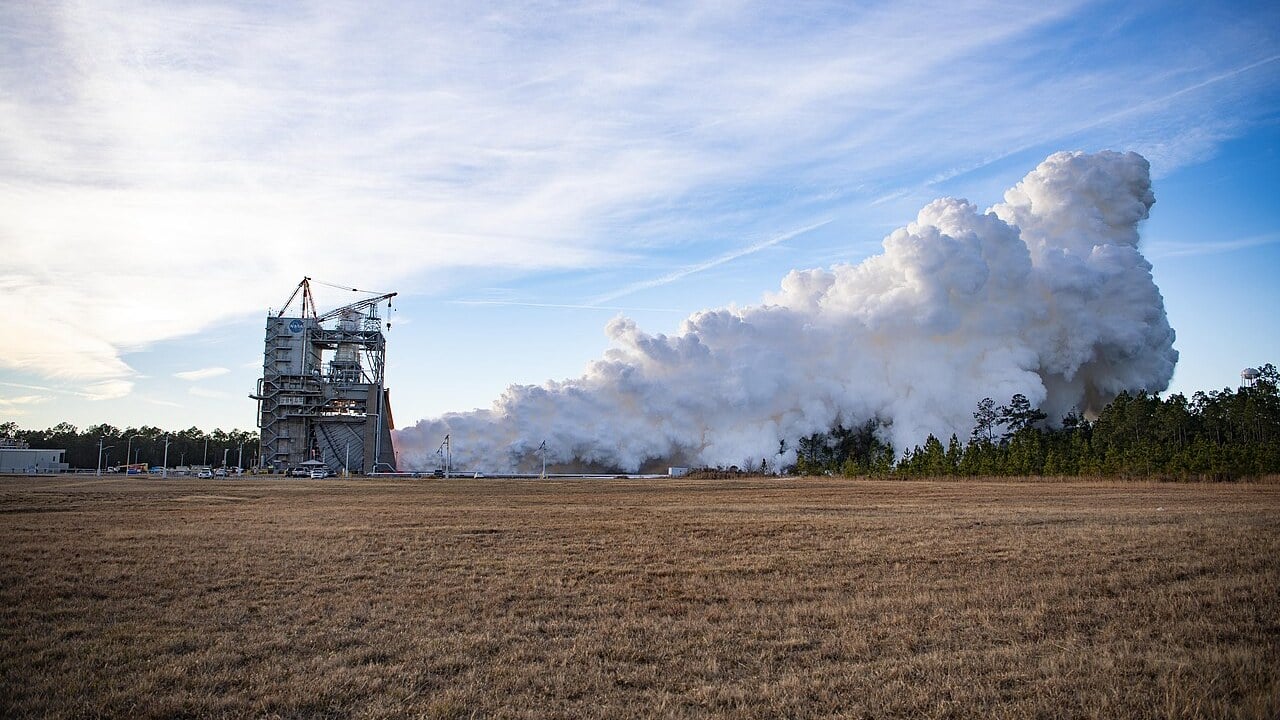
On 13 January 1920, a New York Times editorial mocked the rocket pioneer Robert Goddard. Once a rocket left the air, the paper argued, it would have nothing to push against, and the professor apparently lacked knowledge taught daily in high schools.
The Times was wrong, and it took the paper 49 years to admit it. But the mistake is a useful one, because it sits right on the dividing line between the two great families of reaction engines. A jet engine and a rocket both throw gas backwards to go forwards. The difference is where that gas, and the oxygen to burn it, comes from.
Here is the rocket vs jet engine question explained: why one works in space and the other cannot, why jets win easily inside the atmosphere, and the strange hybrids that tried to have it both ways.
Datos rápidos
- Jet engine: Breathes air: uses atmospheric oxygen to burn its fuel, and the air as reaction mass
- Rocket engine: Carries fuel and oxidiser, so it works in a vacuum
- Rocket thrust: F = mVe + (pe − p0)Ae, with no incoming-air term
- Specific impulse: Turbofan about 6,000 s or more at sea level; chemical rockets about 200 to 400 s
- RS-25: About 453 s in a vacuum
- Me 163 Komet: The only operational rocket fighter; about eight minutes of powered flight
- Mirage III: Optional SEPR 841 rocket pack for high-altitude interception
- SABRE: Air-breathing rocket hybrid; Reaction Engines entered administration on 31 October 2024
Breathing air versus carrying it
Every combustion engine needs two things: fuel and an oxidiser to burn it with. A jet engine takes the easy route. It swallows air from the atmosphere, uses the oxygen in that air to burn its kerosene, and blasts the hot mixture out of the back. We have covered the inside of that process in ¿Cómo funciona un motor a reacción? and the different jet families in Turbojet vs Turbofan vs Turboprop.
A rocket brings everything with it. Its propellants are fuel and oxidiser, carried in tanks or packed together as a solid. Liquid oxygen, nitric acid and concentrated hydrogen peroxide have all been used. Because nothing comes in from outside, the rocket does not care whether there is any air around it at all.
That independence comes at a price in weight. The SEPR 841 booster rocket fitted to the Dassault Mirage III, for example, burned its fuel and nitric acid at a ratio of 1 to 3.5 by weight. For every kilogram of fuel, the aircraft had to carry three and a half kilograms of oxidiser, something a jet simply takes from the sky for free.
One equation, one missing term
NASA’s Glenn Research Center writes the thrust of any of these engines as a single equation. For a jet engine it reads: thrust equals the mass flow leaving the engine times its exit velocity, minus the mass flow of air coming in times the aircraft’s speed, plus a pressure term at the nozzle. In symbols, F = meVe − m0V0 + (pe − p0)Ae.
The middle term is the toll a jet pays for breathing. Every kilogram of air it swallows arrives already moving at the aircraft’s speed, relative to the engine, so the engine only gets credit for the extra speed it adds. A rocket has no incoming air, so that term disappears: F = mVe + (pe − p0)Ae. The pressure term even helps a rocket in a vacuum, where the outside pressure p0 falls to zero.
So the 1920 editorial had it backwards. A rocket does not push against the air. It pushes against its own exhaust, which is Newton’s third law at work, and it does so just as well in empty space.
Specific impulse: the fuel-efficiency score
Engineers compare engines with a number called specific impulse, measured in seconds. NASA defines it as the thrust produced divided by the weight flow of propellant. Put simply, it says how many seconds one kilogram of propellant can produce one kilogram-force of thrust. Higher is better.
Purdue University’s aviation technology department explains specific impulse as a simple way to compare jets and rockets.
Here the jet engine wins by a landslide. According to standard engineering figures, a turbofan may have a specific impulse of 6,000 seconds or more at sea level, while a chemical rocket manages between about 200 and 400 seconds. Even the Space Shuttle’s RS-25 main engine, one of the most efficient chemical rockets ever built, rates about 453 seconds in a vacuum.
There are two reasons. First, a jet counts only its fuel as propellant, because the air it uses as reaction mass and oxidiser comes free. Second, a jet throws a large mass of air backwards relatively slowly, while a rocket throws a small mass of gas very fast. The faster the exhaust compared with the aircraft, the more energy is wasted heating and stirring the air behind it. That is why every airliner and fighter flies on air-breathing engines.
Why rockets still win at the edges
Jets have their own limits. They need air dense enough to breathe, which caps how high they can go, and as speed climbs the air rammed into the intake becomes so hot that conventional turbines cannot cope. Beyond that, designers turn to ramjets and scramjets, which we explained in our story on the X-43A Hyper-X, or to rockets.
A rocket gives huge thrust from a light, simple engine and does not care about altitude or speed. That made it irresistible to fighter designers who wanted to climb to bomber height in minutes. The most famous result was the Messerschmitt Me 163 Komet.
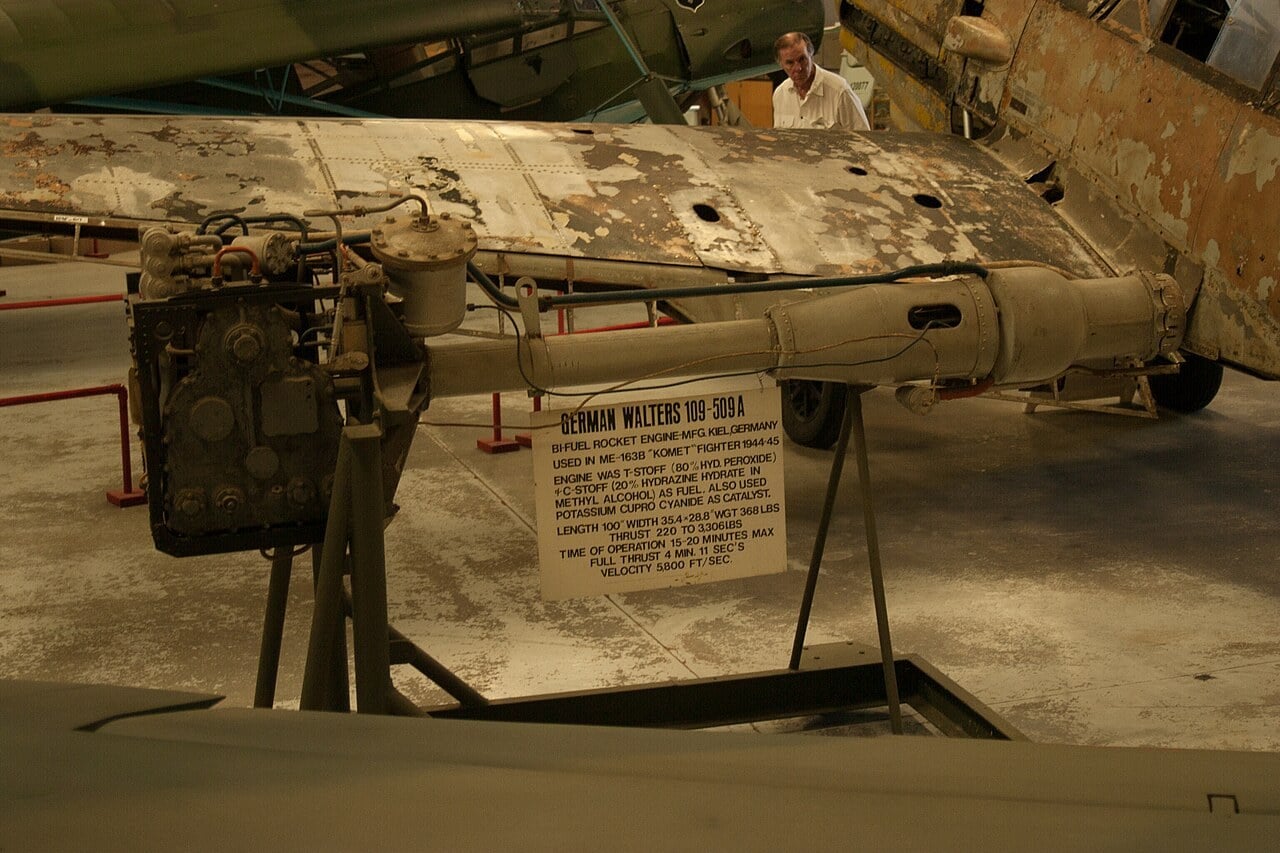
The Komet was the only operational rocket-powered fighter in history. Its Walter HWK 109-509 engine burned T-Stoff, a mix based on 80 percent concentrated hydrogen peroxide, with C-Stoff, a hydrazine hydrate and methanol fuel. In October 1941 a prototype flown by Heini Dittmar set a speed record of 1,004.5 km/h. The catch was endurance: the Smithsonian notes it carried only enough propellant for about eight minutes of powered flight. We told its full, and often grim, story in El Me 163 Komet: El caza cohete que se comió a sus pilotos.
Period instructional film about the Me 163 B rocket interceptor, from around late 1944.
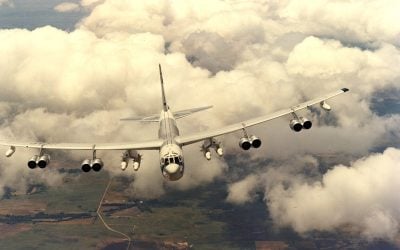
The postwar answer to the record books was the X-15, dropped from a B-52 and pushed by a rocket engine to Mach 6.7. It flew where no jet could breathe, and it is a story for another day.
Rockets and jets together
If rockets are thirsty and jets run out of air, why not fit both? The French did exactly that. The Mirage III could carry a SEPR 841 rocket pack under its rear fuselage for high-altitude interception. Its pumps were driven mechanically from the main jet engine, and the pack could be swapped for an extra fuel tank in about 20 minutes.
In training sorties the combination reached Mach 1.8 with the rocket against Mach 1.4 without, and the jet could reach 75,000 feet on rocket thrust. Britain tried the same idea in the Saunders-Roe SR.53, which paired an Armstrong Siddeley Viper turbojet with a de Havilland Spectre rocket.
A humbler hybrid is still familiar from air shows. JATO, short for jet-assisted take-off, is a misleading name: the bottles strapped to the aircraft are rockets, used to shove overloaded aircraft into the air. The Ángeles Azules’ C-130 Hércules, Fat Albert, made JATO famous at air shows before the demonstration ended in 2009.
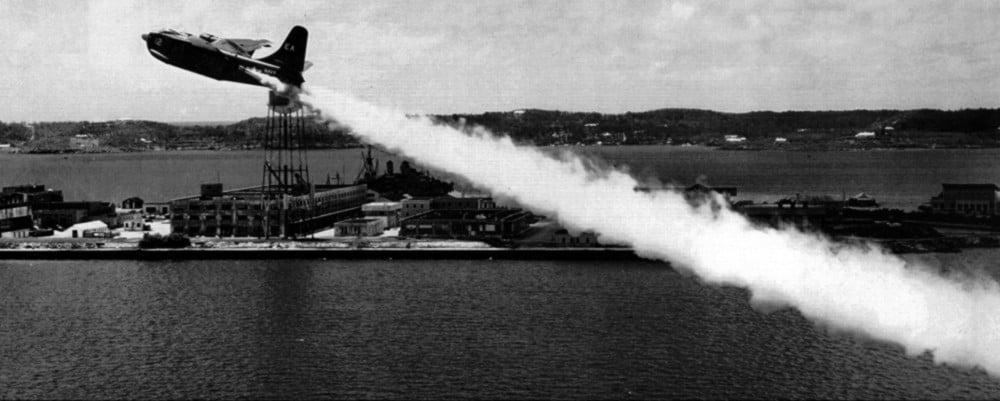
Some of the earliest JATO work was done in late 1941, when Theodore von Kármán’s team fitted small Aerojet solid rockets to an Ercoupe light aircraft and Army Captain Homer Boushey took off on rocket power alone.
Fat Albert, the Blue Angels’ Hercules, makes a JATO take-off at the 2002 MCAS Miramar Air Show.
SABRE: the engine that was meant to be both
The boldest attempt to merge the two was SABRE, the Synergetic Air Breathing Rocket Engine developed by Britain’s Reaction Engines. The idea was to breathe air like a jet up to about Mach 5, then close the intake and run on stored liquid oxygen as a pure rocket to reach orbit in the proposed Skylon spaceplane.
The trick was a precooler. At around Mach 5.5 the air rammed into the inlet reaches about 1,000°C, too hot for any engine. SABRE’s heat exchanger, using a helium coolant loop, was designed to chill it to about minus 150°C in a fraction of a second. Reaction Engines tested the precooler at Mach 5 conditions in 2019.
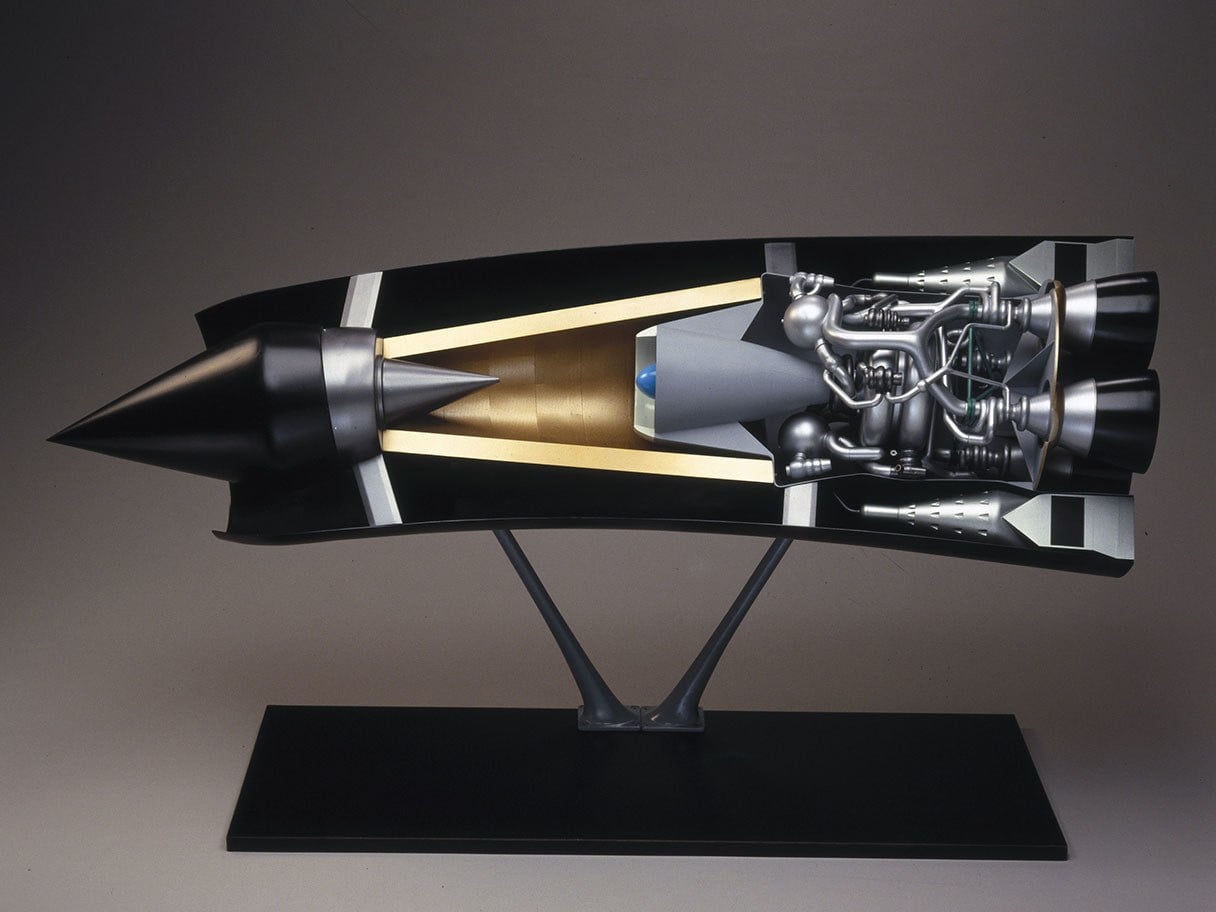
It was not enough to save the company. After failing to raise new funding, Reaction Engines entered administration on 31 October 2024, and 173 of its 208 staff were made redundant. SABRE remains the most ambitious attempt yet to build one engine that is both a jet and a rocket.
Reaction Engines’ own animation of how air was meant to flow through the SABRE engine.
So the rocket vs jet engine contest has no single winner. Inside the atmosphere, breathing air is unbeatable: a jet goes many times further on every kilogram it carries. Above it, there is nothing to breathe, and only an engine that brings its own oxygen will do. Goddard knew that in 1920. It just took everyone else a little longer.
Sources: NASA Glenn Research Center (Beginner’s Guide to Propulsion), Smithsonian National Air and Space Museum, The Register, This Day in Aviation, kottke.org, Wikipedia (Specific impulse; Rocket engine; Messerschmitt Me 163 Komet; Walter HWK 109-509; SEPR 84; Dassault Mirage III; JATO; SABRE; Reaction Engines; Robert H. Goddard; North American X-15; Saunders-Roe SR.53)
0 Comments