
F7F Tigercat
Grumman’s twin-engine heavy fighter
One of the fastest piston fighters ever built — a twin-engine Navy fighter that arrived just too late for its war, and found its niche in the dark skies over Korea.
The F7F Tigercat: the ultimate piston naval fighter, born too late
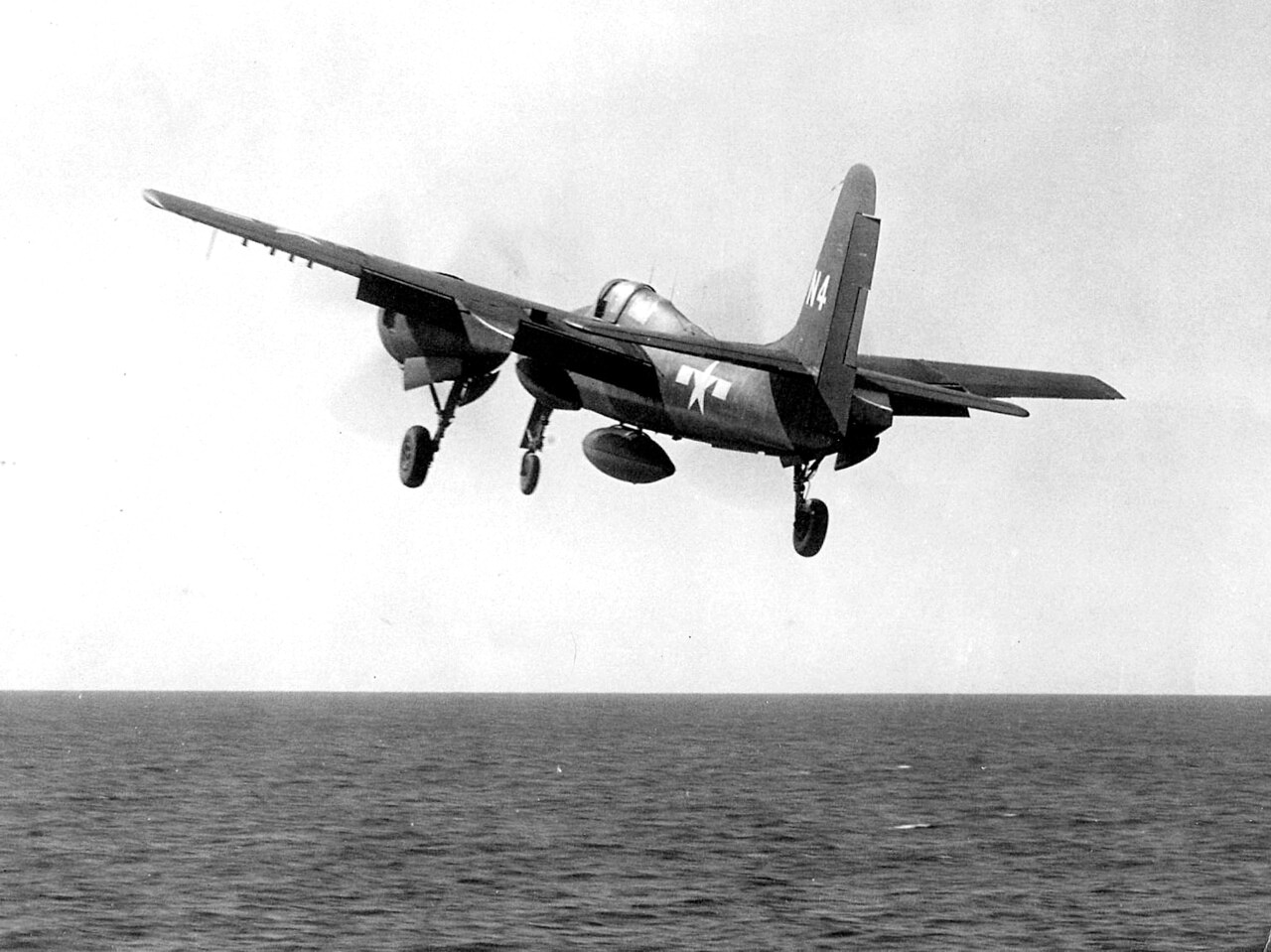
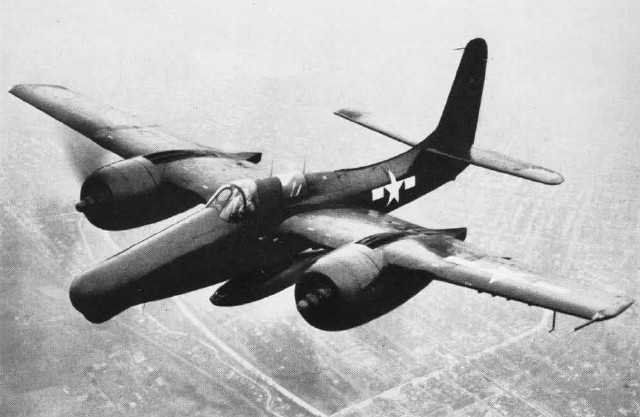
The Grumman F7F Tigercat was meant to be the most powerful carrier fighter in the world. Ordered in 1941 for the big new Midway-class carriers, it broke Grumman’s own mould: two Pratt & Whitney R-2800 Double Wasp engines, more than 4,000 horsepower between them, four 20 mm cannon and four .50-calibre machine guns, and a top speed around 460 mph — some 70 mph faster than the Hellcat it was meant to succeed. It was fast, heavy, and beautifully built.
It was also too much aircraft, too late. The Tigercat first flew in November 1943, but shifting priorities meant it never reached squadrons in numbers before the war ended. And it struggled at the very thing it was designed for: with one engine out it handled badly on a carrier approach, and its tailhook gave trouble, so it failed carrier qualification. Only the final variant, the F7F-4N — just twelve aircraft — ever qualified for the deck. In practice the Tigercat became a land-based fighter for the U.S. Marine Corps.
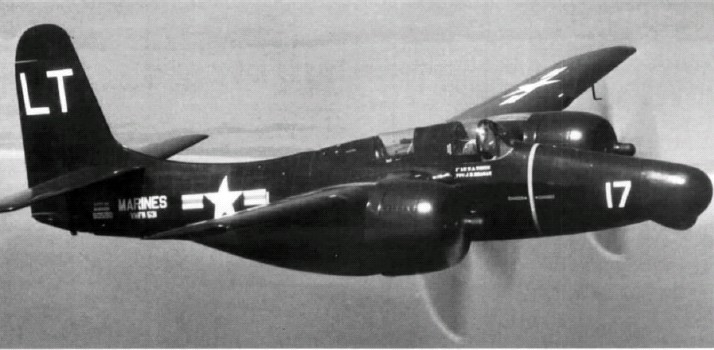
Its real war came in Korea. Marine night-fighter squadrons flew the radar-equipped F7F-3N on night-interdiction and heckler missions, hunting truck convoys and flying close support in the dark. In one of the type’s very few air-to-air engagements, a VMF(N)-513 Tigercat shot down a North Korean Po-2 biplane at night — a strange duel between a 460 mph twin-engine fighter and a wood-and-fabric trainer.
The night-fighter role suited it. With a second crewman working the radar, long endurance, heavy firepower and the reassurance of two engines over hostile ground, the F7F-3N was a capable nocturnal hunter — even if the enemy it mostly hunted was trucks rather than aircraft.
It never became famous, because it never got its moment. Overtaken by the jets almost as soon as it entered service, the Tigercat ended production at around 364 aircraft and was retired from U.S. service by 1954. Many surplus airframes then found a second life as fire-bombers, dropping retardant on wildfires into the 1980s.
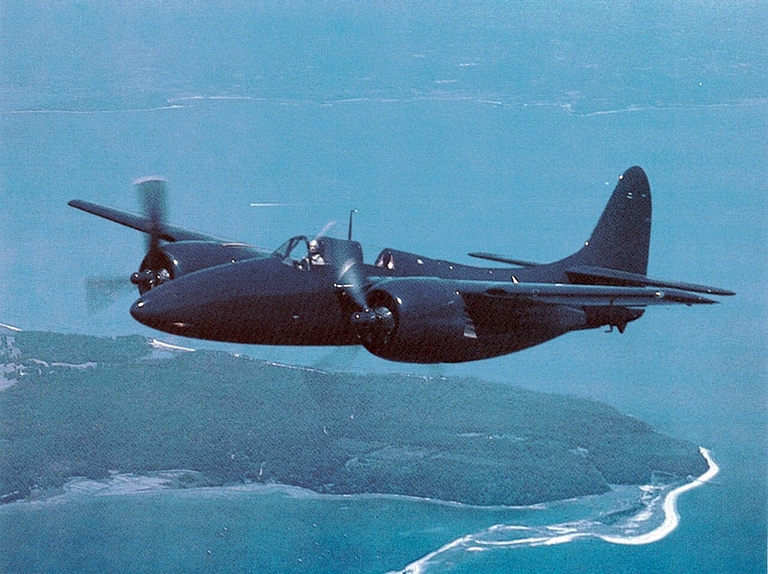
Today it is a warbird favourite — a handful still fly, their twin Double Wasps making a sound enthusiasts travel to hear. The Tigercat is remembered less for what it did than for what it was: arguably the ultimate expression of the piston-engine naval fighter, perfected at the very moment the piston fighter became obsolete.
01Why the F7F Tigercat arrived too late to matter
The Tigercat is a study in unlucky timing. Conceived in 1941 as the fighter for a new generation of large carriers, it was a big, complex, twin-engine machine that took time to develop — and by the time it was ready in 1944–45, the Pacific war was won and the jet age was dawning. Its carrier-suitability problems pushed it ashore, away from the fleet role it was built for, and the Marines who flew it did so from land.
Had it appeared two years earlier, the Tigercat might have been a war-winner. Instead it became a footnote: a superb piston fighter that reached the fight just as pistons were bowing out to jets.
How the F7F Tigercat was built
Two Double Wasps
The Tigercat’s speed came from a pair of Pratt & Whitney R-2800 Double Wasp radials — over 4,000 hp together. Two engines gave it exceptional performance for a piston fighter, and a margin of safety over water and enemy territory that single-engine fighters lacked.
A very heavy punch
Four 20 mm cannon in the wing roots and four .50-calibre machine guns in the nose made the Tigercat one of the most heavily armed fighters of its era. It could also carry bombs, rockets or even a torpedo, doubling as a potent attack aircraft.
Radar and a second seat
The night-fighter variants — the -1N, -2N and -3N — added airborne-intercept radar in a lengthened nose and a second crewman to work it, turning the Tigercat into a genuine all-weather, night-capable fighter.
02The F7F Tigercat’s carrier problem: why a Navy fighter served ashore
The Tigercat was ordered for carriers, but it never really went to sea. Twin-engine aircraft are unforgiving if one engine fails at low speed on a carrier approach, and the F7F’s directional control on a single engine was marginal; its tailhook and arresting behaviour also gave trouble in trials. Early variants failed carrier qualification outright.
Only the much-modified F7F-4N — a mere twelve aircraft — was eventually cleared for carrier operations. The rest of the fleet flew from land with the U.S. Marine Corps, which is why a fighter designed for the Navy’s biggest carriers is remembered as a land-based Marine machine.
03The F7F Tigercat as a night fighter over Korea
The Tigercat found its true calling in the dark. Fitted with radar and a radar operator, the F7F-3N flew night-interdiction and close-support missions in Korea with Marine squadrons such as VMF(N)-513, prowling for truck convoys and troop movements under cover of night. Its heavy armament, long endurance and two engines made it well suited to lonely work over hostile ground.
Air-to-air work was rare — the type’s handful of night kills were against slow Po-2 biplane harassers — but as a nocturnal hunter of ground targets the Tigercat was effective, bridging the gap until jet night fighters took over.
Grumman F7F-3 Tigercat specifications
Airframe & Performance
- צוות
- 1 (2 in the -N night fighters)
- מֶשֶׁך
- 13.83 m (45 ft 4 in)
- מוּטַת כְּנָפַים
- 15.70 m (51 ft 6 in)
- משקל ריק
- ~7,380 kg (16,270 lb)
- Max takeoff weight
- ~11,660 kg (25,720 lb)
- Max speed
- 740 km/h (460 mph)
- תקרת השירות
- 12,300 m (40,400 ft)
- לָנוּעַ
- ~1,900 km (1,200 mi)
Propulsion, Armament & Programme
- Engines
- 2 × Pratt & Whitney R-2800-34W Double Wasp, ~2,100 hp each
- קצב הטיפוס
- ~23 m/s (4,530 ft/min)
- הְתחַמְשׁוּת
- 4 × 20 mm cannon + 4 × .50 in MGs; up to 2×1,000 lb bombs, rockets or a torpedo
- First flight
- November 1943 (XF7F-1)
- Built
- ~364
- Operators
- United States (Navy & Marine Corps)
- Cost per flight hour
- Not recorded — retired from service in 1954
- Retired
- 1954 (US); some flew on as fire-bombers into the 1980s
04The F7F Tigercat’s variants: from day fighter to night hunter
Around 364 Tigercats were built across several variants: the single-seat F7F-1 day fighter (34 built); the radar-equipped F7F-2N night fighter (65); the improved single-seat F7F-3 (189); the two-seat F7F-3N night fighter (60); and the carrier-qualified F7F-4N (12). Photo-reconnaissance F7F-3Ps were also produced. It was a small production run for such a capable aircraft — a consequence of arriving as the war ended and the jets arrived.
05After service: the Tigercat as a fire-bomber and warbird
Retired from the military by 1954, many Tigercats were sold as surplus and converted into aerial fire-fighters, dropping retardant on wildfires across the American West into the 1980s. Their speed and payload made them effective tankers. A handful survive in flying condition today, prized on the warbird circuit for their looks, their rarity and the unmistakable roar of two Double Wasp engines.
The F7F Tigercat, from carrier hope to warbird
Ordered for the fleet
Grumman is contracted to build a twin-engine fighter for the new Midway-class carriers.
First flight
The XF7F-1 makes its maiden flight in November.
Too late for the war
Only reconnaissance Tigercats deploy (to Okinawa) before Japan surrenders; the type sees no WWII combat.
Grounded from carriers
Carrier-qualification problems push the Tigercat ashore with the U.S. Marine Corps.
Into Korea
Marine night-fighter squadrons fly the F7F-3N on night interdiction and close support.
A rare night kill
A VMF(N)-513 Tigercat downs a North Korean Po-2 biplane in the dark.
Retired
The Tigercat leaves U.S. service as jets take over.
A second career
Surplus Tigercats fight wildfires as aerial fire-bombers.
The F7F Tigercat in eight stories
A test pilot’s verdict
Grumman’s chief test pilot loved it.
The full story
The carrier fighter that couldn’t
A Navy fighter that failed carrier trials.
The full story
The Tigercat’s real war
It hunted in the dark, five years late.
The full story
A very odd duel
A modern twin-engine fighter met a wood-and-fabric trainer.
The full story
A family of fighters
Wildcat, Hellcat, Bearcat — and Tigercat.
The full story
A second life over wildfires
Surplus Tigercats fought fires for decades.
The full story
Ready just as it ended
The Tigercat reached the fleet too late to fight.
The full story
Perfected, and obsolete
It was the peak of an era that was already over.
The full story
The F7F Tigercat in photographs
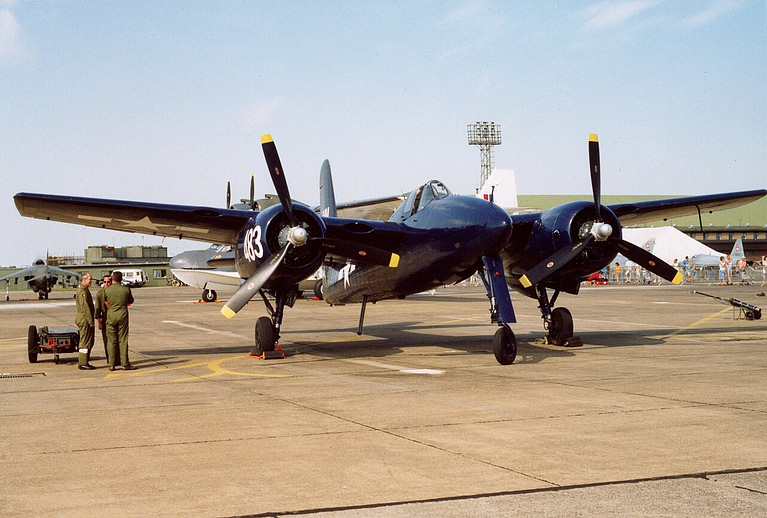
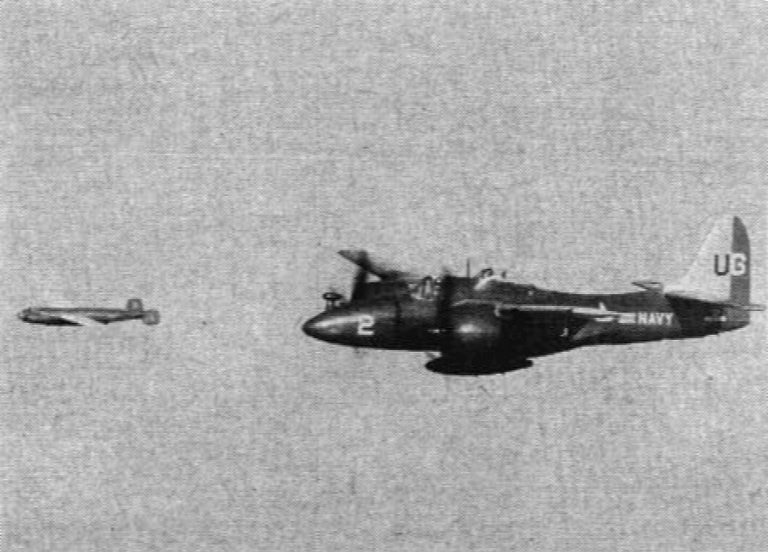
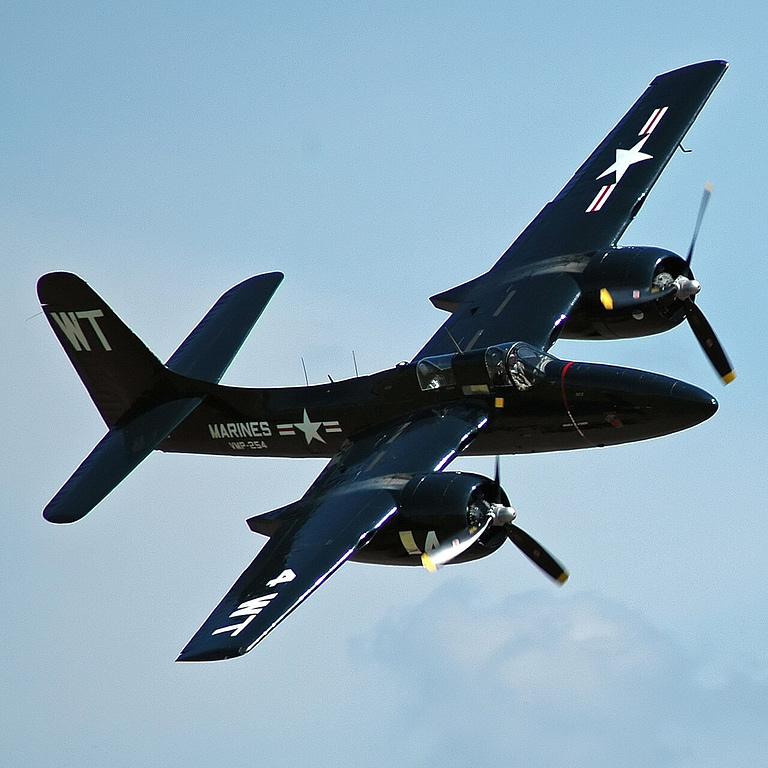
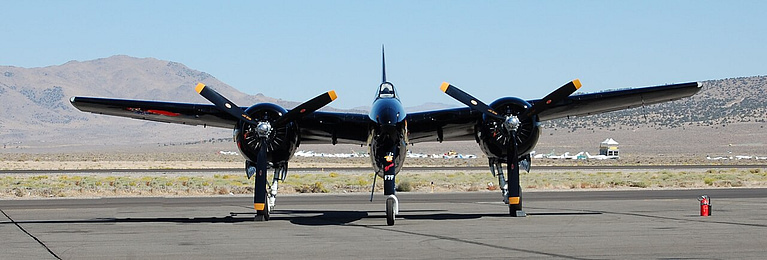
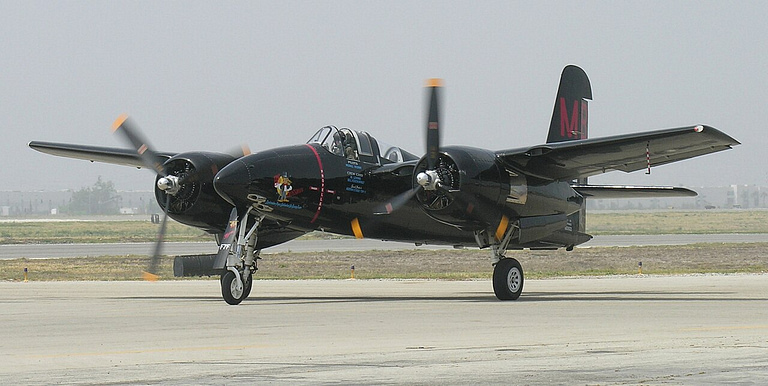
Flying the Tigercat
One of the surviving airworthy Tigercats in the air — the sound and shape of Grumman’s twin-engine heavyweight.
Flying the Grumman F7F Tigercat — a look at one of the surviving warbirds (WingsTV Channel).
Where the F7F Tigercat flew
A quiet war record
The Tigercat missed the Second World War entirely and saw only limited action in Korea — mostly at night, and mostly against ground targets. Its air-to-air tally is a historical footnote, but a memorable one.
Fast and heavily armed, the Tigercat simply arrived after the war it was built for; its lasting role was as a Marine night fighter over Korea. Compare the combat record of every military aircraft.
F7F Tigercat: your questions, answered
Can I fly in an F7F Tigercat?
No — the few airworthy Tigercats are privately owned warbirds, not passenger rides. But you can fly in a real military jet today: MiGFlug offers flights in genuine fighters and jet trainers such as the L-39 Albatros and the MiG-29. See migflug.com/flights-prices.
Was the F7F Tigercat a carrier aircraft?
It was designed to be, but it failed carrier qualification because of poor single-engine handling and tailhook problems. Only twelve F7F-4Ns were ever carrier-qualified; the rest served ashore with the U.S. Marine Corps.
Did the F7F Tigercat fight in World War II?
No. It reached units too late; only a reconnaissance detachment deployed before Japan surrendered, and the type saw no WWII combat.
How fast was the F7F Tigercat?
About 460 mph (740 km/h) — among the fastest piston-engine fighters ever built, roughly 70 mph faster than the F6F Hellcat it was meant to replace.
What did the F7F Tigercat do in Korea?
Marine night-fighter squadrons flew the radar-equipped F7F-3N on night interdiction and close support, hunting truck convoys and downing two Po-2 biplanes.
Why is it called the Tigercat?
Grumman named its naval fighters after cats — the Wildcat, Hellcat, Bearcat and Tigercat. The F7F was the largest and most powerful of the piston-engine cats.
Do any F7F Tigercats still fly?
Yes — several survive as airworthy warbirds and a few are on museum display. Many surplus Tigercats also served as aerial fire-bombers into the 1980s.
You can’t fly the F7F Tigercat.
These, you can.
The Tigercat’s fighting days are long over — but you can still strap into a genuine military jet. MiGFlug flies civilians in real fighters and jet trainers around the world.
 Fly the L-39 AlbatrosThe world’s most-flown jet trainer — aerobatics included
 Fly the F-104 Starfighter“The missile with a man in it”
 Fly the MiG-21The Cold War’s most-produced jet
 טסו על ה-T-33 Shooting StarAmerica’s first jet trainer
 Fly the DH VampireA piece of early jet history
 Fly the S.211Agile Italian jet trainer
 Fly the MB-326The classic Aermacchi jet
 Fly the MiG-15The Soviet legend of the Korean War
Related aircraft
Where this chapter comes from
- National Museum of the U.S. Air ForceReference material on the Tigercat and its contemporaries.
- National Naval Aviation MuseumOn Grumman’s naval fighters and the F7F’s development and service.
- Smithsonian National Air and Space MuseumBackground on the Tigercat and late-war piston fighters.
- National Museum of the Marine CorpsOn Marine night-fighter operations in Korea, including VMF(N)-513.
- MiGFlug — AfterburnerMiGFlug’s aviation magazine, on the great piston fighters and the dawn of the jet age.
Production totals and variant figures vary slightly between sources; the commonly cited figure of roughly 364 aircraft is used here.