
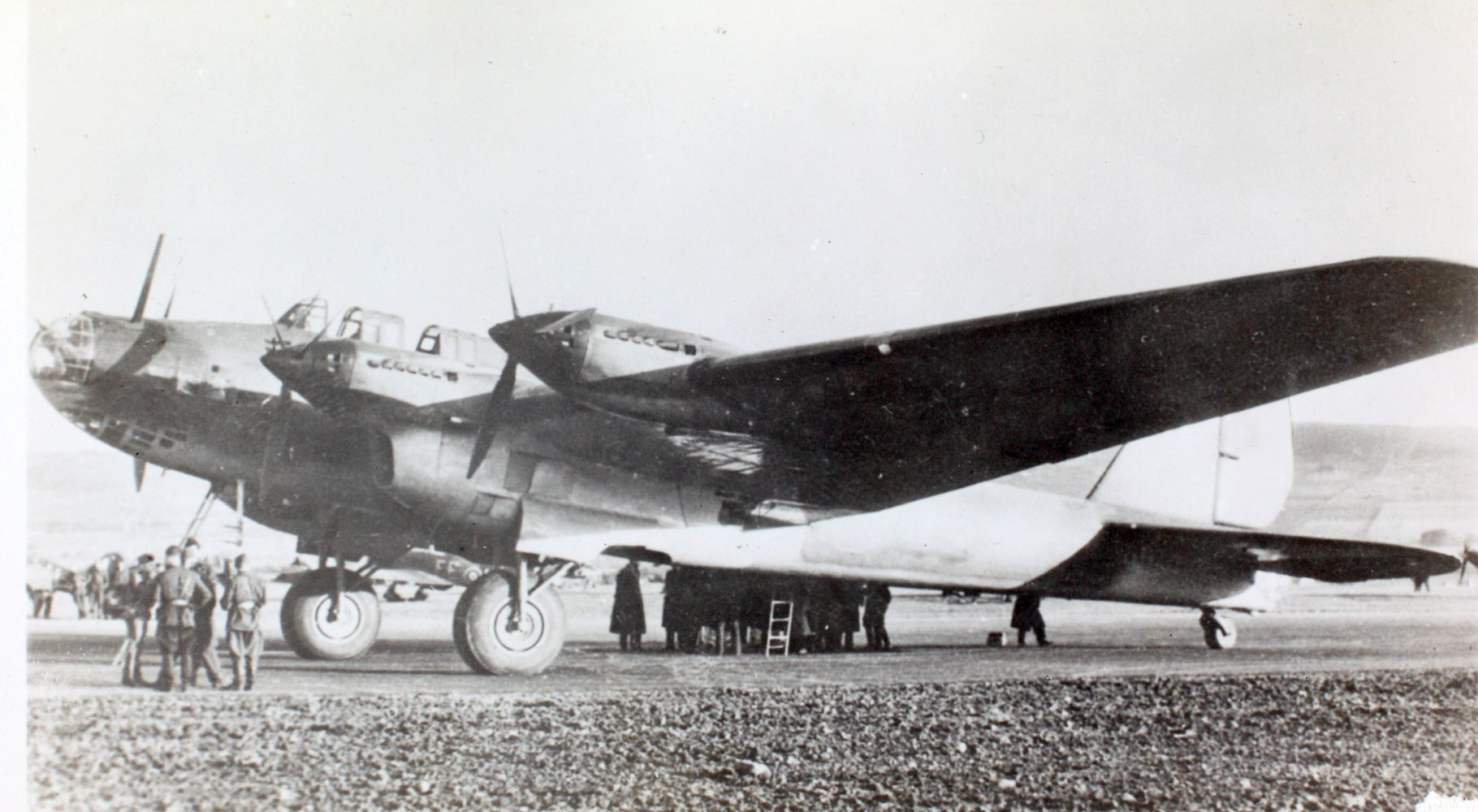
Petlyakov Pe-8
“TB-7”
The Soviet Union’s only four-engine strategic bomber of the Second World War — a rare, hand-built giant that raided Berlin, dropped the largest Soviet bomb of the war, and flew a foreign minister across German-occupied Europe to Washington and back.
The Petlyakov Pe-8: the USSR’s lone four-engine bomber
In the mid-1930s the Soviet Union set out to build a modern four-engine heavy bomber to replace the lumbering Tupolev TB-3. The task fell to a design brigade under Vladimir Petlyakov inside Andrei Tupolev’s bureau, and the aircraft that emerged — the ANT-42, later the service type TB-7 — first flew on 27 December 1936. On paper it was a genuine rival to the American B-17: fast, long-ranged and, thanks to an unusual fifth engine buried in the fuselage to feed its superchargers, able to bomb from altitudes that early fighters struggled to reach.
Reality was harsher. Political turbulence — Petlyakov was briefly imprisoned during the 1937–38 purges — engine shortages and the sheer difficulty of the design meant the bomber trickled off the line at the Kazan plant. Only around 90 to 93 were ever completed. When Petlyakov was killed in the crash of one of his own Pe-2 dive bombers in January 1942, the TB-7 was renamed the Pe-8 in his memory.
Yet this tiny fleet did outsized things. Pe-8s raided Berlin in August 1941, only weeks into the German invasion; they carried the five-tonne FAB-5000, the largest Soviet bomb of the war; and in May 1942 a specially converted example flew Foreign Minister Vyacheslav Molotov from Moscow, over occupied Europe, to Scotland and on to Washington — one of the most remarkable diplomatic flights of the conflict. No other Soviet-designed four-engine bomber saw operational service. The Pe-8 was, and remained, one of a kind.
01The Petlyakov Pe-8’s origins: how the ANT-42 became the TB-7 and the USSR’s only strategic bomber
The programme began with a 1934 requirement for a heavy bomber able to strike deep behind enemy lines. Petlyakov’s brigade, working under Tupolev at TsAGI, produced the ANT-42 — a clean, all-metal four-engine monoplane far more advanced than the TB-3 it was meant to replace. Series development was later led by Iosif Nezval, who nursed the difficult aircraft through years of slow, hand-built production at Kazan’s Plant No. 124.
Every stage was dogged by trouble: the purges swept up key engineers, the specialised engines were in chronically short supply, and the airframe was complex and costly to build. The result was a bomber produced in tiny numbers — commonly cited as about 90 to 93 aircraft — that nonetheless became the only four-engine strategic bomber the Soviet aircraft industry ever fielded in the war. Everything else the USSR flew in the long-range role was either obsolete, twin-engined, or supplied by Lend-Lease.
What makes the Pe-8 special
A fifth engine, hidden in the fuselage
To bomb from high altitude the early TB-7 carried an extraordinary solution: a fifth engine inside the fuselage — a Klimov M-100 driving a large centrifugal blower (the ATsN central supercharging unit) that force-fed compressed air to the four main engines’ superchargers. It let the bomber cruise high above the fighters of 1939, but it was heavy and troublesome, and was dropped from production once high-altitude engines matured.
Four inline engines — when they could be found
Standard aircraft used four Mikulin AM-35A liquid-cooled V12s of roughly 1,350 hp each. But the same engine powered the MiG-3 fighter, and the fighter had priority. Chronic shortages forced desperate substitutions: unreliable Charomskiy M-30 / M-40 diesels and, later, air-cooled ASh-82 radials. The engine story explains much of the Pe-8’s troubled service life.
The five-tonne bomb
The Pe-8 was the only Soviet aircraft that could lift the FAB-5000 — a five-tonne blast bomb, the heaviest the USSR used in the war. Carrying it meant exceeding the type’s rated four-tonne load, but from 1943 Pe-8s dropped these monsters on fortified German positions and cities, a rare Soviet foray into truly heavy strategic bombing.
02The Petlyakov Pe-8’s fifth engine: the ATsN central supercharger explained
High-altitude flight needs dense air fed to the engines, and in the mid-1930s no Soviet powerplant could supply enough on its own at 8,000–10,000 metres. The answer was the ATsN-2 — a Klimov M-100 engine mounted in the fuselage behind the crew, driving a centrifugal compressor that pumped pressurised air out to the four wing engines. With it, the prototype could operate at altitudes commonly cited near 11,000 metres, above the reach of most 1939 interceptors. But the unit added weight, complexity and a fire risk, and consumed internal volume. As dedicated high-altitude versions of the AM-35 became available, the fifth engine was deleted from production aircraft, and service Pe-8s topped out around 9,300 metres.
03The Petlyakov Pe-8’s engine crisis: diesels, radials and the AM-35A shortage
The Pe-8’s preferred AM-35A was also needed for the MiG-3, and fighter production came first. To keep bombers rolling, engineers fitted Charomskiy M-30 and M-40 aviation diesels, prized for their long range — but these proved dangerously unreliable, cutting out over enemy territory during the first Berlin raid of August 1941 and causing several losses. Many aircraft were retrofitted back to AM-35As, and when even those ran short, late Pe-8s received ASh-82 air-cooled radials of around 1,700–1,850 hp, which improved reliability at the cost of high-altitude performance. Few WWII bombers flew with such a bewildering variety of engines, and none of the fixes ever fully solved the problem.
Petlyakov Pe-8: full specifications
Airframe & Performance
- צוות
- Typically ~11 (sources give 8–12)
- מֶשֶׁך
- ~23.2 m
- מוּטַת כְּנָפַים
- 39.1 m
- גוֹבַה
- ~6.2 m
- אזור הכנף
- ~188.7 m²
- משקל ריק
- ~18,570 kg
- Max takeoff weight
- ~35,000 kg
- Max speed
- ~440 km/h
- תקרת השירות
- ~9,300 m (early ATsN aircraft ~11,000 m)
- לָנוּעַ
- ~3,600 km normal load · up to ~5,500 km max fuel
- Bomb load
- up to ~4,000–5,000 kg
Propulsion & Systems
- Engines
- 4 × Mikulin AM-35A V12 (early: + ATsN 5th engine)
- Power (each)
- ~1,350 hp (some sources ~1,200 hp)
- Alternative engines
- ASh-82 radials; M-30 / M-40 diesels
- Defensive armament
- 2 × 20 mm ShVAK, 2 × 12.7 mm UBT, 2 × 7.62 mm ShKAS
- Notable payload
- FAB-5000 five-tonne bomb
- First flight
- 27 December 1936 (as ANT-42)
- Built
- ~90–93 (1939–1944, Kazan Plant No. 124)
- Unit cost
- No verified public figure (Soviet state production)
- Cost per flight hour
- No reliable public figure exists
04The Petlyakov Pe-8’s operating costs: why no reliable price exists
The Pe-8 was a Soviet state product, built in tiny numbers during wartime and never sold on any open market, so a firm flyaway unit price simply does not exist in the public record. Nor is there any credible cost-per-flight-hour figure for the type — the Soviet Union did not publish such data, and Western analysts never had the fleet to study. What sources do agree on is that the Pe-8 was expensive and slow to build: complex, largely hand-assembled and chronically short of engines, which is a large part of why only around 90 aircraft were ever completed. Any precise cost figure attached to a Pe-8 should be treated as guesswork rather than fact.
The Pe-8, from drawing board to retirement
Requirement issued
The Soviet air force calls for a modern four-engine heavy bomber to replace the Tupolev TB-3; Petlyakov’s brigade at Tupolev’s bureau begins the ANT-42.
First flight
The ANT-42 prototype flies on 27 December, test-piloted by M. M. Gromov — a genuine rival to contemporary Western heavy bombers.
Into service as the TB-7
Slow series production begins at Kazan Plant No. 124; the type enters service in tiny numbers as the TB-7.
The Berlin raids
On the night of 10–11 August, TB-7s bomb Berlin — but unreliable diesel engines cause heavy self-inflicted losses, including one aircraft downed over Finland.
Petlyakov dies; the TB-7 becomes the Pe-8
Vladimir Petlyakov is killed in a Pe-2 crash on 12 January; later that year the TB-7 is renamed the Pe-8 in his honour.
Molotov’s transatlantic flight
In May–June a converted Pe-8, flown by Major Endel Pusep, carries Foreign Minister Molotov from Moscow over occupied Europe to Scotland, on to Washington, and home again.
The FAB-5000
Pe-8s begin dropping the five-tonne FAB-5000 — the largest Soviet bomb of the war — on fortified German targets.
Withdrawn
Losses and obsolescence push the Pe-8 out of front-line bombing by 1944; survivors serve in transport and polar-aviation roles before the type is retired, superseded by the Tu-4.
From the archives: twelve Pe-8 stories
The bomber Stalin nearly didn’t get
Purges, engine shortages and sheer complexity kept the USSR’s only heavy bomber to a trickle.
Read the full story
The engine inside the engine bay
A whole fifth engine rode in the fuselage just to feed the other four.
Read the full story
Bombing Berlin as Moscow reeled
Weeks into the German invasion, Soviet heavy bombers struck the enemy capital.
Read the full story
The diesels that quit over enemy territory
Long range on paper, catastrophe in the air.
Read the full story
A bomber flies a minister to Washington
Molotov crossed occupied Europe and the Atlantic in the bomb bay of a Pe-8.
Read the full story
Endel Pusep’s impossible route
An Estonian test-pilot threaded a bomber between the front lines and the Atlantic.
Read the full story
The five-tonne surprise
Only the Pe-8 could carry the biggest Soviet bomb of the war.
Read the full story
Beyond Berlin
Konigsberg, Danzig and Helsinki all felt the Pe-8’s bombs.
Read the full story
A fleet too small to lose
With so few airframes, every loss mattered.
Read the full story
Eleven men in a cold steel giant
Long night missions demanded a big, specialised crew.
Read the full story
From heavy bomber to polar workhorse
When the war ended, the survivors found new lives in the Arctic.
Read the full story
The bomber that left almost nothing behind
No complete Pe-8 survives — the type is effectively extinct.
Read the full story
The Pe-8 in pictures
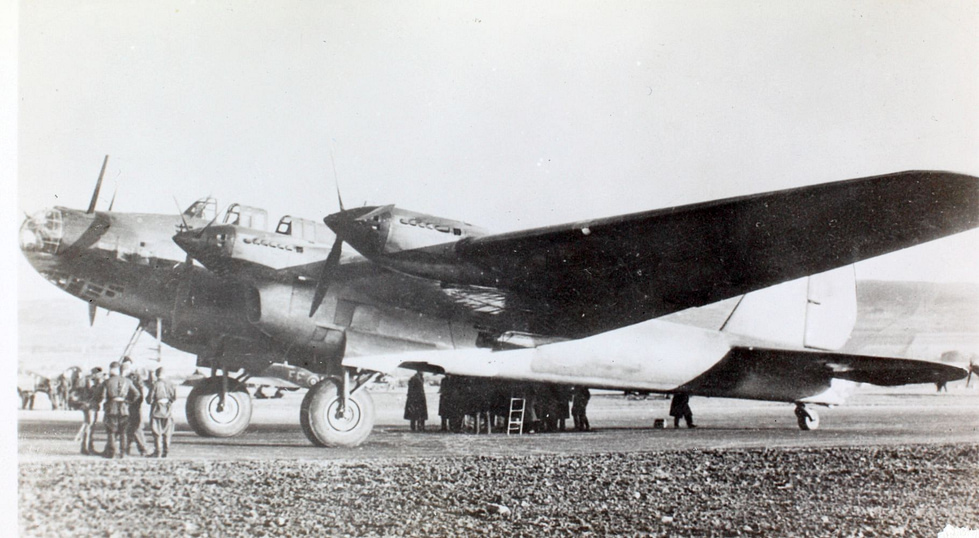
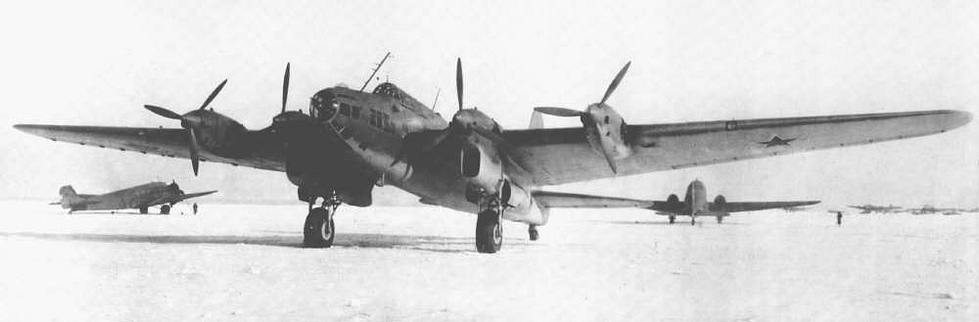
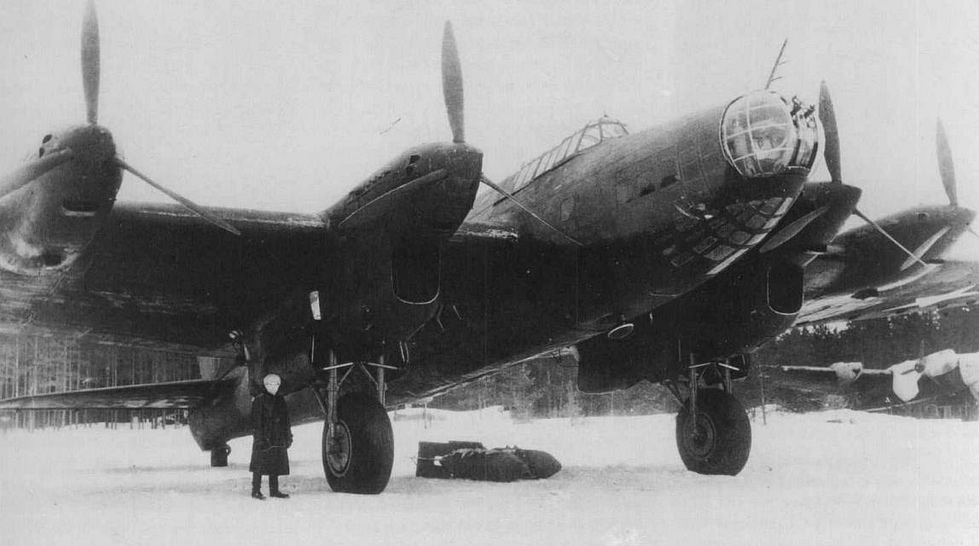
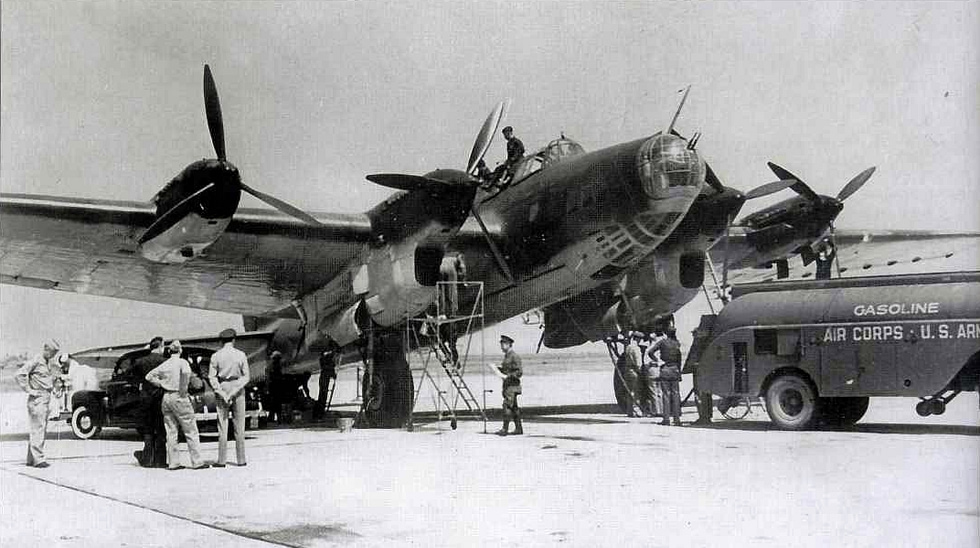
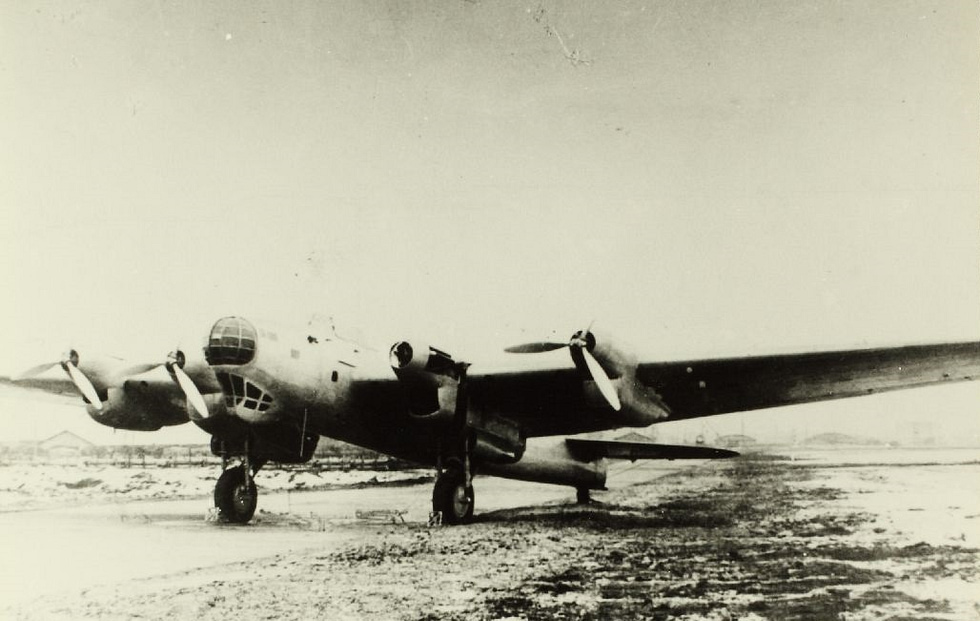
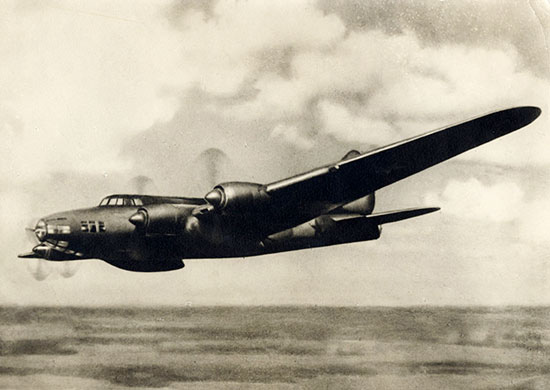
The Pe-8 in motion
Pe-8 Heavy Bomber — Weapons of Victory. A documentary profile of the Soviet Union’s only four-engine strategic bomber, its troubled engines and its long-range wartime missions.
Where the Pe-8 flew
The Pe-8’s war in numbers
The Pe-8 was never a mass weapon — its record is one of outsized deeds by a tiny fleet. It gave the Soviet Union the only true four-engine strategic reach it possessed, striking targets from Berlin to the Baltic and carrying both a foreign minister and the heaviest bomb in the Soviet arsenal.
Compare the combat record of every military aircraft. Figures are commonly cited estimates and vary between sources.
Everything people ask about the Petlyakov Pe-8
Can I fly in a Petlyakov Pe-8?
What was the Petlyakov Pe-8?
Why was the TB-7 renamed the Pe-8?
How many Pe-8s were built?
Did a Pe-8 really fly Molotov to the United States?
What was the FAB-5000?
Do any Pe-8s survive today?
You can’t fly the Petlyakov Pe-8.
These, you can.
Some legends only live in museums — others are fuelled and waiting. MiGFlug has put civilians in real military jet cockpits since 2004.
 Fly the L-39 AlbatrosThe world’s most-flown jet trainer — aerobatics included
 Fly the F-104 Starfighter“The missile with a man in it”
 Fly the MiG-21The Cold War’s most-produced jet
 טסו על ה-T-33 Shooting StarAmerica’s first jet trainer
 Fly the DH VampireA piece of early jet history
 Fly the S.211Agile Italian jet trainer
 Fly the MB-326The classic Aermacchi jet
 Fly the MiG-15The Soviet legend of the Korean War
Continue the tour
Every fact, checked
- HistoryNet — “Red Stars Over Berlin”The Berlin raids, the diesel-engine failures, the Molotov flight and the FAB-5000.
- GlobalSecurity.org — TB-7 / Pe-8 designThe ATsN fifth-engine supercharger, the diesel and radial engine substitutions.
- GlobalSecurity.org — FAB-5000The five-tonne bomb, its designer and its combat use from 1943.
- The National Interest — Petlyakov Pe-8Overview of the type and confirmation that no example survives.
- Aviastar.org — Pe-8Technical data, variants and production history.
- Military Factory — Pe-8 (TB-7)Specifications, crew, armament and production figures.
- World War II Database (WW2DB) — Pe-8Dimensions, weights and performance figures cross-checked against other sources.
- San Diego Air & Space Museum ArchivesPublic-domain wartime photographs of the ANT-42, TB-7 and Pe-8.