
Britain’s steady, fast-diving answer to 1917 — a stable gun platform that carried McCudden, Mannock and Ball, and helped win back the skies after Bloody April.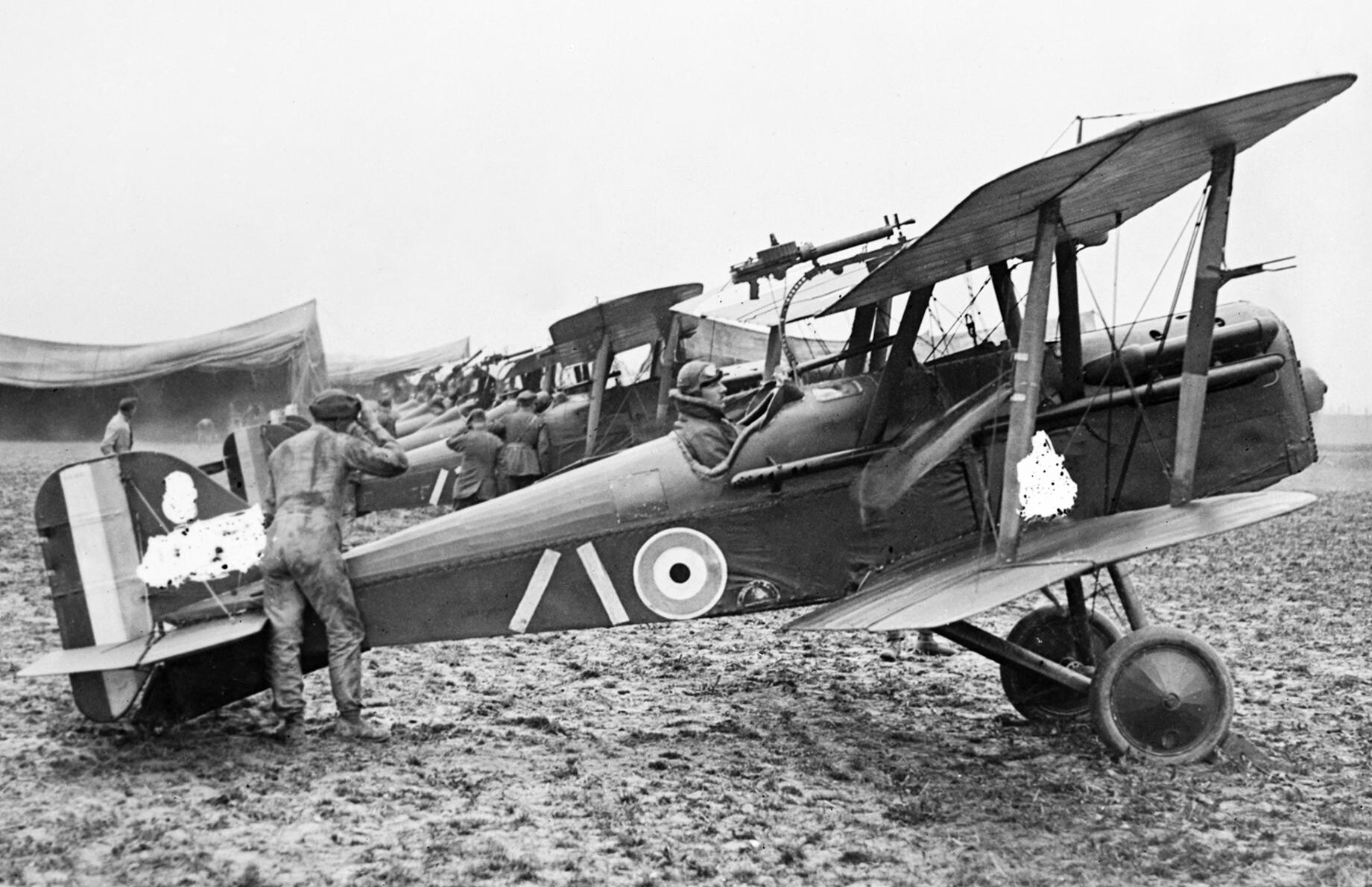
Royal Aircraft Factory S.E.5a
“The fighter the aces trusted”
The Royal Aircraft Factory S.E.5a: how Britain built a fighter its aces could trust
When the Royal Flying Corps fought over France in the spring of 1917, it was losing badly. During what its crews called Bloody April, German scouts led by the Albatros D-series shot down RFC aircraft faster than they could be replaced. The answer was already in the air: the Royal Aircraft Factory S.E.5 — Scout Experimental 5 — designed at Farnborough by Henry Folland and John Kenworthy, with the Factory’s chief test pilot Frank Goodden closely involved. Goodden took the first prototype up on 22 November 1916, but was killed early in 1917 when a prototype’s wing failed — a loss that forced the wing to be redesigned before the type could be trusted at the front.
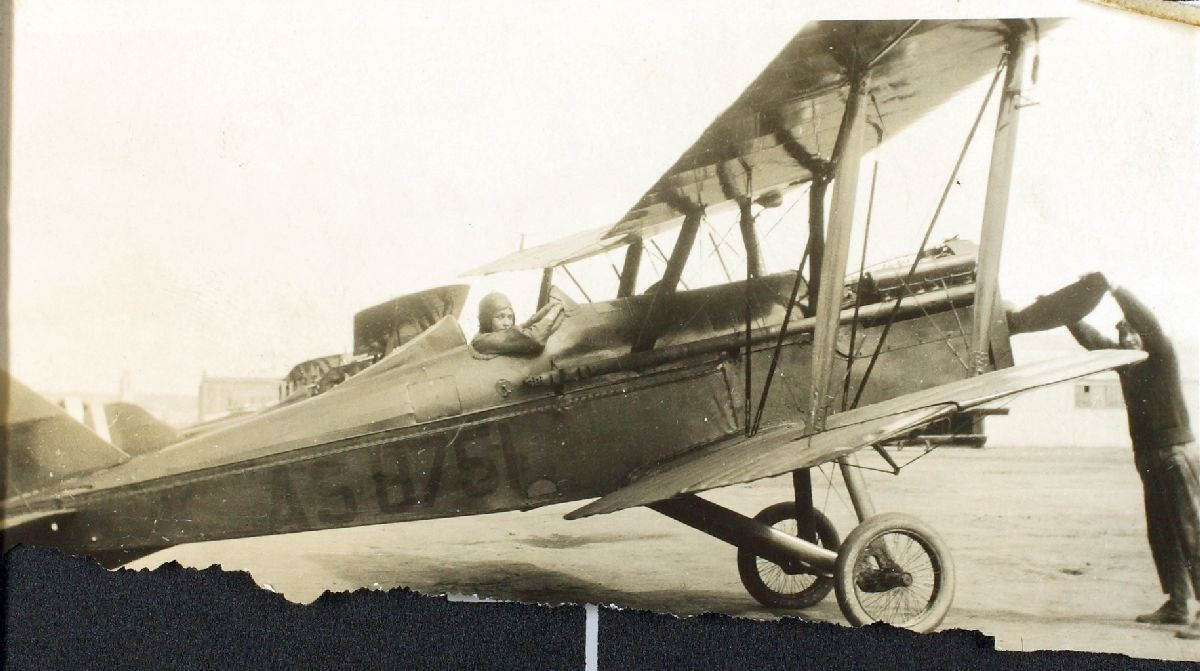
The production version, the S.E.5a, reached the squadrons from the middle of 1917, built around a more powerful 200 hp engine. It was never meant to be the most agile fighter in the sky; that title belonged to the twitchy, rotary-engined Sopwith Camel. Instead the S.E.5a was fast, strong and rock-steady — a stable gun platform a pilot could aim like a rifle. It dived faster than almost anything it met, held its speed in a zoom-climb, and stayed controllable where lighter machines wallowed. For the RFC’s marksmen, that steadiness was worth more than nimbleness.
The one thing that nearly wrecked the programme was its engine. The S.E.5a was designed around the 200 hp geared Hispano-Suiza 8, an advanced French V8 — but the geared version proved unreliable, and French and licensed supply fell chronically short. Airframes sat at the depots waiting for engines through the second half of 1917. The bottleneck eased only when the British firm Wolseley developed the Viper: a high-compression, direct-drive derivative of the Hispano that was rugged and easy to build. With the Viper — or a dependable direct-drive Hispano — the S.E.5a finally became the reliable fighter its airframe deserved.
Its armament was as practical as its handling: a single belt-fed .303 Vickers gun in the fuselage, synchronised through the propeller by Constantinesco gear, plus a .303 Lewis gun on a Foster mounting above the upper wing that could be pulled down to fire upward into an enemy’s belly, or swapped for a fresh drum. In expert hands the pairing was deadly. James McCudden, who scored the great majority of his 57 victories on the type, used its speed and ceiling to stalk high-flying reconnaissance machines; Edward ‘Mick’ Mannock, credited with 61, made it a weapon of patient tactics and teamwork; and Albert Ball — who had famously preferred the nimble Nieuport — was flying an S.E.5 when he was killed in May 1917.
By the Armistice the S.E.5 and S.E.5a had equipped more than twenty squadrons of the RFC, the new Royal Air Force, the Australian Flying Corps and two American squadrons, serving over France and Belgium and as far afield as Palestine and Mesopotamia. Roughly 5,200 were built by a web of British contractors, and more were ordered in the United States. Widely rated the best British single-seat fighter of the war, it is remembered — alongside the Camel — as one of the two aircraft that carried the Allied air effort to victory in 1918.
01The Royal Aircraft Factory S.E.5a’s origins: Folland, Kenworthy, Goodden and the Hispano gamble
The S.E.5 was the work of a small Farnborough team — Henry Folland and John Kenworthy as designers, with chief test pilot Frank Goodden deeply involved — built around Marc Birkigt’s new 150 hp Hispano-Suiza 8 V8. Goodden first flew it on 22 November 1916. The early prototypes had a roomy, heavily glazed cockpit and a wing that proved too weak: Goodden was killed on 28 January 1917 when a prototype broke up in the air. The wings were strengthened and the large windscreen cut down, and the definitive S.E.5a followed with the 200 hp engine. Building the fighter around the advanced but temperamental geared Hispano-Suiza was a gamble that nearly cost the programme its place at the front — and was rescued by the home-grown Wolseley Viper.
What makes the S.E.5a special
A rock-steady gun platform
The S.E.5a was tuned for stability rather than agility. Generous dihedral and a well-balanced tail let a pilot fly almost hands-off, so he could concentrate on his sights. Where the Sopwith Camel demanded constant correction, the S.E.5a sat still in the air — turning marksmanship, not acrobatics, into the path to victory.
Two guns, firing two ways
It carried a belt-fed .303 Vickers gun in the fuselage, synchronised to fire through the propeller by Constantinesco hydraulic gear, plus a drum-fed .303 Lewis gun on a curved Foster mounting over the upper wing. The Lewis could be angled to fire upward into an enemy’s belly, or slid down so the pilot could change its 97-round drum in flight.
Built to dive: power and a strong airframe
With about 200 hp from a Hispano-Suiza 8 or Wolseley Viper V8, the S.E.5a was among the fastest fighters of its day at roughly 222 km/h, and its sturdy wire-braced wooden airframe let pilots dive hard to attack and break away. Speed and strength, not turning circle, defined how it fought.
02The S.E.5a’s airframe: the wing failure that killed its test pilot — and the fix
The S.E.5 used conventional two-bay wooden wings, wire-braced and fabric-covered, on a wooden fuselage. The first prototypes, however, had wings that were structurally suspect: on 28 January 1917 chief test pilot Frank Goodden was killed when a prototype broke up in the air. The wing was redesigned and strengthened before the type went to war, and the reworked structure proved tough enough to let pilots dive the S.E.5a hard in combat — a quality that defined its fighting style. The heavily framed original windscreen was also cut down to improve the view.
03The S.E.5a’s engines: the Hispano-Suiza 8 and the Wolseley Viper
The S.E.5a was built around the 200 hp geared Hispano-Suiza 8b, but that engine’s reduction gearing was troublesome and supply from France and licensees was chronically short, stranding finished airframes through late 1917. The rescue came from Wolseley’s Viper — a high-compression, direct-drive development of the Hispano that was reliable and simple to mass-produce — which became the standard fit. Direct-drive 200 hp Hispano engines (and, for US-built machines, the Wright-Martin) were also used. Engine type mattered: a good Viper transformed the aircraft’s reputation from unreliable to trusted.
04How pilots flew the S.E.5a: dive, zoom and the marksman’s advantage
Pilots exploited the S.E.5a’s speed, ceiling and stability rather than its turn. The classic attack was a diving pass from above, using height and momentum, then a zoom-climb back to safety — tactics that suited its strong airframe and steady gun platform. James McCudden fitted high-compression engines and refined his machine to reach and ambush high-flying German reconnaissance aircraft; Mannock built disciplined formation tactics around it. The overwing Lewis on its Foster mount gave a second option: pull it down and fire upward into an enemy’s unprotected underside.
Royal Aircraft Factory S.E.5a full specifications
Airframe & Performance
- צוות
- 1 — pilot
- מֶשֶׁך
- 6.38 m (20 ft 11 in)
- מוּטַת כְּנָפַים
- 8.11 m (26 ft 7 in)
- גוֹבַה
- 2.89 m (9 ft 6 in)
- אזור הכנף
- 22.67 m² (244 sq ft)
- Empty / loaded weight
- 639 kg / 902 kg (1,410 lb / 1,988 lb)
- Max speed
- 222 km/h (138 mph) with 200 hp Viper
- תקרת השירות
- ~5,185 m (17,000 ft)
- Endurance
- ~2.5 hours
Propulsion, Armament & Production
- מָנוֹעַ
- 1 × Hispano-Suiza 8 or Wolseley Viper, ~200 hp
- Engine type
- Water-cooled V8 piston (geared or direct-drive)
- הְתחַמְשׁוּת
- 1 × synchronised .303 Vickers + 1 × .303 Lewis (Foster mount); up to 4 × 25 lb Cooper bombs
- First flight
- S.E.5 prototype 22 November 1916; S.E.5a in service mid-1917
- Built
- ~5,200 (commonly cited as 5,205)
- Manufacturers
- Royal Aircraft Factory; Austin, Vickers, Wolseley, Martinsyde & others under contract
- Unit cost
- Not reliably recorded (1917–18 procurement)
- Cost per flight hour
- ~$2,000–4,000 (modern airworthy-reproduction estimate)
05S.E.5a variants: the S.E.5, the Viper-engined S.E.5a and the American S.E.5E
The original S.E.5 (1916–17) used the 150 hp Hispano-Suiza and a large, heavily framed cockpit canopy. The S.E.5a was the definitive mass-production fighter: a strengthened airframe, cut-down windscreen and a nominal 200 hp engine — the geared Hispano-Suiza 8b, direct-drive Hispano, or the standard Wolseley Viper. In the United States, licence production was ordered from Curtiss and others; relatively few were completed before the Armistice. After the war the American S.E.5E was built and rebuilt by Eberhart with the Wright-Martin engine, and a number of aircraft were converted into two-seaters or used for skywriting and racing.
06The S.E.5a’s costs: from 1917 wartime contracts to flying a reproduction today
No reliable unit price for the S.E.5a is preserved in the usual references — wartime aircraft were bought under bulk government contracts spread across many firms, and figures were not consistently recorded or published. Any single 1917–18 “price tag” should be treated with caution. As a modern reference point, operating an airworthy S.E.5a reproduction — vintage or replica V8 engine, specialist maintenance, insurance and hangarage — is commonly estimated at very roughly $2,000–4,000 per flight hour. That figure is an informed estimate for comparison only, not a historical cost, and real-world numbers vary widely between operators.
The Royal Aircraft Factory S.E.5a: from Farnborough to the Armistice
Scout Experimental 5 takes to the air
Henry Folland and John Kenworthy design the S.E.5 around Marc Birkigt’s Hispano-Suiza 8 V8; chief test pilot Frank Goodden makes the first flight on 22 November 1916.
Into combat during Bloody April
After the wing is redesigned following Goodden’s fatal crash, No. 56 Squadron takes the S.E.5 to France during the RFC’s costliest month of the air war.
The S.E.5a — and the engine crisis
The 200 hp S.E.5a enters service, but unreliable geared Hispano-Suiza engines and chronic supply shortages strand airframes until the Wolseley Viper arrives to save the programme.
Mastery over the Western Front
With reliable engines and aces like McCudden and Mannock, the S.E.5a helps win back air superiority; by the Armistice it equips more than twenty RFC/RAF, Australian and American squadrons.
Armistice and afterlife
Production reaches roughly 5,200; after the war surplus S.E.5a fly on in Australia, Canada, South Africa and the United States, and as famous skywriting and racing aircraft into the 1920s.
The S.E.5a in twelve stories
The fighter the RFC desperately needed
In April 1917 the Royal Flying Corps was being slaughtered over the Western Front. The S.E.5 arrived just in time to help redress the balance.
Read the full story
The reluctant convert who died in one
Britain’s first celebrity ace distrusted the S.E.5 and clung to his nimble Nieuport — yet he was flying an S.E.5 when he was killed.
Read the full story
The stalker who tuned his own engine
McCudden turned the S.E.5a into a high-altitude sniper’s rifle, patiently ambushing German reconnaissance aircraft far above the trenches.
Read the full story
The tactician and top British ace
Where others hunted alone, Mannock built disciplined teamwork, coaching novices and leading patrols that dismantled enemy formations.
Read the full story
The Canadian who ran up scores on the S.E.5a
The British Empire’s highest-scoring ace commanded an S.E.5a squadron in 1918 and added victories at a furious rate.
Read the full story
The test pilot who never saw it fight
The man who first flew the S.E.5 was killed testing it — a tragedy that forced the redesign which made the aircraft safe to dive.
Read the full story
How the Wolseley Viper saved the programme
The S.E.5a nearly failed — not in the air, but at the depots, where finished airframes sat waiting for engines that would not come.
Read the full story
The gun that fired straight up
The S.E.5a’s overwing Lewis gun could be tilted to fire upward — letting a pilot shoot into an enemy’s unprotected belly.
Read the full story
The elite squadron that led it into battle
The RFC concentrated its best pilots and its new S.E.5s in one hand-picked squadron and sent it to France in April 1917.
Read the full story
The smallest man with the biggest S.E.5a score
A South African so short he needed cushions and blocks to reach the controls became the highest-scoring S.E.5a pilot of all.
Read the full story
Australian and American S.E.5a squadrons
The S.E.5a was not only a British weapon: Australian and United States squadrons flew it over the Western Front in 1918.
Read the full story
Skywriting, racing and the survivors that still fly
Surplus S.E.5a found second careers as skywriters and racers — and a handful survive today, including one still flying.
Read the full story
The S.E.5a in pictures
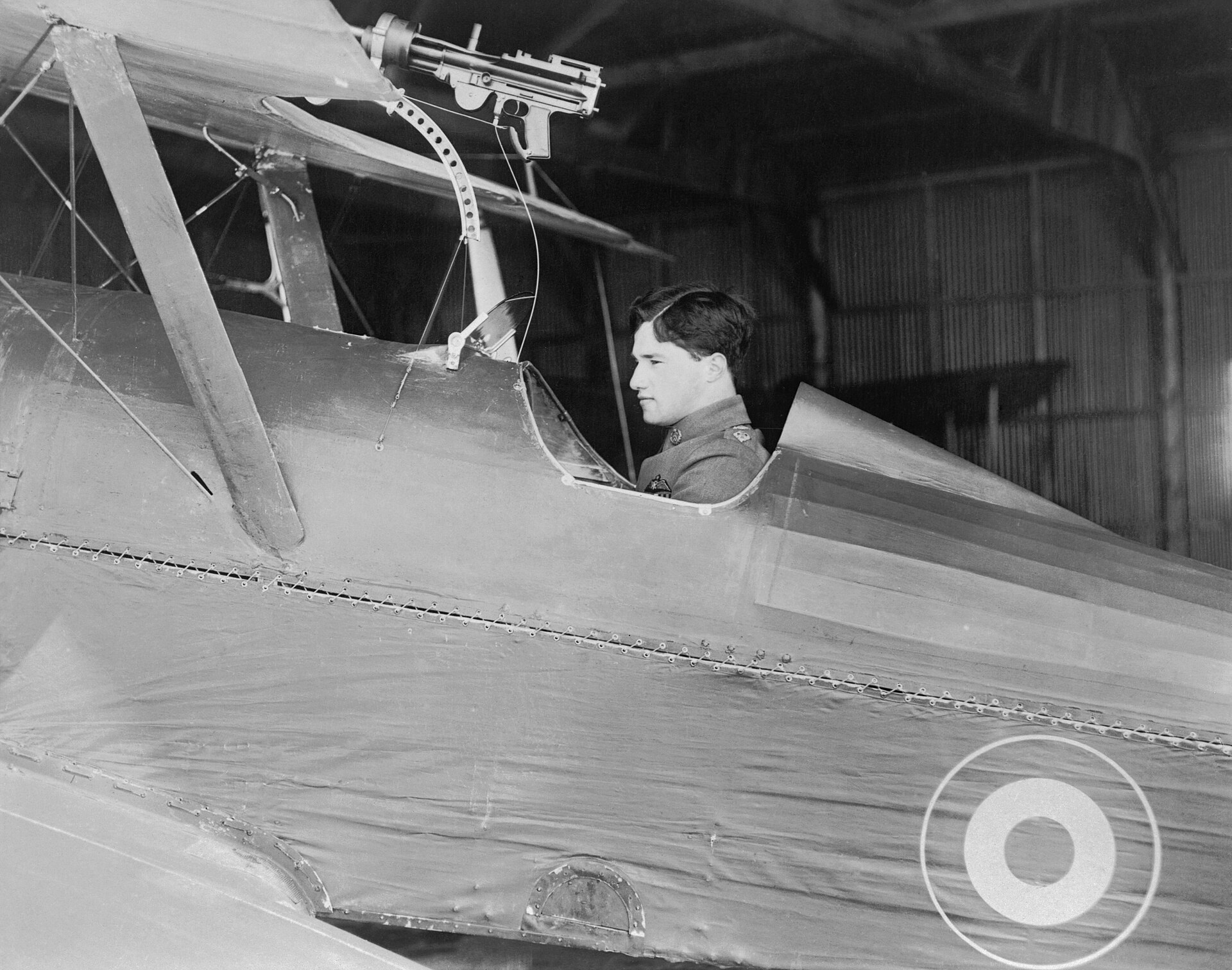
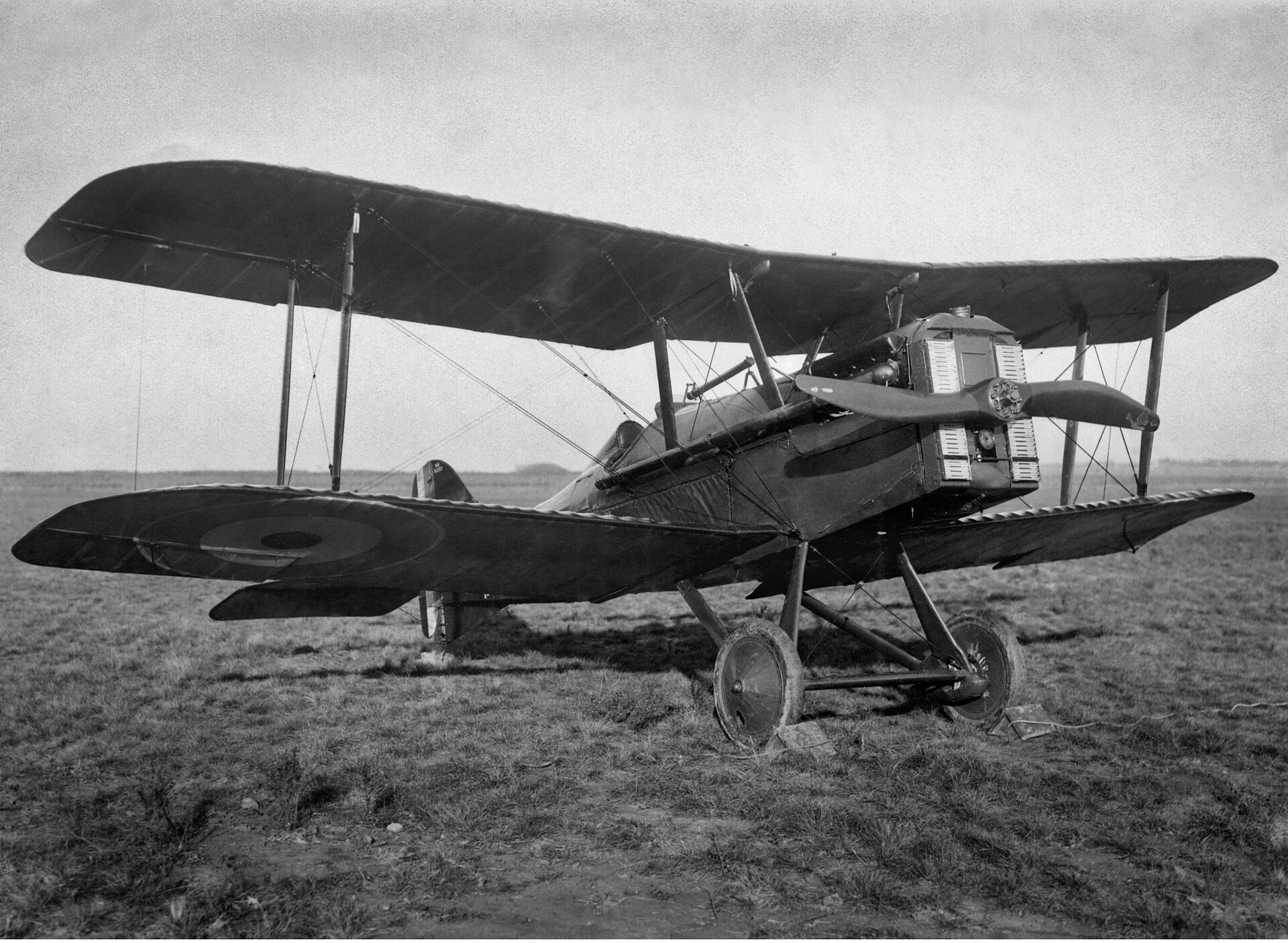
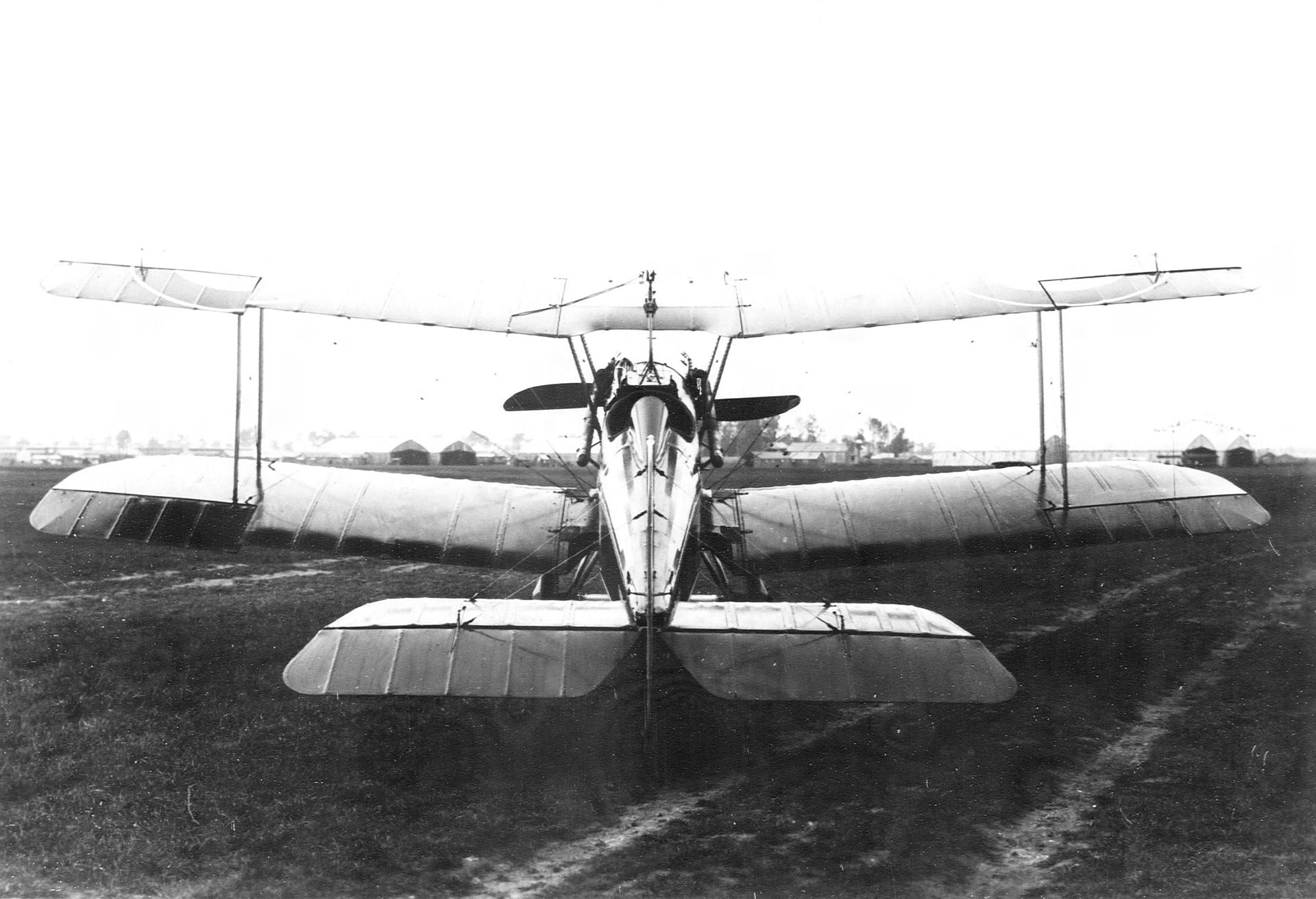
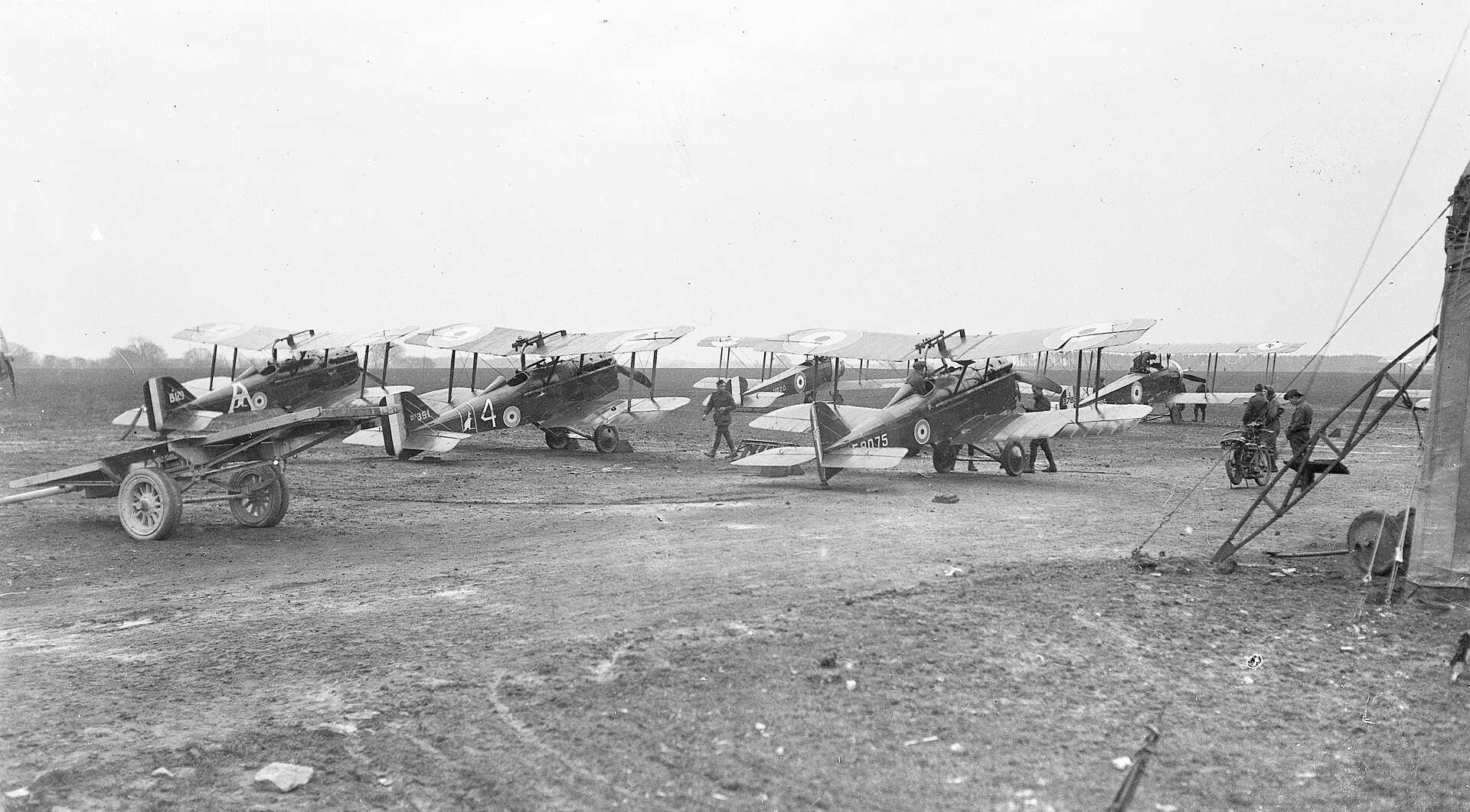
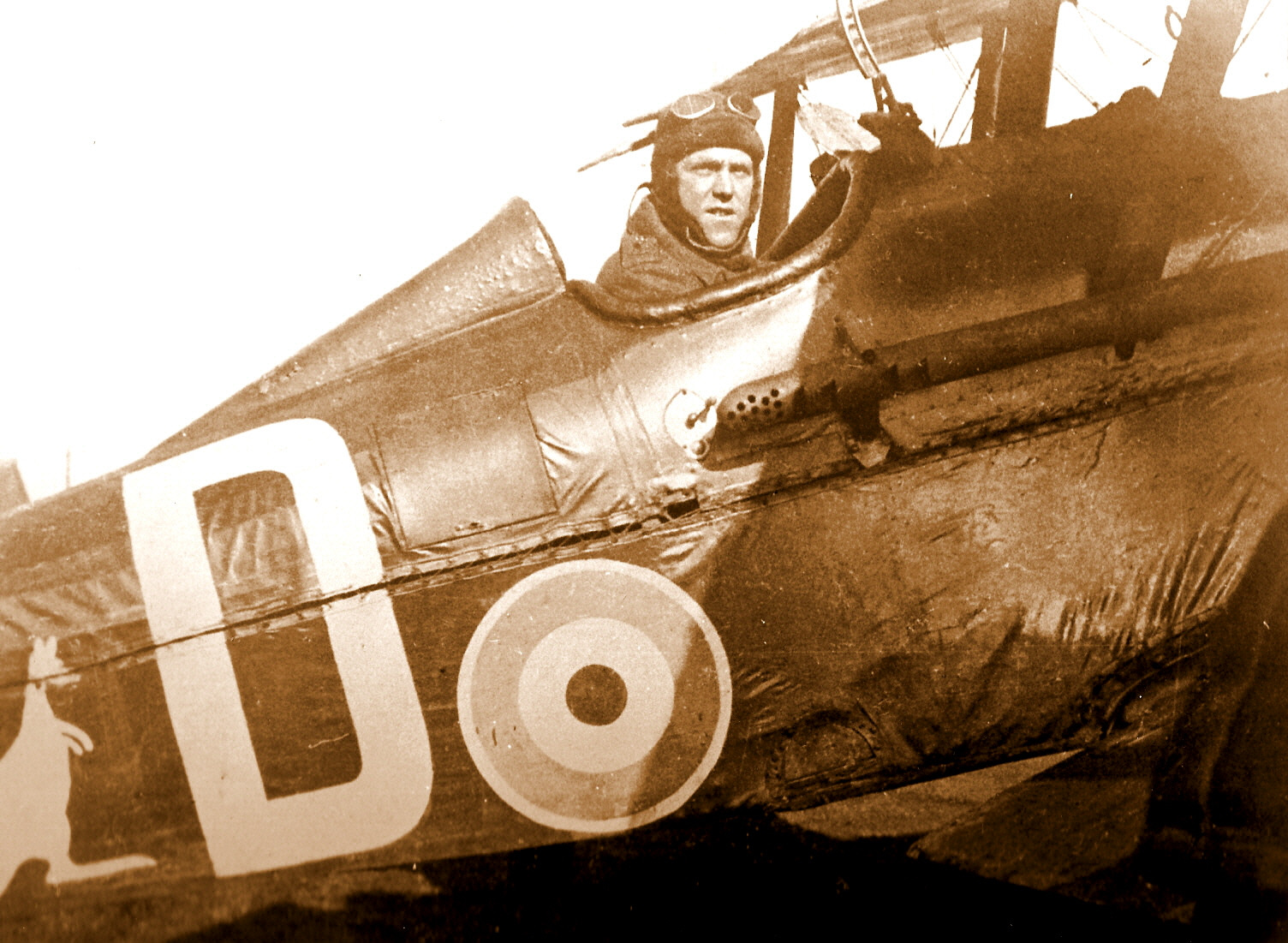
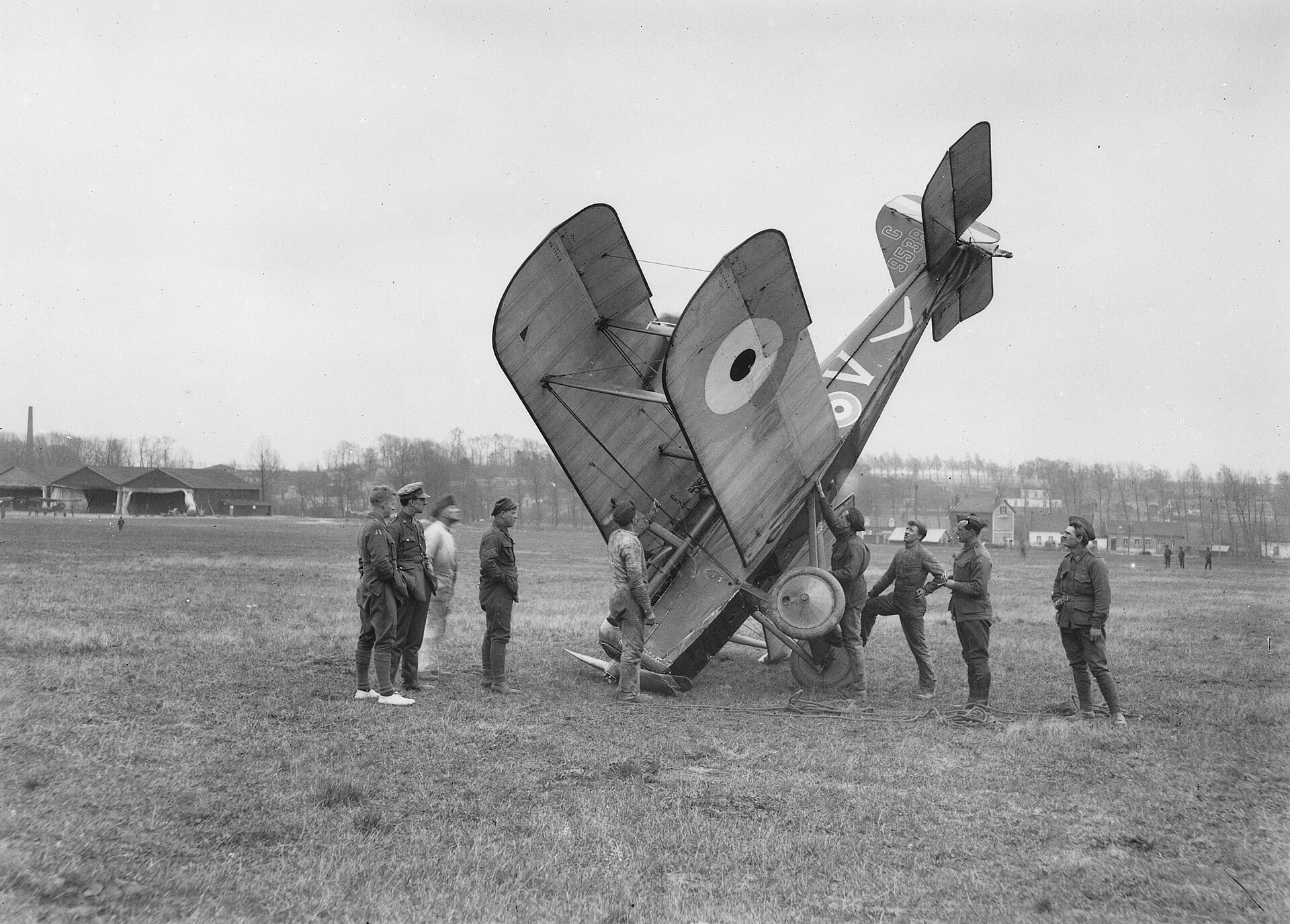
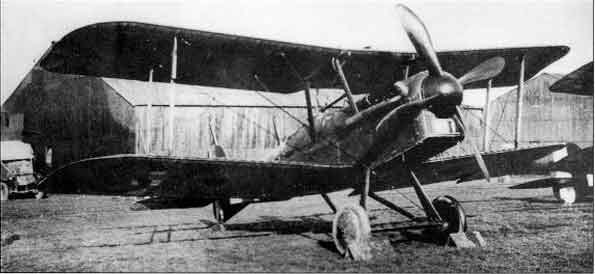
The S.E.5a on film
“Royal Aircraft Factory S.E.5a — WWI Fighter” from the Historical Aviation Film Unit (128,000+ views), showing a genuine airworthy S.E.5a in the air. The unit specialises in filming authentic flying reproductions of First World War aircraft.
Where the S.E.5a flew
Designed and built in Britain, the S.E.5a fought over the Western Front and other theatres from 1917, equipped RFC, RAF, Australian and American squadrons, and — after the war — served on with several air forces before being preserved in museums worldwide. Toggle the categories to see wartime operators, combat theatres, surviving museum airframes and post-war operators.
The record that defines it
The S.E.5a reached the Western Front during the RFC’s darkest month, and once its engine troubles were solved it became one of the decisive Allied fighters of 1918 — the mount of Britain’s greatest aces.
Precise victory tallies for individual aircraft types are impossible to verify a century on, and most aces flew several types over their careers. What is certain is the S.E.5a’s standing as one of the two British fighters — alongside the Sopwith Camel — that carried the Allied air war to victory. Explore the combat record of every military aircraft in our database.
Everything people ask about the S.E.5a
Can I fly in an S.E.5a?
What made the S.E.5a so good?
Who designed the S.E.5a and what engine did it use?
How many S.E.5as were built?
Which aces flew the S.E.5a?
How was the S.E.5a different from the Sopwith Camel?
Are there any original S.E.5as left?
You can’t fly the S.E.5a.
These, you can.
Some legends only live in museums — but a genuine fighter-jet flight is real, and bookable. Take the controls of a supersonic jet, pull real g and see the curvature of the Earth with MiGFlug.
 Fly the L-39 AlbatrosThe world’s most-flown jet trainer — aerobatics included
 Fly the F-104 Starfighter“The missile with a man in it”
 Fly the MiG-21The Cold War’s most-produced jet
 טסו על ה-T-33 Shooting StarAmerica’s first jet trainer
 Fly the DH VampireA piece of early jet history
 Fly the S.211Agile Italian jet trainer
 Fly the MB-326The classic Aermacchi jet
 Fly the MiG-15The Soviet legend of the Korean War
Continue the tour
Every fact, checked
- Royal Air Force Museum — Royal Aircraft Factory S.E.5AMuseum record, service history and the aircraft rated the best British single-seat fighter of WWI.
- The Shuttleworth Collection — Royal Aircraft Factory S.E.5aThe genuine 1918 S.E.5a (F904) kept airworthy and flown at Old Warden.
- The Vintage Aviator — S.E.5a HistoryDetailed history, specifications and engine notes from builders of flying reproductions.
- Imperial War Museums — First World War collectionsOriginal photographs and context for the RFC/RAF air war, 1917–18.
- Smithsonian National Air and Space MuseumHolds an American-built S.E.5E, the type’s post-war US development.
- Science Museum Group Collection — S.E.5aCollection record for a preserved British S.E.5a airframe.
- Australian War Memorial — S.E.5a photographsImages of Australian Flying Corps S.E.5a service on the Western Front.
- J. M. Bruce — The Royal Aircraft Factory S.E.5/5aThe standard technical monograph on the design, development and production of the type.
- Norman Franks — SE 5/5a Aces of World War 1 (Osprey Aircraft of the Aces)Unit histories and biographies of the aces who flew the S.E.5a.
- James McCudden — Flying Fury: Five Years in the Royal Flying CorpsFirst-hand memoir by the S.E.5a ace, describing high-altitude combat in 1918.
Hero and gallery photography credited per image (Wikimedia Commons). Some performance and cost figures for a century-old aircraft are estimates and are hedged in the text. Spotted an error? Every page in the Aircraft Museum is fact-checked before publication — write to us and we’ll correct it.