
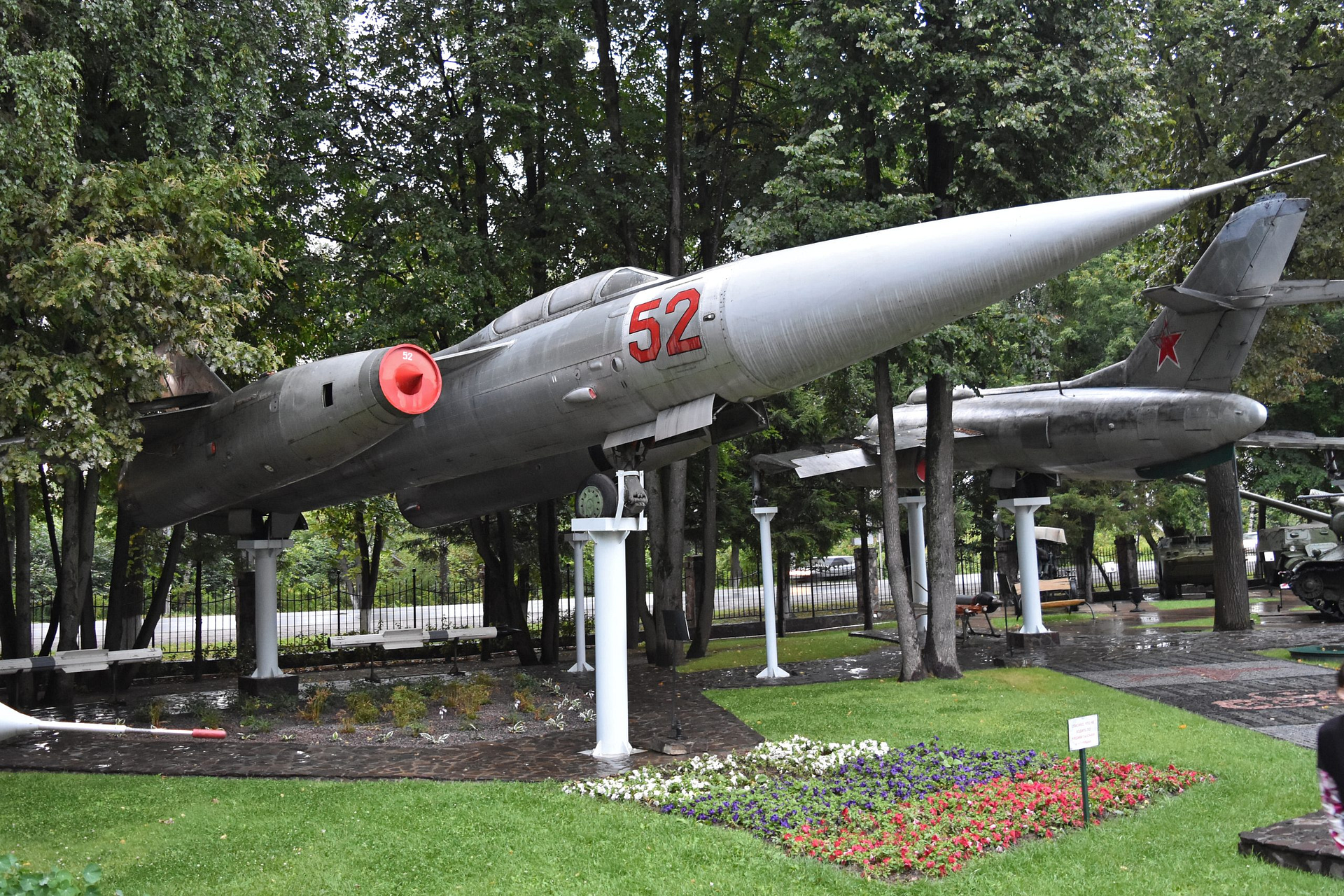
Yakovlev Yak-28
“Brewer · Firebar · Maestro”
A swept-wing, twin-jet Soviet workhorse of the 1960s — one airframe family stretched into a tactical bomber, an all-weather interceptor, a reconnaissance platform, an electronic-warfare jammer and a trainer.
The Yak-28: one Soviet jet, a whole air force’s worth of jobs
By the mid-1950s the Yakovlev bureau had built a family of twin-engine jets — the Yak-25, Yak-26 and Yak-27 — that shared an unusual signature: a slim fuselage riding on bicycle (tandem) landing gear, with the two engines hung in pods under the wings and small outrigger wheels near the wingtips. The Yak-28 grew directly out of that lineage, but with a thinner, more sharply swept wing and afterburning engines it became a genuinely supersonic machine. Western observers, who first saw it at the Tushino display in 1961, initially mistook it for another Yak-25 derivative before realising it was effectively a new aircraft.
What set the Yak-28 apart was not a single record but its sheer versatility. The prototype (designated Yak-129) first flew on 5 March 1958, and over the following decade the design was pulled in five directions at once. The core “Brewer” family were tactical bombers and reconnaissance jets with a glazed nose for a navigator-bombardier; the Yak-28P “Firebar” swapped that glass nose for a radar and became an all-weather missile interceptor for Soviet air defence; the Yak-28PP “Brewer-E” was a dedicated electronic-warfare jammer; and the two-seat Yak-28U “Maestro” trained the crews who flew them all.
The Yak-28 was very much a Soviet-only aircraft — it was never exported to Warsaw Pact allies in the way the MiG-21 was, and roughly 1,180 were built before production wound down around 1971. It served through the 1960s, 1970s and 1980s, reportedly including reconnaissance and jamming work during the Soviet–Afghan War, before the last examples were retired from Russian and successor-state service in the early 1990s. Today the type survives only in museums — but it left one indelible mark on Cold War history, in the waters of a West Berlin lake.
01The Yak-28’s most famous day: the 1966 Havelsee crash in West Berlin
On 6 April 1966 a Yak-28P suffered engine failure over the divided city of Berlin. Rather than eject immediately over the built-up British Sector, the two-man crew — pilot Captain Boris Kapustin and navigator Lieutenant Yuri Yanov — are widely reported to have stayed with the failing aircraft and steered it away from apartment blocks, before it came down in Lake Stössensee, part of the Havel lakes. Both men were killed and later received a posthumous Order of the Red Banner; their sacrifice became a well-known story in the Soviet Union.
Because the wreck lay in the British Sector, it also became one of the best-documented Western technical-intelligence recoveries of the Cold War. British forces, with US help, cordoned the lake while specialists examined the interceptor’s radar and engines — and, by several accounts, quietly flew parts to Britain for study before returning the aircraft to the Soviets. The exact details are told differently by different sources, but the episode is remembered on both sides as the “Firebar affair.”
What makes the Yak-28 special
Bicycle landing gear with wingtip outriggers
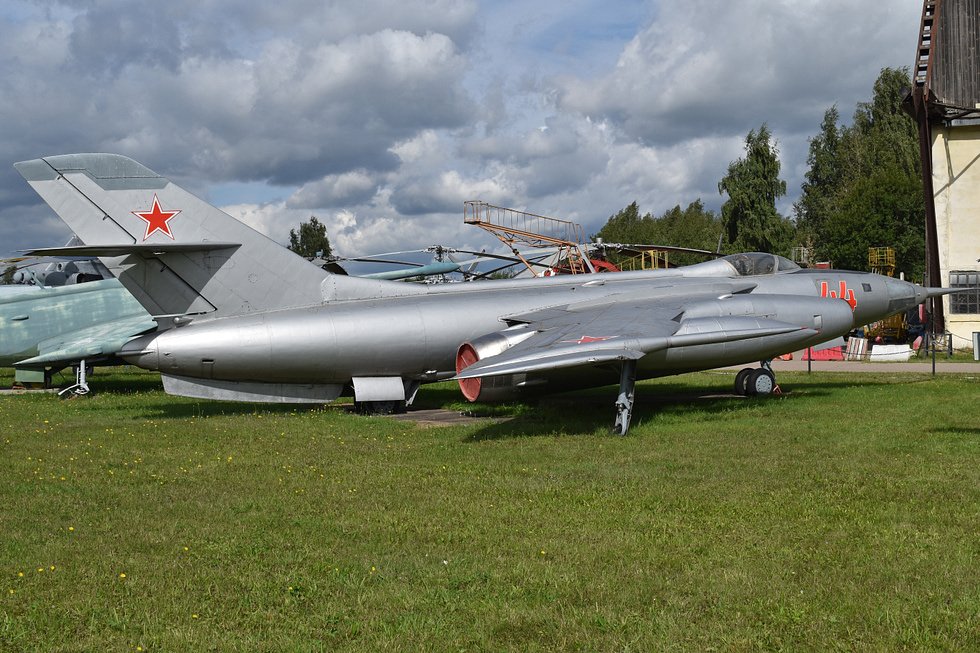
Instead of conventional tricycle gear, the Yak-28 carried a two-wheel nose leg and a two-wheel rear leg in line down the belly, with small single outrigger wheels in fairings near each wingtip to keep the wings level. It gave the jet a distinctive nose-high stance and demanded careful handling on takeoff and landing — a trait inherited straight from the earlier Yak-25 family.
Two Tumansky turbojets in underwing pods
Power came from a pair of Tumansky R-11 afterburning turbojets slung in nacelles under the swept wing rather than buried in the fuselage. The layout kept the fuselage slim and made engine access easy, but early installations were dogged by afterburner-related reliability problems that were only gradually reduced over the type’s service life.
Two very different noses, two mission sets
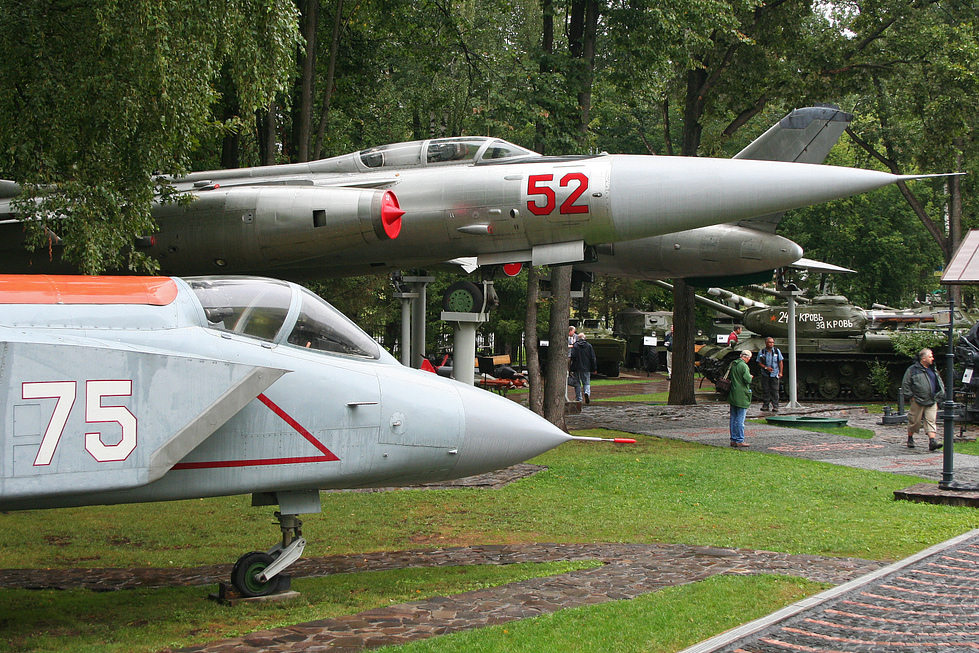
The same basic airframe wore two faces. Brewer bomber and recon variants had a glazed nose housing a navigator-bombardier; the Yak-28P “Firebar” interceptor deleted the glass for a solid radar nose (the “Orel” / NATO “Skip Spin” set) feeding its air-to-air missiles. It is the quickest way to tell a Yak-28 bomber from a Yak-28 fighter at a glance.
02The Yak-28 variant families: Brewer, Firebar and Maestro explained
NATO sorted the Yak-28 into three reporting-name families by role. “Brewer” covered the tactical-bomber, reconnaissance and electronic-warfare jets — the base Yak-28 and Yak-28B/L/I bombers (Brewer-A/B/C), the Yak-28R reconnaissance aircraft (Brewer-D) and the Yak-28PP jammer (Brewer-E). “Firebar” was reserved for the radar-nosed Yak-28P interceptor, of which several hundred were built. “Maestro” was the two-seat Yak-28U conversion trainer. Exact production splits vary between sources, so treat sub-variant totals as approximate.
03The Yak-28P Firebar: radar, missiles and the air-defence mission
The Yak-28P was Soviet air defence’s answer to gaps in its interceptor coverage. It carried a two-man crew, a nose radar, and typically a pair of R-8 / K-8 family missiles (R-98/R-98M, NATO AA-3 “Anab”) — commonly one infrared-homing and one semi-active radar-homing round — sometimes supplemented by short-range missiles. Unlike many contemporaries it carried no internal gun. Popular sources muddle the exact missile designations, so the loadout below should be read as representative rather than definitive.
Yak-28P Firebar: full specifications
Airframe & Performance
- צוות
- 2 (pilot + radar/weapons operator)
- מֶשֶׁך
- ~21.6 m
- מוּטַת כְּנָפַים
- ~11.6–12.9 m (varies by source)
- גוֹבַה
- ~3.95 m
- אזור הכנף
- ~37.6 m²
- משקל ריק
- ~9,970 kg (commonly cited)
- Max takeoff weight
- ~16,000 kg (contested; ~15,000–18,000)
- Max speed
- ~1,840 km/h · ~Mach 1.8 at altitude
- תקרת השירות
- ~16,750 m
- לָנוּעַ
- ~2,500 km
Propulsion, Systems & Cost
- Engines
- 2 × Tumansky R-11 (R-11AF2-300) afterburning turbojets
- Thrust (each)
- ~46 kN with afterburner
- Radar
- Orel-D (“Skip Spin”)
- הְתחַמְשׁוּת
- 2 × R-8 / R-98 (AA-3 “Anab”) AAMs · no gun
- First flight
- 5 March 1958 (Yak-129 prototype)
- Built
- ~1,180 (all variants, to ~1971)
- Unit cost
- Soviet state product — no open figure
- Cost per flight hour
- No reliable public figure
04The Yak-28’s operating costs: why no reliable price exists
The Yak-28 was a Soviet state product, built for the Soviet armed forces and never sold on an open dollar market. As a result there is no credible flyaway unit price or cost-per-flight-hour figure for the type in the public record — unlike Western aircraft of the era, its true programme economics were never published in convertible currency. Any precise dollar cost you see attached to a Yak-28 is, in practice, a modern estimate rather than a sourced figure.
From Yak-25 offspring to Cold War relic
Born from the Yak-25 family
Yakovlev develops a supersonic successor to its Yak-25/26/27 twin-jets, keeping the bicycle gear and wing-pod engines but adding a thinner swept wing.
First flight
The Yak-129 prototype makes its maiden flight on 5 March 1958.
Enters service
The Yak-28 begins reaching Soviet Air Force units as a tactical bomber; some sources date operational interceptor service a little later.
Tushino debut
Shown publicly at the Tushino air display, where Western observers at first misidentify it as another Yak-25 derivative.
The variants multiply
Specialised versions enter service: Brewer bombers, the Yak-28R recon jet, the Yak-28U “Maestro” trainer and the Yak-28P “Firebar” interceptor.
The Havelsee crash
On 6 April a Yak-28P goes down in a West Berlin lake after engine failure — the crew are killed and the wreck triggers a Cold War intelligence recovery.
Electronic warfare
The Yak-28PP “Brewer-E” dedicated jamming aircraft enters service, supporting Soviet strike packages.
Afghan service
Reconnaissance and electronic-warfare Yak-28s are reportedly employed during the Soviet–Afghan War.
Retirement
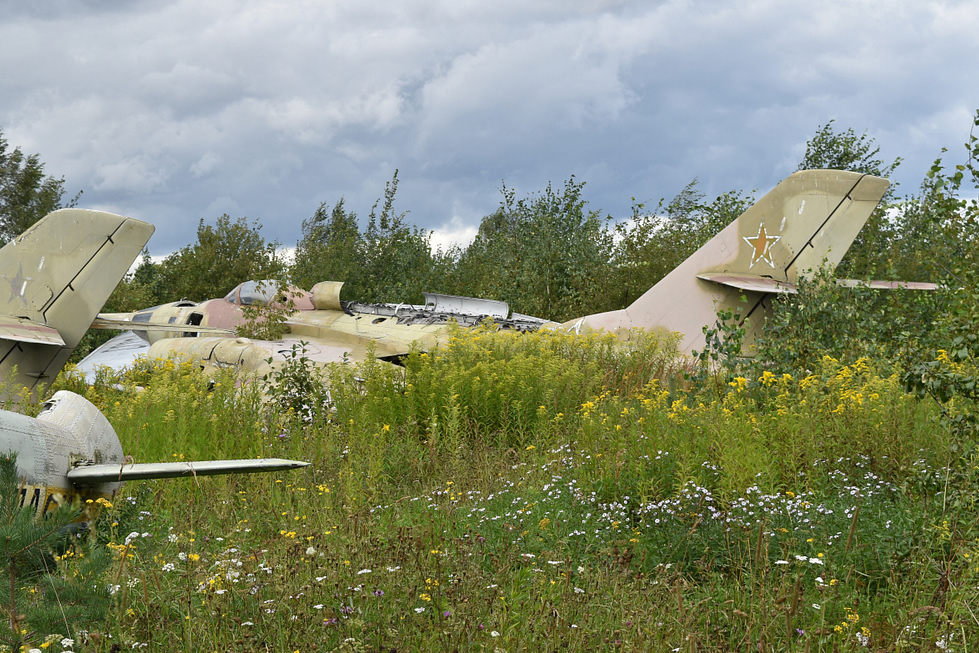
The last Russian and successor-state examples are withdrawn; the Yak-28 passes into museums.
Twelve Yak-28 stories
The Havelsee crash
A Yak-28P went down in a West Berlin lake; the crew reportedly steered it clear of homes and died.
Read the full story
The Firebar affair
Because the wreck lay in the British Sector, Western specialists examined its radar and engines before it went back.
Read the full story
A jet on a bicycle
The tandem main gear plus wingtip outriggers gave the Yak-28 its unmistakable nose-high stance.
Read the full story
Engines under the wing
Hanging the Tumansky turbojets in underwing pods kept the fuselage slim — but the afterburners gave trouble.
Read the full story
Flown with care
Accounts describe a relatively fragile airframe and advise against aerobatics.
Read the full story
The Firebar’s job
The radar-nosed Yak-28P filled gaps in Soviet air defence with missiles instead of a glazed bomber nose.
Read the full story
Eyes over the front
The Yak-28R turned the bomber into a dedicated tactical spy plane.
Read the full story
The jammer of the family
The Yak-28PP “Brewer-E” existed to blind enemy radars ahead of a strike.
Read the full story
Checking out the crews
The two-seat Yak-28U “Maestro” taught pilots the family’s tricky handling.
Read the full story
Work over Afghanistan
Recon and jamming Yak-28s were reportedly used in the Soviet–Afghan War.
Read the full story
Soviet through and through
Unlike the MiG-21, the Yak-28 was essentially never exported.
Read the full story
Remembered in a lake
The 1966 crew are commemorated to this day, and the wreck recovery is still studied.
Read the full story
The Yak-28 in pictures
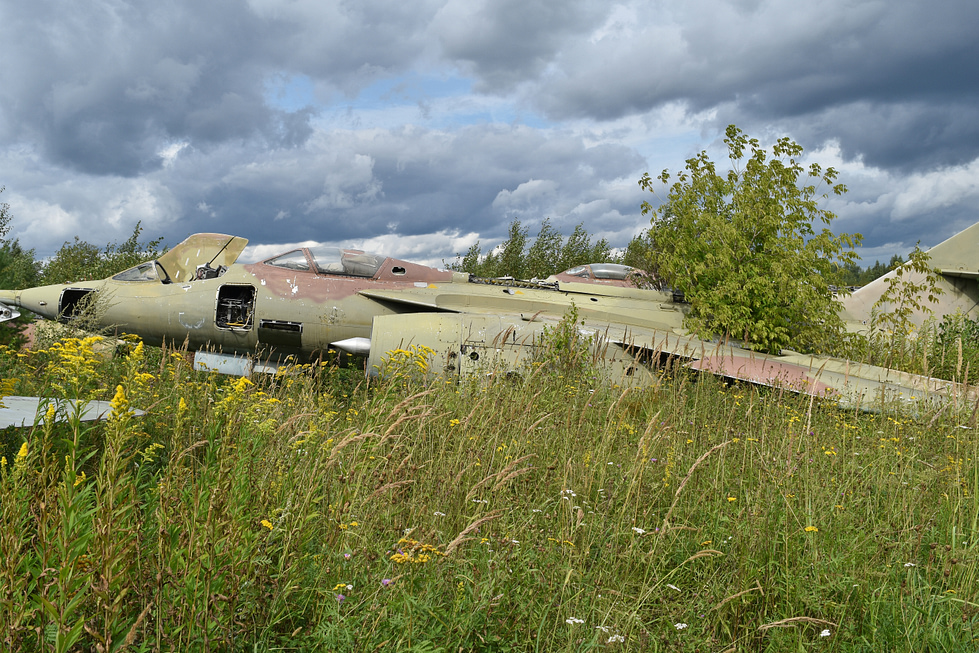
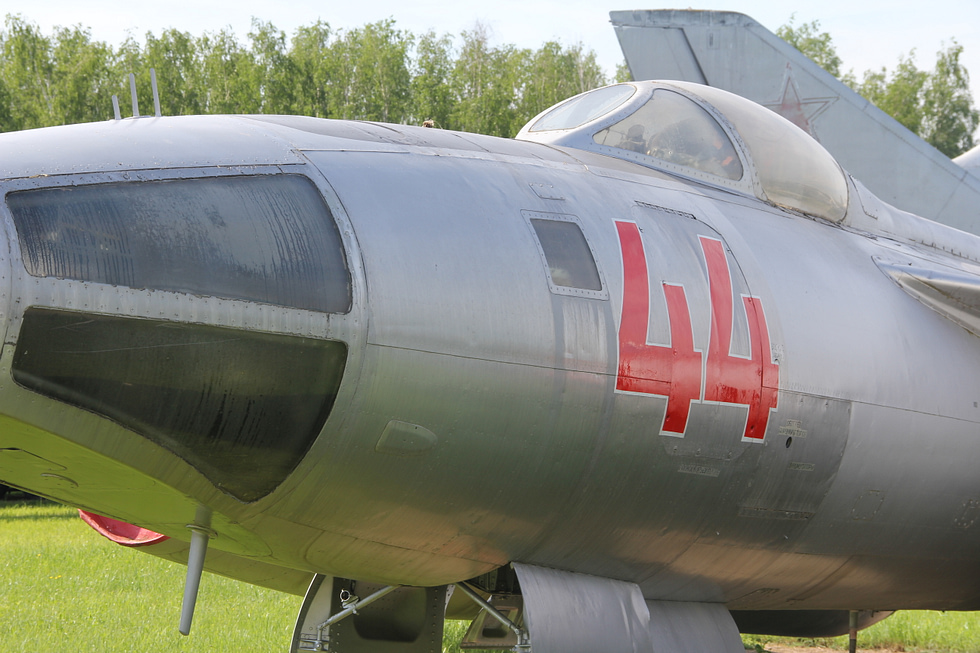
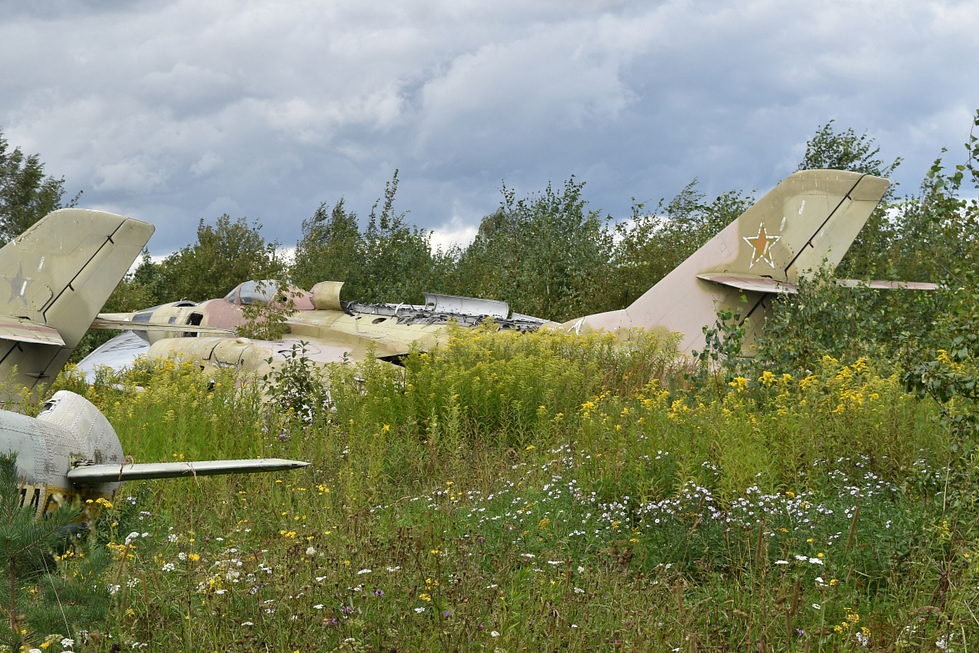
The Yak-28 in motion
A verified, high-authority video feature for the Yak-28 is still being sourced — video coming soon. In the meantime, explore the gallery and stories above for how this five-role Soviet jet looked and worked.
Where the Yak-28 flew
The record of a workhorse, not a duellist
The Yak-28 is not remembered for air-to-air kills — that was never really its story. Its record is one of breadth: a single airframe that carried bombs, cameras, jammers and missiles for the Soviet armed forces across three decades, and one famous crash that made it a fixture of Cold War history.
Compare the combat record of every military aircraft. Figures are approximate and drawn from open sources.
Everything people ask about the Yak-28
Can I fly in a Yak-28?
Is the Yak-28 still in service?
Who operated the Yak-28?
How fast was the Yak-28?
What do “Brewer,” “Firebar” and “Maestro” mean?
Why is the Yak-28 famous in Cold War history?
What made its landing gear unusual?
How many Yak-28s were built?
You can’t fly the Yak-28.
These, you can.
Some legends only live in museums — others are fuelled and waiting. MiGFlug has put civilians in real military jet cockpits since 2004.
 Fly the L-39 AlbatrosThe world’s most-flown jet trainer — aerobatics included
 Fly the F-104 Starfighter“The missile with a man in it”
 Fly the MiG-21The Cold War’s most-produced jet
 טסו על ה-T-33 Shooting StarAmerica’s first jet trainer
 Fly the DH VampireA piece of early jet history
 Fly the S.211Agile Italian jet trainer
 Fly the MB-326The classic Aermacchi jet
 Fly the MiG-15The Soviet legend of the Korean War
Continue the tour
Every fact, checked
- Military Intelligence Museum — “1966: The Firebar Incident”Authoritative account of the Berlin crash and the British/US recovery and examination.
- Vulcan to the Sky Trust — “Red Steer: The Firebar Affair”Narrative of the crash, the crew and the radar recovered from the lake.
- Western Allies Berlin — “Jak-28 Crash”Local Berlin account of the origin airfield, handover dates and BRIXMIS role.
- Military Factory — Yakovlev Yak-28Variant table, NATO names, production totals and Yak-28P performance figures.
- Global Military — Yak-28 Brewer/FirebarSpecification table (weights, thrust, wing area) and operator-status reference.
- Fly a Jet Fighter — Yakovlev Yak-28First-flight, service and retirement dates plus a variant and NATO-name summary.
- Aviation Safety Network — accident record 180558Database entry for the 6 April 1966 Berlin crash.
- Cold War Decoded — “A Brilliant Deception”Crew names, the engine-flameout account and the recovery-and-deception detail.