
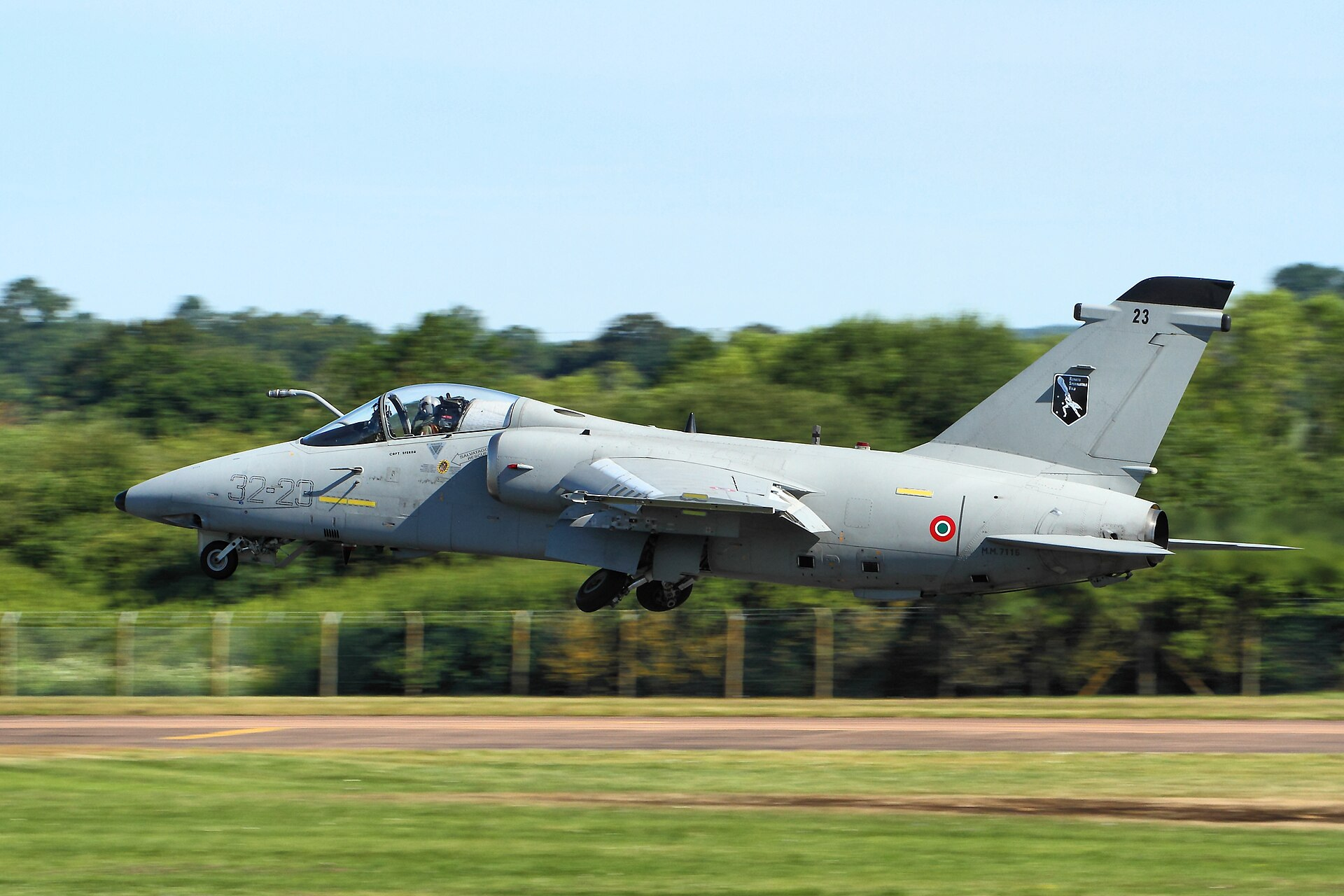
AMX International AMX
“A-11 Ghibli · A-1”
The Italian–Brazilian subsonic strike jet built by two air forces on two continents — a small, precise ground-attacker that flew combat over Bosnia, Kosovo and Afghanistan and soldiered on into the 2020s.
A strike jet built by two nations
By the late 1970s the Italian Air Force needed to replace an ageing fleet of Fiat G91 light strike fighters and F-104G Starfighters with a modern aircraft optimised for close air support, interdiction and tactical reconnaissance. In 1977 Aeritalia and Aermacchi began work on a compact subsonic jet under the name AMX — broadly, Aeritalia–Macchi–Experimental. It was never meant to be glamorous: the requirement called for a rugged machine that could carry a useful bomb load, fly low and fast to a target, hit it accurately and get home, day or night.
In 1980–81 the programme became genuinely binational. Brazil, hunting for a similar aircraft to modernise its own attack force, joined through Embraer, and a 1981 memorandum of understanding split the design, tooling and production between the two countries. Embraer took roughly a third of the work — the wings, tail surfaces, air intakes and part of the fuselage — while the Italian partners built the rest and each nation ran its own final-assembly line. It was one of the first times a Latin American manufacturer sat as a full partner in a modern European combat-aircraft programme.
The result was deliberately modest. A single Rolls-Royce Spey 807 turbofan — licence-built in both countries, and crucially without an afterburner — gave the AMX a top speed of only about Mach 0.86. The designers spent that restraint on range, reliability, a stable weapons platform and low running costs rather than raw performance. The prototype first flew on 15 May 1984; it was lost on its fifth flight, killing its pilot, but development pressed on. Production aircraft entered service around 1989 as the A-11 Ghibli in Italy — named for the hot Saharan desert wind — and the A-1 in Brazil.
For a jet built to a low-key brief, the AMX saw a surprising amount of action. Italian AMXs flew their first combat over Bosnia in 1995, then a heavy close-air-support and reconnaissance workload over Kosovo during Operation Allied Force in 1999, and later deployed to Afghanistan and over Libya (2011) for reconnaissance and precision strike. Brazil used the A-1 for attack, patrol and Amazon surveillance, upgrading survivors to the sensor-rich A-1M. A 1999 Venezuelan order was blocked when Washington refused export clearance for the aircraft’s US-sourced technology. Italy retired its last Ghibli on 5 April 2024, and Brazil is phasing out the A-1 in favour of the Gripen — closing the book on a jet that quietly did its job for 35 years.
01The AMX programme’s origins: why Italy and Brazil built a strike jet together
Italy set the requirement first — a light attack and reconnaissance jet to replace the G91 and F-104G from the 1980s. Aeritalia and Aermacchi teamed up to build it, but the numbers Italy needed alone made the programme expensive per aircraft. Brazil, facing a parallel need and keen to grow Embraer into a maker of combat aircraft, joined in 1980–81 and took a full design-and-production share. The partnership spread development costs, opened a second market and gave Brazil priceless experience, while letting Italy field a modern jet it could afford. The trade-off was complexity: two air forces with different needs (Italy wanted the 20 mm M61 cannon it could not export to Brazil; Brazil fitted twin 30 mm DEFA guns instead) and two assembly lines an ocean apart, all building what was essentially the same aircraft.
What makes it special
A jet designed across two continents
The AMX was a true joint venture: Aeritalia (later Alenia) and Aermacchi in Italy and Embraer in Brazil each built major sections and ran their own final-assembly line. Embraer produced the wings, tail, intakes and part of the fuselage — around a third of the airframe. It was one of the first modern combat aircraft co-developed by a European and a Latin American manufacturer as equal partners.
One Rolls-Royce Spey, and no afterburner
Power came from a single Rolls-Royce Spey 807 turbofan of about 49 kN (11,000 lbf), licence-built in both countries and deliberately fitted without reheat. That capped the AMX at roughly Mach 0.86 — and that was the point. The single-engine, subsonic layout bought range, reliability, easy maintenance and low cost per flight hour, exactly what a close-support jet needs.
Same airframe, different guns
Italian AMXs carried a single 20 mm M61A1 Vulcan rotary cannon. Brazil could not: the United States refused to license the M61 for Brazilian aircraft, so the A-1 was armed with two 30 mm DEFA 554 revolver cannons instead. The same US-technology dependence — wrapped up in the licence-built Spey and other systems — would later sink an export sale to Venezuela.
02The AMX’s Rolls-Royce Spey: why a subsonic strike jet was the whole point
It is tempting to see the AMX’s modest top speed as a weakness. It was a choice. A close-support and interdiction jet spends its life at low level, hauling bombs to a target and loitering over friendly troops — not chasing fighters. A single, proven, non-afterburning Rolls-Royce Spey 807 gave the AMX long range on internal fuel, a light logistics footprint, high availability and low operating cost. Adding a second engine or an afterburner would have raised weight, fuel burn and price for capability the mission never needed. The design instead put its money into avionics, a stable weapons platform and, in later Italian and Brazilian upgrades, precision-guided weapons and modern sensors.
03The AMX and the US-technology catch: the cannon swap and the blocked Venezuela sale
Because the AMX contained US-origin technology — from the licence-built Spey to avionics and the M61 cannon — its exports needed American approval. That is why Brazilian A-1s carry twin 30 mm DEFA cannons rather than the M61 Vulcan fitted to Italian jets: the US would not clear the Vulcan for Brazil. The same dependence later killed a deal. In 1999 Venezuela ordered a batch of AMX-ATA aircraft, but the US Congress blocked the sale on the grounds that the jets included American technology — and, by the era, the relationship with the Chávez government. Without US clearance the aircraft could not be delivered, and the order collapsed.
Full specifications
Airframe & Performance
- クルー
- 1 (two-seat AMX-T seats 2)
- 長さ
- 13.23 m
- 翼幅
- 8.87 m
- 身長
- 4.55 m
- 翼領域
- 21 m²
- 空虚重量
- ~6,700 kg
- Max takeoff weight
- ~13,000 kg
- Max speed
- ~Mach 0.86 · ~1,050 km/h
- サービス天井
- ~13,000 m (43,000 ft)
- 戦闘半径
- ~520 km lo · ~890 km hi-lo-hi
Propulsion & Armament
- エンジン
- 1 × Rolls-Royce Spey 807 (licence-built)
- Thrust
- ~49 kN (11,000 lbf) · no afterburner
- Cannon (Italy)
- 1 × 20 mm M61A1 Vulcan
- Cannon (Brazil)
- 2 × 30 mm DEFA 554
- ハードポイント
- 5 (1 centreline, 4 underwing) + wingtip rails
- External load
- ~3,800 kg of stores
- Self-defence AAM
- AIM-9 Sidewinder / MAA-1 Piranha
- First flight
- 15 May 1984
- Built
- ~200 (Italy & Brazil, from 1984)
- Unit cost
- No firm public figure (estimate: low tens of millions US$)
- Cost per flight hour
- No reliable public figure
04The AMX’s operating costs: why it was built to be cheap to fly
The AMX was designed around affordability as much as capability, and its single non-afterburning Spey is the clearest expression of that. A one-engine, subsonic jet burns far less fuel and needs far less maintenance than a twin-engine supersonic fighter, which is exactly why Italy and Brazil chose the layout for a workhorse strike aircraft they intended to fly hard for decades. That said, no reliable public cost-per-flight-hour or firm flyaway unit price exists for the type: it was a state programme split between two governments, never sold on an open dollar market, so any precise figure you see should be treated as an estimate rather than a sourced number.
From a NATO strike requirement to a two-nation farewell
A requirement over the boot
The Italian Air Force needs a modern light strike and recon jet to replace the Fiat G91 and F-104G. Aeritalia and Aermacchi begin the AMX.
Brazil signs on
Embraer joins the programme under a memorandum of understanding, making the AMX a genuinely binational Italian–Brazilian aircraft.
First flight — and first loss
The prototype flies on 15 May but is lost on its fifth flight, killing its pilot. Development continues.
Into service
Production aircraft enter service as the A-11 Ghibli in Italy and the A-1 in Brazil, with the first operational squadrons standing up.
First shots over Bosnia
Italian AMXs fly their combat debut supporting NATO operations over Bosnia.
Kosovo
Over Kosovo in Operation Allied Force the AMX flies a heavy close-air-support and reconnaissance workload, dropping hundreds of bombs.
Ghibli over Herat
Italian AMXs deploy to Herat, Afghanistan, flying reconnaissance and precision strike for ISAF before handing the mission on.
The Italian farewell
Italy retires its last A-11 on 5 April 2024; Brazil phases out the A-1 in favour of the Gripen. The AMX passes into history.
From two air forces: twelve AMX stories
Two air forces, one requirement
Italy needed a G91 and F-104 replacement; Brazil needed something similar — so they built it together.
Read the full story
A prototype lost on its fifth flight
The AMX flew on 15 May 1984 — and days later the first prototype crashed, killing its pilot.
Read the full story
Why Italy called it Ghibli
The Italian A-11 took its name from a hot, dry Saharan desert wind.
Read the full story
One Spey, no afterburner
A single non-afterburning turbofan capped the AMX at Mach 0.86 — on purpose.
Read the full story
First blood over Bosnia
The AMX made its combat debut supporting NATO operations over the former Yugoslavia.
Read the full story
The AMX over Kosovo
During Operation Allied Force the AMX flew hundreds of close-support and reconnaissance sorties.
Read the full story
Replacing the Starfighter’s eyes
The AMX took over the tactical-recon role from the RF-104, carrying the Orpheus pod.
Read the full story
Ghibli over Herat
From 2009 Italian AMXs deployed to Herat for reconnaissance and precision strike with ISAF.
Read the full story
The A-1 over the Amazon
Brazil flew the A-1 for attack, patrol and surveillance across its vast territory.
Read the full story
The A-1M and the Scipio radar
Brazil rebuilt survivors with a new radar, glass cockpit and modern weapons as the A-1M.
Read the full story
The order the US blocked
Venezuela ordered the AMX in 1999, but Washington refused to clear its US technology.
Read the full story
The last Ghibli, 2024
Italy retired its final AMX on 5 April 2024, closing a 35-year career.
Read the full story
The AMX in pictures
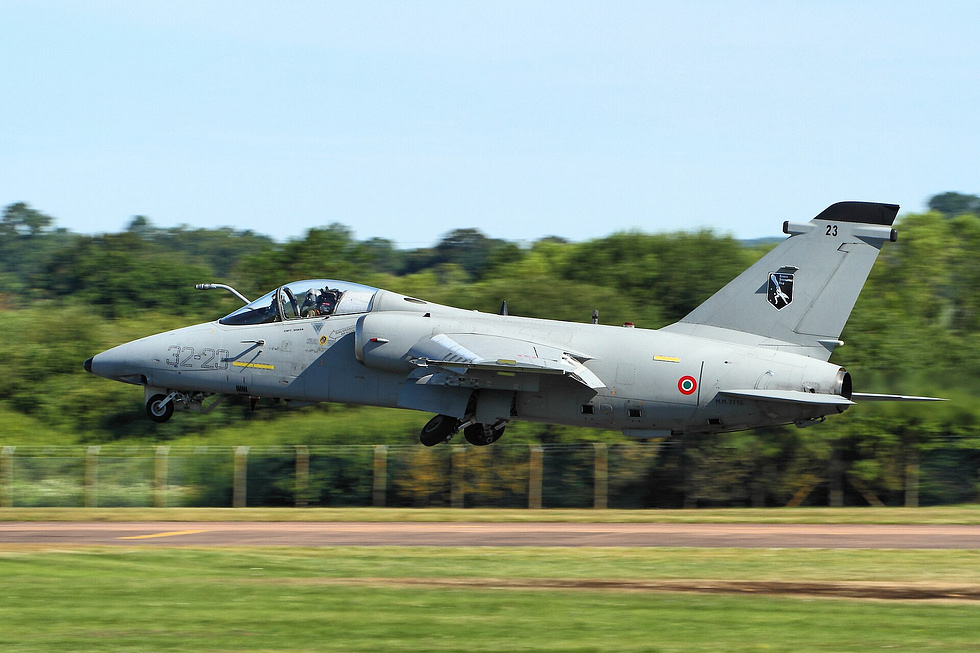
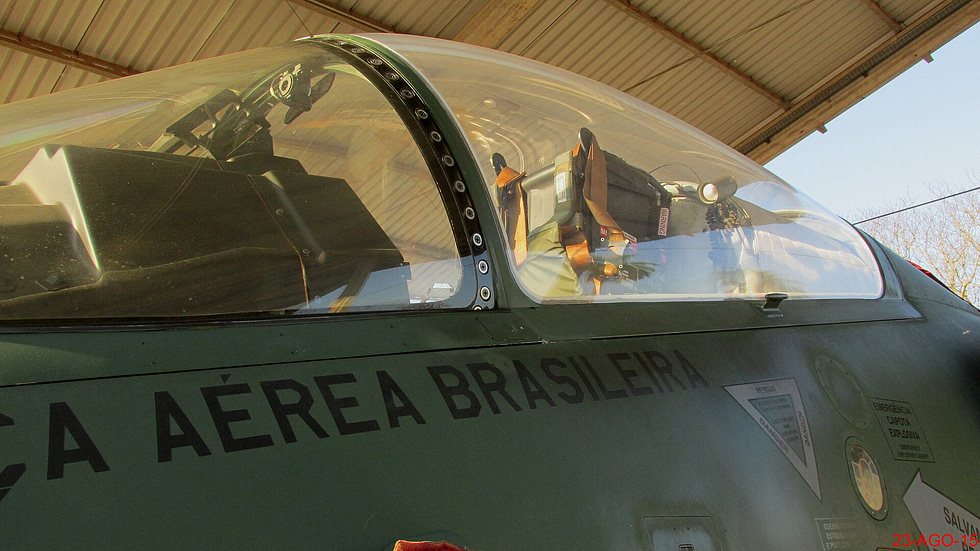
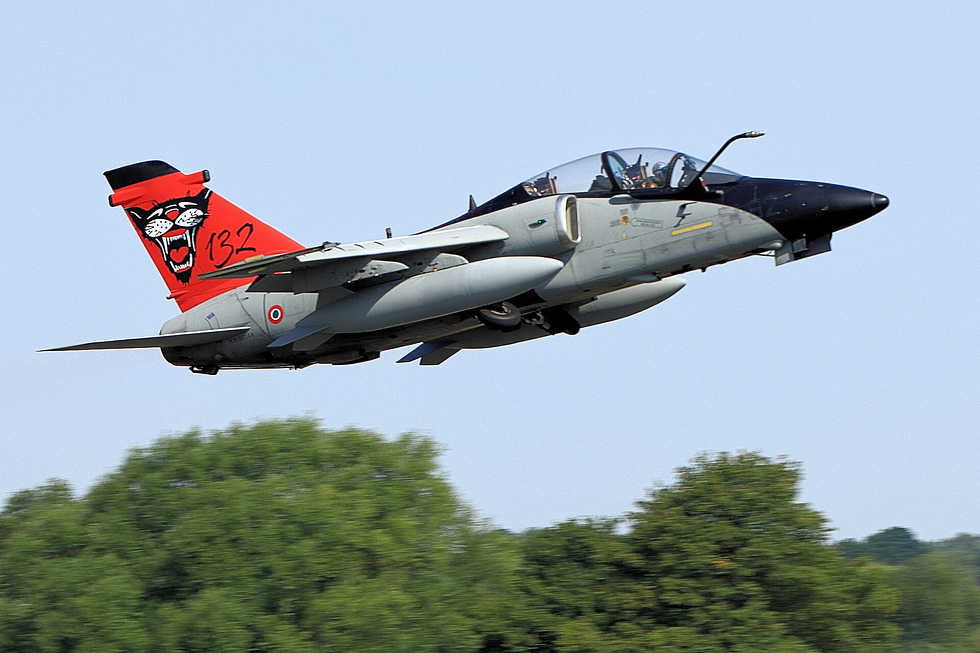
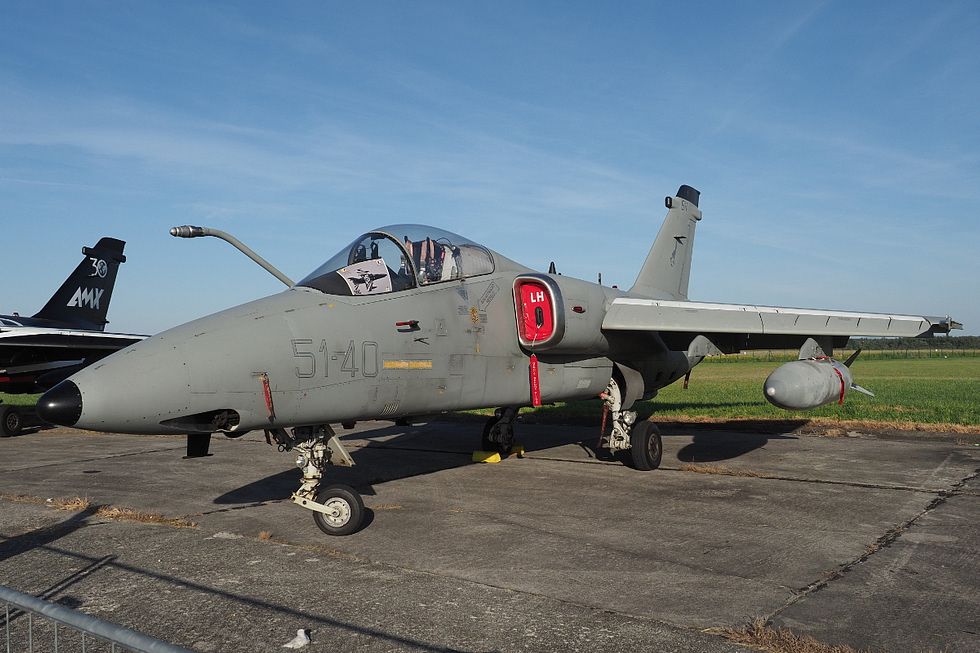
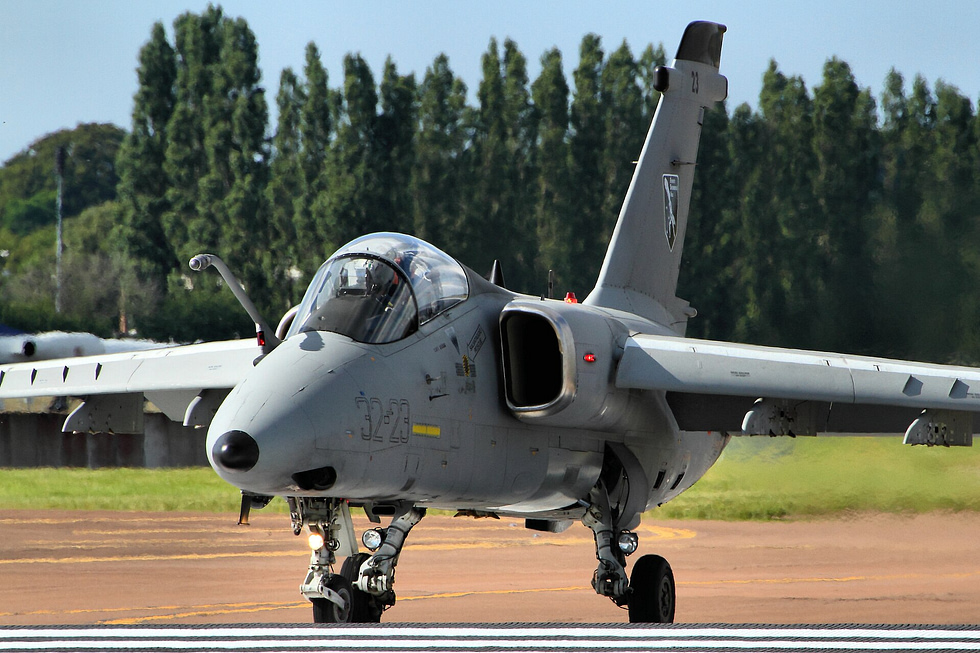
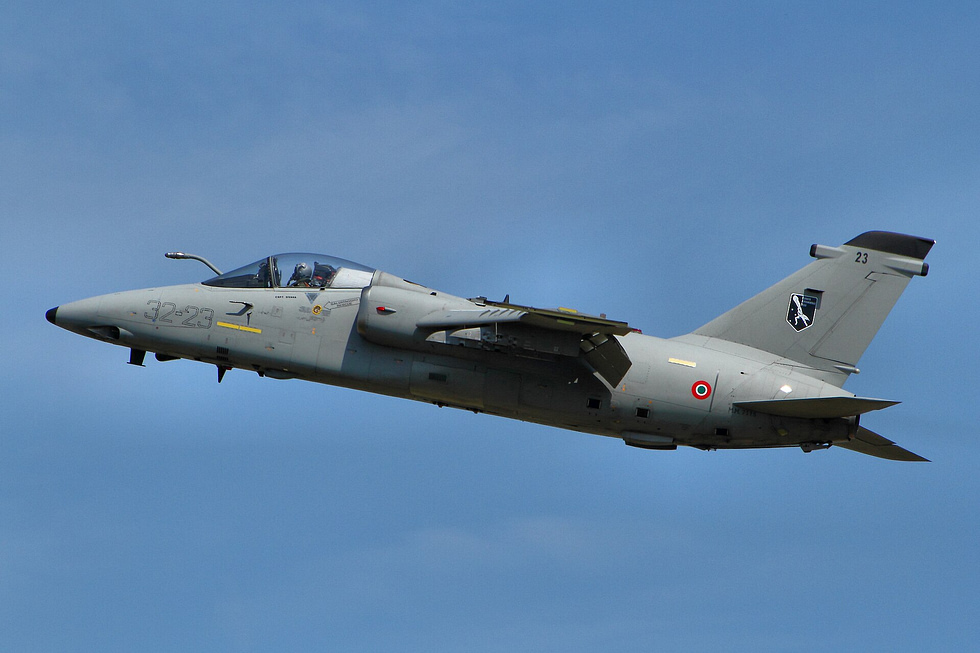
The AMX in motion
A dedicated AMX video feature is coming soon. In the meantime, explore the gallery above and the stories from Italian and Brazilian service.
Where the AMX flew
The score that defines it
The AMX was never built to dogfight, and it has no air-to-air kills — that was never its job. Its record is written in close air support and reconnaissance across three conflicts, where it proved a stable, accurate and economical bomb-truck for two air forces.
Compare the combat record of every military aircraft. Figures as of July 2026.
Everything people ask about the AMX
Can I fly in an AMX?
What is the AMX International AMX?
Is the AMX supersonic?
Did the AMX ever see combat?
Why do Italian and Brazilian AMX aircraft have different cannons?
Why was Venezuela’s AMX order cancelled?
Is the AMX still in service?
You can’t fly the AMX.
These, you can.
Some legends only live in museums — others are fuelled and waiting. MiGFlug has put civilians in real military jet cockpits since 2004.
 Fly the L-39 AlbatrosThe world’s most-flown jet trainer — aerobatics included
 Fly the F-104 Starfighter“The missile with a man in it”
 Fly the MiG-21The Cold War’s most-produced jet
 T-33シューティングスターを操縦しようAmerica’s first jet trainer
 Fly the DH VampireA piece of early jet history
 Fly the S.211Agile Italian jet trainer
 Fly the MB-326The classic Aermacchi jet
 Fly the MiG-15The Soviet legend of the Korean War
Continue the tour
Every fact, checked
- The Aviationist — “Ghiblis over the boot”Detailed history of the AMX in Italian service, including Kosovo operations and the reconnaissance role.
- The War Zone (TWZ)Italy’s 2024 retirement of the AMX and a retrospective on the type’s career.
- Vintage Aviation NewsThe AMX’s development, first flight and the Italian–Brazilian programme.
- Airforce TechnologyProgramme overview, powerplant, armament and variant reference data.
- Key MilitaryThe Italian AMX deployment to Herat, Afghanistan, and its ISAF missions.
- Aeronautica Militare (Italian Air Force)Official reference for AMX operators, units and the 2024 retirement.
- Força Aérea Brasileira (Brazilian Air Force)Official reference for the A-1 and the A-1M modernisation programme.
- Pickled WingsFeature on the AMX’s design philosophy and place in service.