
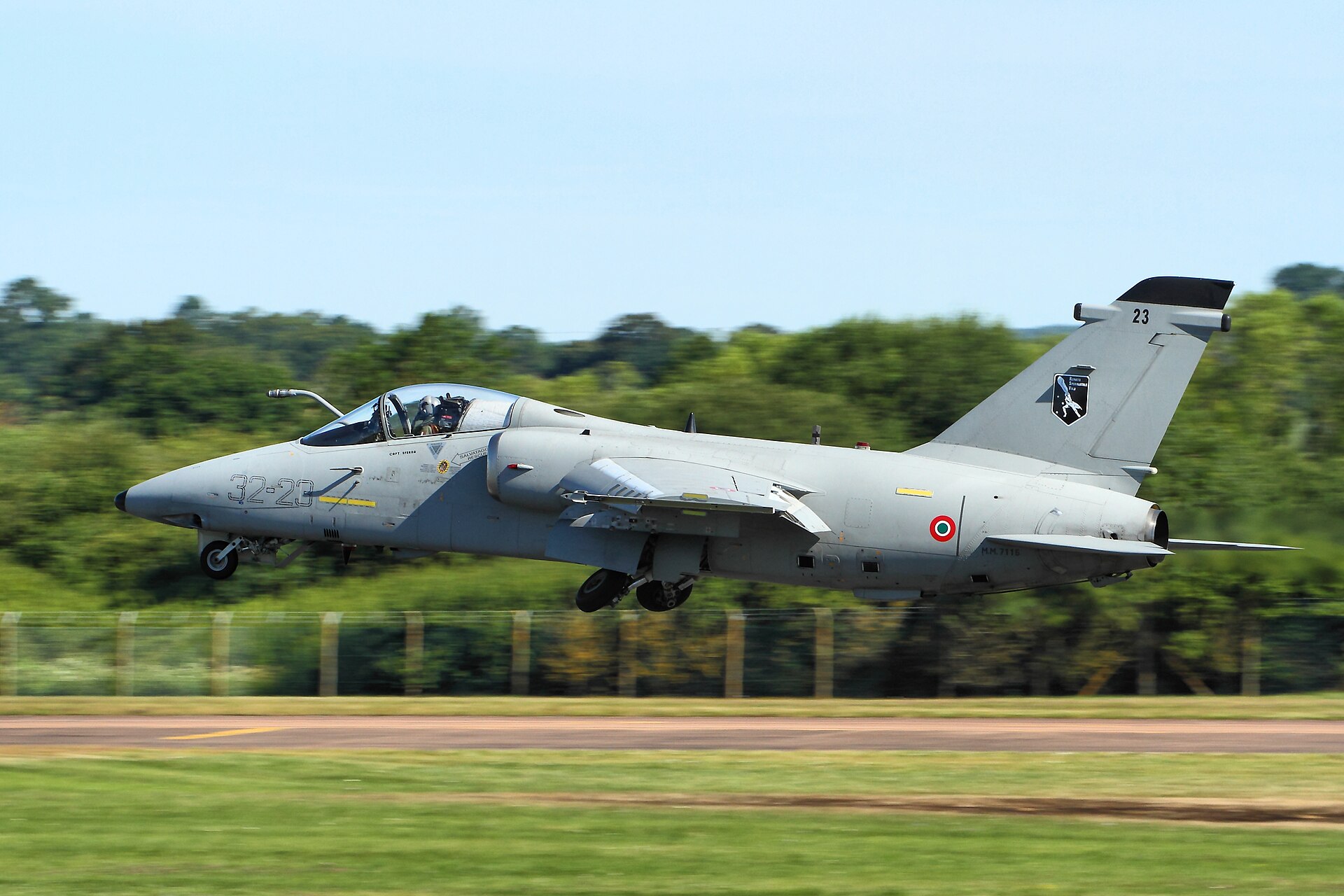
AMX International AMX
“A-11 Ghibli · A-1”
The Italian–Brazilian subsonic strike jet built by two air forces on two continents — a small, precise ground-attacker that flew combat over Bosnia, Kosovo and Afghanistan and soldiered on into the 2020s.
A strike jet built by two nations
By the late 1970s the Italian Air Force needed to replace an ageing fleet of Fiat G91 light strike fighters and F-104G Starfighters with a modern aircraft optimised for close air support, interdiction and tactical reconnaissance. In 1977 Aeritalia and Aermacchi began work on a compact subsonic jet under the name AMX — broadly, Aeritalia–Macchi–Experimental. It was never meant to be glamorous: the requirement called for a rugged machine that could carry a useful bomb load, fly low and fast to a target, hit it accurately and get home, day or night.
In 1980–81 the programme became genuinely binational. Brazil, hunting for a similar aircraft to modernise its own attack force, joined through Embraer, and a 1981 memorandum of understanding split the design, tooling and production between the two countries. Embraer took roughly a third of the work — the wings, tail surfaces, air intakes and part of the fuselage — while the Italian partners built the rest and each nation ran its own final-assembly line. It was one of the first times a Latin American manufacturer sat as a full partner in a modern European combat-aircraft programme.
The result was deliberately modest. A single Rolls-Royce Spey 807 turbofan — licence-built in both countries, and crucially without an afterburner — gave the AMX a top speed of only about Mach 0.86. The designers spent that restraint on range, reliability, a stable weapons platform and low running costs rather than raw performance. The prototype first flew on 15 May 1984; it was lost on its fifth flight, killing its pilot, but development pressed on. Production aircraft entered service around 1989 as the A-11 Ghibli in Italy — named for the hot Saharan desert wind — and the A-1 in Brazil.
For a jet built to a low-key brief, the AMX saw a surprising amount of action. Italian AMXs flew their first combat over Bosnia in 1995, then a heavy close-air-support and reconnaissance workload over Kosovo during Operation Allied Force in 1999, and later deployed to Afghanistan and over Libya (2011) for reconnaissance and precision strike. Brazil used the A-1 for attack, patrol and Amazon surveillance, upgrading survivors to the sensor-rich A-1M. A 1999 Venezuelan order was blocked when Washington refused export clearance for the aircraft’s US-sourced technology. Italy retired its last Ghibli on 5 April 2024, and Brazil is phasing out the A-1 in favour of the Gripen — closing the book on a jet that quietly did its job for 35 years.
01The AMX programme’s origins: why Italy and Brazil built a strike jet together
Italy set the requirement first — a light attack and reconnaissance jet to replace the G91 and F-104G from the 1980s. Aeritalia and Aermacchi teamed up to build it, but the numbers Italy needed alone made the programme expensive per aircraft. Brazil, facing a parallel need and keen to grow Embraer into a maker of combat aircraft, joined in 1980–81 and took a full design-and-production share. The partnership spread development costs, opened a second market and gave Brazil priceless experience, while letting Italy field a modern jet it could afford. The trade-off was complexity: two air forces with different needs (Italy wanted the 20 mm M61 cannon it could not export to Brazil; Brazil fitted twin 30 mm DEFA guns instead) and two assembly lines an ocean apart, all building what was essentially the same aircraft.
What makes it special
A jet designed across two continents
The AMX was a true joint venture: Aeritalia (later Alenia) and Aermacchi in Italy and Embraer in Brazil each built major sections and ran their own final-assembly line. Embraer produced the wings, tail, intakes and part of the fuselage — around a third of the airframe. It was one of the first modern combat aircraft co-developed by a European and a Latin American manufacturer as equal partners.
One Rolls-Royce Spey, and no afterburner
Power came from a single Rolls-Royce Spey 807 turbofan of about 49 kN (11,000 lbf), licence-built in both countries and deliberately fitted without reheat. That capped the AMX at roughly Mach 0.86 — and that was the point. The single-engine, subsonic layout bought range, reliability, easy maintenance and low cost per flight hour, exactly what a close-support jet needs.
Same airframe, different guns
Italian AMXs carried a single 20 mm M61A1 Vulcan rotary cannon. Brazil could not: the United States refused to license the M61 for Brazilian aircraft, so the A-1 was armed with two 30 mm DEFA 554 revolver cannons instead. The same US-technology dependence — wrapped up in the licence-built Spey and other systems — would later sink an export sale to Venezuela.
02The AMX’s Rolls-Royce Spey: why a subsonic strike jet was the whole point
It is tempting to see the AMX’s modest top speed as a weakness. It was a choice. A close-support and interdiction jet spends its life at low level, hauling bombs to a target and loitering over friendly troops — not chasing fighters. A single, proven, non-afterburning Rolls-Royce Spey 807 gave the AMX long range on internal fuel, a light logistics footprint, high availability and low operating cost. Adding a second engine or an afterburner would have raised weight, fuel burn and price for capability the mission never needed. The design instead put its money into avionics, a stable weapons platform and, in later Italian and Brazilian upgrades, precision-guided weapons and modern sensors.
03The AMX and the US-technology catch: the cannon swap and the blocked Venezuela sale
Because the AMX contained US-origin technology — from the licence-built Spey to avionics and the M61 cannon — its exports needed American approval. That is why Brazilian A-1s carry twin 30 mm DEFA cannons rather than the M61 Vulcan fitted to Italian jets: the US would not clear the Vulcan for Brazil. The same dependence later killed a deal. In 1999 Venezuela ordered a batch of AMX-ATA aircraft, but the US Congress blocked the sale on the grounds that the jets included American technology — and, by the era, the relationship with the Chávez government. Without US clearance the aircraft could not be delivered, and the order collapsed.
Full specifications
Baseline note: the figures below describe the single-seat AMX as delivered to the Aeronautica Militare between 1988 and 1997 — the Rolls-Royce Spey RB.168 Mk 807 aircraft that Italy designated A-11A and, after the ACOL upgrade, A-11B. Deltas for the two-seat AMX-T and for the Brazilian A-1 and A-1M are given in grey. Four cautions before the numbers. First, this is a binational aeroplane with two genuinely different fits, and the difference is not cosmetic: Italian aircraft carry one 20 mm M61A1 Vulcan, Brazilian aircraft two 30 mm DEFA 554 revolver cannon, because Washington refused Brazil an export licence for the M61. Almost every table that quotes a single armament line for the AMX is wrong for one of the two operators. Second, the radar differs too — a simple ranging set in Italian aircraft, a multimode SCP-01 Scipio in Brazilian ones — so "the AMX’s radar" is a category error. Third, production totals are widely misreported: several English-language references state 94 aircraft delivered to Brazil (79 single-seat plus 15 two-seat), which is the contracted figure from a programme that was cut. Embraer actually delivered 56, about 45 single-seat and 11 two-seat, against an original Brazilian requirement of 100; Italy took 136 of a requirement for 187. Roughly 192 production airframes were built, not 230. Fourth, the standard speed line — 1,053 km/h at 10,975 m, quoted as Mach 0.85 — is internally inconsistent, because 568 kn true at 36,000 ft is closer to Mach 0.99. The airframe was never cleared past about Mach 0.86 and was never intended to go supersonic, so the Mach number is the figure to trust.
Dimensions & weights
- Crew
- 1 — the AMX-T, Italian TA-11A and Brazilian A-1B seat two in tandem, the rear seat raised for instructor view. The second cockpit was bought by deleting one fuselage fuel cell, so the trainer keeps the full weapons fit and loses radius rather than capability
- Length
- 13.23 m (43 ft 5 in). Small — more than four metres shorter than a Jaguar GR.1 and nearly five shorter than a Tornado IDS. The AMX was deliberately sized as a G.91 replacement, not as a strike fighter
- Wingspan
- 8.87 m (29 ft 1 in) at the tips; 9.97 m (32 ft 8 in) measured over the wingtip missile rails, which is the figure hangar planners actually used
- Height
- 4.55 m (14 ft 11 in)
- Wing area
- 21.0 m² (226 sq ft)
- Aspect ratio
- 3.75 — modest sweep and a fairly generous wing for the weight, chosen for field performance and low-level ride rather than for speed. It is the opposite choice to the Mitsubishi F-1 or the Jaguar, and it is why the AMX could work off a short strip
- Wing planform
- Shoulder-mounted, swept, with full-span leading-edge slats, large trailing-edge flaps and overwing spoilers ahead of the flaps — the spoilers double as airbrakes and as lift dumpers on touchdown, which is how a 13-tonne aeroplane on one non-afterburning engine gets into and out of a short runway
- Empty weight
- 6,700 kg (14,771 lb). Jane’s and the Italian tables give 6,700 kg; several other references, including airvectors and the Portuguese-language sources, give 6,730 kg. The 30 kg is not worth arguing about, but it is a good marker of how casually the AMX numbers have been copied
- Gross weight
- 10,750 kg (23,700 lb) — the reference condition for the published wing loading and thrust-to-weight figures, and the condition in which the aeroplane actually handled well
- Maximum take-off weight
- 13,000 kg (28,660 lb)
- Maximum external stores
- 3,800 kg (8,377 lb) across five hardpoints. This is arithmetically a paper figure: empty weight plus full internal fuel plus 3,800 kg of stores comes to about 13,200 kg, above the maximum take-off weight, so the full load can only be lifted with fuel offloaded. Real strike loads were nearer 2,000–2,500 kg
- Pylon capacity
- Centreline and two inboard wing stations 907 kg (2,000 lb) each; two outboard wing stations 454 kg (1,000 lb) each; two wingtip rails for air-to-air missiles only. All four wing stations are plumbed for fuel, the centreline is not — which is why the centreline usually carried a pod
- Wing loading
- 512 kg/m² (105 lb/sq ft) at gross weight, rising to 619 kg/m² (127 lb/sq ft) at maximum take-off weight. Low for a strike aircraft of the period, and the reason the AMX was pleasant to fly and unpleasant to intercept things with
- Internal fuel
- 3,555 litres (939 US gal), about 2,700 kg, in fuselage cells and integral wing tanks. airvectors gives 3,500 litres; the two-seaters carry less
- External fuel
- Two 1,000-litre tanks inboard and two 500-litre tanks outboard (264 and 132 US gal). Some sources list 1,100-litre and 580-litre tanks instead; both sets appear in service photographs and the discrepancy is probably nominal versus usable volume
Performance
- Maximum speed
- 1,053 km/h (654 mph, 568 kn) at 10,975 m in the standard tables. Treat the accompanying Mach 0.85 label as the real limit — see the baseline note. In squadron use the AMX was a high-subsonic aeroplane and nothing more
- Supersonic capability
- None — and deliberately so. No attempt was made to give the AMX supersonic performance, which was unusual for a strike aircraft designed in the 1980s and was the single most argued-about decision of the whole programme. The trade bought reliability, cheapness and field performance at the price of any dash out of trouble
- Service ceiling
- 13,000 m (42,650 ft)
- Rate of climb
- 52.1 m/s (10,260 ft/min) at sea level, clean. Respectable for 49 kN of dry thrust, and a direct consequence of the low wing loading
- Combat radius, hi-lo-hi
- 889 km (552 mi, 480 nmi) carrying 900 kg of external stores. This is the figure the manufacturers quoted and the one to compare against; a fully low-level profile with a useful bomb load was very much shorter
- Ferry range
- 3,336 km (2,073 mi, 1,801 nmi) with external tanks
- Endurance
- 4 hours 15 minutes — which mattered more than radius once the aircraft found its late career loitering over Afghanistan with a reconnaissance pod rather than dashing at a Warsaw Pact armoured column
- Take-off run
- Under 1,000 m (3,280 ft) at maximum take-off weight, and far less at typical training weights. The requirement was explicit: operate from a damaged 1,200 m strip with no arrester gear
- Load factor limits
- +7.33 g / −3 g — a conventional strike-aircraft envelope. Published g limits for the AMX are unusually hard to source and this pair should be treated as the best-attested figure rather than an official one
- Thrust-to-weight
- 0.47 at gross weight, falling to about 0.38 at maximum take-off weight. With no afterburner there was nothing in reserve, and pilots were emphatic that a heavily loaded AMX on a hot day was a matter of planning rather than throttle
- In-flight refuelling
- Fixed probe on the starboard nose — standard on Italian aircraft and the reason a short-radius attack aeroplane could deploy to Afghanistan at all. Brazilian A-1s also refuel in flight, latterly from KC-390 and KC-137 tankers
- Attrition record
- Two fleet-wide groundings for engine failure — February to May 1992 after an Italian crash, and January to March 1996, which interrupted the Bosnia deployment. The Spey was chosen for reliability, and its early service was the programme’s worst embarrassment
Propulsion & systems
- Engine
- One Rolls-Royce Spey RB.168 Mk 807 turbofan, 49.1 kN (11,030 lbf, about 5,000 kgp). No afterburner and no reheat plumbing anywhere in the airframe
- Why the Spey
- Chosen in October 1978 over the RB199, the Adour and the Viper — not because it was modern, because it was not, but because it was cheap, reliable and free of American export control. That single procurement decision is what made the AMX sellable to Brazil and, later, what made it too slow and too thirsty for the job it ended up doing
- Licence manufacture
- Built under licence by separate consortia in each country — FiatAvio, Alfa Romeo Avio and Piaggio in Italy, CELMA in Brazil. No component of the aircraft was made in two places; the workshare split was Aeritalia 46.5 per cent, Embraer 29.7 per cent, Aermacchi 22.8 per cent
- Proposed re-engining
- Never taken up — a Spey RB.168 Mk 821 of 58.4 kN was tested, and in 1999 AMX International proposed a dry-rated Eurojet EJ200 with far more thrust. Neither was funded, and the aeroplane finished its 35-year career on the engine it started with
- Air intakes
- Fixed, simple, round-lipped side intakes — possible only because the aircraft was subsonic. No variable geometry, no splitter ramps, nothing to go wrong, and a genuine maintenance saving
- Flight controls
- Hybrid — fly-by-wire for the spoilers, rudder and variable-incidence tailplane, drawing directly on Panavia Tornado experience; dual-redundant hydraulics for ailerons and elevators, with manual reversion so the aircraft remains flyable after total hydraulic failure. Either system can work without the other
- Radar
- Differs by operator — Italian aircraft a simple FIAR ranging set, Brazilian aircraft the Tecnasa/SMA SCP-01 Scipio, a genuine multimode radar with air-to-air and sea-search modes. Brazil wanted a maritime capability Italy did not need, and paid for a radar Italy never bought
- Navigation and attack
- Twin digital computers, HUD and a head-down multifunction display — a large share of the internal volume went to avionics, all of it in bays under the cockpit reachable from ground level without platforms. ACOL replaced the inertial platform with a ring-laser INS coupled to GPS and added colour displays and night-vision-goggle compatibility
- Self-protection
- Elettronica ELT/156 radar warning receiver with tailfin antennas, plus a podded active jammer of the ELT/555 family and chaff and flare dispensers — extensive for a light attack aircraft, and one of the areas where the Italian and Brazilian fits diverge most
- Reconnaissance provision
- Centreline pod or internal pallet — Italian aircraft carried the Oude Delft Orpheus infrared linescan pod and later the Rafael RecceLite; Brazilian RA-1s have a dedicated bay forward of the main gear on the starboard side taking one of three camera pallets with vertical, oblique and forward-facing cameras
- Structure
- Conventional aluminium with carbon-fibre fin and elevators — no exotic materials, no attempt at low observability, and a detachable rear fuselage for engine changes. Survivability came from duplicated systems rather than armour, which was studied and rejected on cost
- Escape system
- Martin-Baker Mk 10L zero-zero ejection seat — the same family fitted to the Tornado, and one of a long list of components the AMX shared with larger Italian aircraft to keep support costs down
04The AMX’s operating costs: why it was built to be cheap to fly
The AMX was designed around affordability as much as capability, and its single non-afterburning Spey is the clearest expression of that. A one-engine, subsonic jet burns far less fuel and needs far less maintenance than a twin-engine supersonic fighter, which is exactly why Italy and Brazil chose the layout for a workhorse strike aircraft they intended to fly hard for decades. That said, no reliable public cost-per-flight-hour or firm flyaway unit price exists for the type: it was a state programme split between two governments, never sold on an open dollar market, so any precise figure you see should be treated as an estimate rather than a sourced number.
Armament & payload
The AMX carries two different guns because Washington would not let Brazil have the first one
Every account of this aircraft has to start with the cannon, because the cannon is where a joint programme between a NATO member and a South American republic ran into the United States. Italian AMXs mount a single 20 mm M61A1 Vulcan low on the port side of the forward fuselage with roughly 350 rounds. Brazil asked for the same installation, and the United States refused the export licence. Embraer’s answer was two 30 mm DEFA 554 revolver cannon, a French weapon of an older generation, mounted one each side — heavier shells, a far lower rate of fire, a fraction of the ammunition, and a different aiming solution. It is the clearest illustration anywhere in the programme of what the partners meant when they said they wanted an aeroplane free of American export restrictions, and of how thoroughly they failed to achieve it.
Beyond the gun, the AMX is a five-hardpoint aeroplane with a modest lift and a good pod bay. Two wingtip rails take short-range infrared missiles for self-defence, never for offensive counter-air. The centreline and two inboard wing stations are stressed to 907 kg each and the outboard pair to 454 kg, but the maximum quoted external load of 3,800 kg cannot be carried with full internal fuel and remains a brochure number. What changed the aircraft’s worth was not lift but guidance: an Italian AMX of 1990 dropped iron bombs, an ACOL-standard A-11B of 2011 carried a Litening III pod, laser Paveways and GPS-guided JDAM and could pass sensor imagery to troops on the ground. The airframe did not improve at all; the kit hanging off it improved out of recognition. Italian and Brazilian stores clearances were never the same, and neither air force published a full list; Brazilian weapons in particular are documented mostly through manufacturer claims and airshow displays rather than official clearance data.
Gun
- Italian aircraft: one 20 mm M61A1 Vulcan six-barrel rotary cannon in the lower port forward fuselage, with about 350 rounds. Some references give the later M61A2; the A1 is the better-attested fit
- At 6,000 rounds per minute that magazine lasts around three and a half seconds of continuous fire, so the gun was used in short bursts and pilots were taught to count them
- Brazilian aircraft: two 30 mm DEFA 554 revolver cannon, one per side, fitted because the United States denied Brazil an export licence for the M61. Brazilian-assembled guns are sometimes listed under the local designation Bernardini Mk-164, which is the same weapon
- The trade is real: the DEFA fires a much heavier shell with better effect against vehicles and small vessels, but at roughly 1,300 rounds per minute per gun and with far less ammunition. Published round counts for the Brazilian installation are inconsistent and are best treated as unverified
- Both fits are aimed through the HUD with ranging from the aircraft radar, and strafing stayed in the syllabus in both air forces to the end — the AMX was slow enough and steady enough to be good at it
Air-to-air
- Two wingtip rails, self-defence only. Italian aircraft carried the AIM-9L Sidewinder throughout, with the IRIS-T associated with late Italian service in some accounts but not firmly documented on the AMX
- Brazilian aircraft carried the AIM-9 family and the indigenous Mectron MAA-1 Piranha, an infrared missile developed in Brazil precisely because foreign supply could not be relied upon
- The Brazilian-South African A-Darter high-off-boresight missile is listed against the A-1M in several sources; it entered service too late and in too few numbers for the pairing to be more than nominal
- No radar-guided missile capability at all, in either fleet. The Italian ranging radar could not illuminate for a semi-active weapon, and the Brazilian SCP-01 was never cleared for one
- The AMX was categorised as an attack aircraft and its air-to-air fit reflects that honestly: two missiles to get out of trouble, and a strong preference for not being in trouble
Air-to-surface guided
- Paveway II laser-guided bombs, principally GBU-12 and GBU-16, self-designated once Italian aircraft gained the Rafael Litening III targeting pod under the ACOL upgrade
- JDAM — GBU-32 and GBU-38 — cleared on ACOL aircraft, giving the AMX an all-weather guided capability it had entirely lacked for its first fifteen years of service
- Opher: an Israeli infrared seeker kit bolted to standard Mk 82 bombs, used in quantity by Italian AMXs over Kosovo in 1999. Cheap, autonomous and, at the time, the only precision weapon the aircraft could actually employ
- Brazilian aircraft integrate the Mectron MAR-1 anti-radiation missile, a genuinely unusual weapon for a light attack type and the only defence-suppression capability the AMX ever had in either fleet
- No stand-off cruise weapon, no anti-ship missile in service, no Maverick-class electro-optical missile. The AMX-ATA proposal would have added anti-ship and medium-range missiles, and was never built
Bombs
- Mk 82 227 kg and Mk 83 454 kg low-drag general-purpose bombs, with retarded versions for low-level delivery — the everyday load for the type’s first decade
- Mk 84 907 kg bombs are within the inboard and centreline pylon limits, though rarely photographed and not a normal Italian load
- Cluster munitions were carried by both operators in the 1990s, including BL755-class weapons in Italian service and Brazilian BLG-252 sub-munition dispensers; both were withdrawn as cluster weapons fell out of use
- Practice bombs and carriers for range work, which is what the great majority of AMX sorties in both air forces actually carried
- The useful load is small. A Tornado IDS lifts more than twice as much, and the AMX’s answer was always to fly a second sortie rather than a heavier one
Rockets
- Unguided 70 mm rocket pods on the wing stations, the standard close-support store of the type’s design era and one of the capabilities inherited straight from the G.91 it replaced
- Italian aircraft used NATO-standard LAU-series and Italian Aerea launchers; Brazilian aircraft the Avibras LM-70/7 pod firing SBAT-70 rockets, another deliberately domestic supply chain
- Larger 127 mm rockets appear in some manufacturer literature for the type; they are not a documented operational load in either air force
- Rockets went the way of unguided bombs after 1999. Over Kosovo, Afghanistan and Libya the AMX did not fire them in anger; guided weapons had made the rocket pod a training store
- Kept in the clearance list to the end all the same, because a light attack aircraft that cannot strafe or rocket a soft target is not doing the job it was bought for
Pods & other stores
- Rafael Litening III targeting pod on the centreline, added by ACOL and first used operationally by AMX crews over Libya in 2011 — the single change that turned the aircraft into a modern strike platform
- Oude Delft Orpheus infrared linescan reconnaissance pod, the original Italian centreline fit, later supplemented and then replaced by the Rafael RecceLite digital pod on 132° Gruppo aircraft
- Elettronica ELT/555 family jamming pod, normally on a wing station, complementing the internal ELT/156 radar warning receiver and the chaff and flare dispensers
- Drop tanks of 1,000 litres inboard and 500 litres outboard; all four wing stations are plumbed, the centreline is not, which is why the pod and the tanks never competed for the same pylon
- Brazilian RA-1s carry their reconnaissance sensors internally on one of three camera pallets rather than in a pod, freeing the centreline — a small but real advantage over the Italian arrangement
Three typical loadouts
- Kosovo 1999, Italian precision strike
- Two Mk 82 bombs fitted with Opher infrared guidance kits on the outboard pylons, two 1,000-litre tanks inboard, an ELT/555 jamming pod on the centreline, two AIM-9L on the tip rails, 350 rounds for the Vulcan. Twelve aircraft flew 252 sorties and around 667 hours in Operation Allied Force without a loss, and the Opher kit was the only way an unmodernised AMX could put a bomb on a point target.
- Afghanistan 2009–2014, ACOL reconnaissance and close support
- Litening III or RecceLite pod on the centreline, two GBU-12 Paveway II on the inboard pylons, two 500-litre tanks outboard, AIM-9L on the tips. Four aircraft flew over 700 combat missions by the end of 2010 and more than 3,100 in total; the prized capability was not the bombs but real-time digital sensor imagery passed straight to troops on the ground.
- Brazilian tactical reconnaissance, RA-1 and A-1M
- Internal camera pallet in the starboard fuselage bay, two 1,000-litre tanks on the inboard pylons, a RecceLite pod on the centreline on modernised aircraft, MAA-1 Piranha on the tip rails, two 30 mm DEFA 554 with the ammunition the airframe allows. This was the mission that kept the type alive in Brazil after the strike role passed elsewhere, and it is what the last Poker Squadron aircraft were flying.
Sourcing caveat: neither air force published a complete stores clearance list. Italian weapons are reasonably well documented through NATO operations reporting and the ACOL contract announcements; Brazilian integrations, particularly MAR-1, A-Darter and the later guided bombs, rest largely on manufacturer statements and press coverage of the A-1M programme, which was cancelled before most of the intended fleet was converted. Ammunition capacities for the DEFA installation and the AMX’s g limits are the two figures we could not corroborate to a standard we are happy with.
Variants
Two air forces bought the same airframe and then spent thirty years making it into two different aeroplanes
The AMX began as an Italian requirement of 1977 for 187 strike fighters to replace the Aeritalia G.91 and the reconnaissance RF-104G. Aeritalia and Aermacchi chose to bid jointly rather than compete, Brazil joined in 1980 looking for an MB-326 replacement, and Embraer was brought into the industrial partnership in July 1981. The workshare was divided with no duplication anywhere: Aeritalia built the centre fuselage, stabilisers and rudder, Aermacchi the forward fuselage and tail cone, Embraer the wing, intakes, pylons and drop tanks. Seven flying prototypes were built, three Italian, two by Aermacchi and two Brazilian. The first flew on 15 May 1984 and was lost on its fifth flight, killing its pilot; testing thereafter was uneventful.
Neither air force got the numbers it wanted. Italy asked for 187 and took 136. Brazil asked for 100, contracted for 94, and received 56. What followed was two divergent modernisation stories — an Italian upgrade that was funded, completed and used in three wars, and a Brazilian one that was cancelled in mid-flight by a budget cut and delivered about a quarter of the aircraft it promised. The export story is shorter still: eight aircraft ordered by Venezuela and blocked by the United States Congress, and a Philippine negotiation that ended with an order for Korean FA-50s instead. The AMX was never sold to anybody outside the two countries that built it.
- AMX / A-11A (1988–1997, 110 to Italy)
- The baseline single-seater: M61A1 Vulcan, FIAR ranging radar, fixed refuelling probe, Orpheus reconnaissance pod on the centreline. Redesignated A-11A under the Italian mission-design-series scheme adopted in 2012.
- AMX-T / TA-11A (first flight 14 March 1990; 26 to Italy, 11 to Brazil as A-1B)
- Two-seat operational trainer with a raised rear cockpit, created by deleting a fuselage fuel cell. It keeps the full weapons fit and the gun, so squadrons could work up on the trainer, and gives away radius rather than capability.
- AMX ACOL / A-11B and TA-11B (contracted 2005, about $390m, 55 planned and roughly 53 completed)
- Aggiornamento Capacità Operative e Logistiche: ring-laser inertial platform with GPS, colour multifunction displays, night-vision-goggle compatible cockpit, new communications and IFF, Litening III pod integration and clearance for JDAM. The upgrade that made the aircraft useful over Libya.
- A-1A (from 1989, about 45 to Brazil)
- The Brazilian single-seater: two 30 mm DEFA 554 in place of the Vulcan, the Tecnasa/SMA SCP-01 Scipio multimode radar in place of the Italian ranging set, and none of the NATO-specific systems Brazil had no use for.
- AMX-R / RA-1 (Brazilian reconnaissance conversion, around 15 aircraft)
- Dedicated tactical reconnaissance variant with an internal sensor bay forward of the starboard main gear taking one of three interchangeable camera pallets. The role that outlived every other Brazilian AMX mission.
- A-1M (first delivery 3 September 2013; 43 planned, about 11 completed before cancellation in May 2016)
- Embraer-led rebuild with Elbit Systems avionics: glass cockpit with HUD, HOTAS and colour displays, DASH IV helmet-mounted display, upgraded SCP-01 Scipio radar with Orbisat involvement, fixed forward-looking infrared, new radar warning receiver and automatic countermeasures dispensers, on-board oxygen generation, Embraer BR2 data link, and Litening and RecceLite pods. A US$400m five-year programme killed by a budget reallocation.
- AMX-ATA (offered 1998–1999; 8 ordered by Venezuela, none delivered)
- The most ambitious version proposed: an Elta EL/M-2032 multimode radar, forward-looking infrared, helmet-mounted display and clearance for anti-ship and medium-range air-to-air missiles on a two-seat airframe. The United States Congress vetoed the Venezuelan sale because the aircraft contained American technology — the same lever that had already dictated Brazil’s gun.
- Re-engined proposals (1990s, none built)
- A Spey RB.168 Mk 821 of 58.4 kN was run, and in April 1999 a dry-rated Eurojet EJ200 was proposed offering far more thrust than the Mk 807. Neither was funded, and the thrust problem the design started with was the thrust problem it retired with.
Disposition. The Aeronautica Militare retired the AMX on 5 April 2024 with a ceremony at Istrana, 35 years after 103° Gruppo of 51° Stormo stood up on the type in November 1989; the final fleet was 35 A-11B and 5 TA-11B flown by 101°, 103° and 132° Gruppo. In Brazil, 3º/10º GAv Esquadrão Centauro flew its last A-1M sortie on 9 December 2024 after 27 years, leaving eleven modernised aircraft — nine A-1AM and two A-1BM — with 1º/10º GAv Esquadrão Poker at Santa Maria; five were to be kept available to the end of 2025 under a Leonardo support contract running to 9 April 2026, with the Gripen E taking over. We can find no corroborated evidence of front-line AMX operations by either air force since, which is why no operators table appears above. Preserved airframes are original aircraft, not reproductions: prototype MMX599 at Volandia near Malpensa, MM7125 at the Italian Air Force Museum at Vigna di Valle, a further Italian machine on a pedestal outside the Thales Alenia Space works in Turin, the first Brazilian-assembled prototype at the Memorial Aeroespacial Brasileiro in São José dos Campos, and a retired FAB aircraft at the Praça do Avião beside Galeão in Rio de Janeiro. A note on a common error: the Brazilian fleet was not retired in 2021. What happened in December 2016 was the disbandment of 1º/16º GAv Esquadrão Adelphi at Santa Cruz, whose aircraft were concentrated at Santa Maria; the type flew on in Brazil for another eight years after that.
From a NATO strike requirement to a two-nation farewell
A requirement over the boot
The Italian Air Force needs a modern light strike and recon jet to replace the Fiat G91 and F-104G. Aeritalia and Aermacchi begin the AMX.
Brazil signs on
Embraer joins the programme under a memorandum of understanding, making the AMX a genuinely binational Italian–Brazilian aircraft.
First flight — and first loss
The prototype flies on 15 May but is lost on its fifth flight, killing its pilot. Development continues.
Into service
Production aircraft enter service as the A-11 Ghibli in Italy and the A-1 in Brazil, with the first operational squadrons standing up.
First shots over Bosnia
Italian AMXs fly their combat debut supporting NATO operations over Bosnia.
Kosovo
Over Kosovo in Operation Allied Force the AMX flies a heavy close-air-support and reconnaissance workload, dropping hundreds of bombs.
Ghibli over Herat
Italian AMXs deploy to Herat, Afghanistan, flying reconnaissance and precision strike for ISAF before handing the mission on.
The Italian farewell
Italy retires its last A-11 on 5 April 2024; Brazil phases out the A-1 in favour of the Gripen. The AMX passes into history.
From two air forces: twelve AMX stories
Two air forces, one requirement
Italy needed a G91 and F-104 replacement; Brazil needed something similar — so they built it together.
Read the full story
A prototype lost on its fifth flight
The AMX flew on 15 May 1984 — and days later the first prototype crashed, killing its pilot.
Read the full story
Why Italy called it Ghibli
The Italian A-11 took its name from a hot, dry Saharan desert wind.
Read the full story
One Spey, no afterburner
A single non-afterburning turbofan capped the AMX at Mach 0.86 — on purpose.
Read the full story
First blood over Bosnia
The AMX made its combat debut supporting NATO operations over the former Yugoslavia.
Read the full story
The AMX over Kosovo
During Operation Allied Force the AMX flew hundreds of close-support and reconnaissance sorties.
Read the full story
Replacing the Starfighter’s eyes
The AMX took over the tactical-recon role from the RF-104, carrying the Orpheus pod.
Read the full story
Ghibli over Herat
From 2009 Italian AMXs deployed to Herat for reconnaissance and precision strike with ISAF.
Read the full story
The A-1 over the Amazon
Brazil flew the A-1 for attack, patrol and surveillance across its vast territory.
Read the full story
The A-1M and the Scipio radar
Brazil rebuilt survivors with a new radar, glass cockpit and modern weapons as the A-1M.
Read the full story
The order the US blocked
Venezuela ordered the AMX in 1999, but Washington refused to clear its US technology.
Read the full story
The last Ghibli, 2024
Italy retired its final AMX on 5 April 2024, closing a 35-year career.
Read the full story
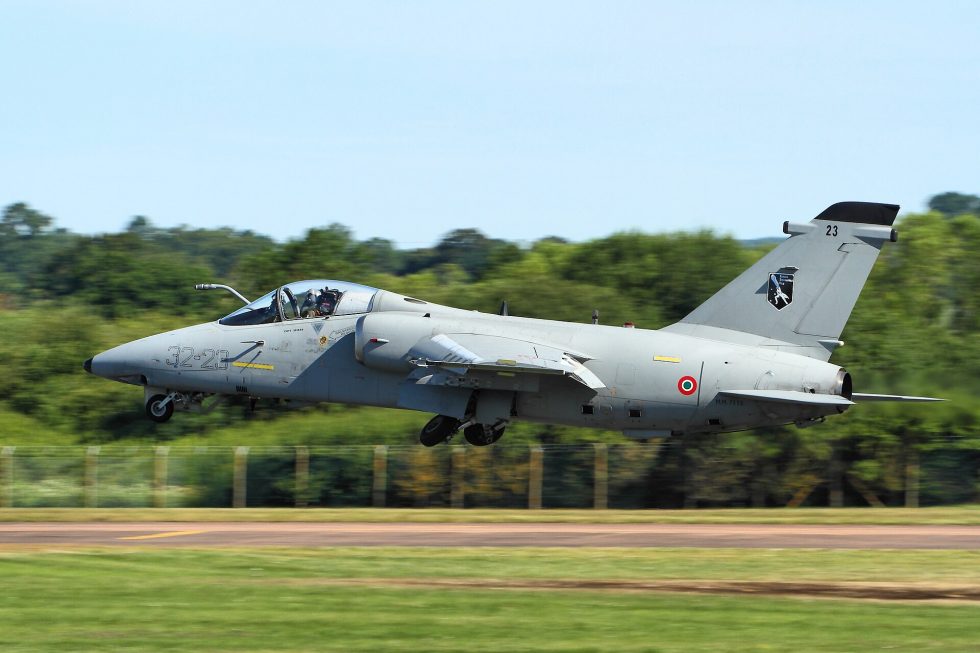
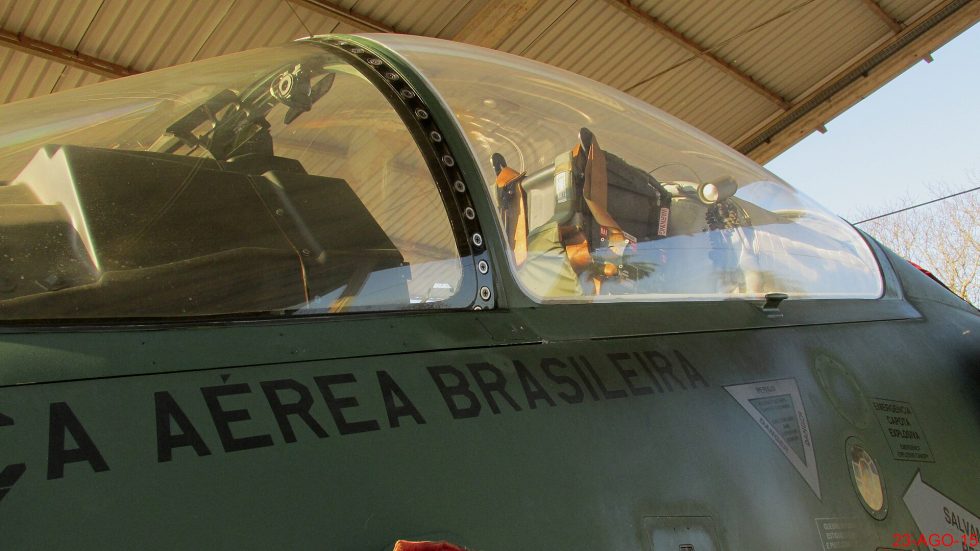
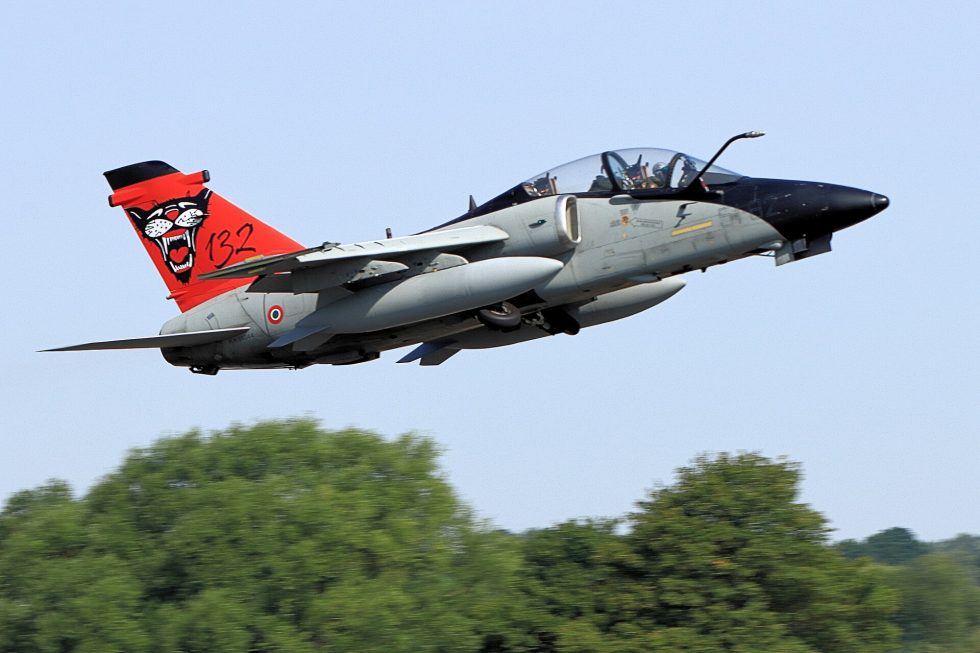
The AMX in pictures
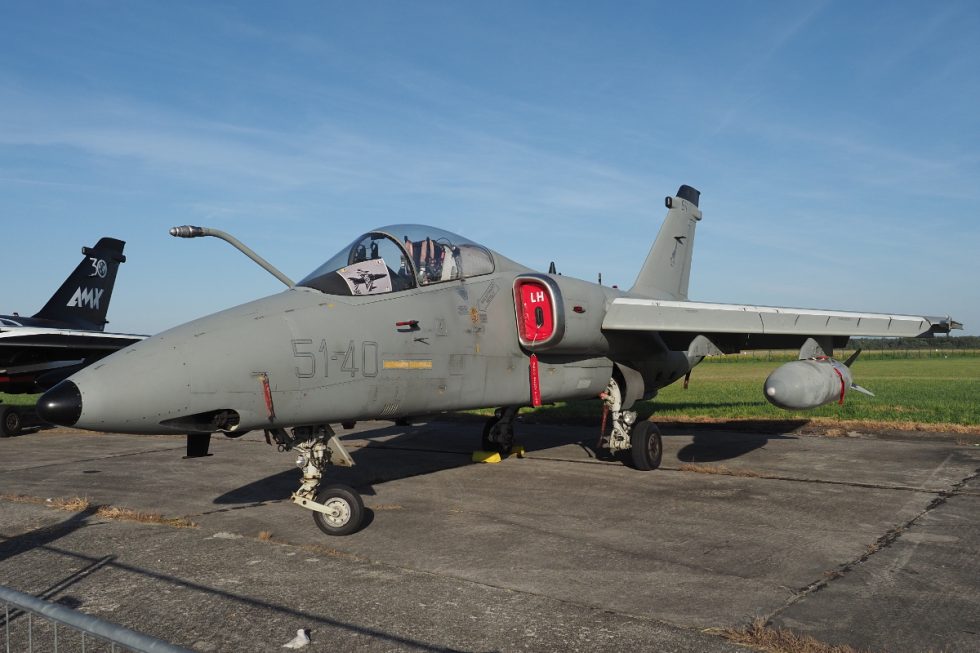
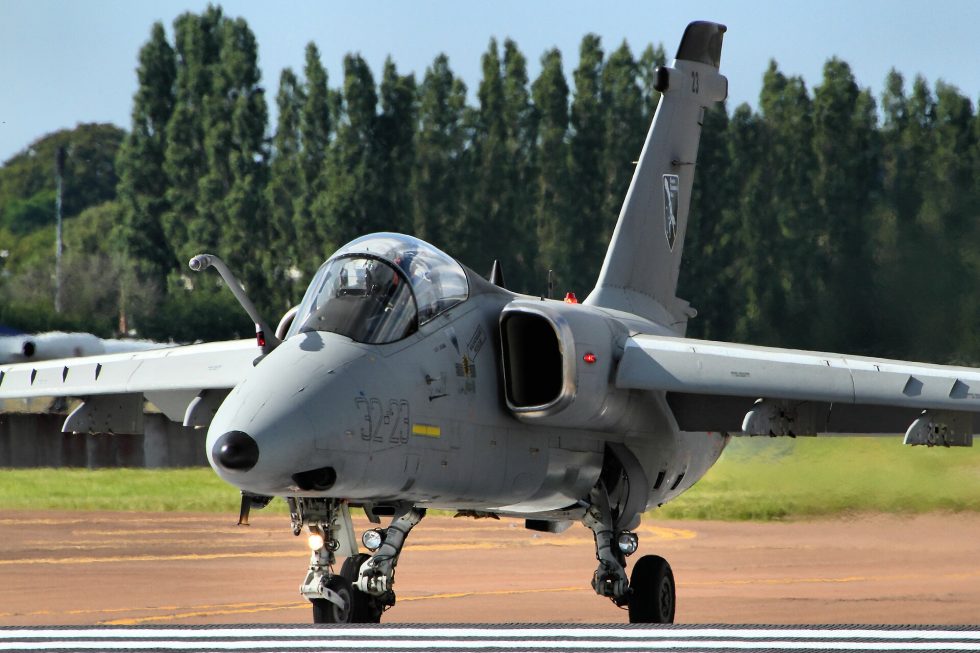
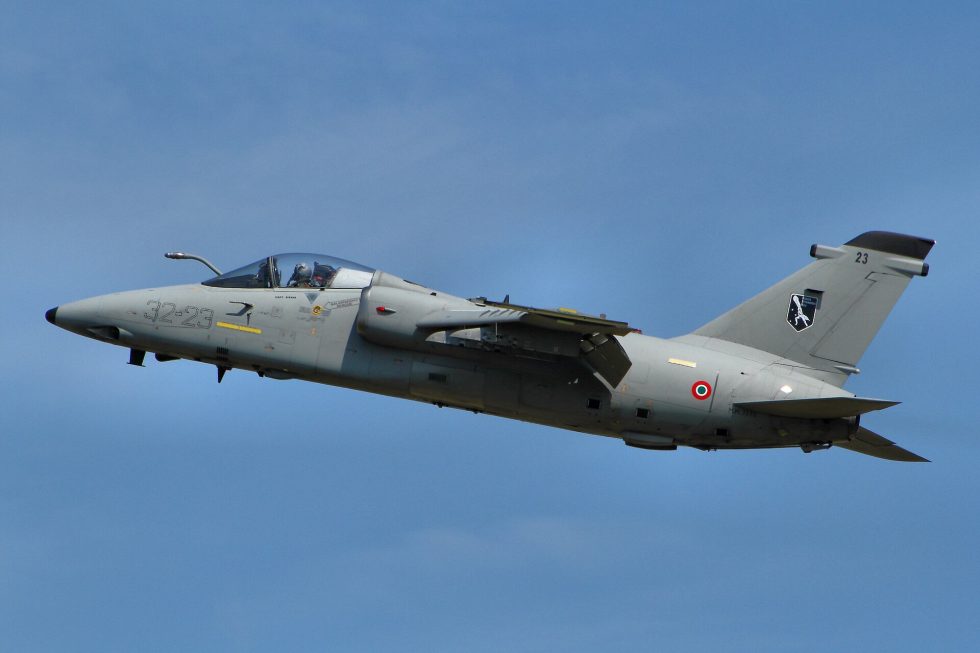
The AMX in motion
A dedicated AMX video feature is coming soon. In the meantime, explore the gallery above and the stories from Italian and Brazilian service.
Where the AMX flew
The score that defines it
The AMX was never built to dogfight, and it has no air-to-air kills — that was never its job. Its record is written in close air support and reconnaissance across three conflicts, where it proved a stable, accurate and economical bomb-truck for two air forces.
Compare the combat record of every military aircraft. Figures as of July 2026.
Everything people ask about the AMX
Can I fly in an AMX?
What is the AMX International AMX?
Is the AMX supersonic?
Did the AMX ever see combat?
Why do Italian and Brazilian AMX aircraft have different cannons?
Why was Venezuela’s AMX order cancelled?
Is the AMX still in service?
You can’t fly the AMX.
These, you can.
Some legends only live in museums — others are fuelled and waiting. MiGFlug has put civilians in real military jet cockpits since 2004.
 Fly the L-39 AlbatrosThe world’s most-flown jet trainer — aerobatics included
 Fly the F-104 Starfighter“The missile with a man in it”
 Fly the MiG-21The Cold War’s most-produced jet
 Fly the T-33 Shooting StarAmerica’s first jet trainer
 Fly the DH VampireA piece of early jet history
 Fly the S.211Agile Italian jet trainer
 Fly the MB-326The classic Aermacchi jet
 Fly the MiG-15The Soviet legend of the Korean War
Continue the tour
Every fact, checked
- The Aviationist — “Ghiblis over the boot”Detailed history of the AMX in Italian service, including Kosovo operations and the reconnaissance role.
- The War Zone (TWZ)Italy’s 2024 retirement of the AMX and a retrospective on the type’s career.
- Vintage Aviation NewsThe AMX’s development, first flight and the Italian–Brazilian programme.
- Airforce TechnologyProgramme overview, powerplant, armament and variant reference data.
- Key MilitaryThe Italian AMX deployment to Herat, Afghanistan, and its ISAF missions.
- Aeronautica Militare (Italian Air Force)Official reference for AMX operators, units and the 2024 retirement.
- Força Aérea Brasileira (Brazilian Air Force)Official reference for the A-1 and the A-1M modernisation programme.
- Pickled WingsFeature on the AMX’s design philosophy and place in service.