
He 162 Volksjäger
Germany’s desperate wooden jet
A jet fighter of wood and desperation, designed in weeks and meant to be flown into battle by teenagers — the last, doomed idea of the Luftwaffe.
The He 162 Volksjäger: a jet built out of desperation
By late 1944 Germany was losing the air war and running out of everything — fuel, aluminium, trained pilots, time. Its answer was one of the strangest aircraft of the entire conflict: the Heinkel He 162 Volksjäger, or “People’s Fighter.” It was a small jet fighter made largely of wood, meant to be built in the thousands by unskilled labour and flown into battle by barely-trained Hitler Youth. It went from a paper requirement to its first flight in roughly ninety days.
That speed came at a terrible price. The design was selected on 25 September 1944; the prototype flew on 6 December. Four days later, in a demonstration before Nazi officials, the acidic wartime glue holding its wooden structure together failed, a wing came apart, and the aircraft broke up in the air, killing test pilot Gotthold Peter. The programme did not slow down.
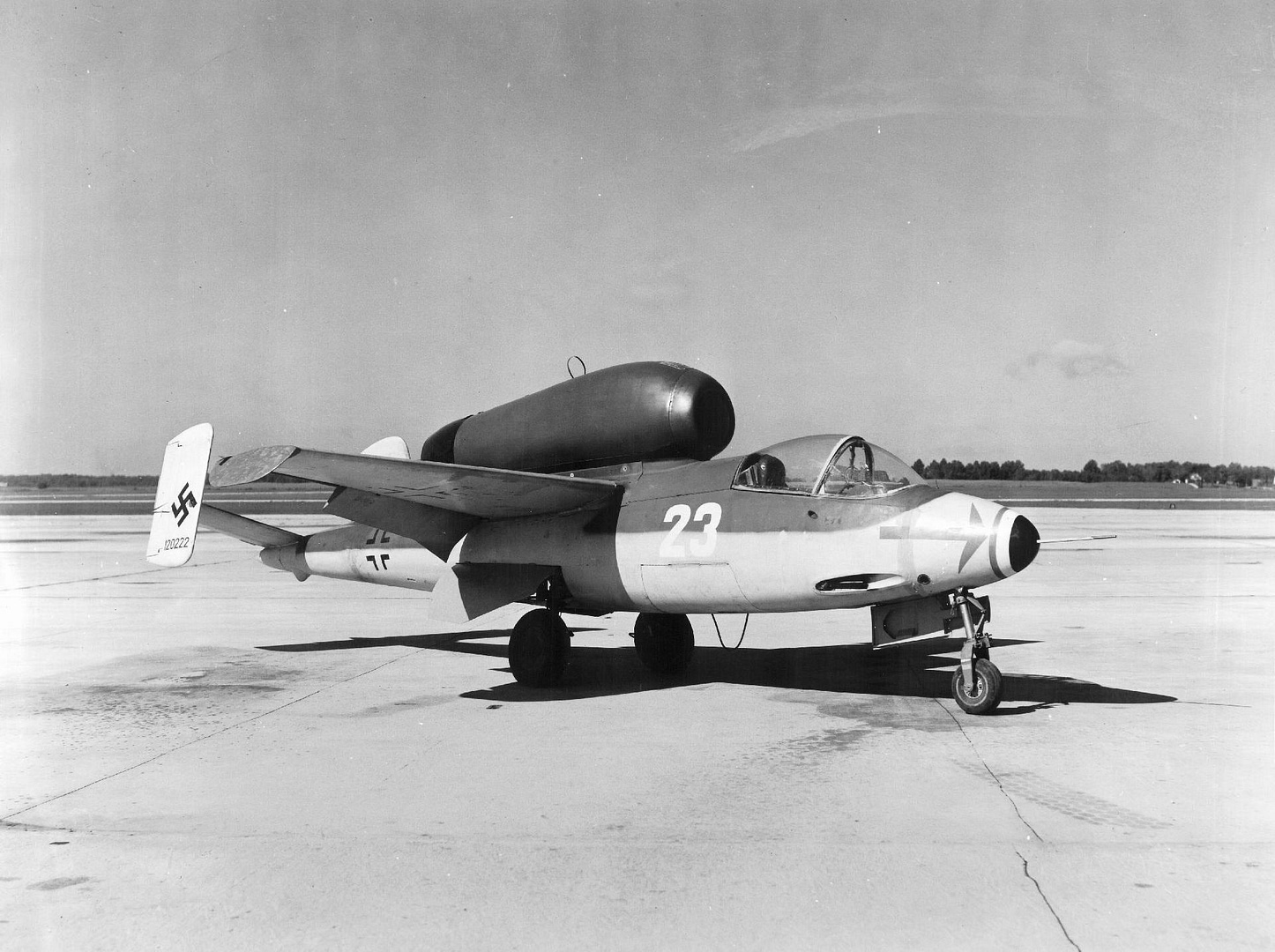
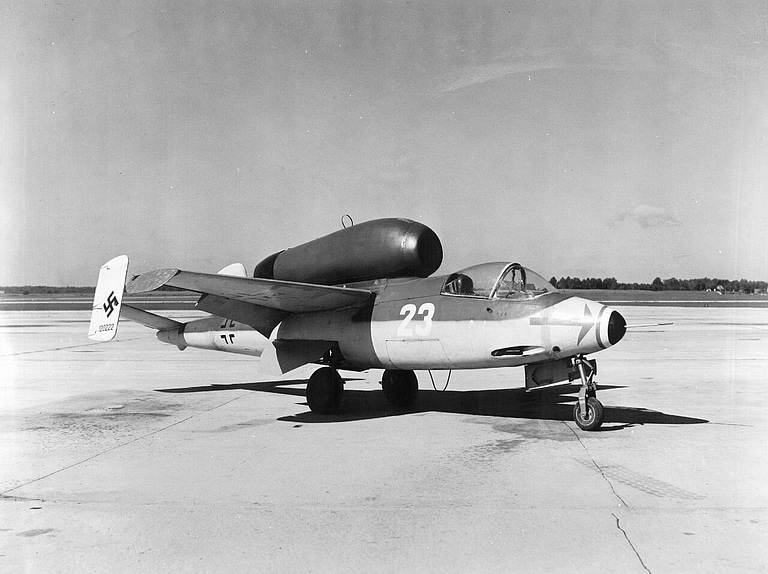
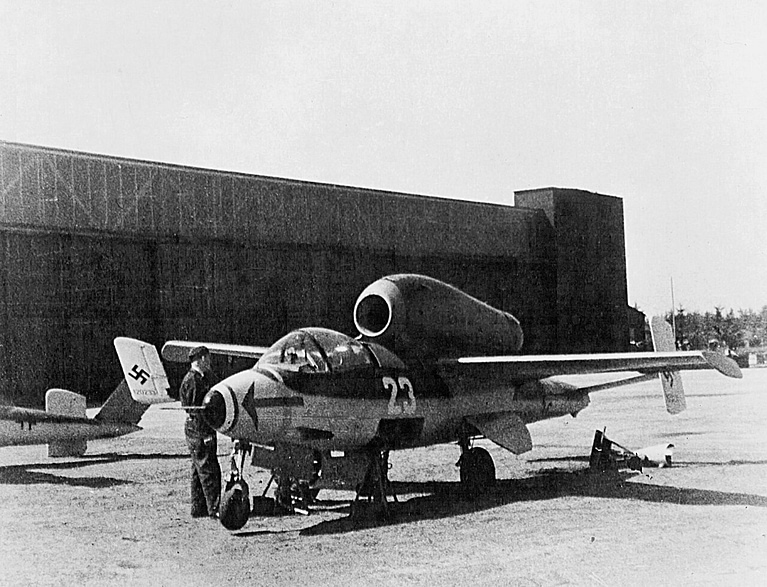
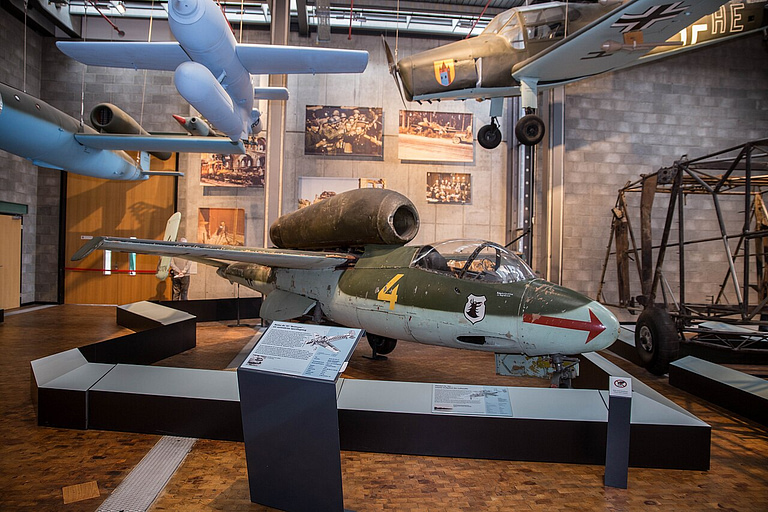
The He 162 was full of clever ideas rushed past the point of safety. Its single BMW 003 turbojet sat in a pod on top of the fuselage, behind the cockpit; it carried one of the first ejection seats fitted to a production fighter; and it was genuinely fast — over 500 mph, faster still with emergency boost. But it was unstable, unforgiving, and had barely thirty minutes of fuel. The plan to have teenagers fly it after a few glider lessons was, in the words of its own maker Ernst Heinkel, an “unrealistic notion” born of “unbalanced fanaticism.”
Only one unit, JG 1, ever took it into combat, in the last weeks of the war. On 19 April 1945 a He 162 pilot shot down an RAF fighter — and was himself killed the same day. In roughly three weeks of operations the unit lost thirteen aircraft and ten pilots; only two were shot down by the enemy. The rest fell to flameouts, structural failures and dead-stick landings after the fuel ran out.
Nearly a thousand He 162s stood on the assembly lines when Germany surrendered, many in underground factories, but only about 120 reached the squadrons and few ever flew. On 6 May 1945 the surviving JG 1 aircraft were handed over to the Allies at Leck, and examples went to Britain, America, France and the Soviet Union for study.
Flown after the war, the He 162 impressed the experts who could handle it — and terrified them at the thought of who was meant to. It was a flash of real engineering brilliance wrapped around an idea so desperate it could only have come from a country that had already lost.
01Why the He 162 Volksjäger was a symptom of defeat
The Volksjäger was never really a weapon; it was a confession. By the autumn of 1944 Germany could no longer out-fly the Allies, so it gambled on quantity: a jet so cheap and simple it could be churned out by the thousand in caves and flown by children. Every design choice — the wood, the single top-mounted engine, the minimal training — served that gamble, and every one of them made the aircraft more dangerous to its own pilots.
As engineering, the He 162 showed flashes of brilliance and even pointed toward the future with its ejection seat and light jet layout. As strategy, it was pure desperation — proof that no amount of clever design can rescue a cause that has already run out of fuel, time and men.
How the He 162 Volksjäger was built
Wood and glue
To save scarce metal and use unskilled labour, much of the He 162 was built from wood and plywood. It was a clever way to mass-produce a jet — until the special adhesive factory was bombed and the replacement glue turned acidic, dissolving the structure and killing the first test pilot.
The jet on its back
The single BMW 003 turbojet sat in a nacelle mounted on top of the fuselage, behind the cockpit — easy to build and service, and clear of debris on rough strips, but a source of aerodynamic trouble. The pilot sat ahead of it on one of the first ejection seats fitted to a production fighter.
Fast but feral
The He 162 was quick — over 800 km/h, more with boost — but it was also unstable, prone to Dutch roll and pitch problems that forced hasty fixes like drooped wingtips and nose ballast. With about thirty minutes of fuel and demanding handling, it was a handful even for experienced pilots.
02The He 162’s top-mounted engine and ejection seat
Perching the BMW 003 on top of the fuselage was a production engineer’s solution, not an aerodynamicist’s: it kept the engine away from the wooden structure, simplified installation and let the jet operate from rough surfaces without ingesting debris. The cost was a high thrust line and airflow interactions that added to the aircraft’s instability.
Ahead of the engine sat the pilot — on a compressed-air ejection seat, among the first fitted to a production fighter. It was used in anger at least four times in the He 162’s brief career, though several of those ejections still ended in the pilot’s death, at low altitude or when the canopy failed to clear.
03The He 162’s construction: wood, glue and the assembly caves
Germany’s aluminium was running short, so the He 162 was designed to be built largely of wood and other non-strategic materials by a workforce that included unskilled and forced labour, in dispersed and underground factories. The idea was to build a thousand a month.
It nearly worked, in volume terms — close to a thousand airframes were on the lines at the surrender. But the same haste that made mass production possible also produced the acidic-glue disaster that killed the first prototype’s pilot, and a stream of quality problems that dogged the type to the end.
Heinkel He 162 A-2 specifications
Airframe & Performance
- クルー
- 1
- 長さ
- 9.05 m (29 ft 8 in)
- 翼幅
- 7.20 m (23 ft 7 in)
- Max takeoff weight
- 2,800 kg (6,170 lb)
- Max speed
- 790–840 km/h (491–521 mph); up to ~905 km/h boosted
- サービス天井
- 12,000 m (39,000 ft)
- 上昇率
- ~23 m/s (4,610 ft/min)
- Endurance
- ~30 minutes
Propulsion, Armament & Programme
- エンジン
- 1 × BMW 003 turbojet, ~7.85 kN (1,760 lbf) — top-mounted
- 武装
- 2 × 20 mm MG 151/20 (A-2) or 2 × 30 mm MK 108 (A-1)
- 射出座席
- Yes — among the first in a production fighter
- First flight
- 6 December 1944
- Built
- ~320 completed (~120 delivered; ~1,000/month planned)
- Operator
- Nazi Germany (Luftwaffe — JG 1)
- Cost per flight hour
- Not recorded — a WWII type, retired 1945
- Survivors
- Several, in museums across Europe and North America
04The He 162’s numbers: built in weeks, flown for days
The He 162 is a study in the gap between production and reality. Design to first flight took about ninety days; the plan was to build a thousand a month, and close to a thousand airframes were on the assembly lines by May 1945. Yet only around 120 were delivered to units, and only a fraction of those ever flew a mission before the war ended. It was, in effect, mass-produced and barely used.
05The survivors: where the Volksjäger endures
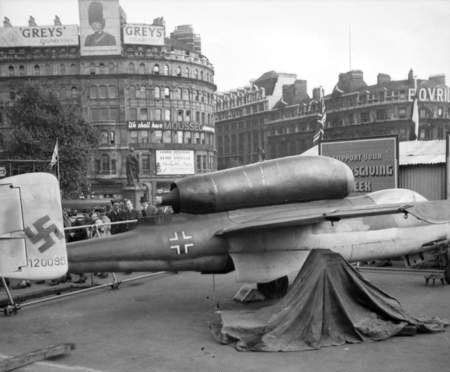
Because so many He 162s were captured intact at the surrender, the type survives unusually well for a late-war rarity. Complete examples are preserved at the Royal Air Force Museum and Imperial War Museum Duxford in Britain, the Smithsonian in the United States, the Canada Aviation and Space Museum, the Deutsches Technikmuseum in Berlin, Planes of Fame in California and the Musée de l’Air near Paris — scattered trophies of a fighter that never really got to fight.
The He 162 Volksjäger, from tender to surrender
The People’s Fighter is ordered
The Volksjäger requirement is issued; Heinkel’s design is chosen on 25 September, with days to spare.
First flight
The He 162 V1 makes its maiden flight — just about ninety days after selection.
Disaster
Days later, a glue failure breaks up the prototype in the air, killing test pilot Gotthold Peter.
To the squadron
Deliveries begin to JG 1 — the only unit ever to fly the type in combat.
One kill, one loss
A He 162 downs an RAF fighter, and its pilot is killed the same day.
A thousand on the lines
Nearly a thousand airframes stand unfinished as Germany surrenders; JG 1’s survivors are handed over at Leck on 6 May.
The trophies remain
Several He 162s survive in museums across Europe and North America.
The He 162 Volksjäger in eight stories
From paper to flight in three months
The He 162 was designed and flying in about ninety days.
The full story
A wing that came apart in the air
The rushed construction claimed the first prototype and its pilot.
The full story
The plan to send teenagers to war in jets
The Volksjäger was meant for barely-trained Hitler Youth.
The full story
An engine mounted where you’d least expect
The He 162’s single jet sat on top of the fuselage.
The full story
The He 162’s single day of victory
Its first confirmed kill and its pilot’s death came together.
The full story
An advanced idea, used in desperation
The He 162 had one of the first ejection seats — and needed it.
The full story
Mass production that never flew
Nearly a thousand He 162s were being built at the surrender.
The full story
What the experts thought
Britain’s greatest test pilot admired it — and feared for its pilots.
The full story
The He 162 Volksjäger in photographs
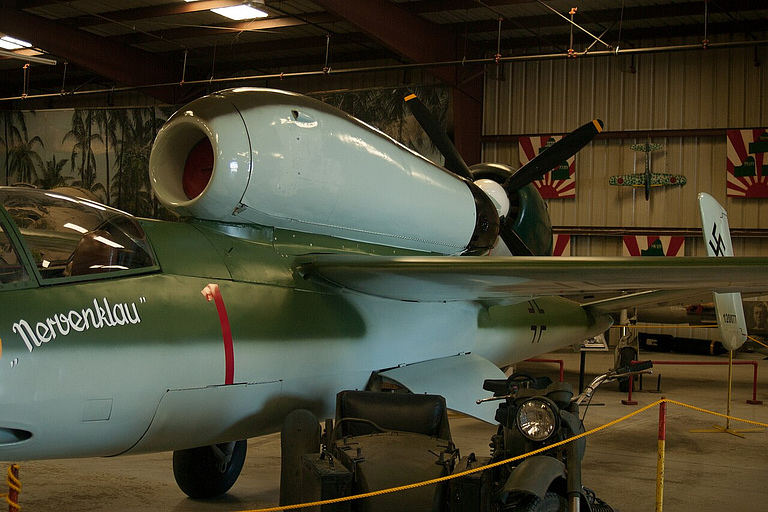
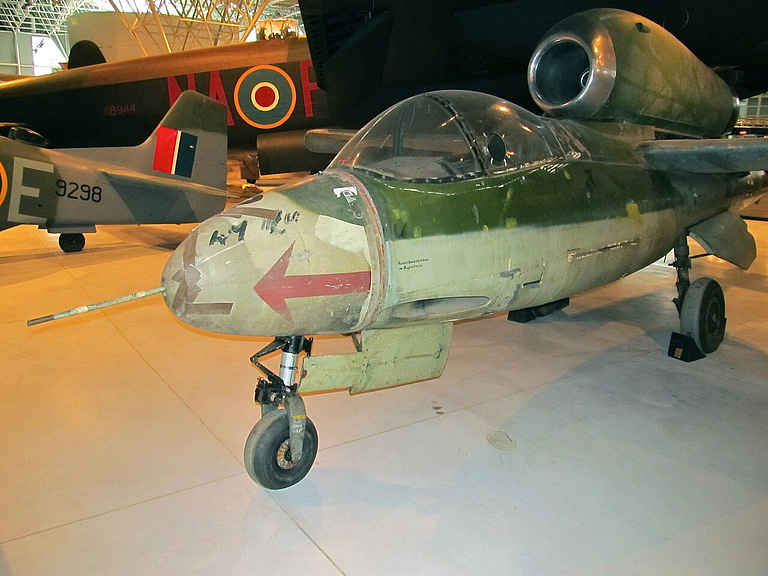
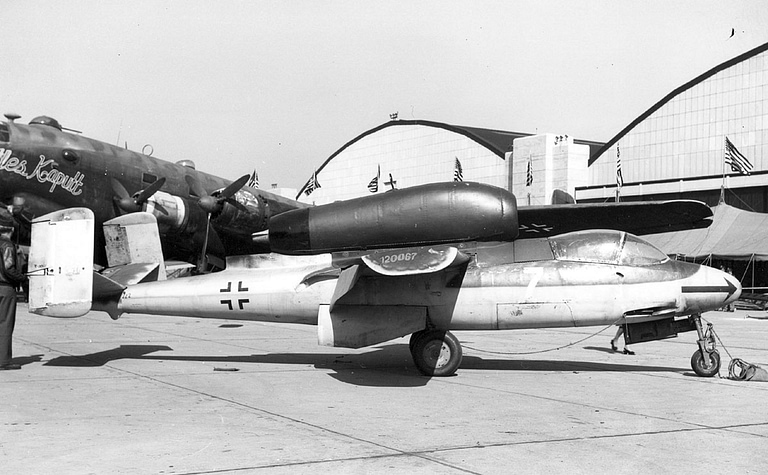
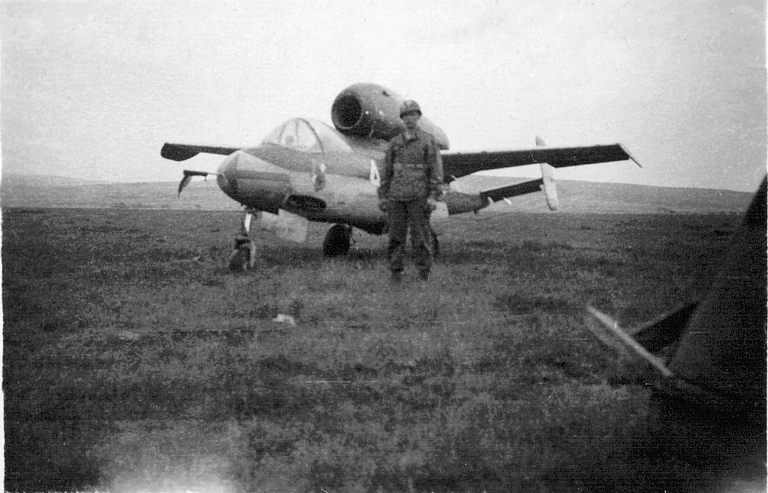
The People’s Fighter in combat
Rare wartime and museum footage of the He 162 — the little wooden jet with its engine on its back.
How the He 162 actually fared in its final weeks of combat (Showtime112).
Where the He 162 Volksjäger flew — and survives
Days of combat, then the end
The He 162 reached combat only in the war’s final weeks, with a single unit, and it killed more of its own pilots than of the enemy. Its record is measured in days.
Rushed from drawing board to squadron in months, the He 162 was undone by its own haste — glue failures, flameouts and fuel starvation. Compare the combat record of every military aircraft.
He 162 Volksjäger: your questions, answered
Can I fly in a Heinkel He 162?
No — every surviving He 162 is a static museum aircraft. But you can fly in a real military jet today: MiGFlug offers flights in genuine fighters and jet trainers such as the L-39 Albatros and the MiG-29. See migflug.com/flights-prices.
What was the Volksjäger?
The “People’s Fighter” — a late-1944 German programme for a cheap, mass-produced jet fighter to be built quickly and flown by minimally trained pilots. The He 162 was the result.
Why was the He 162 made of wood?
To save scarce strategic metals such as aluminium and to allow the aircraft to be built by unskilled and forced labour in dispersed factories.
Why was the engine mounted on top?
Placing the BMW 003 in a pod on top of the fuselage simplified construction and maintenance and kept it clear of debris — at the cost of extra aerodynamic instability.
Was it really meant to be flown by teenagers?
Yes. The plan was to train Hitler Youth glider pilots to fly it after minimal instruction — an idea even Ernst Heinkel condemned as unrealistic fanaticism.
Did the He 162 see combat?
Only just. One unit, JG 1, flew it in the last weeks of the war, scoring one confirmed kill while losing far more aircraft and pilots to accidents than to the enemy.
How many He 162s survive?
Several — preserved in museums in Britain, the United States, Canada, Germany and France, unusually many for such a late-war type, because so many were captured intact.
You can’t fly the He 162 Volksjäger.
These, you can.
The Volksjäger belongs to a desperate, vanished moment — but you can still strap into a genuine military jet. MiGFlug flies civilians in real fighters and jet trainers around the world.
 Fly the L-39 AlbatrosThe world’s most-flown jet trainer — aerobatics included
 Fly the F-104 Starfighter“The missile with a man in it”
 Fly the MiG-21The Cold War’s most-produced jet
 T-33シューティングスターを操縦しようAmerica’s first jet trainer
 Fly the DH VampireA piece of early jet history
 Fly the S.211Agile Italian jet trainer
 Fly the MB-326The classic Aermacchi jet
 Fly the MiG-15The Soviet legend of the Korean War
Related aircraft
Where this chapter comes from
- Smithsonian National Air and Space MuseumHolds a He 162 and documents the Volksjäger programme.
- Royal Air Force MuseumOn the captured He 162s brought to Britain and the type’s development.
- Imperial War MuseumContext on the collapsing German air war the He 162 was meant to reverse.
- Deutsches Technikmuseum / Deutsches MuseumGerman technical history of the He 162 and its BMW 003 engine.
- MiGFlug — AfterburnerMiGFlug’s aviation magazine, on the Luftwaffe’s wonder-weapons and the dawn of the jet age.
Figures for the He 162 — production totals, top speed and combat losses — vary between sources; the most widely cited values are used here.