
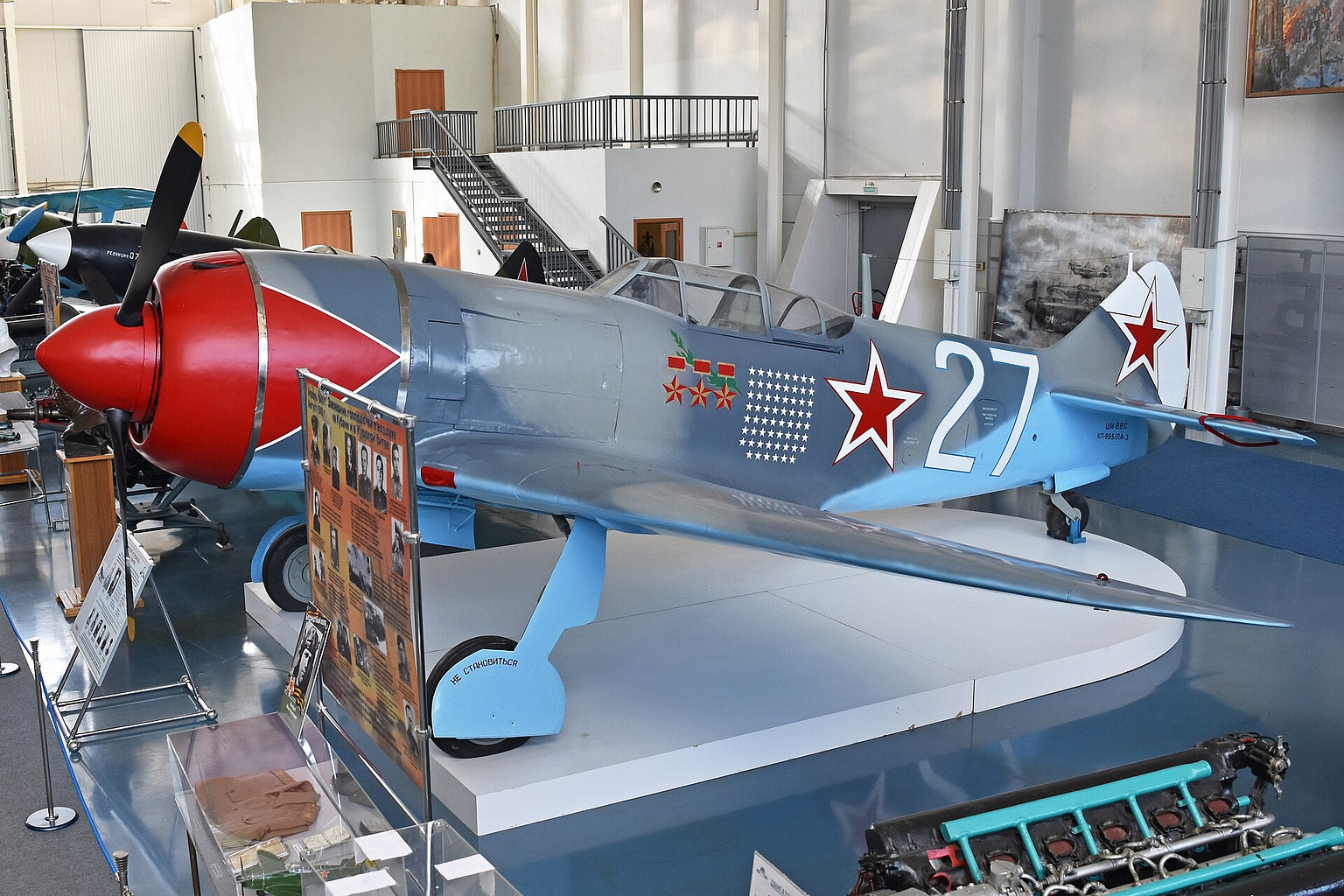
Lavochkin La-7
The wooden fighter that mastered the Eastern Front
A radial-engine air-superiority fighter refined from the wooden LaGG-3 and La-5 — fast and deadly at low altitude, built largely of wood to beat a metal shortage, and the mount of the top Allied ace of the war, Ivan Kozhedub.
The wooden fighter that caught up with Germany
The La-7 began life as one of the least-loved aircraft in the Soviet inventory. Its ancestor, the LaGG-3 of 1940, was an all-wooden fighter built around a Klimov inline engine — sturdy but heavy and underpowered, so disliked that pilots joked its initials stood for a “varnished, guaranteed coffin.” Semyon Lavochkin’s design bureau was close to losing its production lines. The rescue came in late 1941, when the team grafted a bulky Shvetsov M-82 (ASh-82) 14-cylinder radial onto the LaGG-3 airframe in place of the inline. The transformation was dramatic, and the result became the La-5.
The La-5 reached the front around the fighting at Stalingrad in 1942; the fuel-injected La-5FN followed in 1943 and, at Kursk, showed it could trade blows with the Messerschmitt Bf 109G and Focke-Wulf Fw 190. Lavochkin then cleaned up the design — better aerodynamics, lighter structure with metal wing spars where scarce aluminium allowed, and the more powerful ASh-82FN — to produce the La-7 in 1944. It is widely rated one of the best Soviet piston fighters of the war: exceptional at the low and medium altitudes where most Eastern Front air combat took place, and a match for late-war German types down low, if less commanding at high altitude.
Above all, the La-7 is bound to one man. Ivan Kozhedub, the highest-scoring Allied ace of the war with around 62 victories, flew La-5s and La-7s throughout — scoring his final 17 kills in the La-7 and, on 19 February 1945, reportedly downing a Messerschmitt Me 262 jet. He was never shot down. Roughly 5,750 La-7s were built before production ended in 1946, most of them still largely of wood; postwar, Czechoslovakia was among the few foreign operators before jets swept the type aside in the early 1950s.
01The Lavochkin La-7’s wooden airframe: how a metal shortage shaped a front-line fighter
The Soviet Union entered the war desperately short of aviation-grade aluminium, so its fighter designers leaned on what they had in abundance: wood. The LaGG-3 and the La-5/La-7 that grew from it used delta-drevesina (“delta wood”) — birch plywood impregnated with resin and compressed into a tough, fire-resistant material — for much of the structure, with fabric-covered control surfaces. The approach made the fighters cheap and easy to mass-produce in factories staffed largely by unskilled labour, and it kept scarce metal for engines and other aircraft.
As the aluminium supply eased later in the war, Lavochkin worked metal back into the design — notably metal wing spars on the La-7 — which cut weight and improved strength. But the La-7 remained, to the end, a substantially wooden aeroplane. Its wartime record is a reminder that a fighter’s materials matter less than how well the whole package is matched to the fight it has to win.
What makes it special
Radial power and low-altitude punch
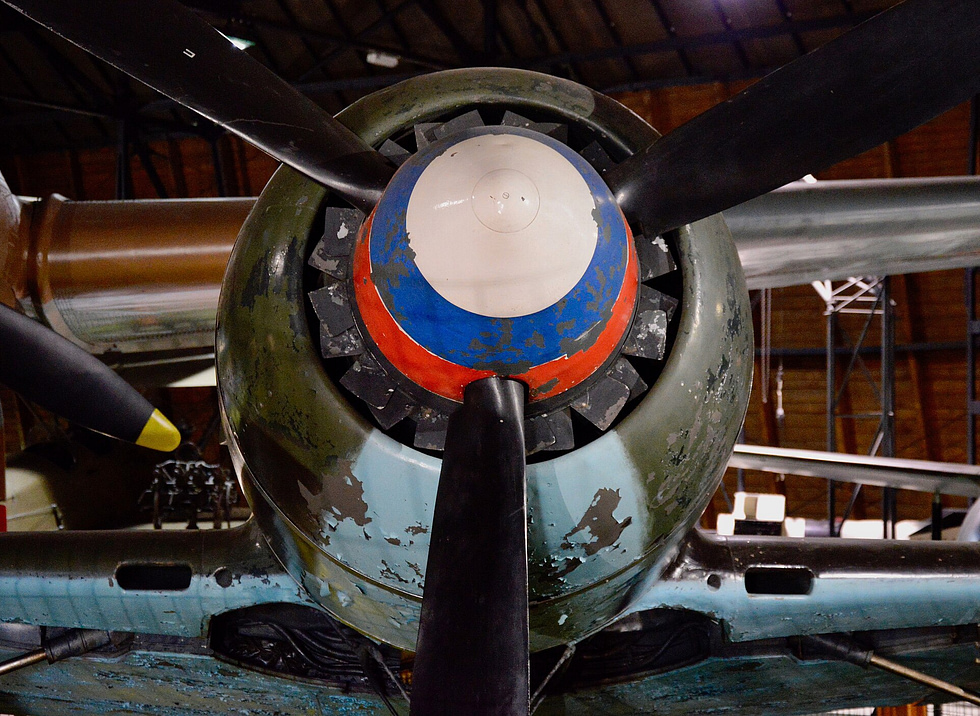
At the La-7’s heart is the Shvetsov ASh-82FN, a fuel-injected 14-cylinder air-cooled radial of about 1,850 hp. Air-cooling made it robust and hard to kill — no vulnerable coolant system to be shot away — and it gave the light airframe roughly 661 km/h plus strong climb and acceleration low down, exactly where most Eastern Front dogfights were decided.
A fighter built mostly of wood
Facing a chronic aluminium shortage, Lavochkin built the La-5/La-7 largely from resin-impregnated birch plywood (“delta wood”) and fabric, adding metal spars on the La-7 as supplies improved. Cheap, robust and easy to mass-produce, the design let Soviet factories turn out roughly 5,750 La-7s in two years of war.
Cannon firepower — and Kozhedub’s record
The La-7 carried its guns in the nose: usually two 20 mm ShVAK cannon, with a heavier three-cannon version using 20 mm B-20 guns built in smaller numbers. Concentrated, hard-hitting and accurate, that armament served the war’s top Allied ace, Ivan Kozhedub, through his final and deadliest campaigns.
02The La-7’s ASh-82FN radial: why air-cooling suited the Eastern Front
Most of the Luftwaffe’s single-seat fighters on the Eastern Front used liquid-cooled inline engines whose radiators and coolant lines were a battle-damage weak point. The La-7’s ASh-82FN radial had no such plumbing: an air-cooled engine could keep running with cylinders shot out, a real advantage in the low-level, close-range brawls typical of the front. Fuel injection (the “FN”) let it perform manoeuvres that would starve a carburetted engine, and its power-to-weight suited a light fighter optimised for the thick air below about 5,000 metres. The trade was drag and forward view over a slim inline — a price the Lavochkin design absorbed well.
03The Lavochkin La-7’s guns: two cannon, sometimes three
Standard La-7s were armed with two synchronised 20 mm ShVAK cannon firing through the propeller arc — lighter than some rivals but concentrated on the centreline, which made aiming simple and hits telling. A three-cannon variant armed with the newer 20 mm Berezin B-20 was produced in more limited numbers, boosting weight of fire at some cost in complexity. Sources differ on exactly how many three-gun aircraft were built, so the type is best described as carrying two to three 20 mm cannon depending on the batch.
Full specifications
Airframe & Performance
- クルー
- 1
- 長さ
- ~8.60 m
- 翼幅
- ~9.80 m
- 身長
- ~2.54 m
- 空虚重量
- ~2,610 kg
- Max takeoff weight
- ~3,300 kg
- Max speed
- ~661 km/h at ~6,000 m
- サービス天井
- ~10,450 m
- 範囲
- ~635 km
- 上昇率
- ~16–18 m/s
Propulsion & Armament
- エンジン
- 1 × Shvetsov ASh-82FN
- Configuration
- 14-cylinder air-cooled radial
- Power
- ~1,850 hp (~1,380 kW)
- 武装
- 2–3 × 20 mm cannon (ShVAK / B-20)
- External load
- Light bombs / rockets (some aircraft)
- First flight
- Early 1944 (La-7)
- Built
- ~5,750 (1944–1946)
- Unit cost
- No public market price (Soviet state production)
- Cost per flight hour
- No reliable public figure
04The Lavochkin La-7’s cost: why no dollar price exists
The La-7 was a Soviet wartime state product, built to a central plan and accounted for in rubles and labour-hours rather than sold on any open dollar market. No meaningful flyaway unit price or cost-per-flight-hour figure exists in the public record, and any precise dollar number attached to the type should be treated as a modern estimate rather than a sourced fact. What the record does show is the design intent: a fighter cheap and simple enough to build in the thousands from wood, at a time when every ton of aluminium was needed elsewhere.
From a wooden coffin to a war-winning fighter
The LaGG-3 enters production
Lavochkin, Gorbunov and Gudkov field an all-wooden inline-engined fighter — robust but heavy and underpowered.
A radial engine changes everything
Late in the year Lavochkin grafts the Shvetsov M-82 radial onto the LaGG-3 airframe, transforming its performance.
The La-5 reaches the front
The re-engined fighter enters combat around the fighting at Stalingrad and quickly proves its worth.
La-5FN at Kursk
The fuel-injected La-5FN shows it can trade blows with the Bf 109G and Fw 190 at low and medium altitude.
The La-7 enters service
An aerodynamically refined airframe with the ASh-82FN engine reaches front-line regiments — among the best Soviet piston fighters.
Kozhedub and the jet
On 19 February, Ivan Kozhedub reportedly downs a Messerschmitt Me 262 in his La-7; the war ends with the type at its peak.
Production ends
Roughly 5,750 La-7s have been built; Lavochkin turns to the all-metal La-9 and La-11.
Postwar service
Czechoslovakia and a handful of other operators fly the La-7 until jet fighters render it obsolete.
From the front line: twelve La-7 stories
The “varnished coffin”
Pilots joked the LaGG-3’s initials stood for a lacquered, guaranteed coffin.
Read the full story
A radial where an inline had been
Fitting a bulky Shvetsov M-82 radial to the slim LaGG-3 airframe transformed it.
Read the full story
Baptism over Stalingrad
The re-engined fighter entered combat during the fighting around Stalingrad.
Read the full story
The La-5FN proves itself
The fuel-injected La-5FN could trade blows with the best German fighters.
Read the full story
The pilot who was never shot down
Ivan Kozhedub scored around 62 victories and was never lost in combat.
Read the full story
A piston fighter downs a jet
On 19 February 1945 Kozhedub reportedly shot down an Me 262 jet in his La-7.
Read the full story
Carved from wood
A chronic aluminium shortage made the La-7 a largely wooden aircraft.
Read the full story
Two cannon in the nose
The La-7 usually carried two 20 mm cannon, with a three-gun version built too.
Read the full story
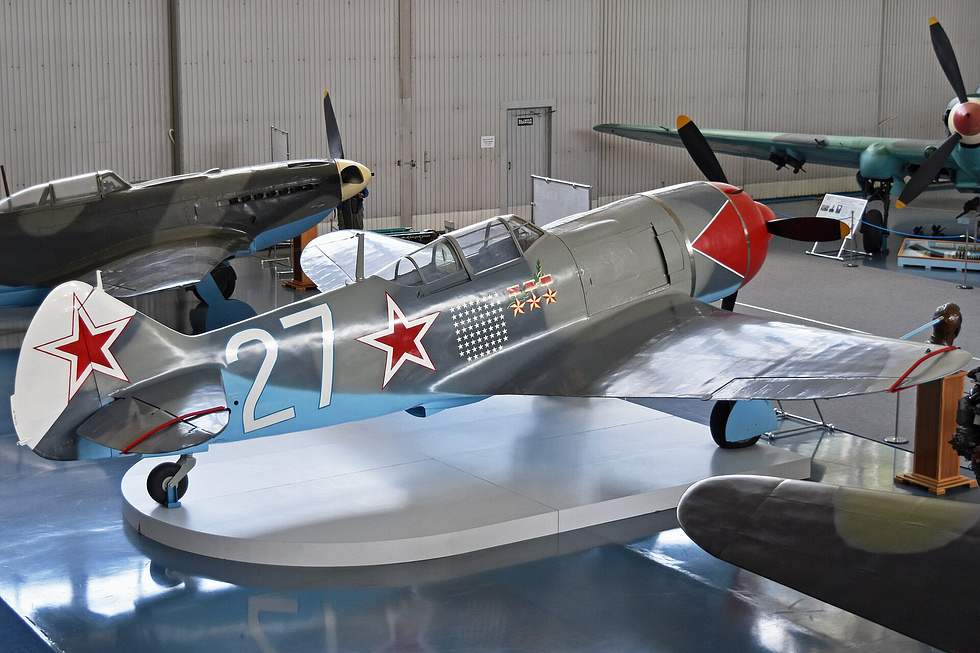
Kozhedub’s golden-star La-7
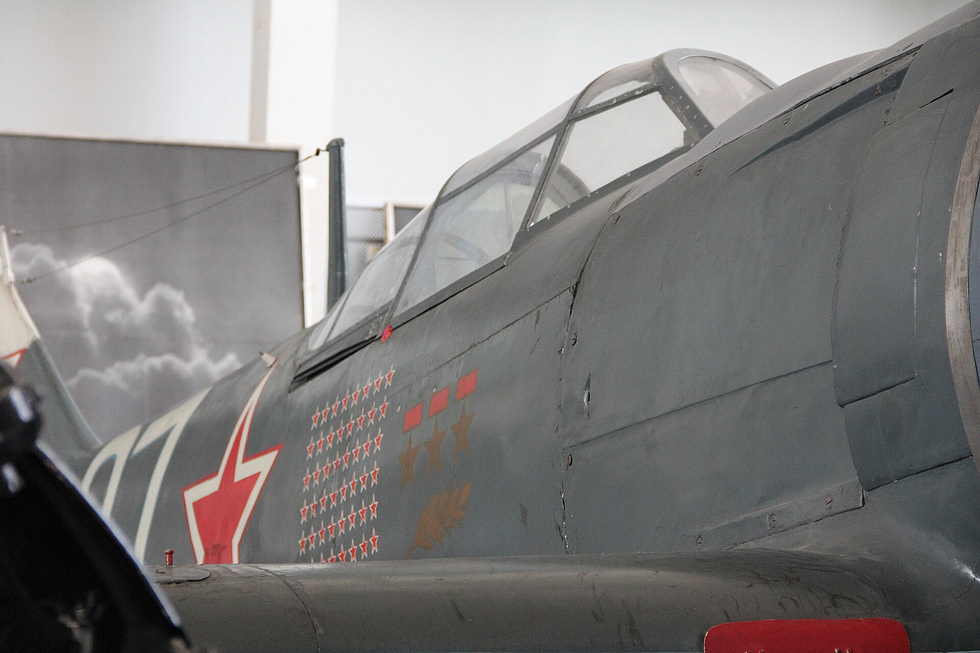
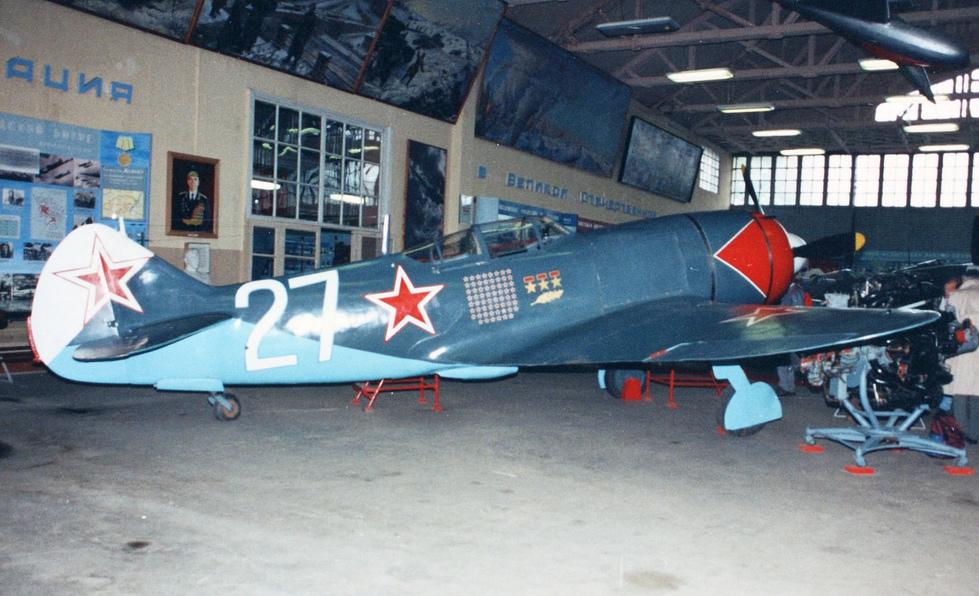
His preserved La-7, side number 27, survives at the Monino air-force museum.
Read the full story
Against the Focke-Wulf
Down low, the La-7 could out-turn and out-accelerate its German rivals.
Read the full story
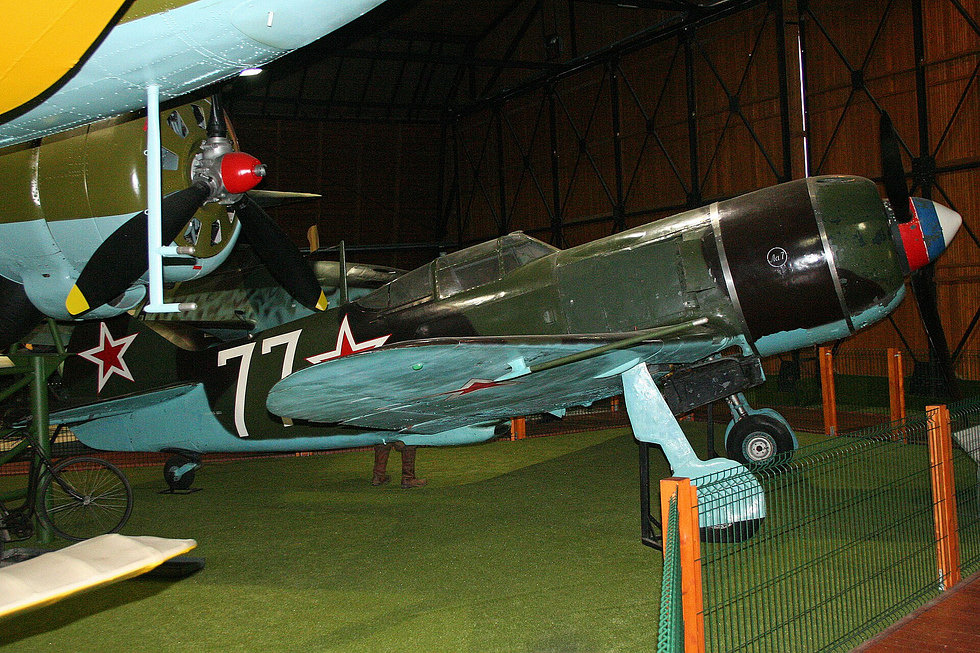
The Czechoslovak La-7
Czechoslovakia was among the few foreign operators after the war.
Read the full story
From La-7 to La-9 and La-11
The wooden La-7 led directly to Lavochkin’s all-metal postwar fighters.
Read the full story
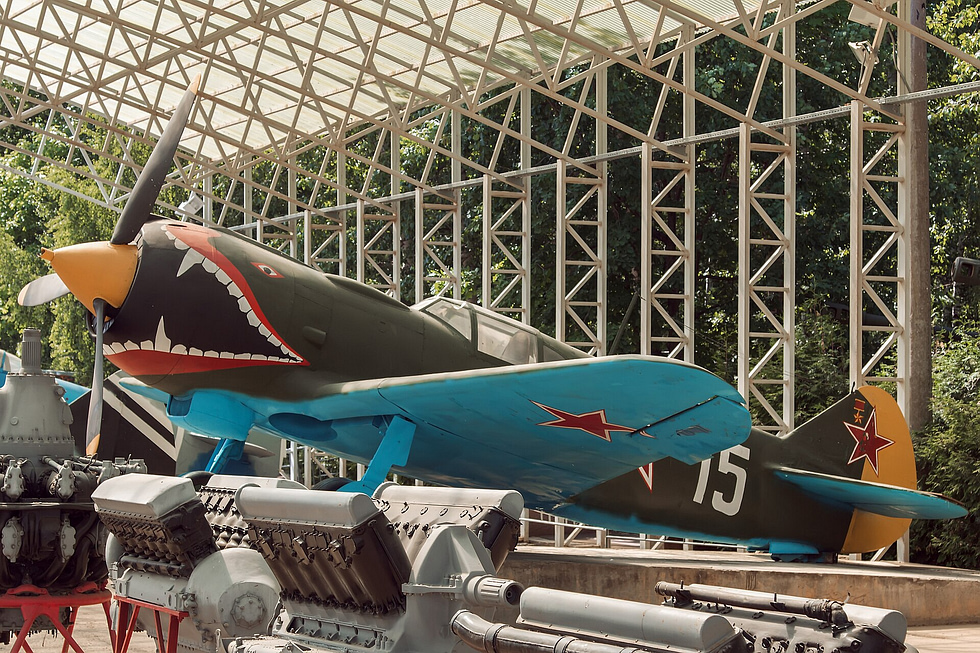
The La-7 in pictures
The La-7 in motion
Video coming soon — we are sourcing a high-quality, authoritative documentary clip on the Lavochkin La-7 and will add it here.
Where the La-7 flew
The score that defines it
The La-7 was a front-line dogfighter, not a specialist, and its record is written across the Eastern Front of 1944–45 — and above all in the logbook of one pilot. Ivan Kozhedub flew Lavochkin fighters throughout his career, and the La-7 carried him through his final, deadliest campaigns to become the highest-scoring Allied ace of the war.
Compare the combat record of every military aircraft. Figures as of July 2026.
Everything people ask about the La-7
Can I fly in a La-7?
What made the Lavochkin La-7 special?
Was the La-7 really made of wood?
Who was Ivan Kozhedub?
Did a La-7 shoot down a jet?
How did the La-7 compare to the Bf 109 and Fw 190?
What is the difference between the La-5 and La-7?
Is the La-7 still flying today?
You can’t fly the La-7.
These, you can.
Some legends only live in museums — others are fuelled and waiting. MiGFlug has put civilians in real military jet cockpits since 2004.
 Fly the L-39 AlbatrosThe world’s most-flown jet trainer — aerobatics included
 Fly the F-104 Starfighter“The missile with a man in it”
 Fly the MiG-21The Cold War’s most-produced jet
 T-33シューティングスターを操縦しようAmerica’s first jet trainer
 Fly the DH VampireA piece of early jet history
 Fly the S.211Agile Italian jet trainer
 Fly the MB-326The classic Aermacchi jet
 Fly the MiG-15The Soviet legend of the Korean War
Continue the tour
Every fact, checked
- Military Machine — WW2 Aircraft Encyclopedia: La-7Specifications, production numbers and combat-performance summary.
- MilitaryFactory — Lavochkin La-7Dimensions, weights, powerplant and armament reference.
- WW2-Weapons — Lavochkin La-5 & La-7Development history from the LaGG-3 through the La-5FN to the La-7.
- World War II Database — La-7Service history and technical data for the type.
- The National Interest — Kozhedub and his LavochkinsIvan Kozhedub’s career flying the La-5 and La-7.
- Russia Beyond — Ivan KozhedubBiographical detail on the top-scoring Allied ace of the war.
- Kyiv Post — Ivan KozhedubAccount of the Me 262 claim and his combat record.
- MiGFlug Afterburner — Ivan KozhedubMiGFlug’s own profile of the ace and his Lavochkin fighters.