
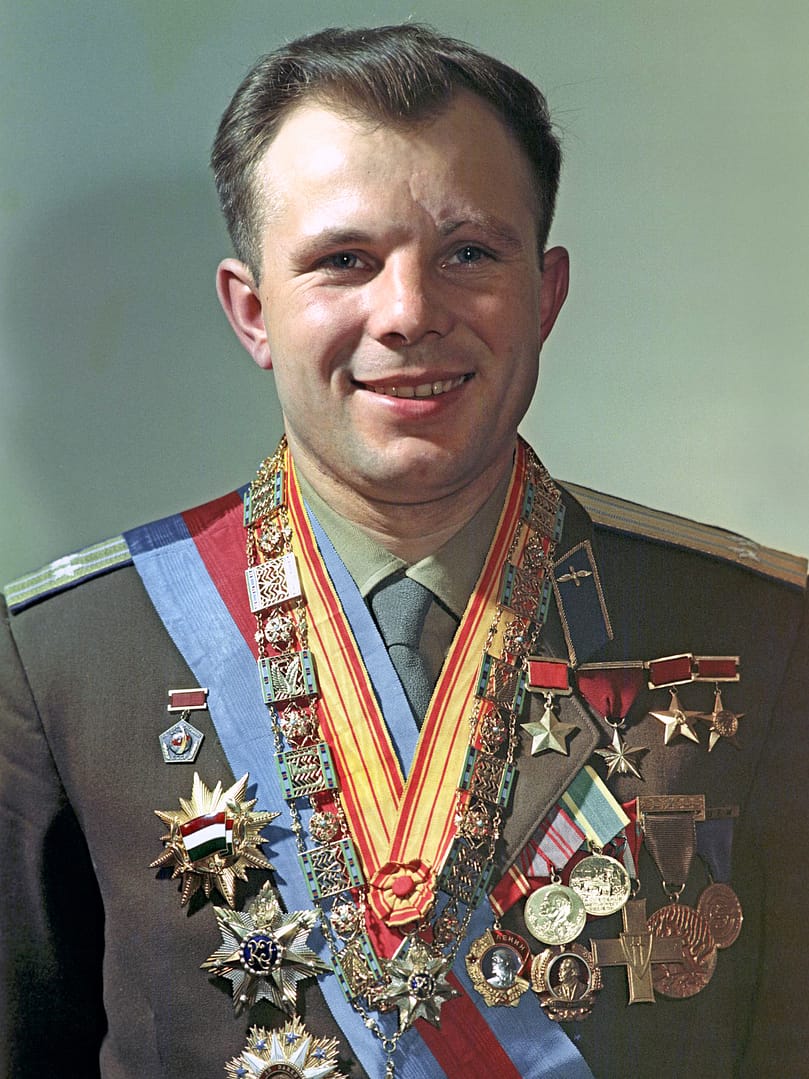
On 12 April 1961, at 06:07 GMT, a Vostok-K rocket lifted off from Baikonur carrying Senior Lieutenant Yuri Alekseyevich Gagarin of the Soviet Air Force into a 169-by-327 kilometre orbit around the Earth. The flight lasted 108 minutes. Gagarin’s last word before liftoff, transmitted on UHF to the bunker at Site 1, was “Поехали” — “Poyekhali,” let’s go. By the time he landed, by parachute, in a Saratov field two hours later, he was the most famous human being alive.
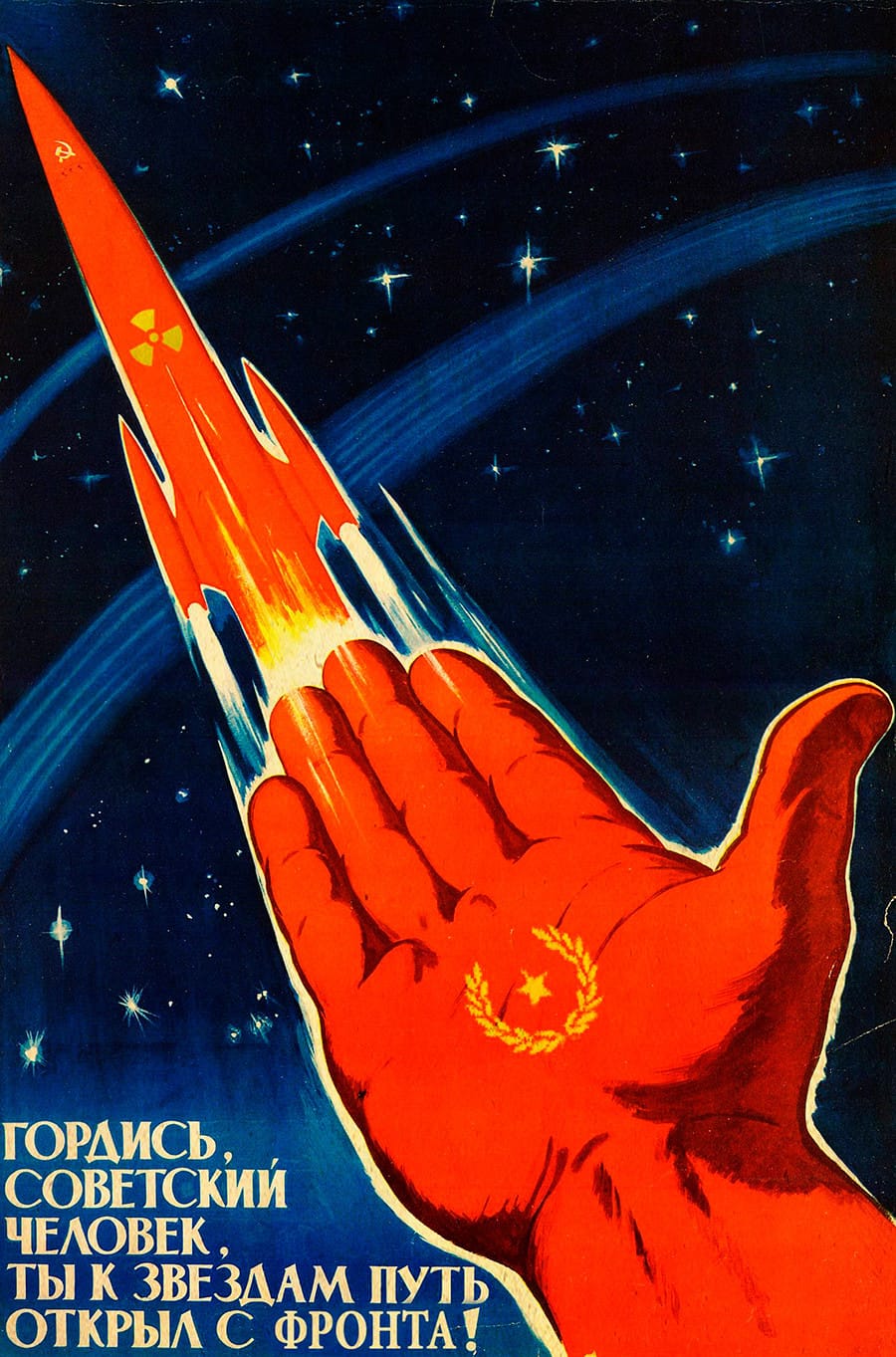
The Soviet propaganda apparatus had been preparing for this moment for ten years. When it arrived, the apparatus delivered the campaign of its life. Gagarin’s face — clean-shaven, peasant, smiling, the Soviet Order of Lenin pinned to his uniform — became, almost overnight, one of the most-reproduced human likenesses in the history of mass media. Stamps in every Eastern Bloc country. Posters in classrooms from Phnom Penh to Havana. The 1960s were the decade Soviet aviation propaganda became Soviet space propaganda, and reached its apex.
Quick Facts
Yuri Gagarin — Vostok 1: 12 April 1961, 108 minutes in orbit
Gherman Titov — Vostok 2: 6 August 1961, 25 hours in orbit (first day in space)
Valentina Tereshkova — Vostok 6: 16 June 1963, first woman in space (callsign “Chaika” — seagull)
Alexei Leonov — Voskhod 2: 18 March 1965, first spacewalk (12 minutes outside the capsule)
Gagarin’s catchphrase: “Поехали!” (Let’s go)
Gagarin’s death: 27 March 1968, MiG-15UTI crash, Kirzhach (training flight)

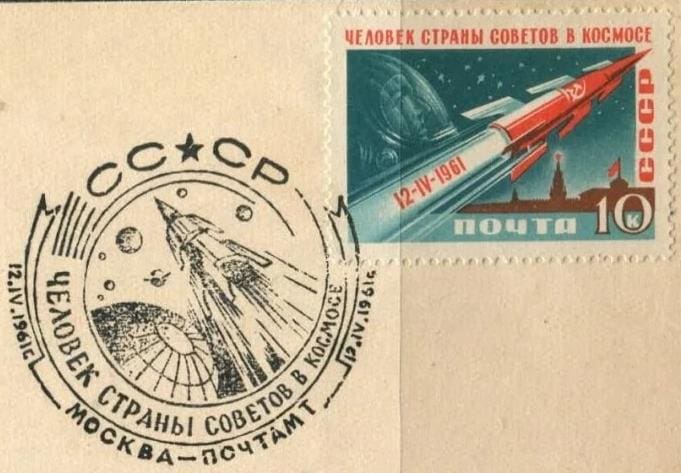
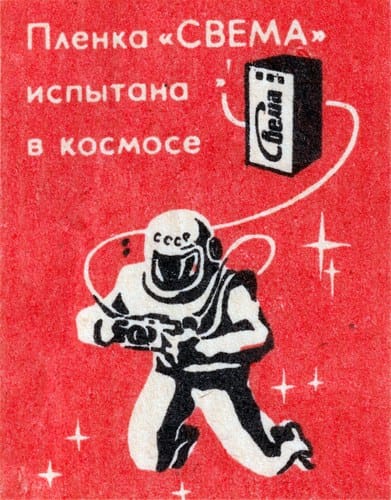
“Poyekhali”
The propaganda machinery activated within hours. Pravda rushed out a special edition on 12 April, and the next day’s front pages across the Soviet Union carried one message: Chelovek v kosmose — A Man in Space. By 13 April every Soviet city had organised public celebrations. On 14 April Khrushchev personally embraced Gagarin at Vnukovo Airport, where the cosmonaut arrived aboard an Il-18, and the Presidium of the Supreme Soviet named him a Hero of the Soviet Union the same day.
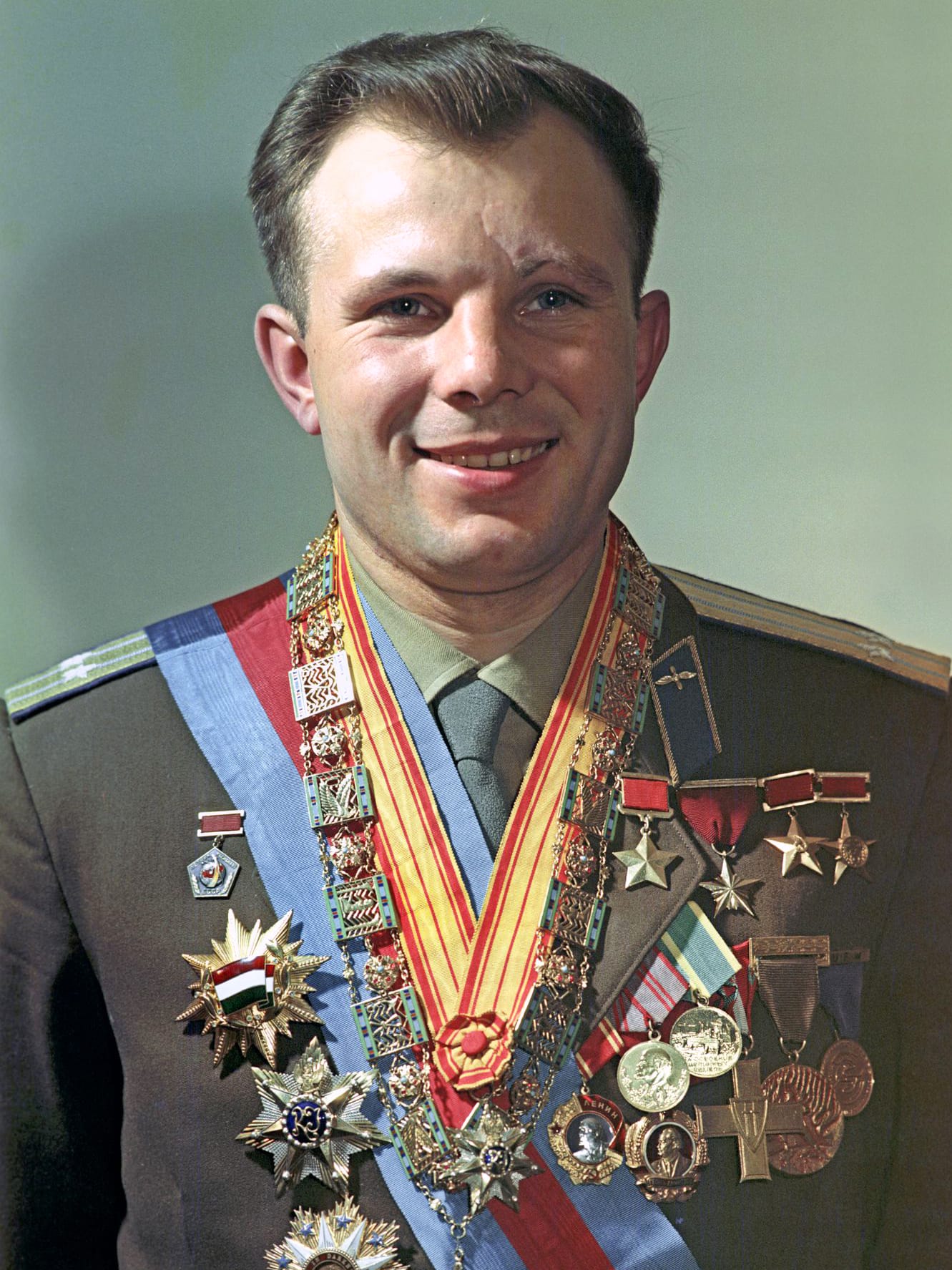
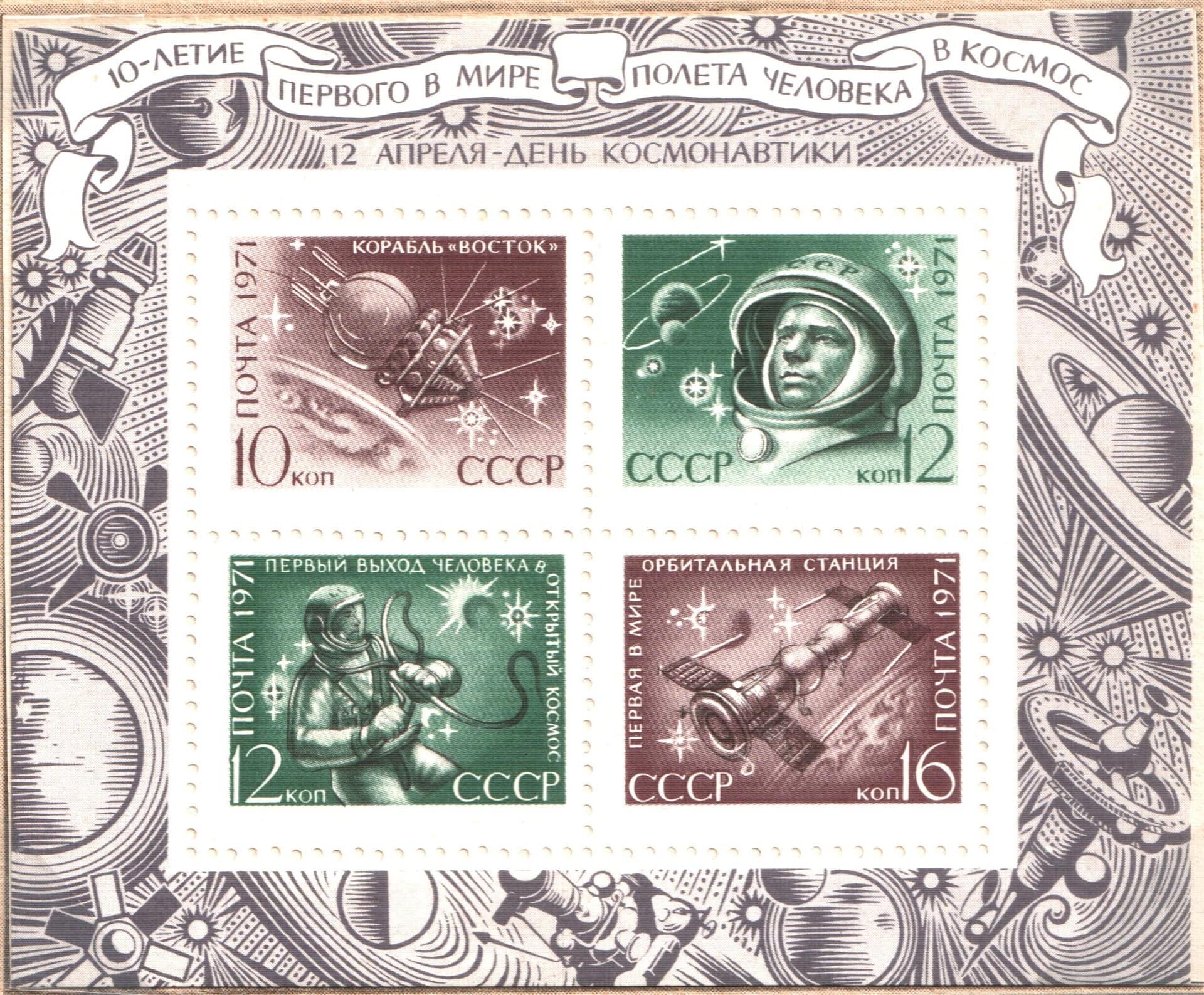
What followed was the most carefully managed celebrity tour of the entire Cold War. Gagarin toured more than two dozen countries between 1961 and 1963. He met Queen Elizabeth II, Fidel Castro and Kwame Nkrumah. The British government, which had not invited him, had to provide a state-level reception when his arrival in Manchester drew enormous crowds. His face appeared on East German, Cuban, Hungarian, Polish, Bulgarian, Romanian, Mongolian, North Korean and Czechoslovak postage stamps within twelve months of the flight.
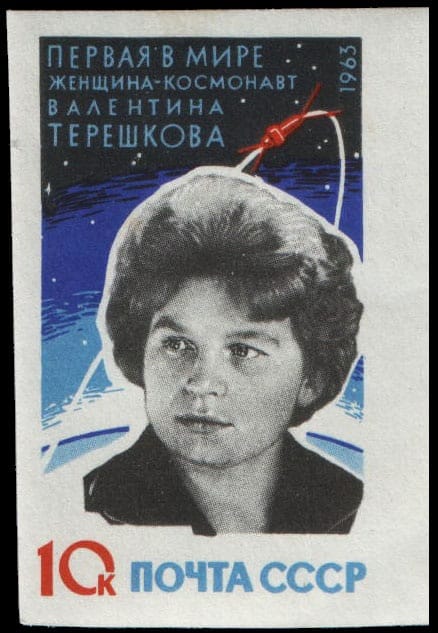
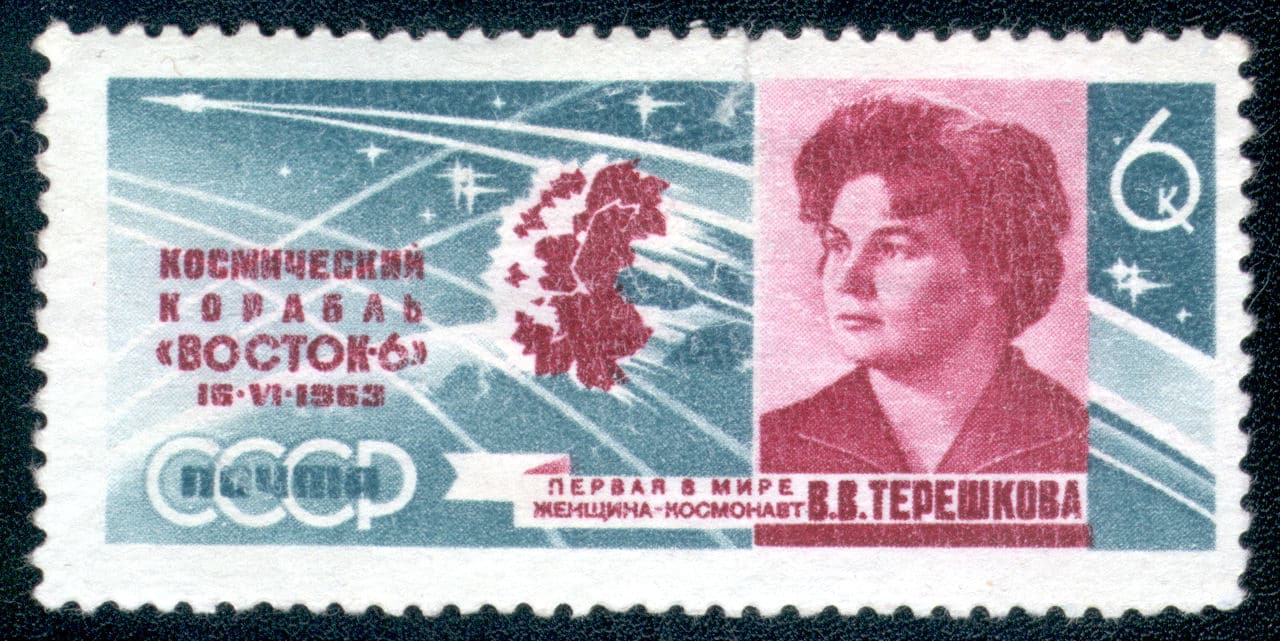
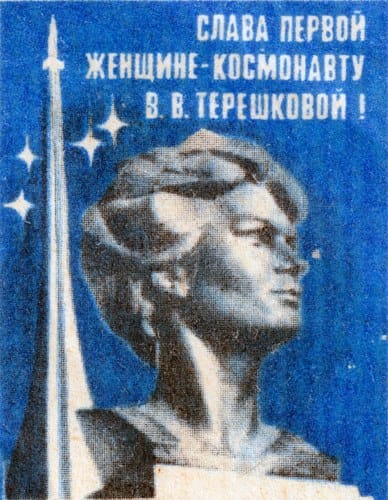


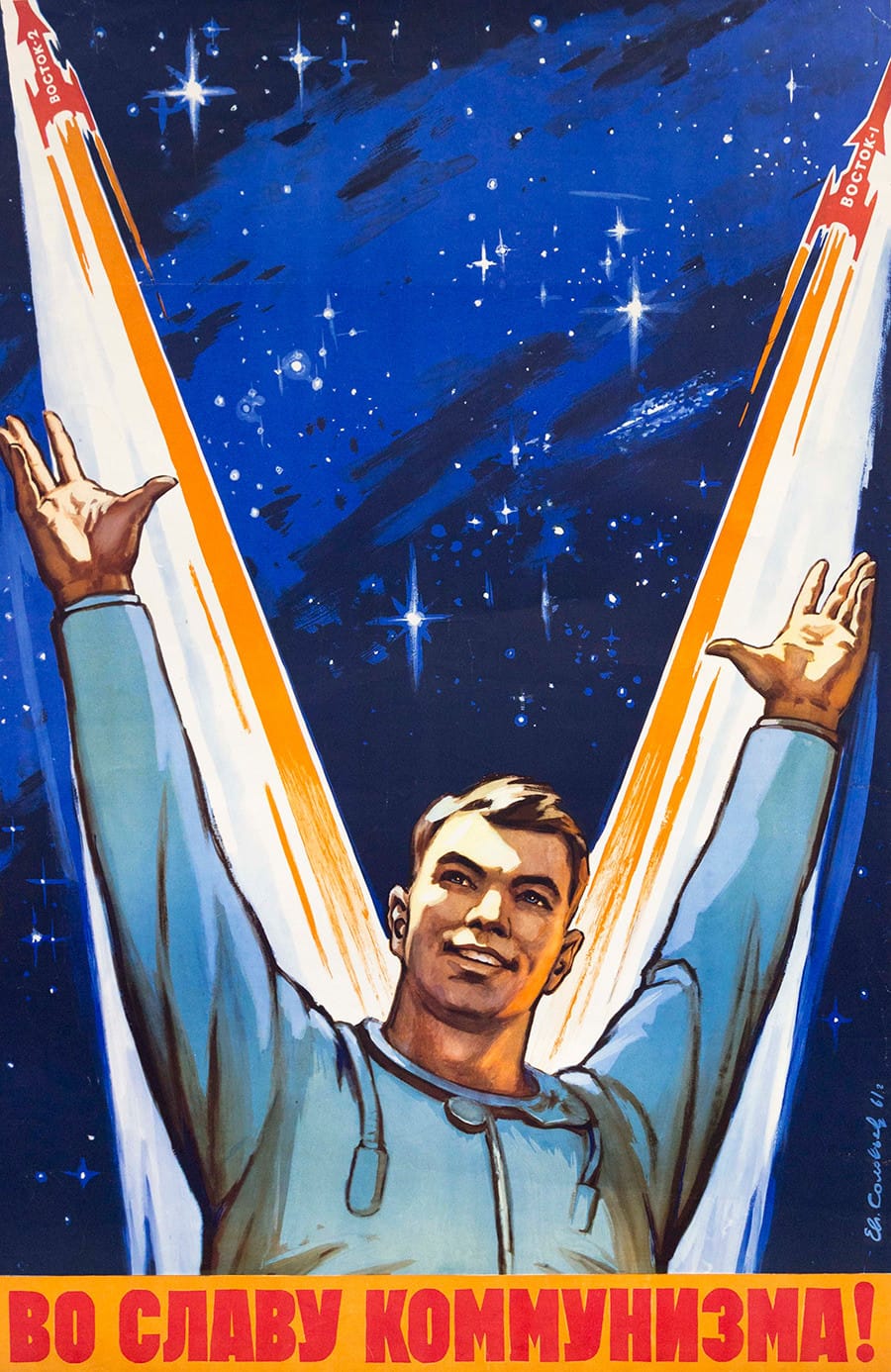
“Chaika” — Tereshkova, 1963
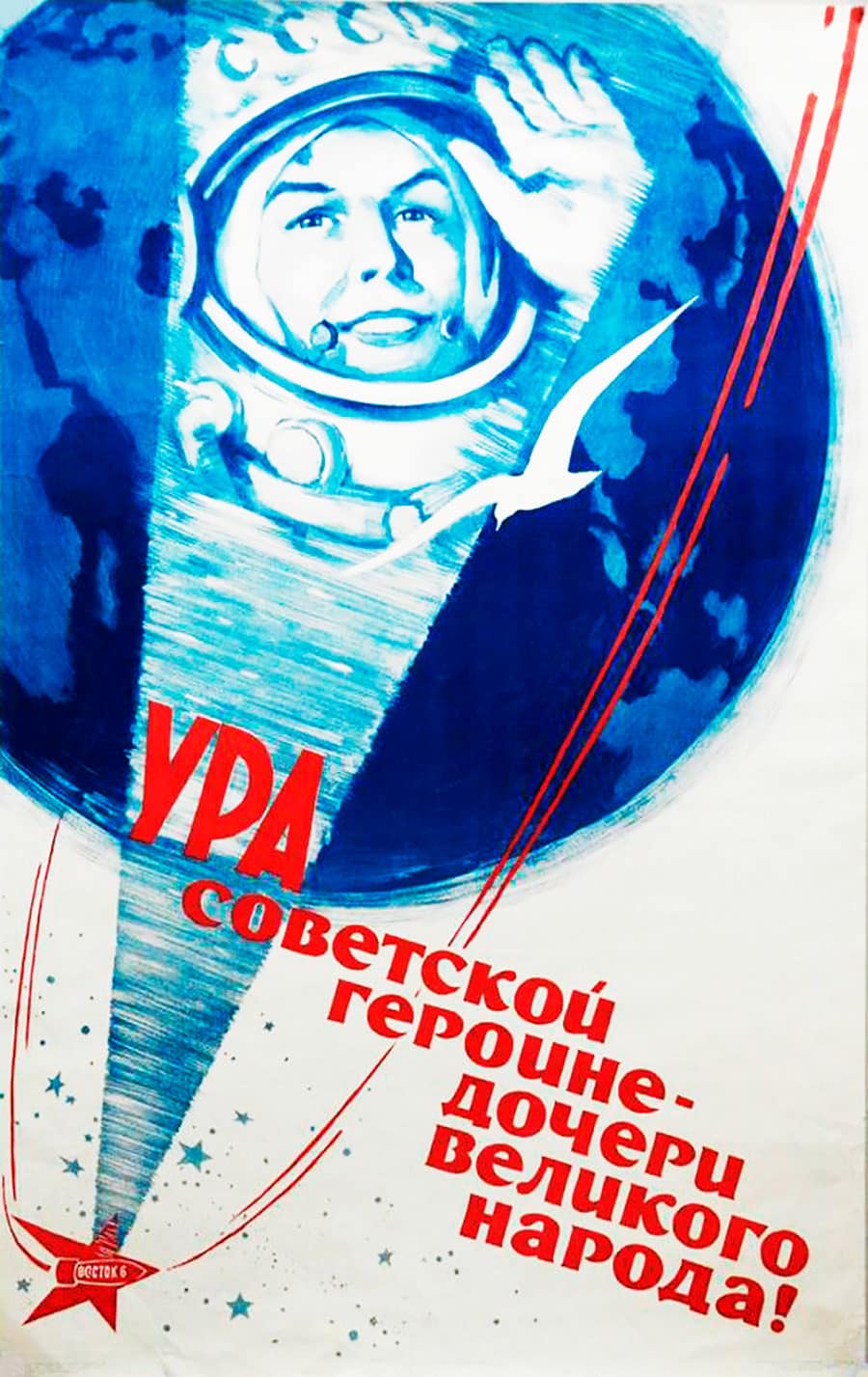
On 16 June 1963, with Khrushchev’s personal approval, Junior Lieutenant Valentina Vladimirovna Tereshkova — a 26-year-old Yaroslavl textile worker and amateur parachutist, recruited specifically as a civilian-background propaganda asset — flew Vostok 6 into a three-day orbit. She returned to Earth on 19 June with 48 orbits, 1.97 million kilometres flown, and the title of the first woman in space.
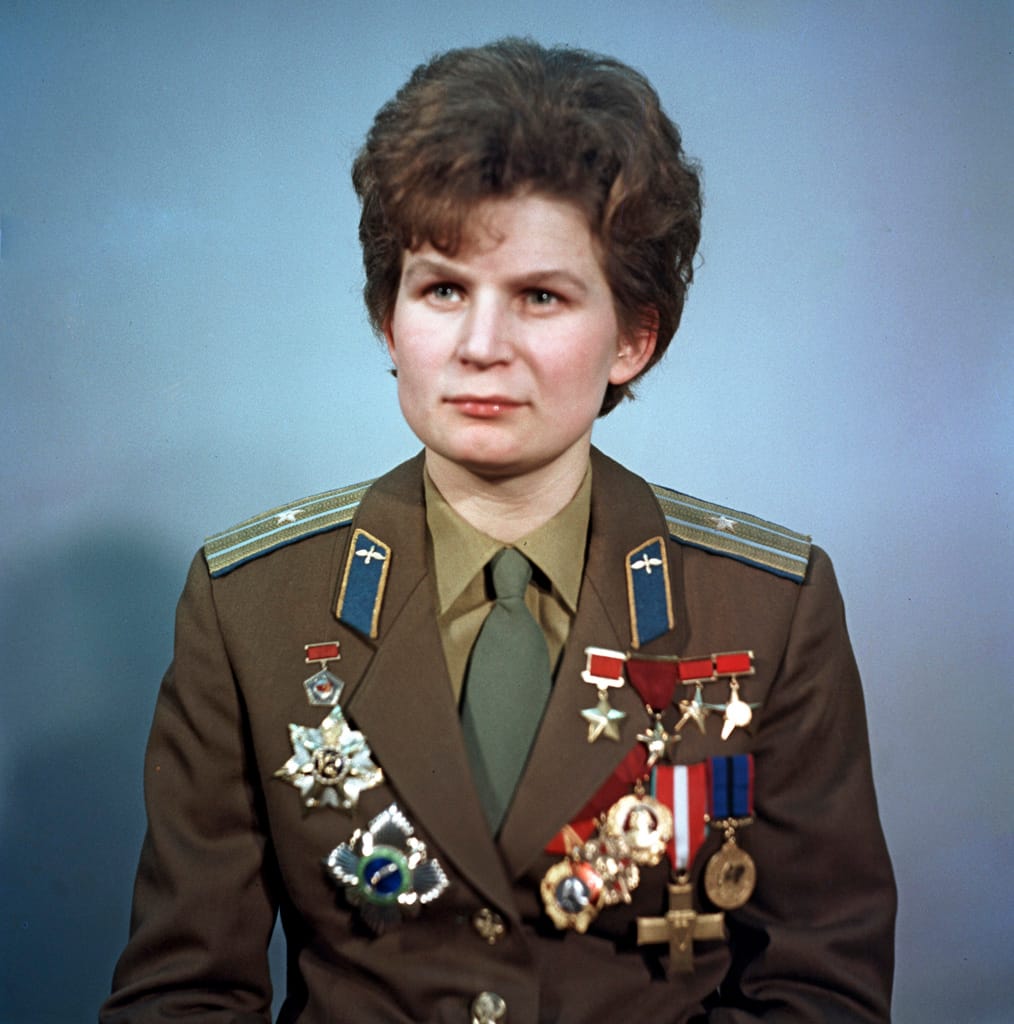
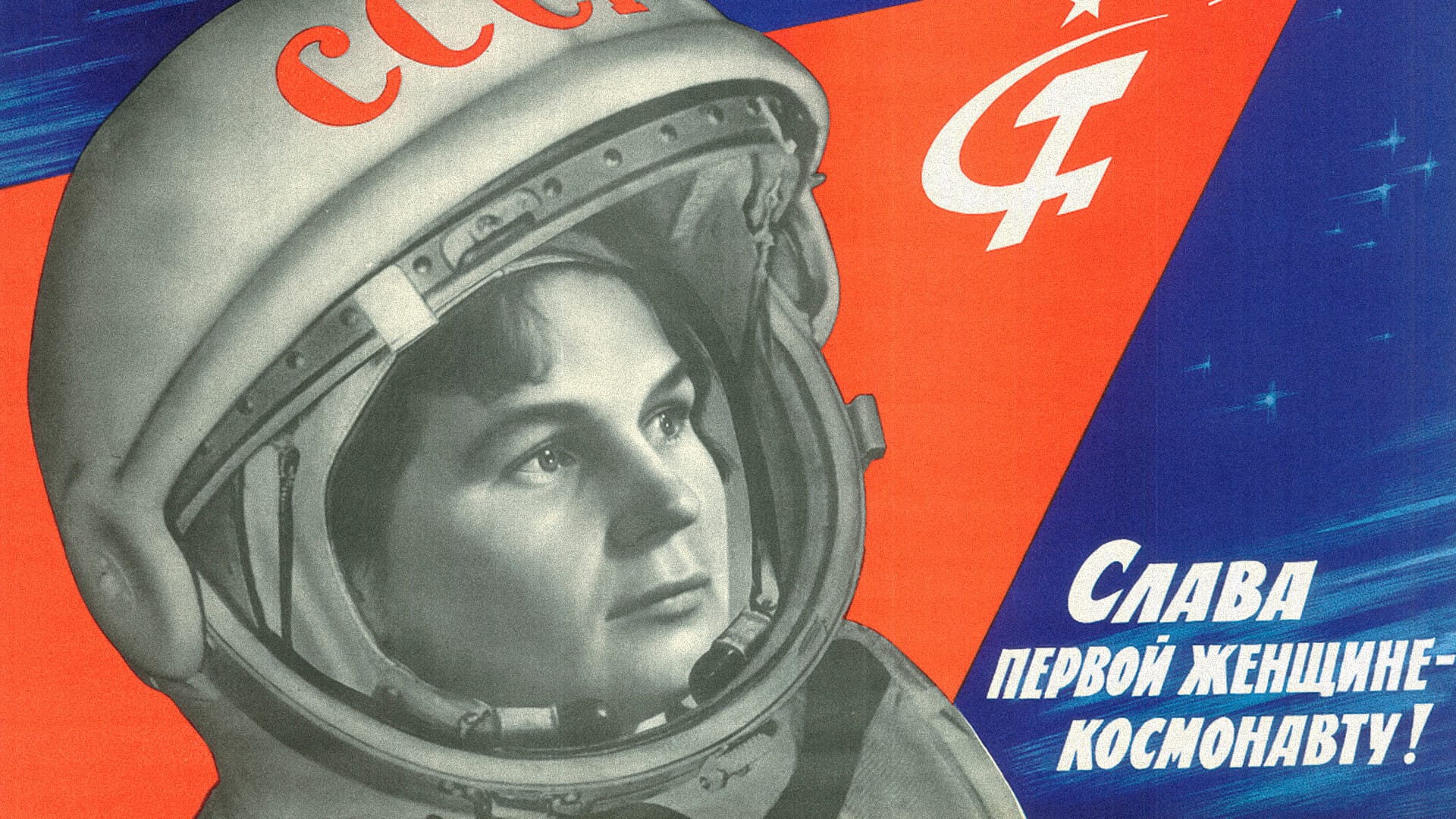
Tereshkova was, by every propaganda measure, the perfect cosmonaut. Working-class background — her father had been a Red Army tractor driver killed during the Finnish War. A Komsomol activist who became secretary of her mill’s committee. Recreational sport parachutist — 126 jumps before recruitment. Photogenic. Articulate. And, crucially, a woman, which let the Soviet propaganda apparatus claim a particular ideological advantage over the United States — whose Mercury programme, in 1963, had selected only men and would not fly an American woman until Sally Ride on STS-7 in 1983, twenty years after Tereshkova.
The propaganda images of Tereshkova in her bright orange pressure suit, smiling under her bubble helmet, were everywhere. Stamps. Posters. Pravda front pages. Schoolbooks. Tereshkova married fellow cosmonaut Andriyan Nikolayev in a wedding Khrushchev personally hosted at the Kremlin — and the wedding photographs went straight back onto the propaganda apparatus.
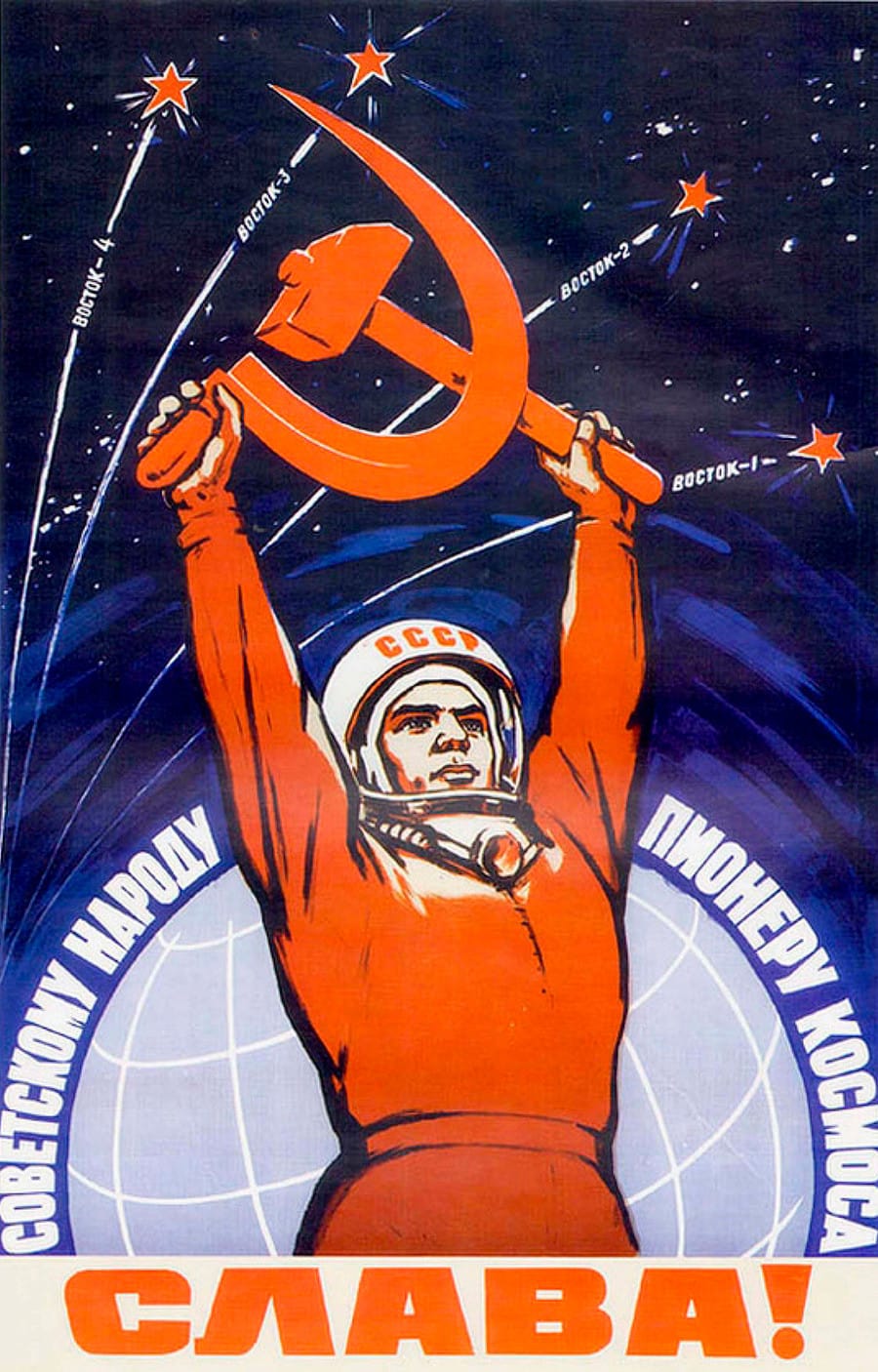
Leonov: the first walk in space
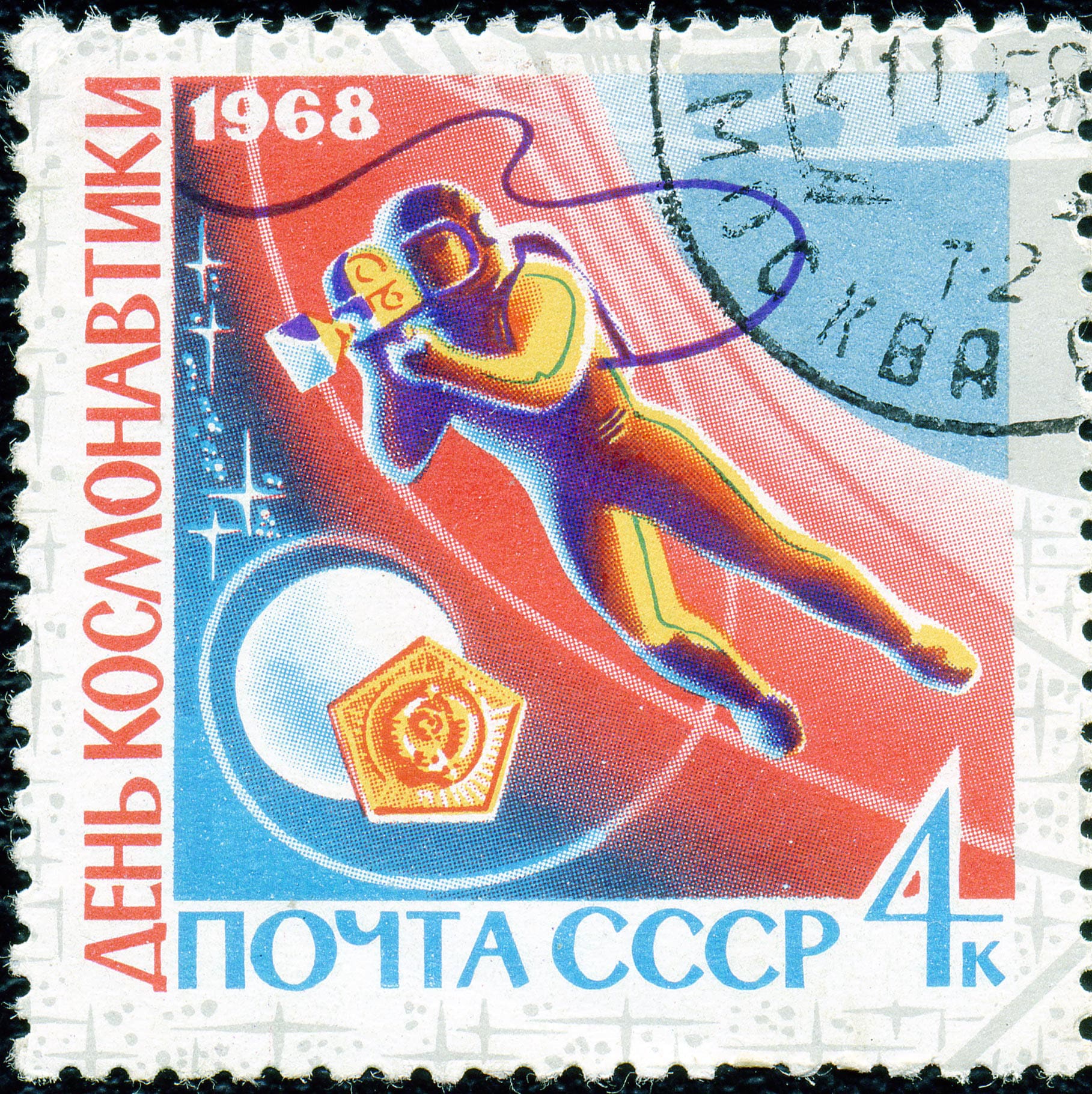
Eighteen months later, on 18 March 1965, Voskhod 2 lifted off carrying two cosmonauts — Pavel Belyayev and Alexei Leonov. After ninety minutes in orbit, Leonov opened the outer hatch of the Voskhod inflatable airlock, pushed himself outside, and spent twelve minutes attached only to a five-metre umbilical line, floating in vacuum over the Mediterranean. The first human spacewalk in history.
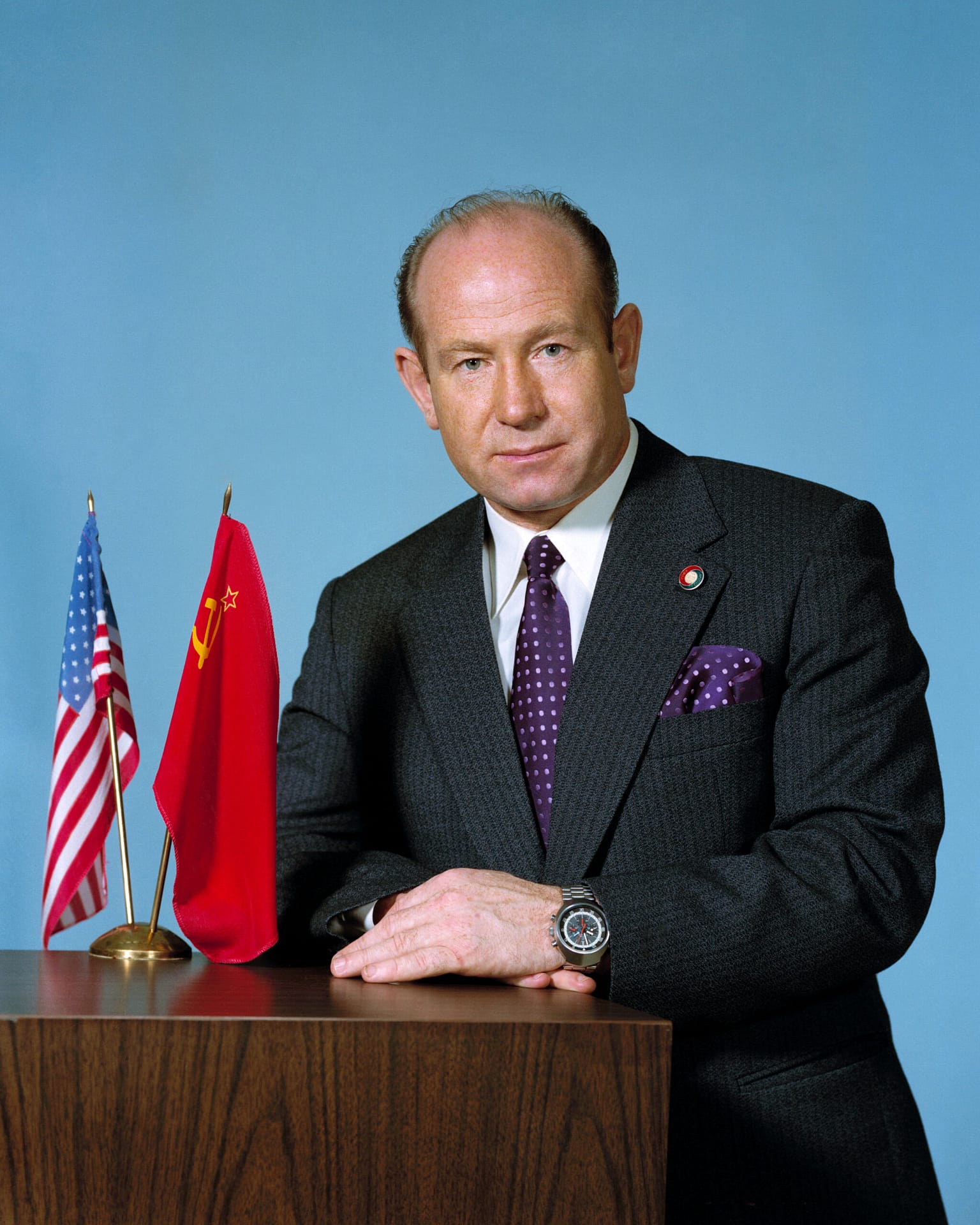
Leonov’s spacesuit ballooned alarmingly on egress. He spent the last four minutes of the spacewalk struggling to bleed pressure out of the suit to fit back through the airlock. The propaganda apparatus did not, of course, mention any of this. The Soviet propaganda story was that the first spacewalk had gone exactly to plan. The footage of Leonov tumbling against a brilliant blue Earth was broadcast on Soviet television within twenty-four hours and ran on East German, Polish and Czech state television within forty-eight hours. The image of Leonov outside the Voskhod, his white spacesuit against the black-and-blue limb of the Earth, became one of the defining propaganda visuals of the entire 1960s.
The end of the perfect decade
The 1960s were the decade everything went right for Soviet space propaganda. First man in space (Gagarin, 1961). First day in space (Titov, 1961). First woman in space (Tereshkova, 1963). First multi-person mission (Voskhod 1, 1964). First spacewalk (Leonov, 1965). First soft landing on the Moon (Luna 9, 1966). First soft landing on Venus (Venera 7, 1970). Almost every “first” in the 1960s belonged to the USSR.
Almost. The “first” the propaganda apparatus was preparing for, throughout the late 1960s, was the first humans on the Moon. The Soviet N1 lunar rocket — Korolev’s design — failed catastrophically on all four of its test launches between 1969 and 1972. On 20 July 1969 Neil Armstrong stepped onto the Sea of Tranquility while the Soviet propaganda apparatus, in real time, had to recalibrate its entire narrative about space. The decade did not end as it had begun.
And on 27 March 1968, Yuri Gagarin himself — by now 34 and frustrated by his role as a propaganda figurehead, demanding to be returned to flight status — climbed into a MiG-15UTI training jet at Chkalovsky airbase outside Moscow with his instructor Vladimir Seryogin. The aircraft crashed in a wooded area near the village of Novosyolovo. Both pilots were killed. The cause was never publicly determined; the Soviet propaganda apparatus closed the file and buried Gagarin in the Kremlin Wall.
Gagarin’s funeral filled Red Square. Brezhnev and Kosygin carried the urn. The propaganda apparatus mourned its perfect symbol — the working-class boy from Klushino who had become the first human in space — and then, in the same week, began the process of building the same propaganda machinery around the next generation: Khrunov, Shatalov, Volynov, the long Soyuz-and-Salyut programme that would define the propaganda image of the 1970s.
The peak was over. The next decade would be about whether the propaganda could keep selling space when the Americans had won the Moon and the spectacular firsts had run out. The answer, on the propaganda side, would be yes. On the engineering side, the answer was more complicated.
Sources: Asif Siddiqi, “Challenge to Apollo”; Andrew Jenks, “The Cosmonaut Who Couldn’t Stop Smiling: The Life and Legend of Yuri Gagarin” (Northern Illinois UP, 2012); Roshanna Sylvester, “She Orbits Over the Sex Barrier” (in Into the Cosmos, U Pittsburgh Press, 2011); Pravda archives 1961–1965 via the Russian State Archive of Sociopolitical History.
Aviation in Soviet Propaganda — Series Index
→ The 1940s: The Great Patriotic War
→ The 1960s: The Cult of the Cosmonaut (you are here)

 English
0 Comments