
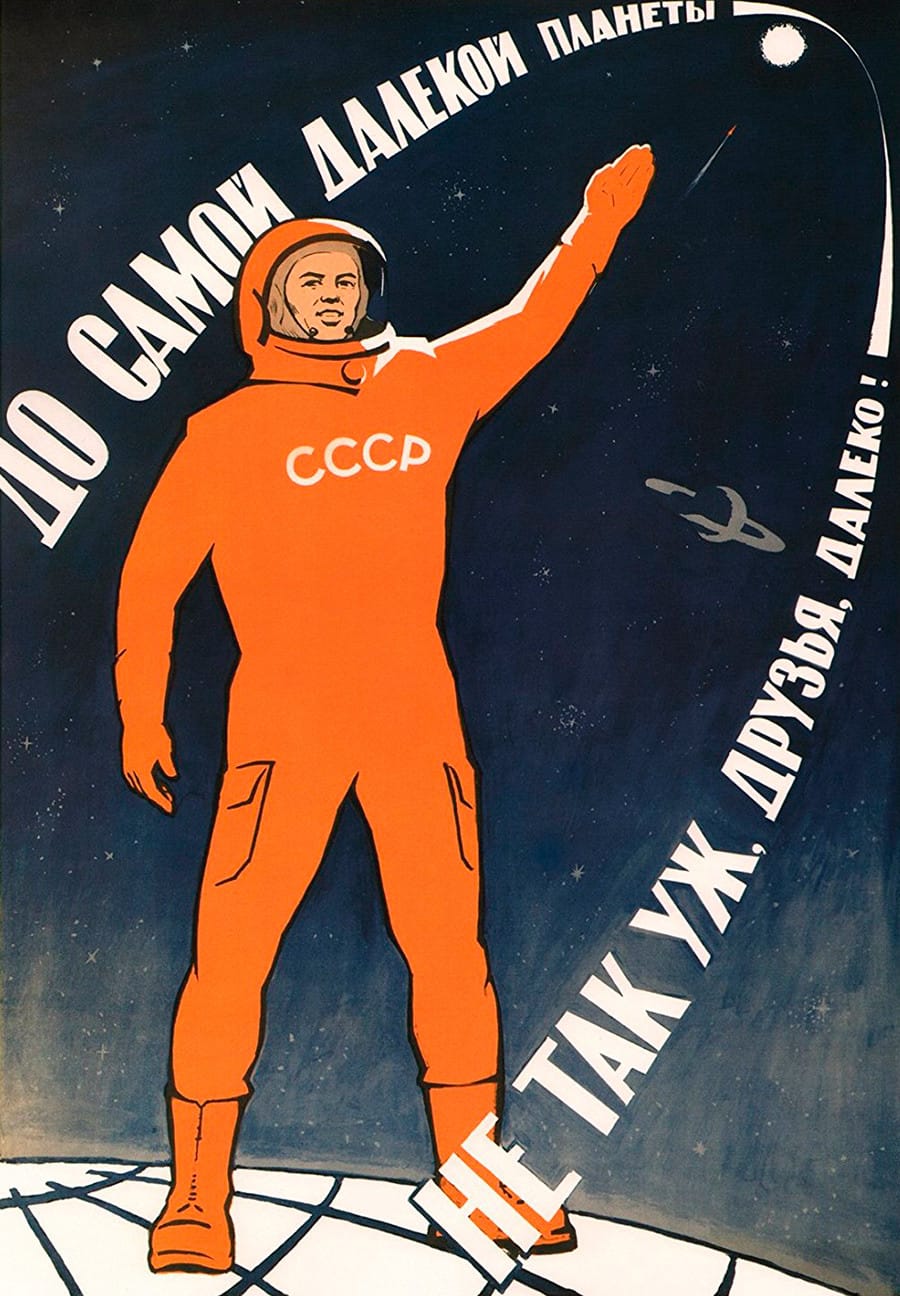
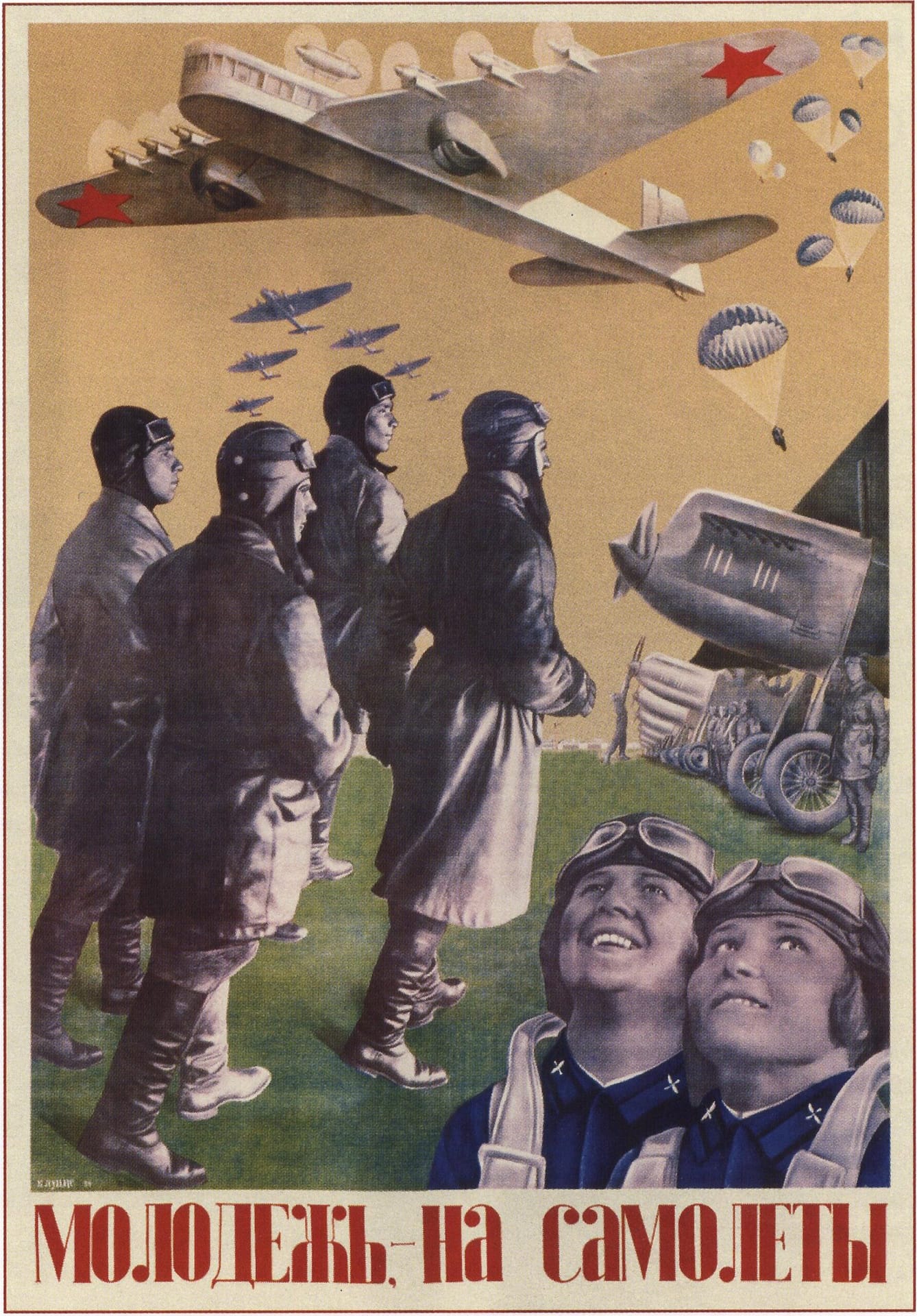
The 1980s were the decade Soviet aviation propaganda kept its volume but lost its conviction. The propaganda apparatus that had spent sixty years building the Aviamarsh, the cosmonaut cult, and the Salyut routine kept producing the same posters, the same stamps and the same Pravda front pages. The country underneath the propaganda was beginning to fail.
And yet, on a snowy morning in November 1988, with Mikhail Gorbachev’s perestroika reforms already three years old, the Soviet aviation industry achieved the single most expensive engineering display in its entire history. The Buran orbital shuttle — a clean-sheet Soviet answer to the American Space Shuttle, years late and billions of roubles over budget — flew its first and only mission. The propaganda apparatus, briefly, lit up one last time. Then it went dark with the state that had built it.
Quick Facts
Mir core module launch: 19 February 1986 — first permanent orbital outpost
First Soviet female spacewalk: Svetlana Savitskaya, 25 July 1984 (Salyut 7)
Buran first flight: 15 November 1988 — uncrewed, 206 minutes, two orbits
Buran builder: Molniya NPO + Energia rocket from Energia NPO
Buran programme cost: ~16 billion roubles (~$24 billion 2026 USD)
Buran total flights: 1

Mir, Salyut 7 and the propaganda routine
The decade began with the propaganda apparatus repeating, with diminishing returns, the success of the 1970s Salyut programme. Salyut 7, launched in 1982, became the most-photographed Soviet space station of the decade — partly because of an unscheduled rescue mission in June 1985 when cosmonauts Vladimir Dzhanibekov and Viktor Savinykh docked with a powerless, dead Salyut 7 and brought it back to life through one of the most ambitious in-orbit repair operations in the history of crewed spaceflight.
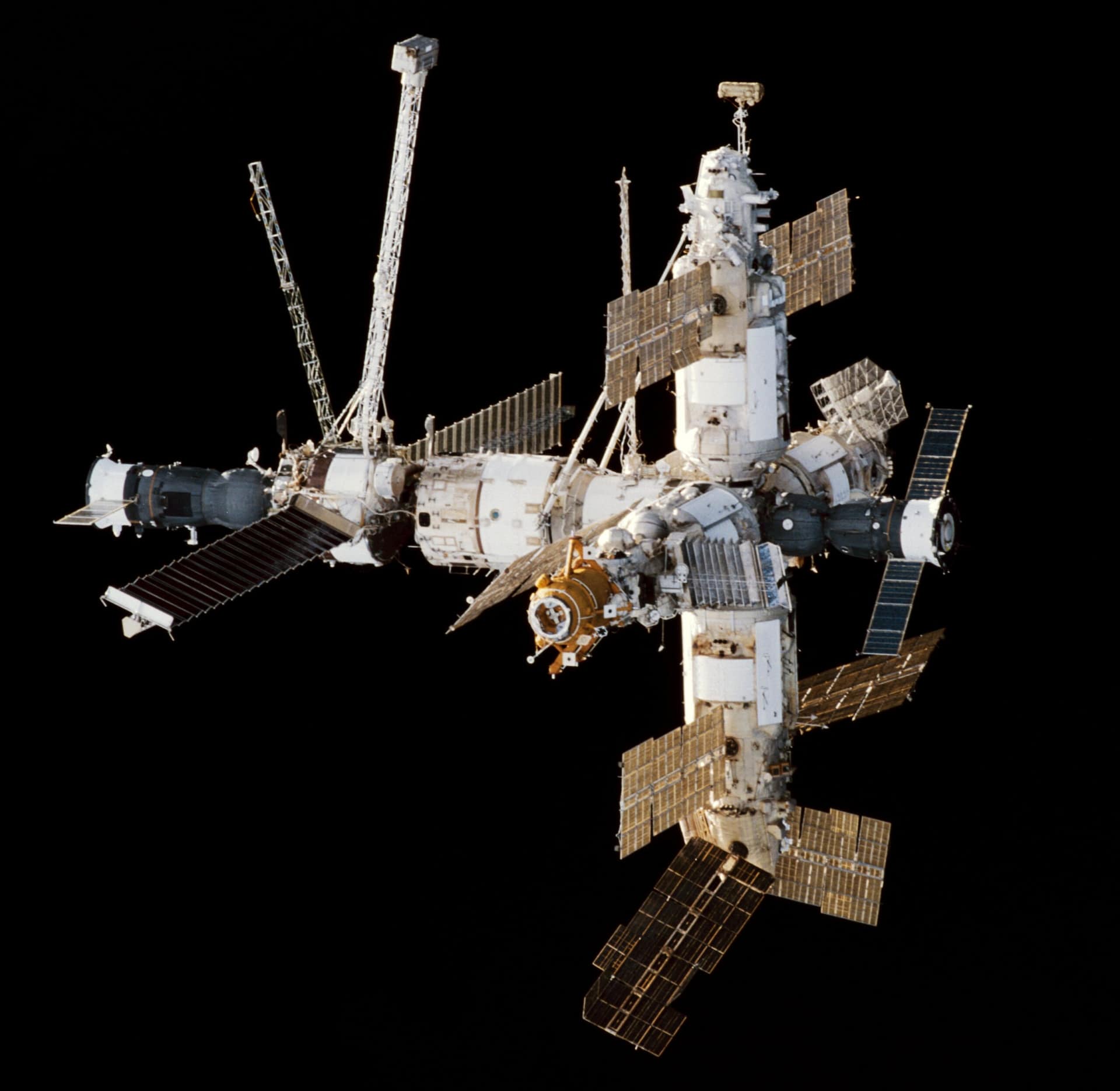
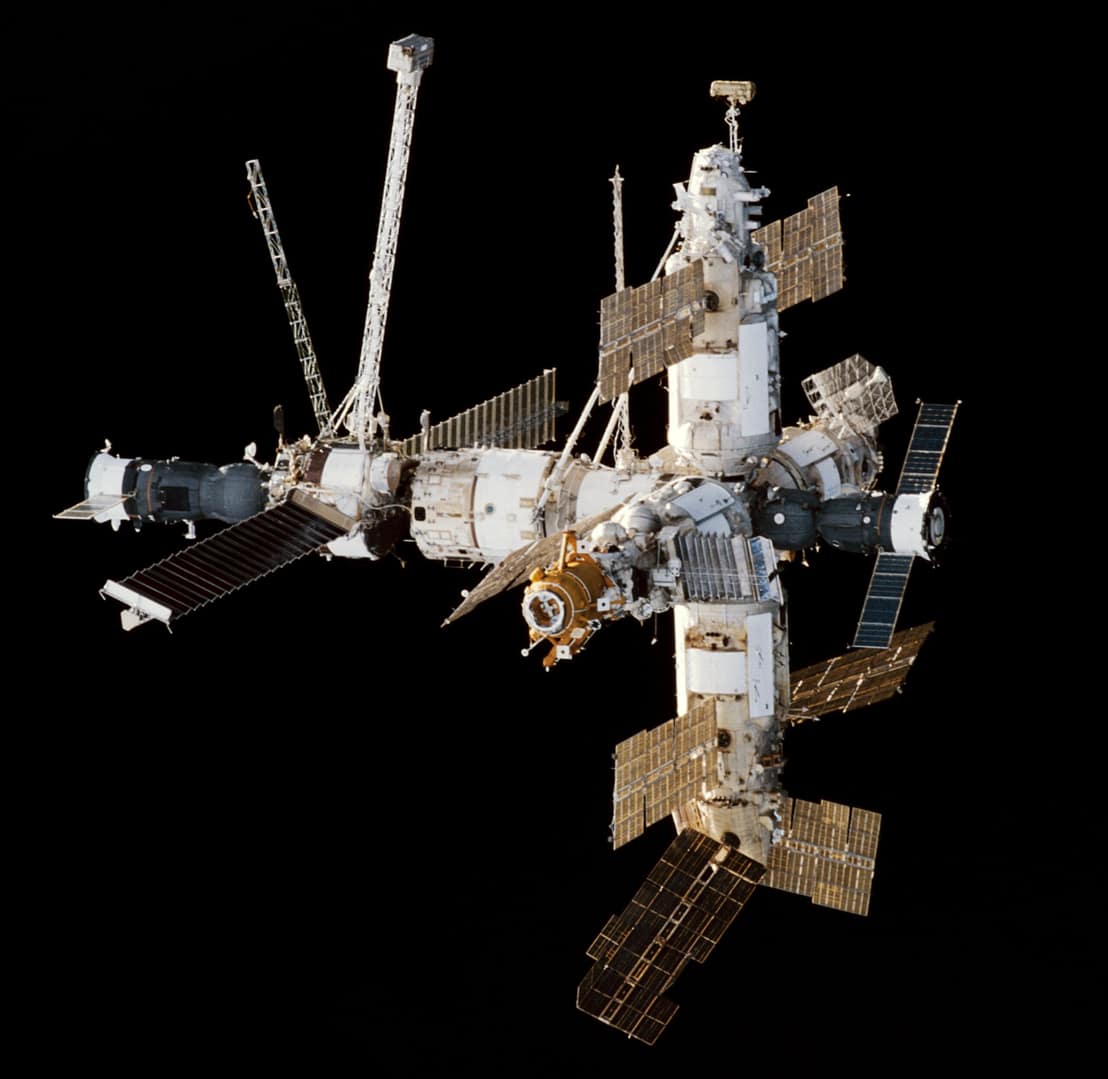
The propaganda apparatus made the Dzhanibekov rescue a Pravda feature for three days. The 2017 Russian film Salyut-7 dramatised the mission with full state cooperation. But Salyut 7 was an old design. What the apparatus actually needed — and got, on 19 February 1986 — was the Mir core module: a clean-sheet space station designed for modular expansion through the late 1990s. Mir was bigger, more capable, more comfortable, and built specifically so the propaganda could keep showing forward motion.
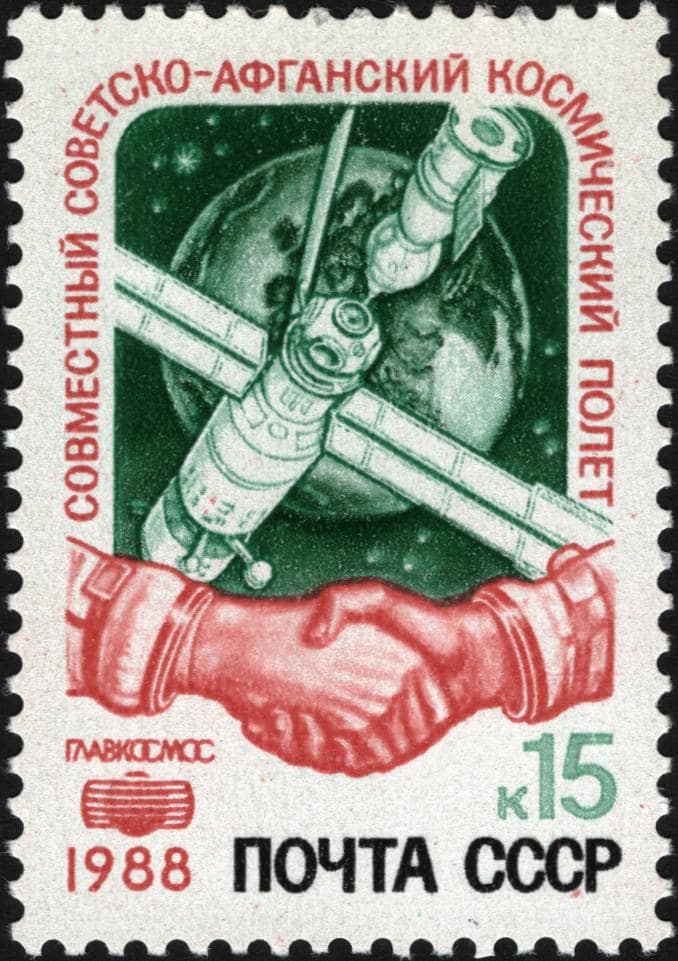
Mir worked. The apparatus celebrated every new module — Kvant in 1987, Kvant-2 in 1989, Kristall in 1990. By the early 1990s Mir was the largest object ever assembled in orbit and the largest crewed object in space. The propaganda kept showing cosmonauts inside Mir conducting Soviet–East European–international experiments under the same internationalist banner the 1970s programme had built. The Aviamarsh kept playing.
Buran: the sixteen-billion-rouble propaganda gesture
The decade-defining moment was Buran. Begun in 1976 as a direct Soviet answer to the American Space Shuttle programme, Buran went through twelve years of development, some sixteen billion roubles of expenditure, the construction of a clean-sheet vehicle (the OK-1K1 Buran), a clean-sheet super-heavy launcher (Energia), a clean-sheet flying-truck carrier aircraft (Antonov An-225 Mriya), and a clean-sheet runway at Baikonur designed to handle the orbiter’s landing weight.
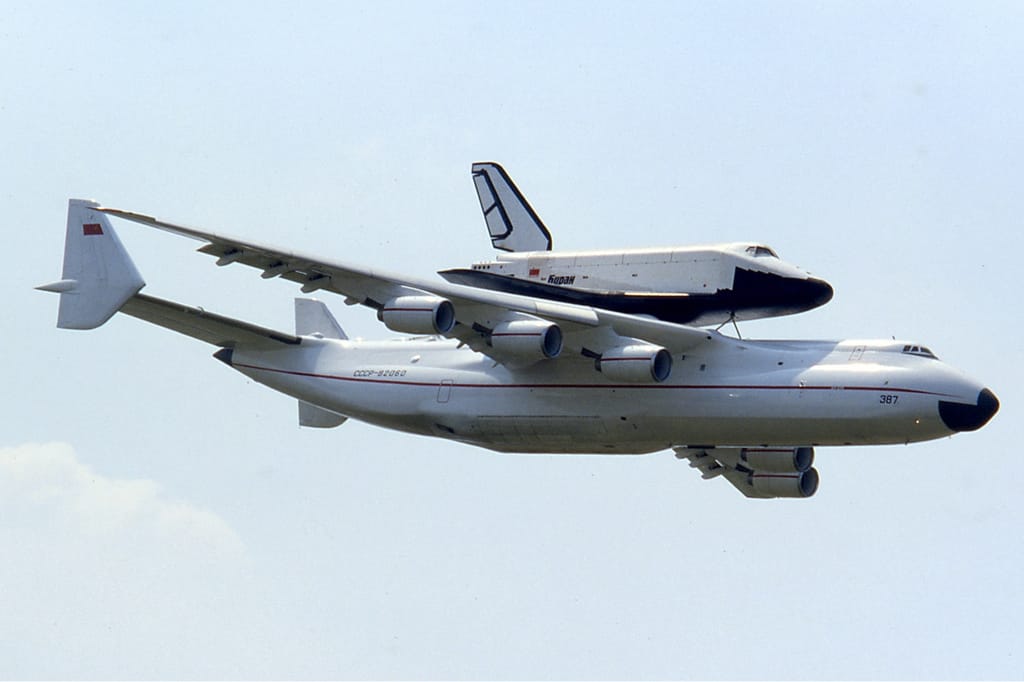
On 15 November 1988, at 03:00 GMT, an Energia super-heavy launcher lifted off from Baikonur with the Buran orbiter strapped to its side. Two orbits and 206 minutes later, the orbiter executed a fully automatic re-entry, glided into the atmosphere above the Indian Ocean, and landed itself on Baikonur’s specially-built 4.5-kilometre runway in a 17 m/s crosswind that the American Space Shuttle was not certified to handle. No human had been aboard. The entire flight had been executed by the on-board software stack and the ground-control loop. The propaganda apparatus declared it a triumph of Soviet computing.
It was. Buran’s automated flight-control software was, in 1988, more advanced than the American Space Shuttle’s manual-landing pilot interface, and the Soviet vehicle had executed an end-to-end mission with no human input at all. Pravda devoted its front page of 16 November 1988 to the flight.
The aircraft that never flew again
What the propaganda apparatus did not say — and what Gorbachev’s reforming Politburo already knew — was that Buran had no operational purpose. The Soviet Union had no civilian payloads that required a reusable shuttle. The American programme had been built around classified military payloads that Buran’s customer-base (the Soviet Ministry of Defence) had largely cancelled by 1988. The cost-per-launch projection of $300 million in 1988 dollars — roughly equivalent to ten Soyuz launches with equivalent crewed-up-mass — made the vehicle commercially impossible to justify.
Gorbachev and the reform-minded Politburo were openly asking what the shuttle was actually for — what missions it could fly that the existing Soyuz and Proton could not handle at a fraction of the cost — and whether the space programme could justify itself as anything other than a gesture against the West.
It was, in propaganda terms, the most heretical question a Soviet leadership had asked about space in thirty years. The answer the apparatus eventually had to accept was that Buran had been built as a propaganda gesture against the West — and that the Soviet Union, at the end of the 1980s, no longer had the money to keep producing propaganda gestures at this scale.
Buran flew once. The orbiter was placed in storage at Baikonur. In 2002, fourteen years after its only flight, the hangar roof at Baikonur collapsed onto the orbiter and destroyed it completely. The collapse killed eight workers who were carrying out repairs on the long-neglected roof.
The Antonov, the orbiter, the Aviamarsh
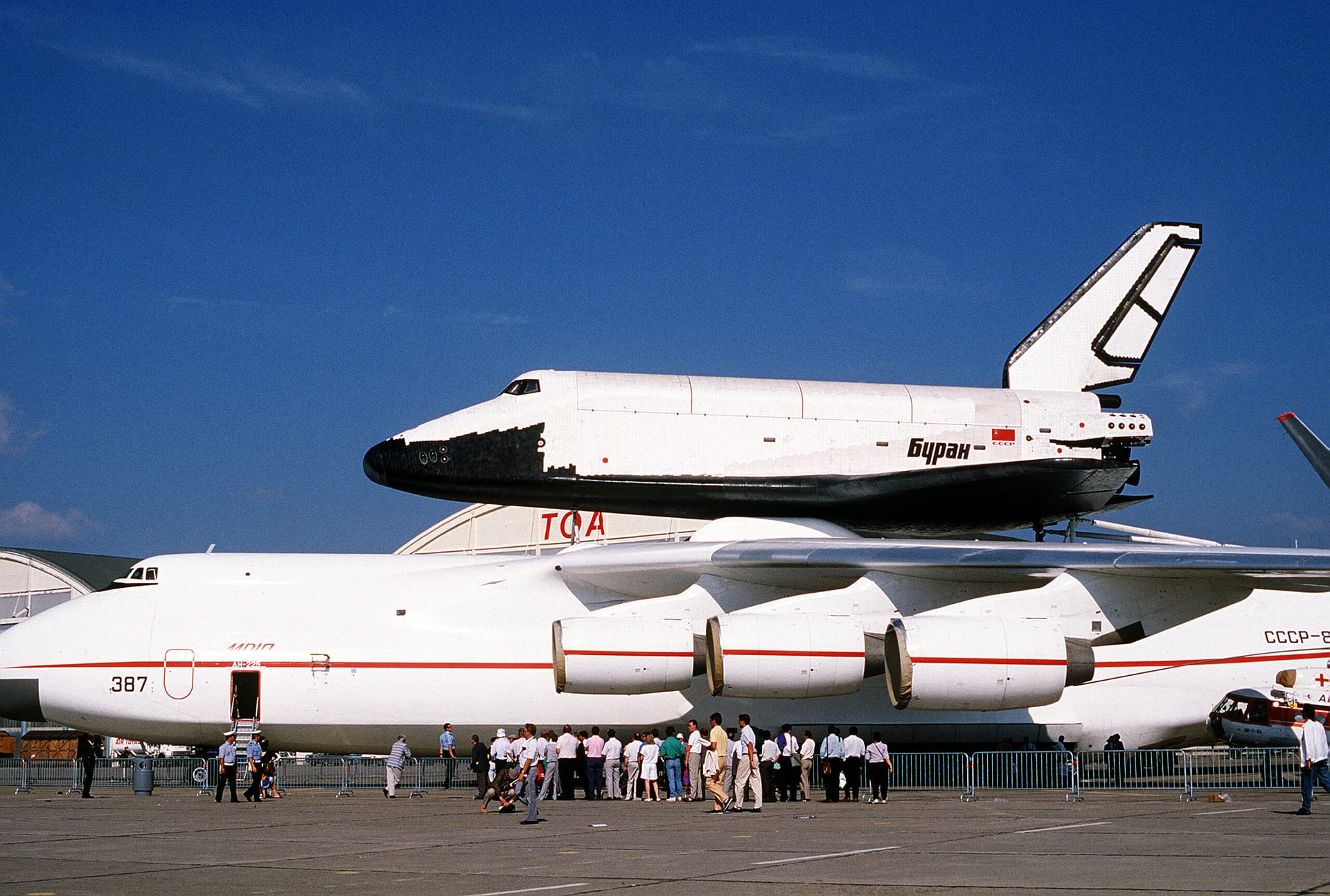
The Antonov An-225 Mriya — the six-engine, 88-metre-wingspan, 250-tonne-payload cargo aircraft Antonov built specifically to carry the Buran orbiter on its spine — flew its first public display at the Paris Air Show in June 1989, with the Buran strapped to its back. The image of the Mriya on the ramp at Le Bourget, the Buran riding it, became the single most reproduced piece of Soviet aerospace propaganda of the late 1980s. It is also the image you now have to look at twice, because the Soviet Union had thirty months left to live.
The Mriya itself, the only flyable An-225 ever built, kept flying as a cargo aircraft after the Soviet Union dissolved. It was destroyed at Hostomel airfield outside Kyiv during the Russian invasion of Ukraine in February 2022. The Buran orbiter that it had carried into Paris in 1989 had been destroyed twenty years earlier. The propaganda machinery that built both of them no longer existed.
The 1980s in propaganda terms
The decade closed with the Soviet aviation industry still flying, still building, still producing the iconography the apparatus needed. The Aviation Day flying displays still drew enormous crowds. The Sukhoi Su-27 Flanker was on the propaganda posters. The 1989 Paris Air Show, with the Mriya and the Buran together on the ramp, was the single most visible Soviet aerospace event in the West since the Tu-104 had landed at Heathrow in 1956.
What the propaganda did not say — could not say — was that the Soviet Union was, by 1989, two years from dissolution. Gorbachev had begun perestroika. The Berlin Wall fell in November 1989. The Warsaw Pact signed its dissolution in July 1991. The August 1991 coup attempt collapsed in three days. On Christmas Day 1991 the red flag came down from the Kremlin.
The aviation propaganda apparatus simply, quietly, stopped. By the spring of 1992 the posters were gone from Moscow billboards. The Aviamarsh kept being played on military parades because the Russian Federation, the Soviet successor state, inherited the apparatus that had used it. But the cosmonaut cult, the pilot cult, the Pravda front pages, the Komsomol training films, the schoolbook portraits of Gagarin — all of those had been an artefact of a state that was now historical. The 1990s — the last piece in this series — is the story of what happened next.
Sources: Bart Hendrickx and Bert Vis, “Energiya-Buran: The Soviet Space Shuttle” (Springer Praxis, 2007); David Harland, “The Story of Space Station Mir”; Asif Siddiqi, “The Soviet Space Race with Apollo”; David Hoffman, “The Dead Hand” (Anchor, 2009); Russian State Archive of Science and Technology (Buran flight data).
Aviation in Soviet Propaganda — Series Index
→ The 1940s: The Great Patriotic War
→ The 1960s: The Cult of the Cosmonaut
→ The 1970s: The Routine Cosmonaut
→ The 1980s: Mir and Buran (you are here)

 English
0 Comments