
The 1970s were the decade Soviet aviation propaganda had to learn to live with second place.
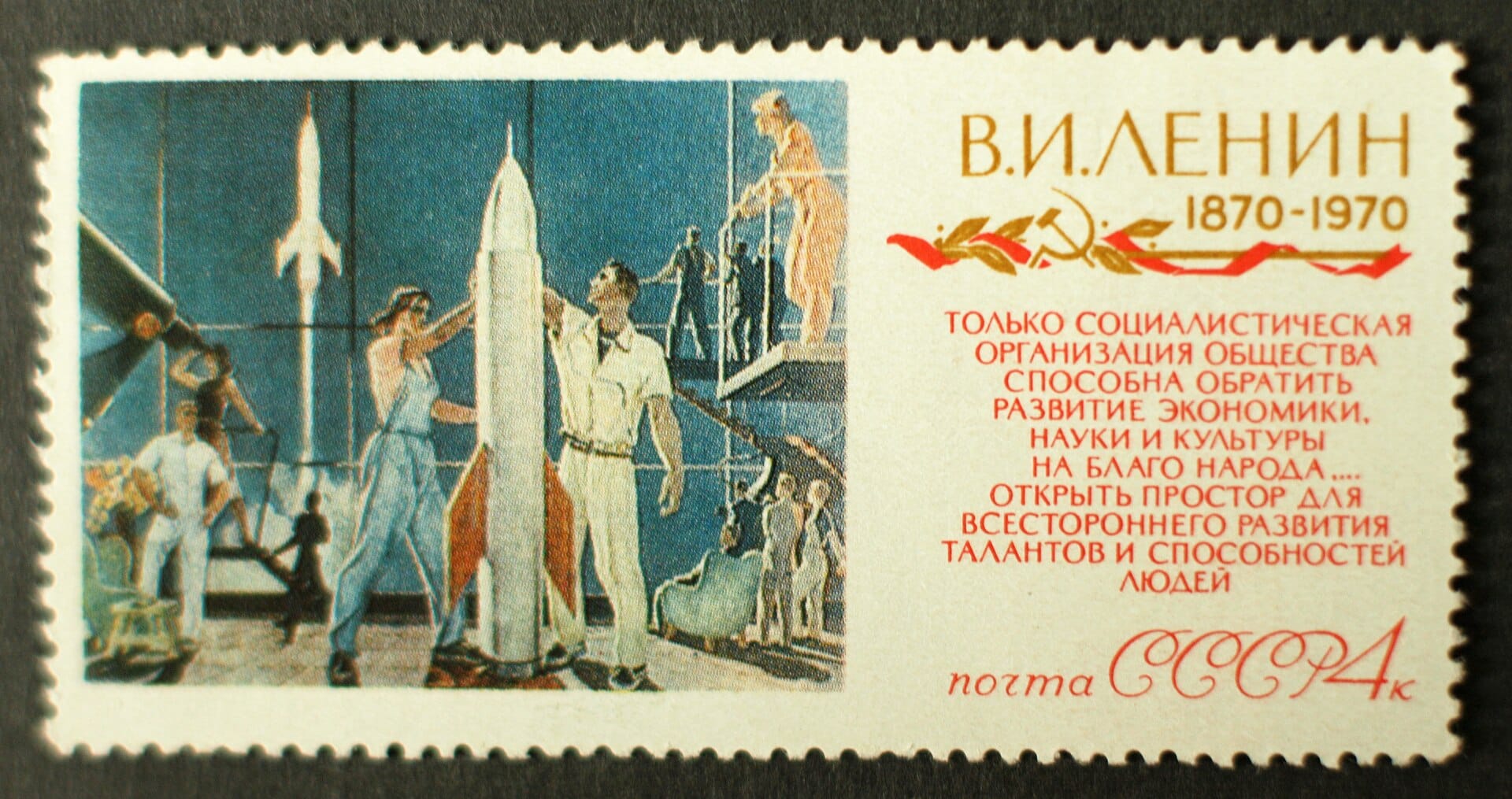
On 20 July 1969 — eighteen months before the new decade began — Neil Armstrong had stepped onto the Sea of Tranquillity, and every Soviet propaganda narrative built around the words “first in space” had suddenly become out of date. The N1 lunar rocket that was supposed to put a Soviet cosmonaut on the Moon kept exploding on its launch pad. The propaganda apparatus could no longer claim the biggest prize. What it could do — and this is what the 1970s actually became — was reframe Soviet space activity as something more durable than American spectaculars: the long, patient, scientifically serious occupation of low Earth orbit.
Quick Facts
First space station: Salyut 1 — launched 19 April 1971
First robotic lunar rover: Lunokhod 1 — operating on the Moon, 17 November 1970
First Mars landing: Mars 3 — 2 December 1971 (transmitted for 14.5 seconds)
Apollo–Soyuz Test Project: Docking 17 July 1975 — Stafford / Brand / Slayton + Leonov / Kubasov
Salyut 6 long-duration record: 96 days, Romanenko & Grechko, 1977–78
Tu-144 first supersonic airliner service: 1 November 1977, Moscow–Almaty
Lunokhod and the robotic Moon
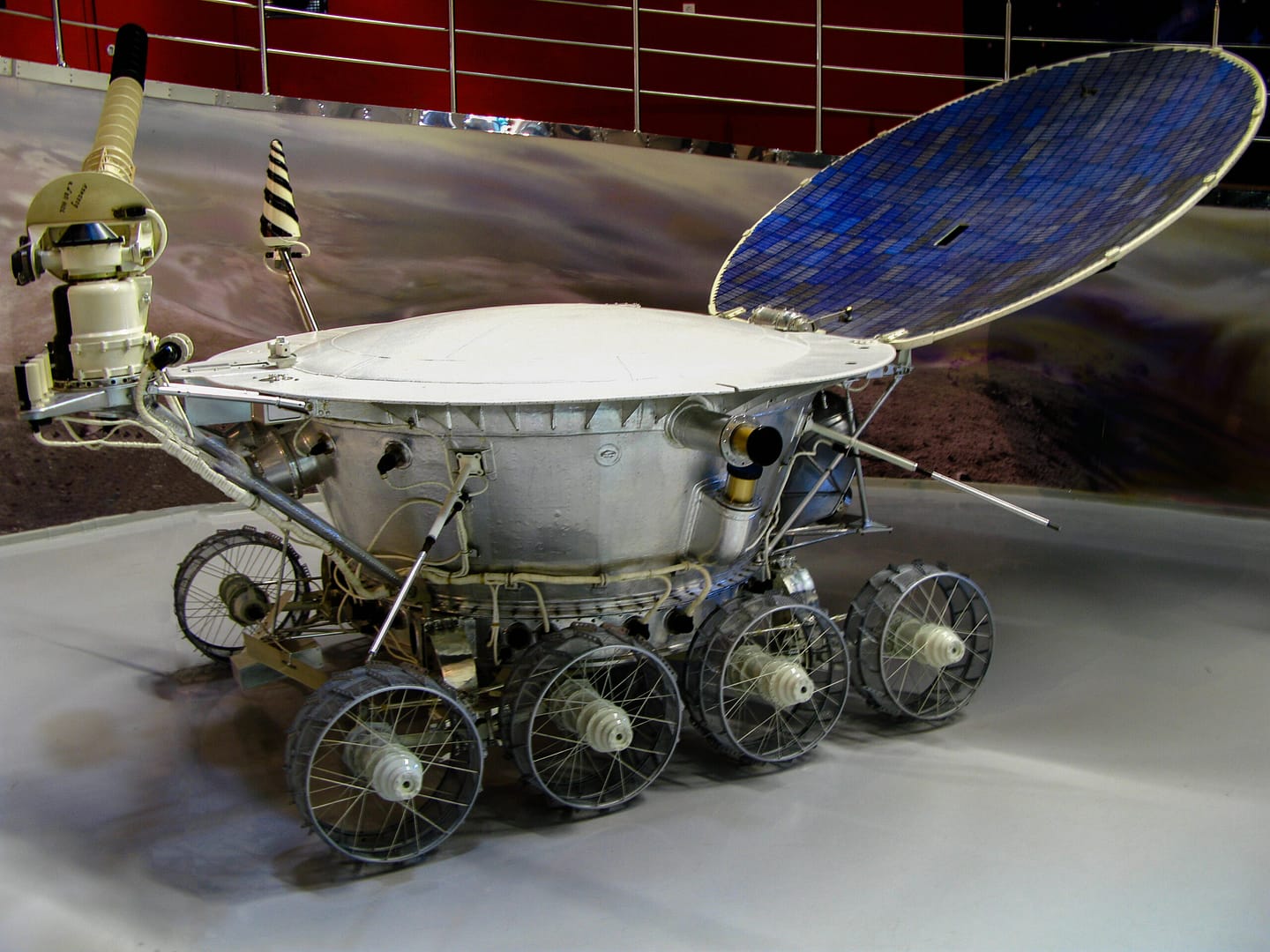
The first move was to redefine the lunar competition. On 17 November 1970 — seven months after Apollo 13 had nearly killed three astronauts and two and a half months before Apollo 14 — the unmanned Luna 17 lander touched down on the Mare Imbrium and disgorged a remote-controlled eight-wheeled rover the size of a small Volkswagen. Lunokhod 1.
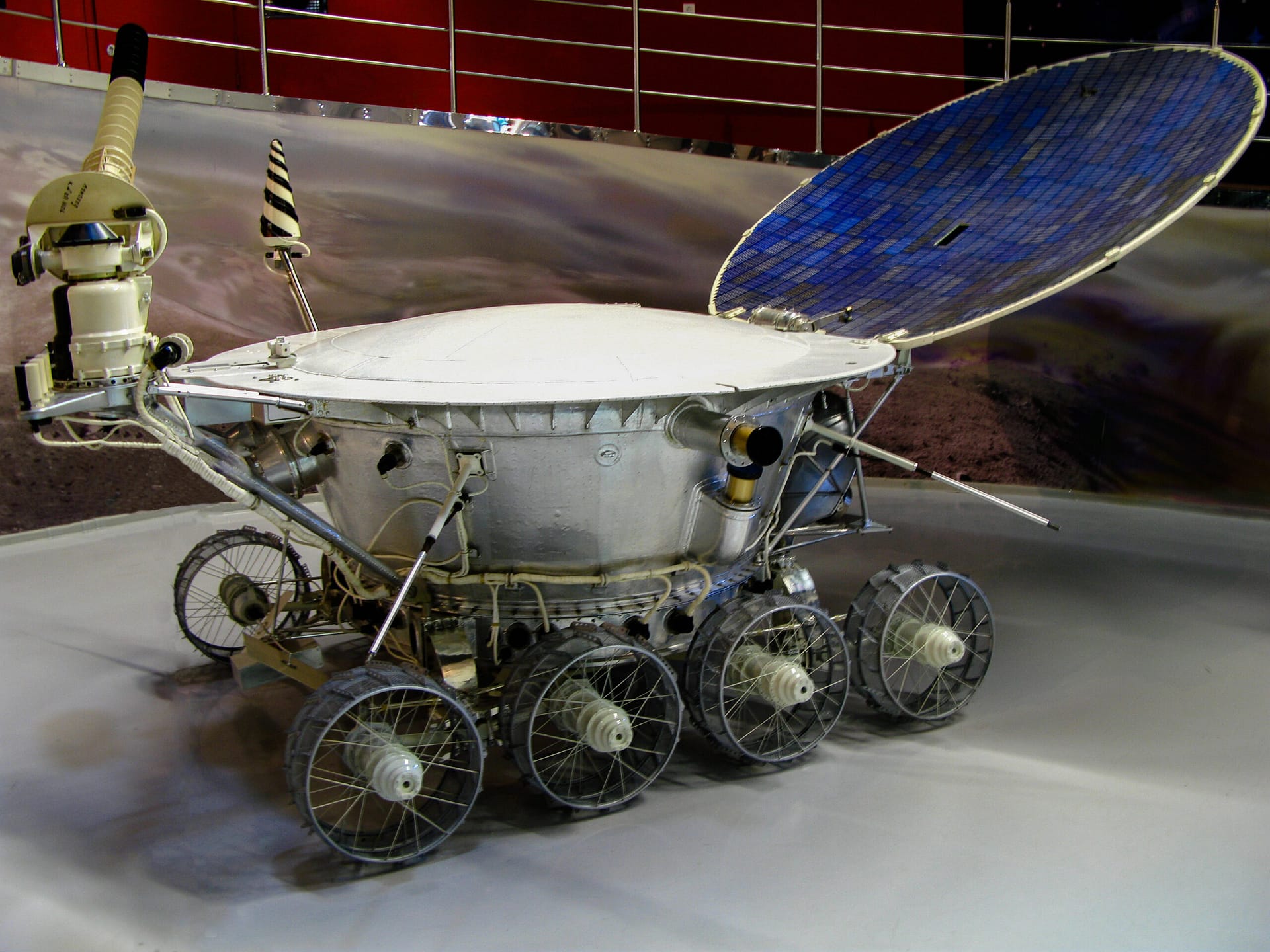
Lunokhod 1 ran for 322 Earth days, covered 10.5 kilometres of lunar surface, transmitted 20,000 photographs, and was driven by a five-man team at the Soviet deep-space tracking facility in Crimea. The propaganda apparatus made the most of it. The Soviet press ran regular illustrated dispatches about the rover’s progress across the Mare Imbrium, written in the same gentle paternal voice the apparatus had used for Chkalov forty years earlier.
The propaganda framing was elegant. The Americans had sent humans to the Moon at enormous risk and expense; the Soviets had sent robots, also to the Moon, more cheaply, more safely, and able to keep working for almost a year. By 1973 Lunokhod 2 had landed and was still going. Soviet schoolchildren of 1972 could draw lunar rovers from memory. The propaganda apparatus had stopped trying to compete with Apollo on Apollo’s own terms and had started telling a different story about scientific endurance.
Salyut and the long stays
The same logic produced the Salyut programme. On 19 April 1971 Salyut 1 entered orbit — the first space station in history. Its inaugural three-cosmonaut crew, Soyuz 11 (Dobrovolski, Volkov, Patsayev), spent twenty-three days aboard and broke every previous duration record. They died on re-entry, suffocated when an undetected valve vented their cabin atmosphere; the propaganda apparatus made them national martyrs and used their funeral to launch the next campaign.
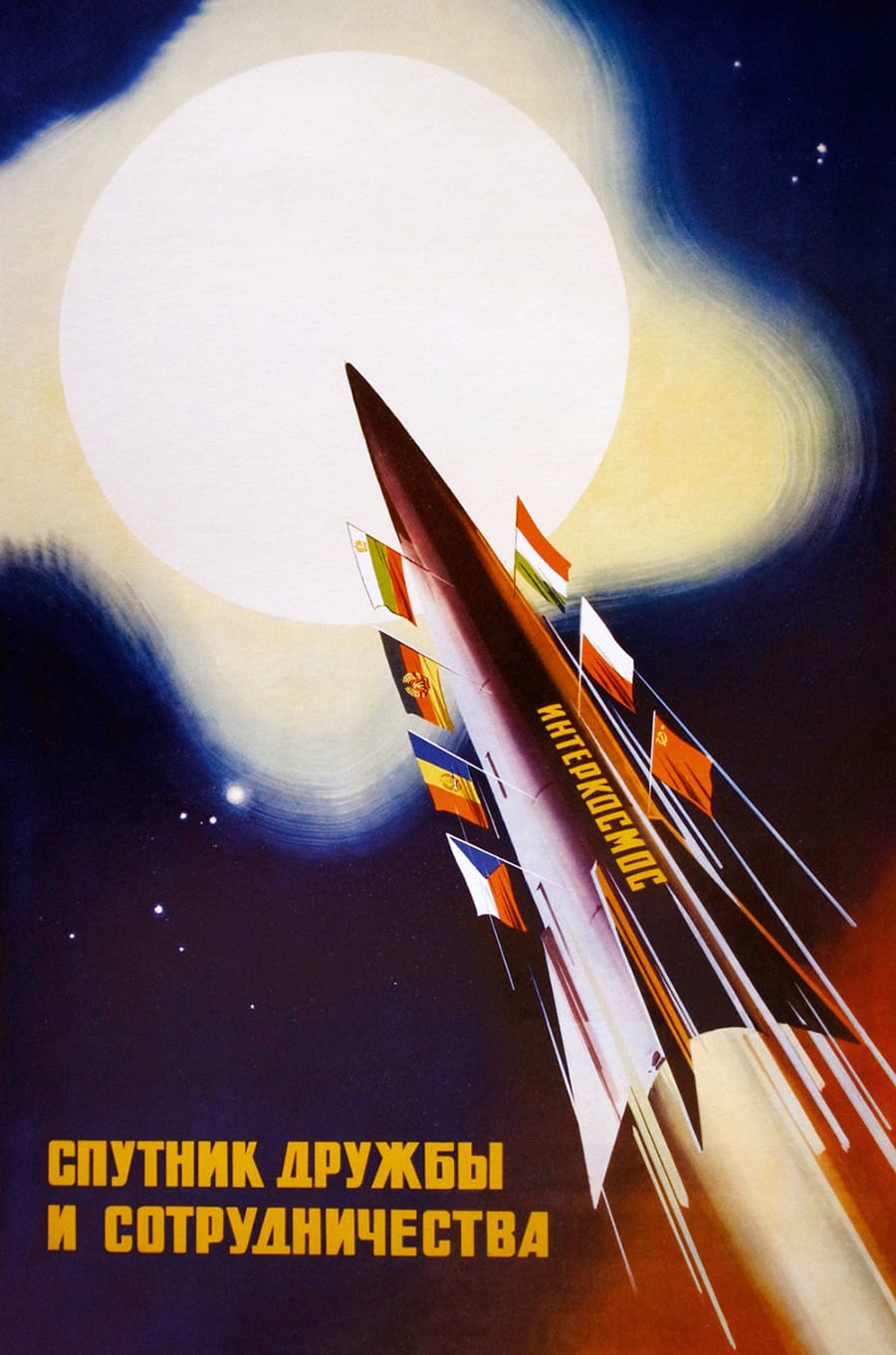
Salyut 2, 3, 4, 5, 6 and 7 followed. By the late 1970s Salyut 6 was sustaining six-month cosmonaut rotations, taking visitors from Warsaw Pact “guest cosmonauts” — Vladimír Remek (Czechoslovakia, 1978), Mirosław Hermaszewski (Poland, 1978), Sigmund Jähn (East Germany, 1978), Georgi Ivanov (Bulgaria, 1979) — and broadcasting the docking handshakes back to East European prime-time television.
The propaganda dividend was immense. The Soviet space programme had turned its East European satellites into partners in the project, with Soviet rockets and Soviet stations as the indispensable platform. Posters in Prague, Warsaw and East Berlin showed the local national flag flying over Salyut 6, with a smiling Soviet cosmonaut handing a microphone to the local Warsaw-Pact astronaut. The propaganda framing was perfect for the Brezhnev era: socialist internationalism, scientific endurance, brotherhood under the red flag.
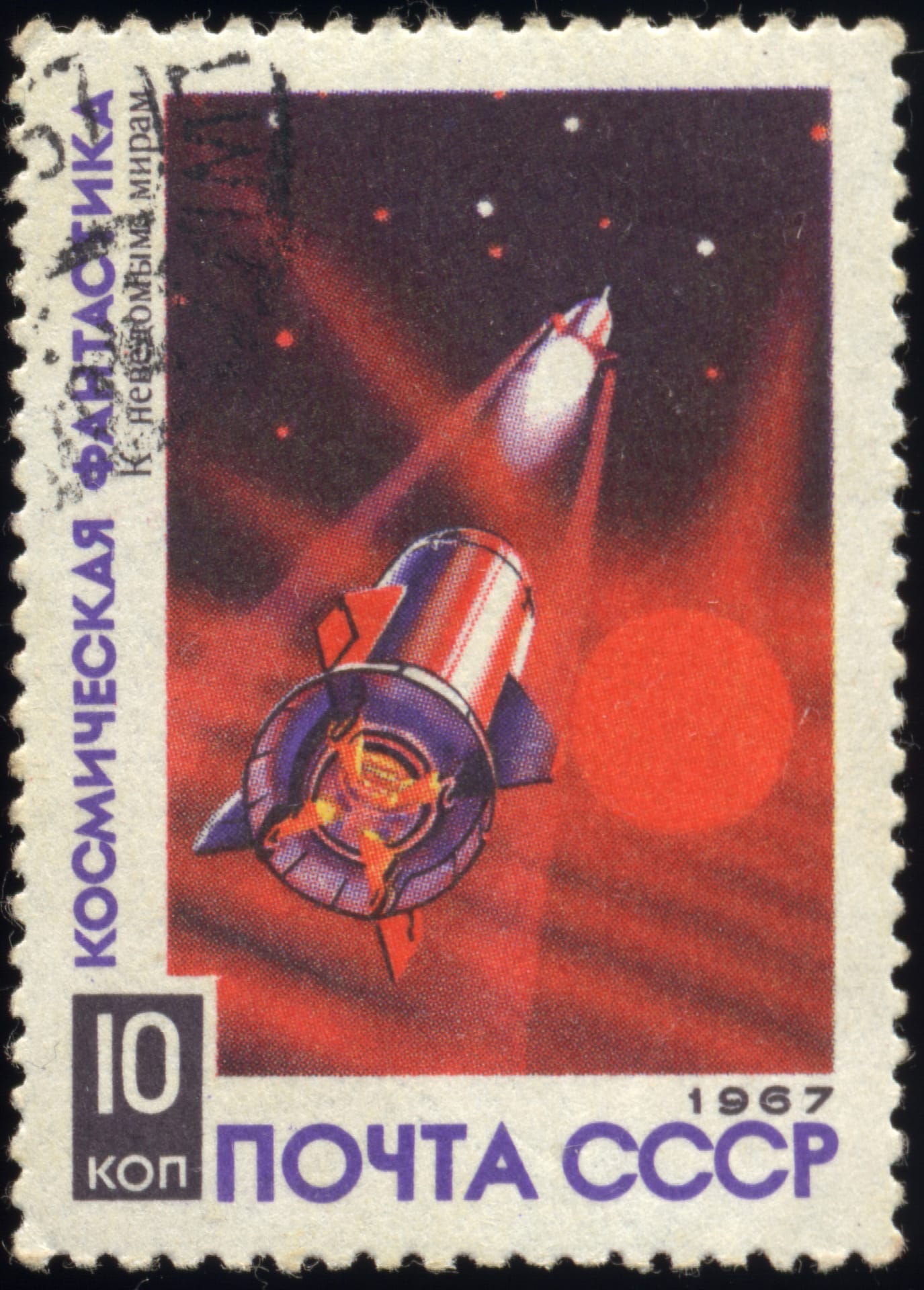
The Apollo–Soyuz handshake
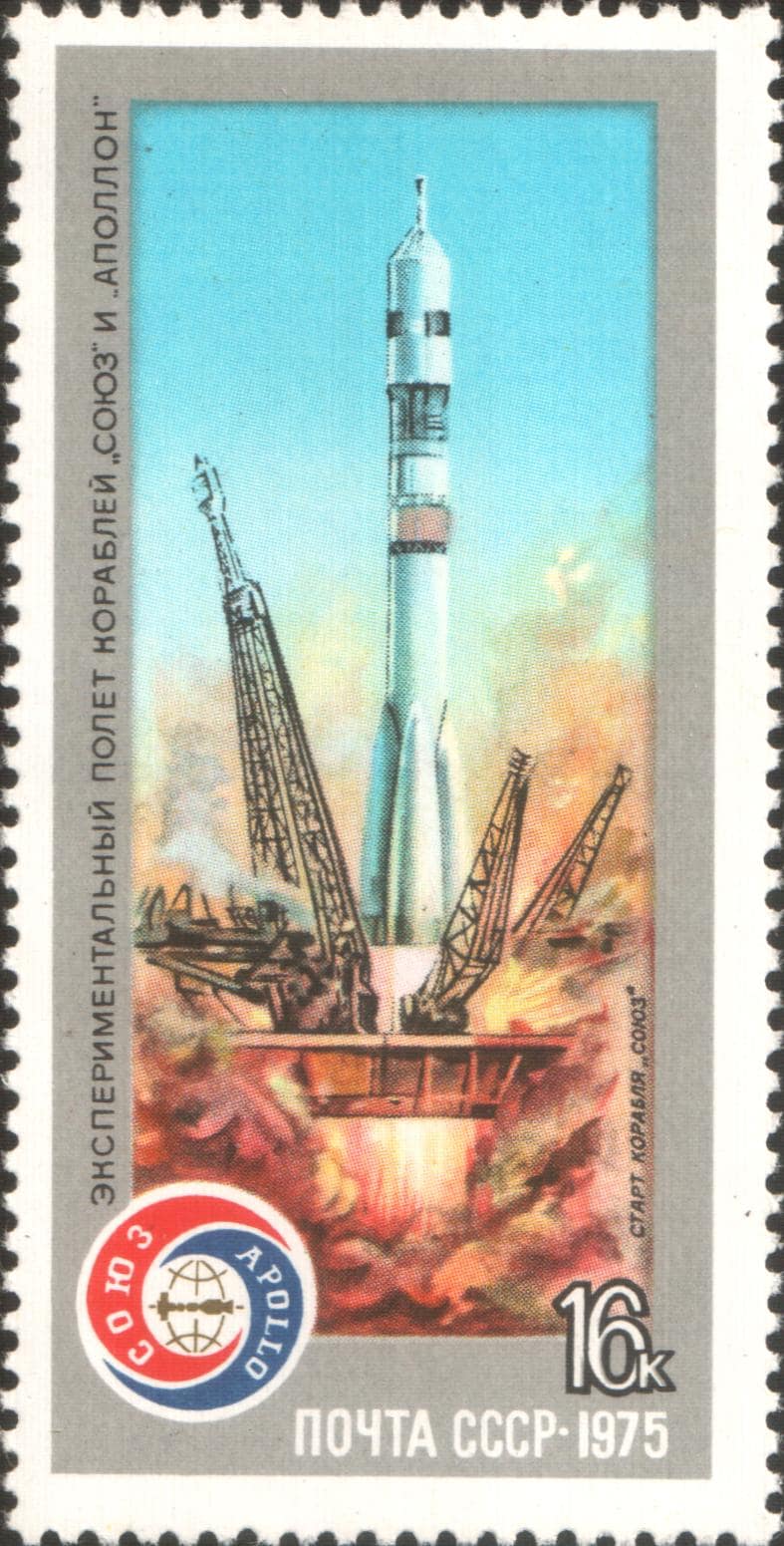
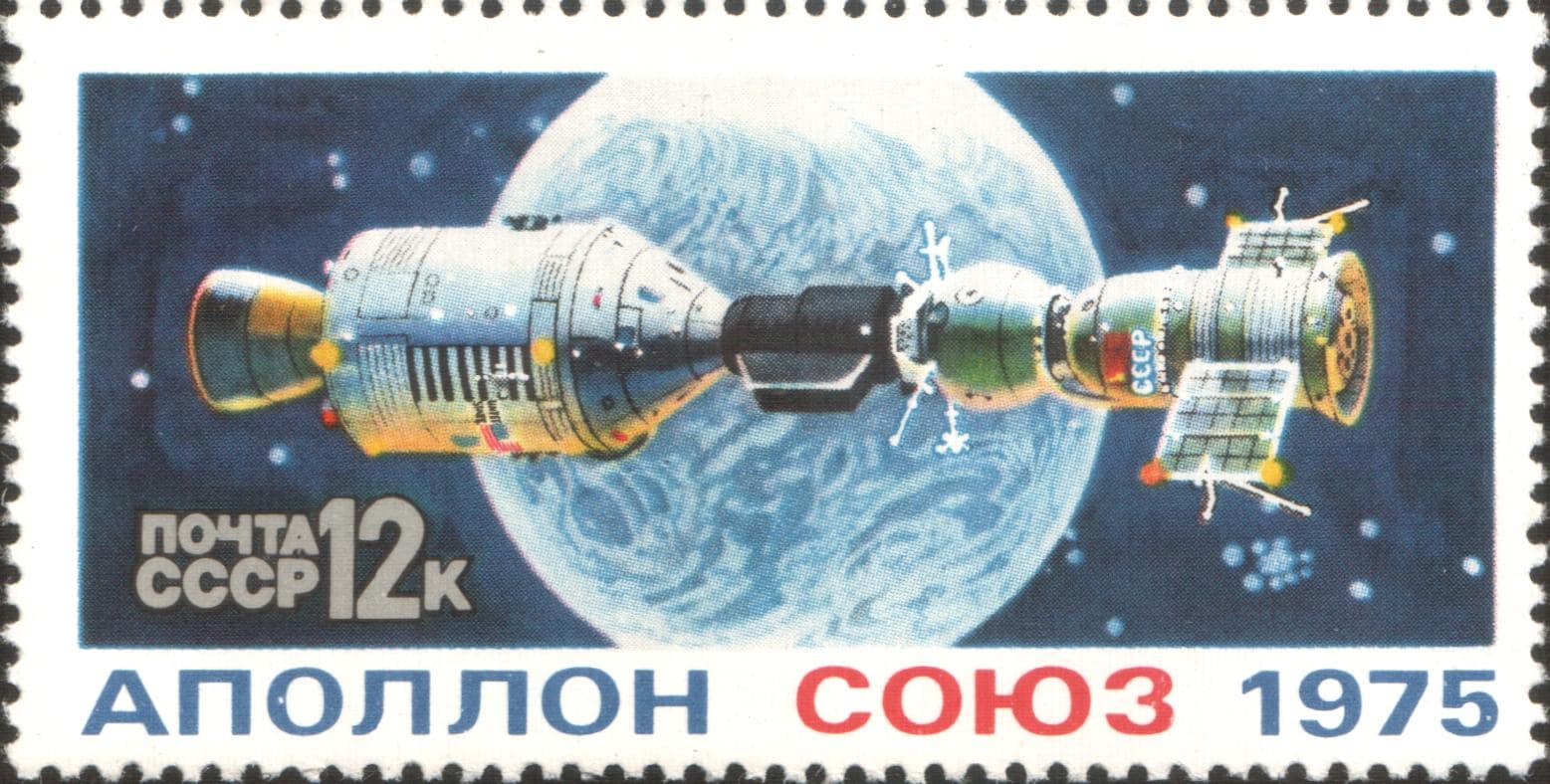
On 17 July 1975, at 16:09 GMT, an American Apollo command module commanded by Thomas Stafford docked with Soyuz 19, commanded by Alexei Leonov — the same Leonov who had performed the first spacewalk in 1965. Three hours after the docking, the hatches were opened. The two crews shook hands. The handshake was broadcast live to both countries.
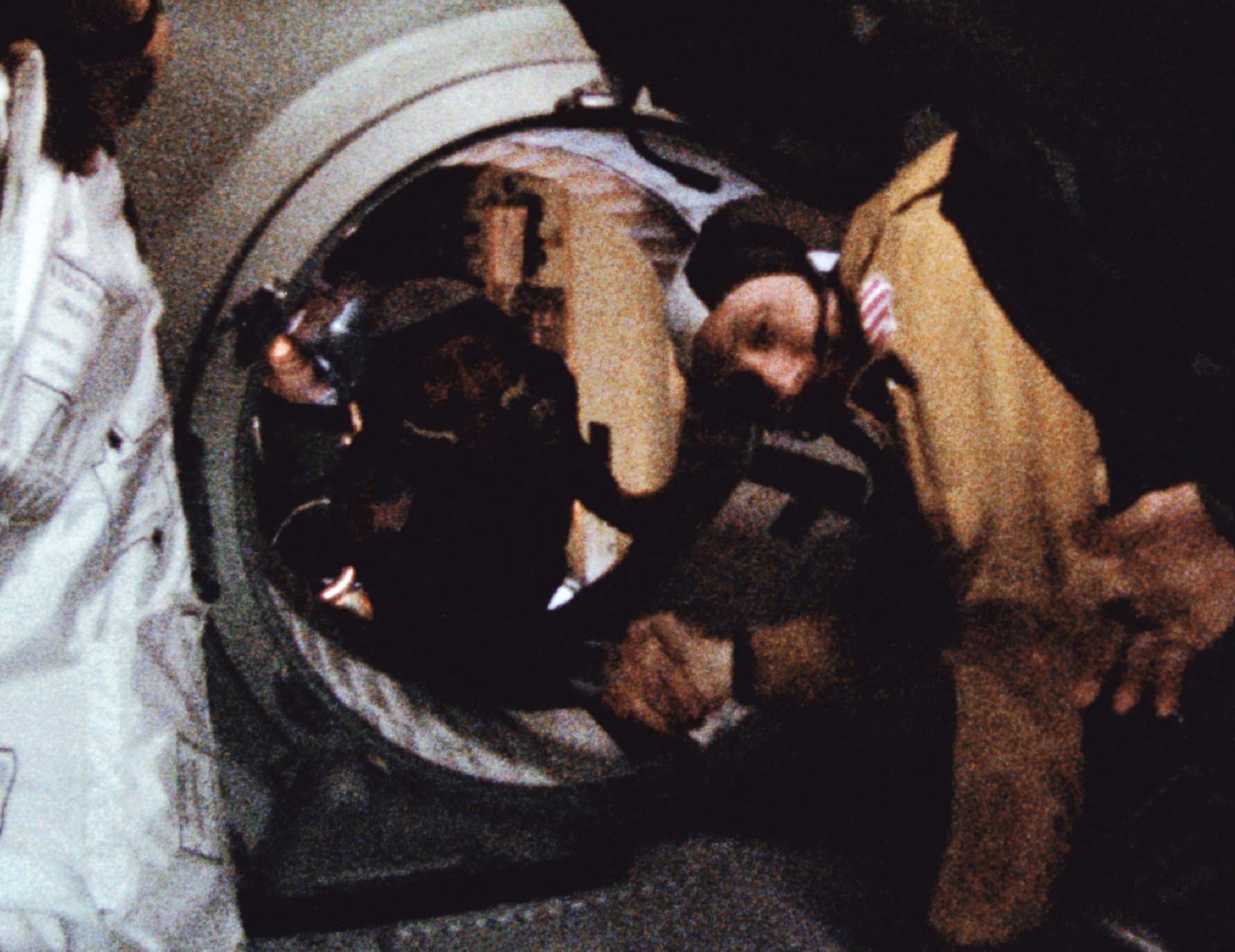
The Apollo–Soyuz Test Project was, for the Soviet propaganda apparatus, a triple win. It put a Soviet cosmonaut (Leonov, the highest-profile of the entire programme since Gagarin) in front of an American camera; it proved the technical equivalence of Soyuz and Apollo at a moment when that proof was politically useful; and it gave the Brezhnev–Nixon (then Brezhnev–Ford) détente exactly the photo opportunity it needed. The Leonov–Stafford handshake photograph, taken by the joint crews aboard the docked spacecraft, was reprinted across Soviet and East European newspapers for days afterwards.
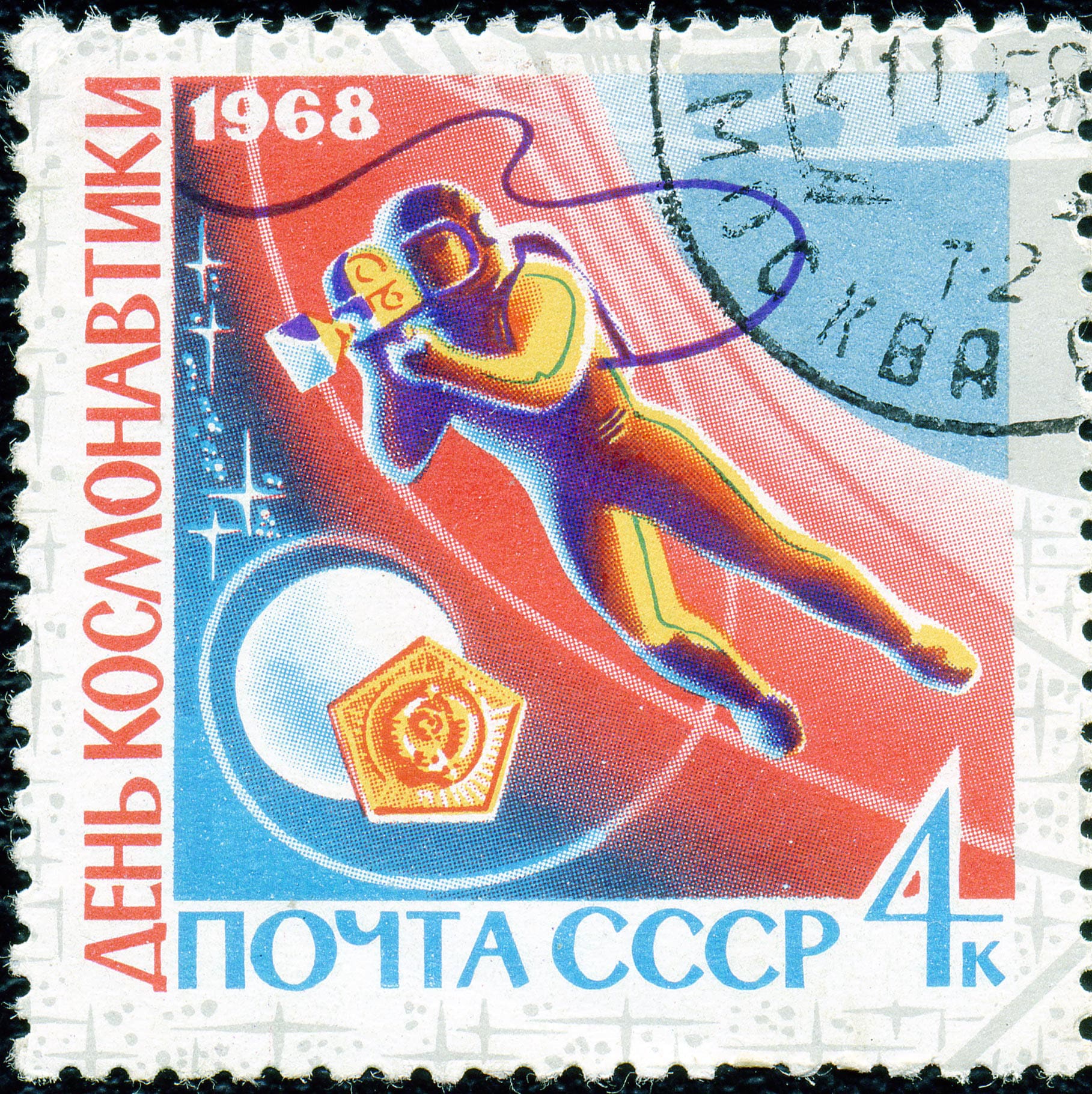
The civil aviation side: the Tu-144
While space dominated propaganda, the 1970s also produced the civilian Soviet aviation flagship that did not turn out the way the propaganda apparatus hoped. The Tupolev Tu-144 — the world’s first supersonic airliner, two months ahead of the Concorde when it first flew on 31 December 1968 — entered scheduled Aeroflot service on 1 November 1977 between Moscow and Almaty.
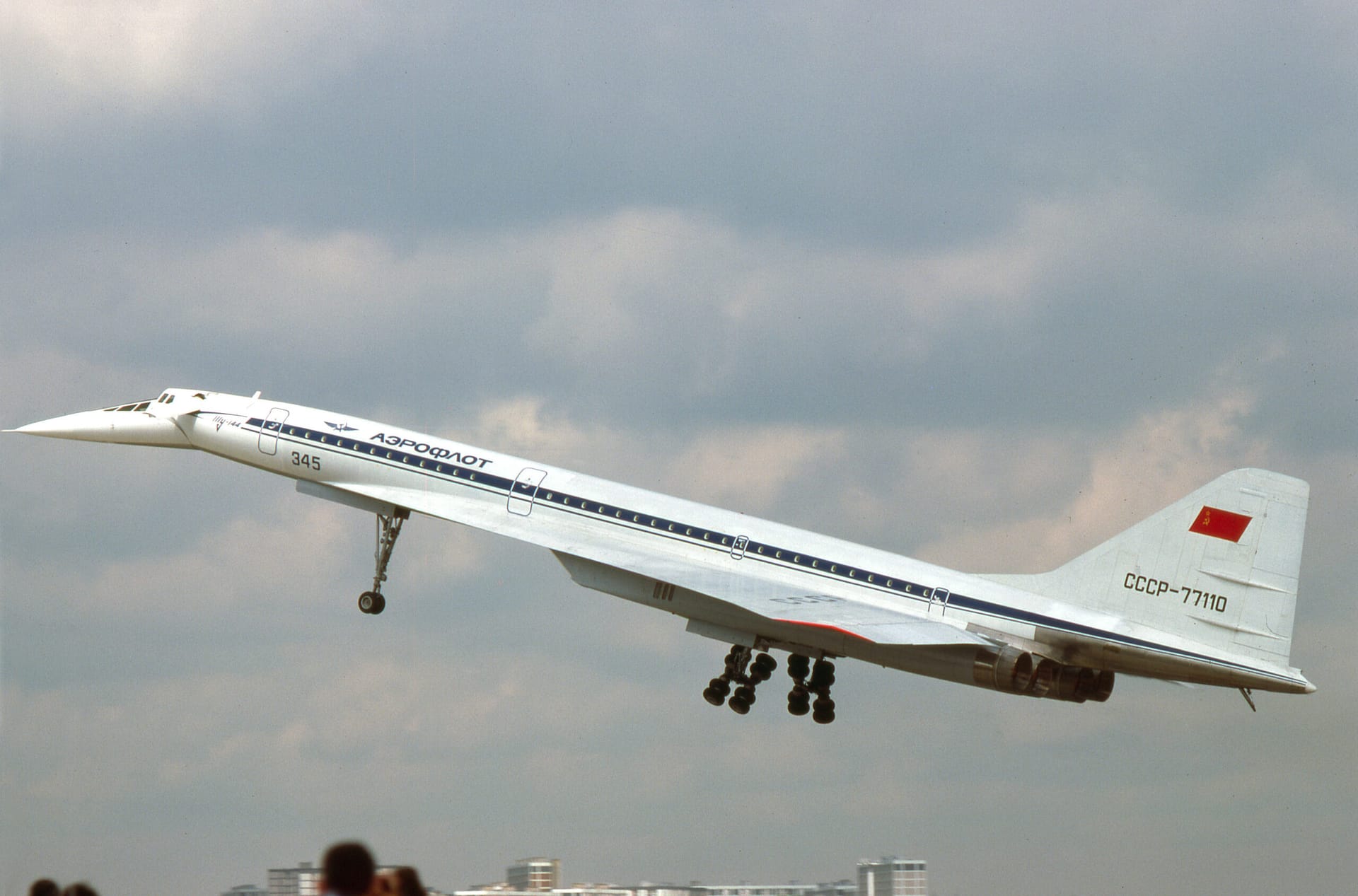
The propaganda celebrated the Tu-144 as it had once celebrated the ANT-25 and the Tu-104: as a symbol of Soviet engineering superiority. The reality was harder. The 1973 Paris Air Show crash, which killed the entire crew and eight people on the ground, had been quietly buried. The aircraft’s fuel burn was almost twice the Concorde’s. The cabin was so noisy that conversations between adjacent seats required shouting. Passengers on the inaugural revenue flight in 1977 were reportedly given complimentary cotton wool for their ears. Aeroflot ran the Tu-144 in regular passenger service for just seven months — 55 passenger flights in all — before quietly withdrawing it after another crash in May 1978.
The propaganda apparatus, after the second crash, simply stopped mentioning the Tu-144. The aircraft kept flying as a test platform until 1999, eventually carrying NASA astronauts during a joint flight-research programme in the mid-1990s. But the propaganda’s brief moment with the Tu-144 had already passed.
A decade of patient routine
By the end of the 1970s the propaganda machinery had successfully reframed Soviet space activity from a story of dramatic firsts into a story of methodical occupation. Salyut 6 was operating continuously. Lunokhod 2 had finished its mission. The Warsaw Pact guest-cosmonaut programme was sending one new East European cosmonaut into orbit roughly every six months. The Soviet space programme had become, in propaganda terms, an institution — and institutions are easier to celebrate continuously than spectaculars, even if they generate fewer headlines.
What the propaganda apparatus did not say — but what was true — was that the engineering side of the programme was also beginning to age. The Salyut stations were small, cramped, structurally limited; the Soyuz capsule had been in service since 1967 with relatively few modifications; the N1 lunar rocket programme had been quietly cancelled in 1976; the Tu-144 had been quietly withdrawn. The propaganda kept playing the Aviamarsh. The machinery underneath the propaganda was getting tired.
The 1980s — the next piece in this series — would be the decade that contradiction became unsustainable. The propaganda was still loud, still confident, still celebrating Mir and Buran. The state under it was on its way to dissolving.
Sources: Asif Siddiqi, “Challenge to Apollo”; David Harland, “The Story of Space Station Mir” (Springer Praxis, 2005); James Harford, “Korolev” (John Wiley, 1997); BBC World Service, “Witness History” Apollo–Soyuz episode (2015); Tu-144 historical record at thisdayinaviation.com.
Aviation in Soviet Propaganda — Series Index
→ The 1940s: The Great Patriotic War
→ The 1960s: The Cult of the Cosmonaut
→ The 1970s: The Routine Cosmonaut (you are here)

 English
0 Comments