
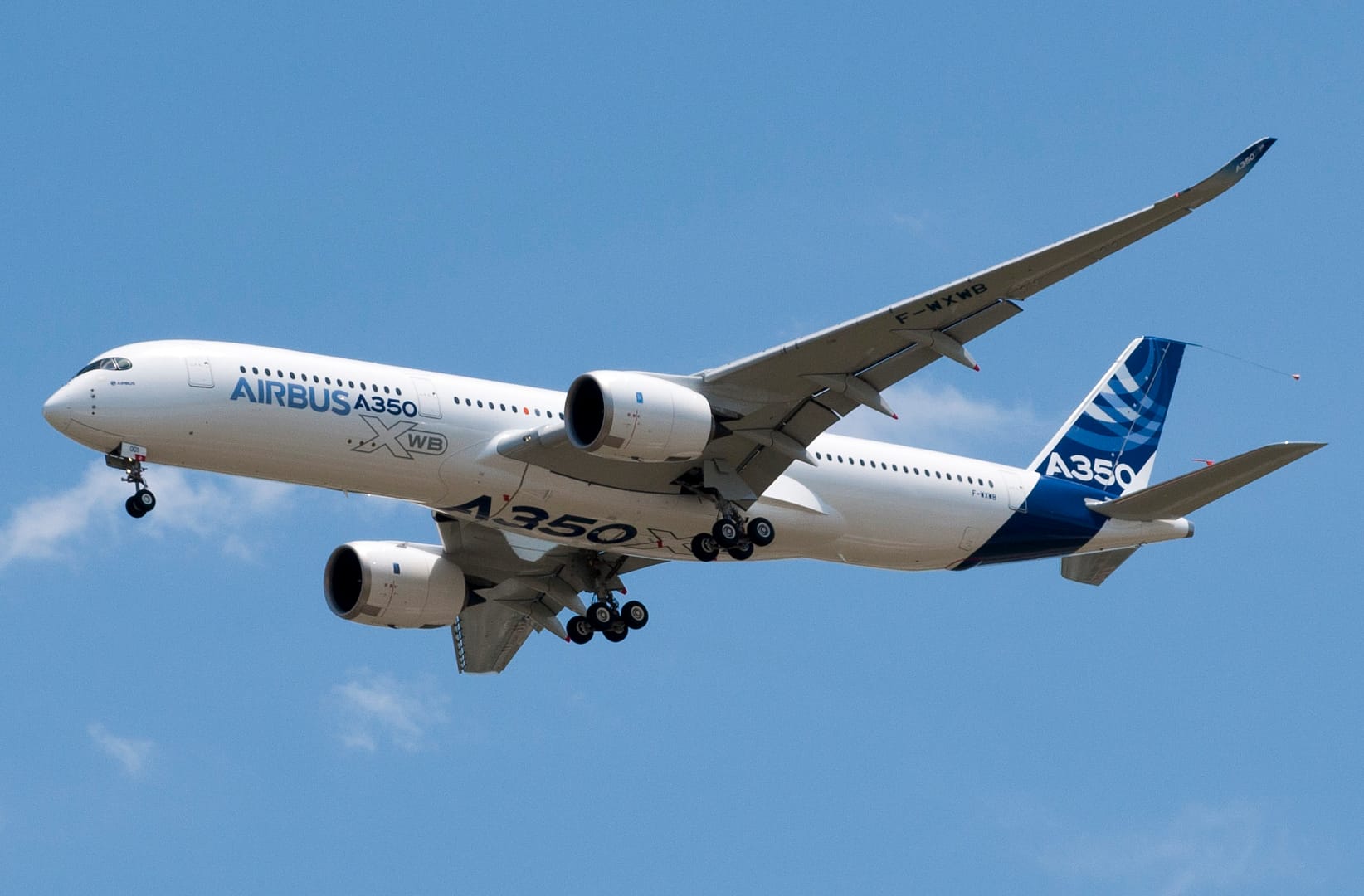
Stand at any major airport in the world and watch the planes come and go. A Boeing 737 lands. An Airbus A320 takes off. A Dreamliner taxis past an A350. And unless you know exactly where to look -- the nose shape, the winglet style, the engine nacelle profile -- you could be forgiven for thinking they're all the same airplane. Cylindrical fuselage. Low swept wings. Two big turbofans slung underneath. A conventional tail sticking up at the back. The formula hasn't changed since the Boeing 707 first flew in 1957. That's nearly seven decades of the same basic shape. Why? Because physics and economics are ruthless optimizers, and they've driven every aircraft manufacturer on Earth to the same inescapable answer.
Quick Facts: The Tube-and-Wing Consensus
| Template Aircraft | Boeing 707 (first flight: 1957) |
| Design Formula | Cylindrical fuselage + low swept wings + underwing turbofans |
| Cruise Speed | Mach 0.78-0.85 (unchanged for 65+ years) |
| BWB Fuel Savings | 20-50% (projected) |
| BWB Contender | JetZero Z4 (250 passengers, first flight ~2027) |
| Why Mach 0.85? | Wave drag increases exponentially above this speed |
| Why Underwing Engines? | Structural relief, easy maintenance, certification simplicity |
The Tube: Why a Cylinder Is the Only Shape That Works
The cylindrical fuselage isn't a choice -- it's a physical necessity. A pressurized airliner cabin operates at a pressure differential of about 8 psi between the inside and outside at cruise altitude. That's over 30 tonnes of force trying to blow the fuselage apart from the inside. A cylinder distributes that pressure evenly around its circumference, turning the entire skin into a tension structure. Any other cross-section -- oval, rectangular, blended -- creates stress concentrations that require heavier reinforcement.
The numbers are brutal. A circular cross-section of a given diameter can be pressurized with significantly less structural weight than an equivalent-width elliptical or rectangular cross-section. Every kilogram saved on the fuselage structure is a kilogram that can be filled with passengers, cargo, or fuel. Over a 30-year service life with 60,000+ pressurization cycles, even marginal structural inefficiency compounds into millions of dollars in lost revenue. The cylinder wins because the cylinder always wins.
The Wings: Swept at 25 Degrees Because Math Says So
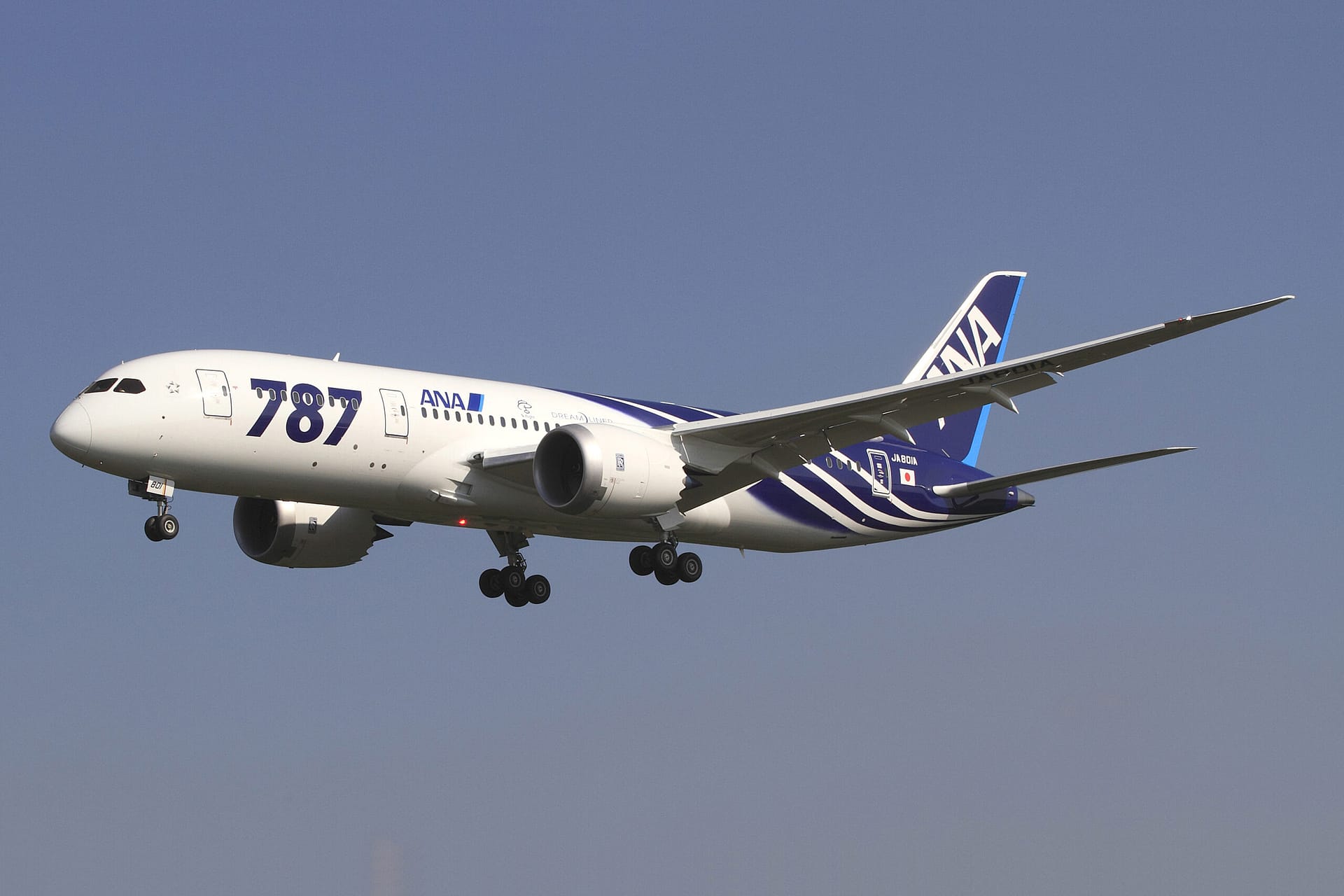
Every modern airliner has wings swept back at approximately 25 degrees. Not 15, not 35 -- about 25. This isn't arbitrary. Wing sweep delays the onset of transonic drag rise, allowing the aircraft to cruise faster before shock waves form on the wing and dramatically increase fuel consumption. A sweep angle of 25 degrees is the sweet spot: enough to push the critical Mach number up to around 0.85, but not so much that it hurts low-speed performance (which matters enormously for takeoff and landing).
And those engines hanging beneath the wings? That positioning is a masterpiece of practical engineering. Underwing engine placement provides "structural relief" -- the upward lift of the wings is partially offset by the downward weight of the engines, reducing the bending moment at the wing root and allowing a lighter wing structure. It also makes engine maintenance vastly easier (mechanics can work on them at ground level), keeps engine exhaust away from the fuselage, and provides a clean path for the intake airflow. The alternative configurations -- rear-mounted engines like the DC-9 or tri-jet layouts like the L-1011 -- all proved to be structural compromises.
Why We're Stuck at Mach 0.85
Here's a question that should bother you: the Boeing 707 cruised at Mach 0.82 in 1958. The A350 cruises at Mach 0.85 in 2026. In nearly 70 years of aerospace engineering, we've gained exactly Mach 0.03 in cruise speed. That's about 30 km/h. Why?
The answer is wave drag. As an aircraft approaches Mach 1.0, shock waves begin forming on the wings and fuselage. These shock waves create enormous additional drag that increases exponentially. Going from Mach 0.85 to Mach 0.90 doesn't cost 6% more fuel -- it can cost 30-40% more. The economics simply don't work. Airlines have calculated, correctly, that passengers will accept a 9-hour transatlantic flight at Mach 0.85 rather than a 7.5-hour flight at Mach 0.95 that costs 40% more. The Concorde proved this definitively: supersonic airliners can be built, but nobody wants to pay for a supersonic ticket.
The Blended Wing Body: Will Anything Ever Change?
If you've read this far and feel vaguely depressed about the state of airliner design innovation, there's one concept that keeps aerospace engineers up at night with genuine excitement: the blended wing body (BWB). Instead of a tube with wings bolted on, the BWB merges fuselage and wing into a single lifting surface. Researchers from Delft University of Technology found that BWB concepts had 12-23% higher aerodynamic efficiency than equivalent tube-and-wing designs. Some proponents claim fuel savings of up to 50%.
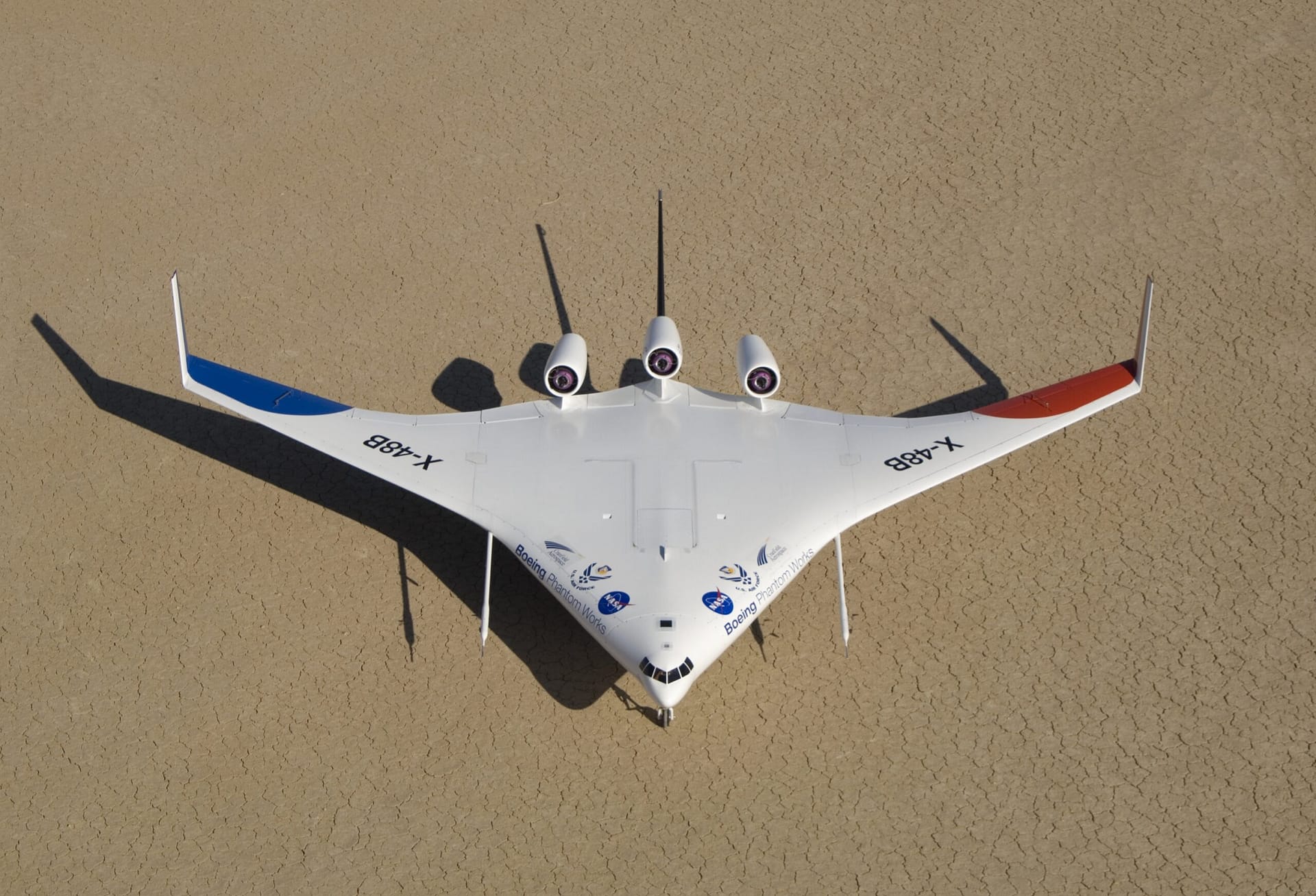
California startup JetZero is betting its future on the concept with the Z4 -- a 250-passenger BWB designed for the lucrative mid-market segment. In 2023, the U.S. Air Force awarded JetZero a $235 million contract to build a full-scale demonstrator, with first flight targeted for 2027. Alaska Airlines and United Airlines have both invested, and easyJet has joined its airline working group, attracted by the projected 50% fuel savings.
But the barriers are immense. How do you evacuate 250 passengers from an aircraft with no windows? How do you certify a pressurized non-circular fuselage? How do passengers in the outer sections feel about sitting 15 meters from the centerline during banking turns? How do airports redesign their gates for an aircraft that's twice as wide as a 737? These aren't unsolvable problems, but they're the reason the tube-and-wing has survived for seven decades while every "revolutionary" alternative has remained a PowerPoint presentation. Physics may eventually force the change. But don't expect it to happen fast -- convergent evolution in aerospace, like convergent evolution in biology, is extraordinarily hard to escape.
Related Questions
Why do all modern airliners look the same?
Almost every airliner shares the 'tube-and-wing' shape — a cylindrical fuselage, low swept wings and engines slung underneath — because physics and economics push every manufacturer toward the same optimum. The template was set by the Boeing 707 in 1957 and has barely changed in over 65 years because it simply works.
What is the tube-and-wing aircraft design?
Tube-and-wing describes the standard airliner layout: a pressurised cylindrical fuselage 'tube' carrying passengers, low-mounted swept wings for efficient high-speed lift, and turbofan engines hung under those wings. It balances structural strength, aerodynamic efficiency, ease of maintenance and certification better than any alternative tried so far.
Why are airliner fuselages cylindrical?
A cylinder is the only practical shape for a pressurised cabin. Airliners cruise with about 8 psi of pressure difference between cabin and outside air, and a circular cross-section spreads that stress evenly through the skin. Any other shape would need much heavier reinforcement to avoid bulging or cracking.
Why do airliners cruise at around Mach 0.85?
Above roughly Mach 0.85, wave drag rises sharply as airflow over the wings approaches the speed of sound, sharply increasing fuel burn. Cruising just below that threshold gives the best balance of speed and efficiency, which is why airliner cruise speeds have stayed near Mach 0.78–0.85 for decades.
Why are jet engines mounted under the wings?
Hanging engines below the wings relieves bending stress on the wing structure, keeps the heavy engines low and accessible for maintenance, and simplifies certification. The layout also keeps engine noise and any failure debris away from the cabin, which is why it became the industry standard.
Which aircraft set the template for modern airliners?
The Boeing 707, which first flew in 1957, established the tube-and-wing formula that virtually every jetliner still follows. Its combination of a cylindrical fuselage, swept wings and podded underwing engines proved so effective that competitors quickly adopted the same basic configuration.
What is a blended wing body aircraft?
A blended wing body, or BWB, merges the fuselage and wings into one smooth lifting shape, promising projected fuel savings of 20–50%. Contenders such as the JetZero Z4, a 250-passenger design aiming to fly around 2027, could finally break the tube-and-wing mould — much as NASA's X-59 rethinks supersonic flight.
Will future airliners look different?
Possibly. Pressures to cut fuel and emissions are driving radical concepts like blended wing bodies and revived supersonic designs. History shows bold shapes don't always succeed — see the Tu-144 'Konkordski' — and even the humble auxiliary power unit will have to adapt to new airframes.
Related Posts
- Boom or Basket: Why the World Can't Agree on Aerial Refueling

0 Comments