
Quick Facts
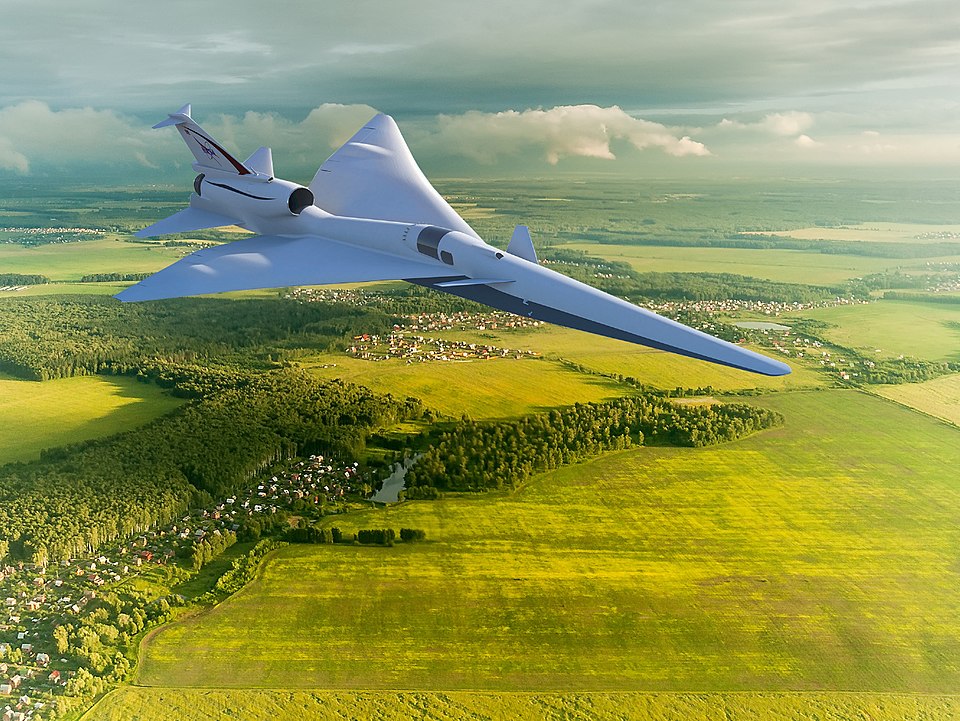
- Aircraft: Lockheed Martin X-59 QueSST (Quiet SuperSonic Technology)
- Date: 5 June 2026, Edwards Air Force Base, California
- Speed achieved: Mach 1.1 (~713 mph / 1,148 km/h)
- Altitude: 43,400 feet
- Flight duration: 81 minutes
- Engine: General Electric F414-GE-100
- Next milestone: Mission-conditions flight at Mach 1.4 / 55,000 ft, followed by community overflight surveys
- Goal: Provide data to lift the 1973 FAA ban on civilian supersonic flight over land
The 53-Year Ban
In 1973, the FAA banned civilian supersonic flight over the continental United States. The regulation was a direct response to the Concorde and the American SST programme: sonic booms from supersonic aircraft rattled houses, cracked plaster, and generated thousands of noise complaints. The ban killed commercial supersonic travel over land before it ever began. The X-59's entire design philosophy is built around defeating that ban — not by lobbying Congress, but by generating data so compelling that regulators have no choice but to rewrite the rule.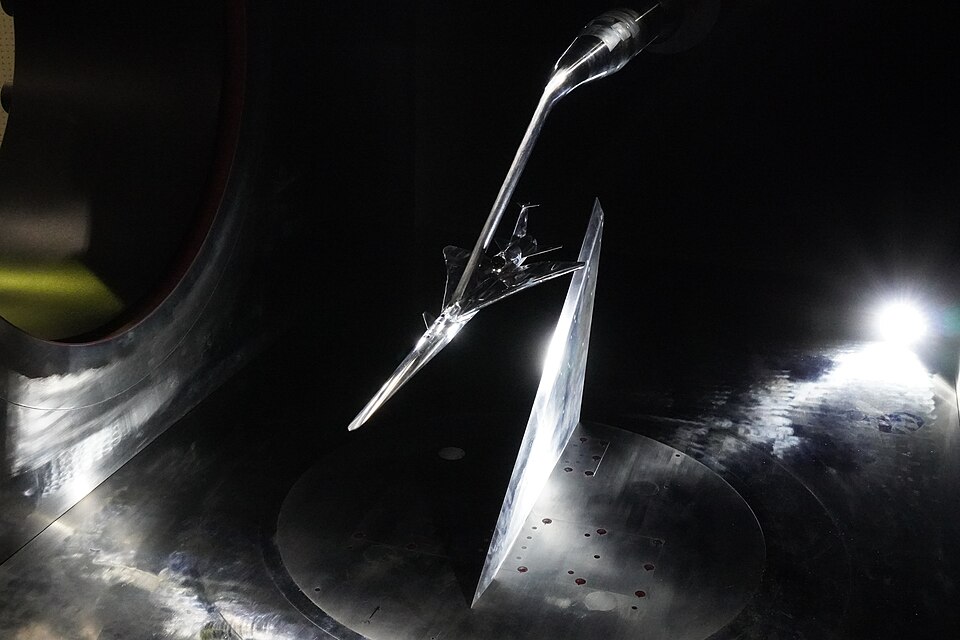
What the Flight Proved
The 5 June sortie was the X-59's first excursion past Mach 1.0. Previous test flights — which began with the aircraft's maiden flight in October 2025 and resumed after a brief pause in early 2026 — had stayed subsonic, validating handling, systems, and the aircraft's unique eXternal Visibility System (XVS), which replaces a forward-facing windshield with cameras and a 4K display. Reaching Mach 1.1 at 43,400 feet confirms that the X-59's airframe, engine, and control systems function correctly in the transonic and low-supersonic regime. NASA reported the aircraft "performed as expected." The next step is a mission-conditions flight at Mach 1.4 (925 mph) and 55,000 feet — the speed and altitude planned for the community overflight phase. During those tests, the X-59 will fly over selected U.S. cities while ground teams and residents record the noise level. That data will be submitted to the FAA and the International Civil Aviation Organization (ICAO) to support new noise standards for commercial supersonic flight.What It Means for the Future
If the community overflight data shows that the X-59's thump falls below an acceptable noise threshold — and if regulators act on that data — the 1973 ban could fall within a year or two. That would open the door for companies like Boom Supersonic to develop commercial supersonic airliners (Spike Aerospace has gone quiet and Exosonic folded in 2024) capable of operating over land. A New York-to-Los Angeles flight that takes five hours today could take two. London to Dubai in three. The economics of supersonic travel have always been brutal — Concorde never turned a profit — but the X-59's bet is that the economics change when you can fly the overland routes that Concorde never could. Congress is already moving: the Supersonic Aviation Modernization Act passed the House in March 2026, and a June 2025 executive order has the FAA drafting the repeal of the overland ban, with a final rule expected by mid-2027. If the legislation passes alongside the community noise data, the regulatory path is clear. Sources: NASA, Air & Space Forces Magazine, The Aviationist, AIAA, Aerospace Testing InternationalRelated Questions
What is NASA's X-59?
The X-59 QueSST (Quiet SuperSonic Technology) is an experimental jet built by Lockheed Martin for NASA to fly faster than sound without a loud sonic boom. Its long, slender shape softens the shockwaves into a gentle thump, aiming to make overland supersonic passenger flight possible again. It has since flown faster, reaching Mach 1.4.
When did the X-59 first fly supersonic?
The X-59 first broke the sound barrier on 5 June 2026 over Edwards Air Force Base in California, reaching Mach 1.1 at 43,400 feet during an 81-minute flight. It produced only a soft thump rather than a window-rattling boom, a milestone after a decade of development.
How does the X-59 avoid a sonic boom?
The X-59 avoids a loud sonic boom through its shape: an extremely long, narrow nose and carefully arranged surfaces spread out the shockwaves an aircraft creates at supersonic speed. Instead of merging into one sharp bang, they reach the ground as a quiet thump, barely noticeable to people below.
Why has supersonic flight been banned over land?
Civil supersonic flight over the United States has been banned for 53 years because of the disruptive sonic boom, the loud bang produced when an aircraft exceeds the speed of sound. The rule effectively ended overland supersonic airliner service. NASA's X-59 aims to prove that quiet supersonic flight could justify changing it.
How fast and high did the X-59 fly?
On its first supersonic flight the X-59 reached Mach 1.1, about 713 mph or 1,148 km/h, at an altitude of 43,400 feet, powered by a single General Electric F414-GE-100 engine. The 81-minute sortie demonstrated that the aircraft could go supersonic while keeping its boom quiet.
How is the X-59 different from Concorde?
Concorde was a supersonic airliner that carried passengers but generated a powerful sonic boom, restricting it largely to overwater routes. The X-59 is a single-seat research aircraft designed specifically to eliminate that boom. The Soviets built their own rival airliner, the Tupolev Tu-144 "Konkordski", which faced similar limits.
Related Posts


0 Comments