
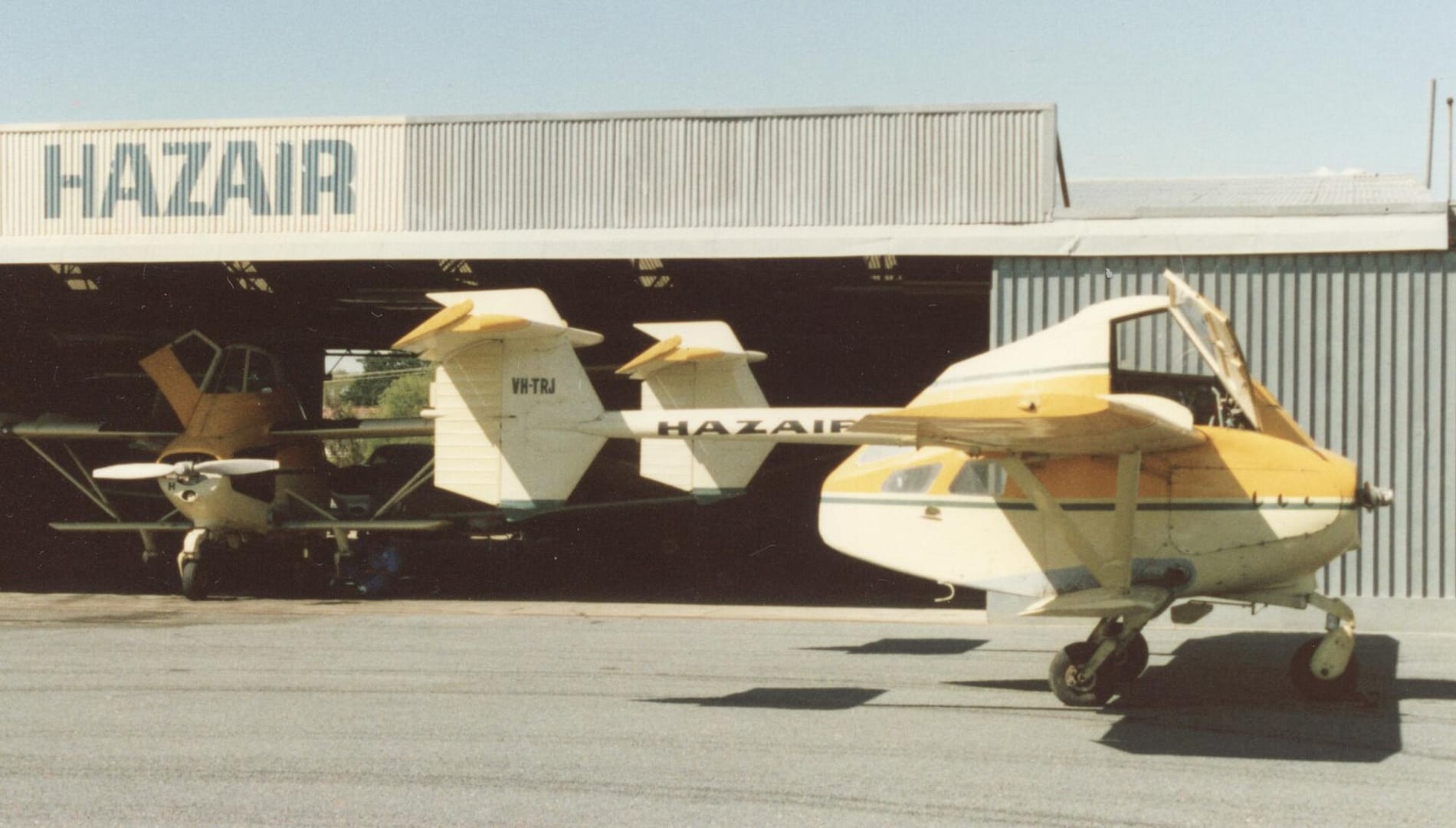
There are ugly aeroplanes, and then there is the Transavia Airtruk. It looks like a garden shed, a greenhouse and a barn door got into an argument and were forced to fly home together. It is so otherworldly that the filmmakers behind Mad Max Beyond Thunderdome cast it — almost unmodified — as a futuristic flying machine.
And here is the part nobody expects: the Airtruk is not a joke. It is one of the cleverest agricultural aircraft ever built. Every bizarre feature is there for a reason.
QUICK FACTS
| Aircraft | Transavia PL-12 Airtruk — agricultural crop duster |
| Designer | Luigi Pellarini, Australia |
| First flight | 15 April 1965 |
| The look | Twin separate tail booms, a high cockpit, built around a hopper |
| Built | Around 140, from 1966 to 1993 |
| Fame | Played a futuristic flying machine in Mad Max Beyond Thunderdome |
Built around a barrel
The Airtruk was the work of Italian-Australian designer Luigi Pellarini, and his guiding idea was simple. Most crop-dusters are ordinary aircraft with a chemical tank bolted on as an afterthought. Pellarini did the opposite: he built the entire aircraft around a big, barrel-shaped hopper, then perched the pilot high on top of it for a commanding view of the crops below. The prototype first flew on 15 April 1965 behind a modest 285-horsepower engine.
The result looks ungainly on the ground. In its actual job — flying low and slow over a field, dumping a tonne of fertiliser, then doing it again — it is exactly right.
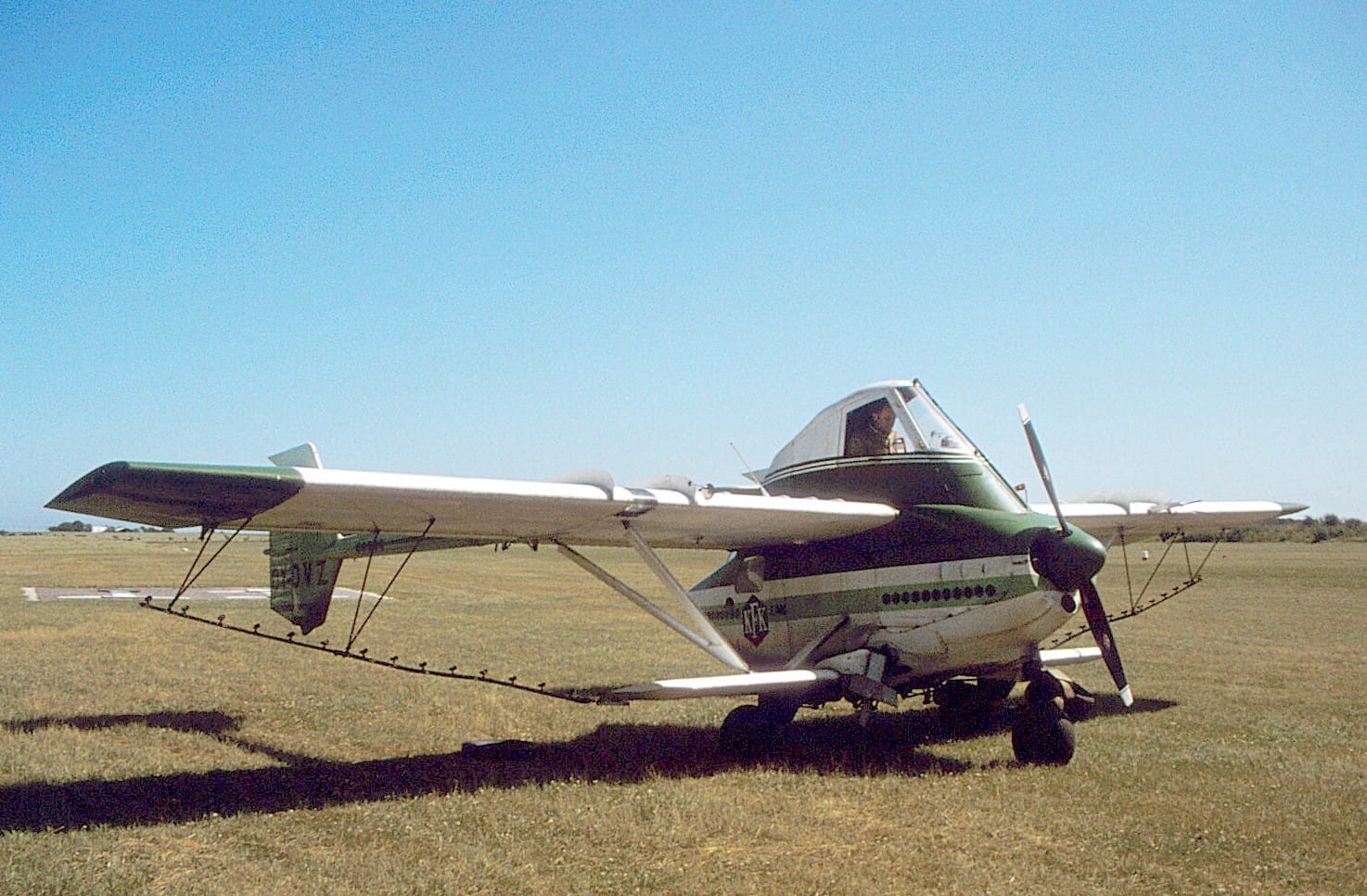
The genius of the twin tails
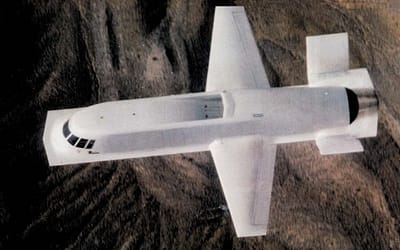
Look at the back and you will see the strangest detail: two completely separate tail booms with a wide gap between them, instead of one normal tail. That gap is the masterstroke. It let a loading truck reverse straight up to the rear of the aircraft to refill the hopper in seconds — with the ground crew safely behind the cabin, well clear of the propeller spinning at the nose. Combine that with the high-mounted seat and its panoramic view, and you have a machine optimised down to the bolt for one tough, repetitive job.
It was rugged, too, happy to land on rough outback strips right next to the field it was treating. The Airtruk turns up on just about every list of the ugliest aircraft ever built — see for yourself below.
Ugly, famous, and a quiet success
The movie cameo made the Airtruk briefly famous, but its real achievement is far less glamorous: it worked, and it kept working. Around 140 were built between 1966 and 1993, prized by farmers and operators for their load capacity, ruggedness and surprising agility.
It is the perfect rebuttal to the idea that good design has to be beautiful. The Airtruk is proof that if you solve the right problem cleanly enough, you can build something genuinely brilliant — and have it look like absolutely nothing else in the sky.
Sources: Wikipedia; Plane & Pilot; AeroTime; Smithsonian Magazine.
Related Questions
What is the Transavia Airtruk?
The Transavia PL-12 Airtruk is an Australian agricultural crop-dusting aircraft, first flown on 15 April 1965 and designed by Italian-Australian engineer Luigi Pellarini. Famous for its bizarre shape — twin separate tail booms, a high cockpit, and a fuselage built around a chemical hopper — it is often listed among the ugliest aircraft ever built, yet it was a clever, effective design.
Why does the Transavia Airtruk look so strange?
Every odd feature of the Airtruk serves a purpose. Rather than bolting a tank onto an ordinary aircraft, Pellarini built the whole machine around its chemical hopper. The high-mounted cockpit gives a panoramic view for low-level spraying, and the twin tail booms with a wide gap let a loading truck reverse right up to the rear to refill the hopper in seconds.
What movie featured the Transavia Airtruk?
The Transavia Airtruk appeared in the 1985 film Mad Max Beyond Thunderdome, where its otherworldly shape let it serve — almost unmodified — as a futuristic flying machine. The cameo made the aircraft briefly famous, though its real distinction is as a genuinely capable crop duster rather than a movie prop.
Who designed the Transavia Airtruk?
The Airtruk was designed by Luigi Pellarini, an Italian-Australian aircraft designer. His guiding principle was to build the aircraft around its agricultural payload rather than adapt an existing airframe. Pellarini worked in a tradition of bold Italian aeronautical engineering that produced other strikingly unusual machines, such as the nine-winged Caproni Ca.60.
How many Transavia Airtruks were built?
Around 140 Airtruks were built between 1966 and 1993. Farmers and operators prized them for their load capacity, ruggedness, and surprising agility, and the type was happy to land on rough outback strips right next to the fields it was treating — much like other rugged utility aircraft. For a plane so often mocked for its looks, it was a quiet commercial success.
Why was the Airtruk's twin-boom tail important?
The Airtruk's twin tail booms, separated by a wide gap instead of a single conventional tail, were its masterstroke. The gap let a loading truck reverse straight up to the rear of the aircraft to refill the chemical hopper in seconds, while keeping the ground crew safely behind the cabin and well clear of the nose-mounted propeller.

0 Comments