
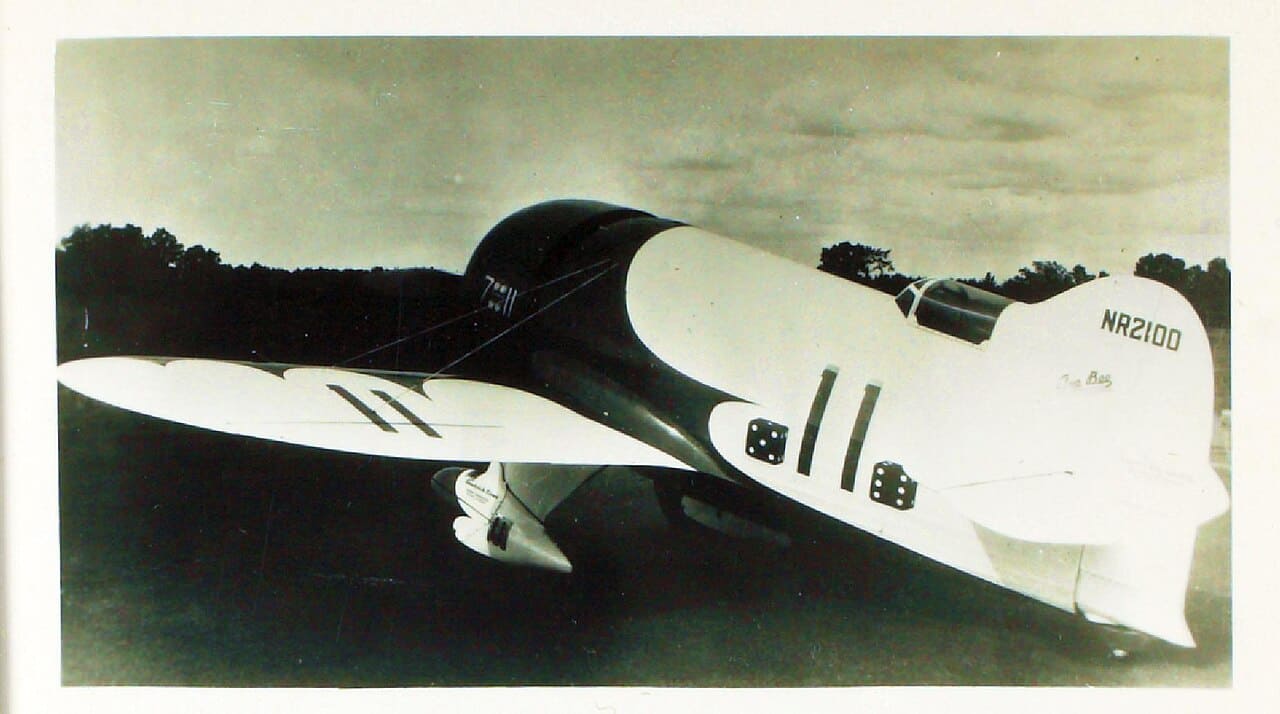
In the autumn of 1932, a small, barrel-chested aeroplane painted red and white sat on a Cleveland airfield looking less like an aircraft than a cartoon of one. It was almost all engine — a giant radial nose bolted to a stubby fuselage, with the cockpit shoved so far back it nearly touched the tail. Pilots who saw it laughed. Then they saw it fly, and stopped laughing. The Gee Bee could outrun almost anything in the sky. It could also kill you before you understood what you had done wrong.
Few aircraft in history have been so loved, so feared, and so lethal all at once.
QUICK FACTS
| Aircraft | Gee Bee Model R Super Sportster (R-1 / R-2) |
| Built by | Granville Brothers Aircraft, Springfield, Massachusetts |
| Year | 1932 |
| Engine | Pratt & Whitney Wasp radial — enormous for the tiny airframe |
| Famous pilot | Jimmy Doolittle — 1932 Thompson Trophy, ~296 mph record |
| Reputation | Blisteringly fast and lethally unforgiving |
A flying engine
The Gee Bee Model R was built by the Granville Brothers — “Gee Bee” for G.B. — a small outfit in Springfield, Massachusetts, chasing the enormous prize money of Depression-era air racing. Their solution to going fast was blunt: take the biggest engine you can find, a Pratt & Whitney Wasp radial, and build the smallest possible aeroplane around it. The result had the aerodynamics of a flying beer keg and the power-to-weight of a rocket.
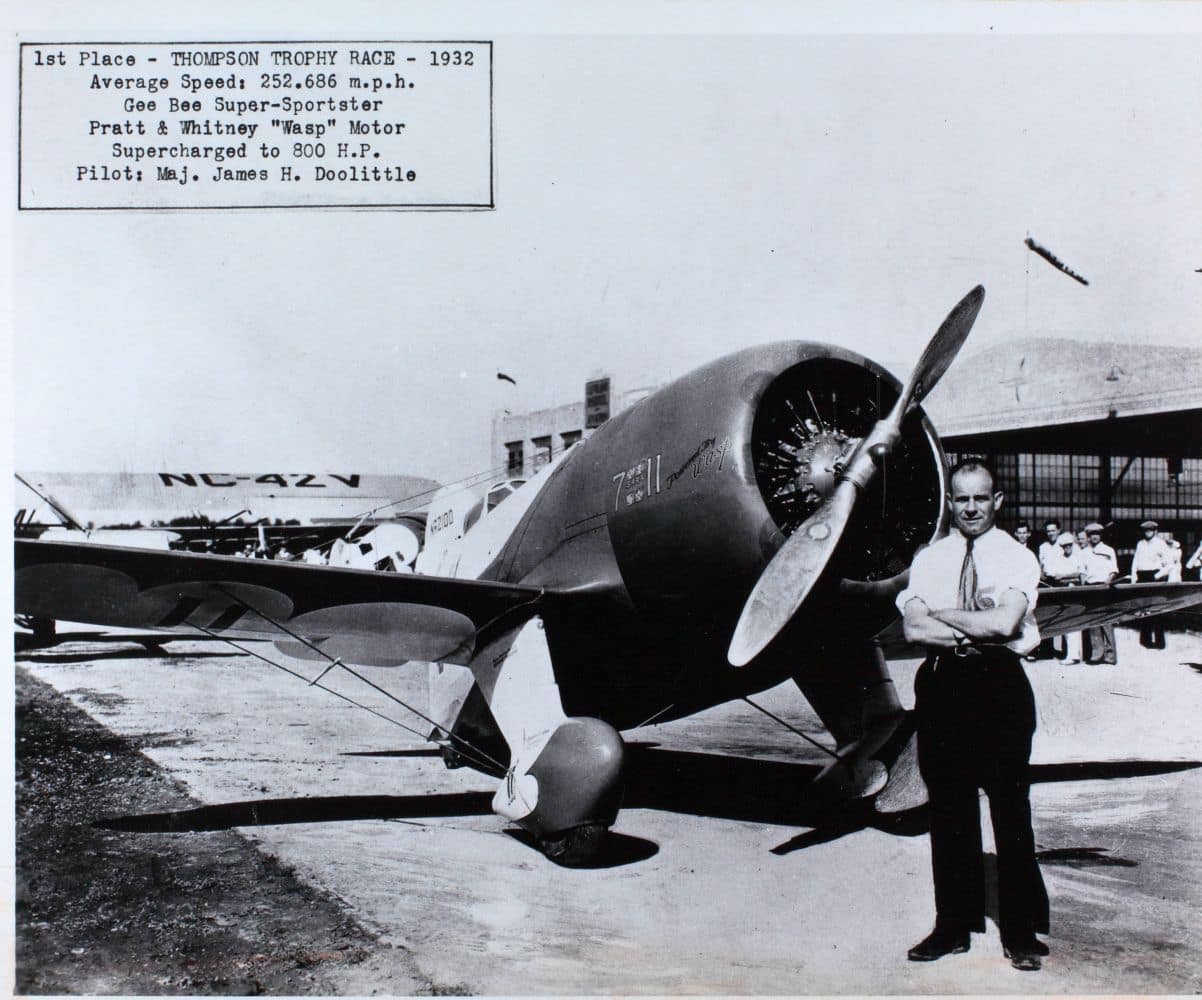
It worked. In 1932 the R-1, flown by the legendary Jimmy Doolittle, won the Thompson Trophy pylon race and set a world landplane speed record of about 296 miles per hour. For a moment, the ungainly little Gee Bee was the fastest thing on wings over land.
The widowmaker
But that speed came from a design that broke every rule of stability. The huge engine hung far ahead of the tiny wings; the short fuselage gave the tail almost nothing to work with. The Gee Bee was twitchy in the air and treacherous near the ground, punishing the smallest mistake on takeoff or landing with a snap that few pilots could catch in time. One after another, Gee Bee racers crashed, and their pilots did not walk away.
Doolittle — one of the most gifted and careful aviators who ever lived — survived his season in the R-1, collected his trophy, and then did something telling: he quit air racing. He had looked into the Gee Bee’s character and decided he had used up enough luck.
Beautiful, terrible, unforgettable
The originals were all eventually destroyed, most in fatal crashes. And yet the Gee Bee never faded. Its shape is instantly recognisable, its story taught to every student of aviation history, its reputation equal parts admiration and dread. In the 1990s the pilot Delmar Benjamin built a faithful flying reproduction and proved the beast could be mastered — dancing it through airshow routines that made older pilots wince.
That is the paradox of the Gee Bee. It was one of the most dangerous aircraft ever built, and one of the most beloved. It killed, and it thrilled. Ninety years on, it remains the purest expression of a simple, reckless idea: bolt a person to an engine, point it at the horizon, and see how fast the world can go.
Sources: Smithsonian National Air and Space Museum; New England Air Museum; contemporary air-racing records.
Related Questions
What was the Gee Bee Model R?
The Gee Bee Model R Super Sportster was a 1932 American racing aeroplane built by the Granville Brothers of Springfield, Massachusetts. It was essentially a giant radial engine with tiny wings and a cockpit tucked near the tail — built for one purpose: raw speed around a pylon course.
Why was the Gee Bee so dangerous?
Its extreme design — a huge, heavy engine on a stubby, short-coupled fuselage — made it twitchy, unstable and brutally unforgiving, especially at low speed and on landing. Several Gee Bee racers crashed and killed their pilots, giving the aircraft a fearsome, almost cursed reputation.
Did Jimmy Doolittle fly the Gee Bee?
Yes. Jimmy Doolittle won the 1932 Thompson Trophy in the Gee Bee R-1 and set a world landplane speed record of roughly 296 mph that same year. Having survived one of the most dangerous aircraft of the age, the famously careful Doolittle then stepped away from air racing.
How fast was the Gee Bee?
Very fast for its day. The R-1 set a world landplane speed record of around 296 mph in 1932 and won the Thompson Trophy pylon race averaging over 250 mph — astonishing numbers for an aircraft of that era, wrung from a single oversized radial engine.
Do any Gee Bees still fly?
The original racers were all lost long ago, but the design’s fame never faded. In the 1990s pilot Delmar Benjamin built and flew an exact Gee Bee R-2 reproduction, proving the “widowmaker” could be flown safely by a skilled pilot — and thrilling airshow crowds for years.

0 Comments