
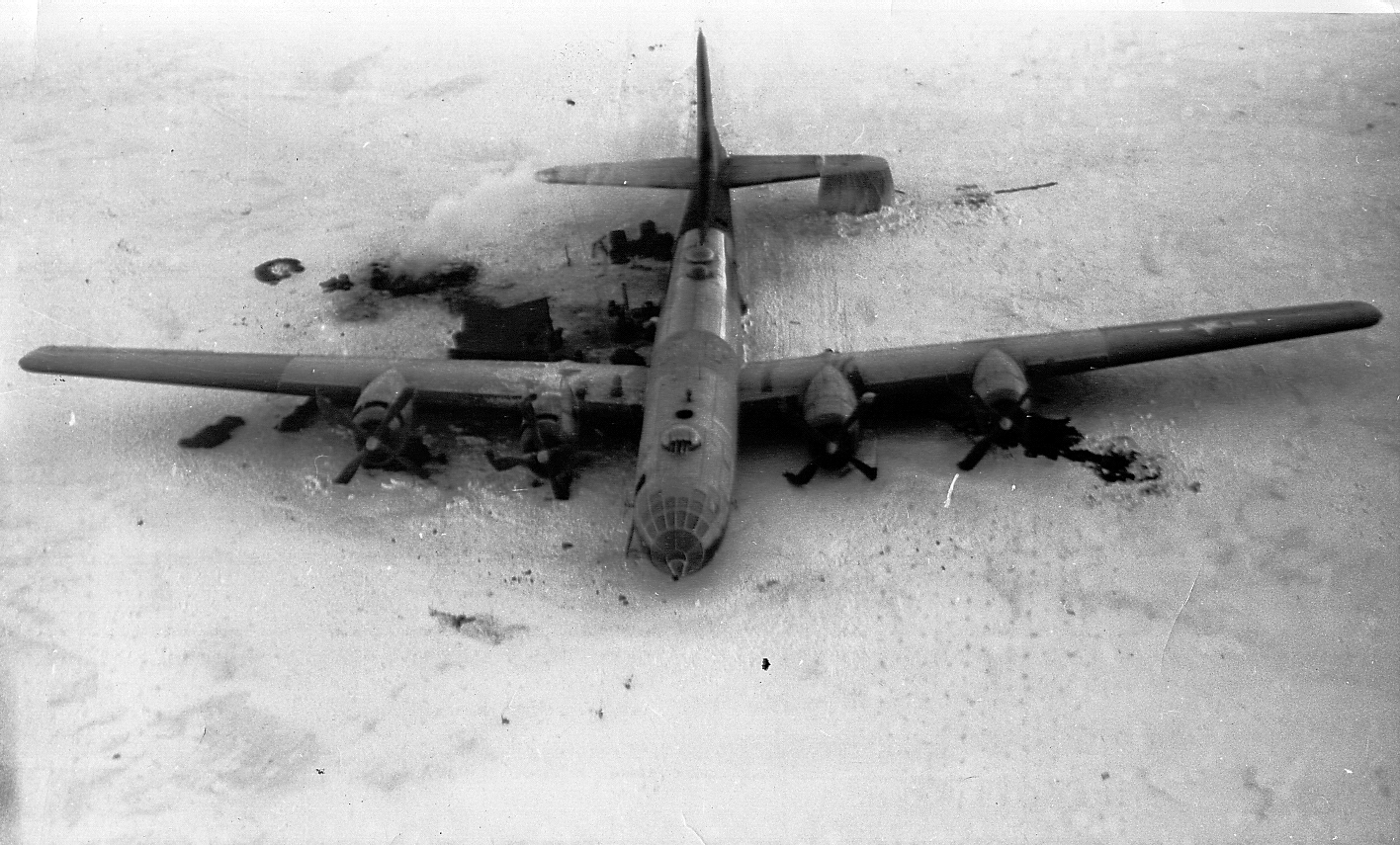
On 21 May 1995, on a frozen lake 250 miles north of Thule, Greenland, a B-29 Superfortress that had not moved in forty-eight years swung onto its makeshift ice runway under its own power. Four rebuilt engines ran sweetly. Half a century of Arctic exile was about to end in the most romantic warbird recovery ever attempted.
Minutes later, the Kee Bird was burning. The story of how she got to that lake, how a band of greying engineers nearly flew her out of it, and how it all came apart in the final hundred metres, is one of aviation’s great heartbreaks.
Quick Facts: The Kee Bird
| Aircraft | Boeing B-29-95-BW Superfortress, serial 45-21768, 46th Reconnaissance Squadron |
| Lost | 21 February 1947 — wheels-up landing on a frozen lake in northwest Greenland after a polar navigation mission went astray |
| Crew | 11 men, all rescued after three days on the ice |
| Recovery attempt | 1994–95, led by test pilot and air racer Darryl Greenamyer |
| The end | 21 May 1995 — APU fuel fire during taxi; airframe destroyed |
| Documented in | NOVA’s “B-29 Frozen in Time” (PBS, 1996) |
Three Days at the Top of the World
The Kee Bird’s war was the Cold War, and her battlefield was emptiness. Flying secret Project Nanook reconnaissance from Ladd Field, Alaska, her crew launched on 20 February 1947 toward the North Pole — and into a polar night that swallowed their navigation. Lost, low on fuel, radioing “four minutes of fuel” as the tanks emptied, pilot Lieutenant Vern Arnett put her down wheels-up on a nameless frozen lake. The landing was so gentle the bomber was barely scratched.
All eleven men survived three days at forty below before a ski-and-JATO-equipped C-54 snatched them off the ice. The Air Force wrote off the airframe, and the Kee Bird began her second career: the world’s best-preserved B-29, parked alone at the top of the world.
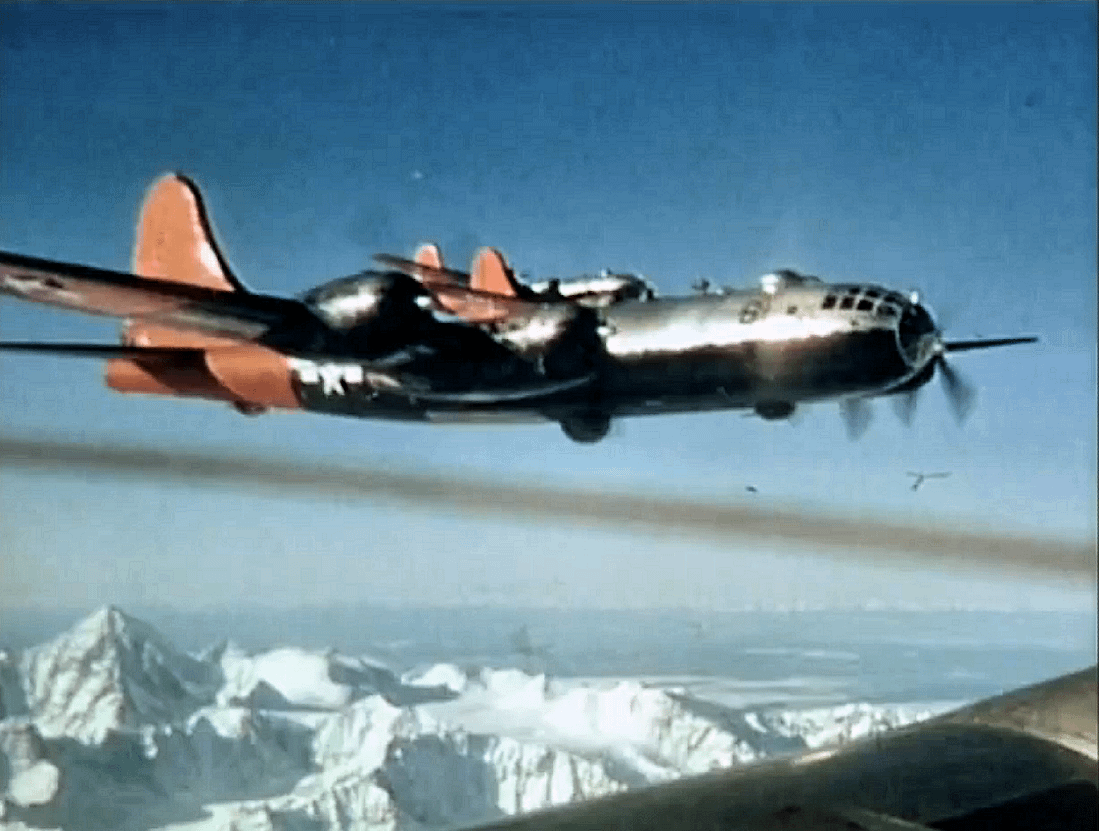
The Impossible Salvage
Enter Darryl Greenamyer: SR-71 test pilot, Reno air-race legend, world speed-record holder — and a man constitutionally incapable of leaving a flyable B-29 in the ice. In July 1994 his team flew into the lake aboard a Caribou bush transport carrying, among other things, four remanufactured engines, new propellers, tires and a small bulldozer. The plan was gloriously simple: fix her on the spot, carve a runway from the ice, and fly her to Thule.
The Arctic made them pay for every bolt. The 1994 season ended in a winter retreat; worse, flight engineer Rick Kriege fell gravely ill at the site and died shortly after evacuation — the project’s quiet tragedy, remembered in the NOVA film by the men who worked beside him. In May 1995 the team returned, finished the engines, and taxied her out.
A Hundred Metres From History
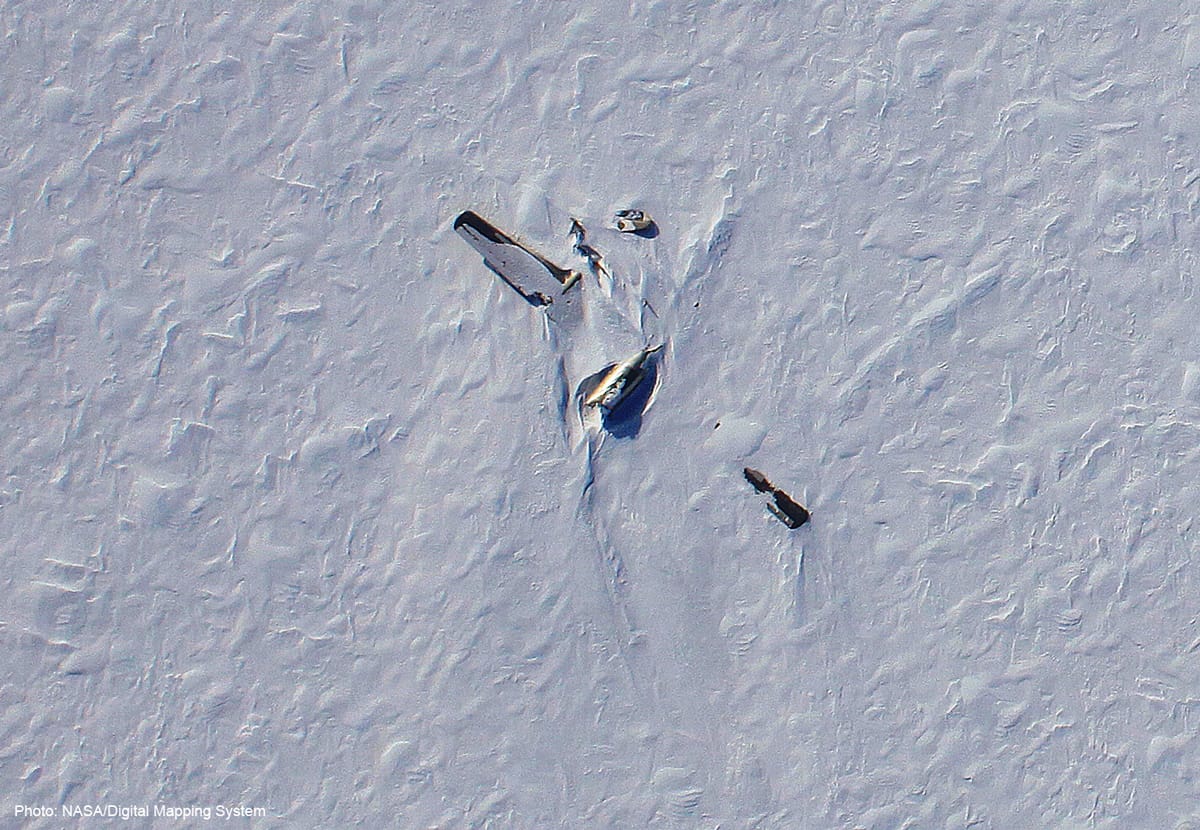
Rolling toward takeoff position, the jury-rigged auxiliary power unit in the rear fuselage broke loose from its mounting. Fuel spilled onto the hot unit and lit. With no fire suppression in an airframe full of fresh fuel, the crew could only save themselves — one team member escaped with burns and smoke inhalation — and watch the fire eat fifty years of survival and two years of obsessive work down to the wing spars.
The wreck lies on the lake still — broken, blackened, photographed by NASA survey aircraft as a landmark. Of the nearly four thousand B-29s built, exactly two fly today: FIFI, back in the air since mid-2025 after engine work, and Doc, touring since 2016. There was so nearly a third.
The full NOVA documentary — one of the finest aviation films ever made — is on PBS’s official channel:
A shorter telling of the whole saga, with expedition footage:
Sources: PBS NOVA (“B-29 Frozen in Time”, transcript); HistoryNet; Vintage Aviation News; NASA Earth Observatory; Commemorative Air Force; Wikipedia
Related Questions
What was the Kee Bird?
The Kee Bird was a Boeing B-29 Superfortress (serial 45-21768) that made a wheels-up landing on a frozen lake in northwest Greenland in February 1947 after a polar navigation mission went astray. All eleven crew were rescued, and the near-undamaged bomber sat preserved on the ice for nearly fifty years.
Why did the Kee Bird land in Greenland?
Flying a secret Project Nanook reconnaissance mission from Alaska toward the North Pole on 20 February 1947, the crew became lost in the polar night and ran critically low on fuel. Pilot Lt. Vern Arnett set the B-29 down wheels-up on a nameless frozen lake so gently the bomber was barely scratched.
What happened to the Kee Bird recovery attempt?
In 1994–95 a team led by test pilot and air racer Darryl Greenamyer tried to restore the B-29 and fly it out. On 21 May 1995 the rebuilt engines ran and the bomber taxied under its own power — but an auxiliary power unit fuel fire broke out during taxi and destroyed the airframe in minutes.
What was the B-29 Superfortress?
The B-29 was America's most advanced heavy bomber of the Second World War, a pressurised, long-range aircraft best known for the atomic missions over Japan. After the war it flew hazardous Cold War reconnaissance, a role echoed by later spy flights such as the C-130 ferret missions.
Did anyone die in the Kee Bird incidents?
No one died in either event. All eleven original crew survived three days at forty below in 1947 before a ski-equipped C-54 rescued them, and the 1995 recovery crew escaped the burning bomber unharmed.
Why was the Kee Bird so well preserved?
Greenland's dry, sub-zero Arctic climate combined with the gentle wheels-up landing left the bomber almost intact, making it one of the best-preserved B-29s in existence — which is exactly why it became such a tempting prize for warbird restorers.

0 Comments