
Quick Facts
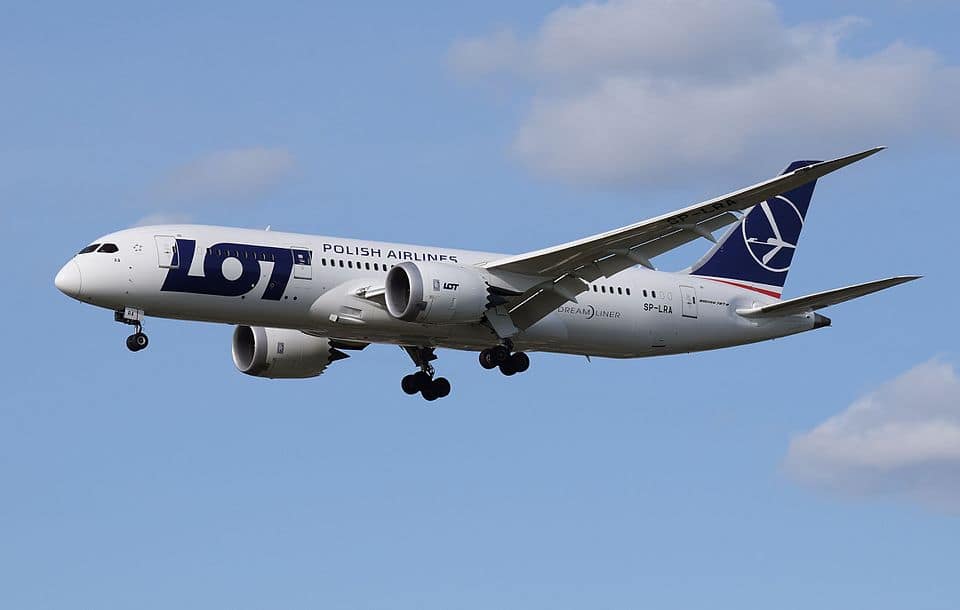
Plaintiff: LOT Polish Airlines
Defendant: The Boeing Company
Court: Federal court, Seattle, Washington
Filed: 2021 — now at jury trial stage
Core claim: Boeing concealed MCAS risks in 2016 to secure aircraft lease deals
Historic significance: First airline to take Boeing to jury trial over the 737 MAX crisis
Current LOT fleet: 26 Boeing 737 MAX jets in active daily service
737 MAX grounding: March 2019 – November 2020 (20 months)
The Sales Pitch That Started Everything
To understand LOT's lawsuit, you need to understand the competitive pressure Boeing was under in the early 2010s. Airbus launched the A320neo — a re-engined version of its best-selling narrowbody — and it sold extraordinarily well. American Airlines ordered 260 A320-family jets — 130 of them neos — as part of a record 460-aircraft order split with Boeing. That was an earthquake at Boeing, whose 737 NG was suddenly looking expensive and fuel-thirsty by comparison. Boeing's response was the 737 MAX: take the existing 737 airframe, hang bigger, more fuel-efficient engines under the wings, and bring it to market as fast as possible. The "as fast as possible" part is where the trouble started. The new engines changed the aircraft's handling characteristics at high angle of attack, and MCAS was designed to mask those differences — keeping the MAX's handling similar enough to the NG that pilots wouldn't need full simulator type training to transition. No new simulator requirement meant airlines could switch crews from NG to MAX with minimal disruption. That was a massive commercial advantage, and it was central to the MAX's value proposition to customers including LOT.
What LOT Says Boeing Hid
LOT's case centers on a specific allegation: that in 2016, when the Polish airline was evaluating aircraft for its fleet, Boeing representatives made representations about the MAX's flight characteristics and training requirements that were materially false or misleading. Specifically, LOT alleges Boeing understated MCAS's authority and downplayed the risks of single angle-of-attack sensor dependence — the exact vulnerability that contributed to both fatal crashes. The airline signed lease agreements based on those representations. Then, in October 2018, Lion Air Flight 610 plunged into the Java Sea thirteen minutes after takeoff, killing all 189 people on board. Ethiopian Airlines Flight 302 followed five months later. The global MAX fleet was grounded in March 2019 and didn't return to service until late 2020. During those twenty months of grounding, LOT couldn't fly its MAX aircraft. Revenue evaporated. Leases kept accruing. The airline claims substantial financial losses — and that those losses were a direct consequence of Boeing's concealment of risks LOT should have known about before signing those leases.
Why a Jury Changes Everything
Most airline litigation settles. The discovery process is expensive, the technical complexity is daunting, and both sides usually find it more economical to negotiate than to fight. LOT has chosen differently — and the decision to demand a jury trial is significant in ways that go beyond the courtroom. Juries don't evaluate aerodynamics. They evaluate credibility. They evaluate whether the people in charge of a massive corporation told the truth to people who were depending on them. In that framing, the MAX case is not primarily about MCAS sensor logic or angle-of-attack disagree alerts. It's about whether Boeing representatives sat across the table from airline customers in 2016 and made promises they knew were false. That's a story twelve ordinary citizens can understand. And that is precisely what makes it dangerous for Boeing.
The Counterargument Boeing Will Make
Boeing's legal team has a pointed response to LOT's narrative. If LOT Polish Airlines was truly defrauded — if Boeing concealed such fundamental flaws — why does LOT currently operate 26 Boeing 737 MAX jets in daily revenue service? The airline re-certified the aircraft, returned it to routes, and has been flying passengers on it continuously since the global grounding ended. LOT's likely counter is that safety and fraud are distinct legal questions. The MAX was fixed — Boeing redesigned MCAS, added sensor redundancy, and regulators worldwide re-certified the aircraft. An airline flying a fixed aircraft isn't endorsing the conduct that created the problem in the first place. The alleged fraud occurred at the point of sale, not at the point of re-entry into service.The Broader Stakes
LOT's case doesn't exist in isolation. The deferred prosecution agreement Boeing signed with the Department of Justice has been challenged and renegotiated. Victims' families have fought for years for criminal accountability. Congressional investigators produced thousands of pages documenting what they described as a culture of concealment at Boeing. A jury verdict — either way — will add another chapter to one of aviation history's most consequential corporate stories. If LOT prevails, it may embolden other airlines who quietly absorbed MAX-related losses to revisit their legal options. If Boeing prevails, it will use the verdict to argue the commercial side of the MAX crisis has been adequately resolved. Either way, the 737 MAX's shadow is long. And it hasn't finished falling yet. Sources: Reuters; The Seattle Times; U.S. District Court Western District of Washington filings; Aviation Week; Bloomberg LawRelated Questions
Why is LOT Polish Airlines suing Boeing?
LOT Polish Airlines is suing Boeing in a Seattle federal court over the 737 MAX, alleging Boeing knew about the risks of its MCAS flight-control system as early as 2016 and deliberately concealed them from customers to avoid triggering costly simulator-training requirements that would have hurt the jet's sales.
What is MCAS on the Boeing 737 MAX?
MCAS, the Maneuvering Characteristics Augmentation System, was software that automatically pushed the 737 MAX's nose down in certain conditions. Faulty sensor data triggered it in two crashes that killed 346 people. Its existence and behaviour were not fully disclosed to pilots, central to the litigation around the aircraft.
How many people died in the Boeing 737 MAX crashes?
A total of 346 people died in the two 737 MAX crashes — Lion Air Flight 610 in 2018 and Ethiopian Airlines Flight 302 in 2019. Both accidents were linked to the MCAS system, leading to a worldwide grounding of the type and years of investigations, settlements and penalties.
What makes the LOT lawsuit against Boeing different?
Unlike most MAX cases, which ended in confidential settlements, LOT wants a jury trial — twelve ordinary citizens hearing the full story in open court. Filed in 2021 and now reaching trial, it could expose internal Boeing decisions publicly rather than resolving them quietly behind closed doors.
Did Boeing face other penalties over the 737 MAX?
Yes. Beyond family settlements, Boeing paid billion-dollar government penalties and entered a deferred prosecution agreement with the US Department of Justice that itself became controversial. Despite the scandals, airlines kept buying the jet — one reason they cannot stop ordering the Boeing 737.
Has Boeing's quality faced scrutiny on other aircraft?
Yes. Boeing's manufacturing and quality control have drawn scrutiny across its range, including investigations into newer widebodies such as the issues examined in the Lufthansa 787 Dreamliner probe. The MAX crisis intensified regulatory and customer attention on the planemaker's processes.
Related Posts

0 Comments