
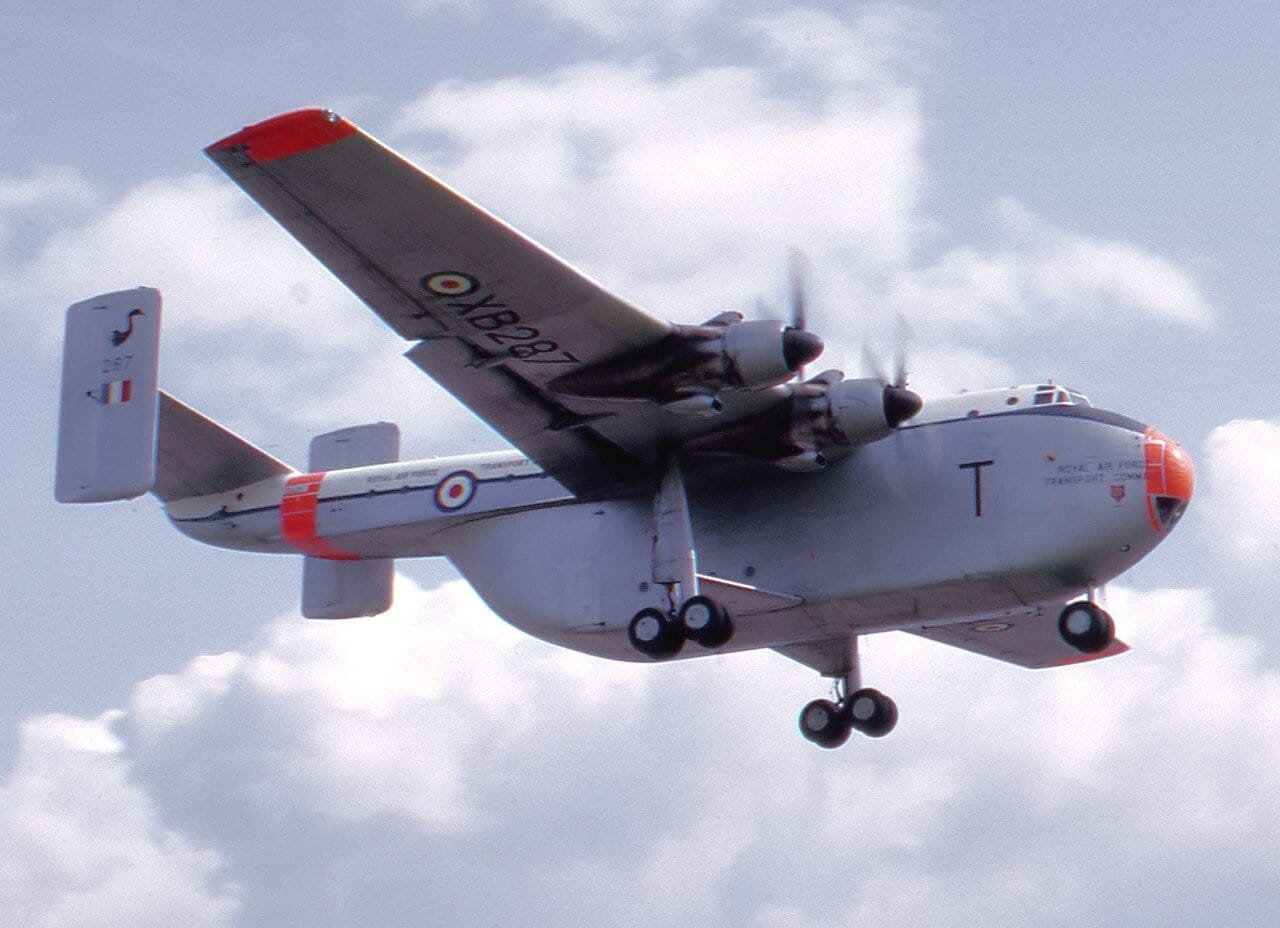
Some aircraft are beautiful. The Blackburn Beverley was not one of them. It looked like a shipping container that had grown four propellers and a pair of tails and decided to fly anyway — a slab-sided barn of an aeroplane with its wheels bolted down permanently underneath.
And yet the RAF loved it, because the Beverley could do one thing better than almost anything else of its era: carry enormous, awkward loads into short, rough strips where no sensible transport had any business landing.
Quick Facts
- Aircraft: Blackburn B-101 Beverley heavy transport
- Operator: RAF Transport Command, mid-1950s to 1967
- Engines: Four Bristol Centaurus radials with reverse-pitch propellers
- Short field: Landing run about 310 yards at full load — and it could reverse under its own power
- Load: 94 troops, or bulky cargo through clamshell rear doors
- Built: 47 aircraft; replaced by the C-130 Hercules
A box with wings
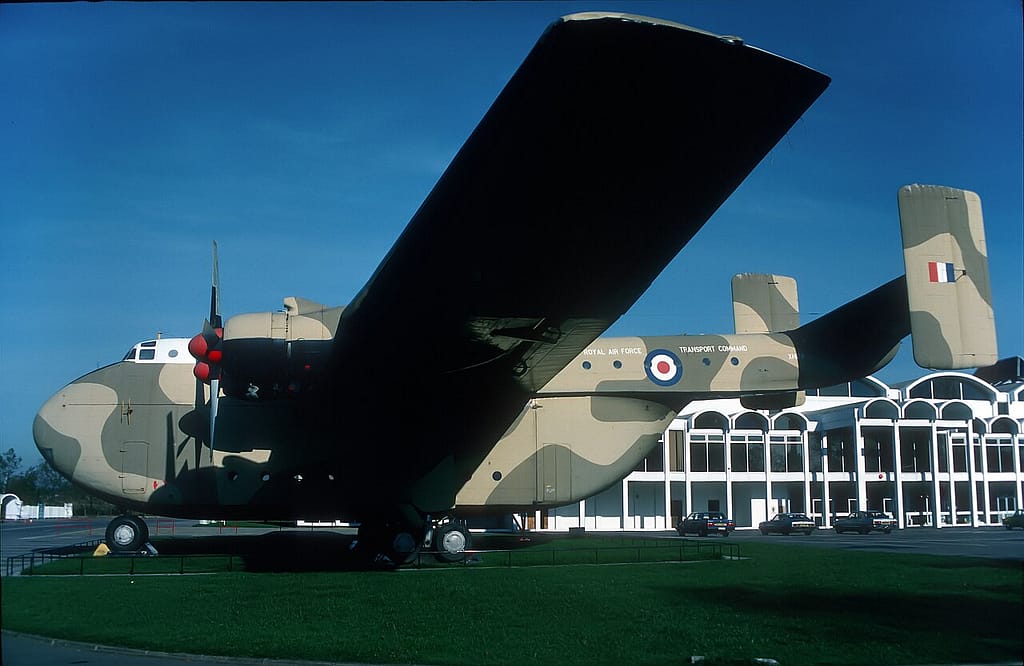
The design logic was blunt. Instead of squeezing cargo into a streamlined tube, Blackburn built a giant rectangular hold you could drive vehicles straight into, then bolted a long tail boom behind it to carry the tail surfaces — and, usefully, up to thirty more passengers. The fixed undercarriage looked archaic, but it was simple, rugged and hard to break on a rough desert airstrip.
Four big Bristol Centaurus radial engines hauled it into the air. Their reverse-pitch propellers let the Beverley stop in barely 300 yards and even taxi backwards under its own power — priceless when you have landed something this size on a patch of packed sand with no room to turn around.
Ungainly but indispensable
Through the late 1950s and 1960s the Beverley did the RAF’s heavy lifting east of Suez — hauling guns, vehicles and supplies around Aden, the Gulf and the Middle East, and dropping paratroopers and loads over places lighter aircraft could not reach. Crews were fond of it in the exasperated way people are fond of something ugly that always gets the job done.
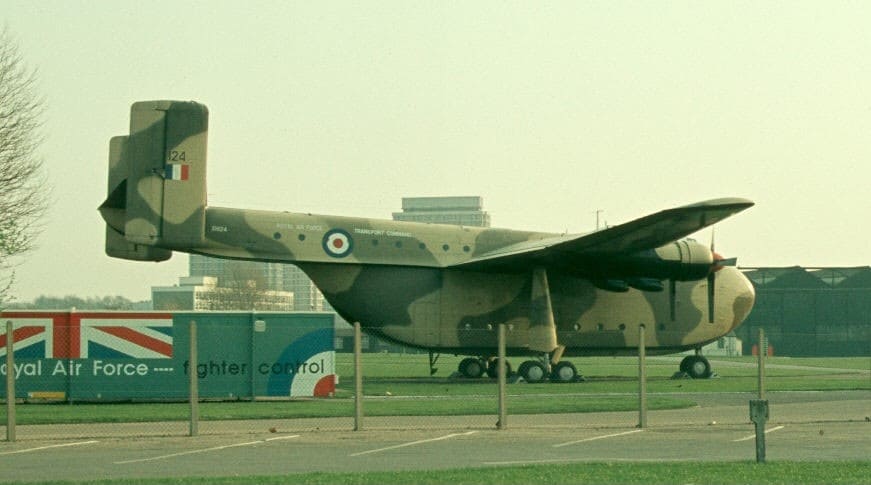
By 1967 the turboprop C-130 Hercules had made the slow, thirsty, piston-engined Beverley obsolete, and the fleet was retired after barely a decade. But those who flew it never quite forgot what it could do.
Only one complete Beverley survives today, preserved as a reminder that in air transport, elegance has never counted for much — but a big enough box counts for a great deal.
Sources: BAE Systems Heritage; History of War; Airborne Assault Museum (ParaData); Wikipedia.
0 Comments