
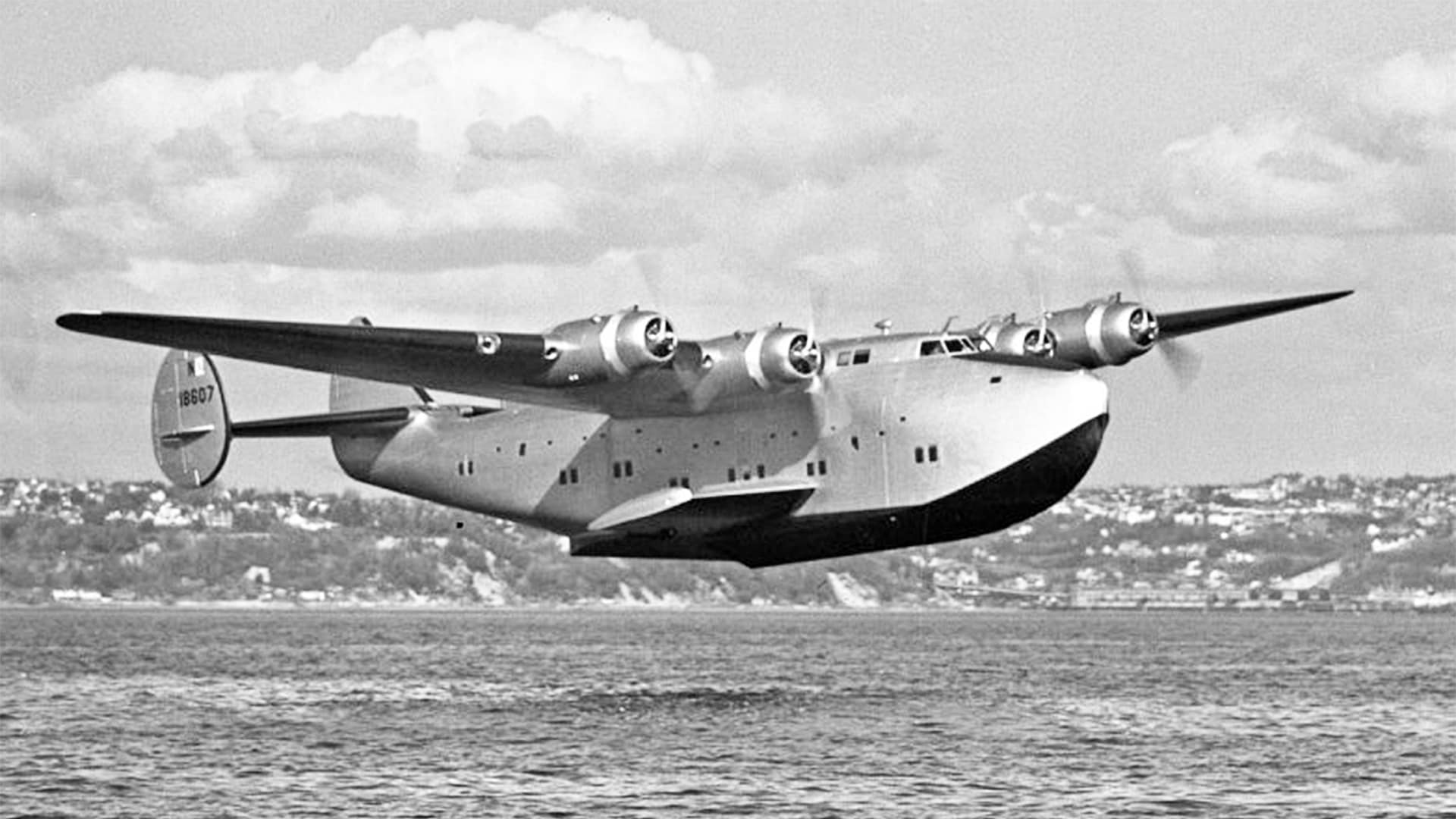
On the morning of 28 June 1939, twenty-two extraordinarily lucky people walked down a pier at Port Washington on Long Island and climbed aboard what looked like an ocean liner with wings. Captain R.O.D. Sullivan ran up the four big engines, and the Boeing 314 flying boat — the Dixie Clipper — thundered across the water and lifted into the sky, bound for Europe. By the time it splashed down off Marseille, those passengers had done something no fare-paying traveller had ever done before: they had flown across the Atlantic Ocean.
An ocean that took a fast liner the better part of a week now took roughly a day and a half of flying. The Pan American Clipper had arrived, and the world suddenly felt smaller.
QUICK FACTS
Aircraft: Boeing 314 Clipper — a giant four-engine flying boat
Airline: Pan American Airways
Built: Only 12 ever made
Milestone: First scheduled transatlantic passenger service, 28 June 1939
That flight: The Dixie Clipper, Capt. R.O.D. Sullivan, 22 passengers, New York to Marseille via the Azores and Lisbon
The fare: Around $375 one way — a small fortune in 1939
An ocean liner that happened to fly
The Boeing 314 was not an aeroplane as we think of one today. It was enormous, and it was lavish. Passengers did not perch in cramped rows; they moved between lounges, ate multi-course meals served by white-jacketed stewards in a proper dining room, and slept in real berths as the Clipper droned through the night. There was even a bridal suite.
Only twelve were ever built, and they were the most glamorous way to travel on Earth. A ticket cost a small fortune — around $375 one way at a time when that was many months’ wages — so the cabins filled with diplomats, film stars, tycoons and royalty. Flying the Clipper was not transport. It was an event.
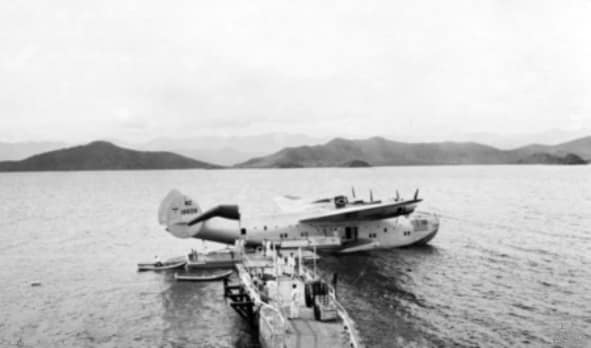
The flagship: Yankee Clipper
The first of these giants assigned to the Atlantic was the Yankee Clipper, christened in March 1939 by First Lady Eleanor Roosevelt with a bottle not of champagne but of Atlantic and Pacific seawater. That spring it pioneered the route, carrying the first scheduled transatlantic airmail before the Dixie Clipper carried the first passengers in June.
In the 1930s there were almost no runways long enough for a heavy long-range aircraft — but every coastal city had a harbour. A flying boat could land on water anywhere sheltered, which made it the only practical way to fly the great ocean routes. The Clippers island-hopped the Atlantic via Newfoundland or the Azores, refuelling on the water.
For a few golden years the Clippers ruled the oceans, linking America to Europe, South America and across the vast Pacific. Passengers wrote home in awe about watching the sun rise over the Atlantic from a comfortable chair, a cup of coffee in hand.
The story of the Boeing 314 Clipper — only twelve were built, and they were the most luxurious aircraft ever to fly.
The golden age that couldn’t last
It ended almost as fast as it began. The Second World War pressed the Clippers into military service, and by the time peace returned, the runways had caught up: long-range land planes like the Lockheed Constellation and, soon after, the jets could cross the same oceans faster, cheaper and without needing a harbour. The flying boat’s brief reign was over.
But for one shimmering summer in 1939, the only way to fly the Atlantic was to step aboard a flying ocean liner, settle into a berth, and wake up on the far side of the world. The Dixie Clipper’s twenty-two passengers were the first ordinary travellers ever to do it — and the Atlantic was never quite so wide again.
Sources: Pan Am Historical Foundation; This Day in Aviation; Foynes Flying Boat Museum; HistoryLink; Wikipedia.
Related Questions
What was the Boeing 314 Clipper?
The Boeing 314 Clipper was a giant four-engine flying boat operated by Pan American Airways in the late 1930s and 1940s. Only 12 were built. Luxurious enough to be called a flying ocean liner, it opened the first scheduled passenger air service across the Atlantic.
When was the first transatlantic passenger flight?
The first scheduled transatlantic passenger flight took place on 28 June 1939, when Pan Am’s Boeing 314 flying boat Dixie Clipper carried 22 paying passengers from New York to Marseille, France, via the Azores and Lisbon.
Why were the Clippers flying boats?
In the 1930s there were almost no runways long enough for heavy long-range aircraft, but every coastal city had a harbour. A flying boat could take off and land on sheltered water, which made it the only practical way to operate the great ocean air routes of the era.
How much did a Boeing 314 Clipper ticket cost?
A transatlantic Clipper ticket cost around $375 one way — a small fortune in 1939, equivalent to many months’ wages for an average worker. As a result, the passenger cabins were filled with diplomats, film stars, tycoons and royalty.
What ended the era of the flying boats?
The Second World War pressed the Clippers into military service, and by the time peace returned, long-range land planes such as the Lockheed Constellation — and soon the jets — could cross the same oceans faster and cheaper without needing a harbour. The flying boat’s brief golden age was over.
0 Comments