
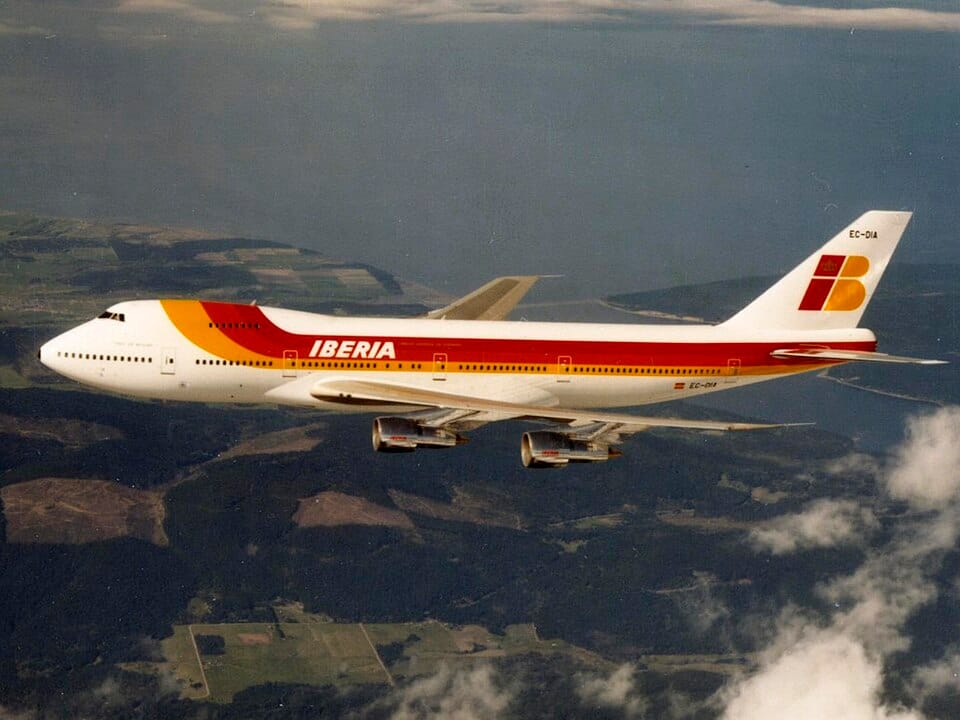
For more than half a century, the Boeing 747 was the largest and most recognisable commercial aircraft on Earth. From its first flight in 1969 to its final delivery in January 2023, the "Queen of the Skies" carried billions of passengers, opened intercontinental routes that had never been economically viable, and turned long-haul air travel from a luxury into something ordinary people could afford.
- First flight: 9 February 1969
- Designer: Joe Sutter and the "Incredibles" team at Boeing
- Engines: 4 × turbofan (Pratt & Whitney JT9D on early models)
- Capacity: 366–524 passengers (depending on variant and configuration)
- Total built: 1,574
- First commercial flight: 22 January 1970 (Pan Am, New York–London)
- Last delivery: 31 January 2023 (Atlas Air 747-8F freighter)
Juan Trippe's Gamble
The 747 began with a handshake between two men willing to bet their companies. In 1966, Pan American World Airways president Juan Trippe told Boeing chairman Bill Allen that he wanted an aircraft at least twice the size of the 707 — something that could carry enough passengers to bring ticket prices down to a level the middle class could afford. Allen agreed to build it. Neither company could survive if the project failed.
Boeing assigned the project to engineer Joe Sutter, who assembled a team of around 4,500 engineers that became known as "the Incredibles." They designed the aircraft from scratch in roughly 29 months — a timeline that would be unthinkable today. The wide-body fuselage, the distinctive upper-deck hump housing the cockpit and first-class lounge, and the high-bypass turbofan engines that made the whole thing possible were all firsts.
The Aircraft That Changed Flying
When Pan Am launched 747 service on the New York–London route on 22 January 1970, it was a revolution. The aircraft could seat more than 350 passengers in a typical two-class layout — roughly 2.5 times the capacity of a 707. More seats meant lower cost per passenger, which meant lower fares. Routes that had been marginally profitable with smaller jets suddenly made money.
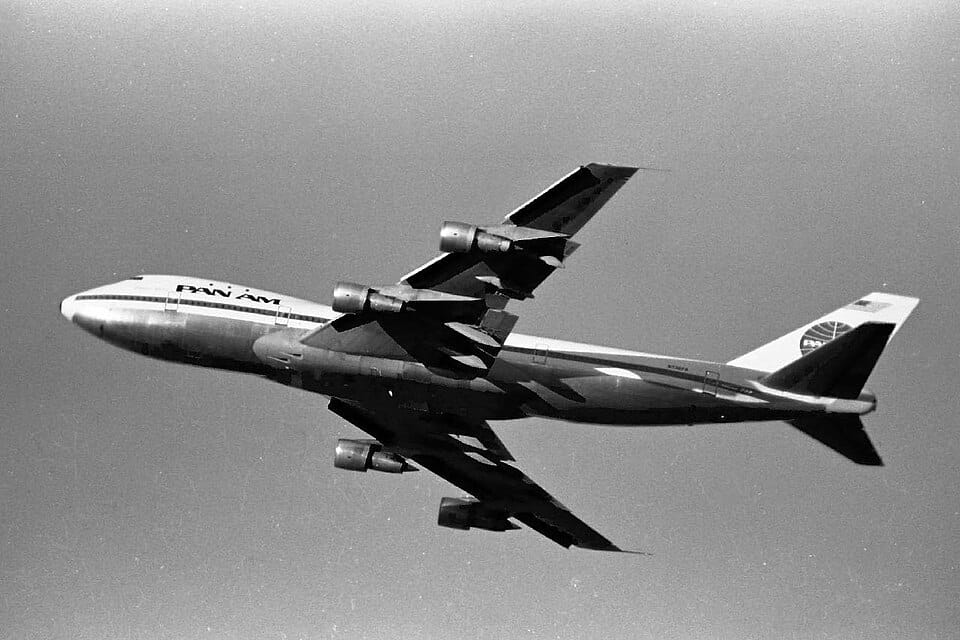
The 747 opened the era of mass international travel. Airlines began offering transatlantic flights at prices that secretaries, teachers, and students could afford. Tourism economies from the Caribbean to Southeast Asia grew on the back of jumbo jet service. The aircraft did not just serve demand for air travel — it created it.
More Than a Passenger Plane
The 747's versatility extended far beyond airline service. The freighter variants, with their hinged nose that swings upward for straight-in cargo loading, became the backbone of global air freight. As a VIP transport, the 747 serves as Air Force One for the President of the United States. NASA used a modified 747 as the Shuttle Carrier Aircraft, ferrying Space Shuttles piggyback across the country. Qantas, Lufthansa, British Airways, Japan Airlines, and dozens of other carriers made the 747 their flagship for decades.
The Long Goodbye
The rise of efficient twin-engine widebodies — the Boeing 777 and Airbus A350 — gradually made the four-engine 747 uneconomical for most passenger routes. Airlines began retiring their 747 fleets through the 2010s, accelerated by the fuel price spikes and the collapse of travel demand during the COVID-19 pandemic. British Airways, Qantas, KLM, and Lufthansa all said farewell to the type within a few years of each other.
Boeing delivered the last 747 — a freighter for Atlas Air — on 31 January 2023, closing a production run that had lasted 54 years. In total, 1,574 aircraft were built. The 747 freighter continues flying cargo worldwide, and the aircraft remains in presidential service, but the era of the four-engine passenger jumbo is over.
Related Questions
What was the Boeing 747?
The Boeing 747, nicknamed the “Queen of the Skies,” was for more than half a century the largest and most recognisable commercial aircraft on Earth. First flown on 9 February 1969, the four-engined wide-body carried billions of passengers, opened new intercontinental routes and helped turn long-haul air travel from a luxury into something ordinary people could afford.
Who designed the Boeing 747?
The 747 was designed by Boeing engineer Joe Sutter and a team of around 4,500 engineers who became known as “the Incredibles.” They designed the aircraft from scratch in roughly 29 months — a timeline that would be almost unthinkable today — producing its wide-body fuselage, distinctive upper-deck hump and high-bypass turbofan engines.
Why was the Boeing 747 built?
In 1966, Pan Am president Juan Trippe told Boeing chairman Bill Allen he wanted an aircraft far larger than anything flying — big enough to cut costs and bring fares within reach of the middle class. Both men bet their companies on it: neither could have survived if the project had failed.
How did the 747 change air travel?
When Pan Am launched 747 service on the New York–London route on 22 January 1970, the aircraft could seat more than 350 passengers — about 2.5 times a Boeing 707's capacity. More seats meant lower cost per passenger and cheaper fares, opening routes that had been only marginally profitable and democratising long-haul flight.
How many Boeing 747s were built?
A total of 1,574 Boeing 747s were built between 1968 and 2023, with the final aircraft — a 747-8F freighter for Atlas Air — delivered on 31 January 2023. Its longevity places it among aviation's icons, a fixture on lists of the most beautiful aircraft ever built.
Was the Boeing 747 a commercial success?
Yes. Despite the enormous risk and early financial strain on Boeing, the 747 became one of the most successful airliners in history, remaining in production for over five decades. Its story stands in stark contrast to ambitious programmes that failed to pay off, chronicled among the most expensive aircraft that never made it.
0 Comments