
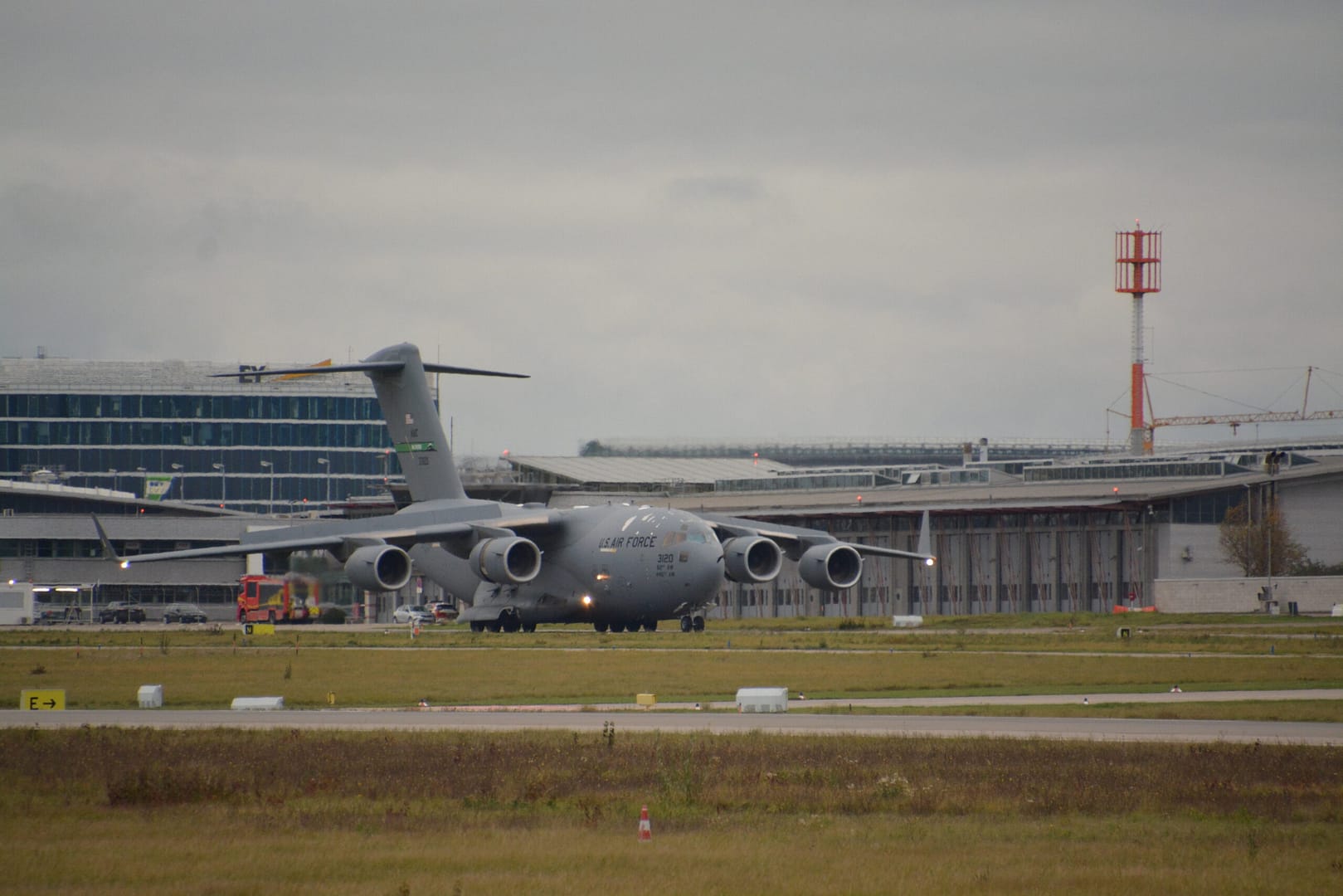
A decade after Boeing shuttered the C-17 Globemaster III production line in Long Beach, California, the unthinkable is back on the table. Boeing says it is "encouraged" by restart discussions with multiple operators, and the House Armed Services Committee has ordered the Air Force to deliver a formal feasibility briefing by March 1, 2027.
The C-17 is the backbone of American strategic airlift. With roughly 222 Globemaster IIIs in service and no comparable Western alternative in production, the Air Force is staring at a capacity gap that gets wider with every crisis. The current plan to fly these aircraft through 2075 — making them 80 years old at retirement — is raising eyebrows across the Pentagon.
Now Congress wants answers: Can we build more? How much will it cost? And who else might buy in?
Quick Facts
- Aircraft: Boeing C-17 Globemaster III
- Total built: 279
- Current USAF fleet: ~222 aircraft
- Last delivery: 2013 (USAF); production line closed 2015
- Long Beach facility: Sold to Goodman Group for $200M+ in 2019
- Restart cost estimate (RAND): $2.1–2.7 billion (C-17A baseline, 2011 dollars)
- Congressional deadline: Feasibility briefing by March 1, 2027
- Planned service life: Through 2075
- Other operators: Australia, Canada, India, Kuwait, Qatar, UAE, UK
What Congress Wants to Know
The House Armed Services Committee laid out an extensive checklist in its report accompanying the latest draft of the National Defense Authorization Act (NDAA). The committee wants the Air Force to assess the technical and industrial feasibility of restarting the line, including the status of tooling, supplier base viability, workforce availability, and potential reconstitution costs.
Beyond restart mechanics, Congress is also asking for cost estimates covering limited procurement and multi-year procurement options, a timeline to first delivery, and an evaluation of alternatives — including service life extension programs, commercial derivative cargo aircraft, and expansion of the Civil Reserve Air Fleet (CRAF).
Perhaps most critically, the committee wants to know about international partner interest. Japan's former Prime Minister Shigeru Ishiba expressed interest in acquiring C-17s in 2025, raising immediate questions about where those aircraft would come from.
Boeing's Careful Optimism
At the Paris Air Show in 2025, Boeing Vice President Turbo Sjogren revealed that talks with an unnamed country about a possible C-17 restart were in their "early infancy." His assessment of the challenge was characteristically direct.
Boeing has now confirmed to The War Zone that it is "proud of our continued support for the unique, mission-proven capabilities that the C-17 Globemaster III delivers" and is always willing to work with customers to understand their requirements. The company has not ruled out a production restart.
The Price Tag Problem
A 2011 RAND Corporation analysis remains the most detailed public assessment of what a C-17 restart would cost. The figures are sobering even before adjusting for inflation.
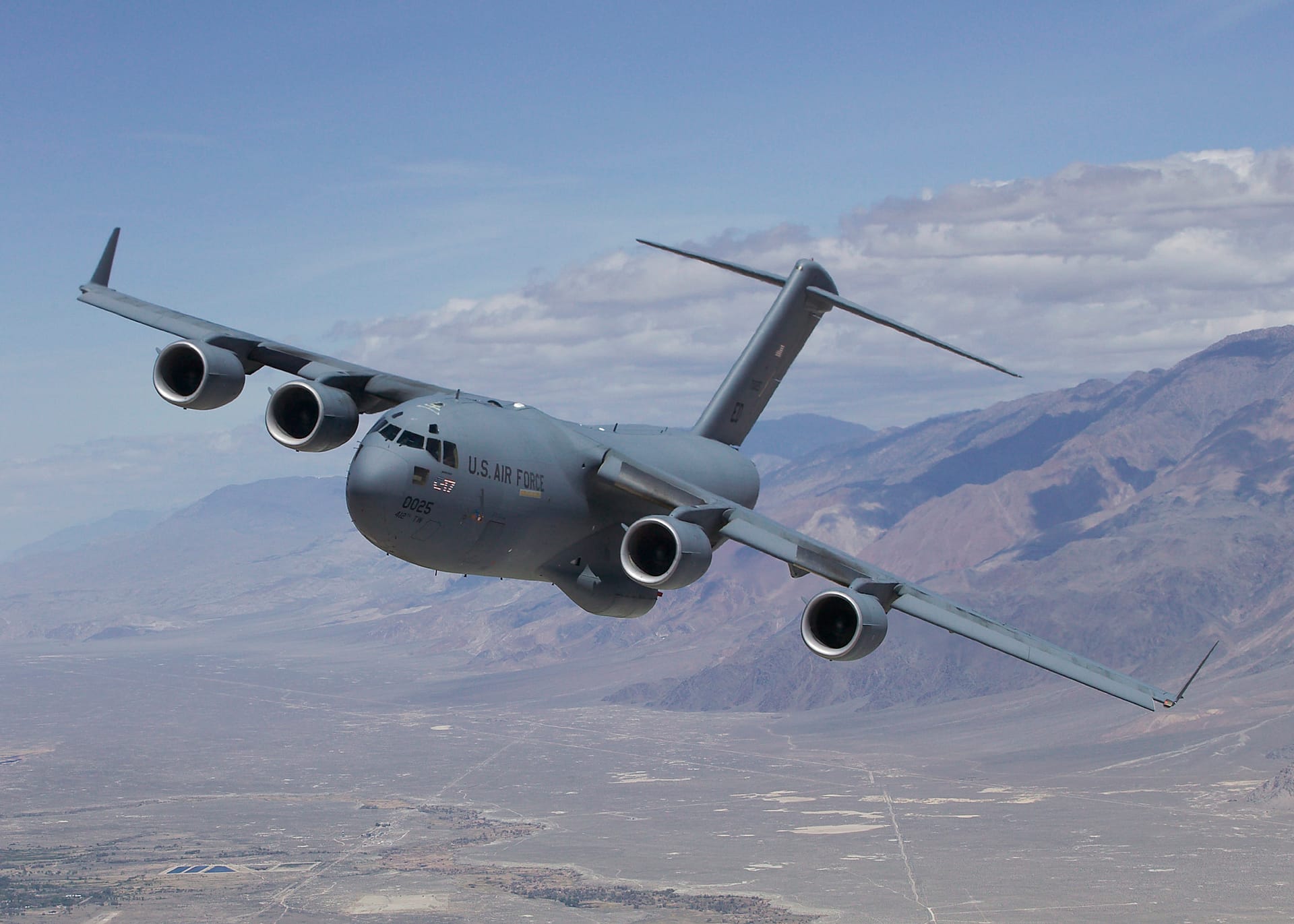
For the baseline C-17A, RAND estimated $2.1 to $2.7 billion in nonrecurring costs just to restart the line, depending on how much tooling Boeing retained. A more advanced C-17B variant with higher-thrust engines, centerline landing gear, and advanced countermeasures would cost $4.6 to $6.4 billion before a single aircraft rolled off the line. A radically redesigned "fuel-efficient" C-17FE with a narrower fuselage and winglets would run $6.2 to $7 billion.
Those numbers are in 2011 dollars. Adjusted for inflation, the real cost today would be substantially higher — and that is before procuring any actual aircraft.
Why There Is No Plan B
The fundamental problem driving this conversation is simple: there is no comparable aircraft in production anywhere in the Western world. The Airbus A400M sits between the C-130 and C-17 in capability. Embraer's KC-390 competes with the C-130, not the Globemaster. Only China's Y-20 and Russia's Il-76 operate in the same class — and neither is available to NATO allies.
Sonkiss, who has been serving as interim head of Air Mobility Command, added a stark warning at the Air & Space Forces Association's Warfare Symposium in February: "I cannot have a gap in my strategic airlift forces. We have to get after what next looks like, and we cannot wait until we are shoveling it into the boneyard before we get to that discussion."
The Bigger Picture
Any C-17 restart discussion sits within a broader context. The Air Force is developing requirements for the Next Generation Air Lift (NGAL) program, which envisions a single platform replacing both the C-17 and the larger C-5 Galaxy. But NGAL aircraft are not expected to fly operational missions until the 2040–2041 timeframe.
That leaves a multi-decade gap during which the existing fleet must absorb every crisis, every humanitarian mission, and every combat deployment. Operation Epic Fury alone demonstrated the enormous strain that sustained operations place on the airlift fleet. The question is no longer whether America needs more strategic airlift capacity, but whether it can afford to wait for a clean-sheet design.
Meanwhile, Boeing continues modernizing the existing fleet. A flight deck upgrade program is underway to resolve avionics obsolescence, and 3D-printed microvanes are being installed across the entire C-17 fleet to reduce fuel consumption. But upgrades to old airframes and building new ones are two very different conversations.
Whether the C-17 line actually fires up again depends on answers that will not come before March 2027. But the fact that Congress is asking, Boeing is encouraging, and allies are calling suggests that this is no longer idle speculation.
Sources: The War Zone, Air Data News, Simple Flying, Zona Militar, Military Watch Magazine, RAND Corporation (TR-1143), Boeing
Related Questions
Is Boeing restarting C-17 Globemaster production?
Boeing is studying the feasibility, prompted by Congress. The U.S. House Armed Services Committee has asked the Air Force to assess restarting the C-17 line, with a feasibility briefing due by 1 March 2027. The line closed in 2015 and the Long Beach factory was sold in 2019, so a restart would be costly and complex — RAND estimated $2.1–2.7 billion.
What is the C-17 Globemaster III?
The Boeing C-17 Globemaster III is a large strategic airlifter used to carry troops, vehicles and outsized cargo over long distances and into short, rough runways. A total of 279 were built, with the U.S. Air Force operating about 222. It is also flown by Australia, Canada, India, Kuwait, Qatar, the UAE and the UK. It complements heavier lifters like the C-5 Galaxy.
When did C-17 production end?
The last U.S. Air Force C-17 was delivered in 2013, and the production line closed in 2015. Boeing's Long Beach, California facility was sold to the Goodman Group for more than $200 million in 2019. Those closures are exactly why any restart would be difficult, requiring tooling, suppliers and skilled workers to be reassembled from scratch.
How much would restarting the C-17 line cost?
A RAND study estimated $2.1–2.7 billion to restart C-17A baseline production (in 2011 dollars). Congress wants the Air Force to evaluate tooling status, supplier viability and workforce before deciding. With the fleet planned to serve through 2075, lawmakers are weighing whether new-build aircraft are cheaper than sustaining ageing ones — a debate that also surrounds transports like the A400M Atlas.
How many C-17s were built and who flies them?
A total of 279 C-17 Globemaster IIIs were built. The U.S. Air Force operates roughly 222, and export customers include Australia, Canada, India, Kuwait, Qatar, the UAE and the United Kingdom. With production closed since 2015 and no replacement in sight, each remaining airframe is increasingly valuable — driving the interest in a possible restart.
Related Posts
The B-52 at 70: The Bomber That Will Outlive Everything
Hands Off the Raptor: Congress Blocks F-22 Retirement Through 2032
The Spy Plane That Refuses to Die: U-2 Dragon Lady Gets Yet Another Reprieve
0 Comments