
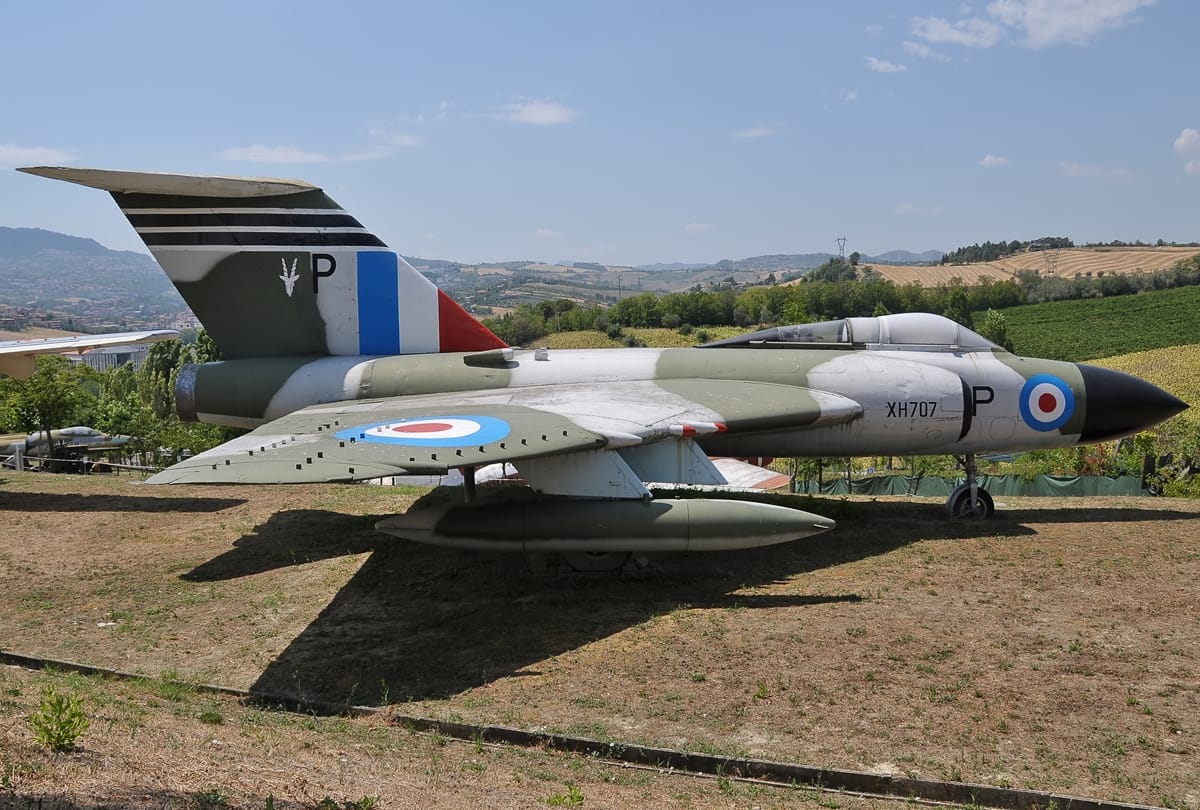
The Gloster Javelin was a first and a warning wrapped in one big delta wing. It was the Royal Air Force's first purpose-built all-weather interceptor and Britain's first delta-winged fighter — a genuinely modern machine for the early 1950s. It was also cursed with a way of killing pilots that the engineers barely understood when it first flew.
Broad, flat and slab-sided, it earned the nickname "Flat Iron." For twelve years it stood watch over Britain and its Cold War frontiers in weather that grounded everything else. But it never quite escaped the shadow of the trap built into its own tail.
Kurzinfo
- Hersteller: Gloster Aircraft Company — the last aircraft to carry the Gloster name
- Erster Flug: 26 November 1951
- Rolle: two-seat all-weather / night interceptor
- Motoren: two Armstrong Siddeley Sapphire turbojets
- Layout: large delta wing with a high T-tail
- Leistung: about 710 mph (Mach 0.93) — subsonic
- Gebaut: 436; RAF service 1956-1968
- Armament (later marks): four Firestreak missiles plus two 30 mm ADEN cannon
A delta with a deadly habit
On paper the Javelin was clever: a big delta wing for lift and fuel, twin Sapphire engines for reliability, and a high T-tail. That last choice hid a killer. Pushed too slowly and too steeply, the delta wing's turbulent wake would sweep up and blanket the tailplane, stealing the pilot's control in pitch. The aircraft would settle into a flat, stable "deep stall" and fall — as one test pilot put it — like a brick.
It cost lives. Test pilot Peter Lawrence was killed in June 1953 when a prototype entered exactly this stall, and further spinning accidents followed before the behaviour was understood and flying limits imposed. The deep stall the Javelin helped reveal became a permanent lesson in aircraft design — one that would later bite airliners and other T-tailed jets too.
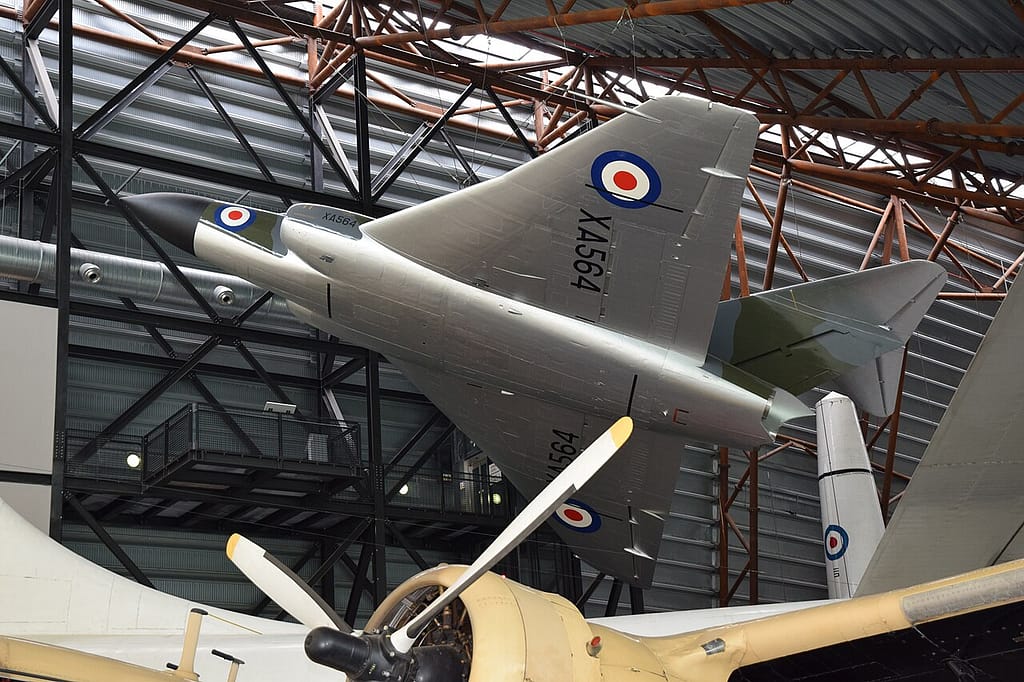
Cold War watchman
Once tamed, the Javelin did its job well. It was the first RAF fighter designed from the outset to fight in cloud and darkness, guided by radar to its target — a real capability gap-filler at a time when Soviet bombers were the nightmare that kept air-defence planners awake. Later marks swapped some of the cannon armament for four Firestreak heat-seeking missiles, giving it a genuine all-weather punch.
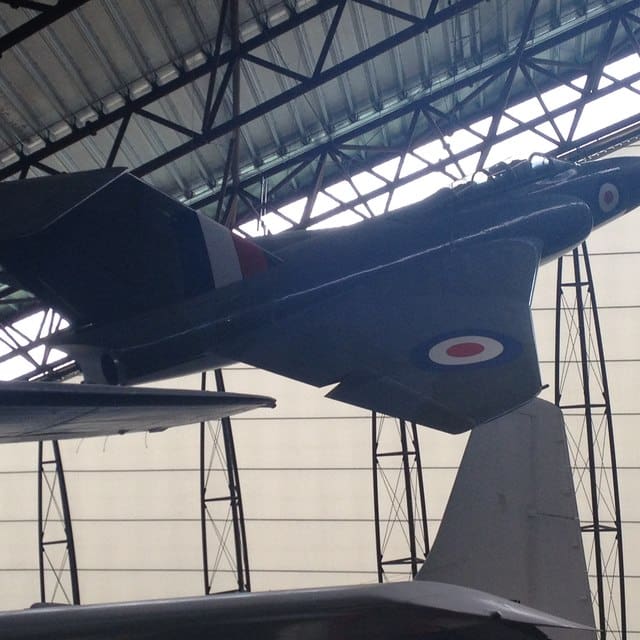
Its closest brush with combat came far from home, flying air-defence patrols during the Indonesia–Malaysia Confrontation of the mid-1960s, though it never scored a confirmed kill. By 1968 the supersonic Englische elektrische Beleuchtung had taken over, and the Javelin — the last aircraft ever to wear the proud Gloster name — was retired.
It is easy to remember the Javelin for the way it could fall out of the sky. The fairer memory is of the aircraft that taught Britain how to fight in the dark, and taught every designer since to respect the T-tail.
Sources: Wikipedia; Hush-Kit; Bill Waterton, "The Quick and the Dead"; Tony Buttler, "Flying Flat Iron."
Ähnliche Beiträge
0 Kommentare