
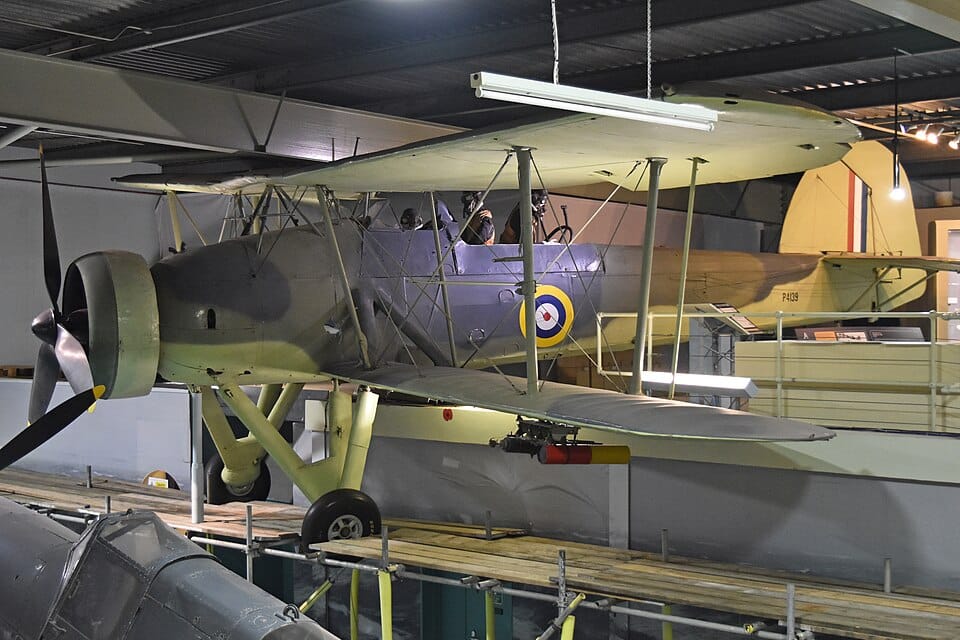
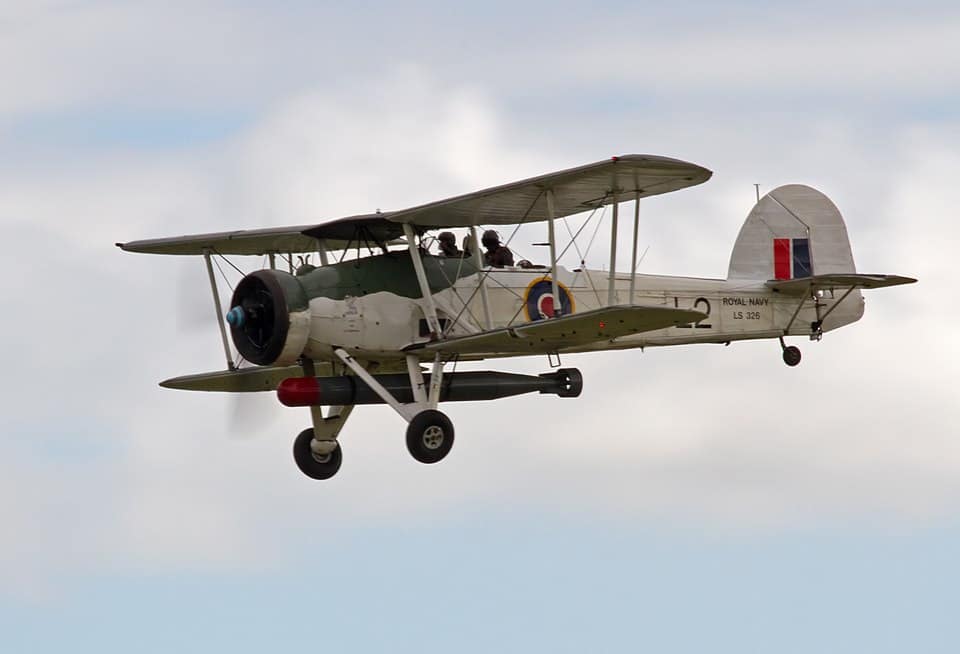
On the evening of 26 May 1941, fifteen fabric-covered biplanes lumbered off the pitching deck of HMS Ark Royal into a North Atlantic gale. Their target was the most powerful warship in the world: the German battleship Bismarck, a 50,000-ton behemoth that had just blown HMS Hood in half and sent 1,415 men to the bottom of the sea. The aircraft closing in on her looked like relics from a war museum. They were Fairey Swordfish torpedo bombers, and they were about to change the course of naval history.
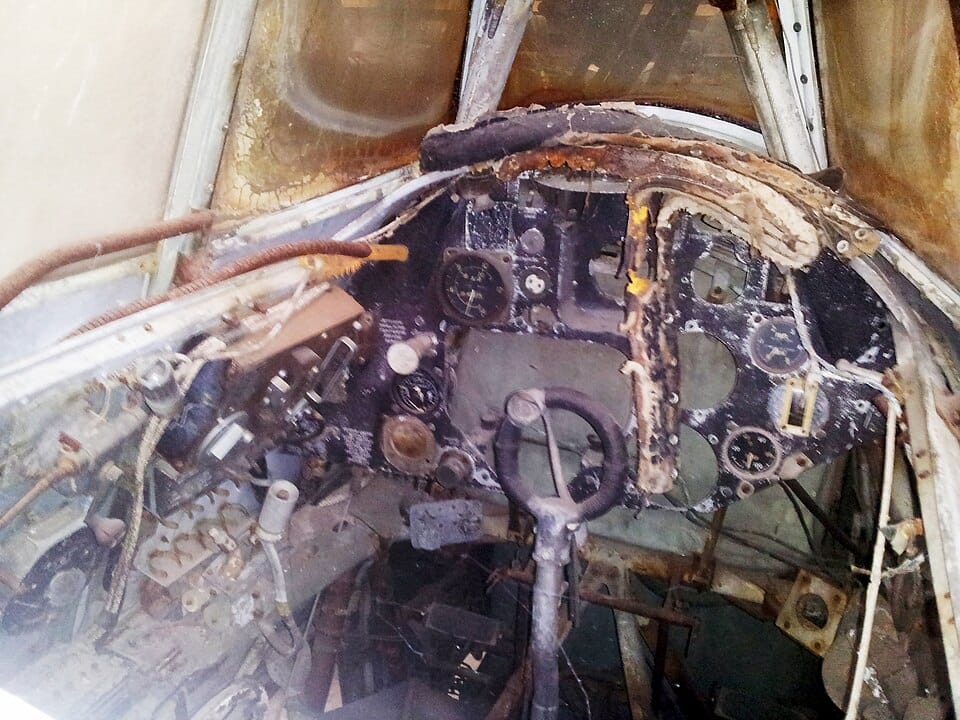
The Swordfish was, by any rational measure, already obsolete when the Second World War began. Its open cockpit, fixed landing gear, and fabric-and-metal construction belonged to an earlier era. Crews called it the "Stringbag" — not because it looked like one, but because, like a housewife's string shopping bag, it could carry absolutely anything. Torpedoes, mines, depth charges, bombs, rockets, radar equipment — the Swordfish hauled them all. And in doing so, this creaking biplane compiled one of the most astonishing combat records of any aircraft in history.
Quick Facts
Type: Torpedo bomber / reconnaissance biplane
Manufacturer: Fairey Aviation Company
First Flight: 17 April 1934
Top Speed: 139 mph (224 km/h)
Crew: 2-3
Nickname: "Stringbag"
Torpedo Load: 1 x 18-inch (450 mm) torpedo, 1,670 lb
Total Built: 2,391
Born Between the Wars
The Swordfish traced its lineage to a 1933 Fairey specification for a torpedo-spotter-reconnaissance aircraft. The prototype, designated the TSR.I, crashed during testing, but its successor — the TSR.II — first flew on 17 April 1934 and proved immediately promising. The Air Ministry ordered the type into production, and the first Swordfish Mk I entered Fleet Air Arm service with 825 Naval Air Squadron in July 1936.
Even by mid-1930s standards, the Swordfish was not fast. Its Bristol Pegasus radial engine produced 690 horsepower, enough to push the aircraft to a maximum speed of 139 mph — or considerably less when carrying an 18-inch torpedo slung beneath the fuselage. But speed was never the point. The Swordfish was rugged, reliable, and possessed handling qualities that carrier pilots adored. It could fly slowly enough to land on the smallest escort carriers in the roughest seas, and its simple construction meant that damage could be repaired with little more than fabric patches and dope.

The Night at Taranto
The Swordfish first stunned the world on the night of 11-12 November 1940, when 21 aircraft from HMS Illustrious attacked the Italian fleet anchored at Taranto harbour. Flying through a storm of anti-aircraft fire, the Swordfish crews put three torpedoes into the battleship Littorio, crippled the Conte di Cavour so badly she never sailed again, and damaged the Caio Duilio. In a single night, the balance of naval power in the Mediterranean shifted dramatically. The attack at Taranto achieved with 21 biplanes what the Italian navy had spent years preparing to resist. It also provided a blueprint that Admiral Yamamoto studied carefully before planning the strike on Pearl Harbor thirteen months later.
Hunting the Bismarck
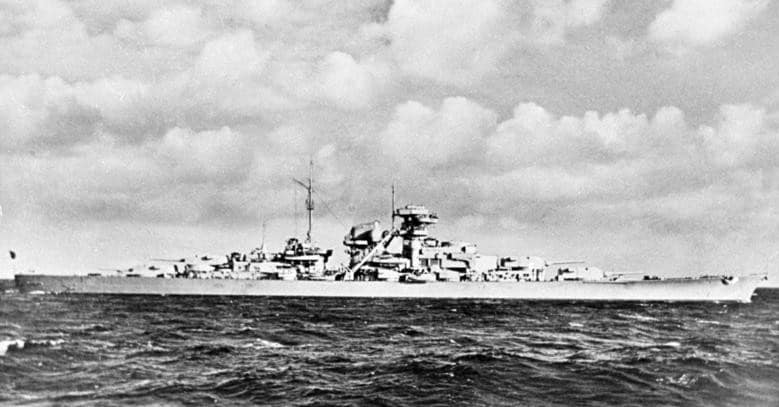
The Swordfish's most celebrated moment came during the pursuit of the Bismarck. After sinking HMS Hood on 24 May 1941, the German battleship was running for the safety of French ports and Luftwaffe air cover. The Royal Navy was desperate. If Bismarck reached Brest, she might never be caught again.
On 26 May, with time running out, Swordfish from Ark Royal launched into appalling weather. Visibility was near zero. The first strike accidentally attacked the British cruiser HMS Sheffield. The second wave, correcting their error, pressed home through a wall of anti-aircraft fire that should have annihilated them. One torpedo struck Bismarck's stern, jamming her rudder at 12 degrees to port. The mighty battleship could now only steam in circles.
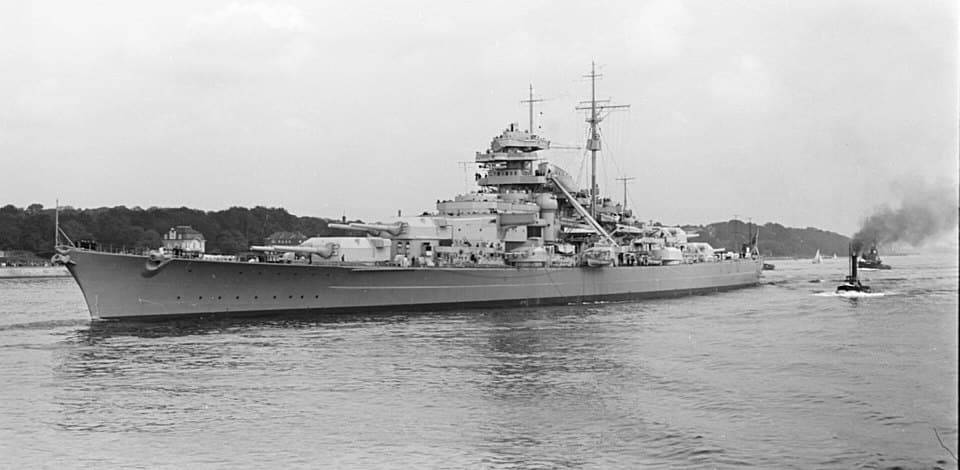
By morning, the British fleet had closed in. Bismarck was battered into a burning wreck by the battleships King George V and Rodney, then sent to the bottom. The torpedo that crippled her steering — delivered by a canvas-and-wire biplane flying at 90 knots through a Force 8 gale — ranks among the most consequential single weapons hits in naval warfare.
The Atlantic Workhorse
While Taranto and the Bismarck chase made headlines, the Swordfish's longest and arguably most important contribution was the grinding, unglamorous work of convoy escort in the Battle of the Atlantic. Fitted with ASV radar and operating from tiny merchant aircraft carriers (MAC ships) and escort carriers, Swordfish hunted U-boats across thousands of miles of grey ocean. They dropped depth charges, fired rockets at surfaced submarines, and provided the aerial eyes that convoys desperately needed in the mid-Atlantic "Black Gap" where land-based aircraft could not reach.
The Swordfish outlived its intended replacement, the Fairey Albacore, which was retired from front-line service before the Stringbag. It also outlasted the Barracuda in the convoy escort role. The last operational Swordfish flight took place on 21 June 1945 — making it one of very few biplane types to serve in front-line combat from the first day of the war to the last in Europe.
Legacy of the Stringbag
The Fairey Swordfish is a reminder that warfare does not always reward the newest or fastest machine. Sometimes it rewards the most reliable, the most adaptable, and the one flown by crews who simply refuse to accept that their aircraft is obsolete. The Swordfish sank more enemy tonnage than any other Allied aircraft type during the war. It changed the outcome of battles that changed the outcome of the war itself.
Today, two airworthy Swordfish survive. Both fly with the naval aviation charity Navy Wings (successor to the Royal Navy Historic Flight), still turning heads at airshows — still impossibly slow, still impossibly brave.
Sources: Lamb, Charles — "War in a Stringbag" (1977); Wragg, David — "Swordfish: The Story of the Taranto Raid" (2003); Imperial War Museum archives; Fleet Air Arm Museum records.
Related Questions
What was the Fairey Swordfish?
The Fairey Swordfish was a British torpedo bomber and reconnaissance biplane that served the Royal Navy in World War II. First flown in 1934, the fabric-covered "Stringbag" looked obsolete but proved highly effective, famously helping to cripple the German battleship Bismarck in 1941.
How did the Swordfish help sink the Bismarck?
On 26 May 1941, Swordfish torpedo bombers launched from HMS Ark Royal into a North Atlantic gale and attacked the Bismarck. A torpedo hit jammed the battleship's rudder, leaving her unable to steer and allowing British warships to catch and sink her the next morning.
Why was the Swordfish nicknamed the Stringbag?
Crews called the Swordfish the "Stringbag" because of its old-fashioned construction: an open cockpit, fixed landing gear, and a fabric-and-metal airframe that looked like a relic even when the war began. Despite this, it remained effective throughout the conflict.
How fast was the Fairey Swordfish?
The Swordfish had a top speed of only about 139 mph (224 km/h). Against the Bismarck its slow speed actually helped, as the battleship's anti-aircraft fire-control had trouble tracking such a slow-moving target effectively.
How many Fairey Swordfish were built?
A total of 2,391 Swordfish were built. The biplane carried a crew of two or three and a single 18-inch, 1,670 lb torpedo, and it remained in service throughout World War II despite being considered obsolete from the outset.
Related Posts
The De Havilland Mosquito: The Wooden Wonder
0 Kommentare